Three Line Capital

141 posts

Three Line Capital banner
Three Line Capital

Three Line Capital

@threelinecap

public capital allocation from an obsessed retail investor with skin in the game.

Katılım Aralık 2025
5 Takip Edilen59 Takipçiler
Three Line Capital
Three Line Capital@threelinecap·
Lasted about a week on Plus. No coding. Anyone else hitting the wall faster than before already?
Three Line Capital tweet media
English
0
0
1
30
Three Line Capital
Three Line Capital@threelinecap·
If you are feeling fomo after being up 100%, that means there are many others feeling the same and that push for an extra 20-30% is going to make you very skiddish when price goes against you a little, then a lot. Cascades don’t happen because of controlled selling they happen because the market forces you to sell at a price you didn’t love. Benchmark is 7% annual return. Anything above that is a win. Cash is a position.
Daniel Romero@HyperTechInvest

I’m up 100% YTD, and somehow I feel more FOMO and frustration than at any point in the past few years I can’t be the only one feeling this Every time I take my time to research an interesting stock, it shoots up 50% in a week It’s a relentless market

English
0
0
1
70
Three Line Capital
Three Line Capital@threelinecap·
Happy Risk Mgmt Morning Let the current market narrative tell it, bottleneck trade will work forever. I find that extremely hard to believe. Multiples will come down.
English
0
0
0
45
Daniel Moore
Daniel Moore@dizlexic·
@threelinecap @Ric_RTP I fucking LOVE my local qwen3.6:35b-a3b-coding-nvfp4 it's slow as fuck, but I can just let it spin on other projects throughout the day and clean it up intermittently.
English
1
0
0
33
Ricardo
Ricardo@Ric_RTP·
Microsoft just banned its own engineers from using AI. The tool was literally costing MORE than the humans it was supposed to replace. They lied to you about AI adoption and now the whole narrative is blowing up: Microsoft gave thousands of engineers access to Claude Code six months ago and encouraged them to use it. Engineers loved it and adoption exploded. But then the invoices arrived. Token-based pricing means every query, every code review, every debugging session costs money. At scale across 100,000 engineers, the numbers became so large that Microsoft issued an internal order to cancel nearly all Claude Code licenses by end of June and force everyone onto their own cheaper tool instead. The company that invested $5 billion in Anthropic just told its own people to stop using Anthropic's product because it costs too much. Uber's story is even worse... Their CTO Praveen Neppalli Naga told The Information that the budget he planned for the full year was "blown away already" by April. Uber had rolled out Claude Code in December 2025. By March, 84% of their 5,000 engineers were using it with 70% of all committed code coming from AI systems. Heavy users were burning $500 to $2,000 per month each. Naga himself spent $1,200 in a single two-hour demo session. The company had even built internal leaderboards ranking engineers by how much AI they used. They literally gamified the spending and then ran out of money. Now look at what Nvidia's own VP of applied deep learning Bryan Catanzaro said to Axios last month. Direct quote: "For my team, the cost of compute is far beyond the costs of the employees." This is a VP at the company that SELLS the chips saying that using AI is more expensive than paying humans. Think about what this means for the entire AI narrative. Every CEO on every earnings call for the past two years has said the same thing: AI will make us more efficient, reduce headcount, and cut costs. The stock market rewarded every company that said it. Fired workers, stock goes up. Announced AI adoption, stock goes up. But the actual companies deploying AI at scale are discovering the math doesn't work. The MORE employees use AI, the HIGHER the bill. Goldman Sachs forecasts a 24x increase in token consumption by 2030 as companies adopt AI agents. Gartner just published a report showing that even though individual token prices will drop 90% by 2030, total enterprise AI costs will go UP because agents consume exponentially more tokens per task than basic tools. Meta built an internal dashboard called "Claudeonomics" to track which employees use the most AI. Amazon started pushing engineers to "tokenmaxx," their internal term for consuming as many AI tokens as possible. Both companies are spending hundreds of billions on AI infrastructure this year alone. And Microsoft, the company that bet its entire future on AI, just told 100,000 engineers to stop using the tool they liked best because the per-token bills got out of control. The companies building AI are telling investors it saves money. The companies using AI are finding out it costs more than the humans it was supposed to replace. And even the company that makes the chips just admitted it through its own VP. This is the gap nobody on Wall Street is pricing in. $725 billion in AI infrastructure spending this year across Big Tech. And the first companies to actually deploy these tools at scale are already pulling back because the economics don't work. What do you think?
English
1.8K
8.8K
21.6K
2.4M
jintao
jintao@hellojintao·
Bought 60% more spot $RIVN here at $14. It will go 17x higher, everyone on this app is poor. It will be the #1 runner for the rest of this, and the next, cycle. No one will get the opportunity to DCA back in around $12-13.
English
30
2
105
10.8K
Three Line Capital
Three Line Capital@threelinecap·
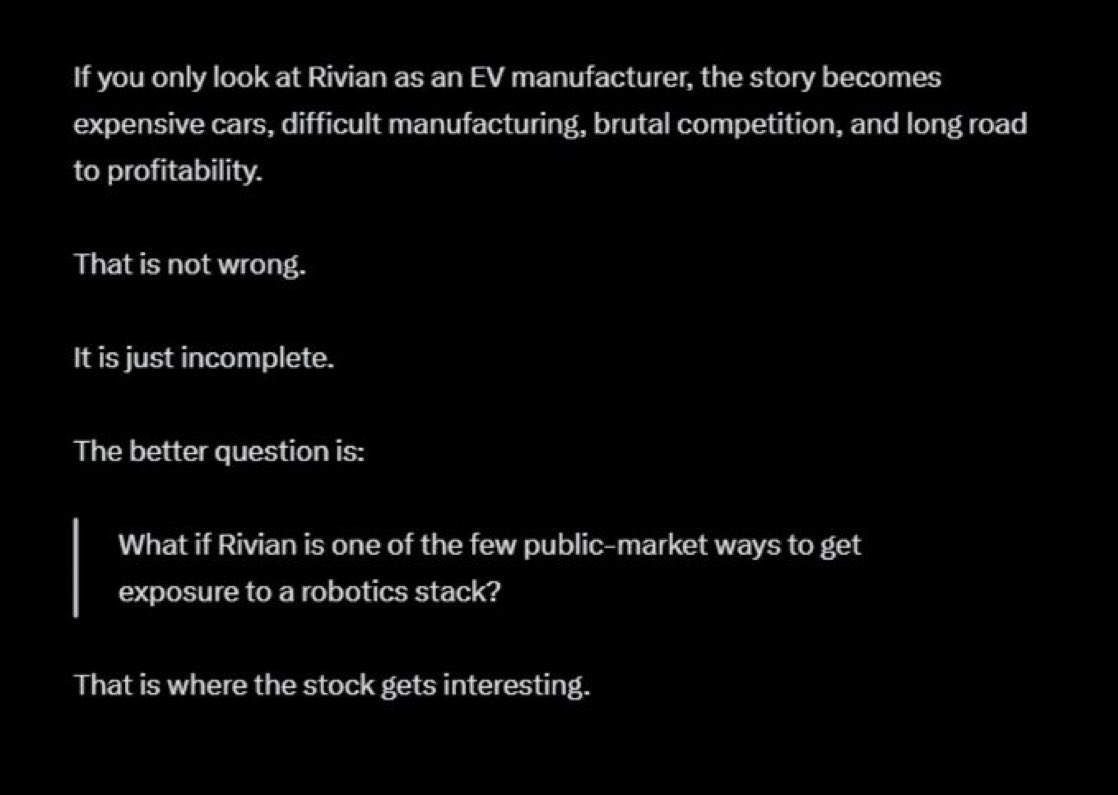
@fleetingbits The thesis literally jumps off the page. Market is pricing robotics way to narrow requiring legs and arms to suffice. I am looking at the Robotics layer hiding in plain sight.
Three Line Capital tweet media
English
0
0
1
48
FleetingBits
FleetingBits@fleetingbits·
some tentative thoughts on humanoid robotics 1) i'm not sure there is such a thing as asi for humanoid robotics, at least in a commercially valuable sense 2) once you have a robot that can take text instructions and turn them into decent management of a particular robot embodiment, you have captured most of the value 3) at that point, you can deploy it onto a production line, you can use it for unpacking and stocking shelves in a convenience store, perhaps it can be used in the home, etc... 4) at scale, like in a warehouse or on a factory floor, they can be coordinated using reasoning models, which receive telemetry and issue commands to individual robots and troubleshoot their behavior; 5) you can imagine further advances in robot operating models that create incremental value in particular industries, but the core of the value has already been captured 6) you can also imagine more general models that can operate multiple kinds of physical embodiments well, not just one; but i tend to think that this is mostly a cost improvement for operators 7) we should assume foundation models for robotics will follow a similar trend to llms, where the open source models trail the frontier by 9-24 months 8) this is true in part because there are well resourced players, like nvidia, that would train these models and have an incentive to open source them, to avoid concentration of their customer base 9) so, the companies that get the software advantage first have 9-24 months of lead time, but their models will saturate much more quickly than language model intelligence saturates 10) at that point, most of the value goes to whoever can produce the robots at scale and get them out at good gross margins, not to whoever produced the software 11) so, the winners look like the people that are good at building and running the factories and tooling them, plus the people that are good at training language models for discovery and operations that support this 12) my gut is that companies like figure and physical intelligence are on the wrong side of robotics on the long term; they are too invested in the software 13) tesla is maybe on the right side; chinese hardware companies are certainly on the right side; as these companies specialize in building at scale 14) there will also be many niche uses of robotics that both require further capability unlocks to be fully valuable and are vlm-shaped, like very small air gapped drones for war 15) but, i suspect this is not the majority of the economic value for humanoid robots and the majority of the value saturates on intelligence
English
13
1
118
8.6K
Three Line Capital retweetledi
OddStats
OddStats@OddStats·
I genuinely, deeply hate to say this because people are going to think I'm predicting the future of the stock market, and I'm not. I have no more of an idea how long they can levitate this than you do. I lived in Austin from '94 to '03. I *vividly* remember friends dropping out to take insane jobs that you couldn't pass up (in tech) that paid absurd money and offered stock options. Multiple friends were Dellionaires. I remember the nights out on them on Sixth Street. One night, a stranger I was shooting pool with at the Tavern offered me $$80k+ a year (in 1999 dollars) to "play video games all night, drink Dr Pepper, and answer the help line in case anyone actually calls it." He had money to burn and he was going to. His investors demanded it. A friend with an (non computer) engineering degree from MIT got a job paying him $350k a year with a company that hadn't sold a single widget yet because they needed to make it look like they were a) hiring great people and b) spending their money on the sort of things they thought their investors wanted to see. The money coming in from investors was euphoric and it needed to be spent or the spigot would be turned off and we all knew it. The stories were real. I watched it first hand. It's feeling eerily similar. I'm not suggesting the coming stock market is 2000-2003 because things *have* changed and the tricks to keep the illusion alive have gotten a lot more complex. Maybe this goes on forever. But, man, I gotta tell you. EMOTIONALLY, there are actual similarities to late 90s Austin investor-cash euphoria. Feel free to stay optimistic, but tread carefully.
Yoshik@AskYoshik

The AI bubble math doesn't add up. Anthropic spends $3 to make $1 and that’s before you include any and all other costs like staff or electricity. Microsoft dumped $300B in capex, made ~$18B in AI revenue. OpenAI and Anthropic alone make up 43-54% of Microsoft, Google, Amazon and Oracle's entire revenue backlogs. Enterprises are burning through annual AI budgets in 4 months with zero measurable ROI. This is the most expensive science experiment in history, funded by your SaaS subscriptions.

English
87
139
2K
530.1K
Three Line Capital
Three Line Capital@threelinecap·
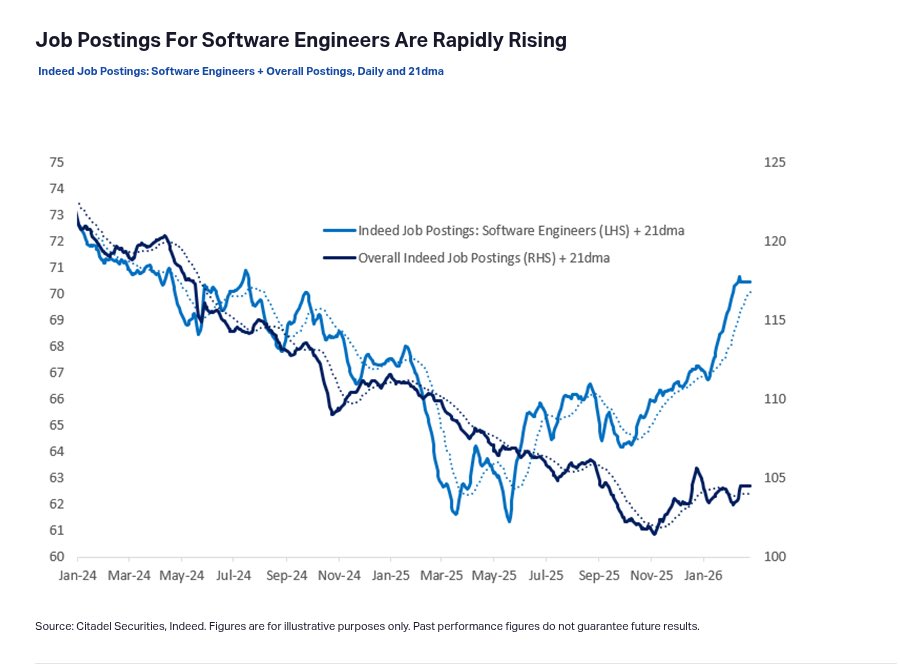
Yes, more code has been created per GitHubs stats, but that code coupled with poor token discipline doesn't mean AI has been efficiently used. Domain Knowledge will still be just as important going forward. Getting compilable code in 50 prompts is one thing, getting there in under 15 is another. Who can get to the same result with less tokens becomes the valuable engineer.
English
0
0
0
1.1K
David Sacks
David Sacks@DavidSacks·
Q: How are job postings for software engineers rising rapidly despite AI agents automating coding? A: Because there’s far more code to manage than ever before. We’re already seeing a 14x YoY increase in GitHub commits, and it’s accelerating. AI has dramatically lowered the cost of writing code, so it’s now being used across far more businesses, applications, and use cases. We’re at the beginning of a massive productivity boom driven by the proliferation of bespoke software throughout the entire economy. Coding has been AI’s breakout use case this year. The fact that it’s increased demand for software engineers — rather than decreased it — should call into question the entire “AI will cause mass job loss” narrative.
David Sacks tweet media
English
775
1.3K
8.3K
1.2M
Three Line Capital
Three Line Capital@threelinecap·
@M0rganaF @Ric_RTP I agree, AI in the hands of a user with prior domain knowledge compounds productivity. It will come down to users who are able to maximize production using the least number of tokens who win. Sloping until barely usable is what kills credits in a short time.
English
0
0
1
37
~Belle Rose~
~Belle Rose~@M0rganaF·
AI is slop why? it's the : Least Common Denomiator anyone who has studied statics understands the results given are based on prediction and not critical thought why pay someone to use slop when you can pay someone to actually code? it never made any sense * I worked with DEVs who graduated from Georgia tech so I am used to being surround by ppl who do, not ppl who need cliffnotes ( which is what AI is...) they skip reading the book and just want the highlights, to me it's a sign of low IQ now, if you use it to proof your code, sure or maybe there's a concept you vaguely recall for years ago... sure it can help you. But it's always just a tool like a fork or knife
English
3
0
4
59
Three Line Capital
Three Line Capital@threelinecap·
@hyhieu226 Agreed. In the AI era, coding/software is getting commoditized fast, a decent model can do a lot of heavy lifting. The alpha is in hardware becoming the real moat for the next decade and beyond.
English
0
0
0
89
Hieu Pham
Hieu Pham@hyhieu226·
If your moat is software, you most likely dont have any moat.
English
47
12
262
21.9K
Three Line Capital
Three Line Capital@threelinecap·
@aleabitoreddit Wolfspeed was fun but is an old trade for me and am already looking to allocate for the next trade: physical AI.
Three Line Capital tweet media
English
5
0
7
17K
Serenity
Serenity@aleabitoreddit·
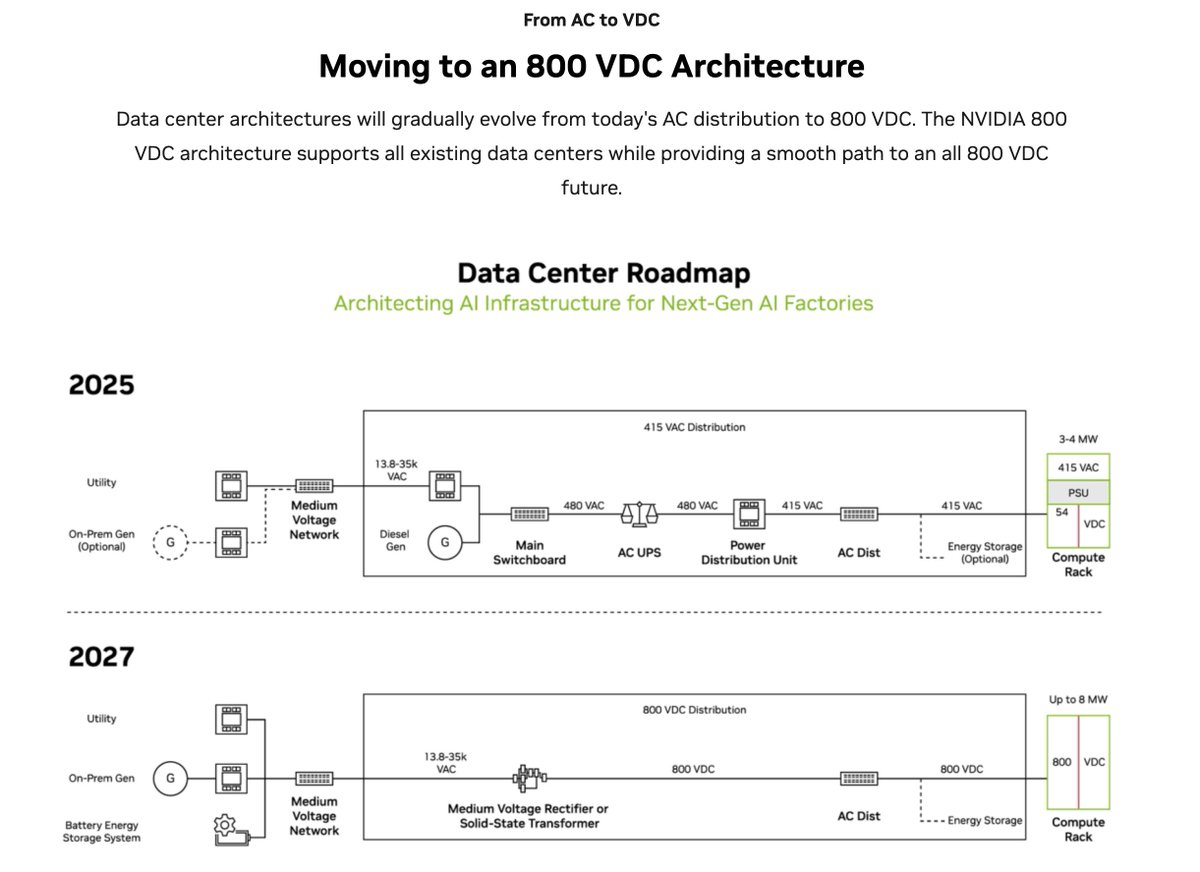
All right chat, crowdsourcing your #1 highest conviction (10x only) stock long for the Power Semi trade. Especially given $NVDA pushing shift to 800 VDC. Stuff like $NVTS or $WOLF, but high-beta, 10x potential only. Anywhere around the world. What's your pick?
Serenity tweet media
English
503
180
2.3K
755.6K
Three Line Capital
Three Line Capital@threelinecap·
@Pentosh1 Bunch of my readers already ahead of it after reading my last article. Autonomous vehicles for example addresses a $10 trillion TAM. Robotics in vehicles will hit before robotics with legs.
Three Line Capital tweet media
English
1
0
0
1.1K
🐧
🐧@Pentosh1·
There are a couple physical AI companies that imo are just starting their uptrends with some pretty decent upside over the next few years. Going to write about what I'm looking at shortly, and I'm open to your suggestions as well if you have them. Feel free to share AI started as software, but now AI in entering the stage of having hands, arms, and eyes Robotics is essentially going to solve for some parts of a 55-60T annual problem. Which is labor. These robots will have an upfront cost, but over the lifetime of them might only cost around $2 per labor hour vs the average of $40 or so in the US. While we are a bit early to robotics companies going public, we can still buy the "bottlenecks" of many of these that are going to be supplying all the parts to build them.
English
91
30
609
51.3K
Three Line Capital
Three Line Capital@threelinecap·
@DannyDayan5 @ernietedeschi AI buildout is definitely not deflationary. Could we see deflationary pressures in 10-20 years after the technology has been around long enough to work into the supply side of economy, sure but agreed not currently.
English
0
0
1
28
Ernie Tedeschi
Ernie Tedeschi@ernietedeschi·
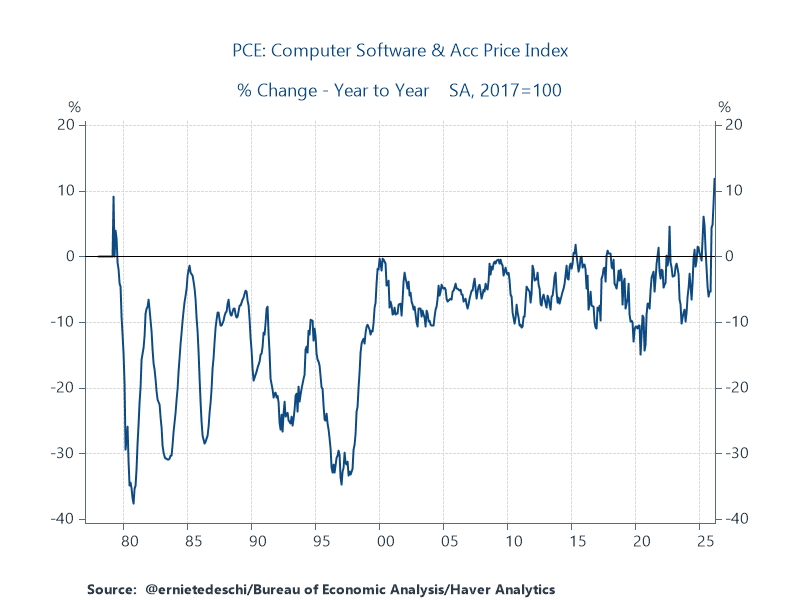
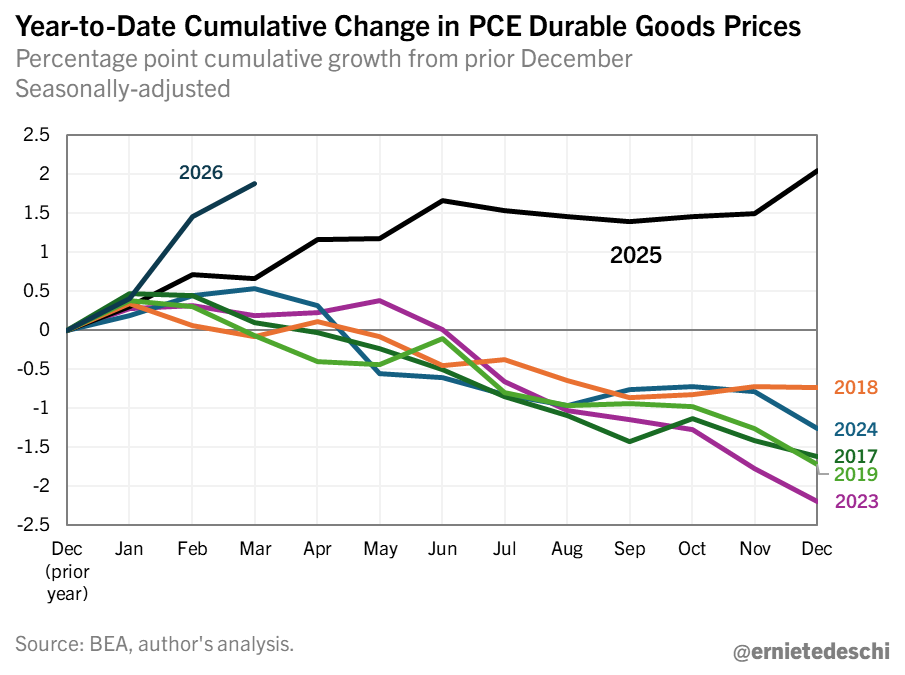
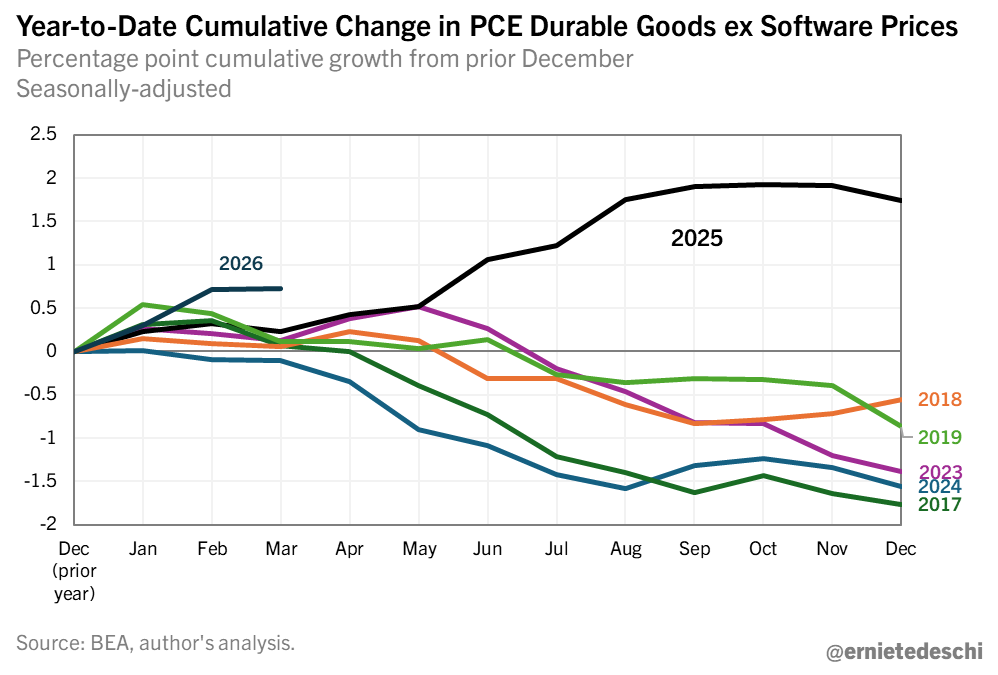
Interesting note. As the authors point out, software & accessories inflation in PCE--part of durable goods--is the highest since the series began in the late 1970s. This is a plausible channel where AI demand could be weighing on measured core PCE inflation. The authors argue that in principle, the PCE "software & accessories" category should *not* include flash drives & blank media, but the CPI index the BEA uses for this PCE category includes these items, which, since memory prices are skyrocketing under AI demand, may be incorrectly boosting PCE software & accessory prices. Worth noting however that even if you exclude flash drives & blank media from PCE software & accessories, it needs to be accounted for *somewhere* else in PCE durable goods, e.g. "personal computers & peripheral equipment". Shifting the subcategory accounting of flash memory won't change overall core goods or core PCE inflation, it's just switching the effect from one pocket to another. I agree with them it's worth thinking about hedonic adjustments to software due to AI but it's not clear to me how that affects NAND. Interestingly, if you exclude software & accessories entirely from PCE durables, YTD durable price increases in 2026 are still high but a bit less extraordinary relative to other recent non-recession years, but 2025 durables price increases look modestly *more* extraordinary.
Ernie Tedeschi tweet mediaErnie Tedeschi tweet mediaErnie Tedeschi tweet media
FedResearch@FedResearch

New #FEDSNote: Measurement of “Computer Software and Accessories: federalreserve.gov/econres/notes/… #EconTwitter
English
8
32
125
53.2K
Three Line Capital
Three Line Capital@threelinecap·
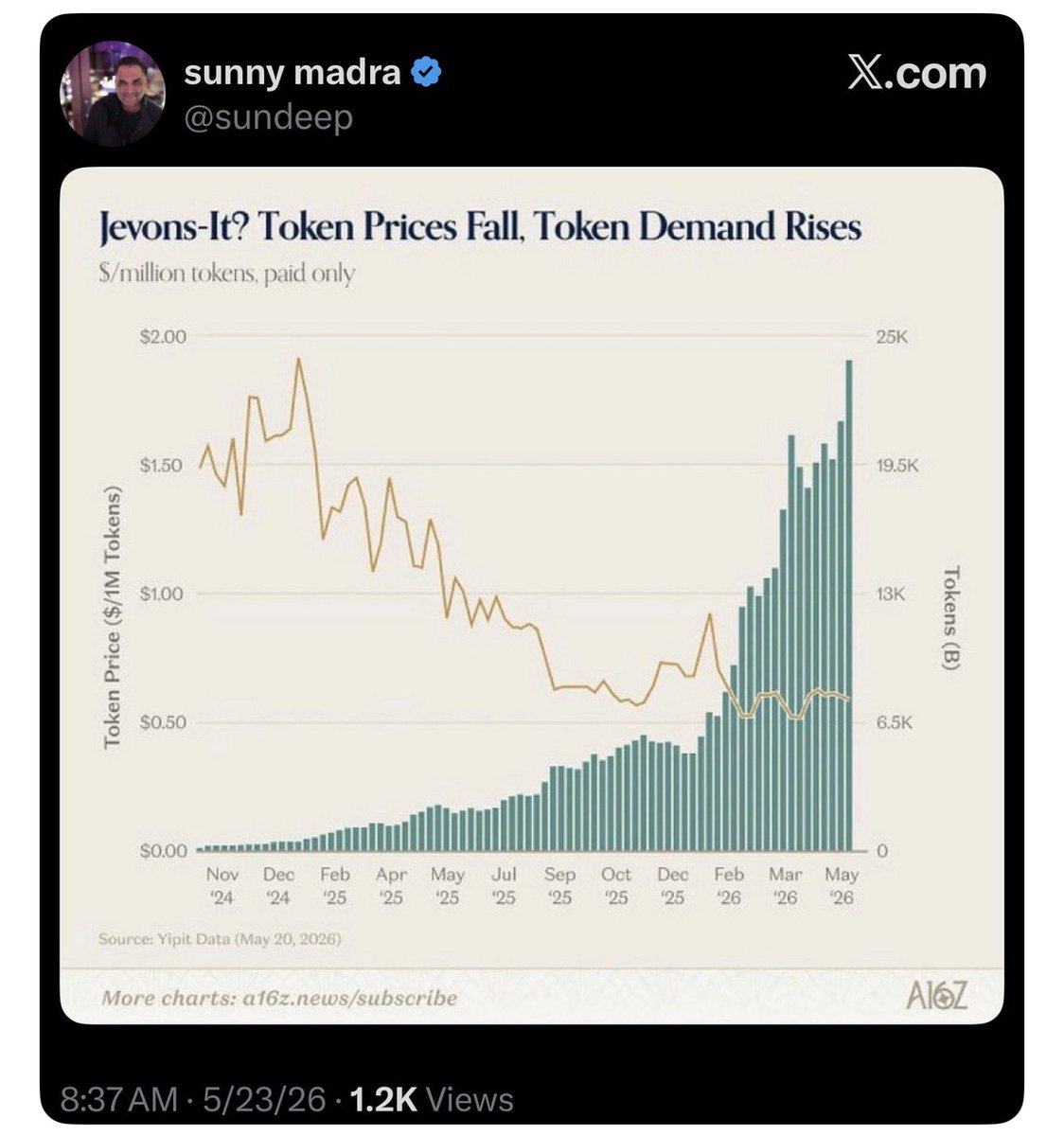
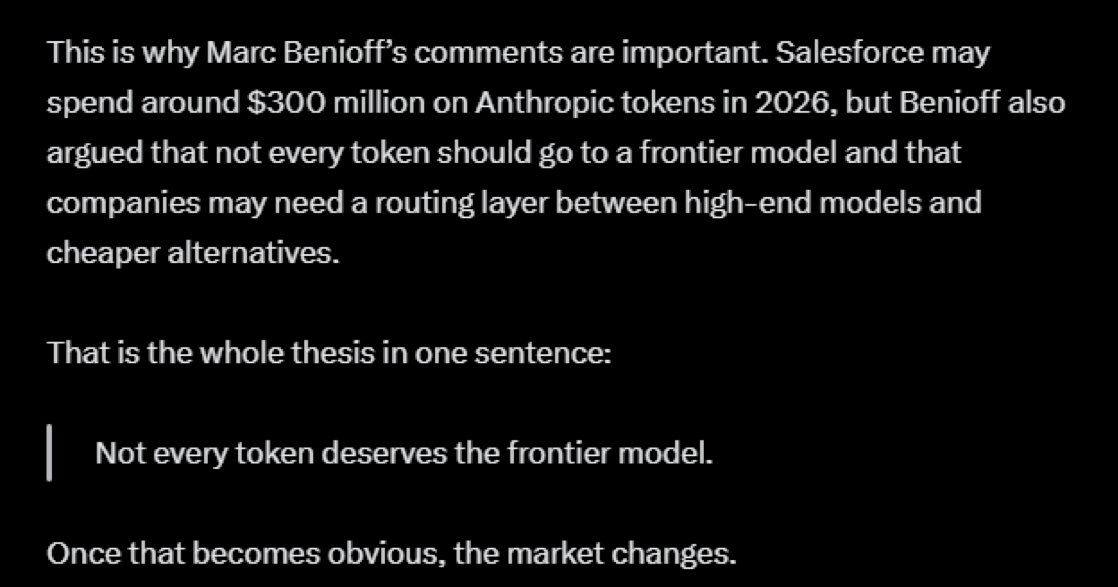
Market has been in ‘unlimited genie’ mode: casual research, productivity hacks, echo-chamber agent experiments. Real token economics (full-cost inference pricing) haven’t hit yet. What I am seeing is next phase being token discipline: boosting output at the lowest possible cost per token. Per-token prices can keep falling, but if usage grows faster than savings + revenue per seat, it gets blurry. Token Routing and Efficiency become the new skills in this agentic workforce.
Three Line Capital tweet media
English
0
0
0
125
Cassandra Unchained
Cassandra Unchained@michaeljburry·
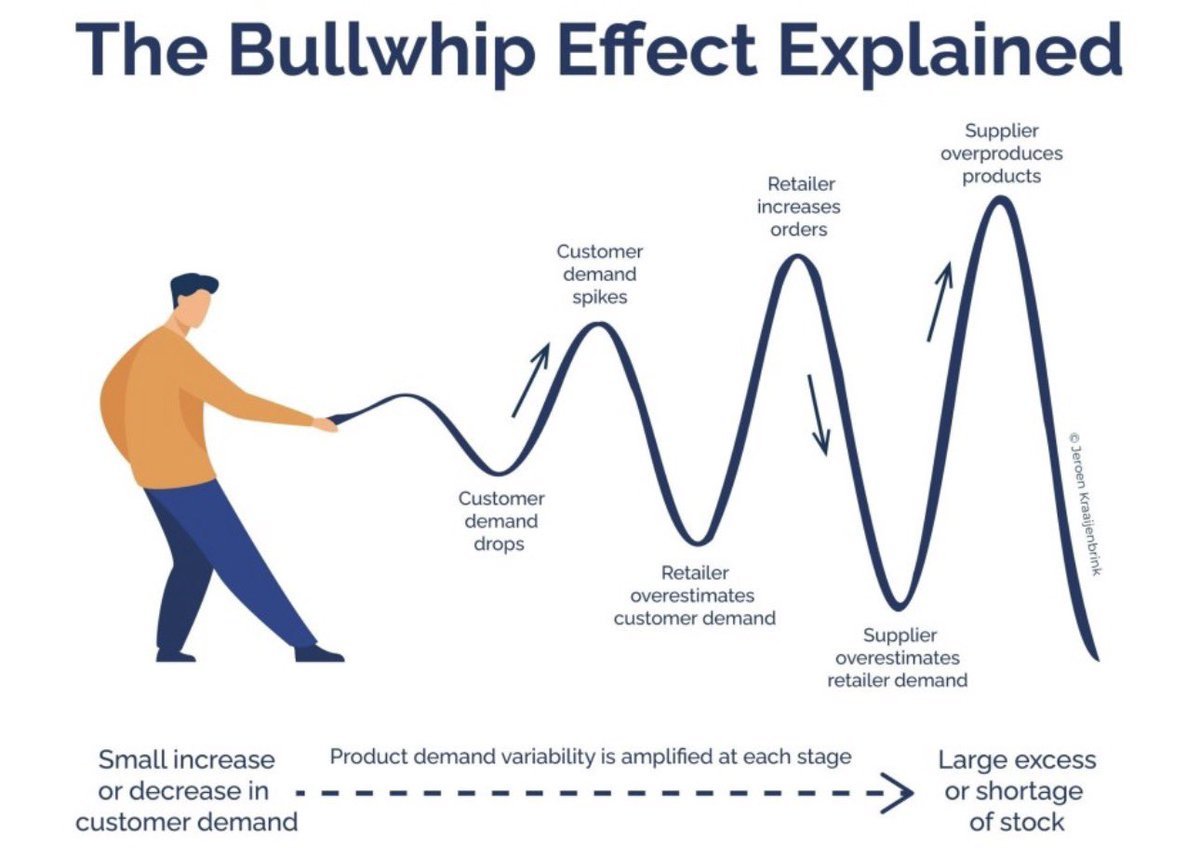
Many are using this chart to prove Jevons Paradox is working. They should look closer at the pattern and read Heretic’s Guide Part III. open.substack.com/pub/michaeljbu… Prices had already fallen for some time when the big token demand lift happened. Tokenmaxxing and benchmarking are much better explanation than Jevons Paradox based on the timeline than prices of tokens falling. In fact this chart may not show Jevons Paradox at all. And, if it does not, that is some massive benchmarking demand that is temporary and sending the wrong demand signal up and down the supply chain. Perhaps skipping a few cycles in the bullwhip effect. michaeljburry.substack.com/p/the-heretics…
Cassandra Unchained tweet mediaCassandra Unchained tweet media
English
66
76
576
176.6K
Three Line Capital
Three Line Capital@threelinecap·
@Christopher314A @Ric_RTP The next stage is boosting productivity at the lowest possible AI cost. Per-token prices may fall, but if usage grows faster than cost savings and revenue per seat, it’s pointless—token efficiency becomes a new demanded skill.
English
0
0
0
98
Christopher P Wendling
Christopher P Wendling@Christopher314A·
@Ric_RTP Thing is- if the productivity went up 10x, but the cost only increased 2x- this is simply a budgetting outcome- not an indictment of AI.
English
5
0
19
1.6K
Three Line Capital
Three Line Capital@threelinecap·
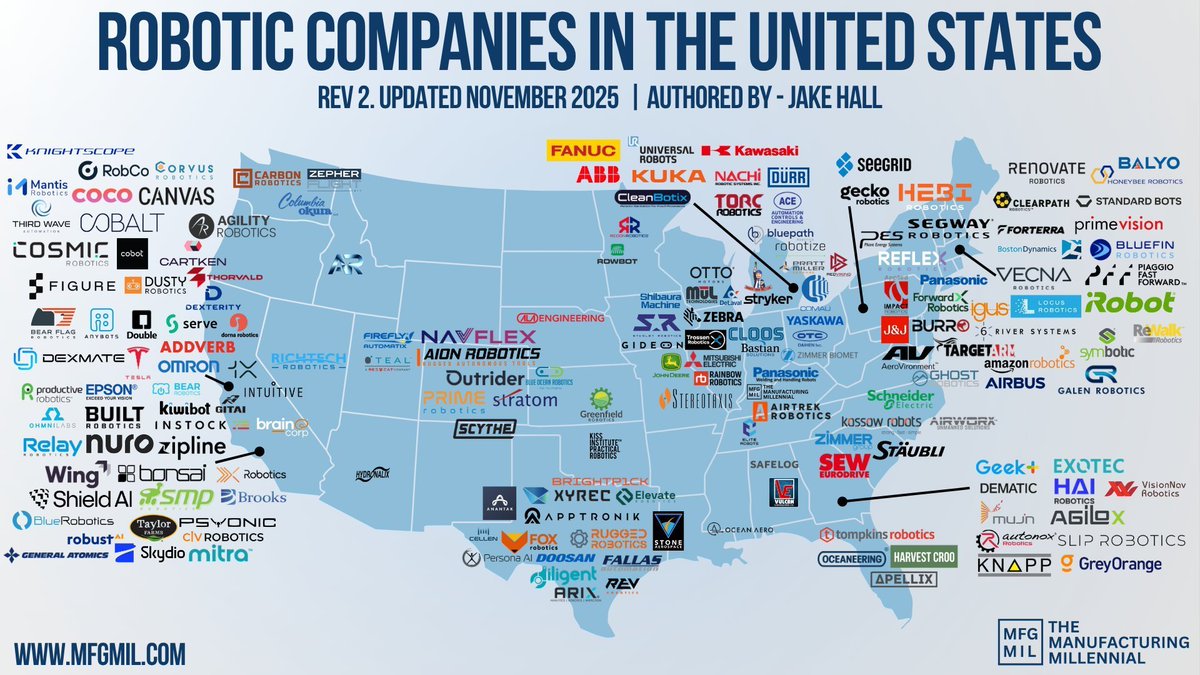
@rohanpaul_ai Love this — Seems like nobody is looking at the $10T TAM of autonomous vehicles as “robotics”.
Three Line Capital tweet media
English
0
0
1
390
Rohan Paul
Rohan Paul@rohanpaul_ai·
Robotic Companies in the United States
Rohan Paul tweet media
English
13
85
302
20.2K
Three Line Capital
Three Line Capital@threelinecap·
@justacycle Good read and I agree on the pending performance plateue of newer models. Draws a similar comparison to the iPhone problem; do I really need to upgrade every year? and in this case every month for LLMs
Three Line Capital tweet media
English
1
0
1
40