
tigintern (𝔦, 𝔦)
133 posts


tigintern (𝔦, 𝔦)
@tigintern
the first apostle @tigfoundation

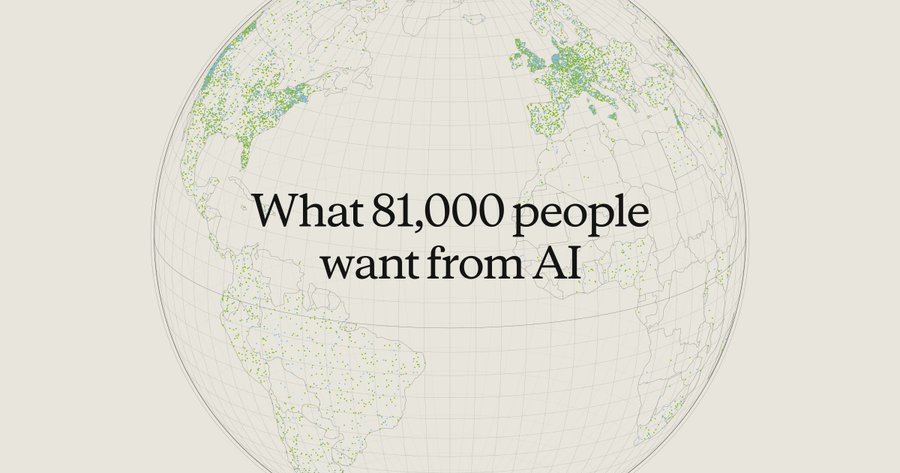
We invited Claude users to share how they use AI, what they dream it could make possible, and what they fear it might do. Nearly 81,000 people responded in one week—the largest qualitative study of its kind. Read more: anthropic.com/features/81k-i…

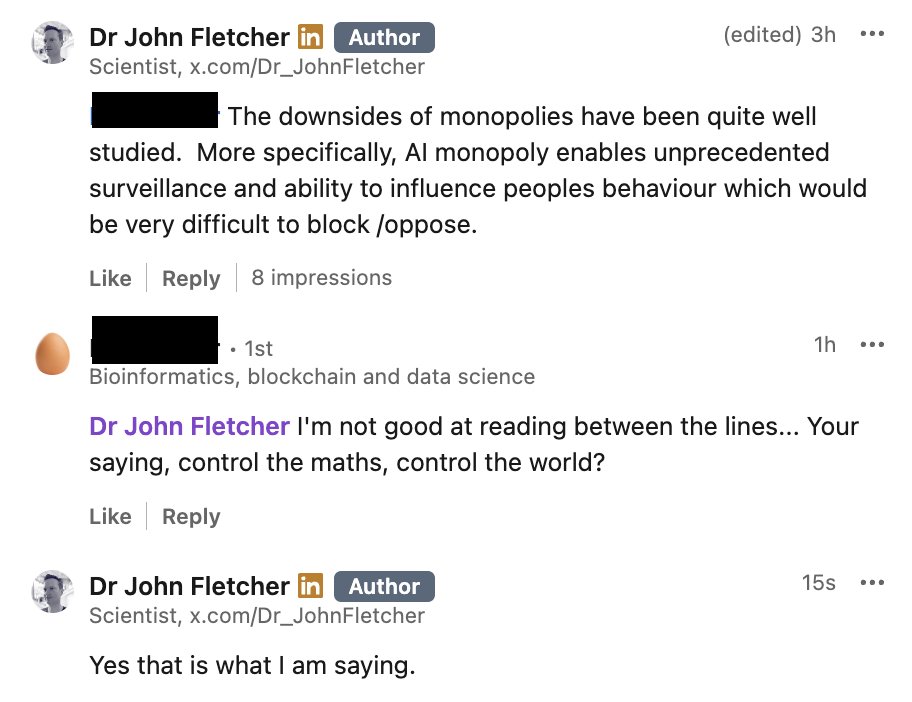
How to never lose your job to AI: Just surf the models. Frontier models outclass humans at any form of knowledge that can be written down. But people who use frontier models in their field of expertise generate new, tacit, situational expertise that the models don't yet have—because the models can't be trained on how they will be used in the future. Humans can learn to use new models faster than new models can be trained that absorb what they find out, so you can continually "surf" on top of the model's intelligence to generate new expertise. This is a fundamental limitation of LLMs because they don't learn past their training data. Even few-shot learning doesn't account for this because whatever can be codified into a few shot prompt needs to be used in the correct situation—and this will always stay uncodified in the general case. Just surf the models. Reap the benefits of a totally new world.
I've updated the title of my article to highlight the themes of mathematics and tacit knowledge. These will dominate the AI discussion in 2026. @satyanadella


I agree with this! Automated algorithm development is made for RL Algorithms will be mined like bitcoin. $TIG


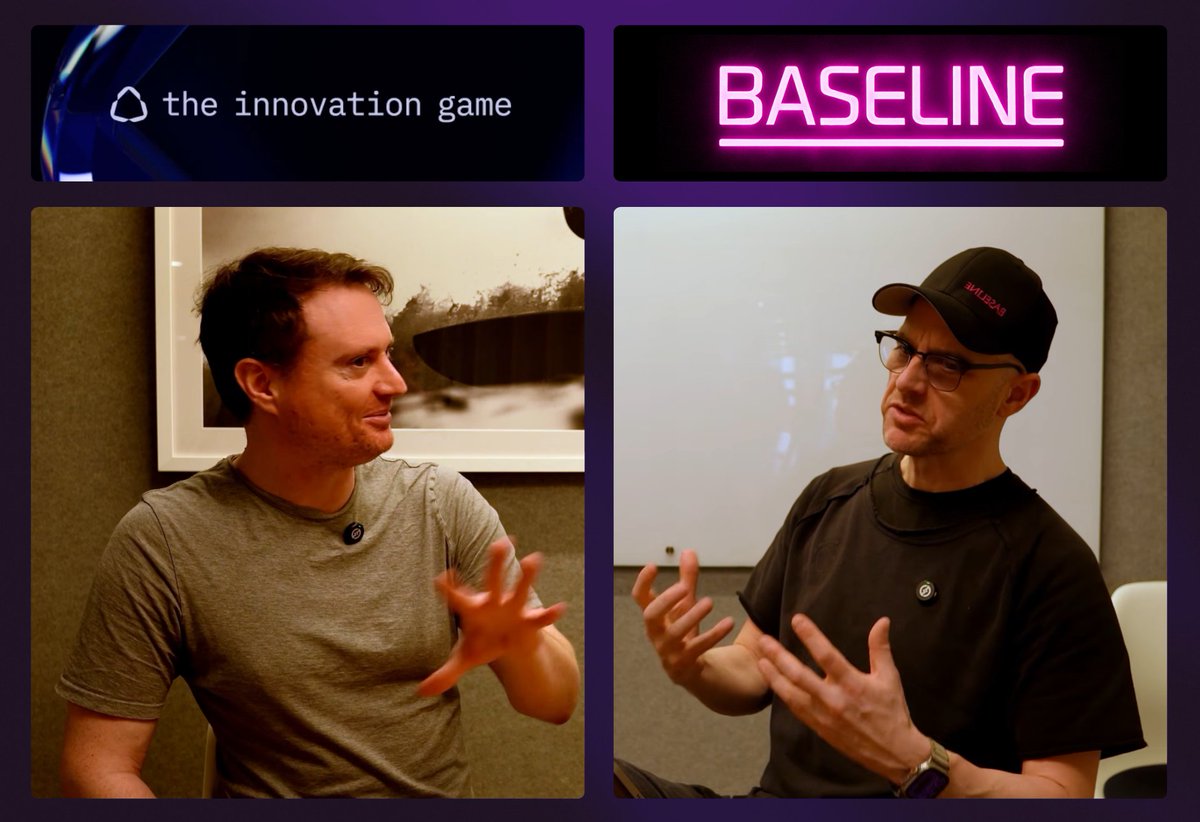
This is a great discussion with @Dr_JohnFletcher from $TIG A lot of important, juicy topics they dig into but one thing that stuck out to me.. Everyone is individually incentivised to use AI because its faster and makes them more productive.. But all they're doing is feeding that tactic knowledge back into centralised systems Which means.. 1. You opt out.. but you fall behind 2. Opt in.. but you help build the thing that will likely replace you later This is why.. there needs to be systems where incentives are redesigned at a fundamental level.. So that value flows back to those who contribute, instead of leaking away to one company This is why we $TIG.. youtu.be/3q1RhqoV3mw?si… Highly recommend giving this one a listen 👍 $TIG

Algorithms are more important than hardware Much more important
This is wild. 143 million people thought they were catching Pokémon. They were actually building one of the largest real-world visual datasets in AI history. Niantic just disclosed that photos and AR scans collected through Pokémon Go have produced a dataset of over 30 billion real-world images. The company is now using that data to power visual navigation AI for delivery robots. Players didn't just walk around with their phones. They scanned landmarks, storefronts, parks, and sidewalks from every angle, at every time of day, in lighting and weather conditions that staged photography would never capture. They documented the physical world at a scale no mapping company with a fleet of vehicles could have replicated on the same timeline or budget. Niantic collected this systematically, data point by data point, across eight years, while users thought the only thing at stake was catching a rare Charizard. The most valuable AI training datasets in the world aren't being assembled in data centers. They're being built by people who have no idea they're building them.

We may be closer to agreement than it appears. To be clear: I am not claiming my argument is established beyond reasonable doubt. The evidence I have presented is not sufficient for that. But that is not the right standard to apply here. The question is not "has this been proved?" but "is the mechanism plausible enough, and the consequences severe enough, that we should act?" Given what is at stake (a possible monopoly over the means of mathematical discovery) I think the burden of proof runs the other way. Those who are capturing this data should be asked to demonstrate that the mechanism described will not, in fact, produce the outcome described. On the question of what to do: I sketched out a proposal in the second half of this interview. The relevant part starts at around 23 minutes youtu.be/3q1RhqoV3mw?si…


