Sabitlenmiş Tweet
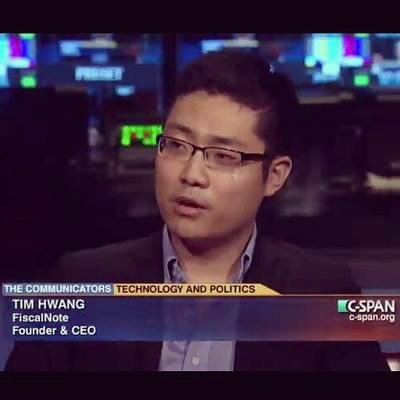
Welcoming America’s newest public company @FiscalNote (NYSE: $NOTE) to the @NYSE by ringing the Opening Bell!
English
Tim Hwang
3.8K posts

@timthwang
CEO/Co-Founder, @NitraFinance. Exec Chair / Founder @FiscalNote. Chairman and Co-Founder, @GetAmberEV, Jericho Security. Princeton and Harvard.




The FDA just made one of the most significant shifts in its evidentiary standards in decades—and it feels like a lot of people have slept on the news! The FDA will now default to ONE pivotal trial for drug approval, not two. The science of evaluating whether a drug works has advanced enormously. Today, development programs build evidence across multiple dimensions—mechanism of action, biomarker effects, intermediate endpoints—that collectively tell a more complete story. That body of confirmatory evidence, from mechanistic data to real-world evidence, can replace a second pivotal trial. We have historically seen more regulatory flexibility in rare diseases and oncology where need is acute. But the biggest impact we expect to see with the shift from two to one pivotal trial is likely to be in common conditions like cardiovascular and respiratory where the two pivotal trial dogma has been more entrenched. Potentially up to $350M in savings per program and years off timelines. And this might just be the start—could continuous trial designs that collapse the rigid phase structure be the next paradigm shift in clinical development?




Thanks for noting and flagging his thread about how undervalued they feel it is. In Nov he put a bottom in stock claiming he might take co private. What happened? Instead of buying co. it's just been selling. 10b5-1 or not...if you are considering acquiring it why sell $1? Great if you get a Spaces going to answer these. And nice work on it! fiscalnote.com/press-room/fis…


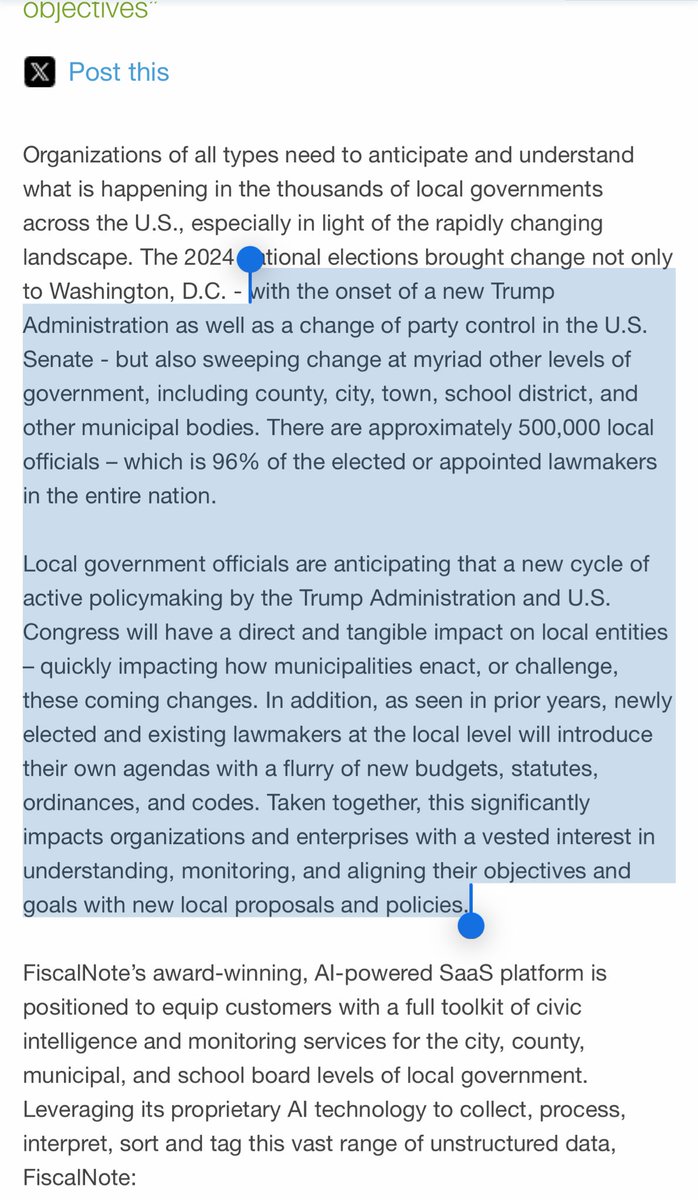
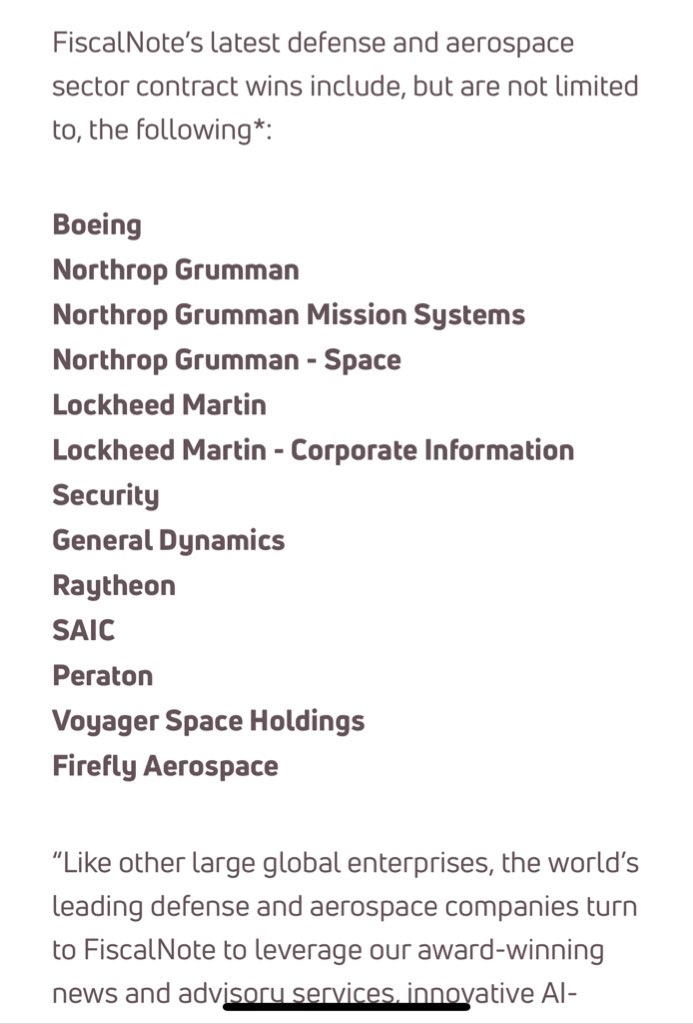
$NOTE might be one of the biggest beneficiaries from the Trump admin. Thesis is simple: deregulation and change of policy will cause confusion across the board for all companies in the US/EU. NOTE keeps track and has access to all three branches of the federal government. Not apples to apples but mini $PLTR.






High skilled immigration has been central to America leading the world in tech. The biggest misunderstand about high skill immigration stems from people thinking that the market opportunities in tech, and tech-adjacent fields, are zero sum. This essentially imagines innovation is finite and we’re all fighting over the same job or opportunity pool. This may be true of a few very legacy, slow growth industries, but it’s categorically not true for any important industry in the past 50 years or the next 100. Biotech, AI, advanced manufacturing, software, EVs, new energy sources, and dozens of other fields of the future are our high growth industries. And there’s no inherently fixed volume of companies or talent that the market needs. Tesla being started or not started in America is the difference between 100,000’s of jobs here - and leading in EVs globally - and not. Apple being started here is the difference between potentially millions of jobs being here - and leading consumer electronics globally - and not. You could go through this list all day long. Tech is not zero sum. More startups, pursuing more ideas, ultimately create more innovation and ultimately more jobs and prosperity. And that means you need the right talent to both work at these companies, and start the next ones. High skilled immigration has directly made America dominant technically and thus economically, and create far more jobs in America for others than are supposedly displaced. Even briefly imagining the alternative scenario, it’s obvious how disastrous this would be. The demand from tech companies for this top talent will remain, yet America won’t benefit directly from their hiring. That talent will go to another company that competes with the US and makes our dominance harder to maintain. You’re just increasing the odds you have more competition in the future. And even in the “best case” scenario (for our competitiveness) where a larger company like Google hires the same people internationally that would have otherwise moved here, when that person leaves Google to start their next company, it will be in their country of origin, not America. This is how you lose the tech war within one or two generations. There’s simply no good game theory in anything that reduces our talent access. Yes, we absolutely have and need to continue to educate and train incredible talent that grows up in the US, but equally having access to the world’s smartest talent has always been a huge advantage for America.