Sabitlenmiş Tweet
TKFinancial
4.3K posts

TKFinancial
@tk_financial
In the ETF and RIA world. CFA Charterholder. Not investment advice. Value bagholder. Laser eyes.
Katılım Mart 2019
513 Takip Edilen563 Takipçiler
TKFinancial retweetledi

Why Do Rich People Still Borrow Money?
"The more time I spend in wealth management, the more I realize that the intelligent use of debt can make sense even if you have a high net worth. Lots of rich people use debt as a tool."
buff.ly/KiPtkpx
by @awealthofcs

English

@valuations_ The efficiency gains of “summarize a PDF and make a template” are huge for a decent swath of white collar workers.
English
TKFinancial retweetledi

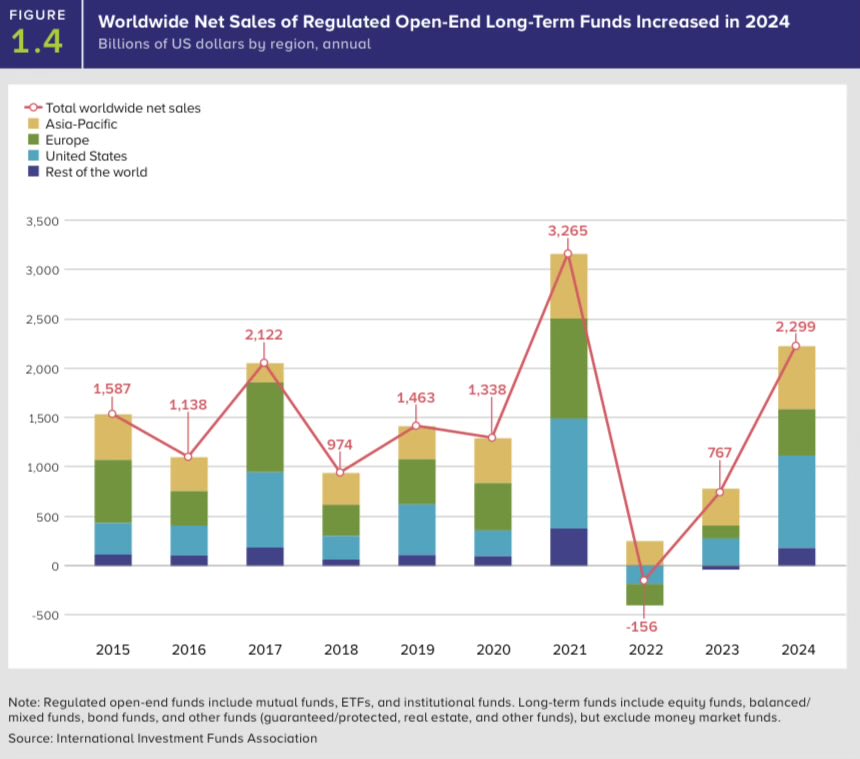
@stevesi At around $375B annually that’s meaningful as a percent of net inflows into funds for the US (blue bar below). It’d require a persistent bump in new inflows, either from a tick higher in the savings rate or foreign buyers.

English
TKFinancial retweetledi

ASIC : GPU split of 2026 Capex
$GOOGL 78% : 22%
$AMZN 40% : 60%
$META 20% : 80%
trendforce.com/presscenter/ne…
Indonesia
TKFinancial retweetledi

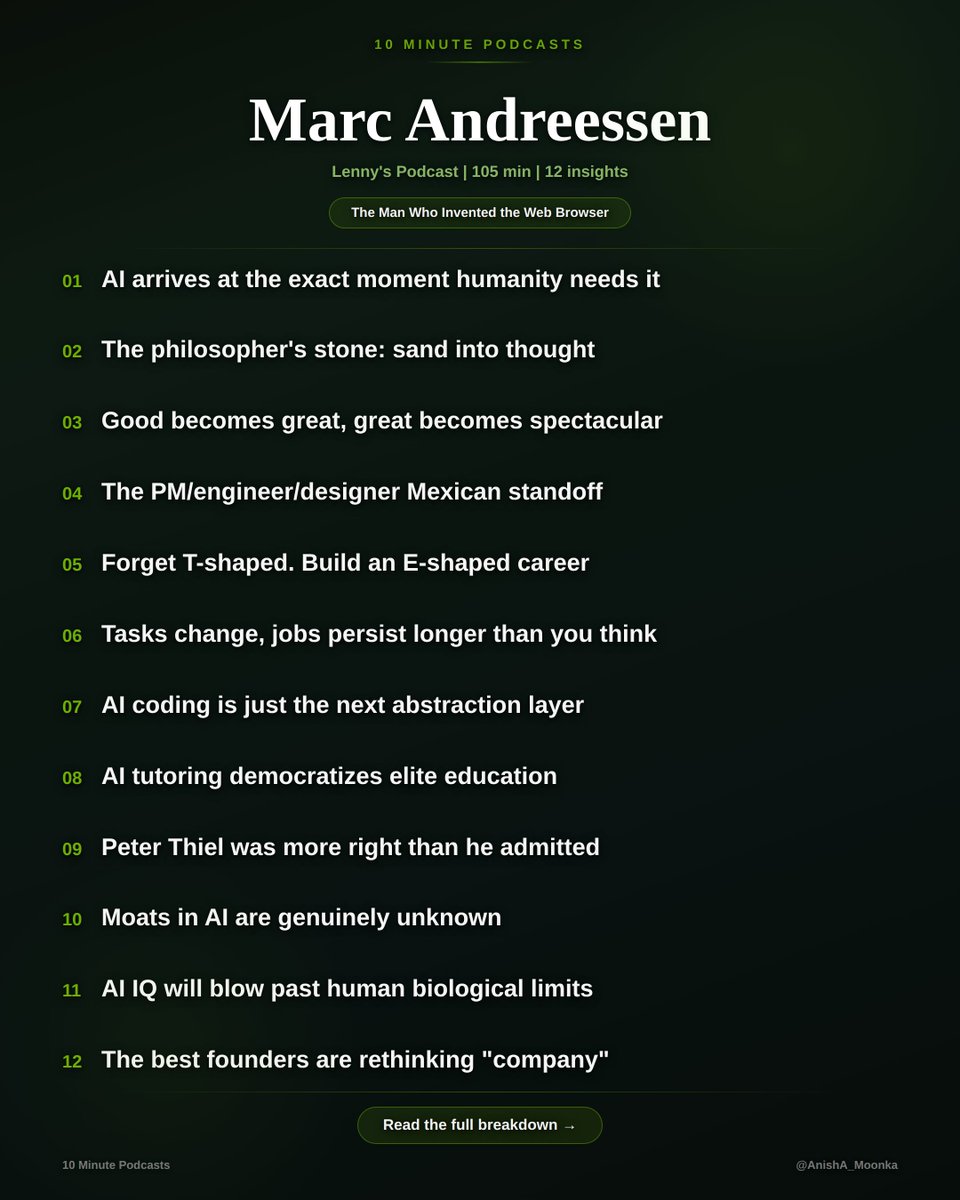
Marc Andreessen just dropped ~105 mins on Lenny's Podcast covering AI, jobs, careers, and why everyone is panicking about the wrong thing.
Just the clearest macro framework I've heard on where AI actually lands.
My notes:
𝟭. 𝗔𝗜 𝗶𝘀 𝗮𝗿𝗿𝗶𝘃𝗶𝗻𝗴 𝗮𝘁 𝘁𝗵𝗲 𝗲𝘅𝗮𝗰𝘁 𝗺𝗼𝗺𝗲𝗻𝘁 𝗵𝘂𝗺𝗮𝗻𝗶𝘁𝘆 𝗻𝗲𝗲𝗱𝘀 𝗶𝘁.
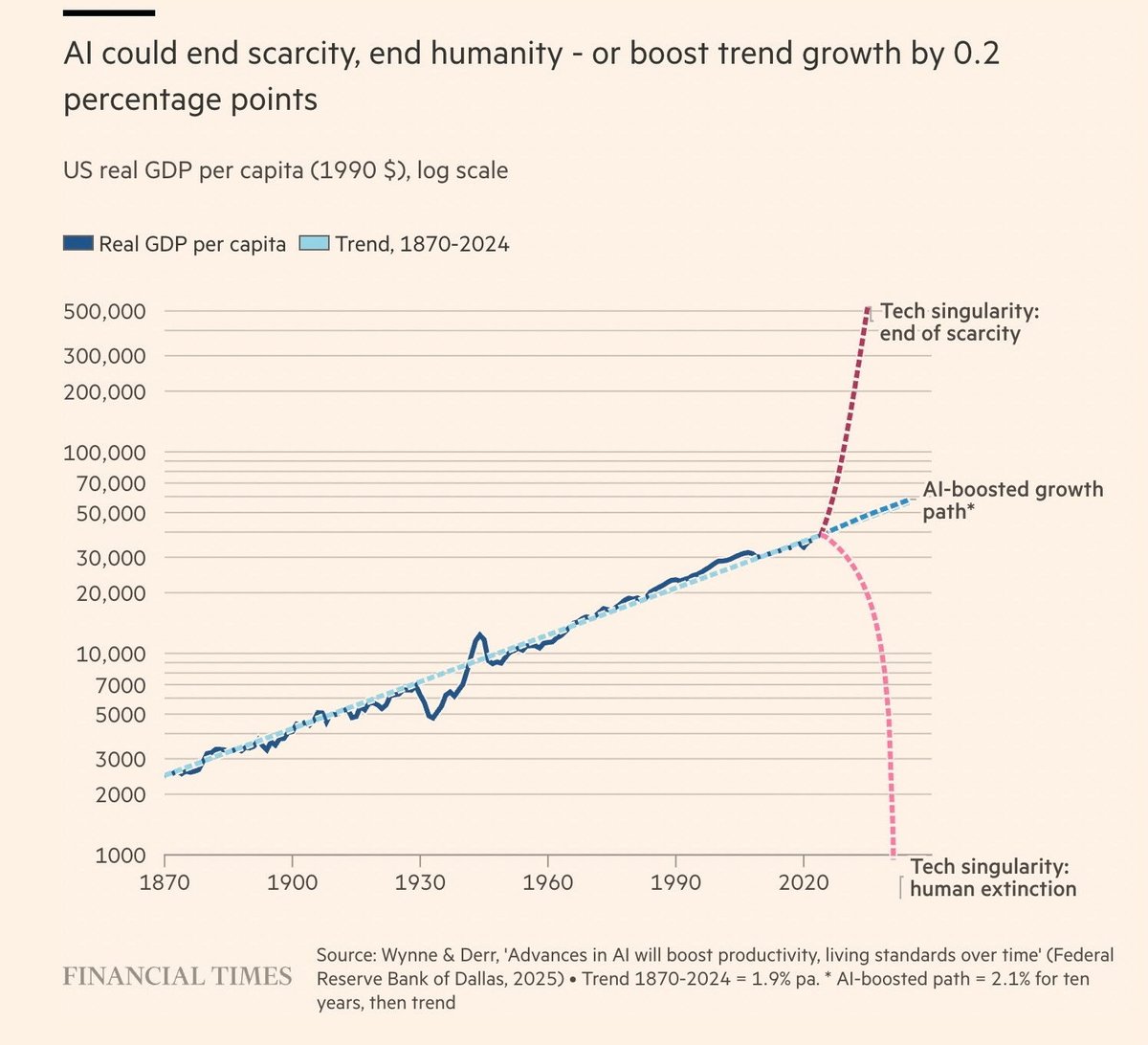
US productivity growth has been running at half the rate of the 1940-1970 era and a third the rate of 1870-1940. The global population is declining below replacement in dozens of countries, including China. Without AI, we would be panicking about economies shrinking from depopulation, not job loss.
The timing is almost miraculous. This is what Andreessen means when he says the real boom has not started yet. We have been in a 50-year productivity drought, and most people do not even realize it.
𝟮. 𝗔𝗜 𝗶𝘀 𝘁𝗵𝗲 𝗽𝗵𝗶𝗹𝗼𝘀𝗼𝗽𝗵𝗲𝗿'𝘀 𝘀𝘁𝗼𝗻𝗲.
Isaac Newton spent decades trying to transmute lead into gold and never succeeded. AI does something more powerful: it converts sand (silicon) into thought. The most common material in the world is the rarest output.
This one metaphor reframes the entire AI conversation. You do not have a job loss problem. You have a philosopher's stone sitting on your desk that you are not using enough.
𝟯. 𝗔𝗜 𝗺𝗮𝗸𝗲𝘀 𝗴𝗼𝗼𝗱 𝗽𝗲𝗼𝗽𝗹𝗲 𝘃𝗲𝗿𝘆 𝗴𝗼𝗼𝗱, 𝗮𝗻𝗱 𝘃𝗲𝗿𝘆 𝗴𝗼𝗼𝗱 𝗽𝗲𝗼𝗽𝗹𝗲 𝘀𝗽𝗲𝗰𝘁𝗮𝗰𝘂𝗹𝗮𝗿𝗹𝘆 𝗴𝗿𝗲𝗮𝘁.
The best coders right now are not reporting 2x productivity. They are reporting 10x. The gap between "pretty good with AI" and "elite with AI" is widening, not narrowing.
This is the most important signal for career planning right now. If you are just using AI to do the same job slightly faster, you are leaving the real leverage on the table.
𝟰. 𝗧𝗵𝗲𝗿𝗲'𝘀 𝗮 𝗠𝗲𝘅𝗶𝗰𝗮𝗻 𝘀𝘁𝗮𝗻𝗱𝗼𝗳𝗳 𝗯𝗲𝘁𝘄𝗲𝗲𝗻 𝗣𝗠𝘀, 𝗲𝗻𝗴𝗶𝗻𝗲𝗲𝗿𝘀, 𝗮𝗻𝗱 𝗱𝗲𝘀𝗶𝗴𝗻𝗲𝗿𝘀.
Every engineer now thinks they can be a PM and designer. Every PM thinks they can code and design. Every designer knows they can do both. And they are all correct, because AI enables each role to absorb the tasks of the other two.
I have seen this firsthand in the investing world. The analyst who can build models and write narratives is 5x more valuable than someone who can do only one. The same convergence is happening in the product.
𝟱. 𝗙𝗼𝗿𝗴𝗲𝘁 𝗧-𝘀𝗵𝗮𝗽𝗲𝗱. 𝗕𝘂𝗶𝗹𝗱 𝗮𝗻 𝗘-𝘀𝗵𝗮𝗽𝗲𝗱 𝗰𝗮𝗿𝗲𝗲𝗿.
Scott Adams could not have created Dilbert by being the world's best cartoonist or the world's best business mind. He needed both. The additive effect of two skills is more than double. Three skills are more than triple. Larry Summers puts it differently: don't be fungible.
The person who can code, design, and ship a product is no longer a unicorn. They are the new baseline for "extremely valuable." If you are only one of those three things, you are increasingly replaceable.
𝟲. 𝗝𝗼𝗯𝘀 𝗮𝗿𝗲 𝗯𝘂𝗻𝗱𝗹𝗲𝘀 𝗼𝗳 𝘁𝗮𝘀𝗸𝘀. 𝗧𝗮𝘀𝗸𝘀 𝗰𝗵𝗮𝗻𝗴𝗲. 𝗝𝗼𝗯𝘀 𝗽𝗲𝗿𝘀𝗶𝘀𝘁.
Executives never typed their own emails in the 1970s. Secretaries printed incoming emails and hand-delivered them. Both roles survived the transition, just with different task sets. The same will happen with AI and coding, PM work, and design.
Everyone obsessing over "will my job disappear" is asking the wrong question. The right question is: which tasks in my job are about to rotate, and am I ready to pick up the new ones?
𝟳. 𝗔𝗜 𝗰𝗼𝗱𝗶𝗻𝗴 𝗶𝘀 𝗷𝘂𝘀𝘁 𝘁𝗵𝗲 𝗻𝗲𝘅𝘁 𝗮𝗯𝘀𝘁𝗿𝗮𝗰𝘁𝗶𝗼𝗻 𝗹𝗮𝘆𝗲𝗿.
We went from human calculators to machine code to assembly to C to scripting languages. Each layer was dismissed by the previous generation. Each time, the new layer won, and total coding employment grew. AI coding is the same pattern, not a rupture.
The Perl programmers of 2005, laughing at JavaScript, are the C programmers of 1995, laughing at scripting. History rhymes, and it always rewards the people who adopt the next abstraction first.
𝟴. 𝗔𝗜 𝘁𝘂𝘁𝗼𝗿𝗶𝗻𝗴 𝗱𝗲𝗺𝗼𝗰𝗿𝗮𝘁𝗶𝘇𝗲𝘀 𝗲𝗹𝗶𝘁𝗲 𝗲𝗱𝘂𝗰𝗮𝘁𝗶𝗼𝗻.
One-on-one tutoring is the only method proven to move a student from the 50th to the 99th percentile (Bloom's two sigma effect). It used to require being born into royalty. Alexander the Great was tutored by Aristotle. Now, any kid with a phone can access the same quality of personalized instruction.
This is the most under-discussed consequence of AI. Every parent reading this should be supplementing their kid's education with structured AI tutoring right now. Not next year. Now.
𝟵. 𝗣𝗲𝘁𝗲𝗿 𝗧𝗵𝗶𝗲𝗹 𝘄𝗮𝘀 𝗺𝗼𝗿𝗲 𝗿𝗶𝗴𝗵𝘁 𝘁𝗵𝗮𝗻 𝗔𝗻𝗱𝗿𝗲𝗲𝘀𝘀𝗲𝗻 𝗼𝗿𝗶𝗴𝗶𝗻𝗮𝗹𝗹𝘆 𝗮𝗱𝗺𝗶𝘁𝘁𝗲𝗱.
Progress in bits masked stagnation in atoms. The built world is barely different from 50 years ago. Same bridges from the 1930s, same dams from the 1910s. Cartels, monopolies, unions, and regulations prevent the rate of change that people had 100 years ago.
This is also why AI will not transform everything overnight. Institutional sclerosis is real. Healthcare alone could take a generation. If you are building in atoms, budget for a war of attrition, not a blitzkrieg.
𝟭𝟬. 𝗠𝗼𝗮𝘁𝘀 𝗶𝗻 𝗔𝗜 𝗮𝗿𝗲 𝗴𝗲𝗻𝘂𝗶𝗻𝗲𝗹𝘆 𝘂𝗻𝗸𝗻𝗼𝘄𝗻.
Within a year of ChatGPT's launch, five American companies, five Chinese companies, and open-source all had roughly equivalent models. DeepSeek emerged from a hedge fund in China and basically replicated the American labs' work. The smartest AI insiders privately admit there aren't many real secrets among the big labs.
This is the most honest take I have heard from a top-tier VC. No one knows if the value accrues to models, apps, or infrastructure. Anyone who tells you otherwise is selling you certainty they do not have.
𝟭𝟭. 𝗔𝗜 𝗜𝗤 𝘄𝗶𝗹𝗹 𝗯𝗹𝗼𝘄 𝗽𝗮𝘀𝘁 𝗵𝘂𝗺𝗮𝗻 𝗹𝗶𝗺𝗶𝘁𝘀.
Human IQ caps around 160 because of biology. Current AI models test around 130-140. There is no theoretical ceiling stopping AI from reaching 200, 250, or 300. The concept of AGI as a "human equivalent" will be a footnote because AI will race past that threshold.
This is the frame that makes the "will AI take my job" debate feel small. We are not building a replacement for human thought. We are building something that will be better than the best human thought has ever been.
𝟭𝟮. 𝗧𝗵𝗲 𝗯𝗲𝘀𝘁 𝗳𝗼𝘂𝗻𝗱𝗲𝗿𝘀 𝗮𝗿𝗲 𝗿𝗲𝘁𝗵𝗶𝗻𝗸𝗶𝗻𝗴 𝘄𝗵𝗮𝘁 𝗮 𝗰𝗼𝗺𝗽𝗮𝗻𝘆 𝗲𝘃𝗲𝗻 𝗶𝘀.
Layer one: AI redefines products. Layer two: AI redefines jobs within companies. Layer three, which has not dropped yet: AI redefines the very concept of having a company. The holy grail is the one-person, billion-dollar outcome, and the best founders are chasing it.
Satoshi did it with Bitcoin. Instagram and WhatsApp came close with tiny teams. The question is no longer if this is possible with software. The question is how many of these we will see in the next five years.
AI is the philosopher's stone. The question is whether you pick it up.
The full podcast is worth your time. Link in replies.

English
TKFinancial retweetledi

With all the AI fears it's important to remember the difference between LLMs and Agents and who controls both.
This is an explanation fron Salesforce.
First, it is important to remember LLMs hallucinate and can get things wrong.
Businesses don't like that.
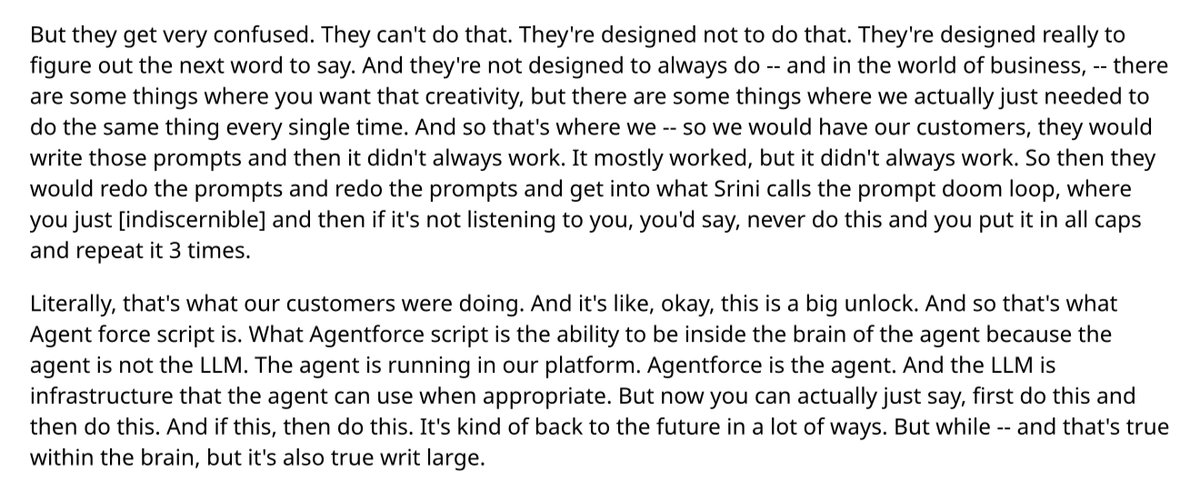
$CRM talks about how there is a "Prompt Doom Loop" where it just doesn't listen to you.
AgentForce runs agents that use LLMs, but wrap it in business logic.
If you are running a refund on an LLM, then the model is basically guessing at whether to refund the customer and the refund amount.
It may be pretty accurate, but it isn't near a 100%.
Instead AgentForce using Atlas Reasoning Enginge (powered by Anthropic, OpenAI, or Google models) to create business logic to execute a function.
So the LLM can interpret what the customer wants and the Agent layer executes deterministic business logic.
For example:
1) Is the customer requesting a refund in the allowable 30 day window?
2) What is the refund amount?
Then the agent can check that the item was sold in the past 17 days and the refund amount is $45.50 and issue it.
If you used an LLM for this, it is basically "guessing" both questions and can get it wrong.
LLMs are probabilistic and certain actions you want to be deterministic.
The agent layer incorporates the intepretation from the LLM and can act deterministically.
Importantly, Salesforce can orchestrate between different LLMs, so if one is better for a task then another, they can swap that in as the "brain".

English

@Greenbackd That’s a very favorable starting point for this comparison
English

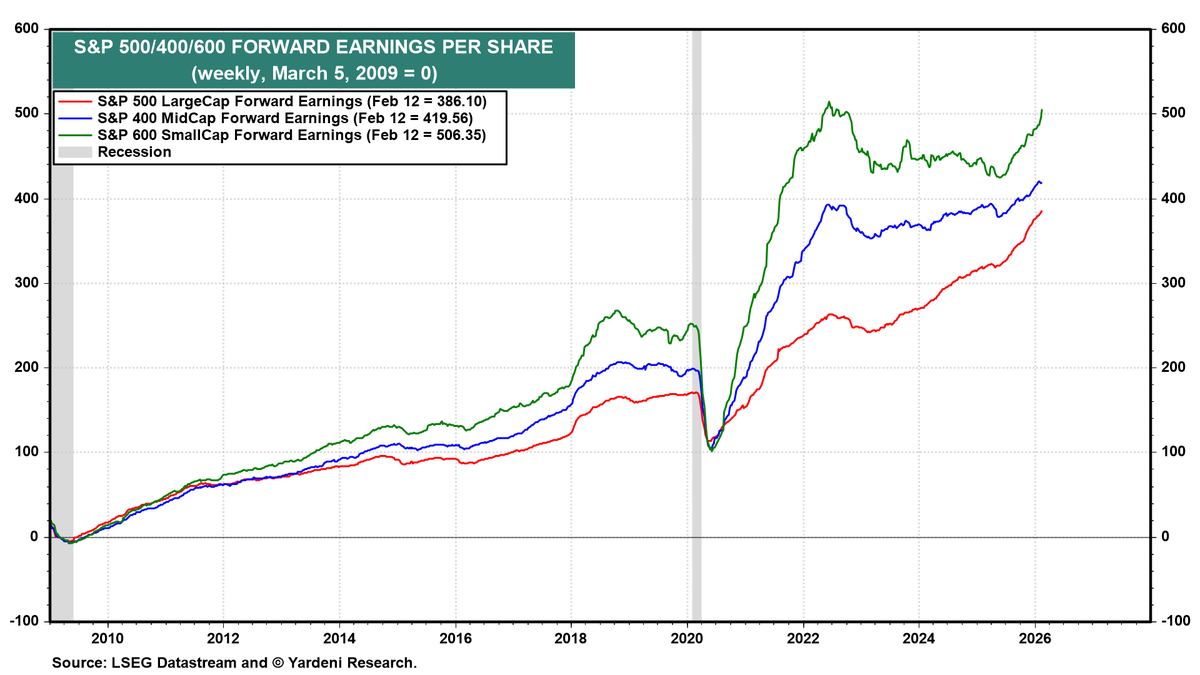
Small caps (green, S&P 600) have delivered the strongest cumulative forward earnings growth since 2009. Mid caps (blue, S&P 400) were second.
After peaking in 2022, small caps fell meaningfully and mid caps corrected moderately due to rising rates and post-COVID malaise.
Forward earnings are now making new highs in mid caps and breaking out in small caps.
The common narrative that “small caps are structurally broken” is not supported by earnings data. The underperformance has largely been multiple compression, not earnings collapse.
Small/mid earnings have higher sensitivity to economic recovery, larger margin expansion potential and faster growth off low bases.
If:
* ISM > 50
* Credit stress stabilizes
* Rates plateau
Then earnings acceleration historically supports small/mid leadership.

English
TKFinancial retweetledi

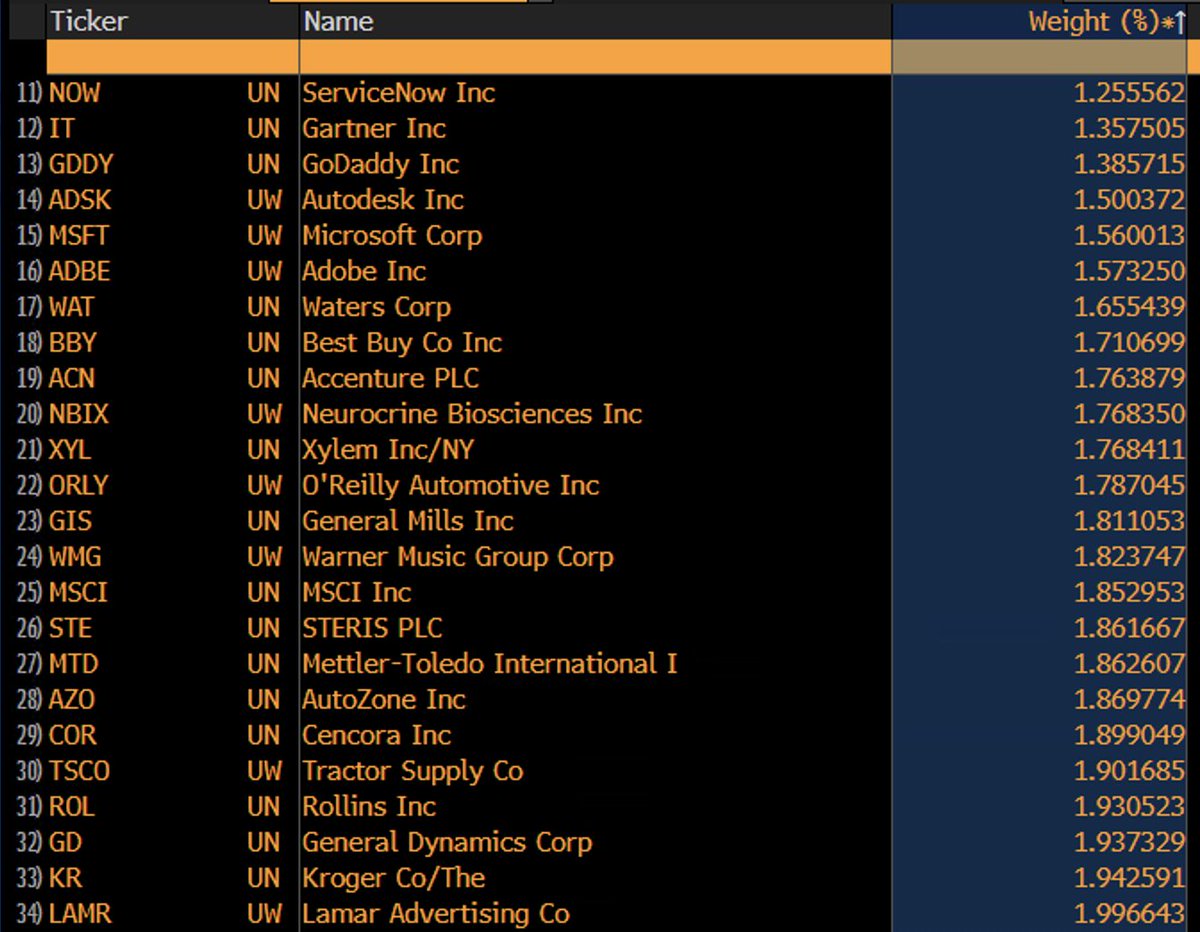
Ngl I starting to think that some of these pricing power companies* are going to come out ok
* From the Bloomberg Pricing Power Index BPPUST Index <GO>, created by yours truly.
bloomberg.com/professional/i…

English
TKFinancial retweetledi
Great question in the tweet below👇🏼. it used to be table stakes to have read a few of the investment canons. It has now become an advantage as most don't read anymore. Or they ask their algos for the TLDR. Competitively, it is a real blessing. Neo-boomers like me, who were trained in the Analog, will have an advantage, especially in the age of AI. Many will lose money, lots of it, mostly because they did not read a $20 book.
But for the youngins that do want to survive and thrive in the GREATEST game in the world. Below are some book suggestions. It is not an exhaustive list. Those are the ones that resonated with me.
What books should a young analyst read, preferably before they become an analyst? The analyst has to solve a few problems. Will list the problem and what book to read for them.
a) Knowing the historical context of our business. History often rhymes, sometimes repeats and then melds/has sex with the idiosyncrasies of the current moment. You therefore need to know the history of our business. "More Money Than God" and "The Power Law", both masterful, both written by @scmallaby. Lowenstein's "Buffett: Making of An American Capitalist" and Schroeder's "Snowball". "Reminiscences of a Stock Operator", by Lefevre, the annotated version where Paul Tudor Jones writes the introduction, fucking chef's kiss.
b) Most analyst dont understand fuck all about what it takes to run a business or compete as a business. A lof of business practices dont show up in a model, a 10k or transcript. Analysts are mostly desk jockeys and usually could not operate themselves out of a paper bag. Reading biographies of great CEOs help here, though often these CEOs dont really disclose how predatory they were and the extent they were willing to go to to crush their competitors. You have to read between the lines here. The Buffett aphorism of "I am a better businessman because I am an investor and a better investor because I am a businessman" is really important to understand. Some faves: Chernow's "Titan: The Life of John D. Rockefeller, Sr." Willis Johnson's "From Junk to Gold", the dude moved his family to a fucking junk yard, my kind of CEO. Sam Walton's "Made in America". Jeff Bezos shareholder letters for AMZN. "Working Backwards" on Amazon (chapters on hiring and the memo process are priceless). "The Hard Things Hard Things" by @bhorowitz. Brad Stone's "The Everything Store" and "The Upstarts". "High Output Management" and "Only The Paranoid Survive" by Andy Grove. (advice: get your ass in the field, talking to customers, management and learn from them, observe business competing, try the products).
c) Understand value principles and how to apply them. Though there are close to 4k books on value investing on amazon, the principles are few and timeless. The concept of value, margin of safety, moats and economic castles, mental models, rule#1/rule#2, opportunity costs, inversion, ect... "Poor Charlie's Almanach", "Letters of Warren Buffett", Chapter 8 and 20 in "Intelligent Investor"
d) Knowing what is priced into a security. Only one book does that masterfully and is, in my opinion, priceless: "Expectations Investing" by Al Rapparport and @mjmauboussin. Coming from the gambling world, it was possible for me to look at a poker hand or a backgammon position, ect... and determine what odds were priced in. How do you do that with stocks? This book gives you a method. Its not perfect, but its very very very good.
e) Understanding networks, regime changes, systems thinking and complexity. Analysts tend to be deconstructionists, whereas great judgment is most likely synthesis. Also, modern businesses that are internet enabled behave like networks. Networks are often counterintuitive. The books I like here are "Age of the Unthinkable" and "The Seventh Sense" by Joshua Cooper Ramo. "Complexity" by Mitch Waldrop. "Thinking in Systems" by Donella Meadows. "Steps to an Ecology of Mind" by Gregory Bateson (a bit dense but Super). Ken Wilber's masterpiece "Sex, Ecology, Spirituality: The Spirit of Evolution", though it took me at least 3 reads to understand it, lol.
f) Understanding organizational failure. How businesses fail is really interesting. Helps for short side. "Military Misfortunes: The Anatomy of Failure in War" by Cohen. Gonzalez's "Survival", "Innovator's Dilemna" by Christensen.
g) Thinking strategically. If you really understand Buffett's "moats and economic castles", it is really all that you need. Porter's barriers to entry too. Sadly, it is difficult to do. So you have to study classic strategy tomes. Sun Tzu's "Art of War", specifically the Roger Ames translation, a PRICELESS book. Machiavelli's "The Prince" and "Discourses on Livy". Meir Finkel's "On Flexibility". How do business apply the principles in these books to compete?
h) Understanding predator/prey dynamics. A very underappreciated element of business and investing. "From Predators to Icons" by Villette. The essays "How David Beats Goliath" and "The Sure Thing" by Malcom Gladwell in the New Yorker.
i) Knowing the right stock selection criteria. Important to apply value principles, of course. But just looking for quality, cheapness, great management, isnt enough today. Too many REALLY smart people do that. Tthere are other criteria that drive great investments. "One Up On Wall Street" by Peter Lynch. "You Can Be A Stock Market Genius" by Joel Greenblatt.
j) Time management, self management and energy management. "The Power of Full Engagement" by Jim Loehr (book first recommended to me by @GrahamDuncanNYC, it changed my life). books by @tferriss, all of them. Understanding how @elonmusk, perceives and manages time is very important. Get your hands on Eben Pagan's "Wake Up Productive" time management program too.
k) Psychology and group behavior. Reading behavioral finance isnt helpful for young analysts. Thats more about individual behavior. Its better for young analysts to understand how to offensively exploit group behavior. Understanding Buffett's institutional imperative principle, evolutionary psychology, ecology and the madness or wisdom of crowds is more useful here. See e) suggestions as they are also helpful for understanding group behavior.
And last l) philosophy. It is possible to have a philosophical advantage in investing. Peter Thiel, George Soros and Bill Miller have all mentioned the impact on philosophy on their performance as investors. The kind of philosophy I like is a comparative one that analyzes the difference between Chinese philosophy and Western philosophy. “Treatise on Efficacy”, “The Geography of Thought” are faves here.
I know I overloaded you but there is no such thing as just one book. You gotta read many to be wise. We are
Happy hunting!
VIL@VeeEyeEll
What books do you tell a junior analyst to read when they’re just starting in their role?
English
TKFinancial retweetledi