Tony Teso

6K posts

Tony Teso

Tony Teso

@tonyteso

Camas

Camas, WA Katılım Nisan 2009
1.1K Takip Edilen191 Takipçiler
Sabitlenmiş Tweet
Tony Teso
Tony Teso@tonyteso·
@PortlandDSA A Word in Search of Its Class What DSA Has Meant by Socialism.docx
English
0
0
0
203
Mr. Dachshund
Mr. Dachshund@obus_r·
Let’s be even more frank and precise. Obviously they did discuss it. Grace raised it, and in fact, expressed a begrudging inclination to do it. Gustavo said: kowtow to my old caucus-mates? Who made me feel soo emasculated last summer? Fuck nah! So they didn’t. Now we’re here
James🔻@GoodVibePolitik

This is a bold lie of omission. DSA National didn’t endorse Zohran because the local chapter (NYC) never thought to fill out the paperwork for national endorsement. They have done this on multiple occasions especially since the NPC tried to hold AOC to commitments on Palestine.

English
2
3
29
2.4K
Connor
Connor@alsoconnor·
People talking about a DSA “split” again. Same noise as usual. Everything is going according to the plan. DSA candidates keep winning. Centrist Democrats now openly talking about how to ban or kick socialists out. The Dirty Break is well on track. “The situation is excellent.”
English
2
1
48
1.1K
Looking for Birds
Looking for Birds@zwstein·
As things stand, AOC is going to get endorsed by dsa if she doesn’t violate her commitments on Palestine. I had no idea anyone seriously thought that august 2027 was too late for that until like 5 days ago. People really need to take a deep breath
welcome to our trash revolution@trash_panda97

in all seriousness, this insane factional mudslinging over whether to do one big nonbinding poll or a bunch of chapter ones is incredibly depressing. i’m begging everyone to take a step back and ask yourself if this is the kind of organization you want to build. is it worth it?

English
4
3
40
1.9K
Aspen🌹🏴
Aspen🌹🏴@Aspen1921·
DSA's tent is not, and has not been for quite a while, big enough for anti-communists
English
29
52
1.2K
24.8K
DSA Communist Caucus ♠️
DSA Communist Caucus ♠️@DSACommunists·
Too many hours of debate center around who can produce the best statement to impress their followers on social media, rather than what strategies & tactics are needed to organize a working class capable of defeating bosses & landlords. Three years on, this essay remains relevant:
DSA Communist Caucus ♠️ tweet media
Alex Colston@enoughformethx

Every time I want to get more involved with DSA, I encounter elements of the internal reasoning by people in charge of organizational decisions and it’s so involuted and gnomic that I reconsider


English
2
11
86
3.6K
Tony Teso
Tony Teso@tonyteso·
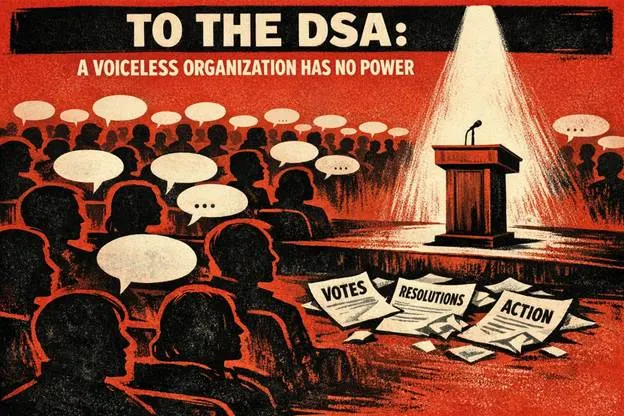
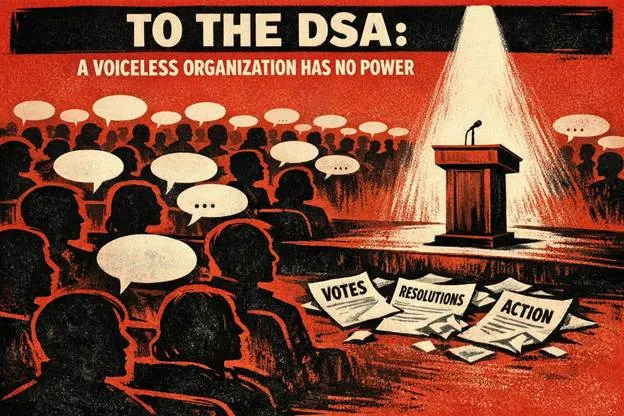
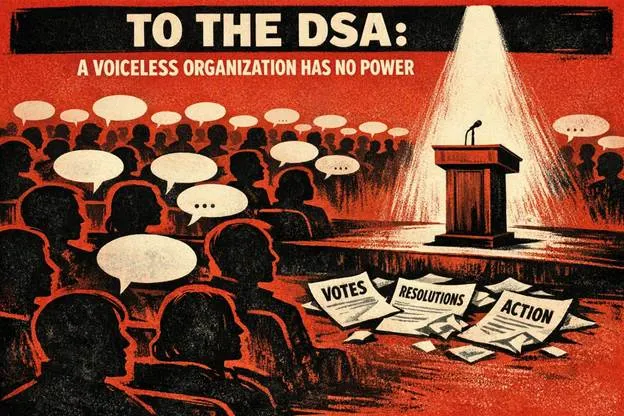
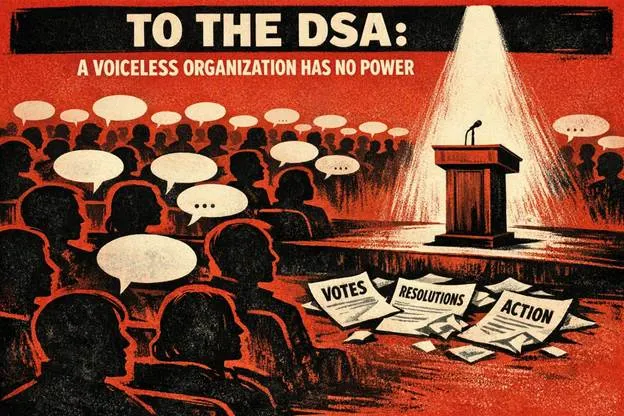
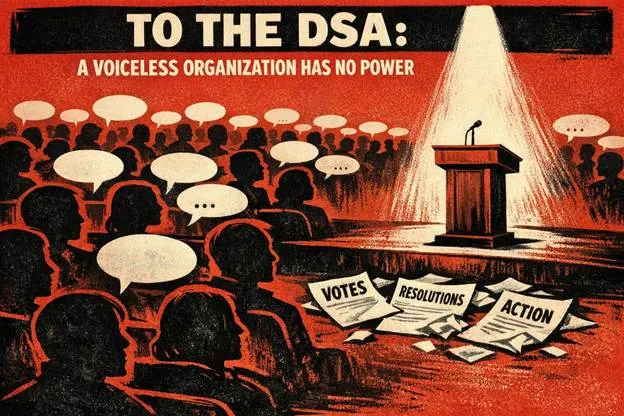
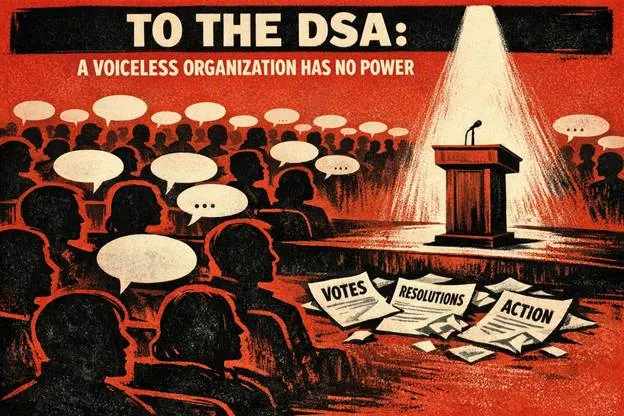
ideas, The DSA has remained as open and diverse as it was in 2016, but internal debates have gotten ahead of the DSA’s ability to follow through on planned action. Currently, open factionalism, public disagreement after votes, and caucuses campaigning against decisions in their publications mean that every national decision is debated over and over. For example, last year, after the NPC endorsed the Statewide Tenant Defense campaign, several major caucuses in the Democratic Left quickly published statements opposing it. The Green New Deal for Public Schools endorsement also faced public criticism from organized caucuses on social media just days after it passed at the convention. This pattern, where a resolution passes only to face public challenges, undermines genuine democracy. Instead, it leads to gridlock. Democratic centralism addresses this issue: debate is genuine and can be intense, but once the NPC or convention votes, the organization acts as one. Members who disagreed still had their chance to argue their case, but they did not have the opportunity to undermine the decision afterward. Discipline is what makes political power legible and understandable. Discipline helps outsiders understand and trust political power. Elected officials, coalition partners, and union allies need to know that when DSA’s national leadership makes a commitment—whether it’s a legislative priority, an electoral endorsement, or a strike solidarity campaign—that promise will be kept. Currently, DSA frequently sends conflicting signals, with one caucus’s national statement often contradicting another chapter’s message just days later. This confusion has already caused problems. For example, in the 2022 housing justice coalition, some partner organizations hesitated to support DSA’s legislative push after seeing public disagreements among DSA chapters. They worried that support from DSA’s leadership would not lead to steady cooperation on the ground. Every union and elected official wants a long-term partnership with a group whose leadership can speak for it. Centralism is not about shutting down debate; it is about making the organization dependable. I have been concerned about it for decades. By “entryism loophole,” I mean the risk that a well-organized minority or outside group can enter a loosely structured organization and, through internal discipline and coordination, steer results in their favor without necessarily expressing the membership’s broader will. The old constitutional ban on democratic-centralist organizations existed precisely because tightly disciplined blocs can outmaneuver a loosely organized mass membership in floor votes, committee seats, and slate elections, not by winning the argument but by simply out-organizing everyone else through coordinated turnout. If disciplined caucuses are going to operate inside DSA regardless (which the 2025 repeal debate itself acknowledged; they already do), the honest move is to formalize the same standard for the whole organization rather than leave everyone else fighting a coordinated bloc with an every-member-for-themselves structure. Universal centralism creates a more equitable environment rather than favoring the faction best at informal discipline. There is a clear precedent: large socialist and labor organizations that created lasting power used centralist or semi-centralist discipline. Industrial unions have binding strike votes, European labor and socialist parties use whip systems, and disciplined parties follow similar patterns. Groups that turn internal democracy into real power need a way to ensure the minority follows the majority’s decisions between meetings. DSA’s current system, with conventions every two years and unlimited dissent in between, is more like a debating club than a party capable of carrying out a long-term plan. The version to support would make only NPC-level political positions and major convention resolutions—like electoral endorsements, strike solidarity, and coalition commitments—binding. It would not apply to internal culture, caucus organizing, or the right to campaign for change before the next vote. These boundaries would be clearly enforced. Members could still debate, dissent, and mobilize for future policy change so long as they respect decisions already made and don’t publicly undermine them. Enforcement would focus only on authorized communications and representation. Members and caucuses could still debate, organize, and suggest new positions internally and make their case for future changes before the next vote. This is the difference between disciplined action and thought-policing, and it is the approach most successful socialist and labor organizations use. It is important to note the arguments against this approach, as it is currently a topic of debate within DSA. Critics say that democratic centralism is a tool that disciplined minority groups use to take over organizations that are supposed to be run by the majority. They argue that binding votes benefit those who attend low-turnout NPC and committee meetings, rather than reflecting the will of most members. There is also a real concern that stopping public disagreement after votes removes the accountability that keeps leaders responsive between conventions. Some believe that DSA’s main strength, attracting people by allowing open ideological diversity, would be undermined. Some argue that centralism would undermine DSA’s main strength, its ability to attract people through open ideological diversity. under centralism. These are valid criticisms, and any proposal should directly address them. To prevent minority domination, regulations such as transparent vote counting, periodic reporting to members, and higher quorum requirements for important decisions can be adopted. Proposals for centralism may also provide that only decisions of fully representative bodies, such as national conventions or votes of all members, are binding. But there would still be room for internal debate and organizing to hold leaders accountable, as well as formal mechanisms to recall or challenge leaders between conventions. In this context, centralism does not mean imposing uniformity of thought on everyone; it means engaging in collective action based on democratically chosen priorities. Members would still be able to organize, propose new ideas, and campaign for change within the group. The DSA thus preserves the open, pluralist character of internal debate, while presenting a united front to the wider world. Subscribe to Eyes of Production By Anthony Teso · Launched 9 months ago My personal Substack investigating the juncture of capital and society
Tony Teso tweet media
English
0
0
0
72
Rebel Alliance Gerrerist Caucus
You heard it here first comrades! There is no distinction whatsoever between paper members and Members in Good Standing. Really cool to read this on the heels of others implicitly declaring that Convention has no right to make decisions on behalf of the members who elected it!
Joe Wrote@joewrote

I'm uncomfortable with the language implying that some DSA members are lesser than others. We don't have "paper members." We don't have non-voting members. We have members. It doesn't matter if a member shows up to one meeting or every one. If they're a member, they're equal.

English
2
0
19
1.5K
slätt
slätt@slattymattyy·
So then why are you afraid of convention?
English
1
0
26
1.2K
Tony Teso
Tony Teso@tonyteso·
The fight inside DSA over the NPC’s presidential endorsement process is an argument for democratic centralism. But not the fake kind where leadership decides, members comply, and everyone calls it Leninism. That is just bureaucracy with better branding. Democratic centralism means open debate. A clear and legitimate decision. Then unity in carrying it out. DSA often has the first without the second—or the second without enough of the first. Right now, the real question is not whether members should obey an endorsement decision. There is no endorsement decision yet. The question is, who gets to make it? The convention claims to be DSA’s highest body. The NPC claims authority between conventions. Chapters claim to be the real centers of member deliberation. Referendum supporters say the membership itself should decide. That is not a minor procedural dispute. It is a struggle over sovereignty inside the organization. Democratic centralism cannot work when nobody knows where democratic authority actually resides. Who decides? By what procedure? Under what mandate? Until those questions are answered, calls for “unity” are mostly demands that somebody else shut up. DSA cannot remain a loose federation forever. A serious socialist organization must be able to make binding decisions, commit resources, coordinate chapters, discipline public representatives, and hold endorsed candidates accountable. Otherwise, it is not a party in formation. It is a coalition of newsletters. But discipline is only legitimate after democracy has happened. A 14–13 leadership vote behind procedural fog does not magically become the “collective will.” A narrow majority can make a valid decision. It cannot manufacture legitimacy by avoiding the membership. On the other hand, a quick online poll is not automatically democracy either. Clicking a box after reading a few factional posts is not collective political formation. That is plebiscitary consumer politics with a red logo. The answer is not leadership rule versus internet polling. The answer is organized political debate chapter meetings. National forums. Candidate questioning. Clear arguments for and against. Then a binding membership vote or a specially elected delegate conference. Once that process produces a decision, the NPC should carry it out. Not reinterpret it. Not delay it. Don't hide behind procedure. Not quietly substitute its own judgment for the mandate it was elected to implement. Minorities should retain the right to criticize the decision. But they should not be allowed to use DSA’s name, money, staff, or infrastructure to sabotage it. Freedom of discussion does not mean freedom from collective obligation. That is the real meaning of “freedom of discussion, unity in action.”
English
1
0
0
16
Cosmonaut Star💫🏴🔻
Cosmonaut Star💫🏴🔻@Solidarity_Star·
I don’t want DSA to split, and I think endorsing AOC is our best bet to avoiding one. But I also think there is a strong danger to associating our brand too closely to AOC. If she tries to play nice with the political establishment as President, they will sink her and us as well.
English
21
8
172
7.3K