TopologicApple

31.3K posts

TopologicApple banner
TopologicApple

TopologicApple

@topologic_apple

Freedom, science, health and Bitcoin 🇺🇸 Libertad, ciencia, salud y Bitcoin 🇪🇦

The future. Katılım Kasım 2016
986 Takip Edilen2.9K Takipçiler
Sabitlenmiş Tweet
TopologicApple
TopologicApple@topologic_apple·
Hilo de memes.
TopologicApple tweet media
Español
25
52
144
42.3K
Hunter Ash
Hunter Ash@ArtemisConsort·
Today is my 33rd birthday.
English
163
5
802
12.1K
Math Files
Math Files@Math_files·
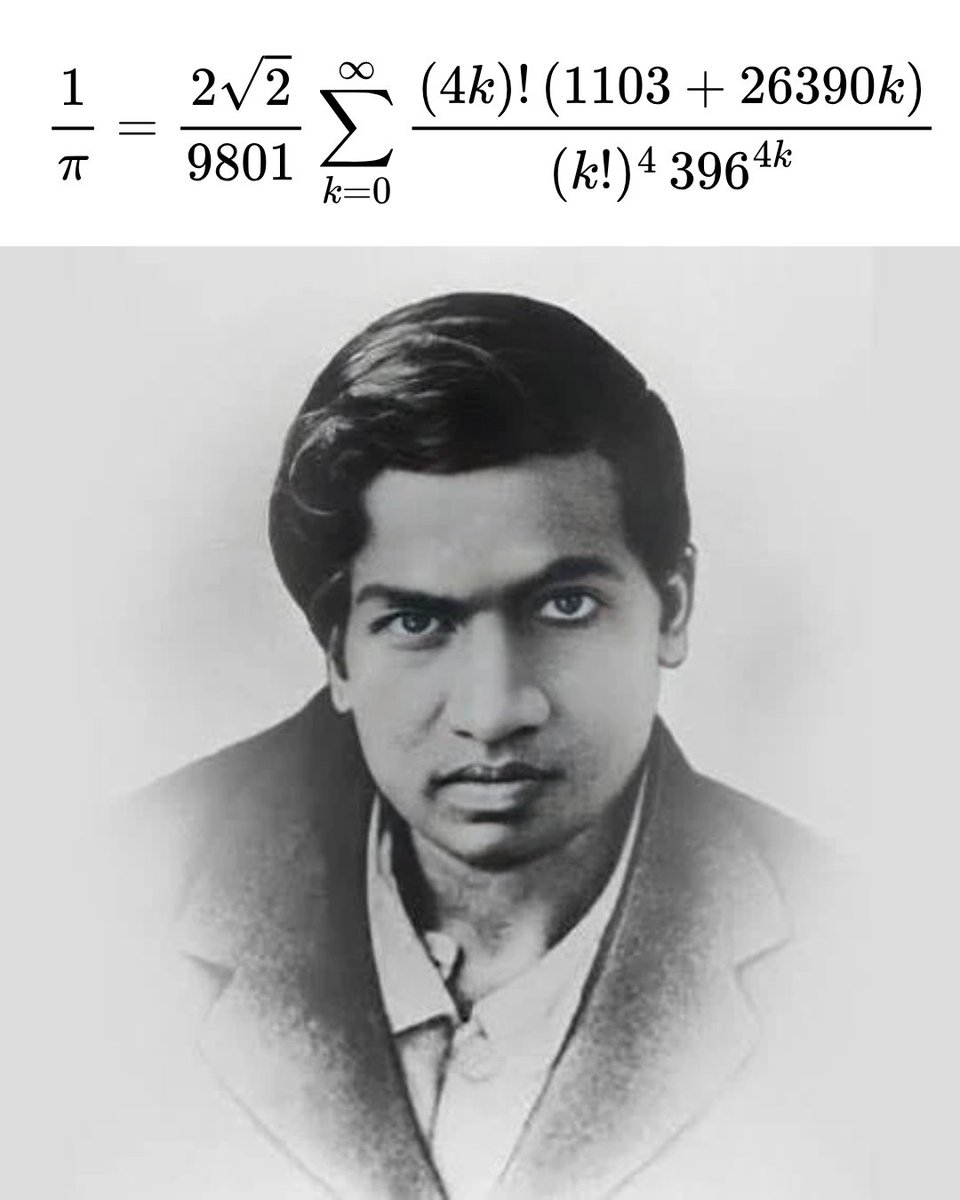
Ramanujan’s formula for π gives an extremely accurate value of π—correct to about six decimal places even when only the first term of the series is used. Remarkably, this single term is accurate enough to calculate the circumference of the Earth with a maximum error of only about 1 meter. It is interesting to note that while Srinivasa Ramanujan’s formula reaches this accuracy with just one term, the famous Gottfried Wilhelm Leibniz series for π requires around five million terms to achieve the same precision. Each additional term in Ramanujan’s series improves the value of π by about eight more decimal places, making it one of the most powerful formulas ever discovered for computing π. The formula itself is based on the infinite series, although the formula works perfectly for calculating π, mathematicians long wondered how Ramanujan discovered such unusual numbers—like 9801 and 1103—that appear in it. Even today, the depth of intuition behind Ramanujan’s discoveries continues to fascinate mathematicians around the world.
Math Files tweet media
English
32
141
762
35.3K
TopologicApple
TopologicApple@topologic_apple·
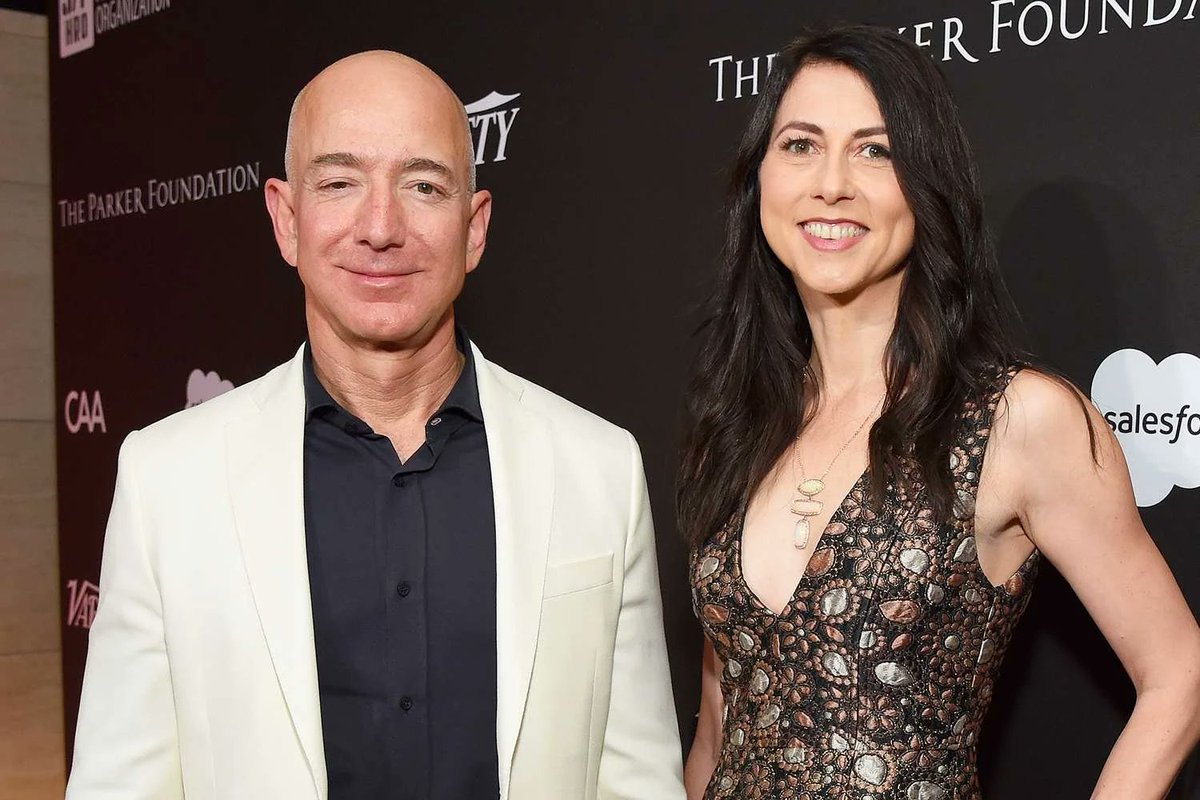
@ankorinclan MacKenzie Scott es uno de los peores enemigos de la sociedad. Tpica mujer divorciada de millonario, que se dedica a financiar organizaciones y politicos woke que hacen un daño enorme. Quien realmente ha mejorado la vida de la gente es Jeff Bezos. Yo no se que haria sin Amazon.
Español
25
2
25
2.8K
Ankor Inclán
Ankor Inclán@ankorinclan·
Cuando MacKenzie Scott salió de su divorcio con Jeff Bezos en 2019, recibió una participación en Amazon valorada entonces en unos 36.000 millones de dólares. El mundo esperaba lo de siempre. Que desapareciera en una vida de lujo. Que creara una gran fundación con su nombre grabado en edificios. O que construyera su propio imperio mediático. Pero hizo algo completamente distinto. Empezó a regalar el dinero. No con grandes eventos ni campañas de imagen. Sin galas, sin placas con su nombre en letras doradas, sin discursos interminables. Su equipo comenzó a investigar organizaciones pequeñas que hacían un trabajo extraordinario pero sobrevivían siempre al límite. Un banco de alimentos que llevaba décadas ayudando a su comunidad. Un hospital rural con equipos antiguos. Un programa que ayudaba a personas que habían salido de prisión a encontrar trabajo. Cuando encontraban una organización así, llegaba un mensaje inesperado. “Hemos observado su trabajo. Creemos en lo que hacen. Queremos ayudar.” Y después, algo aún más inesperado. Millones de dólares. Sin condiciones. Sin restricciones. Sin decirles exactamente en qué debían gastarlo. Muchos directores de esas organizaciones contaron después que cuando recibieron la noticia ni siquiera podían hablar. Algunos tuvieron que parar la reunión porque estaban llorando. Los efectos fueron inmediatos. Hospitales infantiles pudieron ampliar sus servicios de salud mental. Universidades históricamente olvidadas recibieron financiación transformadora. Bancos de alimentos que vivían siempre al límite pudieron por fin responder a todas las familias que llegaban a pedir ayuda. Luego llegó el año 2020. Mientras gran parte del mundo atravesaba una crisis enorme, MacKenzie Scott aceleró aún más el ritmo de sus donaciones. Miles de millones de dólares llegaron a refugios para víctimas de violencia doméstica, organizaciones comunitarias y programas que sostenían a las personas cuando todo parecía venirse abajo. Lo más curioso es que ni siquiera organizaba ruedas de prensa. Publicaba textos sencillos explicando quién había recibido dinero y por qué. Nada más. Y aun así, había algo todavía más sorprendente. Incluso después de donar más de 26.000 millones de dólares, su fortuna siguió creciendo durante años. El valor de sus acciones subía tan rápido que, por momentos, parecía casi imposible desprenderse del dinero al ritmo que ella quería. Era como intentar vaciar un océano con un cubo. Pero siguió haciéndolo. Año tras año, organizaciones que nunca habían imaginado recibir apoyo de una gran fortuna empezaron a transformar sus comunidades: pequeñas universidades que pudieron ofrecer becas, refugios que se convirtieron en centros comunitarios, programas que ayudaban a refugiados a empezar una nueva vida. Miles de vidas cambiaron. Y muchas de esas personas ni siquiera saben quién es MacKenzie Scott. Mientras otros multimillonarios construyen cohetes o levantan monumentos con su nombre, ella eligió algo mucho más silencioso. Mirar una fortuna inimaginable… y hacerse una sola pregunta: ¿Quién necesita esto más que yo? Y después, simplemente entregarlo.
Ankor Inclán tweet media
Español
354
1.8K
9.6K
1.4M
TopologicApple
TopologicApple@topologic_apple·
@udiWertheimer @saylor In a worst case scenario, Microstrategy can stop paying the preferreds dividend and sit in their ass and wait for as long as needed until Bitcoin appreciates again. Yes the price of STRC would collapse, but they are not forced to sell any Bitcoin even in a worst case.
English
1
0
0
342
Udi Wertheimer
Udi Wertheimer@udiWertheimer·
this can work for a while and i bet it will, which is why i’m bullish MSTR and STRC for now, but fundamentally this breaks on step 2: STRC isn’t “overcollateralized” because Strategy has more BTC than it could ever liquidate. the capital is illiquid. you guys own 3% of the bitcoin supply, you can never liquidate that much, so it’s not good collateral. as you issue more STRC it effectively becomes even less collateralized, and eventually everything breaks but there’s time until that happens so for now it’s bullish :)
English
28
2
145
13.6K
Michael Saylor
Michael Saylor@saylor·
A Simple Theory of Digital Credit: 1. Acquire a large pool of appreciating capital ($BTC). 2. Issue credit ($STRC) against that capital, overcollateralized by the equity base. 3. Monetize a portion of the appreciation—directly or via derivatives ($MSTR)—to fund the dividend.
English
749
1.1K
10.1K
657.8K
Mihura
Mihura@XMihura·
estoy en Davos con tres amigos españoles del grado entre los 4 acumulamos fácil 60 matrículas de honor en el grado de Física, probablemente más ninguno vive en España... Londres, Polonia, yo en suiza y otro en Catalunya para pensar
Español
186
20
602
136.9K
Hunter Ash
Hunter Ash@ArtemisConsort·
I used to be progressive. So much of my worldview has completely inverted. But one thing has held constant: I hate liars and frauds, especially those that prey on desperate sick people. I hate pseudoscience. Functional medicine is fake. Homeopathy is fake. Most of nutrition science is fake. Your favorite health influencer is probably fake. When you tell people this, the response is often something analogous to “well what diet do YOU recommend to cure my autism then?” But the fact is we just don’t know a lot about certain things. The lack of a strong alternative model is not a good reason to believe in obviously false models. Sometimes, often, the answer is “we just don’t know how to do that, and anyone telling you otherwise is some combination of lazy and dishonest”
Crémieux@cremieuxrecueil

What's the steelman for using my tax dollars to pay fake doctors to give people fake medicine that doesn't help them?

English
46
52
1.1K
62.6K
TopologicApple
TopologicApple@topologic_apple·
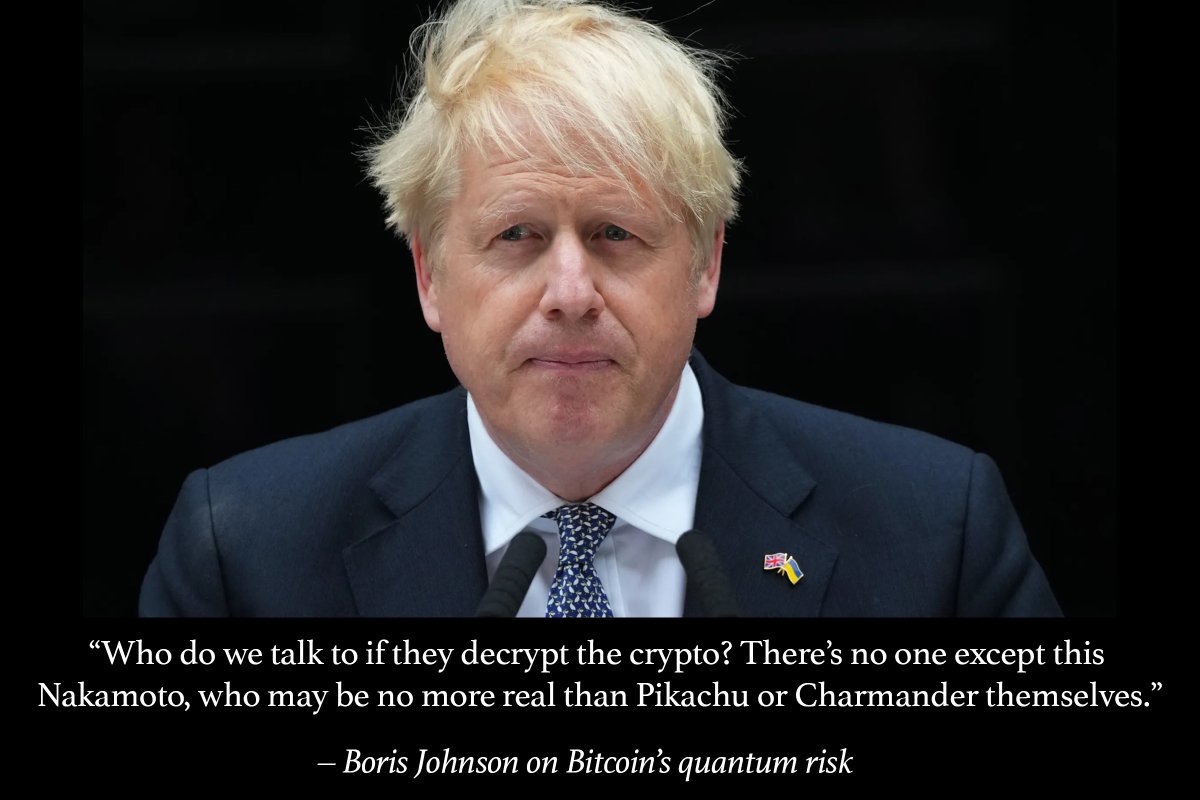
@nic_carter I just read the Boris Bitcoin article and he says nothing sophisticated at all. The article is idiotic and only shows a total lack of understanding of Bitcoin. He takes its strengths as weaknesses. 100% retarded.
English
0
2
7
305
nic carter
nic carter@nic_carter·
boris, not known for his cryptographic expertise, is actually offering a sophisticated critique of bitcoin core and their lack of urgency regarding the pending obsolescence of elliptic curves. his reference to satoshi here is actually an acknowledgement of the 1.7m p2pk coins that are permanently exposed to an ECC break. and I believe "Charmander" is a veiled endorsement of lattice rather than hash-based post quantum cryptographic schemes
nic carter tweet media
Boris Johnson@BorisJohnson

I've long suspected Bitcoin is a giant Ponzi scheme and now I'm hearing tales of woe that make me fear I'm right. mol.im/a/15643681

English
48
2
170
40.3K
TopologicApple
TopologicApple@topologic_apple·
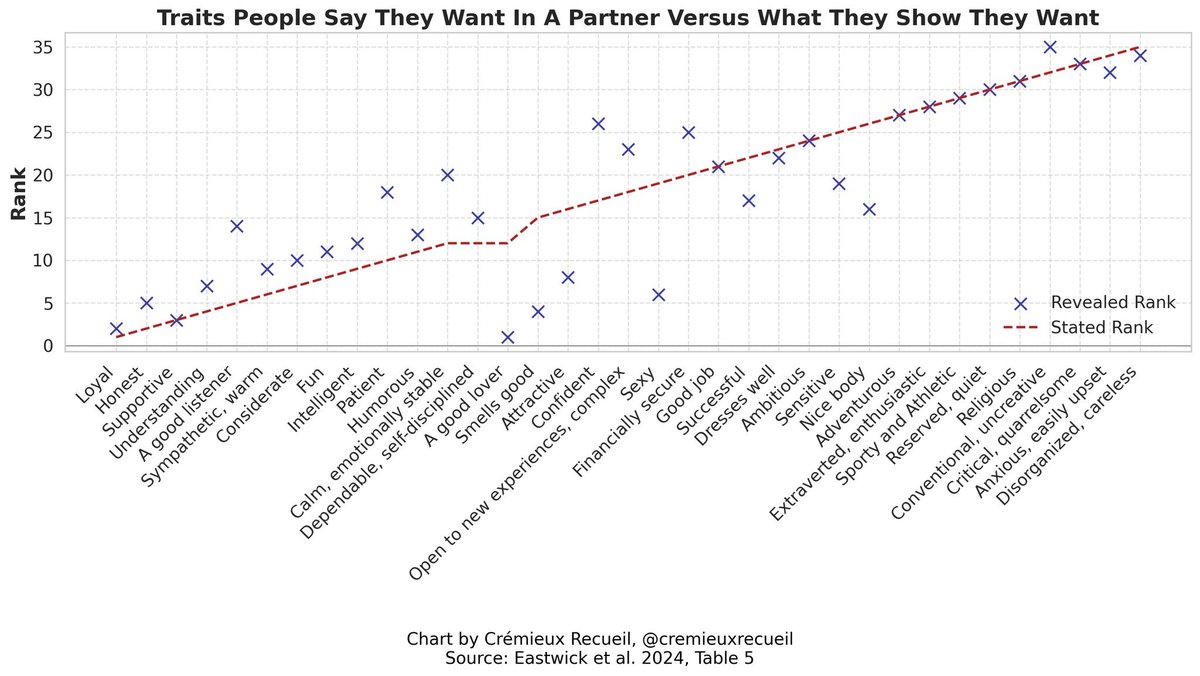
@cremieuxrecueil The most desirable traits in a partner: - they adore you - they have a genuine desire to serve you and submit to you - they are positive, helpful, happy - they are competent, resourceful and smart - they are really good at sex - they are hooot Yeah I have it so good.
English
0
2
15
2.1K
TopologicApple
TopologicApple@topologic_apple·
@ArtemisConsort There is the issue of the greater common good. But there is also the questionable morality of forcing some people to finance charity projects for other people, such as Medicaid. I have nothing against charity, but I think it should be voluntary, not mandatory.
English
0
0
2
262
Hunter Ash
Hunter Ash@ArtemisConsort·
I find the show “My 600lb Life” fascinating, but I can’t stop thinking about the insane costs these people impose on society while, in most cases, providing absolutely nothing of value to others. Very few of these people have jobs. Most are on Medicaid, meaning that all the surgeries, the often months-long hospital stays, the mental and physical therapy, is provided by the taxpayer. And in many cases their food, the cause of the problem, is also subsidized by the taxpayer. Often, the best-case outcome is that they’ll finally be able to work a low-income job. The taxes they pay doing this will never come close to mitigating the cost of their treatment. And of course, as it says in the show’s intro, less than 5% succeed in keeping the weight off long term. Perhaps it seems heartless to think this way. But we have to. Every financially net-negative person is subsidized by net-positive people. And if the parasitic burden becomes too great, the whole system on which we all depend will collapse. Being calculating is the more deeply compassionate position because it’s how you actually ensure the most possible good. Throwing infinite money into a pit because of your emotions is profoundly selfish. You’re too lazy to do the hard work of thinking about what’s sustainable, what helps the most people. You just want to feel good.
English
90
45
1.1K
39K
TopologicApple
TopologicApple@topologic_apple·
@pitiklinov La evolucion arreglara el problema de la natalidad. La evolucion arregla todos los problemas, solo hay que darle tiempo.
Español
0
0
3
104
Pablo Malo
Pablo Malo@pitiklinov·
Rob Henderson argumenta aquí que la caída de las tasas de natalidad en los países ricos no se debe principalmente a costos económicos, sino a presiones sociales y de estatus impulsadas por las élites culturales. El verdadero obstáculo para tener hijos hoy día es social, no material. Las necesidades básicas (comida, vivienda, amor) no han cambiado drásticamente, pero las expectativas de lo que significa ser un "buen padre o madre" se han disparado. En generaciones pasadas, los niños se criaban de forma modesta: habitaciones compartidas, un solo coche, sin actividades extracurriculares interminables ni planificación educativa elitista desde preescolar. Hoy día las normas elitistas exigen cosas como una agenda llena de actividades, deportes de élite, tutores privados, preparación para universidades caras, smartphones, viajes, etc. No cumplir con esto genera sentimientos de fracaso o inadecuación. Las élites con credenciales (académicos, directivos, periodistas, influencers, etc.) suelen ver la baja natalidad como algo positivo: menos presión sobre el planeta, más libertad para las mujeres y mayor autoexpresión. Dice Rob: “El antinatalismo cada vez más parece una creencia de lujo: una idea que otorga estatus a quienes la sostienen, mientras impone costos a aquellos que están más abajo en la escalera socioeconómica. Si la procreación se ha convertido en una competencia de estatus, el movimiento lógico para los que están en la cima es triunfar en ella mientras convencen a los demás de que renuncien.” Según Rob, las élites están protegidas. Si cambian de opinión y quieren tener hijos al final, tienen acceso a congelación de óvulos, tratamientos de fertilidad, niñeras, trabajos flexibles, casas grandes y redes institucionales. La mayoría de las mujeres no cuentan con esas opciones. El resultado final es que las mujeres con dinero y flexibilidad pueden tener tanto familia como estatus mientras que las mujeres sin esos recursos se enfrentan a una elección mucho más difícil. En los países ricos, las tasas de fecundidad están cayendo entre las mujeres más pobres, mientras que las mujeres altamente educadas han estado teniendo más hijos desde 2010. Por eso, las élites con credenciales reciben la caída de las tasas de natalidad con indiferencia o incluso entusiasmo. Su mundo las protege de los costos de las normas que ellas mismas ayudan a crear. En definitiva, los hijos no se han vuelto imposibles de costear sino que las expectativas elitistas han convertido la paternidad en un "proyecto de lujo" en lugar de una etapa normal de la vida.
Rob Henderson@robkhenderson

Alternate link here: wsjfreeexpression.substack.com/p/the-class-wa…

Español
91
622
1.7K
146.5K
TopologicApple
TopologicApple@topologic_apple·
@Raggiomoral Si vives en USA y eres de ese 25% al menos ganas bastante dinero.
Español
0
0
0
58
TopologicApple
TopologicApple@topologic_apple·
@nic_carter Briefly checked who Isabel Foxen Duke is and it looks horrifying. Sociology major pronoun-using grifter, who can't hold a job for more than a few months, mostly selling smoke, with zero technical or scientific background.
English
1
0
0
156
nic carter
nic carter@nic_carter·
Far be it from me to give air to Bitcoin conspiracyslop, but just a couple comments on this Since when do bitcoiners care about the identity or affiliations of BIP developers? Did anyone ask Satoshi his credentials before determining if Bitcoin was worthwhile? One of the most important BIPs in history, BIP148 which led to the activation of Segwit, was written by a developer known simply as Shaolinfry. Did his real world identity - never discovered - matter? As far as BIP360 is concerned, the group has a mix of fantastic technical credentials in Ethan and a clear evidence of determined and persistent Bitcoin advocacy through a number of roles in Isabel - who is a fantastic person by the way. The third author is the pseudonymous Hunter Beast. But the truth is their perceived affiliations or conflicts are utterly irrelevant, the only thing that matters is the quality of the BIP which is of course available for public review. BIP360 is a necessary first step to quantum resistance and does one very simple thing - removes a quantum vulnerability from Taproot addresses. It is part of a series of necessary BIPs required to steel bitcoin against this risk. My guess is the Knots people are upset because they generally lost the battle for influence and because the clear emerging priority is not filters or “spam” but the very real need to find a way to deal with the pending obsolescence of ECC. Thus their petty concerns have been marginalized. The reality is that no one “installed” Isabel or her coauthors - the BIP is just barely making its way into the discussion and has yet to be taken seriously by the Core gatekeepers. Although it should. And as for Isabel’s credentials you couldn’t ask for a better background in terms of navigating a tricky transition that will require a high level of technical expertise as well as an ability to forge social consensus.
Harlan Carradine Investigates ➿@HarlanCarradine

x.com/i/article/2031…

English
38
9
121
35.4K
TopologicApple retweetledi