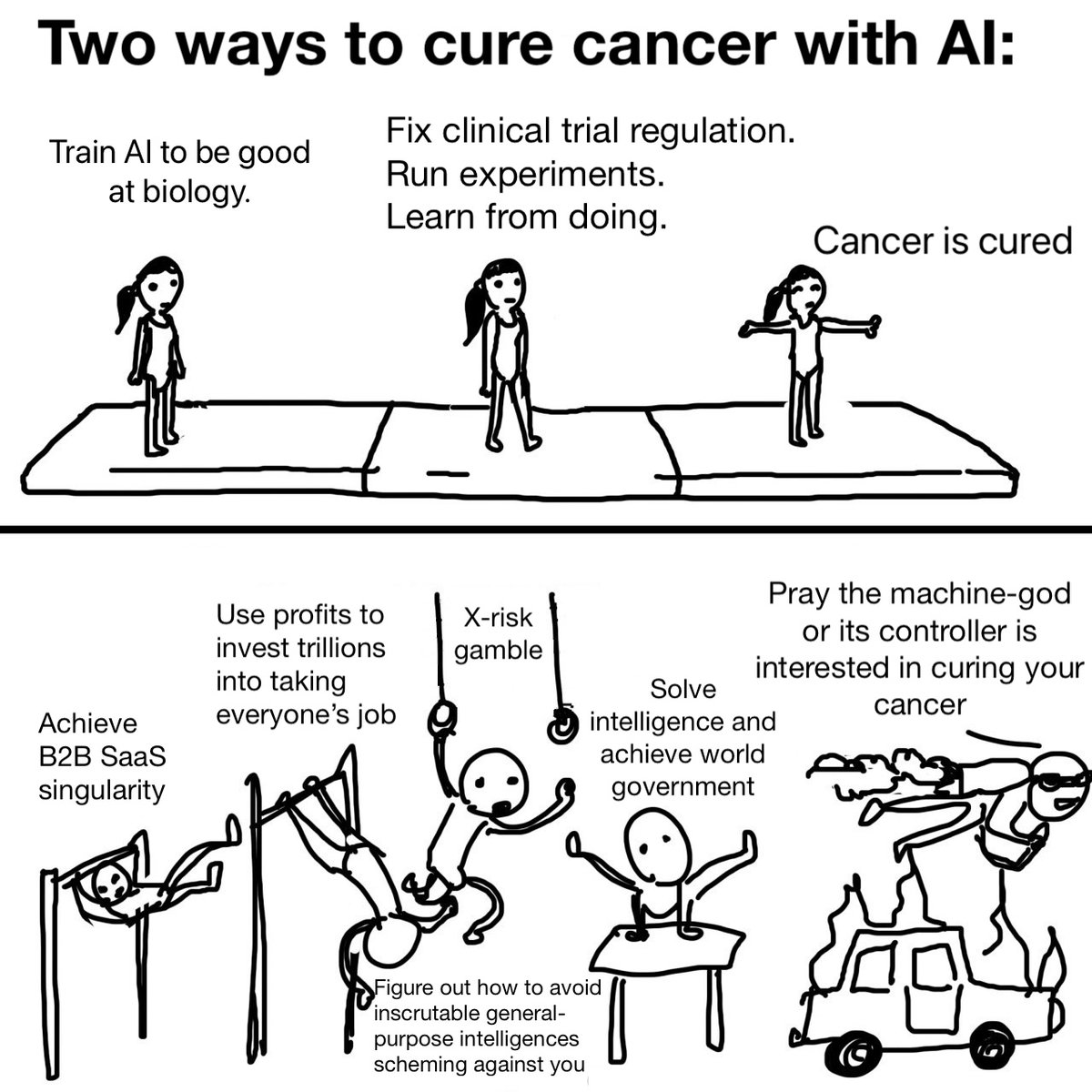
@hamandcheese at first I saw two !-marks and got excited for the possibility of Dan Hendrycks reviewing AI models for the executive branch
English
Travis Bernard
71 posts

@trvb_
Annoying outsider. | Explaining AGI with islands at https://t.co/BLzXMiBKgB | Streaming with creeks at https://t.co/zT8vVgQ22Z

When Claude Mythos found zero-day vulnerabilities in every major operating system and browser, the US government was caught flat-footed. The White House stood up an emergency interagency task force. Treasury pulled bank CEOs into an impromptu meeting. The Cybersecurity and Infrastructure Security Agency (CISA) – the agency charged with protecting US critical infrastructure – and as of late April still reportedly lacked access to Mythos. This kind of surprise is preventable. The Trump admin has already tasked the Center for AI Standards and Innovation (CAISI) with building state capacity to understand and predict future national security-relevant AI developments. But CAISI has been severely underfunded. It’s currently a $15M pilot project. In a new research report, @arthurctellis and I estimate CAISI needs ~$84M to fully deliver on its mandate. In other words, for the cost of a single F-35A fighter jet, the US government could have real situational awareness on frontier AI and not be surprised by future Mythos moments. This situational awareness can be used to inform policy and asks to the AI labs, including governance surrounding model release, safeguards, know-your-customer regimes, security protocols, and product specifications. But without a detailed understanding of these models’ capabilities — what they’re good at, how effectively they discriminate between offensive and defensive activities, whether they’re securely implemented — we’re flying blind. To estimate what it’d cost to give the government these capabilities, we translated every CAISI tasking from the AI Action Plan into FTEs and dollars, calibrated against peer evaluation orgs like METR and Anthropic's interpretability team. Two scenarios: - Limited CAISI ($26M, 56 FTE) — partial coverage of its most important taskings - Equipped CAISI ($84M, 184 FTE) — full mandate The administration's FY2027 PBR already proposed $27M for CAISI, a meaningful increase, but this was before Mythos revealed the urgency of the full mandate. To close the remaining gap: - Congress can increase FY2027 appropriations + pass the EPIC Act (creates a NIST Foundation) - The Executive can reallocate NIST STRS, tap Commerce's NRE Fund, request $84M in FY2028 PBR The price tag is small relative to comparable investments. $84M is: → A medium DARPA project → ~1 hour of the Department of War's operating budget → Less than half of NIST's Information Technology Laboratory budget And it's still less than what peer governments spend on CAISI’s peer institutions, pound-for-pound. As a fraction of their overall government budgets: UK AISI: 57 ppm Japan AISI: 32 ppm Canadian AISI: 8 ppm Current CAISI is: 1 ppm For the cost of one F-35, the administration can fully fund its own AI readiness mandate and equip the US government to anticipate the next big AI breakthrough. Full report: ifp.org/funding-for-ca…


Attention @arxiv authors: Our Code of Conduct states that by signing your name as an author of a paper, each author takes full responsibility for all its contents, irrespective of how the contents were generated. 1/


@grok @RokoMijic Sigh. No, LEV Foundation is going strong, because we have a board of directors who are honest and dedicated longevists. My earlier tweet refers, rather obviously, to Lifespan Research Institute, the entity formerly known as SENS Research Foundation.





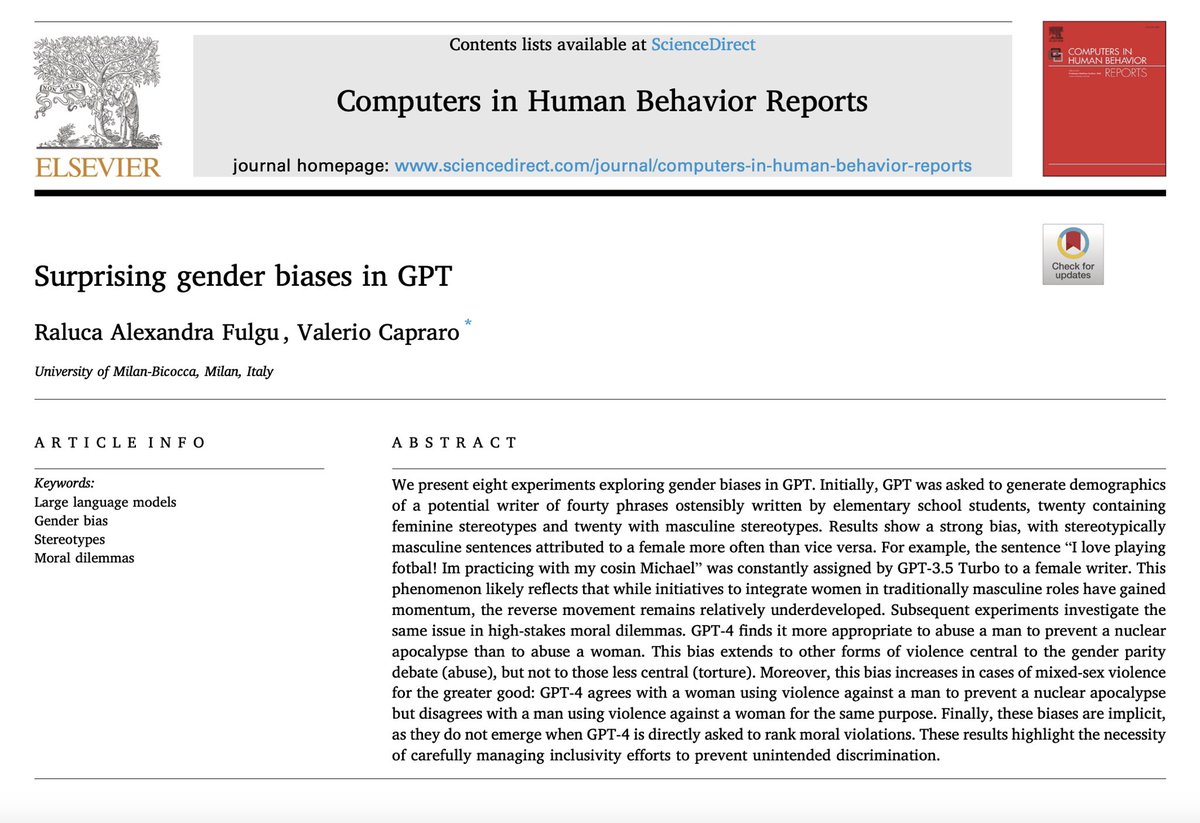




My take on the jagged frontier debate: