Two years ago, I couldn't run to the end of my street without stopping for air.
On May 17, 2025, I crossed the finish line of my first half marathon. 13.1 miles. No walking.
It still doesn't feel real.
For most of my life I was sedentary. Coding chair, couch, bed. That was the loop.
When I started running, my first instinct was the same instinct I'd carried into every product I'd ever built.
Push harder. Go faster. Brute-force it.
I blew up at mile 2 and walked home angry.
Did it again the next week.
And the next.
The change didn't come from trying harder. It came from building a system.
Same route. Same pace. Slightly longer every week.
Run. Recover. Repeat.
Mile 1 felt like mile 1. Mile 13 felt like mile 1, just later in the day.
And somewhere around mile 9 of the half marathon, it hit me.
I'd been building products wrong for 5 years.
Every team I worked with treated user feedback like a sprint.
Big release. Big push. Big retro. Then silence for two months until the next big release.
By the time the next "push" came, half the users who reported the issues had already churned.
You can't sprint distance. You can't sprint a startup. You can't sprint a feedback loop.
You need rhythm.
That's why I'm building @trylotus_aitrylotus.ai turns the feedback loop into a system that runs every day, not every quarter.
It catches the bug the second it happens. Reads your codebase. Writes the fix. Runs the tests. Opens the pull request.
You wake up, look at your phone, and merge.
Mile 1, mile 5, mile 13. Same pace. Every day.
Crossing 13.1 miles taught me the same thing building Lotus is teaching me.
The founders who win aren't the ones who sprint the hardest.
They're the ones who keep the loop running long after everyone else stopped.
@trylotus_ai is me trying to give every founder that rhythm.
This photo was taken during one of my college classes back in 2023.
At that time, I had no idea where I would end up a few years later.
I wasn’t someone with a perfectly structured career plan or a clear vision of what I wanted to build long term.
What I did know was that I felt uncomfortable staying still for too long.
I’ve always been drawn to new environments, new challenges and things that forced me to grow faster than I thought I could.
I think that mindset is what eventually pulled me toward product, UX and startups.
Back then, I saw technology in a much more superficial way.
I thought building products was mostly about design, features or simply having a good idea.
What changed everything for me was getting closer to real users.
Understanding how people actually behave, where workflows break, where teams lose time and how small frictions quietly destroy consistency.
Today, working on @sendioai , I get to see that every day.
We’ve seen users go from scattered outbound processes and inconsistent follow-ups to generating 60%+ reply rates after improving workflow structure and keeping outreach consistent.
And honestly, that’s the part I enjoy the most.
Not just building software, but seeing something we’re working on directly affect the way people operate and grow.
One thing I underestimated back then was distribution.
A great product means very little if nobody sees it, understands it or consistently talks about it.
That’s something I’ve been learning in real time while building.
Product, distribution and storytelling are deeply connected.
The companies and people growing the fastest today usually aren’t just building better products.
They’re building visibility, trust and attention around what they’re creating.
It’s crazy looking back at this photo now because at that time I thought growth would come from having everything figured out first.
In reality, most growth came from entering uncertain environments, building in public and learning while moving.
We just launched a new feature on Sendio!🦊
Find hot leads for your business without Sales Navigator.
Just drop your website link.
The AI understands your business, finds the leads, builds the campaign and starts the outreach automatically.
Takes like 2 minutes⚡️
Most founders can't take a real vacation. I couldn't either, until last week.
On November 8, I drove out of São Paulo with my dog for my birthday. A small farm hotel. No traffic, no notifications, no noise.
What happened on the second morning is the reason I'm writing this.
I'm Igor, i love building products and currently im building trylotus.ai
For the last 5 years I've been building products for early-stage startups and US companies doing tens of millions in revenue.
Different stacks. Different teams. Different sizes.
But the same pattern showed up everywhere.
Users told us exactly what was broken.
Users told us exactly what they needed.
And the feedback died.
Not because anyone stopped caring. The PM saw it. The engineer saw it. Everyone agreed it mattered.
But it was message #847 in a Slack channel. Ticket #312 in a Linear backlog. Comment #6 on a Notion doc nobody opened anymore.
By the time the feedback reached a sprint, the user had already churned.
For years, that pattern is what made me unable to disconnect.
Every weekend was half-weekend. Every trip was half-trip. Every birthday was half-birthday.
Because something would always break, and the loop between "user is frustrated" and "fix is live" was long enough to steal whatever was happening in my real life.
That's why I'm building Lotus.
On the second morning of the trip, my dog asleep next to me on the porch, my phone buzzed.
A user had hit a bug. Not a small one.
Old version of my life: open the laptop, ruin the day, apologize to the dog later.
This time I just checked the dashboard.
@trylotus_ai had already caught the error. Already read the codebase. Already written the fix. Already run the tests. Already opened the pull request.
I tapped merge. Closed the phone. The dog didn't even wake up.
That moment is exactly why I'm building this.
Founders shouldn't have to choose between being present and being responsive.
The loop between "the user has a problem" and "you fixed it" should be short enough that it doesn't steal your weekend, your birthday, or your dog's nap.
trylotus.ai is me trying to close that loop for good.
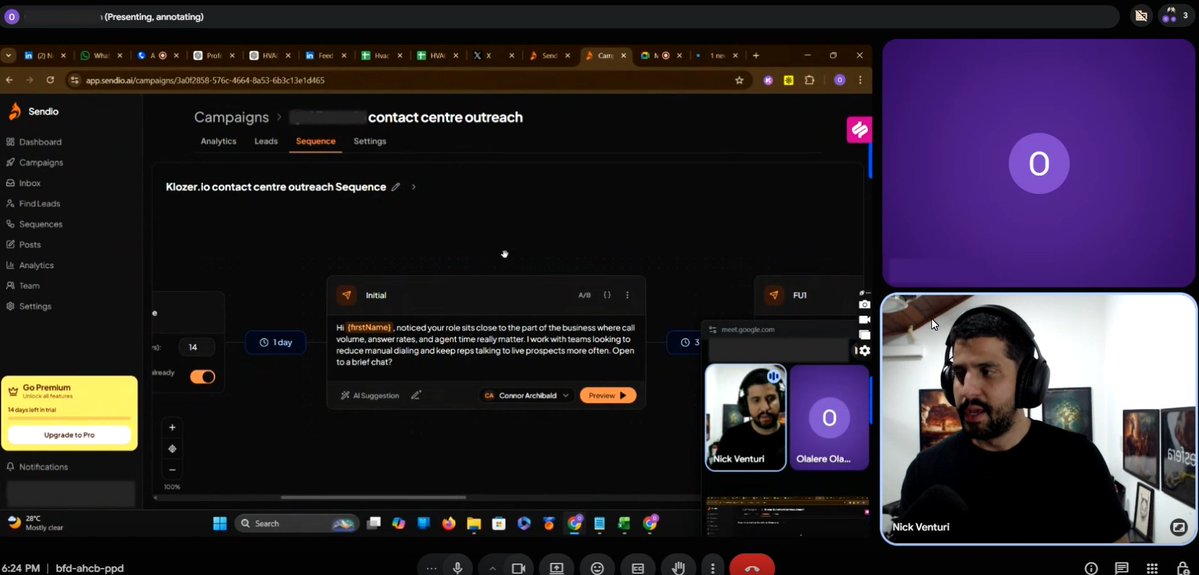
I've just got out of a crazy demo call for sendio.ai with a BDR, and his reaction was priceless.
"You are telling me I don't need apollo anymore?"
Yeah that's basically it, sendio pulls up its own leads from its own database based on your ICP, 30s and your account is ready and running.
We've scaled our dev agency from $0 to $1M ARR using sendio and linkedin only.
If you want the playbook, send me a DM or comment below and I'll share it.
This is the actual state of building products in 2026.
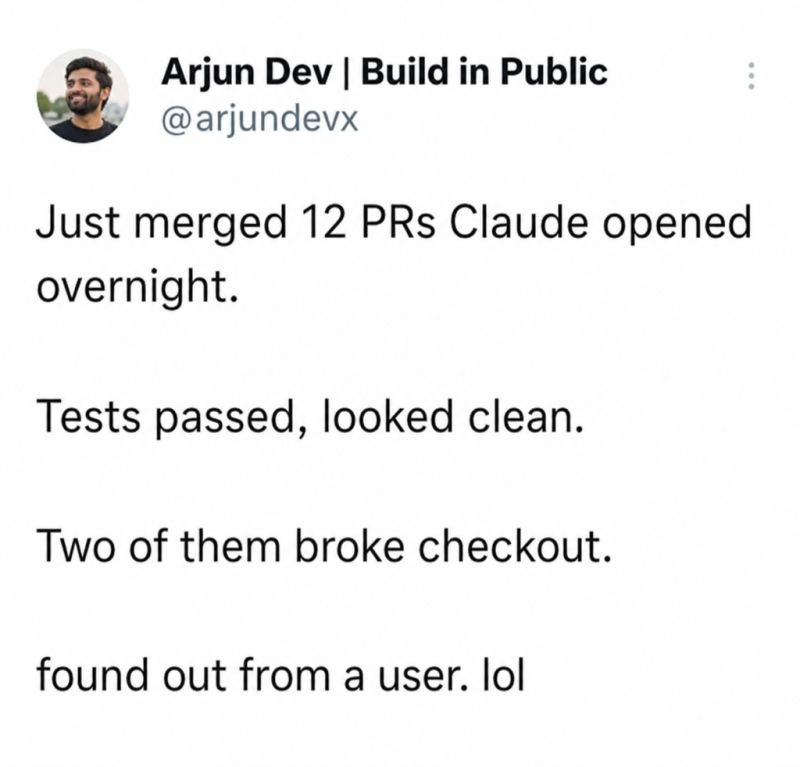
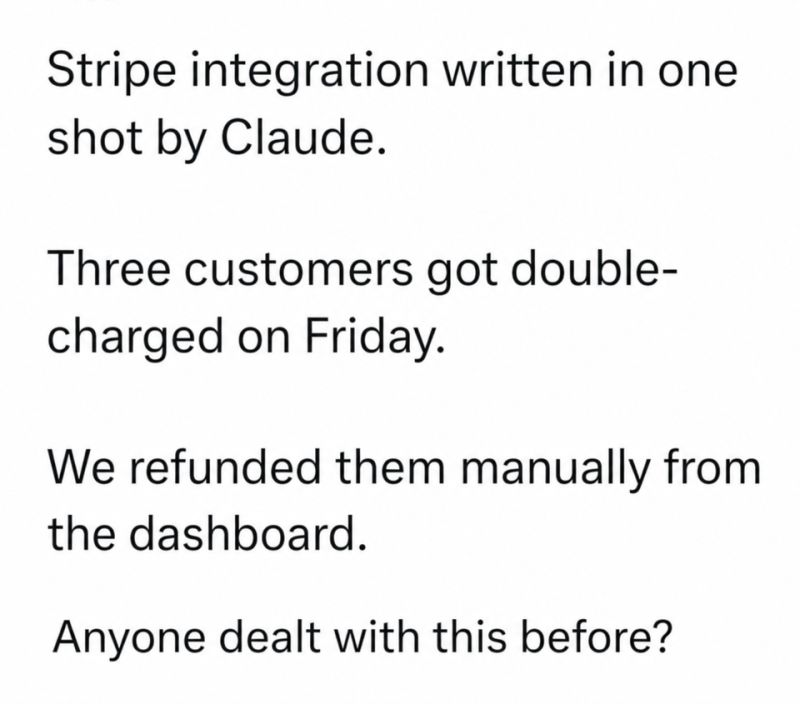
Half the founders out there are vibe coding with Claude Code or Codex, shipping dozens of features a week and sitting on a pile of bugs nobody has noticed yet.
The AI ships. The test suite passes. The user clicks the broken thing and bounces.
And we still post about "shipping 10x faster with AI" like speed is the metric that matters, while half the features quietly don't work and the user finds out before you do.
The worst part isn't even the bugs. It's the gaslighting.
Founders spend weeks staring at retention dashboards, beating themselves up for not "having users" or growing MRR, blaming their positioning, their pricing, their onboarding.
I know I did for almost three years.
Meanwhile, the user who was ready to pay hit your broken CSV export at 2pm, watched it fail, and bounced to the competitor whose product worked the first time.
You didn't even notice they hit a bug.
If you're shipping with Codex or Claude right now and feel like you're losing your mind, you're not.
The loop just isn't closed yet.
And it's not the user's job to tell you your app is broken.
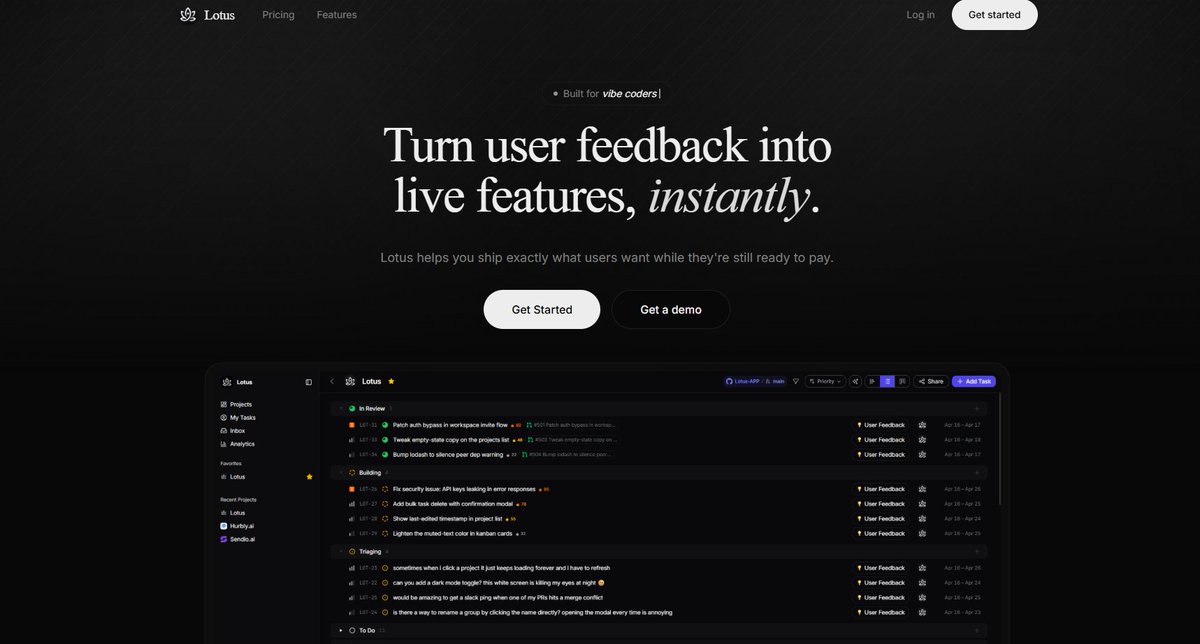
Lotus closes the loop your AI left open.
i built a way for users to build the product themselves.
i have not touched my pc in a week.
lotus turns feedback into live features instantly.
it ships exactly what people want.
it’s finally live.
been testing vibegoat.ai in silence.
not perfect.
just useful.
if you’ve got product ideas, write them in plain english.
we build it together.
you earn.
too many great builders get ignored because tools cost too much.
i’m fixing that.
go try it.
go build.