Universities & Schools Guide

54 posts

Universities & Schools Guide banner
Universities & Schools Guide

Universities & Schools Guide

@unischsguide1

We will keep you ahead of what you deserve to know

Kampala, Uganda Katılım Mart 2025
114 Takip Edilen108 Takipçiler
Universities & Schools Guide
Universities & Schools Guide@unischsguide1·
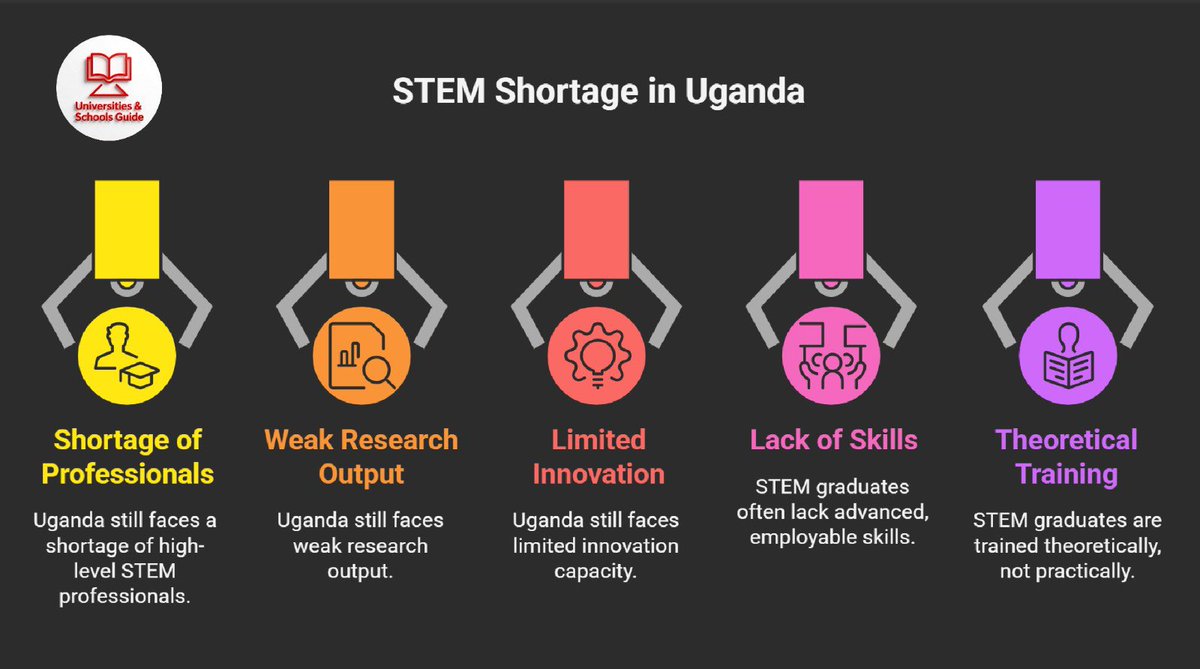
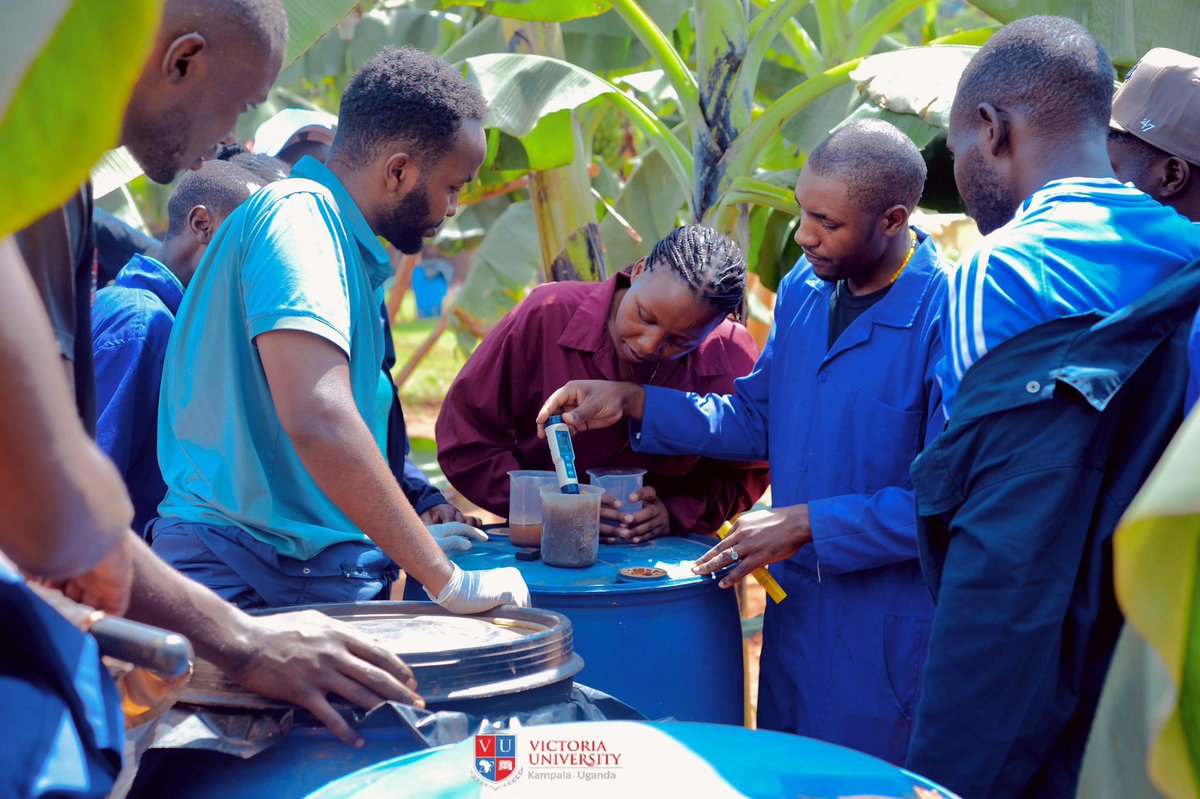
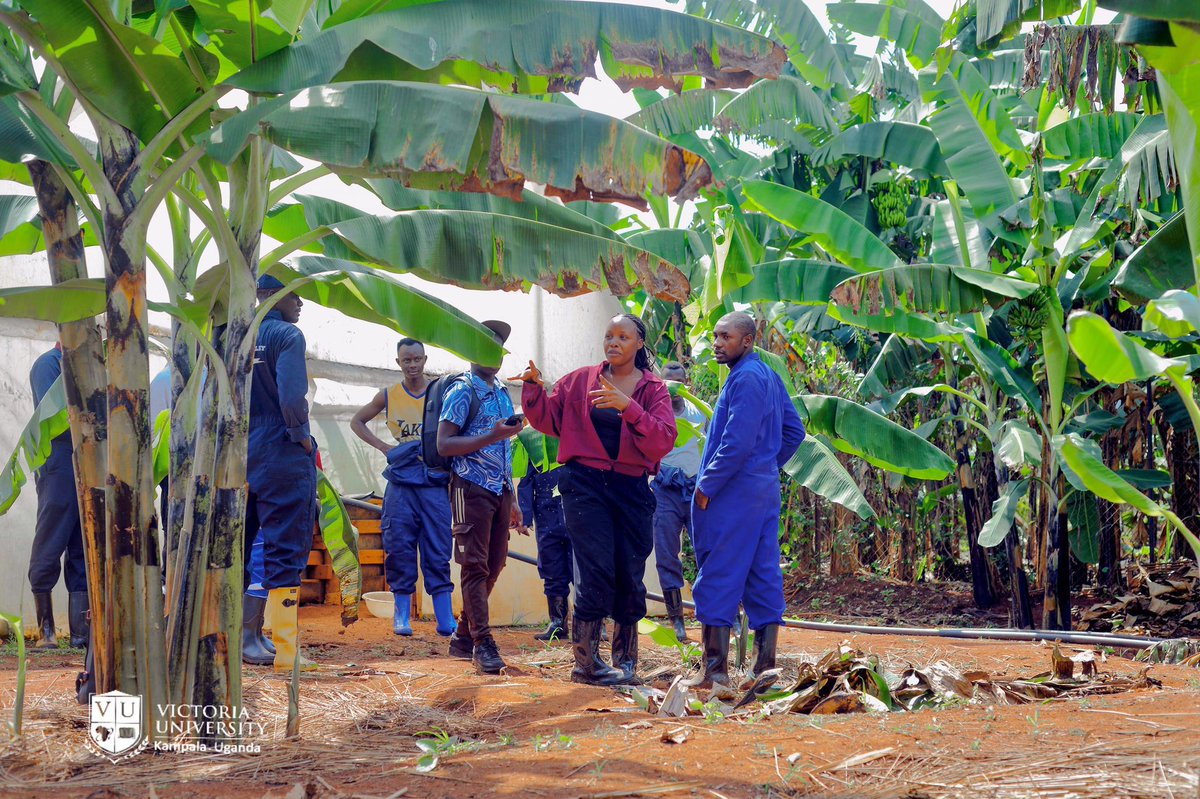
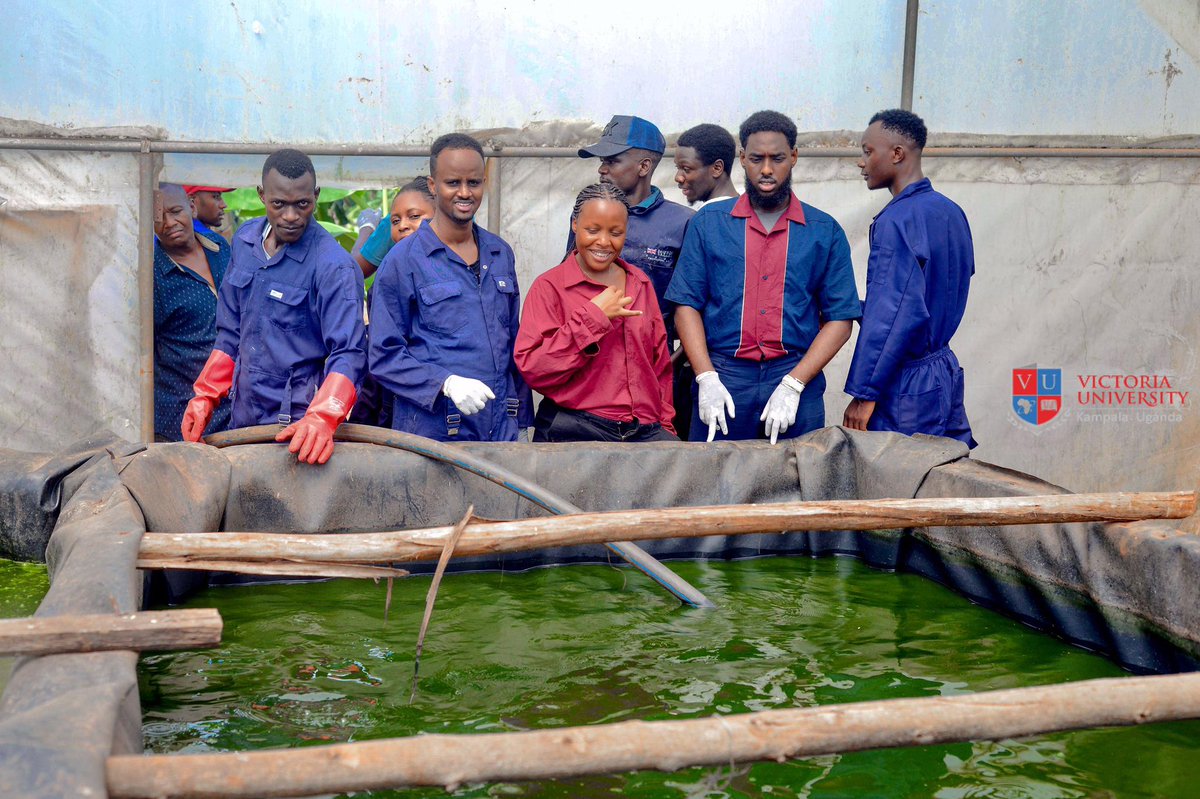
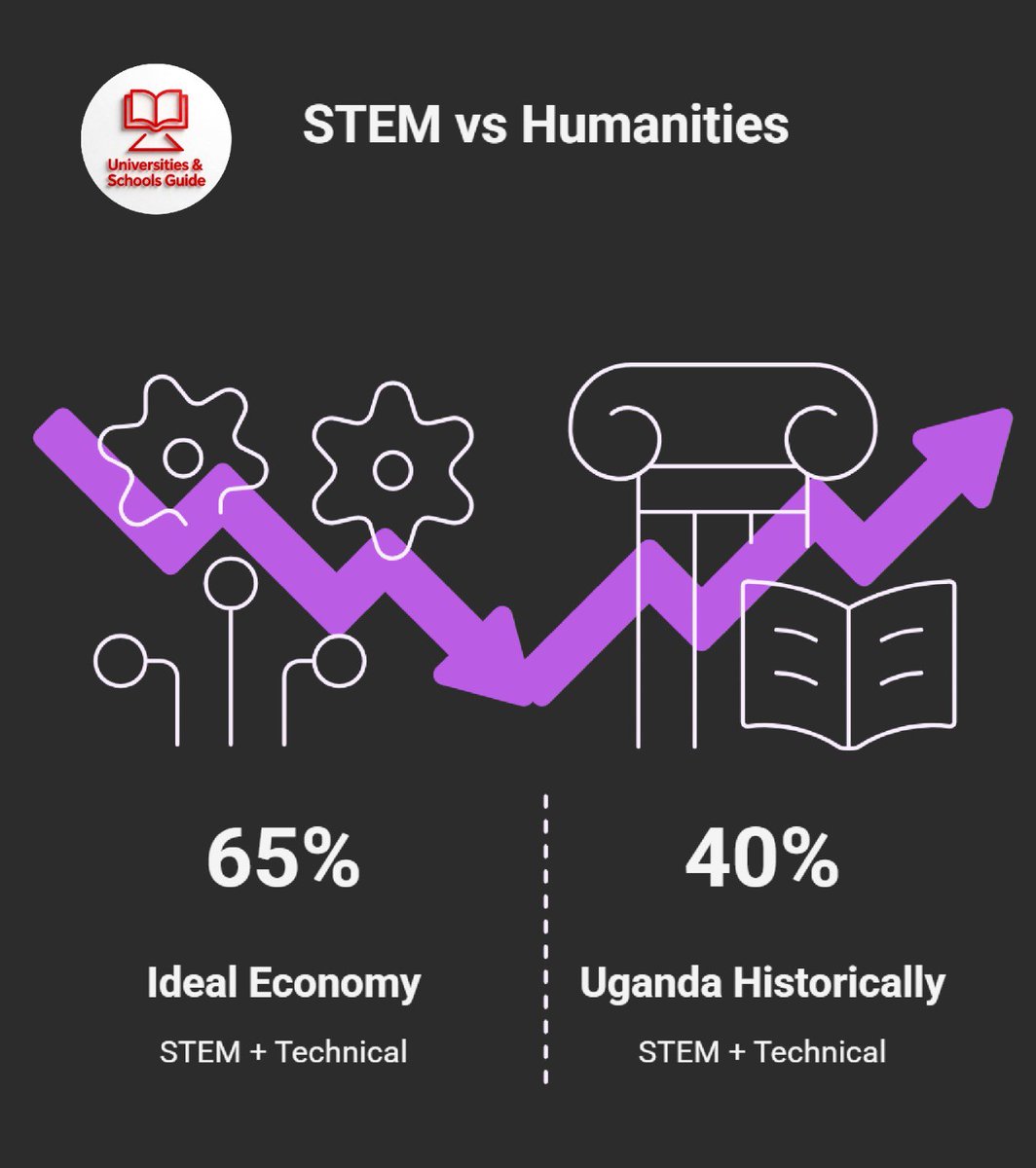
100% Exposure, 25% Expertise: Uganda’s Science Pipeline Leak At primary level (P1–P7), science exposure is almost universal, sitting at roughly 95–100%. This is a major achievement. It means nearly every Ugandan child encounters scientific thinking early—through basic science, health, and environmental studies. At this stage, curiosity is high, fear is low, and science is still seen as exploratory and relatable. The system, at this level, is doing exactly what it should: opening minds and planting seeds. As learners transition into lower secondary (S1–S4), exposure remains high—still around 90–100%—largely because science is embedded in the curriculum through Integrated Science and subject options like Biology, Chemistry, and Physics. However, this is where the first cracks begin to appear. While students are still “doing science,” the nature of engagement changes. It becomes more theoretical, exam-driven, and less experiential. For many learners, science shifts from being interesting to being intimidating. Performance gaps begin to widen, and confidence starts to drop. The real collapse happens at upper secondary (S5–S6), where participation falls dramatically to about 20–30%. This is not accidental—it is structural. Students are required to specialize, and science combinations (like PCM or PCB) are perceived as difficult, risky, and only for the “brightest.” Without strong foundations in mathematics and earlier science, many students opt out. At this stage, science becomes exclusive rather than inclusive. By the time we reach university, the numbers shrink even further—less than 25% of students are enrolled in STEM-related programs. This is the final stage of the pipeline, and it reflects cumulative losses from earlier levels. The system has exposed nearly everyone to science, but only a fraction feel confident, or supported enough to pursue it further. The result is a workforce where scientific literacy is widespread, but scientific expertise is scarce. What it means Uganda does not have a science access problem. Uganda has a science retention, confidence, and relevance problem. At every transition point: Students lose confidence (due to difficulty and poor grounding) Science loses relevance (seen as academic, not practical) The system increases pressure (high-stakes exams, rigid combinations) This creates a funnel where: Many start the journey, but very few finish it. What should be done 1. Re-engineer how science is taught Shift from notes → experiments, projects, and real-world problem solving Invest in low-cost labs, simulations, and mobile science kits Make science something students experience, not fear. 2. Fix the S4 → S6 transition (the biggest leakage point) Introduce bridging/remedial programs in math and science Offer flexible science pathways Reduce the “elite-only” perception of science combinations 3. Connect science to careers and income early Bring industry into classrooms Show clear career pathways and earning potential Expand internships and exposure programs 4. Strengthen the teacher ecosystem Continuous STEM upskilling for teachers Incentivize top graduates to teach sciences Use AI and digital tools to support weak teaching environments 5. Universities must become re-entry points, not just endpoints Institutions like @VUKampala are already showing the direction: Modular, hands-on learning models Work-integrated education Focus on AI, technology, and future skills Universities should reignite lost interest and rebuild confidence—not just select the already strong. Final insight Uganda’s education system succeeds at introducing science, but fails at sustaining it. Fix the transition points, make science practical, and link it to real opportunity—and you won’t just increase STEM numbers. You’ll unlock a generation of innovators, problem-solvers, and job creators. @ReachDrMuganga
Universities & Schools Guide tweet media
English
0
0
0
26
Universities & Schools Guide
Teachers are our Future! By Businge Conan Daniel In today’s world, teaching is no longer just a profession— it is becoming one of the most powerful and transformative callings of our time. Yes, expectations are high— but so is the impact. Because today’s teacher is not just delivering lessons, they are shaping thinkers, creators, and future leaders. Where once there was only chalk and talk, there is now technology, innovation, and endless possibility. Classrooms are evolving. Learning is expanding. And teachers are at the center of this change. A teacher today is not just seen—they are felt. Not just heard—they are remembered. If a teacher is strict, it means they believe in excellence. If they are friendly, it means they are building trust. If they give more, it’s because they see potential. If they simplify, it’s because they want every child to succeed. And slowly, the world is beginning to understand— that teaching is not about pleasing everyone, but about impacting someone. Today’s teacher is becoming: A mentor in a digital age, A guide in a noisy world, A builder of confidence, A bridge between knowledge and opportunity. And now, something powerful is happening… The world is shifting. Skills are becoming more valuable than memorization. Creativity is rising above routine. Technology is opening new doors. And teachers are no longer just preparing students for exams— they are preparing them for life, work, and purpose. Behind every confident student, there is a teacher who believed. Behind every innovator, there is a teacher who inspired curiosity. Behind every success story, there is a teacher who refused to give up. And this time—the story is changing. Teachers are being seen as nation builders, innovators, and change-makers. Their role is expanding, their voice is growing, and their impact is becoming undeniable. To every teacher reading this: Your work matters. Your effort is seen. Your influence is eternal. And to everyone else: Don’t wait for a special day. Celebrate teachers now. Support them now. Encourage them now. Because a teacher is not just shaping a student— they are shaping the future we will all live in. So this season, do something simple, but meaningful: Reach out. Say thank you. Show appreciation. Because sometimes, all a teacher needs to keep going is to know that what they do… truly matters.
Universities & Schools Guide tweet media
English
9
9
145
145.1K
PETER LEON
PETER LEON@THEGREAT131005·
@unischsguide1 @Mengo_School No disagreement because Arts are essentially relevant in this developing nation. Although I am wondering what actually attracts your attention in a school?
English
1
0
0
100
Universities & Schools Guide
Universities & Schools Guide@unischsguide1·
Bad news: The world of work is changing fast—education is lagging. Good news: MDD has a solution At @Mengo_School , the MDD Festival proved it: students aren’t just performing—they’re building the future. The facts👇 • Creative economy = $2.3T+ (3%+ global GDP) • 30–50M jobs globally • Creator economy → $480B by 2027 • Creative exports → $1.4T • Uganda: 3% GDP (~UGX 4.2T), 400,000+ jobs What MDD builds👇 • Creativity & innovation • Communication & storytelling • Confidence & stage presence • Teamwork & collaboration • Emotional intelligence & leadership These are the skills AI can’t replace. MDD is not extracurricular—it’s future-proof education. @cbusinge @ReachDrMuganga @Mengo_School
Universities & Schools Guide tweet mediaUniversities & Schools Guide tweet media
English
5
14
260
122.6K
Reply Guy
Reply Guy@kindofboov·
@unischsguide1 @Mengo_School This is a good perspective. In our days MDD wasn't seen that way. It was seen as Musilu Dala Dala. As a person who did sciences, I have gradually come to appreciate the value of arts in life. Sciences are for innovating, building and maintaining, arts are for living.
English
1
0
1
133
Universities & Schools Guide
You’re not stuck—you’re just at a turning point. If you’re a theoretical graduate, here’s the truth: your degree is not useless—but on its own, it’s not enough anymore. The good news? You can fix this faster than you think. Start here: Pick one practical skill aligned to your field (digital, tech, business, communication). Don’t scatter—focus. Give yourself 90 days to learn it well enough to do real work, not just understand it. Build proof—projects, a portfolio, small gigs. Employers trust what you can show, not what you say. Get experience early—intern, volunteer, freelance. Even small opportunities matter if they build your competence. Use your degree as a foundation, not a destination—combine your theory with skill, and you become valuable. Stop waiting for the “perfect job.” Start becoming the person companies can’t ignore. Your recovery is simple: Close the skill gap—and your opportunities will open up.
English
0
0
1
9
DAN
DAN@ShepherdbyGrace·
@unischsguide1 How does a theoretical graduate recover from this ? What are their options after the realisation of this fact ?
English
2
0
0
64
Universities & Schools Guide
Dear Student, Before you choose a course (programme), pause and ask yourself: Will this decision give me skills—or just a certificate? The Reality You Must Face The numbers are clear—and they should concern you: Only about 12% of Ugandan graduates secure formal employment Uganda produces over 700,000 graduates every year, but far fewer jobs exist Youth underutilization is above 40%, meaning many are unemployed or stuck in low-quality jobs. This could easily be you! About 41% of young people are not in employment, education, or training (NEET). Graduate unemployment can reach up to 15% or more, depending on the field This is not because graduates are not educated—it is because many are not skilled for the job market. The Hard Truth Employers are not asking: “What did you study?” They are asking: “What can you do?” In fact, many job seekers are rejected due to lack of practical skills and experience The Question Is Yours Are you choosing a course because: It sounds prestigious? Others are doing it? You simply qualified for it? Or because it will make you employable, skilled, and future-ready? What You Should Do Choose a course that: Builds hands-on, practical skills Includes internships and real-world exposure Connects you to industry opportunities Encourages innovation and problem-solving Your Future Depends on This Uganda’s challenge is not lack of education—it is a skills gap. And your course choice will either: Position you for opportunity or Leave you struggling in a crowded job market Conclusion As @ReachDrMuganga always says, “Don’t just choose a course. Choose a skill. Choose relevance. Choose your future. You must future-proof yourself.” @cbusinge says: Be intentional. Don’t be mistaken.
Universities & Schools Guide tweet media
English
6
13
134
107.4K
Universities & Schools Guide
You’re not stuck—you’re just at a turning point. If you’re a theoretical graduate, here’s the truth: your degree is not useless—but on its own, it’s not enough anymore. The good news? You can fix this faster than you think. Start here: Pick one practical skill aligned to your field (digital, tech, business, communication). Don’t scatter—focus. Give yourself 90 days to learn it well enough to do real work, not just understand it. Build proof—projects, a portfolio, small gigs. Employers trust what you can show, not what you say. Get experience early—intern, volunteer, freelance. Even small opportunities matter if they build your competence. Use your degree as a foundation, not a destination—combine your theory with skill, and you become valuable. Stop waiting for the “perfect job.” Start becoming the person companies can’t ignore. Your recovery is simple: Close the skill gap—and your opportunities will open up.
English
1
0
2
32
Universities & Schools Guide
You’re right @Lawxi4 to raise this; but it’s not entirely that nothing is being done. The bigger issue is that the system is still too slow and too theoretical compared to how fast the job market is changing. Government alone won’t solve it. We need: Universities to embed work-integrated learning & real projects Private sector to open up structured internships & apprenticeships Students to actively pursue skills, not just degrees The future belongs to those who gain experience early—even if it starts unpaid but strategic. The real shift is this: From “studying for jobs” to “training while working.” That’s where the gap still is—and where the opportunity is.
English
1
0
2
68
Law👨🏽‍💼
@unischsguide1 Surprisingly the government knows this but no one implements opportunities for on job training or paid internship opportunities or paid volunteer ing opportunities
English
1
0
1
76
yellow theCreator
yellow theCreator@perkmaybe·
Bro to Bro: build your x account Just say “hello” and gain 700 mutuals here.
yellow theCreator tweet media
English
6.7K
414
4K
443.6K
Universities & Schools Guide
Universities & Schools Guide@unischsguide1·
Digital marketing & content creation Financial technology (FinTech) This doesn’t mean traditional courses are useless — it means: You must modernize them
English
0
0
1
75
Universities & Schools Guide
Universities & Schools Guide@unischsguide1·
Go for Growing & Not Declining fields Some fields are expanding rapidly because they solve modern problems. High-opportunity areas include: Artificial Intelligence & Data Science Cybersecurity Health sciences & biotech Renewable energy & environmental sustainability
English
1
1
4
256
Universities & Schools Guide
Universities & Schools Guide@unischsguide1·
Focus on building: Digital skills Critical thinking & problem-solving Communication & storytelling Entrepreneurship mindset ForA business student who understands data analytics will outcompete one who doesn’t A journalist who can use AI tools will outperform a traditional one
English
0
0
0
70
Universities & Schools Guide
Universities & Schools Guide@unischsguide1·
Here’s how a university student should think and focus if they want their education to match future jobs: Start with Skills, Not Just Courses A degree is no longer the finish line — it’s just the foundation.
Universities & Schools Guide tweet mediaUniversities & Schools Guide tweet mediaUniversities & Schools Guide tweet mediaUniversities & Schools Guide tweet media
English
1
2
7
417
Legion
Legion@_01Legion·
🚨🔴 BREAKING NEWS ‼️ "Arne Slot has been sacked after his side lost 4-0 to Manchester City at the Etihad Stadium."
Legion tweet media
English
415
106
2.2K
307.9K
Universities & Schools Guide
Universities & Schools Guide@unischsguide1·
@AbsaSouthAfrica @AbsaKenya @Absa. ABSA Kampala team, for a financial institution of this stature, reliable access to basic banking services like deposits should not be optional—it is fundamental. When customers cannot conveniently deposit funds, it erodes trust…
English
2
0
0
55
Universities & Schools Guide
Universities & Schools Guide@unischsguide1·
@Absa It is quite concerning that ABSA Bank has multiple deposit machines across Kampala that are consistently non-functional, yet this appears to attract little urgency or concern from management.
English
1
0
0
57
Universities & Schools Guide
Universities & Schools Guide@unischsguide1·
Kampala Uganda team, what exactly is the operational strategy here? Because from a customer’s perspective, this reflects a significant gap between expected service and actual experience.
English
0
0
0
36