Sabitlenmiล Tweet
๐๐๐ผ ๐๐๐ฉ๐๐ค๐ขโข
10.6K posts

๐๐๐ผ ๐๐๐ฉ๐๐ค๐ขโข
@usa_satcom
Satellite Communications. GOES (HRIT/GRB/SUVI), HRPT, Inmarsat, L/S/X/Ku-Band, DSN, Astronomy, Whiskey, Endurance Running, Adventure Racing, Climbing.
USA Katฤฑlฤฑm Ekim 2011
439 Takip Edilen13.3K Takipรงiler

@petermeteor Thank you! I am learning.
English

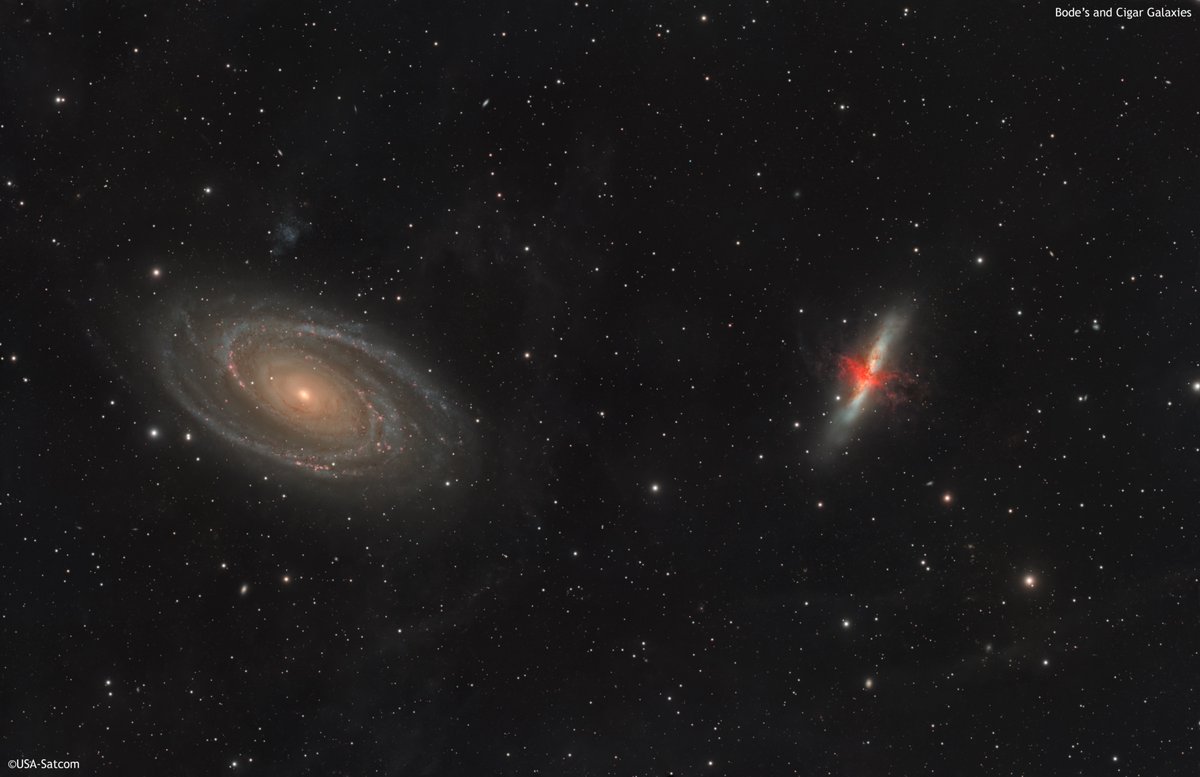
This is Bode's (left) and Cigar (right) galaxies. We are looking through our Milky Way to view these two galaxies, you see some haze/fog around them - the is called Integrated Flux Nebula and is from clouds in our own Milky Way. Both galaxies have star forming regions (red areas). The neat thing is the blue smudge just above the left galaxy, that is a Dwarf Galaxy called Holmberg IX, home of very young stars and pretty hard to capture without a lot of imaging hours. This image is from over 24 hours of exposures. The galaxies are about 12 million light years away from Earth. These galaxies are interacting with each other even though they are separated by ~100,000 light years. Captured with a ZWO FF130 APO scope.

English

@hyermendain Stacking and some processing done in PixInsight and final touches in Photoshop.
English

@usa_satcom What software do you use to stack and give the final touch ?
English

@vibes_exe I don't. Camera is ASI2600MC Pro. Filters are Askar E1 and E2. Scope is UltraCat 91.
English

@usa_satcom Really great shots! Do you post to astrobin? I'm just learning and I'd love to see some more details about filters, camera, etc
English

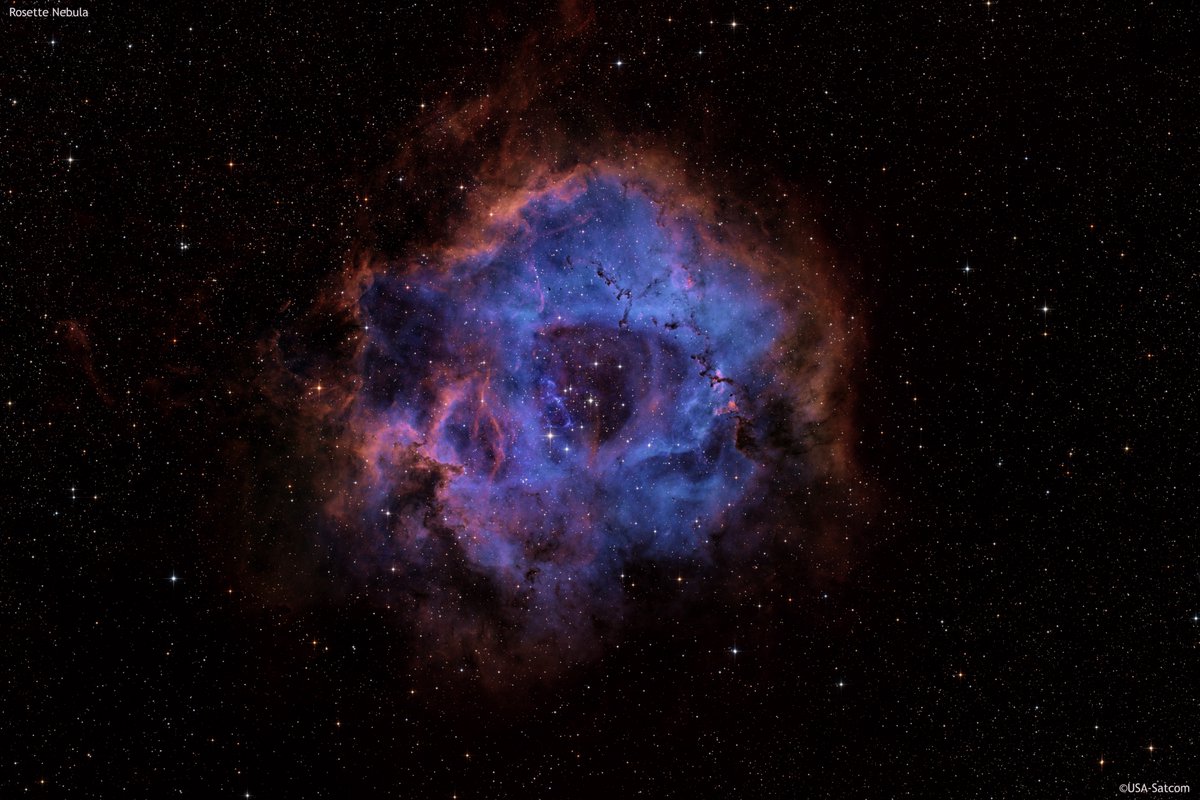
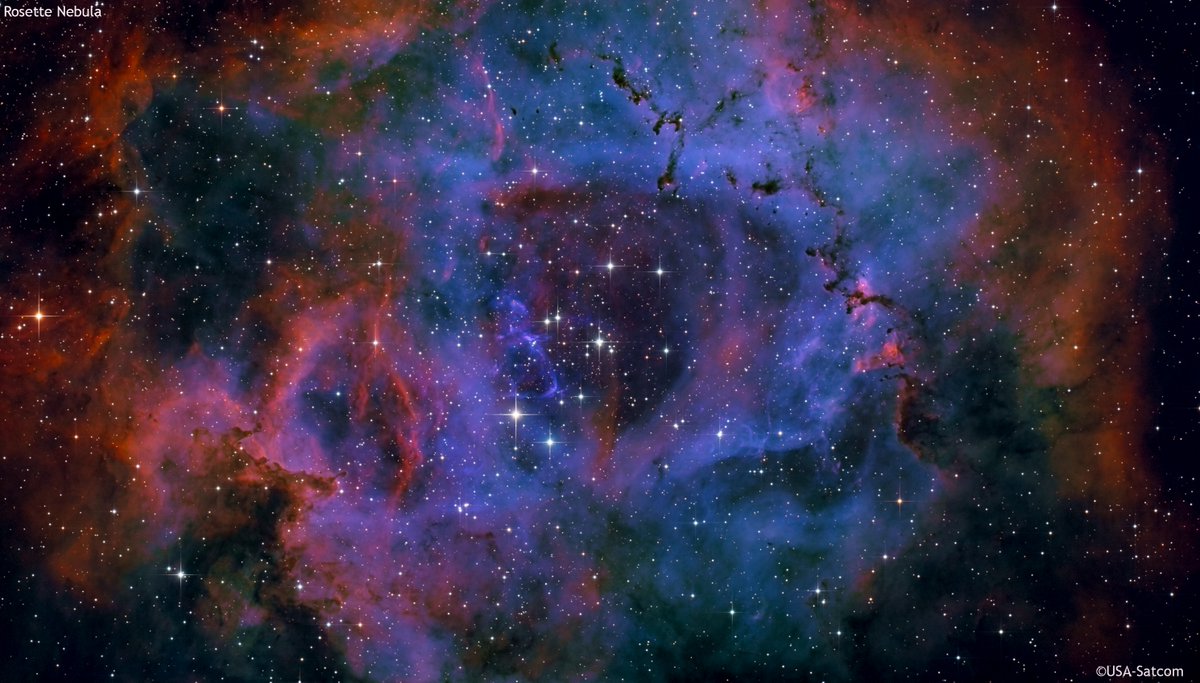
The Rosette Nebula (Caldwell 49) is a massive, roughly 130 light-year-wide emission nebula and stellar nursery located approximately 5,000โ5,200 light-years away in the constellation Monoceros. Known for its flower-like shape, it is powered by a cluster of young stars (NGC 2244) that have carved a hole in its center.
Left image is 13 hours of images. Right is 24 hours of images - zooming in to give better view of the central bubble and star forming region.


English

@pa4fb yes, it's means imaging nightly (when clear) to accumulate data. This accumulation of data increases the SNR as it does with RF.
English

@usa_satcom Very impressive! How do get 24 hours of images, that must be multiple nights? Please explain...
English

@pa4fb about 120 subs, most are 5min exposures (Ha + Sii + Oiii) with 2min exposures for stars (LRGB).
English

@usa_satcom Very nice image! How many stacked images in totall are used for this outcome? Thanks for sharing. I hope that you continu with posting deep space images! ๐
English
๐๐๐ผ ๐๐๐ฉ๐๐ค๐ขโข retweetledi

The Christmas Tree Cluster. I had intended to do this around Christmas, but the weather did not cooperate. This is ~20 hours of subs in HOO palette. #Redcat51.

English


@usa_satcom Very nice image! Show us your new observatory pls. ๐
English
๐๐๐ผ ๐๐๐ฉ๐๐ค๐ขโข retweetledi

Looks like X reduced it to rubbish. Link to original, still downsized but better. All the streaks you see are mostly from the meteor shower Orionid, which is a result of the debris left over from Halley's Comet. dropbox.com/scl/fi/ria1sqlโฆ
English

@CoreyBrand19 Accident? Not at all. It's been known for years.
English
๐๐๐ผ ๐๐๐ฉ๐๐ค๐ขโข retweetledi

๐จMysterious downlink signals from the NRO's SpaceX built classified Starshield satellites in a frequency band reserved for uplinks โ raising concerns over spectrum rules and possible interference with other satellites.
๐งตโฌ๏ธ
npr.org/2025/10/17/nx-โฆ
English