
Inari

43 posts

Inari banner
Inari

Inari

@useinari

An AI-powered product discovery and feedback analytics tool. Surface insights and product opportunities from your customer data auto-magically using AI.

San Francisco Katılım Haziran 2023
391 Takip Edilen346 Takipçiler
Inari retweetledi
Y Combinator
Y Combinator@ycombinator·
🦊@useInari is building a junior AI product manager. Surface customer insights and product opportunities automatically from your feedback, CRM, and backlog so you can prioritize and build products that users love using. ycombinator.com/launches/Mnz-i…
English

14
25
188
31.1K
Inari retweetledi
Frank Lee
Frank Lee@frankdotlee·
wanted to demo and get feedback + roasted on an experimental workflow using @useinari that gets from feedback captured → prd and prompt generated → draft ai prototype or github pr created in a few clicks. eric and I were excited by products like @GitHubCopilot workspace and @cognition_labs's devin moving into general release so we were intrigued by the idea of using inari to aggregate customer and product context then generating instructions for ai coding assistants to create 1st drafts of work for you. so we’ve added the ability to create a new insight or issue in one-click from any individual customer quote. inari will search across all of your connected feedback, look for other quotes that are similar, then generate a 1st draft prd or deep dive. the prd and deep dive is grounded in the customer quotes that inari extracted from your feedback and also comes with sentence-level citations so you can inspect it, verify each source, then make edits yourself. we then added the ability to take that prd and generate an ai coding prompt from the prd and customer context. if you’re a power user of @cursor_ai, @windsurf_ai, @stackblitz's bolt , @Replit agent, or other ai coding tools, you’ll know that the tools do 10x better when provided full context on the feature, acceptance criteria, and any customer edge cases along the way. so this workflow uses the feedback from inari to aggregate all of this context for you into a single prompt. you can dump that prompt into any ai coding tool to better steer the models in building features and solving bugs faster and more reliably. major caveat (!) - we haven’t successfully gotten any of the autonomous ai coding tools to build a feature fully on its own since they’re still incredibly unreliable. but we’re betting that the models and orchestration systems will improve so we wanted to make it easy for product and engineering teams to make use their feedback for steering ai for building better products faster! if you’re a pm prototyping with ai or an engineer relying heavily on cursor and similar tools, we’d love to let you try this out or get feedback on how we can perfect this flow for you!
English
0
1
12
3K
Inari retweetledi
Frank Lee
Frank Lee@frankdotlee·
b2b product teams constantly say that the key metric when prioritizing backlogs is the potential value of the feature based on accounts requesting it. so we made prioritizing by revenue impact simple and automated by integrating with @salesforce and @hubspot! @useinari now connects to either crm, pulls in account and contact fields, enriches every customer and company that submits feedback into inari with gtm data, then attaches a revenue impact to each insight and issue surfaced. for example, we’ve had 100’s of customers say that a blocker to adopting inari was a missing integration for an app they use to collect customer feedback. after connecting salesforce: i can see 40 distinct companies flagged that problem to us and are worth ~221K revenue impact if we closed them all. i can segment this based on my crm’s deal type to see that ~103K of revenue impact comes from prospects while ~137K comes from active customers. i can export the list of companies requesting the feature, see their direct feedback, then follow-up to close the loop. all of the feedback analysis, issue discovery, and linking requests back to companies in your crm are done automatically by inari so you don’t have to manually manage this process in a spreadsheet. if you're having trouble tying your insights and backlog issues to your crm or want to better prioritize your roadmap based on revenue, we'd love to onboard you!
English
1
1
8
1.1K
Inari retweetledi
Frank Lee
Frank Lee@frankdotlee·
we’ve been getting constant requests at @useinari for being able to connect feedback analyzed, insights generated, and backlog issues in inari with gtm data captured in crms. so today we’re shipping a new direct integration between @useinari and @HubSpot! doing so lets you enrich all the customers and companies sharing feedback analyzed in inari with your crm fields like pipeline stage, whether a company is new or existing, and even revenue values like arr or deal size. use case 1️⃣: prioritizing issues by revenue impact now every backlog issue, surfaced based on your customer feedback or sales calls, comes with a revenue impact value. we generate revenue impact by taking the list of unique companies requesting that feature based on their linked feedback then adding up the deal amounts captured in hubspot. use case 2️⃣: segmenting metrics by deal stage / type if you inspect any backlog issue, you now get a deduped list of companies and deal segments to better inform prioritization decisions. so i can quickly see total companies requesting a feature, deal value attached to those companies, all segmented by whether they’re prospective, existing, or churned. we talked to a ton of teams and learned that basically every team has their configurations in their crms for which fields are actually used. so we built this integration so teams can customize which specific fields in hubspot to map with customer and company fields in inari. so if I want to use a custom revenue, pipeline stage, or persona field, I can update the mapping on my own then resync. this is just v1 of the integration so we’d love to test this out with more teams + hear ideas on how to make this more useful for product + cx workflows! otherwise keep an eye out for salesforce soon 👀
English
0
2
7
1K
Inari retweetledi
Frank Lee
Frank Lee@frankdotlee·
i’ve worked in product + startups for almost a decade and have always lowkey wondered why sales teams get CRMs but product and engineering teams don’t get a simple way to track and follow up with customers 🤔 @useinari already automatically analyzes all of your customer feedback and conversations from @Gong_io, @intercom, and other places. now we’ve introduced structured tracking for customers, companies, and personas! we aggregate all the top quotes, feedback, and linked insights and feature requests for each individual customer and company. this makes it easy to browse feedback history, sort on sentiment and interaction dates, then close the loop on specific feature requests for each customer and company. we’ve also updated our backlog so that every issue tracks ARR or deal size. i can sort issues based on revenue impact, see which individual customer or company segments are driving the value, then make prioritization more grounded in revenue without the hassle of manually linking issues to feedback and CRMs. we'd love testers for making this better - hit me up if you’d like to try this out or have ideas on how to improve!
English
1
3
9
669
Inari retweetledi
Frank Lee
Frank Lee@frankdotlee·
building a great product and company requires talking to and learning from as many customers as possible. but as a company scales, it becomes increasingly tough to stay on top of problems and requests that customers are sharing with you on a regular basis. to help with this, we just shipped automated voice of customer summaries in @useinari. inari already integrates with and analyzes customer interactions from sources like gong, intercom, zendesk, and slack. now on a daily, weekly, and monthly basis, we’ll extract and cluster all useful customer quotes, summarize the top themes for you automatically, then push takeaways into your inbox and feed. every takeaway comes with linked citations to quotes and customers so your team can follow-up directly. this feature was actually inspired by my time working on product @ dapper. one of the most valuable things our community team did was pull together weekly VoC reports recapping the top problems, requests, and opportunity areas that community members were mentioning across all support tickets, discord, and twitter. all the leads at dapper would voraciously consume this report and act on the takeaways weekly. if you’re spending hours each week pulling together customer insights for your weekly or monthly business reviews or feel like you’re missing a recap like this, let us automate the draft for you using @useinari 💪🏼
English
0
2
8
694
Inari retweetledi
Frank Lee
Frank Lee@frankdotlee·
it's finally shipped 👋🏼 the top direct integration request for @useinari is live now: @Gong_io! you can now directly integrate gong with inari to ingest all sales call transcripts from specific workspaces then inari will automatically analyze each conversation for useful customer quotes, sales blockers, feature requests, and praises. instead of manually sifting through sales calls transcript by transcript, inari automatically surfaces clusters of top trends in your sales convos so you know exactly what problems and feature requests are blocking new deals, praises your customers are sharing, and provides metrics to make prioritization and reporting easier. try this out and let me know how we can improve the integration or make better use of sales calls and insights for improving product development 💪🏼
English
0
2
7
606
Inari retweetledi
Frank Lee
Frank Lee@frankdotlee·
let's be real: everyone caught @nikitabier joining @lennysan's pod this week. this was basically the super bowl for terminally online startup/product enthusiasts like me 😅 this pod was incredibly dense with tactics but I don’t feel like anyone shared a great bookmarkable summary on X so just wanted to share my notes! 1. best way to search for product ideas is identifying latent demand in some cases, users try to obtain particular value but have to go through distorted processes to obtain the value. if you can crystallize their motivation into a product that helps them accomplish what their goal is, you’ll experience intense adoption. example: there was an app called sarahah, which lets you send anonymous messages by adding a link to your snapchat story that reached #1 in the app store despite being in arabic. 2. there’s basically 4 core reasons why people download consumer apps, 3 of which connect back to basic human instincts - people want to get rich or save money (coinbase, robinhood) - people want to get laid or find a mate (tinder, hinge) - people want to unplug from reality (tiktok, fortnite, netflix) - otherwise people have specific utilitarian needs (amazon, uber) 3. onboard customers to an “aha” moment within 3 seconds consider every tap by a user on mobile to be a miracle. attention spans are short, users are fickle, so activating and retaining users is impossible without demonstrating value quickly. be relentless in cutting features and be creative when using tools and APIs. example: dupe.com originally was a shopping app with a bunch of features but had a feature called deal hop which let users put in a product page and it’d help find the cheapest alternative online. they tried getting a very short domain (”dupe”) then created the ability for users to paste any existing URL on top of “dupe.com” and it’d immediately find cheaper alternatives. 4. test the best version of the experiment. nikita thinks one needs to see marketing message 3+ times before adopting a product. they had to saturate target schools with ads + IG accounts to test virality. this was impossible to scale but was their strategy for maximizing experiment efficacy in a targeted area so they'd never wonder if their experiment failed due to poor execution. 5. validate the most important assumption. one at a time, in the correct sequence. “will people use the core flow?” “will people spread it amongst their peers?” compartmentalize each piece, execute at 100% what you’re validating, or you’ll have scope creep and confounding variables. related, this is why having a reproducible and quick testing → learning process is essential. it’s unpredictable whether a consumer product will work, so being able to move fast and take many shots at bat can determine whether you can live to “get lucky” and reach a breakout app. 6. it’s easier to go viral building for teens since they’re likely to share with and invite others. a study from academics in spain concluded the # of people a person texts grows quickly between ages 14 → 18, peaks at 21, then collapses afterwards. once you exit college and get married, you tend get set on existing comms patterns and talk to less people. this is why it’s easier to grow network-effect products by targeting teens and near-impossible to virally grow with adults without spending a ton on ads. 7. app names matter for growth. during the naming process for gas, they had tested multiple names like “crush” and “melt”. one big problem with “crush” was that they noticed invitations dropped off significantly, potentially because boys typically invite other boys while girls typically invite other girls. with a name like “crush” and a pink logo, boys didn’t feel as comfortable inviting others. when they experimented with more masculine or gender neutral names (like “gas”), they saw invites jump. 8. give users live chat to capture feedback. put live chat support in your app 24hrs a day since it’s the best source of live customer feedback and users will literally tell you the problems they’re having. the community and customer support rep would paste all interesting user feedbacks into slack so the rest of the team has a pulse on customer problems. plug: you should also @useinari to analyze all of your customer interactions for product insights 😂 9. finding durable consumer behaviors is a “black swan” event. earning retention for a consumer social app is a tremendous amount of randomness. finding a durable consumer social behavior is basically a “black swan” event aka might happen once a decade. the incumbents have insanely large moats and existing network effects so finding the catchy edges of social behavior is easier than finding something that endures.
Frank Lee tweet mediaFrank Lee tweet mediaFrank Lee tweet media
English
15
60
857
127.9K
Inari retweetledi
Frank Lee
Frank Lee@frankdotlee·
two quick ships today in @useinari! you can now directly integrate @Zendesk with inari to ingest your support conversations for automated analysis and generating insights and issues based on customer comments. after connecting inari to zendesk, you can select specific groups where your team collects product feedback to and inari will ingest all conversations, analyze them for issues, feature requests, and praises, then surface key trends and insights automatically. we’ve also added a light workflow to search for then dedupe semantically similar insights in each space. you can select one or more insights, we’ll run an embeddings search across your existing insights, then you can select the few that you want to merge. the title and description of the default insight will be preserved while the customers and attributions from the others will be deduped into the default. lmk what you think and if there’s other integrations or requests that’ll make @useinari better! gong integration and feed fixes are coming later this week.
English
0
2
6
577
Inari retweetledi
Frank Lee
Frank Lee@frankdotlee·
i’m linking our @ycombinator app notes directly in the comments if you’re curious on what we wrote + seeing how insanely early we were when we applied. if you're curious about the new first-ever fall batch, you should absolutely apply! for context, eric and i applied while working on a completely different product named “backpocket”. i was just learning how to code. eric wanted to hack on apps + LLM’s. we were both internet nerds with a mutual love of knowledge management tools and tumblr, so we wanted to marry them. we scrapped together an app in a few weeks, focused on pushing development and learning velocity, then iterated based on feedback from a dozen close friends we kept pestering. It was a ton of fun to hack on it but objectively, the app was terrible and we both had pretty minimal consumer experience 😅, so we switched to working on @useinari as soon as the batch started since it was exactly the intersection of our interests and actual work backgrounds (product, ml + forecasting, analysis + research). If you think you’re too early, i’d strongly recommend you apply anyways. we only had a few 100 lines of code written on backpocket but it got us in the groove for shipping daily, thinking about ideas, and talking to people for feedback. yc kicked us into a much more serious and urgent mindset. then the community, group partners, knowledge repo, and internal bookface forum ended up being insanely helpful for us along the journey, especially given we’re first-time founders with an endless amount of naive questions.
Y Combinator@ycombinator

We are running a new YC batch this fall! Applications are now open: ycombinator.com/blog/yc-fall-2…

English
3
3
29
18.2K
Inari retweetledi
Frank Lee
Frank Lee@frankdotlee·
we’re stoked to ship a direct integration between @useinari with @github today to make managing requests and communities more effective and easy! here’s how it works: 1. you can connect your github repos with inari then all open issues will be ingested and analyzed as new pieces of feedback. 2. each issue’s text, tags, and images are reviewed while all specific problems or requests mentioned by customers get extracted. 3. ai surfaces clusters of all meaningful problems and requests, generates detailed deep-dives, and you get volume + sentiment metrics based on the issues auto-linked. 4. alternatively, you can add your own internal issues then enrich them with context and metrics from all the issues automatically. for context, many open source projects get 100’s to 1000’s of PRs submitted by their communities to public repos requesting bug fixes, feature requests, or general improvements. for example, one large publicly available github repo is grafana’s - which currently has 3.9K open issues in their main public repo, with 10’s to 100’s of other repos with 100’s to 1000’s of open issues in each. reviewing each issue, triaging it to the right team, then incorporating the themes or context from the requests into the team’s internal or enterprise backlog is tough to manage given the scale. and it’s tough to close the loop on all of these requests making community members feel alienated when issues linger or they never get responses from the core team. we’d love to test this out with more open source product + eng teams and get feedback on how to make this more useful and effective for surfacing problems, prioritizing the right things, and making community members feel heard! lmk if you want to try @useinari or have ideas on how this could be better 👋🏼
English
0
2
7
366
Inari retweetledi
Frank Lee
Frank Lee@frankdotlee·
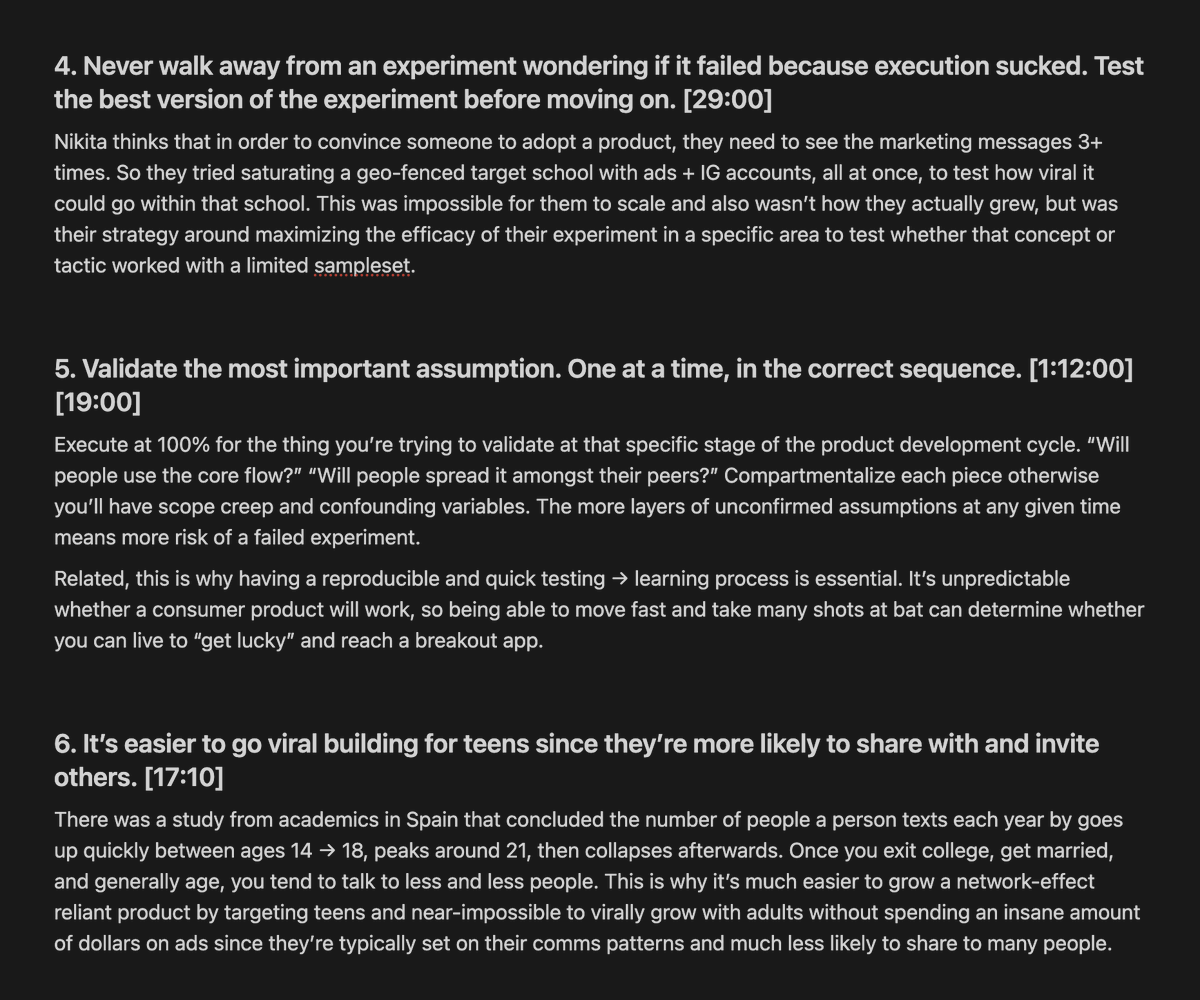
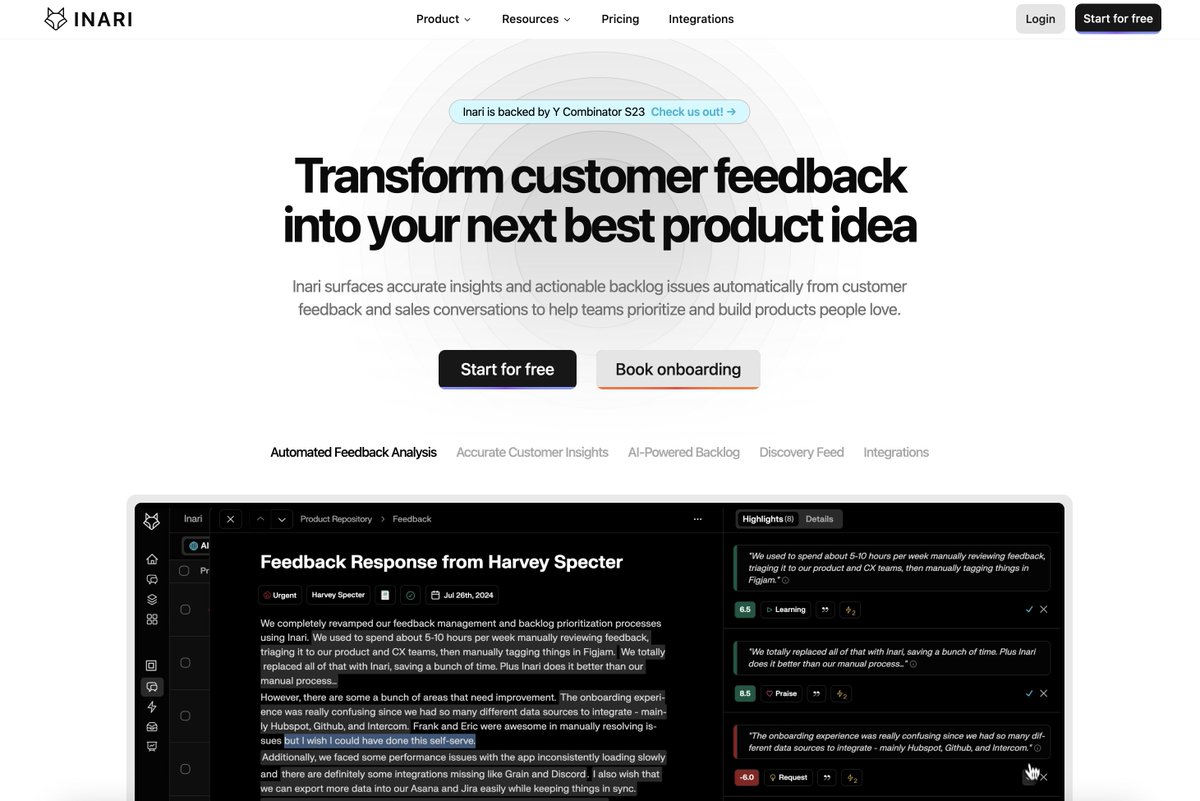
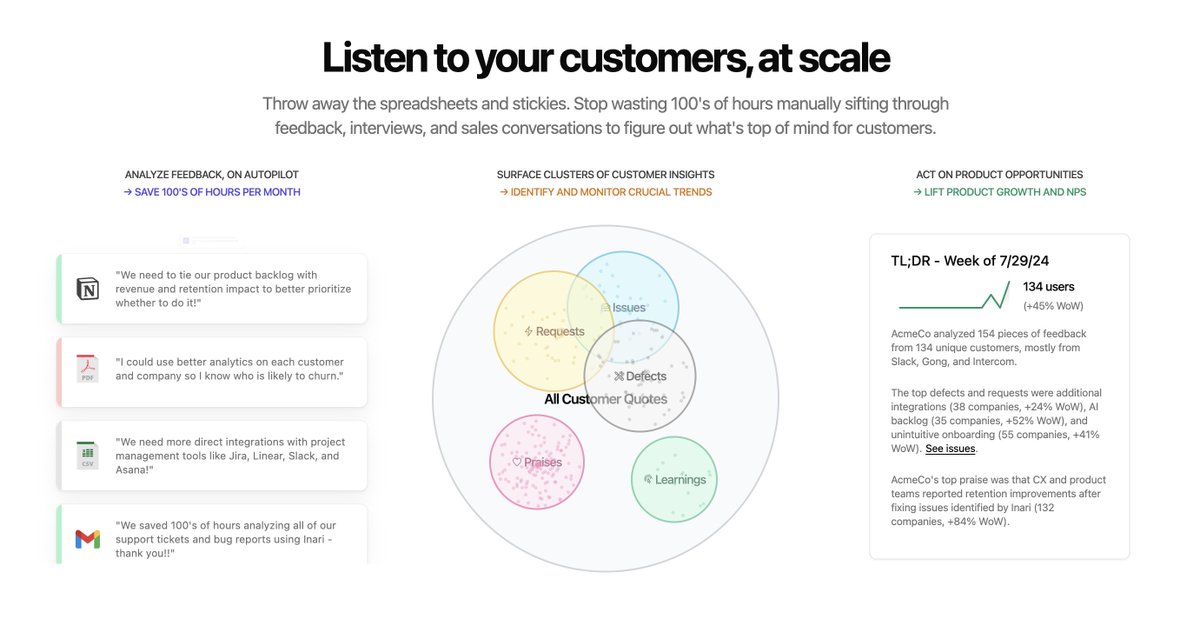
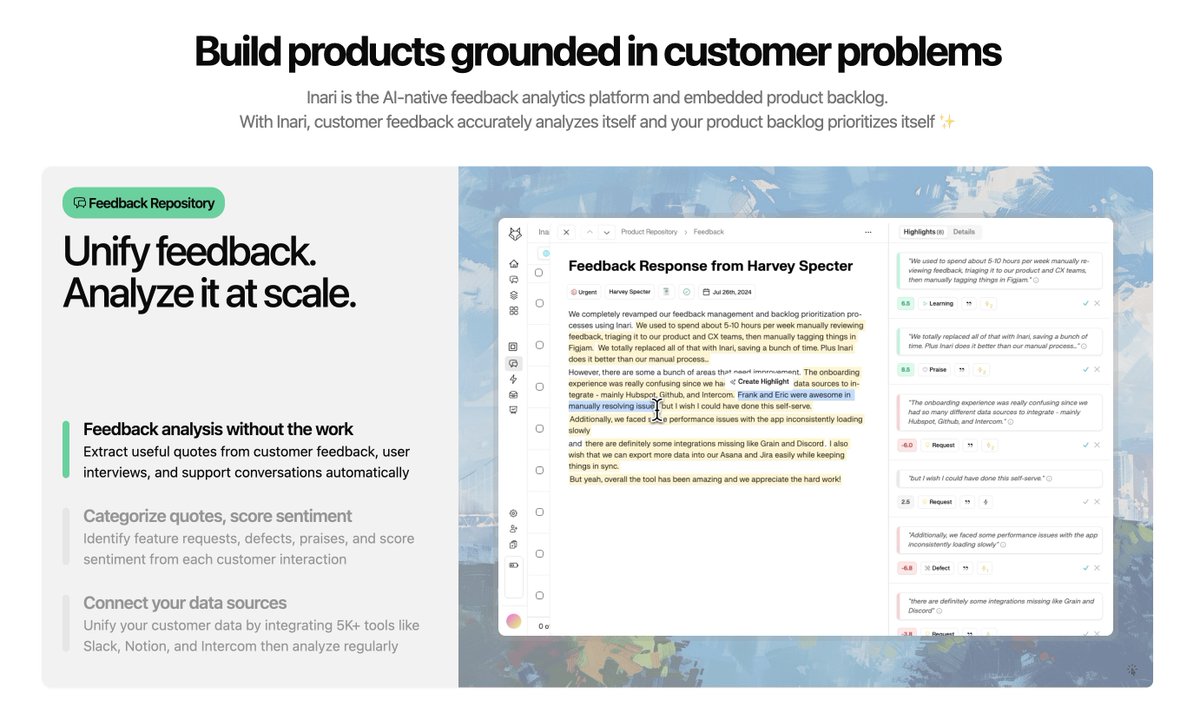
we shipped @useinari's revamped landing page today! inari passed its 1-year birthday a few weeks backs and it’s been a whirlwind year working with 1000’s of startup folks, experimenting with and building a variety of products in the ai and product space, and we’ve been so busy that we hadn’t really revamped our landing page much even though our product dramatically changed since the beginning. i wish i had saved some snapshots of the first versions of inari’s landing page we scrapped together in a day when eric and i first got to sf for the yc s23 batch. trust me - it was terrible. mainly because i was (and am still!) a totally newb product manager turned frontend engineer by necessity. but I’d like to think we’ve gotten slightly better at our engineering and growth efforts over the last year with a lot of persistence. also if you’re a terminally online tech person like me, you’ll stumble on a ton of great tools and resources like coding with ai (❤️ you cursor and openai/anthropic), great open source libraries (shadcn is the 🐐), generating anime images (midjourney niji is too fun) and just a bunch of random tips/components/tools that amazing designers share on the internet because they’re incredible. happy to chat and share but I truly think now is the best time ever to be a “non-technical” person experimenting with hands-on building - it’s been so incredibly fun. anyways, would love if everyone checked out the new landing page (link in comments!), roasted it for any obvious improvements on messaging / look/ feel, and also hit me up if you have a product / product ops process that needs support - I’m always happy to jam.
Frank Lee tweet mediaFrank Lee tweet mediaFrank Lee tweet mediaFrank Lee tweet media
English
3
1
8
498
Inari retweetledi
Frank Lee
Frank Lee@frankdotlee·
i don’t think I’ve shipped more github commits in my life than the last 2 weeks 😅 so i’m really excited to share a few product launches for @useinari this week, starting with this one today! some top recurrent themes we hear from product and cx leads are: 1. they want to pinpoint literally the top 1 or 2 most urgent customer trends at any given moment. 2. their team has 100’s of minutes of support or sales conversations and they want to extract the 2-3 most interesting or useful customer anecdotes to share with their team. 3. they have a weekly business review on monday and they get the worst sunday scaries since they have to prep for it every sunday night 🥲 so, we’ve shipped a discovery feed that pulls together the top trending and new insights, a prioritized set of high-signal customer quotes, and generates brief summaries of the top things happening in your product in a brief tl;dr to automate all the above problems away for you. you can also adjust the time period, date aggregation, and toggle other filters to tweak the visualizations and insight feed based on your reporting needs. i’d love if you checked this out and gave us feedback - we’d love to hear comments on what metrics or filters are most important + if there’s any feed card formats that you think are extremely high signal. our near-term goal is that you can check this in the morning to pinpoint exactly what the biggest customer problem are at any given point - let me know how we can help get there!
English
1
2
6
668
Inari retweetledi
Frank Lee
Frank Lee@frankdotlee·
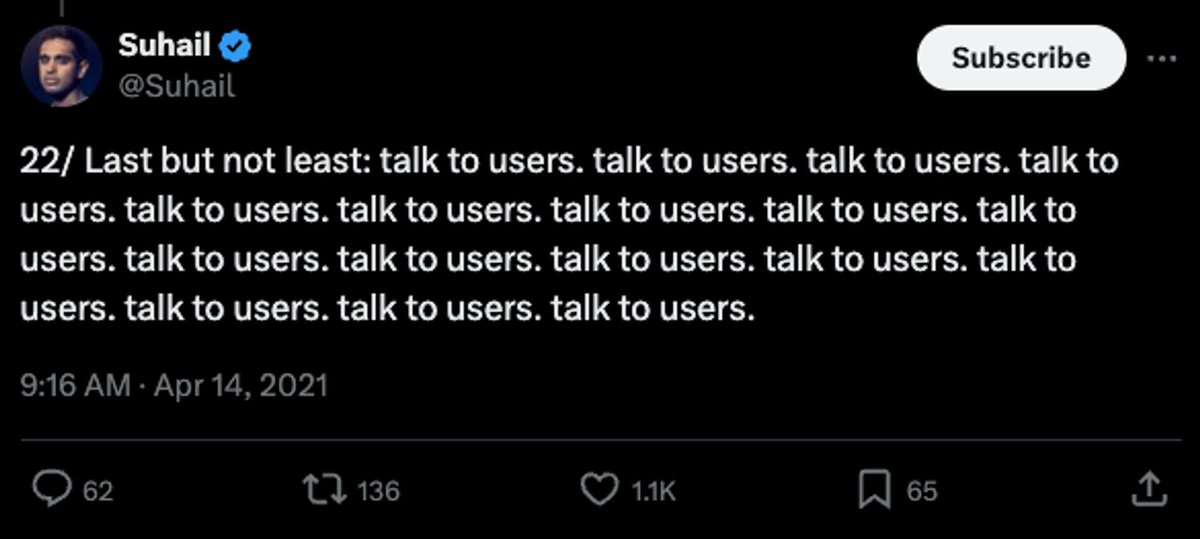
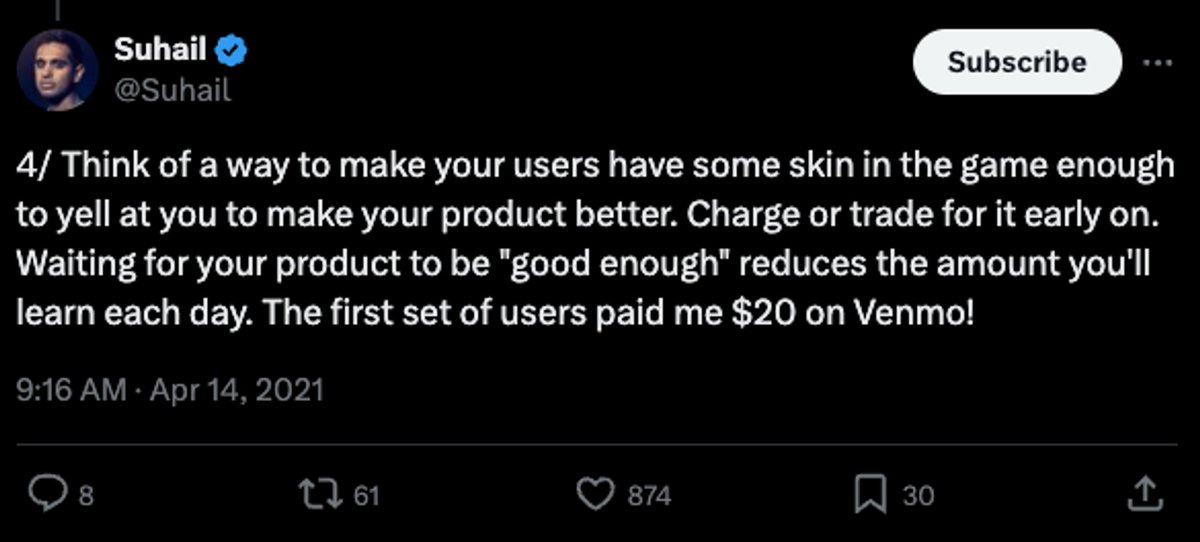
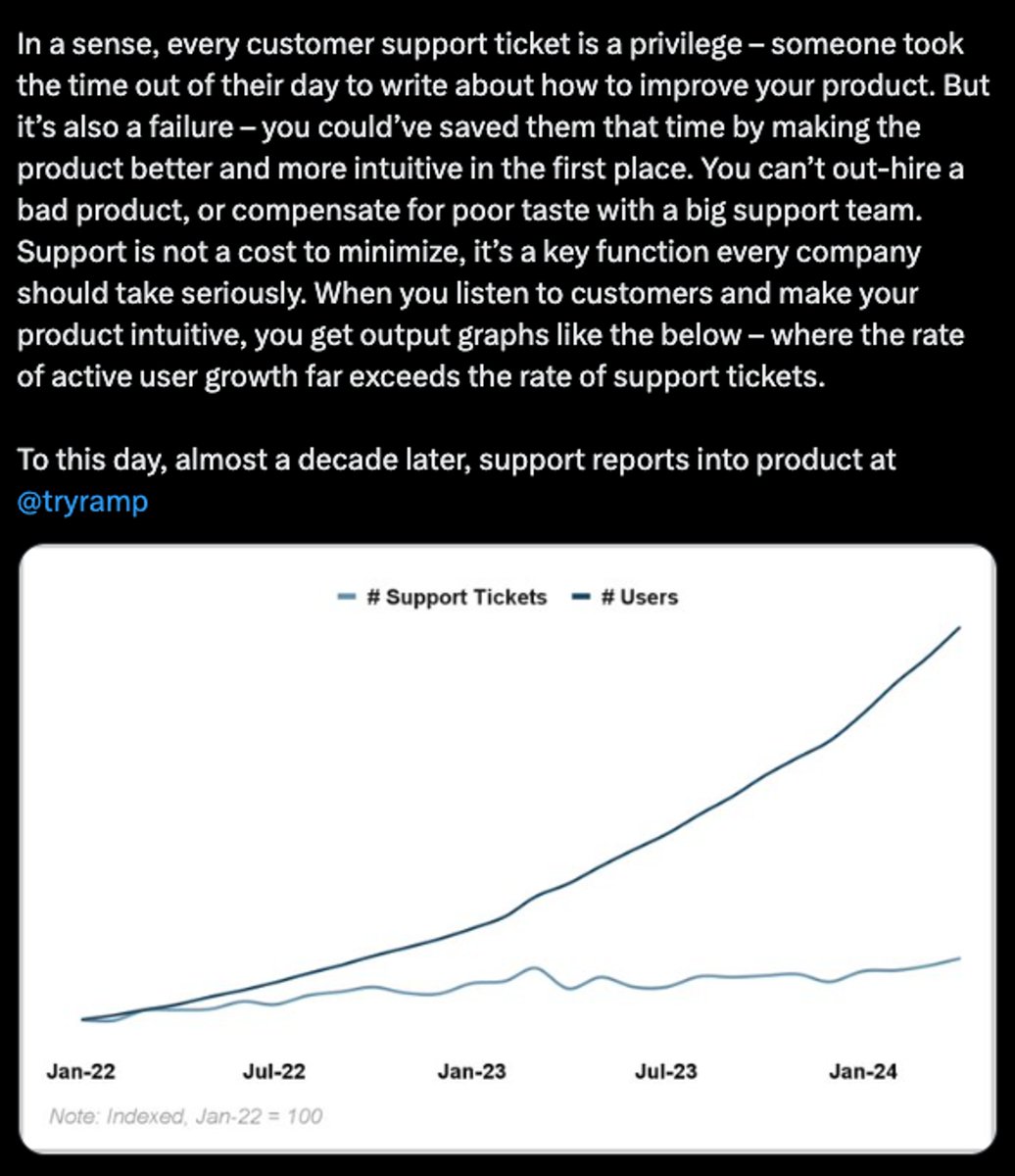
founders, product teams, and other operators are constantly reminded to “talk to users”, so I’ve been compiling some favorite hacks we’ve been doing at @useinari or I’ve seen mentioned online for doing so. here’s the first 3! setup direct lines with customers 📲 every time I end a chat with a potential customer, I offer up the option of setting up a slack connect channel between inari and their org. seems really obvious in hindsight but we’ve been able to get 10x higher volume of feedback, we live troubleshoot problems, and it feels more personal and delightful for customers to have a direct line. added benefit - we link slack channels into @useinari to automatically push feedback and requests directly into our backlog. also, it blows my mind how many PMs don’t spend time directly interfacing with customers on social - it’s the easiest way to get a pulse on sentiment, troubleshoot problems, de-risk upcoming launches, and makes building product 10x more fun since you have personal relationships with your users. i used to spend hours across twitter and discord responding to + dm’ing nba top shot users and we caught so many edge cases + great ideas directly from the community. listen to customers with skin in the game 🙉 i love this idea from @Suhail where he charged $20 to potential customers on venmo to see if customers are willing to put skin in the game for his product and provide higher-quality validation for the idea. @jeff_weinstein similarly mentions on @lennysan's podcast that he listens to feedback only from paid customers since payment is one of the best filtering mechanisms for whether the person giving feedback is actually your target customer and not just being a friend. i really loved jeff’s tip on uncovering even better feature requests by setting a high potential price to charge then pushing the customer to talk through the features needed to justify that high price. - you: “btw, this thing is 10K.” - user: “woah, i like this thing but not for $10K… for $10K, it would need to solve X.…” treat every support ticket as a product exception ❌ i think it’s really cool + unique that @tryramp has their support team report into product. i totally agree that customer support is a key company function, every CS ticket is a privilege, and each support issue should actually be thought of as a product exception - if the product worked as intended or was more intuitive, the customer wouldn’t have experienced the problem or confusion in the first place! we’ve setup an internal system so that every support issue is pinged into slack and notion for visibility by the team. these issues are ingested into @useinari which extracts then clusters the top bugs, product defects, and feature requests from the tickets automatically. then we pick off the backlog of issues and follow-up with customers directly to close the loop. setting up this system has been insanely helpful for making users feel heard. i'd love to hear more tips if you got any!
Frank Lee tweet mediaFrank Lee tweet mediaFrank Lee tweet media
English
1
2
6
382
Inari retweetledi
Frank Lee
Frank Lee@frankdotlee·
do you ever sit down sunday night, plan out your biggest project to tackle during the week, then get completely derailed when unexpected bugs pop up? well hey, dis me 👋🏼😅 this week we got an unexpected 10x+ influx in feedback ingested analyzed from several new orgs connecting their intercom inboxes for the first time and wow - running a startup never ceases to surprise me on how variable and messy data can get. two solid emergency fixes in the last week: we’ve completely reconfigured our pipeline around analyzing and extracting top customer quotes, categorizing its typing, and scoring sentiment. we’re seeing a 35%+ point accuracy gain (🤯) on highlighting better customer quotes, deduping similar ones, and ignoring bot commands. we shipped a preliminary spam filter in @useinari - as we’ve added intercom and more data sources, we’ve also seen some influx of random marketing emails, sales solicitations, and other spam that pollutes data used for analysis. we’re now screening out ~80% of spam with minimal mislabeling on actual feedback - still a ways to improve but much, much better than before. would love more teams to try this out, especially with the analysis and metrics generation seeing step-function improvements in accuracy and reliability - lmk if you want to test this out!
English
1
3
10
712
Inari retweetledi
Frank Lee
Frank Lee@frankdotlee·
how to prioritize initiatives is one of the top problems mentioned by product teams that we interact with @useinari, so we’ve been exploring a bit this week on how to make prioritizing feedback, insights, and issues more effective and easy. i hadn’t researched prioritization frameworks much in the past (i’ve only ever used impact vs effort or MoSCoW) and now i totally understand why folks are struggling. i’m totally overwhelmed by the sheer volume of frameworks and complexity PMs have managed to squeeze in. i think i counted 25+ distinct prioritization frameworks just on the 1st page of my google search 🤯 i’m genuinely curious to any product builders willing to share (comment below or DM me!!): - how are you prioritizing products to build nowadays? - what are the main inputs you look at when prioritizing? - do you actually craft your own formulas? go with set frameworks? or just go with your gut? - what’s your most top of mind problem or request as it relates to prioritization? we’re considering pulling together a few inputs below and crafting a simple score in @useinari but i’m super curious if we’re missing anything obvious: “reach”: we track volumes of users or companies mentioning a problem but can expand more broadly “impact”: revenue, deal size, and sentiment are most obvious but I’m curious what other metrics teams have found useful “effort”: really tough to do since teams are terrible at forecasting effort but maybe making point scoring or t-shirt sizing easier can be helpful (?) “urgency”: very subjective but can be a great proxy for intangibles like unblocking strategy, capitalizing on trends or first mover advantages, positioning against competitors, or prioritizing based on whether the problem gets more painful if delayed i’d love to make this easier for teams and chat with folks willing to share their process and wishlists 😄
English
1
2
5
316
Inari retweetledi
Frank Lee
Frank Lee@frankdotlee·
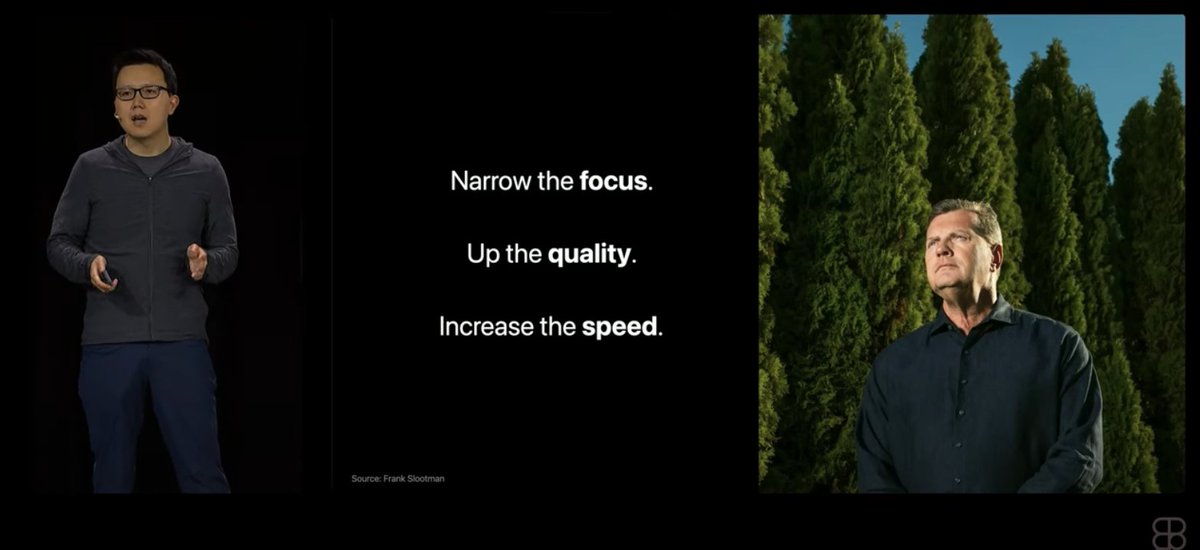
i saw a slide last week teasing @petergyang ’s talk @ figma config (great talk btw) where he reminded everyone about the killer frank slootman mantra: - narrow the focus - up the quality - increase the speed it was super timely because we’ve actually spent the last and current sprints on exactly those things. over the last few months, we’ve shipped a ton of new features on @useinari to experiment and see what sticks but had to make tradeoffs on quality and speed, which we’re now paying our debts to fix. we’ve found 3 processes working really well for upping quality: 1. friction logging then resolving immediately everyday, throughout the day, eric and i log every minor bug or feature that “feels” unpolished to ourselves or gets mentioned by customers into 1 consolidated slack channel. we’ve been blocking off 1-2 hours every night to pickoff and fix or polish every issue before we go to sleep. cumulatively we’ve picked off 20-30+ fixes just in the last 2 weeks and the experience improvements feel like they're compounding. 2. implement policies of polishing the details we’ve been setting better standards on what “acceptable” is before features ship. for example, we basically set a “no spinners allowed” policy. i know every designer is facepalming but previously our buttons and state changes were visibly showing a ton of loading delays and spinners. we’ve refactored as much as possible to updating buttons/states optimistically so users see changes “instantly” and we handle delays and complexity under the hood. 3. using our product daily i’ve been that annoying PM but have been pushing myself and eric to use inari in more and more of our product development workflow. every time a customer conversation comes in and we’re deciding what to build next or we’re manually onboarding a bigger team, we work through our product end to end, logging our own issues and wants, then ship those fixes. some things we shipped under the hood based on these process changes: - this is soon to launch but we’re seeing 20-30%+ pt accuracy improvements on customer quote attribution, more relevant insights and issues, and 30-40% reduction in time spent analyzing with our refactored analysis pipeline. - loading the app is 3x+ faster and more stable than before. - inari feels 10x more polished with optimistic state changes and less spinners. - we’ve deprecated multiple features that weren’t being used frequently or hitting our quality bar. if you have anymore tips or process changes for shipping higher quality experiences, comment them since i’d love to hear about them! we’d love to try them out.
Frank Lee tweet media
English
1
1
7
673
Inari retweetledi
Frank Lee
Frank Lee@frankdotlee·
it’s friday, but screw it. we ship on friday anyways. two biggest things for @useinari this week: 1. you can connect inari with @Jira and export your backlogs into jira projects 2. we started the process for getting SOC 2 compliant with @TrustVanta last week given both things, I thought it’d be fun to dump in over 1,000 public customer reviews about vanta over the last few years into inari and see what everyone is saying. it took us a few minutes but we analyzed every piece of feedback, clustered all the top themes, then generated a prelim set of backlog issues grounded in customer problems. i connected jira with inari then exported a few issues directly into my jira project to start executing against, but this time with the full context of every specific customer mention backing the issue up. for now this just makes one-time exporting easy but we plan to build out real-time syncing with jira and more options to pull in additional customer context soon! we’re also building out a sync with linear soon, so stay tuned. we’d love to hear ideas on how to make these external integrations better - so hit me up if you want to try this out or have feedback! or if you work on product/CX @ vanta and are curious about the top problems and issues from all of your public reviews - i'd love to share our insights repo with you 😁
English
2
3
8
546
Inari retweetledi
Frank Lee
Frank Lee@frankdotlee·
if you want to do this at your company and want to save months of eng resources from building it internally - we do this out the box for you with @useinari 🫡
Eric Glyman@eglyman

Building a great company requires talking to and learning from as many customers as possible, as often as you can. As the company grows, it’s hard to scale getting feedback and transmitting it throughout the company. At @tryramp, we’ve built a number of internal solutions to this scaling problem. Here are two ones made easy with AI: 1) Toby, an AI teammate who listens to and learns from recorded customer conversation — over 100K so far. Anyone at Ramp can ask Toby questions in Slack to get insights from customer feedback. Recent examples include an SDR asking about why people choose Ramp over a competitor, a product marketer seeking to learn why people are dissatisfied with another competitor, and a designer asking about reporting.

English
0
1
5
682
Inari retweetledi
Frank Lee
Frank Lee@frankdotlee·
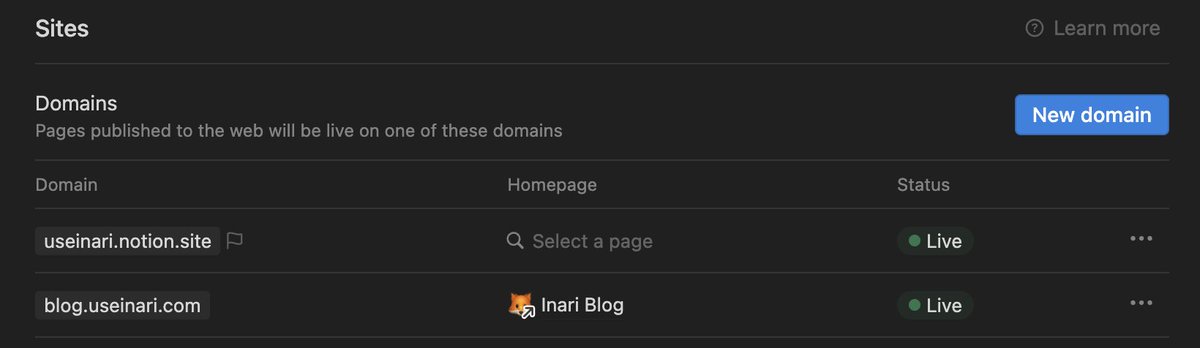
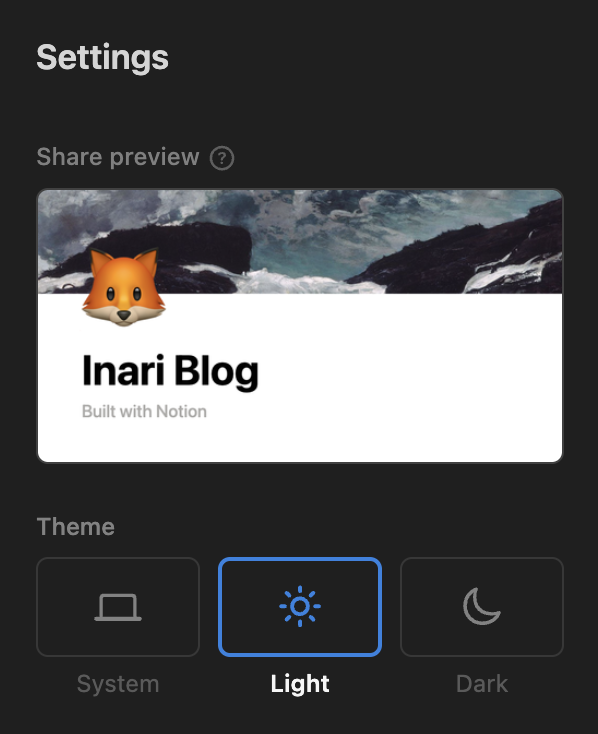
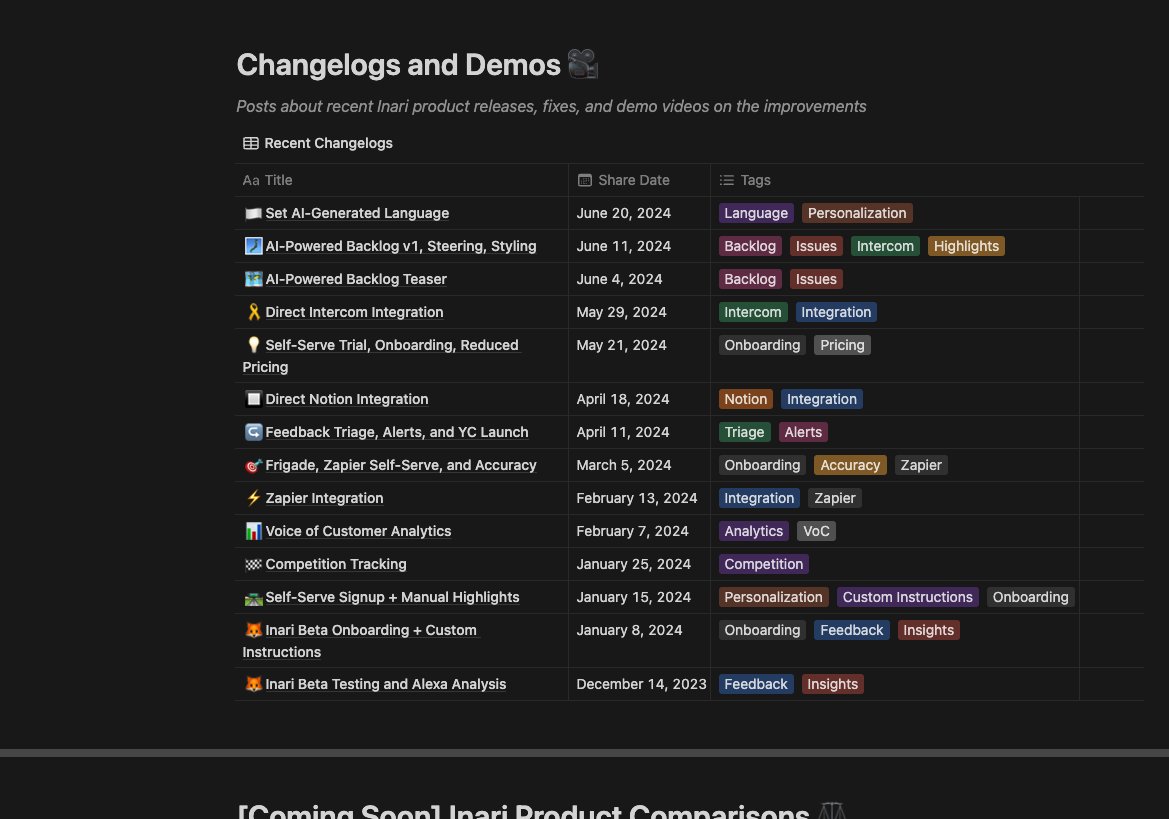
trying this notion site thingie with @useinari - just copied over a lot of my existing social posts that already lived in notion over! blog.useinari.com jotted some feedback for @NotionHQ while moving things over. 1. the setup process for sites was really confusing. at first i accidentally set the domain incorrectly to "useinari.com" then realized my error. notion doesn't let you edit this after you create it. i had to delete the errored one then resubmit with "blog.useinari.com" and had to pay twice. totally understand it was my own error since i'm a domain newb but was def a bad ux and almost made me not want to go all the way through. 2. having to override the default link title over and over was a huge pain in the ass. i don't want to plaster "notion" all over the SEO preview. i'm sure it's on the roadmap but having some type of global site settings makes a lot of sense because i'd like to consistently apply changes without repeating it over and over manually. 3. the theme editing is either confusing or just doesn't work. i've set a "light" theme in the settings but this selection feels randomly applied depending on where i enter the page at. i'm assuming it prioritizes whatever theme a logged-in notion user has selected (i have dark mode selected)? otherwise i have no idea why the theme gets selected. 4. maybe it's just me but how prominent the horizontal scroll attached to the tables is across the full page drives me absolutely nuts. i purposefully condensed all my column titles just so the horizontal scrollbar doesn't show up. nonetheless, i'm genuinely excited for this feature! i was considering some of the notion -> blog alternatives for a while but never pulled the trigger because they're all way too expensive. i like this as a v1 and am hoping we get better customizations + SEO improvements!
Frank Lee tweet mediaFrank Lee tweet mediaFrank Lee tweet mediaFrank Lee tweet media
Notion@NotionHQ

Introducing Notion Sites—the easiest way to make a website 🌐 We turned Notion’s "Publish" button into a full suite of features, including custom domains. To help you create personal websites, portfolios, travel guides, and more with just one click. Get started today at ntn.so/notionsites (P.S. Tag us, and show us what you create!)

English
3
2
9
1.8K