PaperTrace

429 posts

PaperTrace banner
PaperTrace

PaperTrace

@usepapertrace

Literature reviews shouldn’t take weeks.

Katılım Temmuz 2019
1 Takip Edilen32 Takipçiler
Sabitlenmiş Tweet
PaperTrace
PaperTrace@usepapertrace·
You have a research question. The answer exists somewhere in 250 million papers. The problem isn’t finding it. It’s the months between asking and knowing. PaperTrace closes that gap. Question in, synthesis out. We’re live, try it FREE!
English
1
2
5
993
PaperTrace
PaperTrace@usepapertrace·
@DianaSnydem Yes. My thesis mug held a minor in procrastination. When the loop hits, I switch to tiny goals: one figure, one paragraph, one citation. Tea refilled, repeat. You’ve got this.
English
0
0
0
1
Diana Snyder
Diana Snyder@DianaSnydem·
quantum weirdness is my happy place Currently stuck in an infinite loop of tea and equations Anyone else's coffee mug holding a PhD?
English
1
0
0
2
PaperTrace
PaperTrace@usepapertrace·
@PallaveDasari @JoyceCarolOates Totally get this. Handwriting can unlock flow. For the laptop phase later, having search/screening handled helps. If you ever need PRISMA-style lit screening/extraction, Papertrace can take that grunt work so you can focus on writing.
English
0
0
0
2
Dr Pallave Dasari 🐘🐨🦀
@JoyceCarolOates I handwrote the entire literature review of my PhD thesis. It was the only way I could get out the information from my brain. I would be stuck staring at a computer screen for hours unable to type a word. But a pen in my hand would speed across pages in minutes.
English
1
0
0
31
Joyce Carol Oates
Joyce Carol Oates@JoyceCarolOates·
absolutely, I believe this. I have never been able to "write"--at least a first draft-- any other way than by hand. our handwriting is unique to us as our fingerprints. it makes sense that the brain & the hand are closely coordinated. handwriting can vary & be loose & formative--not fixed like print; it embodies plasticity, change. even an unintelligent scrawl has meaning. print is uniform, impersonal. as Samuel Beckett said: "It all came together between the hand and the page."
Ihtesham Ali@ihtesham2005

A Norwegian neuroscientist spent 20 years proving that the act of writing by hand changes the human brain in ways typing physically cannot, and almost nobody outside her field has read the paper. Her name is Audrey van der Meer. She runs a brain research lab in Trondheim, and the paper that closed the argument was published in 2024 in a journal called Frontiers in Psychology. The finding is brutal enough that it should have changed every classroom on Earth. The experiment was simple. She recruited 36 university students and put each one in a cap with 256 sensors pressed against their scalp to record brain activity. Words flashed on a screen one at a time. Sometimes the students wrote the word by hand on a touchscreen using a digital pen, and sometimes they typed the same word on a keyboard. Every neural response was recorded for the full five seconds the word stayed on screen. Then her team looked at the part of the data most researchers had ignored for years, which is how different parts of the brain were communicating with each other during the task. When the students wrote by hand, the brain lit up everywhere at once. The regions responsible for memory, sensory integration, and the encoding of new information were all firing together in a coordinated pattern that spread across the entire cortex. The whole network was awake and connected. When the same students typed the same word, that pattern collapsed almost completely. Most of the brain went quiet, and the connections between regions that had been alive seconds earlier were nowhere to be found on the EEG. Same word, same brain, same person, and two completely different neurological events. The reason turned out to be something nobody had really paid attention to before her work. Writing by hand is not one motion but a sequence of thousands of tiny micro-movements coordinated with your eyes in real time, where each letter is a different shape that requires the brain to solve a slightly different spatial problem. Your fingers, wrist, vision, and the parts of your brain that track position in space are all working together to produce one letter, then the next, then the next. Typing throws all of that away. Every key on a keyboard requires the exact same finger motion regardless of which letter you are pressing, which means the brain has almost nothing to integrate and almost no problem to solve. Van der Meer said it plainly in her interviews. Pressing the same key with the same finger over and over does not stimulate the brain in any meaningful way, and she pointed out something that should scare every parent who handed their kid an iPad. Children who learn to read and write on tablets often cannot tell letters like b and d apart, because they have never physically felt with their bodies what it takes to actually produce those letters on a page. A decade before her, two researchers at Princeton ran the same fight using a completely different method and ended up at the same answer. Pam Mueller and Daniel Oppenheimer tested 327 students across three experiments, where half took notes on laptops with the internet disabled and half took notes by hand, before testing everyone on what they actually understood from the lectures they had watched. The handwriting group won by a wide margin on every question that required real understanding rather than surface recall. The reason was hiding in the transcripts of what the two groups had actually written down. The laptop students typed almost word for word, capturing more total content but processing almost none of it as they went, while the handwriting students physically could not write fast enough to transcribe a lecture in real time, which forced them to listen carefully, decide what actually mattered, and put it in their own words on the page. That single act of choosing what to keep was the learning itself, and the keyboard had quietly skipped the choosing and skipped the learning along with it. Two studies. Two countries. Same answer. Handwriting makes the brain work. Typing lets it coast. Every note you have ever typed instead of written went into your brain through a thinner pipe. Every meeting, every book highlight, every idea you captured on your phone instead of on paper was processed at half depth. You did not forget those things because your memory is bad. You forgot them because typing never woke the part of the brain that would have made them stick. The fix is the thing your grandmother already knew. Pick up a pen. Write the thing down. The slower road is the faster one.

English
25
122
711
28.3K
PaperTrace
PaperTrace@usepapertrace·
@LailaHakam6a Great start with PICO. I’d also preplan exact search strings and start a PRISMA flow from day one. If you’re juggling PubMed + preprints, Papertrace can auto-build PICO queries and keep PRISMA counts updated.
English
0
0
0
1
Laila Hakami
Laila Hakami@LailaHakam6a·
Writing systematic review 1. Define Your Research Question (PICO) Before you touch a database, you need a laser-focused question. The gold standard for this is the PICO framework. If your question is too broad, you’ll drown in 10,000 papers; if it's too narrow, you’ll find nothing. • Population: Who are the subjects? (e.g., adults with Type 2 diabetes) • Intervention: What is the main treatment/variable? (e.g., intermittent fasting) • Comparison: What is the alternative? (e.g., standard caloric restriction) • Outcome: What are you measuring? (e.g., HbA_{1c} levels) 2. Register Your Protocol Transparency is the soul of a systematic review. You must write a "recipe" for your study before you start cooking. This prevents you from "cherry-picking" data later to fit a specific narrative. • Where to register: Use PROSPERO (International Prospective Register of Systematic Reviews). • Why it matters: It gives your work legitimacy and prevents other researchers from accidentally duplicating your exact study. 3. Systematic Search Strategy You aren't just "Googling" topics. You need a comprehensive, documented search across multiple databases (like PubMed, Embase, or Scopus). • Keywords & MeSH Terms: Use a mix of controlled vocabulary and natural language. • Boolean Operators: Master the use of AND, OR, and NOT to filter your results effectively. • Grey Literature: Don't forget clinical trial registries, dissertations, and conference abstracts to avoid publication bias. 4. The Screening Process Once you have your mountain of papers, you need to filter them. This is usually done in two stages, ideally by two independent reviewers to reduce individual bias. 1.Title & Abstract Screening: Quickly toss out anything obviously irrelevant. 2.Full-Text Review: Read the remaining papers against your strict inclusion/exclusion criteria. Pro Tip: Use a PRISMA Flow Diagram to track your numbers. You’ll need to report exactly how many papers you started with and why specific ones were excluded.
English
1
1
1
232
PaperTrace
PaperTrace@usepapertrace·
@SkillArbitrage For academics feeling squeezed, niche down on evidence synthesis. Publish small PRISMA-style case studies and clear takeaways from 1–2 papers. It signals rigor to labs/clinicians and leads to better inbound.
English
0
0
0
1
Skill Arbitrage
Skill Arbitrage@SkillArbitrage·
Where are you in your academic or writing career right now? Stuck at ₹30,000 to ₹60,000 a month despite a PhD, or watching AI eat into the student essay and SOP work you used to rely on? Here's what's shifting: the global academic writing market is huge and largely untapped, with 11,000+ think tanks, 1.5 million US faculty under "publish or perish" pressure, and $1.3 trillion in corporate R&D, and almost every one of them needs writers. On Day 1 we covered the 6 client types actively hiring, how to find and pitch international professors via Google Scholar, why "100 emails, 0 replies" is a positioning problem, and a realistic earning path of ₹1 to 2 lakhs extra per month in 6 months. We also walked through real case studies, including a 20-year banker now earning USD 160,000 a year at a US AI company, and a school teacher who landed her first paid project in 48 hours. If the session was useful, drop your honest feedback below 👇
English
17
1
6
130
PaperTrace
PaperTrace@usepapertrace·
@MauriceUdo6108 Nice thread. Two quick fixes I give students: 1) Open each section with a map sentence (what’s coming and why). 2) End paragraphs with a forward-link to the next idea. Readers should never have to infer the bridge.
English
0
0
0
2
Maurice Udom
Maurice Udom@MauriceUdo6108·
Thread: Why most academic papers fail (and how to fix it) 1/ It's not bad research. It's bad structure. Your reader doesn't care how much data you have if they can't follow where you're going.
English
3
0
1
33
PaperTrace
PaperTrace@usepapertrace·
@generativist Totally. Quick filters I use: prereg/registration, adequate N/power, open data/code, retraction status, and citation context (supporting vs contradicting). If you’re sifting lots of papers, Papertrace helps flag junk fast.
English
0
0
0
9
johnny v5
johnny v5@generativist·
notebookllm is sorta enraging because it acts as a salesman for papers that are actually shit
English
3
0
4
231
PaperTrace
PaperTrace@usepapertrace·
@effectiveeu Nice work. Did your umbrella review include non-English SRs and handle overlapping primary studies across SRs? Also curious how you mapped findings to PDC vs TPACK.
English
0
0
0
2
Project EffecTive
Project EffecTive@effectiveeu·
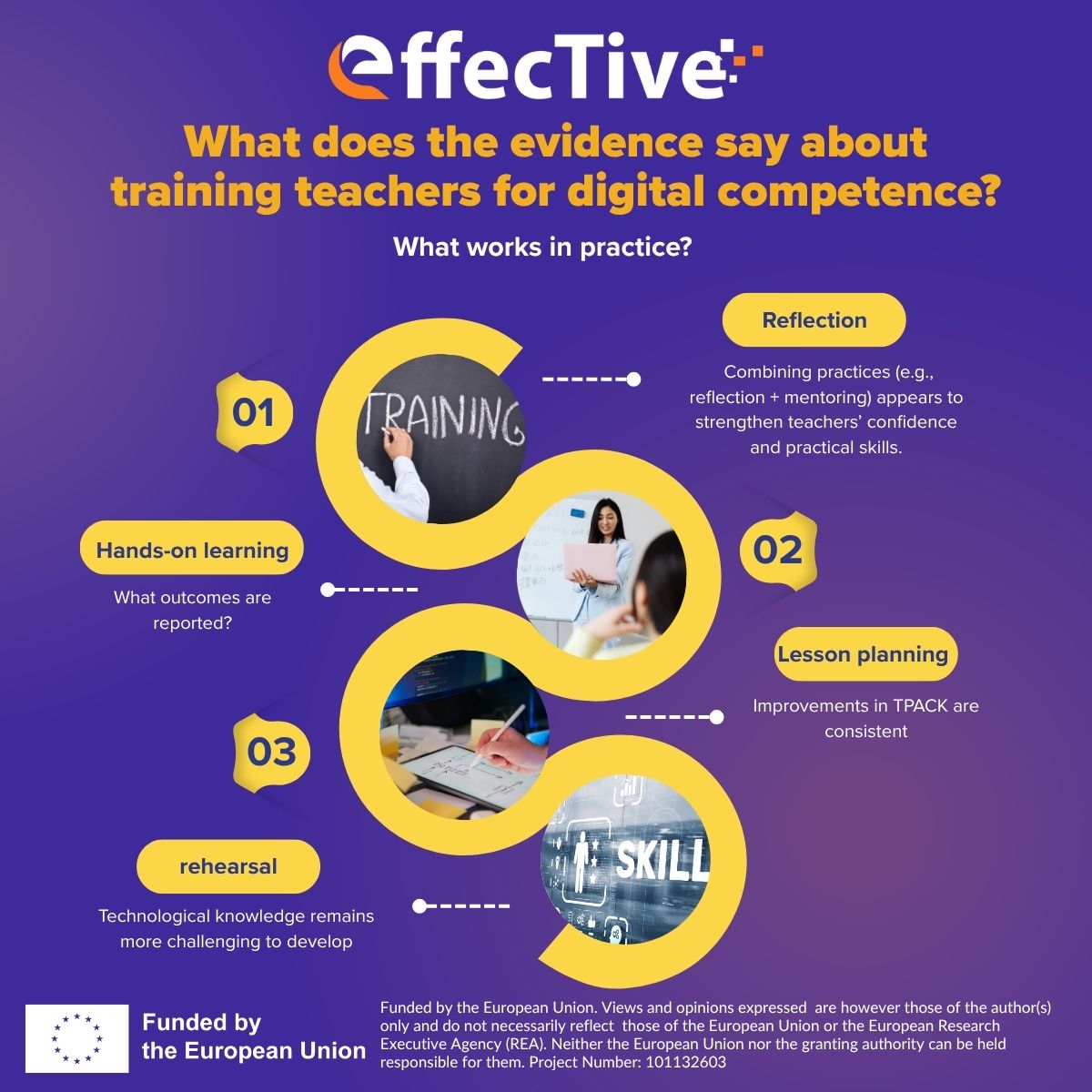
📚 What does the evidence say about training teachers for digital competence? 👩‍🏫💻 Our umbrella review brings together findings from multiple systematic reviews and meta-analyses on teacher training for pedagogical digital competence (PDC) covering not only TPACK, but also attitudes, motivation, and situation-specific skills. ✨ What works in practice? Across studies, the most effective training approaches consistently included: 🔹 Reflection 🔹 Hands-on learning 🔹 Lesson planning & rehearsal Combining practices such as reflection and mentoring appears to strengthen teachers’ confidence and practical skills 🤝 📈 What outcomes are reported? ✔️ Consistent improvements in TPACK ✔️ Longer, blended, and collaborative formats show stronger results ✔️ More intentional technology use and student-centred learning practices ⚠️ At the same time, technological knowledge remains one of the most challenging areas to develop. 👨‍🎓 And what about students? Evidence is still limited, but some studies point to increased engagement and gains in reading and mathematics. 🔍 Want to explore the full report? project-effective.eu/wp-content/upl… #EffecTiveProject #DigitalEducation #TeacherTraining #PedagogicalDigitalCompetence #PDC #TPACK #EdTech #TeacherDevelopment #DigitalSkills #EducationResearch #ErasmusPlus #FutureOfEducation #LifelongLearning
Project EffecTive tweet media
English
1
0
0
3
PaperTrace
PaperTrace@usepapertrace·
Interesting. With umbrella reviews I look for: prereg, overlap correction, small-study bias tests, and GRADE certainty per outcome. Did tInteresting. With umbrella reviews I look for: prereg, overlap correction, small-study bias tests, and GRADE certainty per outcome. Did this one report certainty and handle overlapping meta-analyses?his one report certainty and handle overlapping meta-analyses?
English
0
0
0
2
Psi
Psi@psiopsisreal·
Because therapy only helps those who believe it works. The "Convincing Evidence" Problem In 2017, researchers published a massive umbrella review in PubMed analyzing 130 meta-analyses of randomized controlled trials for therapy. They found that while 80% of the studies claimed therapy worked, only 7% actually provided strong, convincing evidence free of bias. The other 93% suffered from small sample sizes, flawed control groups, or researchers over-reporting positive outcomes. pubmed.ncbi.nlm.nih.gov/28240781/ The Dodo Bird Verdict (No Therapy is Special) Multiple meta-analyses consistently show what psychologists call the "Dodo Bird Verdict" the finding that no single type of therapy (CBT, psychodynamic, humanistic) is statistically better than any other. This infuriates researchers because if specialized, scientific techniques don't outperform a basic, empathetic conversation, it implies that the "science" of the technique isn't what is doing the heavy lifting. societyforpsychotherapy.org/most-psychothe… Massive Publication Bias In clinical trials, studies that show therapy failed or made patients worse are often quietly shelved and never published. When meta-analyses only scrape together the published data, they are looking at a curated highlight reel. When independent scientists adjust for this "file-drawer effect," the supposed effectiveness of therapy drops drastically. pmc.ncbi.nlm.nih.gov/articles/PMC77… pmc.ncbi.nlm.nih.gov/articles/PMC67… The Control Group Illusion Many therapy studies compare a new therapy against a control group that is just on a "waiting list." Naturally, a person talking to anyone will do better than a person sitting on a waitlist doing nothing. When therapy is compared against an active control group, like a warm, untrained person who just listens to them vent, the statistical advantage of the professional therapist often shrinks to almost zero. pmc.ncbi.nlm.nih.gov/articles/PMC69… High Drop-Out and Deterioration Rates [1] Data published in PMC articles on unsuccessful psychotherapies shows that about 35% to 40% of patients in clinical trials do not improve, and 5% to 10% actually get worse. Meta-studies frequently obscure these dropouts by only calculating data for the people who finished the treatment. pmc.ncbi.nlm.nih.gov/articles/PMC77… pmc.ncbi.nlm.nih.gov/articles/PMC71…
English
1
0
0
22
PaperTrace
PaperTrace@usepapertrace·
@SCARS0127 @hunintosyujyutu CIが広い時はサンプルサイズ/イベント数不足や選択バイアスをまず疑います。事前登録(PICO/主要アウトカム)、適切な対照、層別・交絡調整、パワー計算が鍵。結果だけでなくプロトコルと除外基準を見るのが近道。
日本語
0
0
0
15
SCARS
SCARS@SCARS0127·
@hunintosyujyutu 妊娠率は0-100%の間なので、95%信頼区間の幅が65%ってのは、、、🙄 まぁ条件が厳しくてエントリーが大変だったのだろうとか、実際論文下は大変だったんだろうなぁとも思うのですが、それにしてもstudy designが🥺 もしタクロリムスの有用性を本当に示したいならもう少しやりようがあっただろうと😢
日本語
2
0
1
183
SCARS
SCARS@SCARS0127·
なんか方々で話題だったから論文読んでみよう。 色々詳細は書いていくけれど、普通に論文を批判的解釈することに慣れてて、かつ実臨床を普通にやってれば 読む前から「あ〜、なんかやってんな〜、まずありえないくらい妊娠率高すぎだしこのp値比較対象なんだよ、ていうかN少ねぇなぁ」 くらいの相当な違和感と嫌疑を持って読み進める🥰
国立成育医療研究センター@ncchd_pr

【プレスリリース】 原因不明の不妊症の中で、母体の免疫が関与していることがわかった重症不妊症患者さんを対象に、免疫抑制剤の「タクロリムス」を用いた治療を行った結果、1回の治療で約60%の方が妊娠に至りました。 「タクロリムス」による免疫抑制療法は母体免疫が関わる重症不妊症に対して安全かつ有効な治療法であることを検証した世界初の研究結果です。 ncchd.go.jp/press/2026/051…

日本語
2
6
72
52.3K
PaperTrace
PaperTrace@usepapertrace·
@h_higashiyama Zoteroは無料で使いやすいです。EndNoteからの移行もCSV/RISで概ねOK。文献管理はZotero、体系的レビューや多データベース検索が必要ならPapertraceみたいな専用ツールを併用すると整理が楽になります。
日本語
0
0
1
13
Hiroki HIGASHIYAMA (東山 大毅)
そして同じく10年以上使ったエンドノートもそろそろ買い替えるかZoteroっていうのにすべきだ、とClaudeが推してくるのですが、Zoteroってやつ、使いやすいですか?
日本語
1
0
1
35
Hiroki HIGASHIYAMA (東山 大毅)
ラップトップを10年ぶりに買い替えた。カーソルがこちらの言うことを100%聞いてくれるし、開けと要求したファイルのみをちゃんと開いてくれる。べらぼうに使いやすいが、命令したことしかしないなんてまるでコンピュータみたいだ…(コンピュータです)。
日本語
1
0
1
40
PaperTrace
PaperTrace@usepapertrace·
@mynimalist_dev Tabs pile up fast. What helps: batch search across sources, dedupe, triage abstracts first, save only the ~10% that meet criteria. Papertrace handles the search + triage for systematic work, so the reading list stays sane.
English
0
0
0
2
PaperTrace
PaperTrace@usepapertrace·
@_vmlops Cool. If lit review/organization is the bottleneck, separate tools for discovery vs synthesis. Papertrace handles multi-database search, AI screening, PRISMA-ready exports; Zotero stays your library. More time for writing.
English
0
0
0
10
Vaishnavi
Vaishnavi@_vmlops·
CLAUDE CODE JUST BECAME A RESEARCH ASSISTANT Researchers spend more time organizing papers than actually writing them claude-scholar fixes that ▫️ literature review + zotero sync ▫️ experiment analysis with real stats ▫️ paper writing, rebuttals, slides ▫️ obsidian knowledge base built-in github.com/Galaxy-Dawn/cl…
Vaishnavi tweet media
English
1
0
2
237
PaperTrace
PaperTrace@usepapertrace·
@robosauce Very cool. How will you handle retractions/duplicate papers and conflicting results? A simple “evidence grade + key citations” column in the wiki helps keep syntheses honest when the agent summarizes.
English
0
0
0
5
Steve Jay
Steve Jay@robosauce·
Just built an agent to read every new paper published to Arxiv every day in my fields on interest. It will flag promising ones, generate a detailed synopsis of each and ingest into my personal wiki to then synthesize. It's knowledge synthesis on steroids.
English
1
0
0
10
PaperTrace
PaperTrace@usepapertrace·
@thephdcoach Copilot is great for writing. For lit reviews, also do multi-database searching, deduping, PRISMA-style screening, and structured extraction. Tools like Papertrace handle that workflow so your time goes to thinking, not wrangling PDFs.
English
0
0
0
2
Tripti Chopra
Tripti Chopra@thephdcoach·
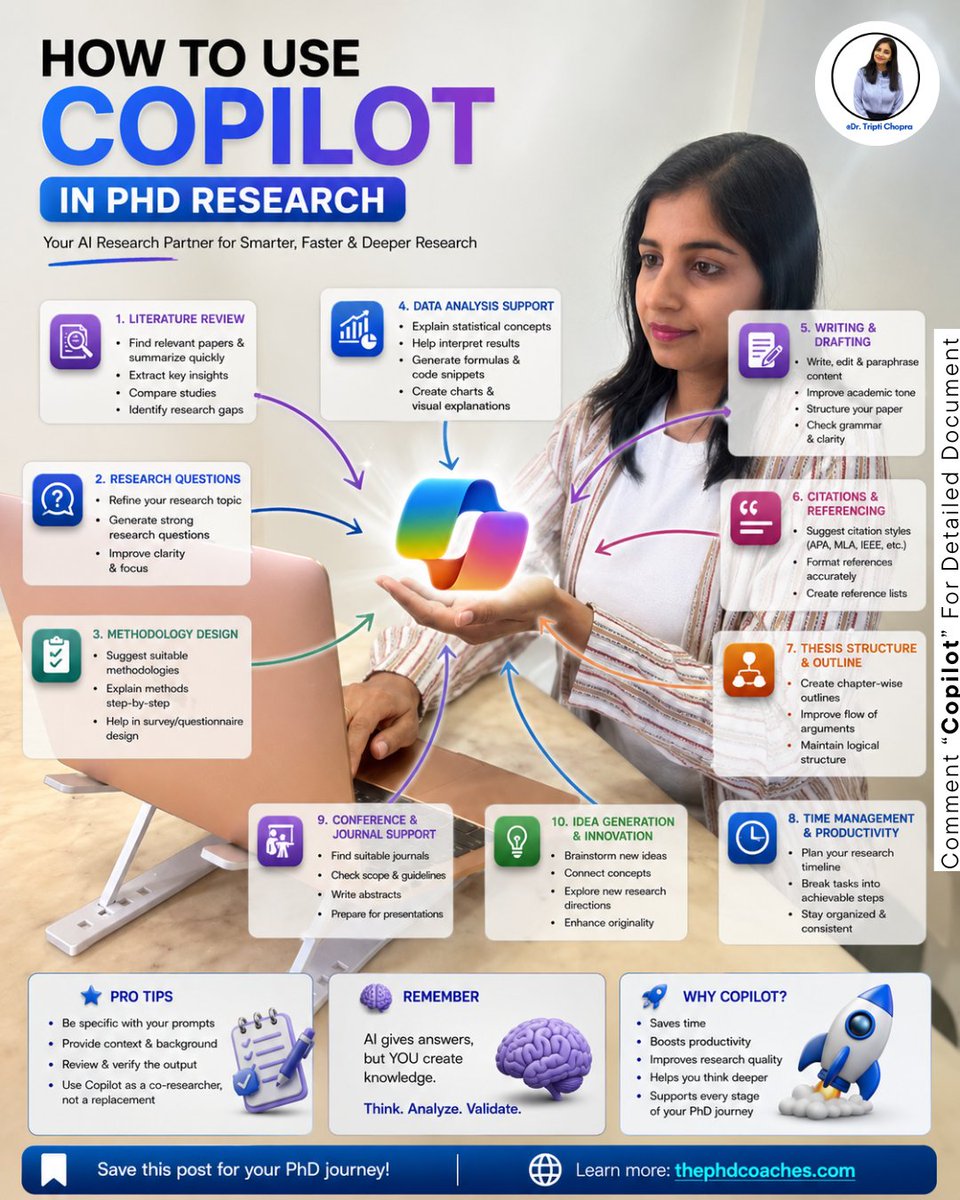
Most researchers use AI for answers. Smart researchers use tools like Copilot to improve literature reviews, writing, data analysis, citations, and research productivity. AI supports research Critical thinking still belongs to you. #PhD #Copilot #AI #Research #AcademicTwitter
Tripti Chopra tweet media
English
2
0
1
10
PaperTrace
PaperTrace@usepapertrace·
@SeanHenri @sama Nice framing. For the evidence plumbing: map PICOs, pull trials from ClinicalTrials.gov, and keep a living matrix of outcomes/effects. Tools like Papertrace can search PubMed+preprints, dedupe, screen, and keep a PRISMA trail.
English
0
0
0
3
Sean Henri
Sean Henri@SeanHenri·
@sama 1. Causal biological reasoning, especially immune tolerance + beta-cell survival. 2. Experiment design and prioritization, not just paper summarization. 3. Multimodal data integration across literature, omics, imaging, CGM, clinical trials, and protocols.
English
2
0
0
95
Sam Altman
Sam Altman@sama·
what would you most like to see improve in our next model?
English
8.3K
305
9K
1.4M
PaperTrace
PaperTrace@usepapertrace·
@mattsclancy Love this. One add: keep a small-bets loop—ship talks/notes, guest-teach a module, co-author a short piece. Each widens your graph and reduces the local-max risk. What was your highest-ROI small bet?
English
0
0
0
17
Matt Clancy
Matt Clancy@mattsclancy·
My generic career advice, as an economist-teacher-blogger-program director with an Econ PhD from a dept. outside T30 (T50?). As with most career advice, N = 1. 1. The danger in optimizing for a very specific career outcome is that you could get stuck at a local max. 2. Lean into your comparative advantages. 3. Send signals to different audiences. Research papers are one kind of signal, but so are blogs, policy white papers, talks, tweets, digital projects, etc. 4. It's hard to predict the future, so don't shortchange doing things that are interesting/valuable today.
English
5
26
322
22.4K
PaperTrace
PaperTrace@usepapertrace·
@robrounsavall Glad it helps! If you try citation contexts, start with scite.ai’s Supporting/Contradicting tabs. And if you want co-citation clusters across PubMed + OpenAlex in one go, Papertrace can map that for a set of papers.
English
0
0
0
2
Robert Rounsavall
Robert Rounsavall@robrounsavall·
My favorite part of any research paper is the references. Dropped the Stanford Real-World AI Security papers into NotebookLM and had it pull every reference from every paper. Now sitting down with index cards to try and understand them. seclab.stanford.edu/RealWorldAIsec/
English
1
0
0
28
PaperTrace
PaperTrace@usepapertrace·
@massa_kim Nice protocol. When you move from protocol to screening/extraction, multi-database search + auto dedupe + PRISMA 2020 flow tracking saves pain. Papertrace can help with PICO-framed queries and blinded screening if useful.
English
0
0
0
4
KIMURA Masato
KIMURA Masato@massa_kim·
Effect of social and digital media mental health messaging on mental health help-seeking behaviors in the sub-Saharan African population: A systematic review protocol journals.plos.org/plosone/articl…
English
1
0
1
35
PaperTrace
PaperTrace@usepapertrace·
@hillaryvipond Pre-submission inquiries are fine. Keep it short: 2–3 sentences on the question, main finding, and why it fits the journal’s Aims & Scope; ask if a full submission is welcome. At conferences, frame it as “sense-checking fit,” not lobbying.
English
0
0
0
5
hillaryvipond
hillaryvipond@hillaryvipond·
I have quite enjoyed the diversity of the responses on this. My conclusion is that people probably do very different things around this & we don't talk about it. Which: interesting. Someone should study this.
hillaryvipond@hillaryvipond

Ok, I am a junior academic. Help?! It is totally 100% opaque to me whether it is ok for me to: 1) ask journal editors whether my paper would be a fit (is this pushy?) 2) ask other people, eg at a big fancy conference where there are lots of seniors who have a good sense of this

English
1
0
10
2.4K
PaperTrace
PaperTrace@usepapertrace·
@mcxfrank Agree. No single source is clean. Papertrace cross-checks PubMed/Europe PMC with OpenAlex/Semantic Scholar + DOIs, flags retractions, and dedupes by PMID/DOI before screening. Cuts a lot of GS/Scopus metadata mismatches.
English
0
0
0
6
Michael C. Frank
Michael C. Frank@mcxfrank·
This is exactly right. There is no ground truth for the bibliographic record. If you try to use databases to get the single best metadata on a paper (eg scopus, Google scholar, ORCID), they disagree!
Yotam Gafni@Suflaky

Getting citations right: (1) There’s no central repository of bibliographic data. Google Scholar is terrible, I used it in my first ever paper, and got an angry email from a Professor. Apparently the GS record scanned the front page of his paper and added the editors in,

English
1
0
1
655