Uta Frith

9.9K posts

Uta Frith banner
Uta Frith

Uta Frith

@utafrith

Golden oldie who likes Cognitive. Social. Neuroscience. But not only.

frithmind.org/socialminds/ Katılım Ağustos 2010
412 Takip Edilen30.9K Takipçiler
Uta Frith retweetledi
Polina Bayvel
Polina Bayvel@bayvel_p·
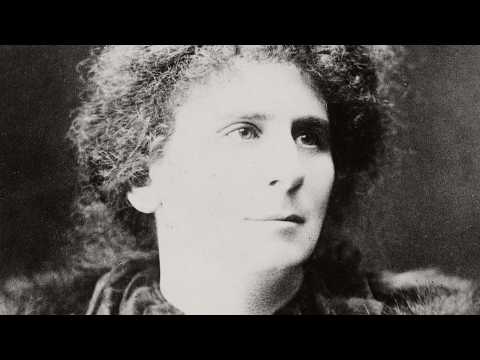
And here is the film about the extraordinary Hertha Ayrton (nee Phoebe Sarah Marks, a Jewish girl from Portsea) - the first female electrical engineer IEE member, and the first woman to be nominated as Fellow of the Royal Society: youtu.be/ahLt9Aqc_wM?si… @RAEngNews
YouTube video
YouTube
Polina Bayvel@bayvel_p

Extraordinary women (and a few men...) recounting their life stories & discussing important questions! @DameWendyDBE @jimalkhalili @utafrith! Well done the Royal Society!

English
0
1
3
1.1K
Uta Frith retweetledi
Naomi Fisher
Naomi Fisher@naomicfisher·
We started a podcast with the deliberate aim of talking to a range of voices. We had had enough of the polarisation and mudslinging of social media. We went to significant effort to seek out different perspectives. Our criterion was not whether they agreed with us, but whether we thought they would have an interesting angle to add. We made it clear in the podcast that the views of the guests did not necessarily represent those of the hosts. From the start we wanted this to be a space where people explained their ideas so that the listener could understand and make up their own mind. We wanted to model openness and tolerance of disagreement. We wanted to do something different to what happens on social media. When we released our first episode, with Dame Uta Frith, we quickly discovered why these conversations are impossible. She said things which some people disagreed with, and as a result they blamed us for platforming her. There was little reasoned discussion of her ideas, and a lot of flinging of mud. People I had worked with and who I respected recorded videos about the harm I was causing and how disappointed they were. Others made huge assumptions about what we, as interviewers thought, including dismissing the suffering and experience of others and having a right wing agenda to cut benefits. Things that Uta had not said were attributed to her, and by association to us. Immediately, our other podcast guests started to withdraw. People whose work I really respected and who had fascinating things to say backed away, scared perhaps that they too would be tainted by association. Their viewpoints were very different to Uta and that is exactly why we asked them. Just like when we interviewed Uta, we wanted to really hear and understand what they had to say. That won’t be possible now. There’s something going on in the online autism world, and it’s not healthy. Many people are terrified to say what they think, for fear of the sort of thing that has happened to me this week. Useful and valid viewpoints are not being heard. Self-censuring is rife. Online shaming has been normalised. As a result, the growth of knowledge is stifled. If you disagree with what Uta Frith said and you’d like to come on our podcast, please email me. We’d love to have you. neurosense.substack.com/p/why-we-need-…
English
90
87
542
66K
Uta Frith retweetledi
Naomi Fisher
Naomi Fisher@naomicfisher·
A study which uses an online survey to recruit participants (as this one did) will not include a representative sample of autistic people. Sweeping claims like this should not be made without a representative sample and careful matching. This illustrates the problem with the over-inclusive autism spectrum. It is assumed that a group of people who completed an online survey represents all autistic people when they do not. This research does not show that self-identifying adults have higher unmet needs and unemployment than diagnosed people with high support needs and intellectual disability. Their needs are erased by this research.
Steven Kapp@drstevenkapp

Autism is not overdiagnosed.📜 Self-identifying autistic adults tended to have similar autistic traits & understanding of autism but *higher* unmet needs, unemployment, & distress than diagnosed adults. They mostly wanted a diagnosis but barriers eg costs: journals.sagepub.com/doi/10.1177/25…

English
11
9
57
8.3K
Uta Frith retweetledi
Naomi Fisher
Naomi Fisher@naomicfisher·
A recent review of 389 studies showed that masking/camouflaging lacks conceptual validity, that the research has been mostly carried out on late-diagnosed females and that masking hasn’t been shown to be autism-specific. A large number of studies is not the same as high quality research. journals.sagepub.com/doi/10.1177/13…
English
11
1
32
11.4K
Uta Frith retweetledi
Naomi Fisher
Naomi Fisher@naomicfisher·
Masking has no scientific validity, says Uta Frith, after sixty years of autism research. Yet masking resonates with so many autistic people. It feels true and it feels like an explanation. Both of those things can be true at the same time. Masking does resonate with many people. It describes something important about their experience. In fact, in my clinical experience masking resonates far beyond autism. It resonates for those who are socially anxious, those with OCD and those with depression. It resonates for people living in cultures they were not born into. It resonates for people going into unfamiliar or challenging environments. It resonates for many women in male-dominated workplaces. Whether or not they are autistic. And this is one of the problems. Masking is talked about as if it’s specific to autism, but the research hasn’t been done to demonstrate that. To draw that sort of conclusion, you need large scale quantitative research on representative samples. You need a carefully chosen comparison group. Online survey studies are unlikely to fulfil these criteria. Lived experience isn’t enough - no one can conclude from their lived experience whether something is autism-specific or not. There are other scientific problems with the idea of masking. It means different things to different people, and it is highly expansive. It is used to explain many different experiences - and researchers have found that there is no agreed upon definition. A third scientific problem with the concept of masking is that the evidence base is unrepresentative. Most of the research has been done on late-diagnosed females without intellectual disability - but it’s been assumed that this generalises to all autistic people. We simply don’t know if this is the case. There are other problems with the concept of masking, but these are three key issues identified in a recent review of the literature on masking/camouflaging. They looked at 389 studies. Number of papers published isn’t enough to make a concept scientifically valid. Other things matter too. journals.sagepub.com/doi/10.1177/13…
English
37
51
250
40K
Uta Frith retweetledi
Paul Whiteley
Paul Whiteley@PaulWhiteleyPhD·
Autism study is my life’s work. The spectrum has lost all meaning thetimes.com/uk/healthcare/… More media. One could argue it never had meaning in the first place such was the continued reliance on 'singular autism is autism' and not the more 'real-life' plural autisms.
English
10
19
73
5.9K
Uta Frith retweetledi
Paul Whiteley
Paul Whiteley@PaulWhiteleyPhD·
"Dame Uta Frith warns ‘things have gone too far’ as term has become so accommodating it is now meaningless" telegraph.co.uk/news/2026/03/0… Prof Firth on the autism spectrum. As expected her words are gathering media momentum. Her scathing review of 'masking' was much needed.
English
10
19
54
9.2K
Uta Frith retweetledi
UnHerd
UnHerd@unherd·
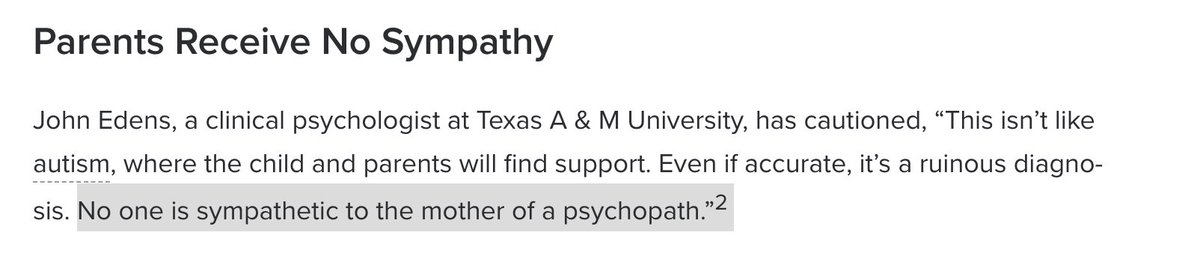
THE FEMINISATION OF AUTISM, by Kathleen Stock (@Docstockk) For decades, the developmental psychologist Uta Frith endorsed the idea of an autistic spectrum in her celebrated work on the condition. But in a new interview, she says that ‘the spectrum has collapsed’. Too many people with importantly varying characteristics are being included, and the concept is no longer a useful clinical tool. She proposes ejecting a large subgroup of people from the autism club: those diagnosed during teens or later, without clear intellectual or communicative impairments, but who exhibit ‘hypersensitivity’ and ‘feel highly anxious in social situations’. Most of these, perhaps needless to say, are female. The most recent wave of expansion of the autism category has been towards conditions emerging in female adolescents that bear scarcely any similarity to the original archetype at all. This was the great feminisation of autism, and it really hasn’t helped. Read more below ⬇️ buff.ly/ENx3fZu
English
45
44
227
130K
Uta Frith retweetledi
Naomi Fisher
Naomi Fisher@naomicfisher·
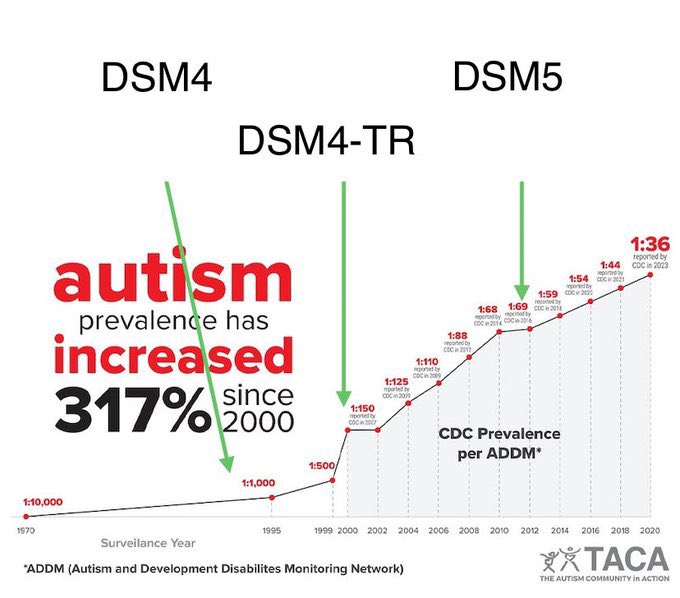
Uta Frith, renowned autism researcher, gives an interview to the TES about autism – and the internet goes wild. We’re told that what she said will put back progress 40 years, that she knows nothing about autism, that she lacks critical thinking and that her words will harm autistic people to the point of suicide. You’d guess she must have said something really awful. Perhaps something deeply offensive about autistic people which reveals her lack of compassion and understanding. Even then, it’s hard to know how one retired academic would have the power to make others commit suicide and to turn back progress to the extent that is predicted. What she said was that she thinks the autism spectrum has expanded too far and that it isn’t helping anyone. Not those who originally received autism diagnoses, and not those who are now getting diagnoses who previously would not have done. She said that she thinks scientific progress is being held back because ‘autism’ now means something so heterogenous that we can’t identify anything that all autistic people share. Nothing biological or neurological, nothing cognitive, nothing behavioural. In her words, there are no markers. The autism spectrum is, in fact, the widest spectrum imaginable. It goes from some of the most disabled people in our society to some of the highest achievers. And there’s no evidence that they have anything in common except their diagnosis. Saying this sort of thing gets you into a lot of trouble online. There are accepted narratives that we are all expected to comply with, and one is the idea that the giant autism spectrum is protective, that it helps people to be included under one diagnosis. Any language which helps people differentiate is banned. Which is odd, because we don’t think that in any other area of medicine. No one says (for example), that we shouldn’t differentiate between Type 1 and Type 2 diabetes because it’s protective not to be able to talk about the differences. It’s obvious that differentiating between types of diabetes will lead to better understanding and interventions. If you don’t comply with these narratives about autism – as Uta Frith hasn’t – then you will be publicly shamed. Your expertise will be challenged, even if you have 60 years of experience. You’ll be told that you are harming people and that you are ignorant. Personal slurs are likely to be used against you. And it’s all about social control. Shame is about social control. It’s about creating things that can be said, and things that can’t be said. Others see the shaming and keep quiet. It’s about controlling the narrative so that real discussions can’t be had. I’ve talked to so many clinicians who raise these concerns with me and who then say that they’d never speak up, for fear of shaming and even losing their job. There are important things that are not being talked about, for fear of the repercussions. To my mind, the interesting question is really why. Why is it treated like blasphemy to say that the vast autism spectrum may no longer be fit for purpose? Why are we not allowed to discuss the reality of clinical practice? Why are personal attacks the go-to when scientists disrupt the prevailing narrative? And why are we all so compliant, censoring ourselves to avoid the discomfort of shame? Listen to our podcast with Uta Frith here. open.substack.com/pub/neurosense…
English
121
223
1.1K
192.4K
Uta Frith retweetledi
Prof Saiful Islam
Prof Saiful Islam@SaifulChemistry·
Fantastic & fascinating set of @Ri_Science #XmasLectures by the superb @DoctorChrisVT. Huge congratulations to Chris, his guests & the whole RI team. The lectures are now on BBC iplayer & Youtube.
Royal Institution (now on Bluesky)@Ri_Science

That's a wrap on the 2024 Christmas Lectures, supported by @CGI_global! 🎬 Huge thanks to our lecturer @DoctorChrisVT and all the fantastic expert guests who joined him. We have learned so much about our bodies and how food is made. Catch up on iPlayer: bbc.co.uk/iplayer/episod…

English
3
8
27
8.8K
Uta Frith retweetledi
The Royal Society
The Royal Society@royalsociety·
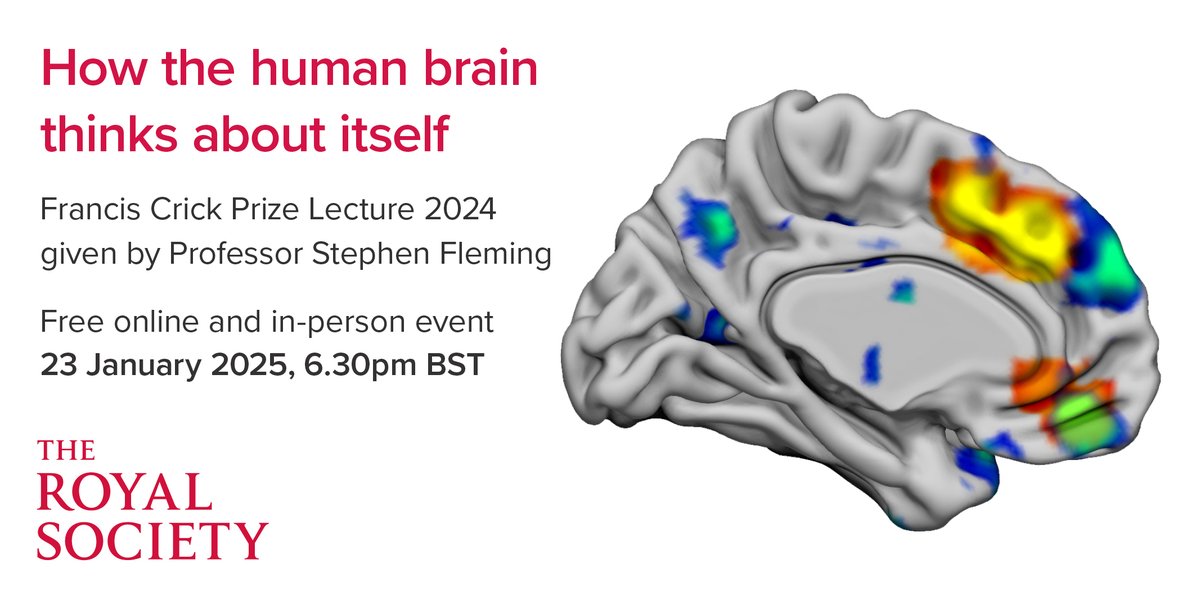
The human brain has a remarkable ability to monitor and evaluate its own thinking, known as metacognition. Join Professor Stephen Fleming for this free lecture on 23 January 2025 as he explores metacognition and his team's work to discover the building blocks of this remarkable ability: royalsociety.org/science-events…
The Royal Society tweet media
English
5
100
271
20.7K
Uta Frith retweetledi
Michael Platt
Michael Platt@MichaelLouisPl1·
You da ant! Ants beat humans at cooperation when challenged to work together to solve a problem. Without effective communication, human cognitive complexity sometimes gets in the way. Sound familiar? pnas.org/doi/10.1073/pn…
English
1
5
21
1.5K