
English
ORDINALLY
1.5K posts

@veryordinally
bitcoin & art with @ancora_art & @ogfam21



It's January 2036. What happens when a house mines Bitcoin for heat, pays for its own AI with the sats it earns and grows its own food? I've been sitting on this text for a few weeks. Some of it works. Some of it doesn't. New essay: Payment Required. sreiss.com/payment-requir…

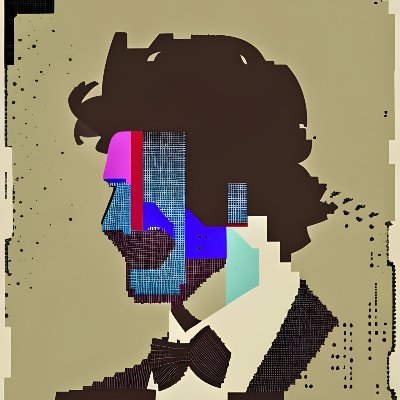




BEST BEFORE Nº278 is now OPEN. Palette: Rouge à Lèvres Lifespan: 3,384,933 blocks (64y) ⇢ordinals.com/inscription/c8…
This weekend I was thinking about programming languages. Programming languages for agents. Will we see them? I believe people will (and should!) try to build some. lucumr.pocoo.org/2026/2/9/a-lan…



@huuep @osura_com @ordinally Using number-theoretic spigot functions implemented in the πxelkit library we built, this series puts the entirety of pi fully onchain on Bitcoin -- literally all the digits, meaning infinite data in a tiny amount of space... ordinals.com/inscription/ef…


Ninja 1506 inscribed 7 books in his 4 megger. These books will now permanently exist on Bitcoin: Nicomachean Ethics The Iliad The Odyssey War and Peace Meditations Philosophical Works A Midsummer Night's Dream This is one of three 4 meggers that was mined today!
You scroll through your timeline. The same image keeps coming back, installation shot, teaser, close up with wall text. The gallery calls it "iconic", the captions say "radical", everyone links it, everyone insists you "have to see this". You look at it and think: Okay, well done, well packaged. But also: I have seen this before. That is exactly the point where criticism would begin. Or could begin, if we actually allowed it to. Instead, criticism is treated like a glitch in the system: too long, too slow, too negative, too elitist, not enough impact. Affirmation has quietly become the norm. Texts are expected to support, contextualize, communicate. Everything is allowed, as long as nothing really hurts. I am not outside of that. My first instinct is almost always to mediate, to frame, to explain rather than to say "no". I genuinely believe you can move a lot by contextualizing. But that instinct very quickly slides into smoothing over, into a way of writing where, in the end, everything is situated, but very little is actually challenged. Reading the recent essay "In Weakness There is Strength: Eight Theses on the Condition of Art Criticism in a Changed Economy" by Isabelle Graw made this feel less like a niche art world problem and more like part of a broader political atmosphere: democratic structures under pressure, public discourse shrinking, critical speech pushed into the defensive. If there was ever a moment when criticism should be stronger, not softer, it is now, even if every generation probably claims that. What feels specific about ours is something else: we have largely unlearned how to argue seriously at all. We are good at irony, at put downs, at sarcasm as proof of superiority. We are less good at building an argument that someone else can actually work with. The tone of conflict is still there, but the work of disagreement is gone. So, back to the field itself. With Pierre Bourdieu, the French sociologist who theorised cultural fields and symbolic capital, in the back of my mind, the art world is not a neutral playground but a market of symbolic goods: works, names, institutions, money, reputation, all convertible into one another. Criticism sits in the middle of that, not outside. It helps decide what counts as important and what quietly drops out of view. At the same time, we are living in what Andreas Reckwitz, a German cultural sociologist who described late modernity as a "society of singularities", actually calls exactly that: a society of singularities. Everything wants to appear unique, special, highly curatable. In art, that means every project needs a singularity script, a new voice, a new language, "the first", "never seen before". Whether that is actually true is secondary. The story just has to hold long enough for floor prices and careers to stabilise. That is the point where criticism becomes inconvenient, because criticism does two things this set up does not like: It draws lines. And it punctures claims. Back to that image that keeps popping up. The official line says "never seen before". A text that takes itself seriously would not just shrug and reply "seen it already". It would ask: where does this actually connect? And then: what is really being pushed here? What is merely repeated? What has been filed down so the package runs smoothly? This is not about patrolling a border to keep people out. It is about refusing to pretend there is no memory. Works do not float in a vacuum; they sit in genealogies. Taking those genealogies seriously is part of the work. The uncomfortable truth is: many people in the current ecosystem do not want that work. A lot of collectors barely read anymore. They rarely update their references; it looks like too much effort. I write long texts, probably too long for some, and the recurring response I sometimes get is the meme: "i ain’t reading all that. i’m happy for you tho, or sorry that happened." It is funny, but it is also a perfect shorthand for the situation: a declared refusal to concentrate, to be slowed down by someone else’s argument, to let language do more than decorate a sales pitch. Not wanting to "read all that" becomes a posture. The formats we use reinforce this. Infinite scroll, Reels, podcasts, clips. Long form criticism quietly becomes something you almost have to print to give it a fair chance. Online, the short, gliding formats win. Criticism is told to adapt, compress, become more "digestible", or risk disappearing. If you look at this through the idea of judgment devices by Lucien Karpik, a French sociologist who studied markets for singular goods such as art and wine, the shift becomes clearer. Markets for singularities, wine, art, music, rely on all sorts of devices to help people decide: critics, guides, networks, reputations. If you strip that down to auction data, floor prices and follower counts, you still have a functioning market. But you lose the layer where people actually learn to distinguish, between deep and shallow, between informed borrowing and lazy repetition, between something that holds over time and something that burns out with the meme cycle. There is also a social cost to taking positions. A pointed text does not just "start a conversation", it can quietly move you to the periphery of certain rooms. Sometimes it does not even take the text, it is enough to spend your time in the “wrong” corner of the field, with the wrong medium, or the wrong chain, or conversations that do not match the currently fashionable narratives. Nothing dramatic happens, but you notice that some doors stay closed, some invitations do not arrive, some circles become slightly more distant. And any call for stronger criticism has to acknowledge the economic pressure critics operate under. Precarity shapes what can be said and what is safer left unsaid. In that environment, the figure of the informed connoisseur collector starts to feel almost old fashioned. I do not mean a caricature of old money, but someone who actually reads, who thinks in longer arcs, who does not hand their entire taste over to advisors and dashboards. Someone who uses criticism, theory and conversation as material to stress test their own enthusiasm. Those are exactly the people who pulled me into collecting when I was still studying. They were not academics. They simply cared enough to build a vocabulary around what they were seeing. They could explain why this small, slightly awkward work mattered more to them than that very smooth, very expensive one. They did not follow trends. They did not treat critics as oracles or enemies. They treated them as people who sometimes found the right words, and sometimes did not. That is also how I think criticism should sit in relation to collecting: not as a binary "buy / do not buy" signal, and certainly not as an all knowing referee, but as a set of articulated positions you can work against. Critics make mistakes. They misread things. They have blind spots and loyalties. That is fine. Their job is not to be right all the time. Their job is to put something on the table that is sharp enough for others to sharpen themselves against it. Seen from there, the habitual suspicion towards criticism looks less like resistance against gatekeeping and more like resistance against effort. Because once you start taking arguments seriously, you also have to admit how much of the field runs on proximity, on habit, on inertia, and how many "radical" works only survive as such because hardly anyone in the room has the historical bandwidth to see what they are repeating. This ties back into the larger atmosphere. When democratic infrastructures are fragile and public discourse is treated as a nuisance, it is not surprising that the art field prefers soft, affirmative talk over open disagreement. You see it in how often we keep everything "open" in theory, while in practice avoiding clear statements like "this does not hold up", "this repeats without adding" or "this only feels new because the context has forgotten its own roots". Reading that essay on the "Condition of Art Criticism" by Graw did not flip a switch for me. It mostly made more explicit what I had already started to do a few months earlier: trying to say more clearly what I see, and to see more clearly what I am actually saying. It helped me line up my own arguments again, instead of just circling them. That does not mean I am suddenly outside the problem. I am still often too mild. I still leave things unsaid because it is easier or because inflating every minor issue into a big performative fight is its own kind of distraction. Sometimes silence is better than making something look more important than it is. But not every time. If criticism is going to be anything other than decoration, it has to be allowed to leave a mark, on how we talk, on what we collect, on which stories we repeat. Not as a performance of harshness, not as a new hierarchy of "those who know" over "those who do not", but as a way of putting some friction back into a system that has become very skilled at sliding over everything. Maybe that is a modest way to think about it: Criticism will not save democracy, will not fix the market and will not magically create better art. But it can give us better tools for seeing where we are and what we are doing. It can make it slightly harder to hide behind numbers and vibes alone. And it can make it harder to reply to every long argument with nothing but: "i ain’t reading all that" and pretend that this counts as a position.