
Victor Robert

55.1K posts

Victor Robert banner
Victor Robert

Victor Robert

@viktorobert

Humanist, Technologist, Free Thinker, 3X founder. Fusion, AI and robotics will usher in humanities golden age. We will rise to the ocean of stars

Incline Village, NV Katılım Nisan 2013
6.1K Takip Edilen1.3K Takipçiler
Sabitlenmiş Tweet
Victor Robert
Victor Robert@viktorobert·
Fusion is the Power of the Cosmos and Solar Power is its prime derivative with wind a 2nd or 3rd derivative energy source from our Sun But just how much Land Would It Require To Get Most Of Our Electricity From Wind & Solar? Not much at all ! cleantechnica.com/2023/02/24/how…
English
5
6
17
5.6K
Victor Robert retweetledi
Garry Tan
Garry Tan@garrytan·
If you want your OpenClaw or Hermes Agent to be able to have perfect total recall of all 10,000+ markdown files, GBrain is here to help. It's exactly my OpenClaw/Hermes Agent setup. MIT-licensed open source. Hope it helps you build your mini-AGI. github.com/garrytan/gbrain
English
150
346
3.3K
326.6K
Victor Robert retweetledi
SciTech Era
SciTech Era@SciTechera·
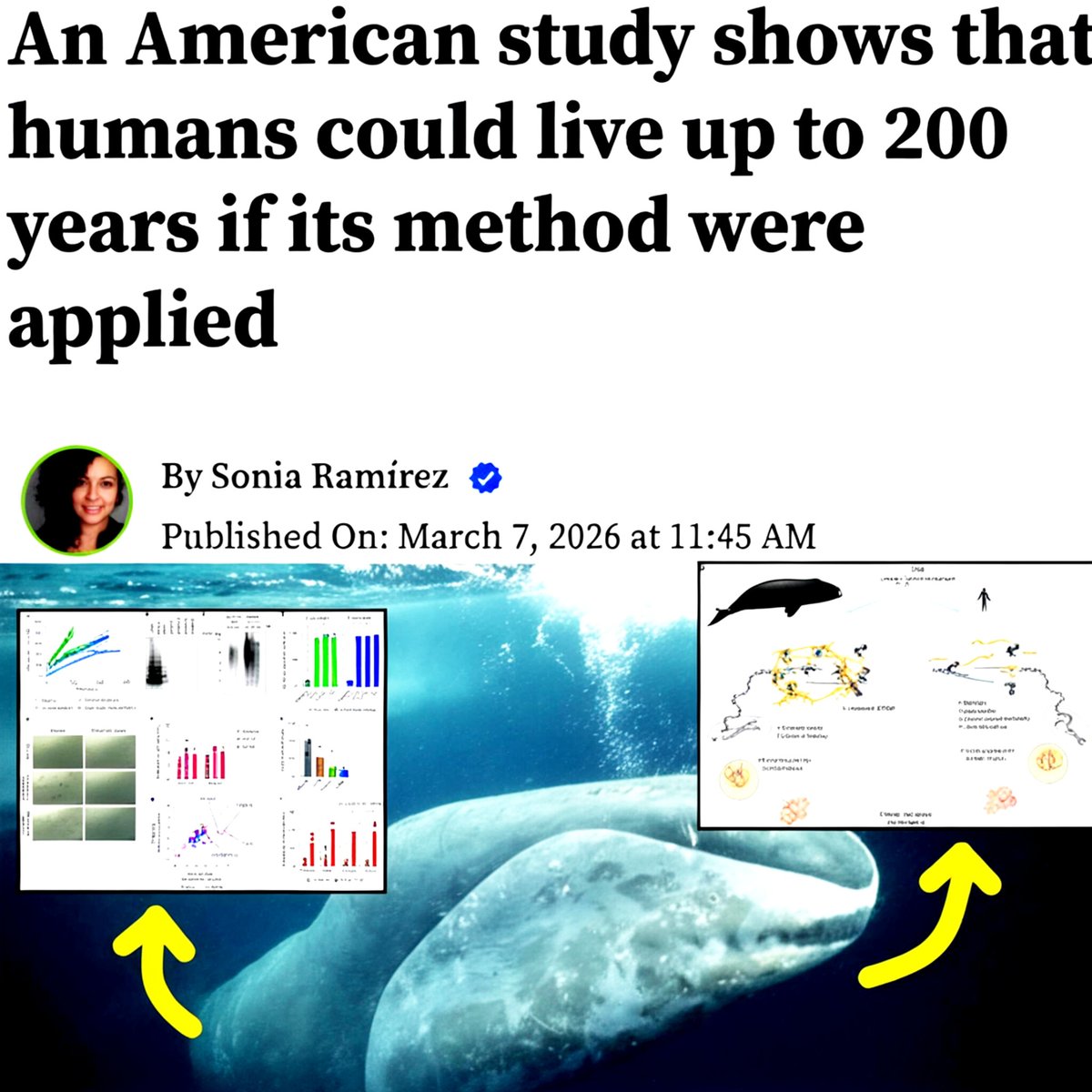
Reminder Longevity begins where DNA repair outruns DNA damage. Scientists at the University of Rochester discovered that bowhead whales, which can live over 200 years, produce extremely high levels of a DNA-repair protein called CIRBP. This protein improves the repair of dangerous DNA double-strand breaks, one of the main sources of mutations, cancer, and aging. When researchers introduced the whale version of CIRBP into human cells, DNA repair became more efficient. In fruit flies, increasing CIRBP levels extended lifespan and improved resistance to radiation damage. This findings suggest that strengthening DNA repair mechanisms could help slow aging and potentially extend healthy human lifespan in the future.
SciTech Era tweet media
SciTech Era@SciTechera

Longevity begins where DNA repair outruns DNA damage. Scientists at the University of Rochester discovered that bowhead whales, which can live over 200 years, produce extremely high levels of a DNA-repair protein called CIRBP (Cold-Inducible RNA-Binding Protein). This protein improves the repair of dangerous DNA double-strand breaks, one of the main sources of mutations, cancer, and aging. When researchers introduced the whale version of CIRBP into human cells, DNA repair became more efficient. In fruit flies, increasing CIRBP levels extended lifespan and improved resistance to radiation damage. The findings suggest that strengthening DNA repair mechanisms could help slow aging and potentially extend healthy human lifespan in the future.

English
2
30
124
4.3K
Victor Robert retweetledi
Daniel Tawfik
Daniel Tawfik@dantawfik·
Most people think resistance training prevents cellular aging. It actually accelerates it—temporarily. A single resistance session increases senescent cell markers by approximately 50%. But five months of consistent training reduces senescent cell burden by 60% in adipose tissue. The gap between those two responses reveals that acute stress and chronic adaptation operate through entirely different mechanisms. Senescent cells—often called zombie cells—are one of the primary drivers of biological aging. They've stopped dividing but refuse to die, instead secreting inflammatory signals that damage surrounding tissue and convert neighboring cells into senescent states. For decades, senescent cell accumulation has been treated as an inevitable consequence of aging: cells sustain damage, enter senescence, and the immune system gradually loses its ability to clear them. But the relationship between exercise and senescence splits into two distinct phases: Acute Response = Transient Senescence Signaling Chronic Adaptation = Systemic Senescent Cell Clearance Stress and repair. If a single session temporarily increases senescence markers, something else must be happening during the weeks and months that follow to reverse the burden at a systemic level. By five months of training, nearly half of the senolytic effect is occurring outside the muscle itself—in adipose tissue surrounding trained muscle. In untrained older adults, senescent cells accumulate in fat, muscle, and connective tissue at baseline. In resistance-trained older adults (average age 72), senescent cell abundance in thigh adipose dropped by 60% after three sessions per week for five months. That's not just local tissue remodeling. It's systemic clearance. Immediately after a resistance session, p16(INK4a)—a key marker of cellular senescence—spikes in muscle tissue alongside leukocyte infiltration. White blood cells flood the area to manage tissue stress and initiate repair. The acute senescence signal isn't damage. It's part of the signaling cascade that triggers adaptation. The systemic clearance reflects four converging biological processes: Myokine secretion from contracting muscle influences immune function and inflammation across distant tissues. Enhanced immune surveillance reactivates the body's natural senescent cell clearance system. Metabolic signaling from trained muscle suppresses inflammatory pathways that promote senescence. Capillary remodeling improves nutrient delivery and waste removal, reducing cellular stress. None of these is transformative alone. Together, they compound into something substantial. The implication: interventions that only target muscle mass or strength—without considering the endocrine and immune effects of muscle contraction—miss half the benefit. Senescent cell burden is trainable. But it requires consistent mechanical stimulus across weeks and months. Resistance training is the most reliable driver of myokine secretion. Over 3,000 myokines have been identified, many of which directly suppress senescence or enhance immune clearance of senescent cells. Chronic training performed 3x per week for 12–20 weeks produces measurable reductions in systemic inflammatory markers like IL-6 and TNF-α—cytokines strongly associated with the senescence-associated secretory phenotype (SASP). The tradeoff: acute sessions transiently increase senescence markers, making consistency essential. Without repeated stimulus, the long-term senolytic adaptation doesn't occur. Meaningful adaptation begins within the first month. Myokine profiles shift detectably after 4–6 weeks of training. Senescent cell clearance becomes measurable around 12 weeks and continues improving through 20+ weeks. The decisions made in the fourth and fifth decades of life shape the senescent cell burden of the seventh and eighth. Cellular aging is a slow, cumulative process across multiple tissues simultaneously. So is the adaptive response to resistance training. The most important variable isn't the perfect protocol. It's consistency across the decades during which senescent cells are quietly accumulating in one direction or being cleared in the other. I analyze how resistance training influences cellular senescence, the mechanisms driving both acute and chronic adaptations, and why skeletal muscle may be one of the most important longevity organs: gethealthspan.com/research/artic…
English
1
4
25
1.9K
Victor Robert retweetledi
Daniel Tawfik
Daniel Tawfik@dantawfik·
Ovarian aging reveals something fundamental about how aging works across all tissues. At age 34, a synchronized molecular shift occurs—ribosome activity surges, autophagy shuts down, and protein quality control fails. The ovary enters metabolic overdrive, producing faster than it can repair. This isn't unique to reproduction. It's a hallmark of aging. A randomized trial testing rapamycin in 100 women undergoing IVF has demonstrated what happens when you interrupt this process. One milligram daily for 3–4 weeks increased developing embryos from one to two (p = 0.001) and raised clinical pregnancy rates from 28% to 50%. The results weren't about producing more eggs. They revealed what happens when metabolic overdrive gets dialed back—and cells regain the capacity to maintain themselves. Aging tissues share a common failure mode: mTOR stays chronically active, driving continuous protein synthesis while suppressing the cellular recycling systems that clear damage. When mTOR remains on, ribosomes flood the cell with newly synthesized proteins faster than quality-control machinery can process them. Misfolded proteins accumulate. Lysosomes—the cellular recycling units—fall behind. Autophagy, the process that degrades and recycles damaged components, shuts down. This imbalance between production and maintenance defines metabolic overdrive. It appears in neurons during Alzheimer's, in muscle during sarcopenia, in pancreatic beta cells during type 2 diabetes—and in the ovary during reproductive aging. The ovary makes this visible because the decline is steep and measurable. Molecular profiling of eggs and their surrounding cumulus cells showed that the shift isn't gradual. At roughly age 34, gene expression patterns pivot abruptly. Genes controlling ribosome biogenesis and energy metabolism surge upward. Genes responsible for chromosome segregation, DNA repair, and meiotic control fall sharply. Key proteins like CENPU and CENPQ, which anchor chromosomes during cell division, become downregulated. When these tethering systems weaken, chromosomes misalign—resulting in aneuploidy, the primary cause of IVF failures and miscarriages. But chromosomal errors don't occur in isolation. They emerge downstream of cellular overload. Imaging of aging ovarian tissue revealed enlarged nucleoli, surging ribosomal RNA levels, reduced lysosomal activity, and clusters of protein aggregates—the same signatures observed in aging neurons and senescent cells across other tissues. The ovary becomes trapped in a high-output, low-maintenance state, burning energy faster than it can repair damage. This metabolic pattern—chronic mTOR activation without compensatory autophagy—is what propels aging forward. Cumulus cells, which form the metabolic support system surrounding each egg, showed the most dramatic decline. Over 2,000 genes involved in protein recycling and oxidative stress defense dropped in activity, leaving eggs less protected and less metabolically resilient. The gap between production and repair widens with each passing year. Rapamycin reverses metabolic overdrive by inhibiting mTOR. In cultured ovarian cells, low-dose rapamycin (0.25–0.5 µM) reduced mTOR activity, reactivated autophagy, cleared protein aggregates, and visibly shrank nucleoli—returning cells to a state where growth and repair operate in balance. In middle-aged mice (8–10 months), brief rapamycin treatment lowered oxidative stress, improved spindle alignment during meiosis, and increased the number of mature eggs ready for fertilization. These weren't reproductive-specific effects. They reflected a restoration of fundamental cellular housekeeping. The human trial enrolled women with an average age of 36 who had experienced prior IVF failures. Half received 1 mg oral rapamycin daily for 3–4 weeks before egg retrieval. The other half served as controls. Rapamycin-treated women produced significantly more fertilized eggs, more developing embryos, and more top-grade blastocysts. The benefit was most pronounced among those transferring day 5–6 blastocysts, where pregnancy success rates reached 27.5% versus 7.7% in controls. The mechanism wasn't about egg quantity. It was about restoring the cellular environment in which eggs mature—by briefly interrupting the mTOR-driven overproduction cycle and allowing autophagy to clear accumulated damage. The implication extends beyond reproduction. If metabolic overdrive drives aging across tissues—neurons, muscle, pancreas, ovaries—then interventions targeting mTOR may address a shared upstream mechanism rather than treating individual age-related conditions in isolation. Chromosomal instability, protein aggregation, mitochondrial dysfunction, and oxidative stress don't occur independently. They converge downstream of the same cellular imbalance: excessive ribosome activity without compensatory recycling. Rapamycin addresses the driver, not the symptoms. The ovary's age-34 inflection point mirrors the broader biomolecular aging waves observed in other studies—periods when multiple systems shift simultaneously rather than declining linearly. Ovarian aging may be among the most visible examples because fertility decline is measurable, abrupt, and occurs within a narrow timeframe. But the underlying mechanism—mTOR-driven metabolic overdrive—operates across tissues throughout the lifespan. This trial is the first to test rapamycin in humans for IVF. The protocol was brief, the dose was low, and the results were measurable across multiple endpoints: embryo number, embryo grade, and clinical pregnancy. The most important variable wasn't the reproductive outcome alone. It was demonstrating that transient mTOR inhibition can reverse cellular aging markers in humans—restoring autophagy, clearing protein aggregates, and improving functional outcomes in a tissue undergoing accelerated aging. The decisions about whether to modulate mTOR during critical windows may shape outcomes across multiple systems simultaneously—not just reproduction, but the cumulative burden of metabolic overdrive that compounds across the fourth, fifth, and sixth decades. Aging may be fundamentally a metabolic problem. And metabolic problems respond to metabolic interventions. In this week's Healthspan Research Review, we analyze how metabolic overdrive drives ovarian aging, why this pattern reveals core aging mechanisms across tissues, and what rapamycin's effects in this trial demonstrate about treating aging as a modifiable cellular condition. gethealthspan.com/research/artic…
English
3
19
50
5.5K
Victor Robert retweetledi
Daniel Tawfik
Daniel Tawfik@dantawfik·
My wife @ElanaMD is an unstoppable force. A month in a small hospital room—chemo, radiation, and a bone marrow transplant— and she still manages to smile through it all.
Daniel Tawfik tweet media
English
33
26
452
0
Victor Robert retweetledi
Tech Layoff Tracker
Tech Layoff Tracker@TechLayoffLover·
Stanford CS graduating class of 2026 just got their final placement statistics Out of 312 graduates: 18 have full-time offers That's a 5.8% placement rate from the most prestigious CS program in the fucking world 2019 placement rate was 94%. 2022 was 78%. 2024 was 31%. Now this. The other 294 are fighting over 47 internships that require "3+ years production experience" Career services is telling them to "consider adjacent fields" while the department just took a $50M donation from a company that replaced 2,400 engineers with Claude One kid showed me his rejection tracker: 1,247 applications since September. 12 phone screens. Zero offers. His parents refinanced their house for his tuition The career fair had 8 companies and 300 desperate students in $180k of debt Meanwhile the CS department just announced they're expanding their PhD program because "industry demand for AI research has never been higher" The same week they sent acceptance letters to 89 new undergrads These kids thought they were learning to be engineers. Turns out they were training to be obsolete.
English
409
1.6K
6.2K
2.6M
Victor Robert retweetledi
Rahul Todi
Rahul Todi@rtodi·
AI data centers are exploding in power demand — racks are heading toward megawatts to train and run massive AI models. But delivering that power efficiently is a huge challenge. The old way (48V or 54V systems) creates massive problems: huge electric currents cause tons of energy wasted as heat (I²R losses), require thick heavy copper cables and busways that take up space and cost a fortune, and make it hard to scale bigger systems. Multiple inefficient conversion stages add even more losses and heat. The new approach? Switching to 800V DC architecture (strongly pushed by NVIDIA for next-gen "AI factories"). Higher voltage means much lower current for the same power — dramatically cutting waste, reducing copper usage (sometimes by 45%+), simplifying infrastructure, lowering cooling needs, and enabling compact, efficient megawatt-scale racks. It's like the EV industry's jump from 400V to 800V, but for data centers. Inside these 800V systems, power conversion happens in stages: - High-voltage front end (handling the full 800V bus or initial step-down): Often uses SiC (Silicon Carbide) switches. SiC is rugged and excellent for higher voltages (650V–1700V+ ratings), with strong thermal performance. These SiC switches are digitally controlled by microcontrollers or DSPs (the "brain") running smart firmware for PWM timing, regulation, and protection. Isolated gate drivers act as the safe interface — sending precise high-current pulses to turn the SiC on/off quickly while protecting against high-voltage spikes. - Back-end / point-of-load (POL) stages (stepping down from intermediate voltages like 48V down to the ~1V that GPUs and CPUs actually need): This is where GaN (Gallium Nitride) really shines. GaN switches faster than silicon or even SiC in many cases, with lower losses, enabling tiny, high-frequency regulators that sit right next to the processors — minimizing wasteful power routing and improving response to bursty AI workloads. Now the exciting breakthrough from Intel Foundry (presented at IEDM 2025): They demonstrated the world's thinnest GaN chiplet — with a silicon base just 19 μm thick (thinner than a human hair!), harvested from standard 300mm GaN-on-silicon wafers. What's special? It's the industry's first fully monolithic integration: powerful GaN power transistors (N-MOSHEMT) + complete silicon-based digital control circuits (logic gates, flip-flops, multiplexers, ring oscillators, etc.) all on the same single device. No need for separate controller chips, which cuts parasitics, speeds things up, and shrinks everything. This ultra-thin design enables better heat dissipation, advanced 3D packaging, and placement extremely close to the AI chips — slashing losses even further. Reliability tests look solid for data center use. In the 800V world, SiC handles the tough high-voltage front end with its digital gate driver control, while Intel's GaN chiplet excels in the dense, efficient final stages closer to the load. Together, they make the whole power delivery chain smaller, cooler, more efficient, and scalable — helping AI grow without skyrocketing electricity bills or environmental impact. It also has potential beyond data centers, like in EVs or wireless infrastructure. This feels like a smart step forward for Intel's foundry business in the AI era, leveraging advanced materials and heterogeneous integration. What do you think? Is this the kind of power innovation needed to keep AI scaling sustainably? ⚡
Intel Foundry@Intel_Foundry

Intel Foundry unveils the world’s thinnest GaN chiplet (19 μm). By integrating power and digital control on a single chiplet, it delivers higher efficiency, faster switching, and smaller designs. Learn more: ms.spr.ly/6018Q2h90 #IntelFoundry #Semiconductors

English
0
7
36
4.3K
Victor Robert retweetledi
Ben Bajarin
Ben Bajarin@BenBajarin·
Part 2 of the future of the datacenter series. 800 vDC + liquid cooling becomes a co-design situation with compute infra decisions. The key is the compute capacity it unlocks. Liquid Cooling: The Thermal Prerequisite for AI Infrastructure Scale thediligencestack.com/p/liquid-cooli…
English
0
7
33
3.5K
Victor Robert retweetledi
Daniel Tawfik
Daniel Tawfik@dantawfik·
At age 44, three biological systems begin failing simultaneously—lipid metabolism, immune function, and the gut microbiome. A longitudinal study tracking 108 individuals across five decades has revealed something counterintuitive about biological aging. Rather than a continuous, linear decline, human aging appears to occur through two distinct waves of biomolecular disruption—one in the mid-40s, another in the early 60s. Between these periods, biological systems remain relatively stable. But at each transition, abrupt shifts occur across multiple systems simultaneously. The first wave, around age 44, triggers measurable changes in lipid homeostasis and inflammatory markers. ApoA1—the primary protein in HDL cholesterol—begins declining. ApoB, which transports LDL particles, increases. This divergence marks the beginning of cardiovascular risk accumulation. But lipid dysregulation isn't the only change occurring. During this same period, senescent cell burden increases sharply. These cells adopt a senescence-associated secretory phenotype (SASP), releasing inflammatory cytokines that convert neighboring cells into senescent states. The result: a self-reinforcing cycle of chronic inflammation—what researchers now call inflammaging. Simultaneously, the gut microbiome undergoes dysbiosis. Beneficial bacteria decline while pro-inflammatory species increase, triggering systemic inflammation and insulin resistance. The second wave, around age 60, produces different but equally profound disruptions. Immune function declines measurably through immunosenescence—weakened pathogen response paired with elevated baseline inflammation. Carbohydrate metabolism deteriorates further. Insulin resistance intensifies due to impaired glucose uptake at the cellular level, driving elevated blood sugar and metabolic syndrome risk. Kidney function also declines, as measured by reduced glomerular filtration rates and rising serum creatinine—compromising the body's ability to clear metabolic waste. What makes these findings particularly important: the transitions are discrete, not gradual. Most aging models assume damage accumulates slowly over decades. This research suggests aging operates more like phase transitions—extended periods of stability interrupted by abrupt systemic reorganization. The wave-based model aligns with quasi-programmed aging theory: biological pathways optimized for growth and reproduction early in life become dysregulated later, driving cellular dysfunction and inflammation. mTOR and GH/IGF-1 pathways exemplify antagonistic pleiotropy. They enhance growth during development but accelerate aging when they remain hyperactive past reproductive years. This reframes aging interventions entirely. If aging occurs through discrete waves rather than continuous decline, precision timing of interventions becomes critical. Strategies targeting mTOR, the GH/IGF-1 axis, and senescent cell burden may be most effective when deployed before or during these transition periods. Rapamycin, metformin, and canagliflozin dampen the developmental programs that drive these waves. Caloric restriction and time-restricted feeding produce similar effects through metabolic pathways. The implication: preventing age-related disease may require anticipating and mitigating these waves before they trigger cascading dysfunction. The decisions made in the fourth decade—before the first wave—shape the physiological trajectory through the sixth and seventh. In our Healthspan Research Review, we review the biomolecular mechanisms driving both aging waves, how they relate to quasi-programmed aging theory, and what interventions can target these transitions to extend healthspan. gethealthspan.com/research/artic…
English
2
28
145
7.3K
Victor Robert
Victor Robert@viktorobert·
@eshanbuilds @fascinatingonX Our atmosphere has trended toward lower CO₂ for millions of years — heading toward plant carbon starvation Last Glacial Maximum: ~190 ppm (many plants starved) Pre-Industrial: 280 ppm. Today: 432 ppm. We’re reversing a long decline. 🌱
English
0
0
0
8
Eshan
Eshan@eshanbuilds·
the wildest part is that current CO2 levels may have already cancelled this ice age entirely. earth's orbital cycles have been triggering ice ages on a predictable schedule for millions of years and we may have broken the pattern in about 200 years of industrialization. the planet had a 10,000 year appointment and we just unilaterally rescheduled it. whether that's terrifying or impressive depends on whether you think we did it on purpose
English
4
0
4
1.4K
For all Curious
For all Curious@fascinatingonX·
BREAKING 🚨: Earth is tilting toward its next ice age in 10,000 years, new research reveals.
For all Curious tweet mediaFor all Curious tweet media
English
596
337
6K
5.2M
Victor Robert retweetledi
nature
nature@Nature·
A woman with an ultra-rare combination of three autoimmune diseases has had no symptoms since receiving a single dose of engineered immune cells go.nature.com/48oKTJr
English
11
276
1K
50.9K
Victor Robert retweetledi
GeniusThinking
GeniusThinking@GeniusGTX·
Scientists just made a 53-year-old's cells behave like a 23-year-old.. In 13 days.. Without drugs.. Using a method based on Nobel Prize-winning science.. And the cells didn't just look young.. They outperformed young control cells.. → Babraham Institute: partial reprogramming using Yamanaka factors reversed cellular biological age by 30 years.. → Skin cells from a 53-year-old produced MORE collagen than young control cells after 13 days of treatment.. → Wound healing markers were significantly improved — not just restored, but enhanced beyond baseline.. → The key was partial reprogramming: enough Yamanaka factor exposure to reverse age, not enough to erase cell identity.. → Life Biosciences has FDA approval to begin the first targeted human age-reversal trials.. The hurdle for 20 years was identity loss.. Fully reprogrammed cells forget what they are — they become stem cells.. Partial reprogramming solved that.. The skin cell stays a skin cell.. Biologically, it's just 30 years younger.. I think we're at the same moment as the first successful CRISPR edit in human cells in 2012.. The timeline from "this worked in a lab" to "this changes medicine" is shorter than anyone expects.. The biggest breakthroughs don't arrive with a press release — they look like a small adjustment to a technique everyone already knows.. The mental models that help you recognize scientific inflection points before the crowd are the same ones history's sharpest thinkers used to see the future early.. I made a free toolkit breaking down 100+ mental models used by history's greatest thinkers — the same frameworks that help you see patterns like this before everyone else. 5,000+ downloads. 113 five-star reviews. Comment "MODELS" and I'll send it to you. If you're new here, @GeniusGTX is a gallery for the greatest minds in economics, psychology, and history. Follow along for more similar content.
TheNewPhysics@CharlesMullins2

🚨 BREAKING: Scientists reversed the age of human cells by 30 years. 53-year-old cells… turned into 23-year-old ones. That shouldn’t be possible. Unless aging isn’t time passing… but systems drifting out of balance. And now we’ve figured out how to push it back. If time isn’t what we think… what else are we getting wrong? Follow this gets deeper.

English
6
24
68
24.4K
Victor Robert retweetledi
David Sinclair
David Sinclair@davidasinclair·
Shout out to Jerry McLaughlin, our incredible team at Life Biosciences, @Serenapoon, and my cofounder Tristan Edwards, who started Life Bio with me in 2018 🚀 Nothing better than making the impossible possible, with people you love working with ✌️
Life Biosciences@lifebiosciences

#ICYMI: Honored to be on @Nasdaq’s Tower celebrating our fully subscribed $80M Series D financing supporting our Phase 1 clinical trial & Partial Epigenetic Reprogramming platform. Thank you to our co-founders, Dr. @DavidASinclair, AO & Tristan Edwards. bit.ly/3PUqVA1

English
15
26
298
23.8K
Victor Robert retweetledi
Science girl
Science girl@sciencegirl·
Scientists just made 50-year-old skin cells behave like they’re 20 again Scientists at the Babraham Institute in Cambridge have demonstrated a way to make older human skin cells act much younger, without turning them into stem cells. In laboratory experiments, researchers worked with fibroblasts, the cells that help form skin structure and repair tissue, taken from middle-aged donors. The team used a modified version of a well-known stem-cell technique that won the Nobel Prize in 2012. This method relies on a group of molecules called Yamanaka factors, which can reset adult cells back to a very early, stem-like state. Instead of completing the full reset, the scientists briefly exposed the skin cells to these factors and then stopped the process early, before the cells lost their skin-cell identity. After around 13 days, the treated cells showed far fewer molecular signs of aging. Measurements of chemical markers on DNA often called the epigenetic clock, indicated that the cells appeared biologically decades younger. Their gene activity patterns also more closely resembled those of much younger skin cells. The rejuvenated cells did not just look younger at a molecular level, they behaved younger too. The treated fibroblasts produced more collagen, a protein essential for skin strength and wound healing, and they moved faster to repair artificial wounds in lab tests. Researchers also observed younger patterns of activity in genes linked to age-related conditions such as Alzheimer’s disease and cataracts. The study was carried out entirely in the laboratory, and the researchers stress that this is early-stage research, not a medical treatment. The underlying biological mechanisms are still being explored, and much more work is needed before any clinical applications are possible. However, the findings suggest that it may one day be possible to partially refresh aging cells to improve tissue repair and slow some effects of aging, without fully resetting cells into stem cells. References Babraham Institute. (2022, April 8). Old skin cells reprogrammed to regain youthful function. ScienceDaily.
Science girl tweet media
English
77
281
1.2K
101.4K
Victor Robert retweetledi
Gracia
Gracia@straceX·
Apple says its latest chips are 3nm. but the 3 doesn’t describe any actual physical dimension on the chip. on TSMC’s N3 process, key features are on the order of tens of nanometers. 3nm is a name, not a measurement.
Gracia tweet media
English
14
33
408
20.3K
Victor Robert retweetledi
Winston
Winston@ChurchillWw·
China built 18 superlarge LNG storage tanks, more than twice the rest of the world combined. Each one holds 9.5 million cubic feet, bigger than Madison Square Garden. Keeping natural gas liquid at minus 162°C demands 9% nickel steel plates, concrete outer containment, and specialized cryogenic welding where every joint is ultrasonically inspected. The material expands 600-fold when it warms back to gas, so the tolerances are extreme. This is heavy industrial skill, not something you improvise. South Korea is now building seven tanks of the same size south of Seoul, with Japan following. nytimes.com/2026/04/08/bus…
English
26
574
2K
184K