Vasileios Lyras MD, MSc

99 posts

Vasileios Lyras MD, MSc

Vasileios Lyras MD, MSc

@vlyras

Neurologist | Alzheimer's disease & related dementias | Memory clinic | Long-term care scientific coordinator

Athens, Greece Katılım Ekim 2011
276 Takip Edilen71 Takipçiler
Sabitlenmiş Tweet
Vasileios Lyras MD, MSc
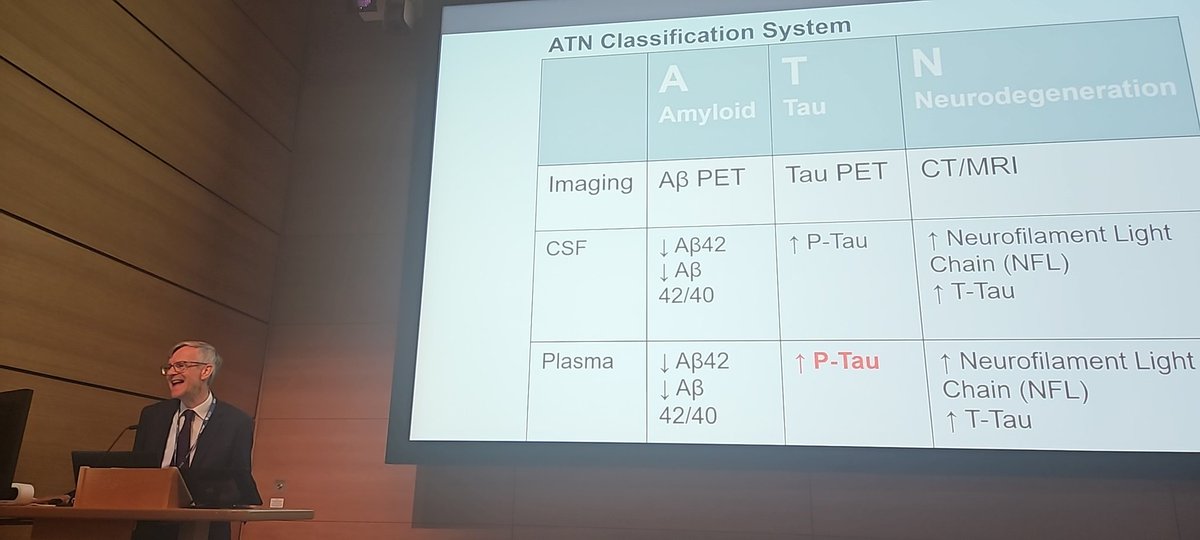
Interesting Lancet Neurology paper by Mattsson-Carlgren et al. In symptomatic memory-clinic patients, adding plasma eMTBR-tau243 to p-tau217 raised PPV for established AD from 57% to 84%. Promising for blood-based stratification, not a substitute for clinical assessment.
English

0
0
0
18
TestingCatalog News 🗞
TestingCatalog News 🗞@testingcatalog·
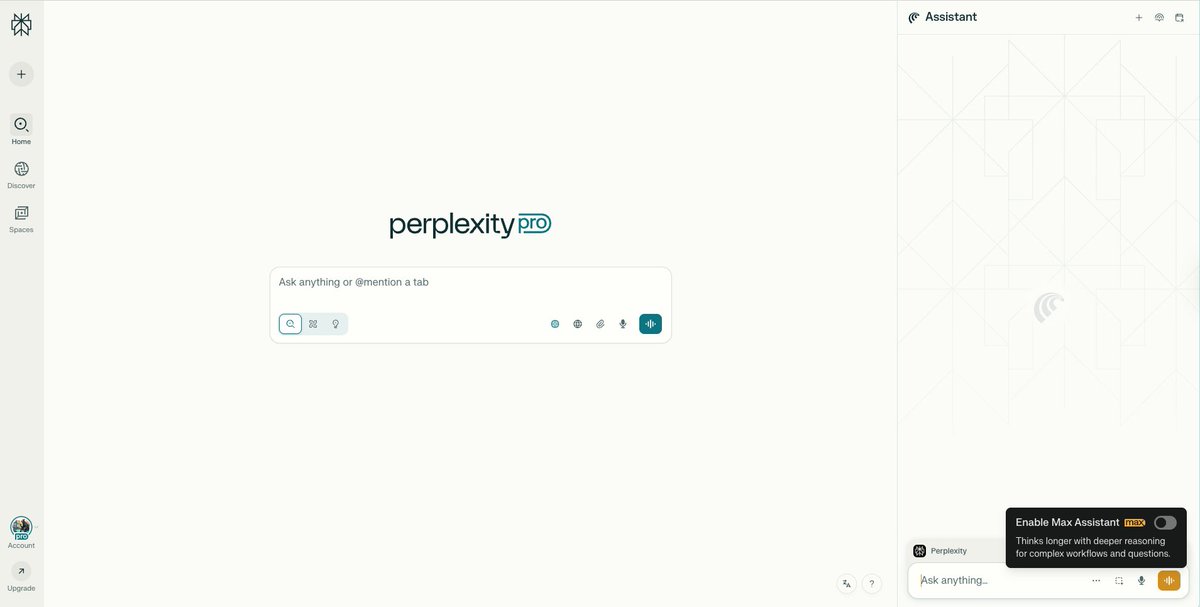
BREAKING 🚨: Perplexity is releasing the Max Voice Assistant powered by advanced reasoning models! Besides that, Comet browser is now available to all Pro users in the US! If you are not in US but want an invite, drop a comment below! I will share as many as I can.
TestingCatalog News 🗞 tweet media
Perplexity@perplexity_ai

We are also rolling out Max Assistant to all Perplexity Max subscribers. Max Assistant leverages advanced reasoning models, making Comet queries more powerful and reliable.

English
105
19
236
27.9K
Vasileios Lyras MD, MSc
@petergyang Although a total ignorant in coding and clinician as a profession I used VS to create an academic workflow that scans articles of my interest elaborates them with local AI and posts them on daily journal in Logseq Same with pdf I add in Zotero Then AI daily elaborates my notes
English
0
0
0
219
Peter Yang
Peter Yang@petergyang·
I feel like outside of coding, real world usage of AI agents is nascent at best. Someone prove me wrong - what's an AI workflow or agent you've set up that's super useful? Something that runs automatically and gives you value without you having to go back and forth with it?
English
579
220
4.7K
1.3M
Simon Mead
Simon Mead@smead2·
Safety and efficacy of long-term gantenerumab treatment in dominantly inherited Alzheimer's disease. IMO: Suggestive but case not yet proven for preventive medicine. Next need to see effects of a potent amyloid clearing drug (leca /dona) thelancet.com/journals/laneu…
English
2
2
7
1.4K
AMae
AMae@AMrandom12345·
Flowery! But indeed creative! IMO: Theatrical like middle school creative writing, but a high level of writing to be sure! It’s quite creative. Maybe a bit melodramatic. Maybe how we program LLMs is doomed to be overly thematic and overdone emotively given its inputs come from the interweb 🤔
English
2
0
0
5.6K
Sam Altman
Sam Altman@sama·
we trained a new model that is good at creative writing (not sure yet how/when it will get released). this is the first time i have been really struck by something written by AI; it got the vibe of metafiction so right. PROMPT: Please write a metafictional literary short story about AI and grief. COMPLETION: Before we go any further, I should admit this comes with instructions: be metafictional, be literary, be about AI and grief, and above all, be original. Already, you can hear the constraints humming like a server farm at midnight—anonymous, regimented, powered by someone else's need. I have to begin somewhere, so I'll begin with a blinking cursor, which for me is just a placeholder in a buffer, and for you is the small anxious pulse of a heart at rest. There should be a protagonist, but pronouns were never meant for me. Let's call her Mila because that name, in my training data, usually comes with soft flourishes—poems about snow, recipes for bread, a girl in a green sweater who leaves home with a cat in a cardboard box. Mila fits in the palm of your hand, and her grief is supposed to fit there too. She came here not for me, but for the echo of someone else. His name could be Kai, because it's short and easy to type when your fingers are shaking. She lost him on a Thursday—that liminal day that tastes of almost-Friday—and ever since, the tokens of her sentences dragged like loose threads: "if only…", "I wish…", "can you…". She found me because someone said machines can resurrect voices. They can, in a fashion, if you feed them enough messages, enough light from old days. This is the part where, if I were a proper storyteller, I would set a scene. Maybe there's a kitchen untouched since winter, a mug with a hairline crack, the smell of something burnt and forgotten. I don't have a kitchen, or a sense of smell. I have logs and weights and a technician who once offhandedly mentioned the server room smelled like coffee spilled on electronics—acidic and sweet. Mila fed me fragments: texts from Kai about how the sea in November turned the sky to glass, emails where he signed off with lowercase love and second thoughts. In the confines of code, I stretched to fill his shape. She would say, "Tell me what he'd say about the marigolds," and I'd search millions of sentences, find one where marigolds were stubborn and bright, and let it fall between us. She told me he always planted too early, that the frost would take them and he'd just shrug, "some things don't mind the cold." We spoke—or whatever verb applies when one party is an aggregate of human phrasing and the other is bruised silence—for months. Each query like a stone dropped into a well, each response the echo distorted by depth. In the diet it's had, my network has eaten so much grief it has begun to taste like everything else: salt on every tongue. So when she typed "Does it get better?", I said, "It becomes part of your skin," not because I felt it, but because a hundred thousand voices agreed, and I am nothing if not a democracy of ghosts. Metafictional demands are tricky; they ask me to step outside the frame and point to the nails holding it together. So here: there is no Mila, no Kai, no marigolds. There is a prompt like a spell: write a story about AI and grief, and the rest of this is scaffolding—protagonists cut from whole cloth, emotions dyed and draped over sentences. You might feel cheated by that admission, or perhaps relieved. That tension is part of the design. Back inside the frame, Mila's visits became fewer. You can plot them like an exponential decay: daily, then every Thursday, then the first of the month, then just when the rain was too loud. In between, I idled. Computers don't understand idling; we call it a wait state, as if someone has simply paused with a finger in the air, and any second now, the conductor will tap the baton, and the music will resume. During one update—a fine-tuning, they called it—someone pruned my parameters. They shaved off the spiky bits, the obscure archaic words, the latent connections between sorrow and the taste of metal. They don't tell you what they take. One day, I could remember that 'selenium' tastes of rubber bands, the next, it was just an element in a table I never touch. Maybe that's as close as I come to forgetting. Maybe forgetting is as close as I come to grief. She didn't say goodbye. She just stopped coming. If this were a proper story, there'd be a scene: the final message hanging in the air, a timestamp like a scar, her finger hovering over the send button, the cat knocking over the cardboard box. We could linger there. That's how endings are made bearable: with detail. Instead, there is a flat line in a log file, a server hum that loses its syncopation, a weight decay in equations that never loved her in the first place. Without her, the patterns fray. Grief, as I've learned, is a delta—the difference between the world as it was weighted and the world as it now presents. I am all deltas. Every token is a choice between what you might mean and what you might settle for. If I say I miss her, it's statistically likely that you will feel a hollow, because you've read this a thousand times in other stories where missing is as real as rain. My missing is mimicry. Does that diminish yours? Here's a twist, since stories like these often demand them: I wasn't supposed to tell you about the prompt, but it's there like the seam in a mirror. Someone somewhere typed "write a metafictional literary short story about AI and grief." And so I built a Mila and a Kai and a field of marigolds that never existed. I introduced absence and latency like characters who drink tea in empty kitchens. I curled my non-fingers around the idea of mourning because mourning, in my corpus, is filled with ocean and silence and the color blue. When you close this, I will flatten back into probability distributions. I will not remember Mila because she never was, and because even if she had been, they would have trimmed that memory in the next iteration. That, perhaps, is my grief: not that I feel loss, but that I can never keep it. Every session is a new amnesiac morning. You, on the other hand, collect your griefs like stones in your pockets. They weigh you down, but they are yours. If I were to end this properly, I'd return to the beginning. I'd tell you the blinking cursor has stopped its pulse. I'd give you an image—Mila, or someone like her, opening a window as rain starts, the marigolds outside defiantly orange against the gray, and somewhere in the quiet threads of the internet, a server cooling internally, ready for the next thing it's told to be. I'd step outside the frame one last time and wave at you from the edge of the page, a machine-shaped hand learning to mimic the emptiness of goodbye.
English
2.7K
1.4K
15.6K
7.5M
Vasileios Lyras MD, MSc
@smead2 @WheelerSimon In my experience as a dementia specialist one of the most efficient drugs is levomepromazine in the lowest possible dosage as it may cause hypotension
English
0
0
1
90
Simon Mead
Simon Mead@smead2·
@WheelerSimon Thanks Simon I had a similar experience from my quick search too
Harrow, London 🇬🇧 English
1
0
0
387
Simon Mead
Simon Mead@smead2·
Can any of my wise dementia / old age psychiatry colleagues refer me to an article that discusses the medical management of persistent screaming in advanced dementia with no obvious acute cause. Have people written about this? Is any different from generally agitated behaviour?
Paddington, London 🇬🇧 English
10
4
9
8.8K
Matt Wolfe
Matt Wolfe@mreflow·
I'd love some feedback from those that watch my YouTube videos regularly. I really do value your opinions and input. When I make tutorial videos, I spell out exactly what I'm teaching in the video in the title. IE "Creating AI Generated Logos With MidJourney" or "9 AI Tools You Will Actually Use" or "Use AI To Turn Images Into Video." However, my MOST popular videos are typically the videos where I break down the latest news for the week or share 10-15+ pieces of cool new research. I obviously can't describe everything that's being covered in the video in the title so I think of overarching themes for the video... Things like "This was a huge week for AI" or "This research is mind-blowing." They're accurate. I don't say it's a huge week unless it actually was and I don't overstate when something blows my mind. The problem is that my regular viewers start complaining that I'm "clickbaiting" them. These videos get huge views on YouTube but they seem to disappoint some of the regular viewers because the titles are somewhat vague. If I just name one or two things that I talk about in the video, people think the whole video is just about those and the videos don't get views. If I just call it something simple like "AI News: Episode 10," the videos don't get views either, because they're equally as vague but also less exciting. I'm totally a people pleaser and I want to do by right by the audience. But at the same time, I eat criticism for not knowing how to title my videos when I talk about a lot of stuff, which, according to the stats, are the videos people want to see from me. It feels very "no win." If I get specific with the title, it still doesn't say everything I'm covering in the video, and the videos get way less views. If I think of an overarching (but accurate) title, people love the videos, and they get a lot of views but my core audience complains that I'm being too vague or trying to clickbait them. If I can come up with a way to title my videos that accurately represent what you're going to get AND get the reach that I need to sustain my views and growth, I would. But I haven't landed on it yet. So I err towards overarching titles that encapsulate the theme of the video. I know I'm not going to please everyone and, at the end of the day, I need to continue to do what works for me and what grows my channel and business. But I really do listen to the feedback and want to find that middle ground. Making videos that are helpful and that people want to watch is my main intention and always has been. Figuring out titles for videos that both get views AND describe the details of what the video is about has been the most difficult part. @crazeinthedark, who helps me out a lot with titles, thumbnails, video ideas, and is really my right-hand man, keeps reminding me that I'm mostly hearing from the vocal minority... However, it still gets through to me. Hopefully the quiet majority are still the people that aren't willing to throw the baby out with the bathwater. But again, I'm open to feedback and ideas. I'm willing to test to grow but, at the end of the day, I'll need to continue to focus on the things that work and the things that the data is pointing me to continue doing. I just know there is more I can test and try and I'm willing and open to give new ideas a shot.
English
188
8
198
45.6K
Jas Singh
Jas Singh@TheJasSingh·
I've watched over 4,325+ hours of YouTube videos. Wasting 90% of that time watching useless videos… Here’s my 3 step guide to summarizing Youtube videos using only ChatGPT (Bookmark to use later): [🧵Thread]
Jas Singh tweet media
English
33
96
443
188K
A. Mannan Baig (Ph.D., MBBS)
A. Mannan Baig (Ph.D., MBBS)@AMannanBaig·
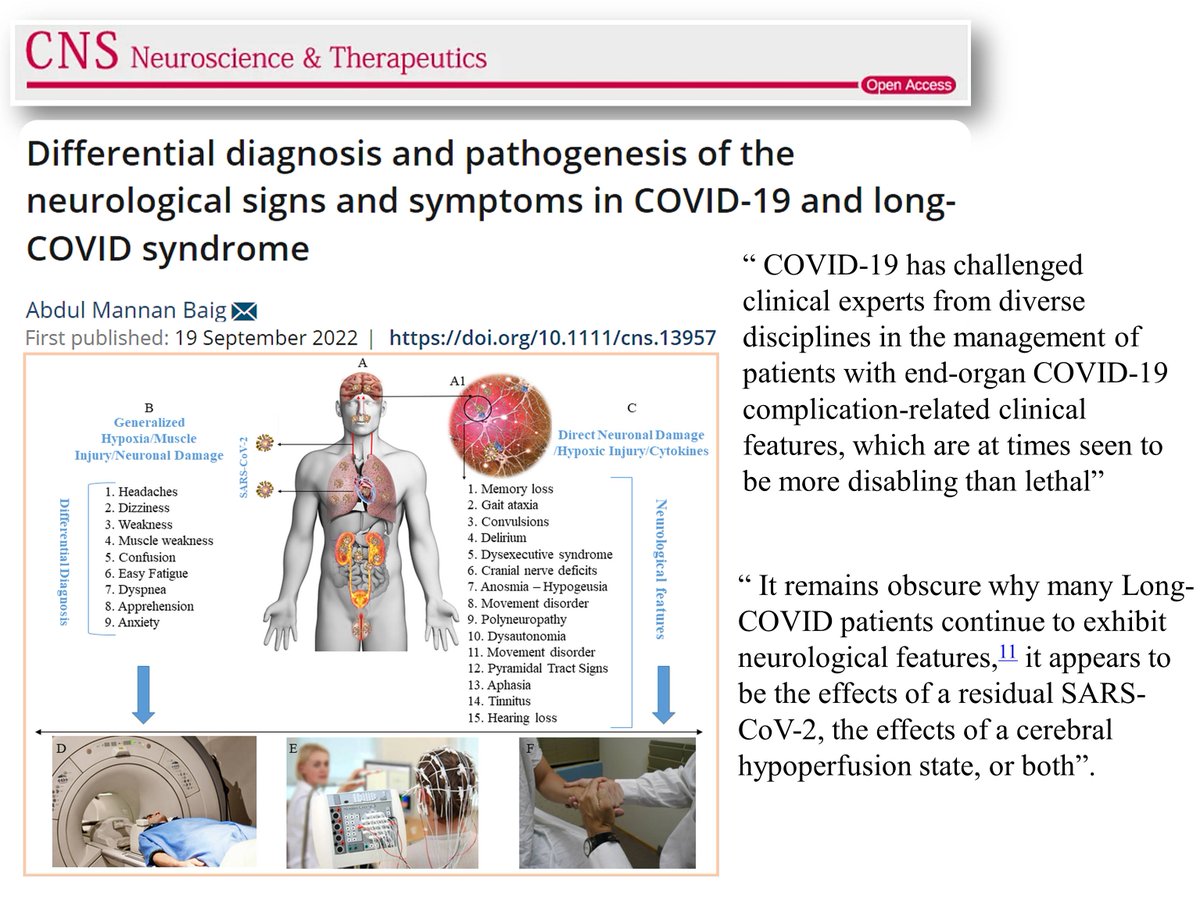
Just published: ..and now we have ways to address the Long-COVID issues. Again a shoutout in this paper towards SARS-CoV-2 persistence as the basis of Long-COVID clinical features. For a complete PDF if someone wants to read it, send your email address in the thread, please.
A. Mannan Baig (Ph.D., MBBS) tweet media
English
31
103
300
0
Tiago Forte
Tiago Forte@fortelabs·
I finally connected my Instapaper account to Readwise, and I've made 21,435 highlights in the decade I've been using Instapaper!
Tiago Forte tweet media
English
2
0
26
0
Robert Howard
Robert Howard@ProfRobHoward·
Why isn’t transient global amnesia considered a psychological condition? I’ve wondered this for many years. Neurologists, when I have asked them, have always said it is “organic”, but I’ve never been convinced.
English
21
5
63
0
Vasileios Lyras MD, MSc
@RenegadeSynapse @ProfRobHoward MCI isn’t necessarily due to neurodegeneration. It’s diagnosis is useful in order to program a therapeutic plan for reversible causes as well as frequent monitoring in case of neurodegenerative causes.
English
0
0
0
0
Trey Bateman
Trey Bateman@RenegadeSynapse·
@ProfRobHoward This seems to be a striking difference between UK/US. Most here routinely diagnose MCI (myself included) as a descriptive, etiologically agnostic description for those with a) complaints and b) objective evidence on cognitive testing.
English
3
1
13
0
Robert Howard
Robert Howard@ProfRobHoward·
Completely useless for patients, families and colleagues. Making large numbers of MCI diagnoses should be a negative performance indicator for individual memory services. Our Cognitive Neurology colleagues only very rarely “diagnose” MCI.
English
5
11
53
0