Marcus Walker

84.2K posts

Marcus Walker banner
Marcus Walker

Marcus Walker

@WalkerMarcus

A clergyman in the Church of England in the Diocese of London. Musings in Church and State and late Roman History (and, in fact, any history).

City of London, London Katılım Ağustos 2011
3.5K Takip Edilen25.2K Takipçiler
Marcus Walker
Marcus Walker@WalkerMarcus·
@St_Lukes_SE25 @MadsDavies I would agree re safeguarding bit not general risk assessments. They are a court- and insurer- driven manifestation of Lanyardism extraordinaire.
English
0
0
0
1
Fr Sam Dennis
Fr Sam Dennis@St_Lukes_SE25·
@MadsDavies @WalkerMarcus If we believe the revolution in safeguarding and risk assessment is a good thing, funding admin roles (especially in places with higher IMD) is something that should be getting serious funding from the centre. It can't fall on wardens and clergy.
English
1
0
1
20
Madeleine Davies
Madeleine Davies@MadsDavies·
Interested to hear from other church folk whether the DBS vetting is deterring churchwardens? (maybe the data breach last year didn't help?)
Madeleine Davies tweet media
English
22
4
16
5.6K
Marcus Walker retweetledi
NPRG
NPRG@CptHastings1916·
Whenever I see this Tweet I think the ship must have sunk or something, but the story is literally that the people on board weren't allowed to enter Canada, & then some of them started a riot when they got home. Utterly bizarre how it's become an official Tragedy.
Mark Carney@MarkJCarney

The Komagata Maru tragedy is one of the darkest chapters in our history — a moment where Canada failed to uphold our values, with horrific consequences. Today, we honour the memory of all the passengers, their descendants, and their communities who suffered: pm.gc.ca/en/news/statem…
English
7
44
547
21.6K
Marcus Walker
Marcus Walker@WalkerMarcus·
It pains me to say this but… Tony Blair is right; absolutely spot on. Depressingly the Labour Party is more likely to listen to my cat than Tony Blair.
Antonello Guerrera@antoguerrera

1) Blair: "The Labour Party is playing with fire; or, more accurately, with its future, and that of the country. I led the Labour Party for 13 years and through three general elections. It is a party largely of decent, well-meaning people who want the best for the country. Its mission is, as its 1994 rewritten constitution says, to ensure that “power, wealth and opportunity are in the hands of the many not the few” and it’s a perfectly noble one. But I am afraid, like many progressive parties, it has an almost infinite capacity for self-delusion. It won the 2024 election not by acclaim, but by being an acceptable (credit to Keir Starmer) default option to a Conservative government the country felt had behaved unacceptably. However, partly because of the intellectual wasteland of the Corbyn years, it had no properly thought-through analysis of how the world was changing and what that meant for policy. Wes Streeting is a huge political talent and Andy Burnham was an outstanding member of my government. But this leadership debate has an extraordinarily retro 20th-century feel to it. Like most politicians, they’re anxious to distance themselves from the ‘Westminster bubble’. But Britain’s problem isn’t with a ‘Westminster’ bubble. It is with a ‘politics’ bubble. The politics of the future may be better understood by those presently outside politics. The world is turning on its axis and today’s politicians living in a 24/7 pressure cooker have barely time to recognise the turning let alone study it. These changes need long-term strategic thinking which is alien to the way most modern democracies function. The government’s principal problem isn’t Keir’s personality. Or a failure to communicate ‘our achievements’. Or a need to assert more strongly Labour’s ‘values’."

English
7
19
197
16.9K
Marcus Walker
Marcus Walker@WalkerMarcus·
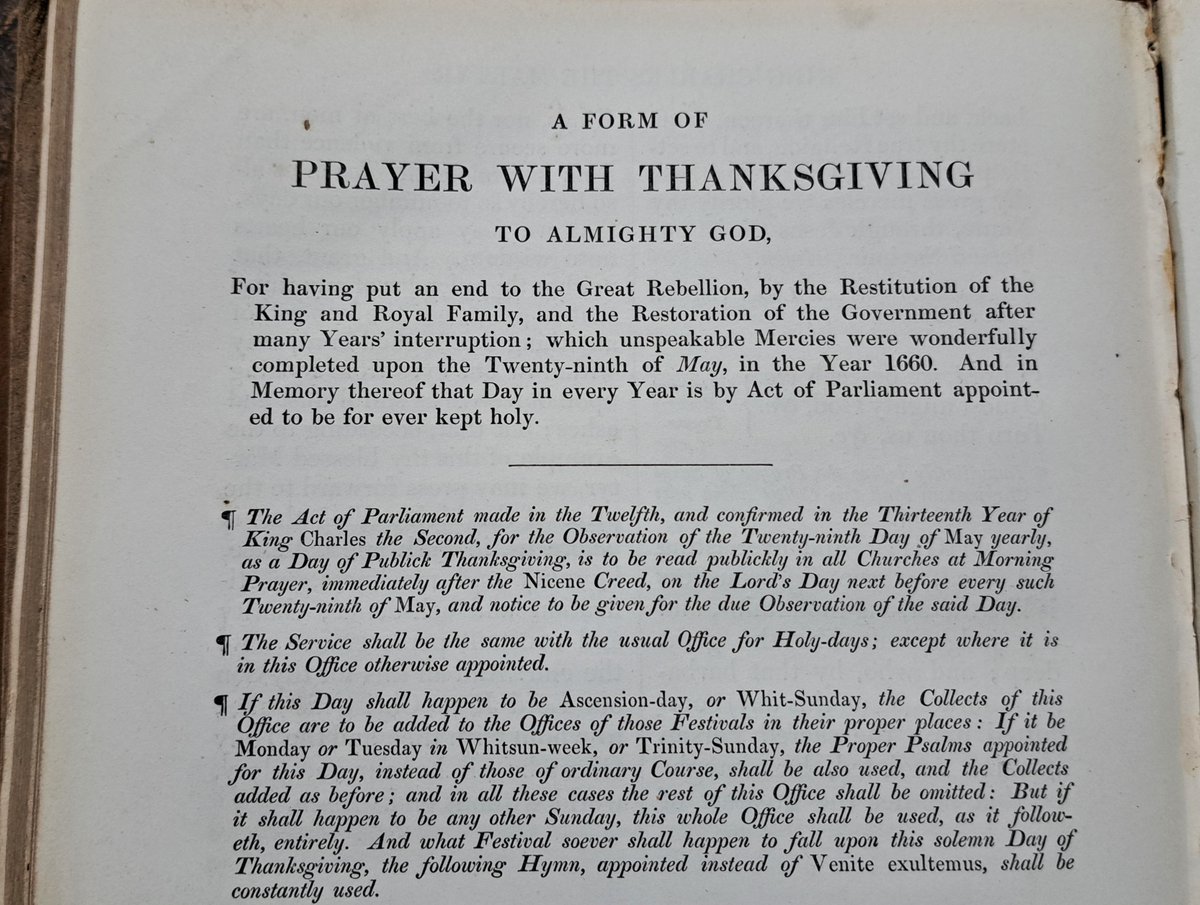
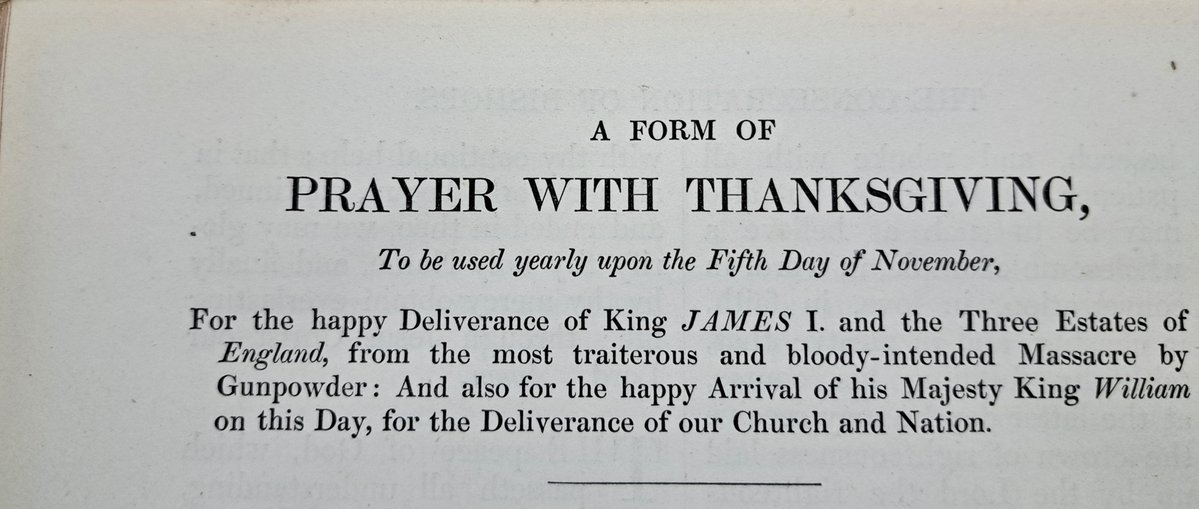
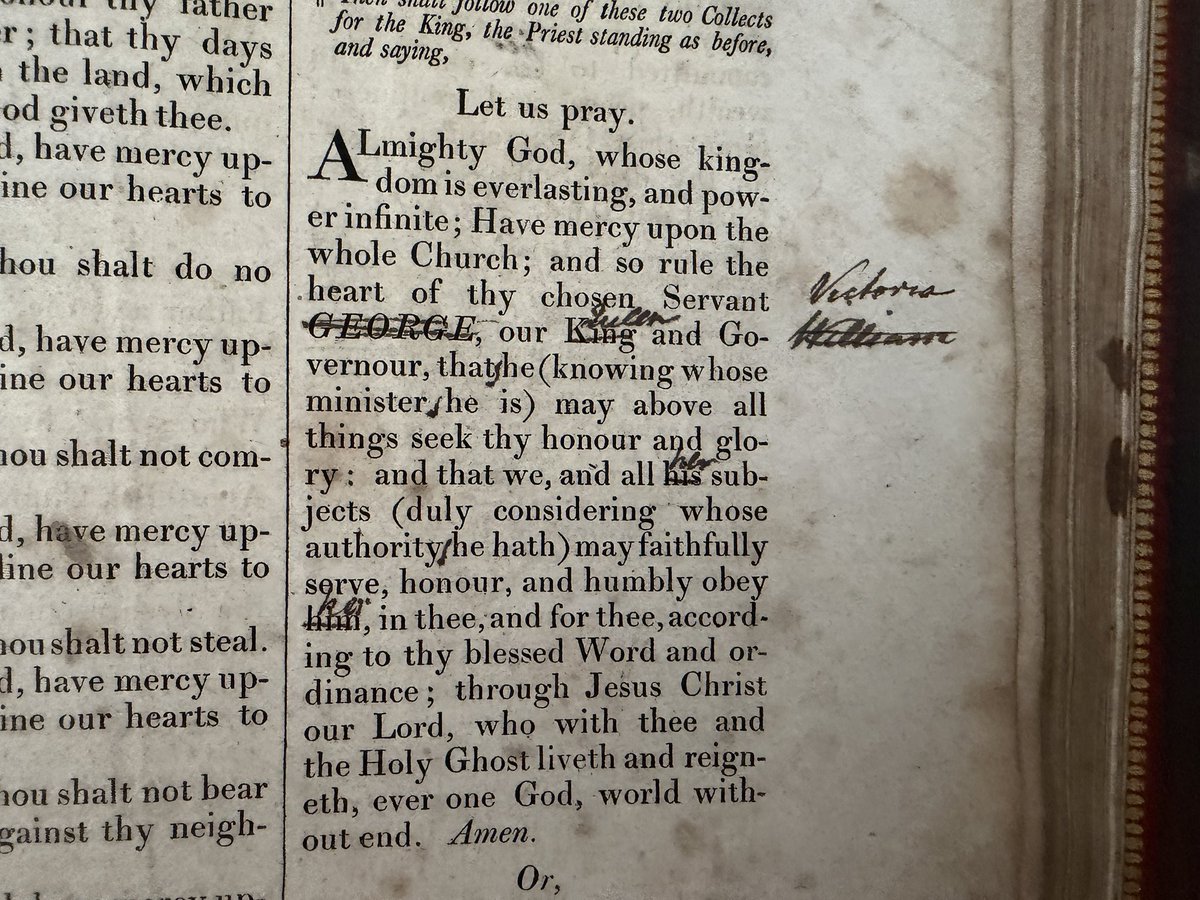
@FoxTerriblis50 Amazing! Look what I found in the Altar Book I used for our High Church Communion service: dating from the period between Prince George’s marriage and the establishment of the Regency, and updated for the subsequent monarchs!
Marcus Walker tweet mediaMarcus Walker tweet media
English
2
0
2
59
Antony Fox
Antony Fox@FoxTerriblis50·
This is from our Altar Book of 1851 (Published in 1849). The Order for the 29th of May, along with that for King Charles the Martyr, the Accession of Queen Victoria (June 20th), and November 5th. In the prayer for the Royal Family, we have the Queen, Prince Albert, and Albert Edward, Prince of Wales. An earlier Prayer Book mentions Queen Adelaide! The 1851 Missal was purchased just three years before George Orwell's Grandfather became our Vicar!
Antony Fox tweet mediaAntony Fox tweet mediaAntony Fox tweet media
English
1
0
1
194
Marcus Walker
Marcus Walker@WalkerMarcus·
We are reviving these old services partially because it's fun, and partially because they help us understand and frame our national story, and by extension our national identity. The consequences of losing the threads of our shared, if contested, narrative are all around us.
Great St Bartholomew@StBartholomews

🌳Oak Apple Day: celebrate the Restoration of the Crown in 1660 📖Use the old service ordered to be used in churches for hundreds of years 🎼Purcell, Child, Batten, Byrd 🎶Hymns of a national, celebratory, variety 👨‍🍳Free food afterwards 🍷Parish bar will be open

English
6
47
398
14K
Marcus Walker retweetledi
Jill Foster
Jill Foster@JournalistJill·
Find your Peter Murrell item by putting a pound sign against the number of X followers and the last thing you touched in your kitchen. Mine is a £42600 pizza wheel.
English
514
278
1.3K
176K
Marcus Walker
Marcus Walker@WalkerMarcus·
There’s a sleight of hand here, as you would need to demonstrate that such a system not only ‘engorges’ those who have most but also deprives the most vulnerable of their subsistence, rather than (say) lifts untold billions out of poverty, while allowing a few to become unimaginably wealthy. Those are not the same thing.
English
0
0
0
17
Both sides of the Tweed
Both sides of the Tweed@Dr_W_E_Bulmer·
@WalkerMarcus @LuathPress Equality in and of itself is not necessarily immoral, but a system that accumulates wealth and power without regard to issues of justice and the common good, quickly becomes immoral, engorging those who already have most while depriving the most vulnerable of their substance.
English
1
0
0
25
Both sides of the Tweed
Both sides of the Tweed@Dr_W_E_Bulmer·
Let's unpack this a bit: "the state driving towards a ‘common good’ that is not actually shared by the public (as manifested by their revealed preference at the till) will often have seriously negative effects."
Marcus Walker@WalkerMarcus

As this was my day job for four years in Rome, I decided to read the Pope’s encyclical, Magnifica Humanitas. Being free from the jurisdiction of the Bishop of Rome, but with an appreciation of any deep thinking by a major Christian leader, I found it very interesting. In short: His underlying analysis of the situation is deeply Burkean - it’s all little platoons, as read and developed through the scriptural narrative; it’s humanity in its messiness and reality not idealised and perfected. I think I agree with this section entirely. The solutions are more mixed. While I can understand the instincts, he seems to slip into three presumptions that either need more work or are likely to backfire significantly: 1) the Luddite fallacy - that there is only so much work and once it’s taken away from a worker, nothing will replace it. AI might be a unique threat to humanity or it might be another step forward as we mechanise one thing and then open up others. 2) There is a belief in multilateral action that doesn’t seem to reflect either that such action is often dominated by dangerous pressure groups (see the WHO) or that the bad powers in the world just ignore it, leaving the good powers stranded (see China). 3) There is a trust in state action which (though reassuringly caveated) still ignores the fact that the state driving towards a ‘common good’ that is not actually shared by the public (as manifested by their revealed preference at the till) will often have seriously negative effects. But all round a much more subtle encyclical than those of his predecessor (which came firmly out of a left wing stable, economically and politically).

English
1
1
4
365
Tom Harwood
Tom Harwood@tomhfh·
I think we should ban MPs and Lords wearing lanyards in either chamber. Looks awful.
English
55
29
749
40.2K
Marcus Walker
Marcus Walker@WalkerMarcus·
@benjamindcrosby @cath_cov There was a wonderful man whom I used to visit in my curacy who had his (grand?)father's communion set from being a chaplain in the First World War. He asked me to celebrate using that, and I never looked back.
English
1
0
7
100
laudablePractice
laudablePractice@cath_cov·
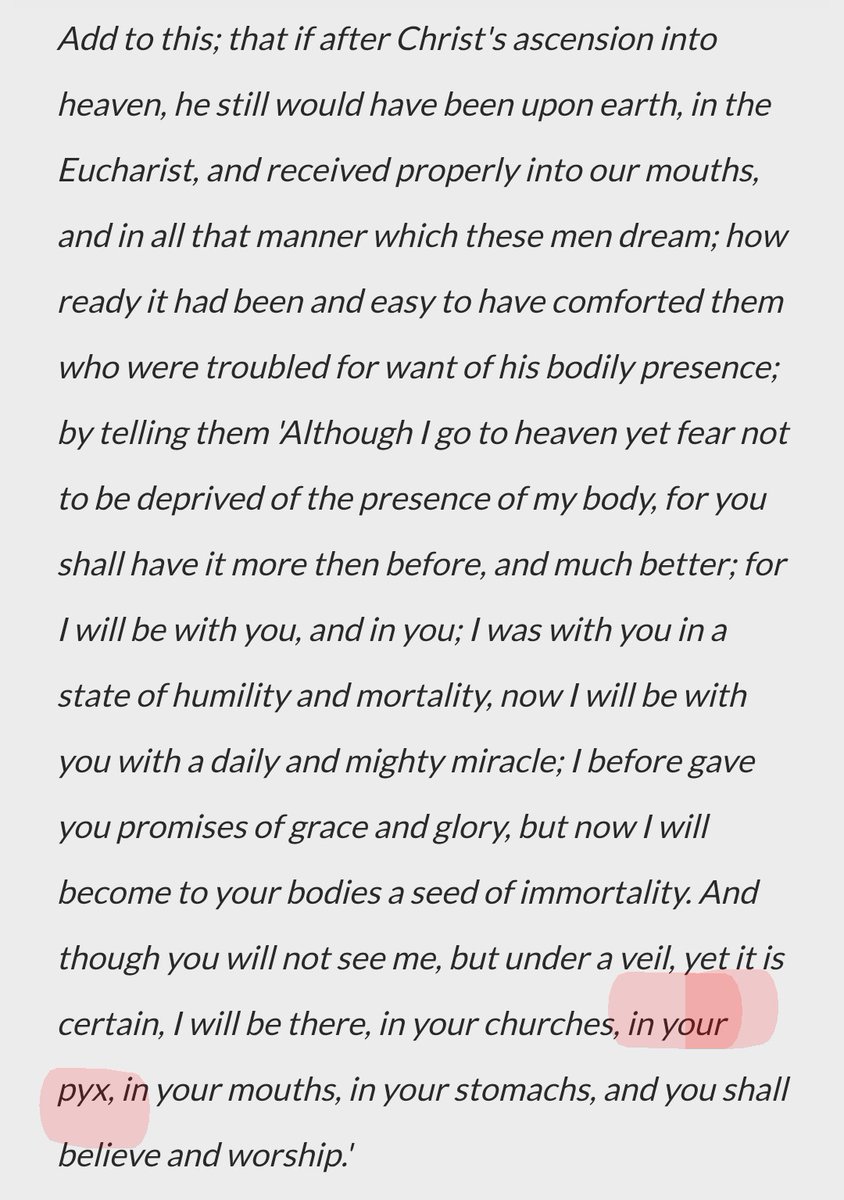
This is rather curious as the one reference I can detect to a pyx in Taylor's work is very negative (see below). He also rejected reservation of the Sacrament. If genuine, my guess is that Taylor used this device to hold the bread for celebrating the Sacrament with the sick. 1/2
laudablePractice tweet media
White Horses@white_horses_

@fathergarlick @Garlickhythe @HappyThurifer Here's more details on it.

English
3
0
11
1.3K
The Presbytery Inn
The Presbytery Inn@PresbyInn·
@WalkerMarcus @SimonFish1529 @linmanfu Etymologically, the word "priest" in English is rented from Vulgar Latin (prester) which just meant presbyter. While it has accumulated many other meanings since then, it isn't objectionable in and of itself as a way of referring to a "minister".
English
1
0
1
34
Marcus Walker
Marcus Walker@WalkerMarcus·
@tc1415 It was! It’s really beautiful and the Burne Jones mosaïc is ace.
English
1
0
6
603
Benjamin Lewis
Benjamin Lewis@tc1415·
I have been instructed by the colleagues I'm with to stop being distracted by every church we pass. (incidentally @WalkerMarcus I didn't even know the Anglican St Paul within the Walls existed, was that part of your old stomping ground?)
English
1
0
12
1.6K
Simon Fish
Simon Fish@SimonFish1529·
@linmanfu @WalkerMarcus @PresbyInn Agreed. BCP does, in many ways, follow a mildly Calvinistic doctrine. Anglican ministers ('priests' 🙄) may put another spin on it.
English
2
0
2
33
Marcus Walker
Marcus Walker@WalkerMarcus·
2) That the ‘common good’ aspect of resource distribution is better served by politics than the market. You seem to have an idealised vision of political engagement (which is itself, in reality, inequitable - much easier if you’re rich and well educated, for example). But most importantly the question of litigating these matters of good / ill are ones where the millions of people making tiny choices have far more democratic credibility than 30-50% of the electorate imposing their will after an election probably fought on other issues. This isn’t to say parliament isn’t the place to tease out and determine the overarching questions, but it’s a terrible place to try to force the market to act against its consumers’ interests (a lesson we are starting to relearn right now).
English
0
0
0
19
Marcus Walker
Marcus Walker@WalkerMarcus·
@Dr_W_E_Bulmer @LuathPress Thank you for this sustained engagement. I think our fundamental disagreements hinge on these two points: 1) That the market is immoral because it allocates resources in an inequitable way. As someone who does not see inequality as immoral, I have to dissent from thus analysis.
English
2
0
0
32
Marcus Walker retweetledi
James
James@TypeForVictory·
There's a dearth of conservative intellectualism, but it's not much better on the liberal end. Calling something 'crackers' or 'absurd' isn't an argument. The twin fallacies of democratic absolutism and 'present day' need challenging - tradition has a social purpose, too.
Tom Gordon MP@tomgordonLD

Having reserved spots for a particular religious group in our Parliament is absolutely crackers in the 21st century. Faith leaders can make valuable contributions, but nobody should get an automatic seat in our legislature. Read my comments below👇 bbc.co.uk/news/articles/…

English
3
2
42
3.5K
Both sides of the Tweed
Both sides of the Tweed@Dr_W_E_Bulmer·
@WalkerMarcus The market treats people radically unequally: the more money you have, the more voice you have in market decisions. Markets, by moral criteria, are very bad at allocating goods, because they go to where there is the most purchasing power, not the greatest need.
English
2
1
4
86
Marcus Walker
Marcus Walker@WalkerMarcus·
@Dr_W_E_Bulmer The weakness of the alternatives is that the ‘common good’ as seen by politicians and endorsed by 30-50% of the population is often not very common.
English
0
0
1
32
Both sides of the Tweed
Both sides of the Tweed@Dr_W_E_Bulmer·
The weakness of @WalkerMarcus argument here is that the common good is not, and never can be, revealed in 'preference at the till'. The common good is not the same as aggregate market demand.
English
2
0
7
136