Robert West, PhD ✝️ 🟦 🧬⚕️#PM101

90.7K posts

Robert West, PhD ✝️ 🟦 🧬⚕️#PM101 banner
Robert West, PhD ✝️ 🟦 🧬⚕️#PM101

Robert West, PhD ✝️ 🟦 🧬⚕️#PM101

@westr

@SUNY Emeritus via @Harvard @ucdavis. #PersonalizedMedicine AI and 🧬 of Disease. #Arachnoiditis: #neuropathicpain #paraplegia. Pic: St. Marks, FL

Tallahassee, FL Katılım Mart 2008
9.4K Takip Edilen19.2K Takipçiler
Robert West, PhD ✝️ 🟦 🧬⚕️#PM101
Bringing the genetically minimal cell [JCVI-syn3A] to life on a computer in 4D [space and time]: Cell cell.com/cell/fulltext/… "Because of stochasticity, each replicate cell is unique. We predict not only the average behavior of partitioning to daughter cells but also the heterogeneity among them."
English
0
2
1
134
Robert West, PhD ✝️ 🟦 🧬⚕️#PM101 retweetledi
Pablo Corral MD
Pablo Corral MD@drpablocorral·
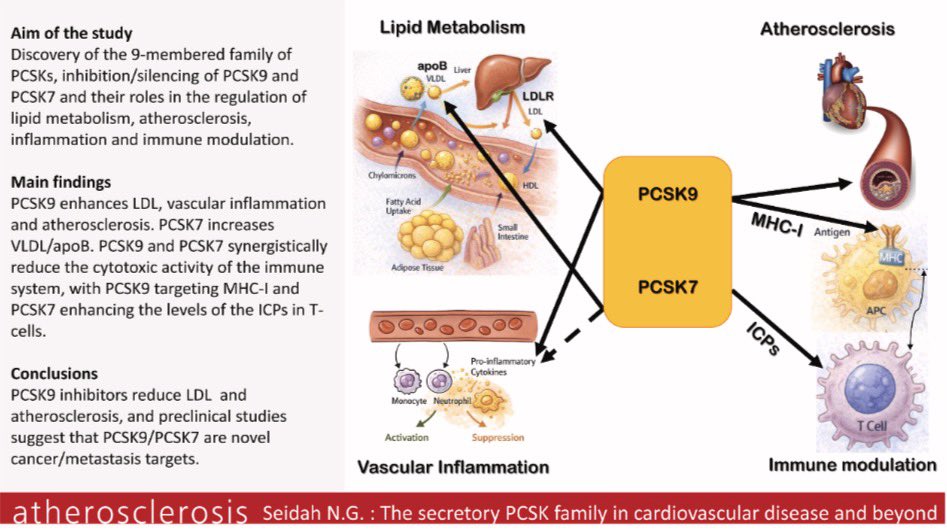
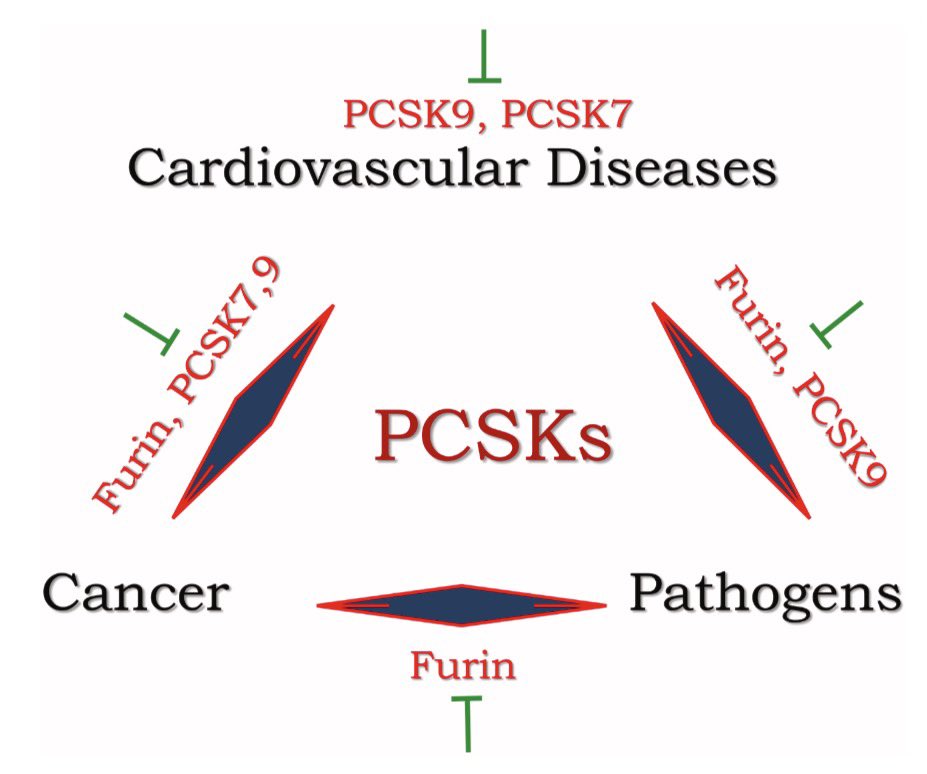
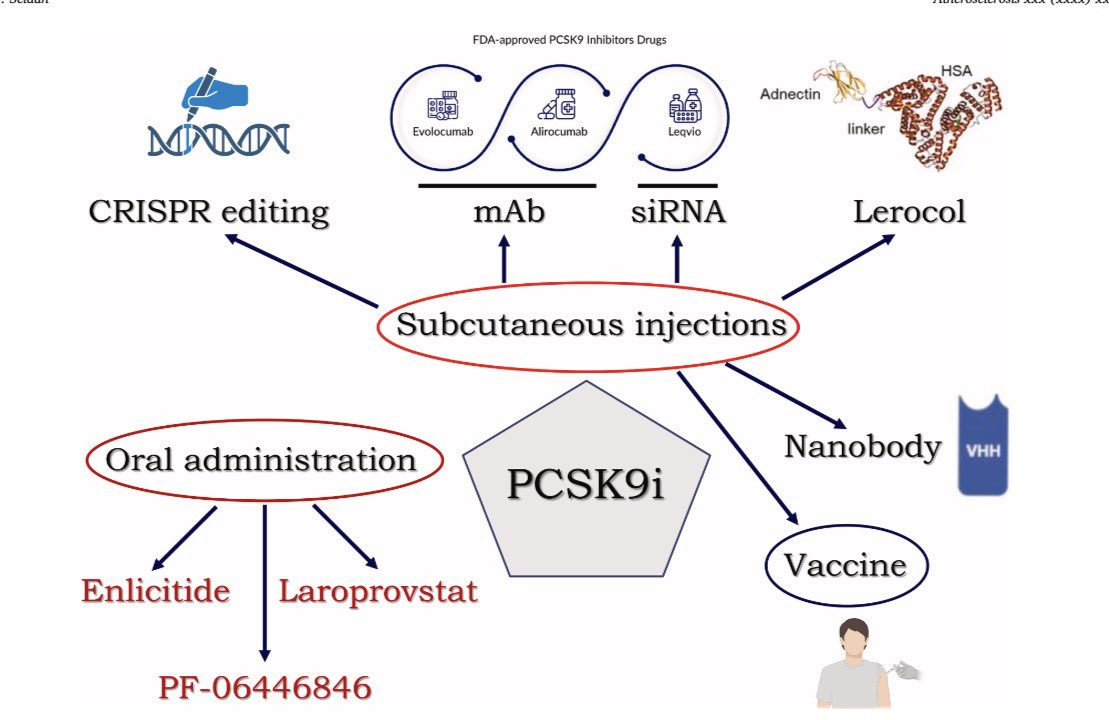
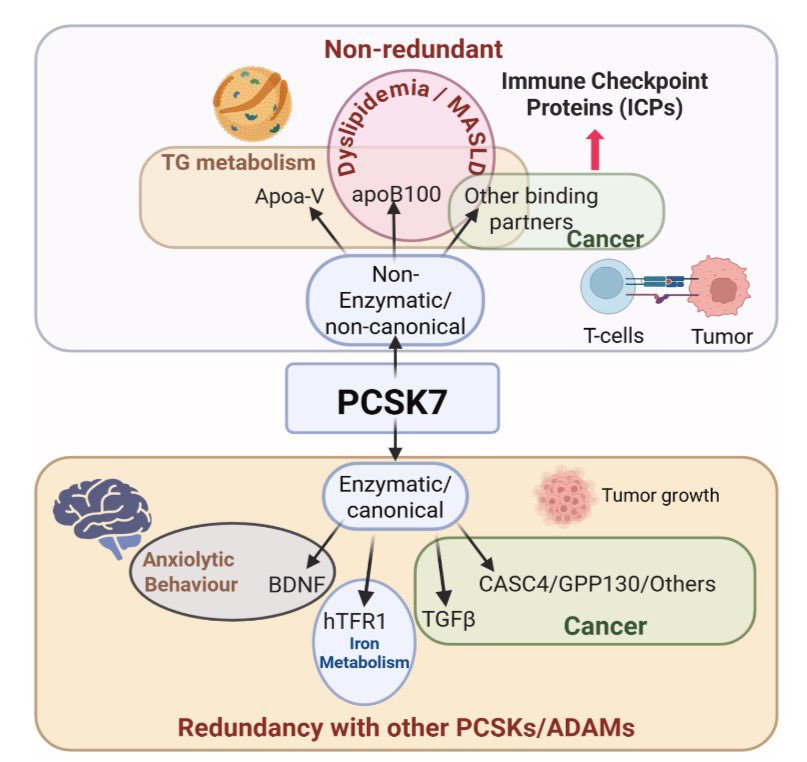
👉The secretory PCSK family in cardiovascular disease and beyond 👉PCSK9 & PCSK7: from atherosclerosis to oncology 📍PCSK9 = more than LDL-C → ↓LDLR → ↑LDL-C (classical role) → also drives vascular inflammation and plaque instability • Immune modulation (the oncology bridge) → PCSK9 promotes degradation of MHC-I → ↓ antigen presentation → ↓ CD8+ T-cell activation → facilitates tumor immune escape 📍PCSK7: complementary effects → ↑ apoB/VLDL secretion → atherogenic burden → in T-cells: modulates immune checkpoint proteins → impacts cytotoxic activity • Oncology signals (preclinical but consistent) → PCSK9 inhibition → ↑ intratumoral CD8+ T-cells → ↓ tumor growth and metastasis → enhances response to immunotherapy ☝️Dual targeting = synergy → PCSK9 (circulation + tumor interface) → PCSK7 (T-cell intrinsic regulation) → combined inhibition → >90% reduction in metastasis in models • Conceptual shift From lipid biology → immunometabolic regulation of cancer 👉Bottom line: PCSK9 helps tumors hide. PCSK7 weakens the attack. 🔗 atherosclerosis-journal.com/article/S0021-… @society_eas @ATHjournal @nationallipid
Pablo Corral MD tweet mediaPablo Corral MD tweet mediaPablo Corral MD tweet mediaPablo Corral MD tweet media
English
2
19
56
4K
Robert West, PhD ✝️ 🟦 🧬⚕️#PM101 retweetledi
Pablo Corral MD
Pablo Corral MD@drpablocorral·
👆 Inflammation ≠ Lp(a): Parallel Paths to ASCVD 📍 Mendelian randomization study assessing IL-6 signaling inhibition, Lp(a), and ASCVD risk 👉 IL-6 inhibition → modest reduction in Lp(a) (~–3 mg/dL) 👉 Clear reduction in ASCVD risk across outcomes (CAD, stroke, carotid plaque) 👉 Key point: Lp(a) explains only a small fraction of this benefit (~1–5%) 👉 Even in high Lp(a) genetic carriers, mediation remains limited (up to ~15%) 👉 Stronger IL-6 → Lp(a) effect in these carriers, but no greater clinical benefit 👉 Most cardiovascular benefit driven by Lp(a)-independent inflammatory pathways 👉 No evidence that elevated Lp(a) modifies IL-6–ASCVD risk reduction 📍 Clinical implication: 👉 IL-6 pathway ≠ Lp(a) pathway 👉 They are independent and complementary targets Translation: lowering inflammation won’t meaningfully replace Lp(a)-lowering strategies 📍 Bottom line: 👉 IL-6 and Lp(a) are independent, complementary targets 👉 Lowering one won’t replace treating the other 🔗 Open Access atherosclerosis-journal.com/article/S0021-… @society_eas @ATHjournal
Pablo Corral MD tweet media
English
5
28
79
4.8K
Robert West, PhD ✝️ 🟦 🧬⚕️#PM101 retweetledi
Akl Fahed
Akl Fahed@aklfahed·
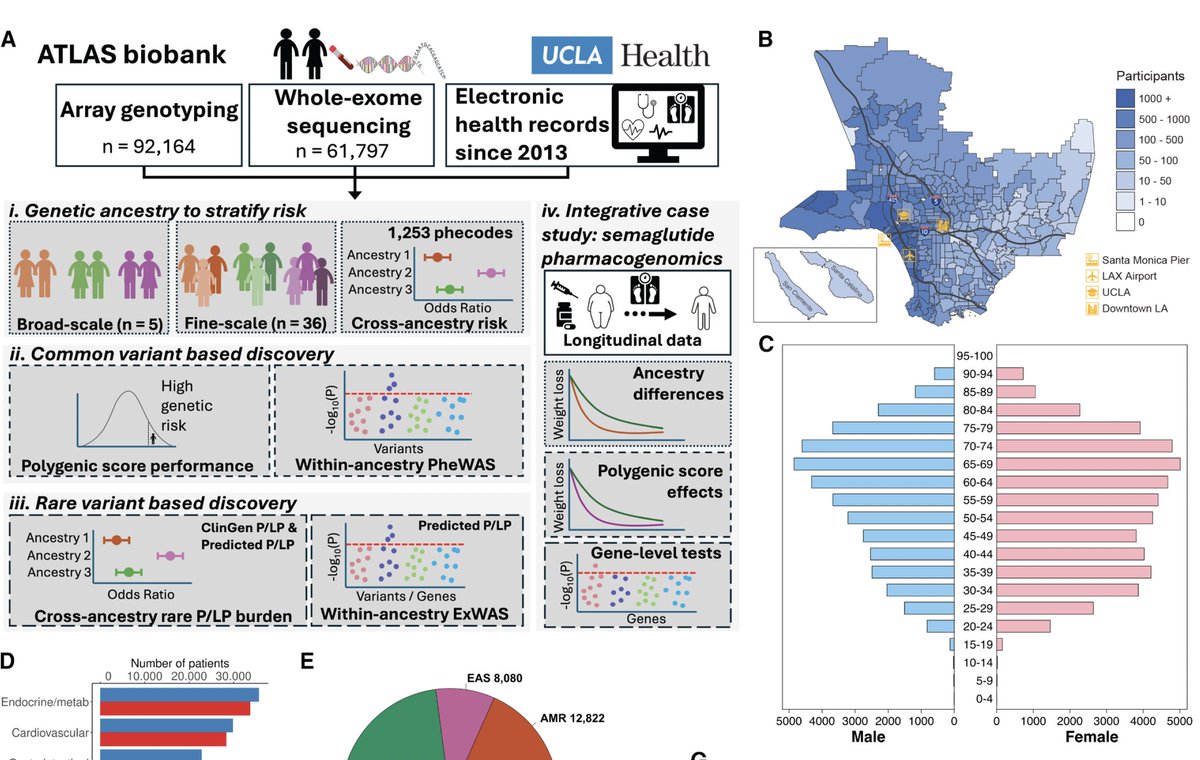
Delighted to share our new preprint on sex differences in polygenic risk prediction. researchsquare.com/article/rs-915… Using 3,000+ PRS in @PGSCatalog across 145 traits in UK Biobank Key: ✳️Sex bias is widespread ✳️Driven more by biology than methods, sample size ✳️Implications for clinical use Thread👇
English
4
18
44
4.2K
Robert West, PhD ✝️ 🟦 🧬⚕️#PM101 retweetledi
Big Think
Big Think@bigthink·
A new framework for consciousness: Can we read conscious brain activity by measuring spikes of neural entropy? @DrTomFroese Read the full article: buff.ly/VG6Dn8n
Big Think tweet media
English
21
87
355
19.7K
Robert West, PhD ✝️ 🟦 🧬⚕️#PM101 retweetledi
Avi Roy
Avi Roy@agingroy·
For more than 20 years, the entire Alzheimer's field chased one target: amyloid. The next wave doesn't all chase amyloid. In 2026, the Alzheimer's pipeline has 11 readouts across 5 mechanism classes. The deepest year on record. Only three of the eight bets still target amyloid. The rest: 1. Remternetug (Lilly): next-gen anti-amyloid, self-injection. 100% plaque clearance in 3 months at top dose. Phase 3 data imminent. 2. Leqembi SC (Eisai/Biogen): at-home version of Leqembi. FDA decision May 24. 3. BIIB080 (Biogen/Ionis): first anti-tau drug to test efficacy in humans. ~60% CSF tau reduction. Q2/Q3 readout. 4. Sabirnetug (Acumen): targets soluble Aβ oligomers, not plaque. Zero ARIA in Phase 1. 5. ACI-24.060 (AC Immune/Takeda): anti-amyloid vaccine. 1-2 shots a year. Interim PET data 1H 2026. 6. AXS-05 (Axsome): oral, treats AD agitation without sedation. PDUFA late April. 7. Xanamem (Actinogen): first oral drug to lower brain cortisol. 60% slowing in high-pTau patients. November data. 8. AL101 (Alector/GSK): boosts progranulin, the brain's clean-up signal. Futility check 1H 2026. One mechanism for two decades. Five in one year.
Avi Roy tweet media
English
11
70
259
21.9K
Robert West, PhD ✝️ 🟦 🧬⚕️#PM101 retweetledi
AdrianWoolfson
AdrianWoolfson@AdrianWoolfson·
My thoughts on ‘evolutionary debt’ in natural biological systems and the genome as ‘spaghetti code’ below. spectrum.ieee.org/synthetic-biol…
English
0
4
5
294
Robert West, PhD ✝️ 🟦 🧬⚕️#PM101 retweetledi
Derya Unutmaz, MD
Derya Unutmaz, MD@DeryaTR_·
As I mentioned before, I am now sharing an example from GPT-5.5 Pro, also featured by OpenAI, that really left me stunned by what it is capable of in biomedical science. (full report on the website I created with Codex, link in the thread). To push GPT-5.5 Pro hard, I uploaded a real data set of immune subset (T cells) gene-expression spreadsheet: 62 sorted T cell samples, 27,906 gene columns, and millions of underlying data points across different T cell subsets. Importantly, this public dataset also had paired structure making it possible to separate true cell-state biology from donor-to-donor variation. I asked GPT-5.5 Pro not merely to summarize the spreadsheet, but to analyze it deeply: What can we learn from this dataset? What are the mechanistic insights? What are the most important biological questions that emerge? What follow-up experiments should we do next? It thought for about 100 minutes and produced a roughly 40-page report! What amazed me was not just the length or even the initial analysis, since previous models are also capable of doing this. What amazed me was the quality of the reasoning and insights it provided! The report recognized that this was not just a table of genes, but two overlapping experimental designs. It identified the major biological axis, which in plain language was that the cells were not just “different categories.” They formed a coherent differentiation landscape, moving from future potential toward immediate function. It also understood the caveats. It did not overclaim from bulk gene-expression data. It clearly explained that bulk transcriptomics cannot distinguish whether every cell in a sorted population has shifted or whether a smaller subpopulation is dominating the signal. It recommended the right next steps experiments, and integration with donor metadata. This is what made the report feel so special to me. It was not just doing statistics. It was reasoning like an expert systems immunologist. It saw the structure of the experiment, interpreted the patterns, built a mechanistic model, identified limitations, proposed causal hypotheses, and laid out a translational roadmap. Other advanced models have been able to generate excellent biomedical reports before, including previous GPT-5 models. So I don't want to claim this is an entirely new type of capability. But this one felt different in an important way. It had more scientific elegance, more restraint, more biological intuition, and more of the nuanced judgment that usually comes only from years of hands-on experience in the field. It felt like this AI model had crossed another threshold. This is the kind of analysis that could easily take a research team months to perform, refine, interpret, and write up. Even then, many teams might not produce something this integrated, this mechanistically coherent, and this useful as a launchpad for future experiments. I know a 40-page T-cell gene-expression analysis may not be exciting to everyone. To illustrate how good it is, also had Codex built a web site with it anyone can explore, link below. 😊 Those interested can go deeper into the report. I also wanted this example on the record because, because to me, it is evidence that we are entering a new stage in AI-assisted biomedical science. The important point is no longer that AI can "analyze data and write a report.” The important point is that AI can now help transform complex biological data into mechanistic understanding, experimental priorities, and testable hypotheses at a speed and depth that would have been almost unimaginable a short time ago. For biomedical science, this is a very big deal! Of course, this may vary across domains, and every analysis still needs expert review, validation, and experimental follow-up. But in my own field, with data I understand deeply, this felt like another inflection point. I feel strongly that we have crossed another milestone threshold in the age of AI, with the release of GPT-5.5.
Derya Unutmaz, MD tweet media
English
22
68
473
47.5K
Robert West, PhD ✝️ 🟦 🧬⚕️#PM101 retweetledi
Scott Isaacs
Scott Isaacs@scottisaacsmd·
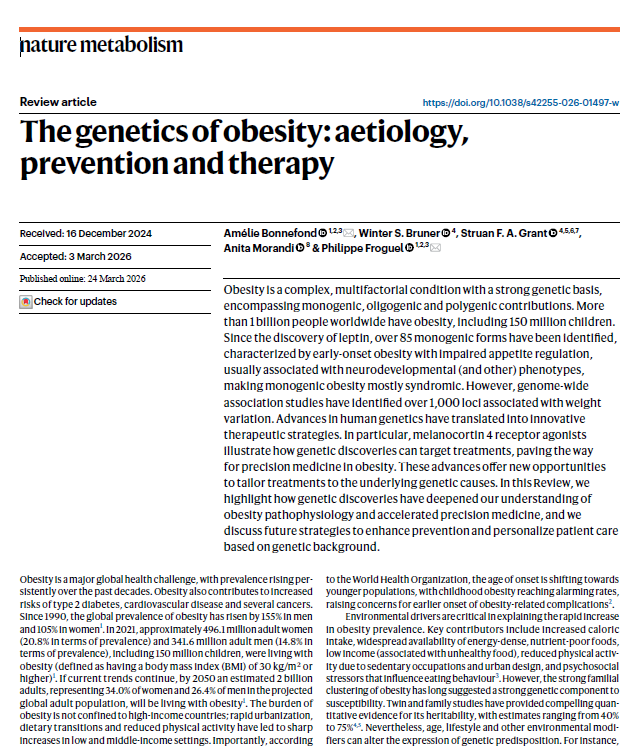
The genetics of obesity: This new @NatMetabolism review shows obesity is highly heritable, with more than 85 monogenic forms and over 1,000 GWAS loci, and is rapidly opening the door to true precision medicine (MC4R agonists, PRSs, genotype-guided therapies) for our patients living with obesity. nature.com/articles/s4225…
Scott Isaacs tweet media
English
2
51
134
6K
Robert West, PhD ✝️ 🟦 🧬⚕️#PM101 retweetledi
Samuel Hume
Samuel Hume@DrSamuelBHume·
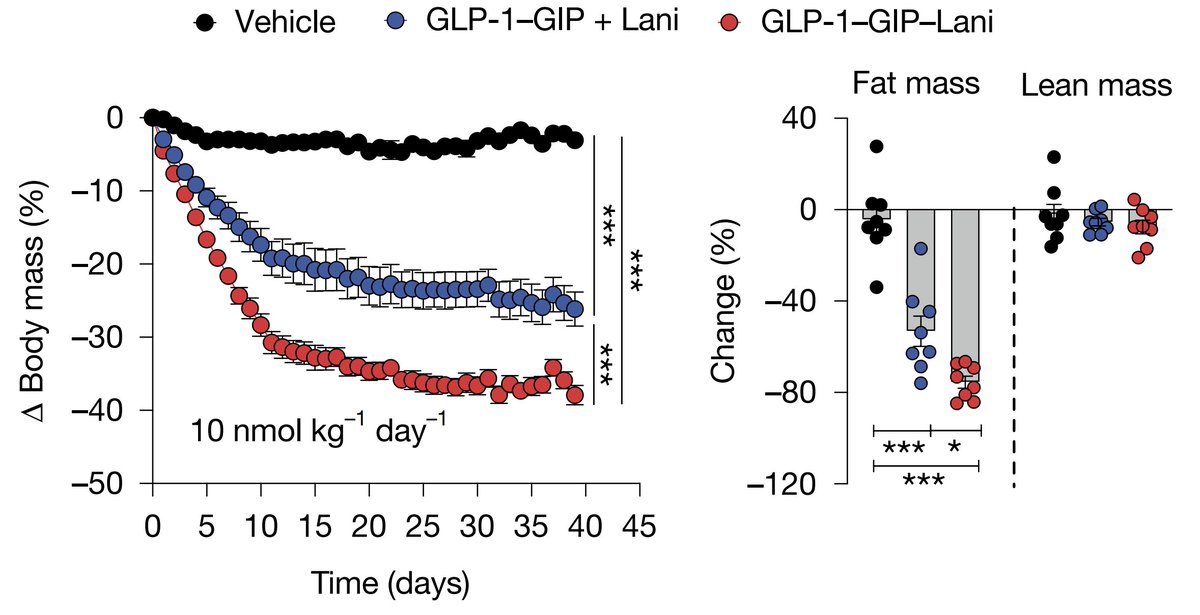
This is getting crazier and crazier A GLP1–GIP–PPARα/γ/δ quintuple agonist (5 different receptors) for treatment of obesity, diabetes, and fatty liver disease (tested here in mice) This is like adding Tirzepatide to Lanifibranor, in the same molecule
Samuel Hume tweet media
English
24
77
745
573.5K
Robert West, PhD ✝️ 🟦 🧬⚕️#PM101 retweetledi
AI Highlight
AI Highlight@AIHighlight·
🚨BREAKING: Anthropic just published a study mapping exactly which jobs its own AI is replacing right now. The workers most at risk are not who anyone expected. They are older. They are more educated. They earn 47% more than average. And they are nearly four times more likely to hold a graduate degree than the workers AI is not touching. The argument is straightforward. Anthropic built a new metric called "observed exposure." Not what AI could theoretically do. What it is actually doing right now in professional settings, measured against millions of real Claude conversations from enterprise users. For computer and math workers, AI is theoretically capable of handling 94% of their tasks. It is currently handling 33% of them. For office and administrative roles, theoretical capability is 90%. Current observed usage is 40%. The gap between what AI can do and what it is already doing is enormous. The researchers are explicit about what comes next. As capabilities improve and adoption deepens, the red area grows to fill the blue. The demographic finding is what makes the paper uncomfortable. The most AI-exposed workers earn 47% more on average than the least exposed group. They are more likely to be female. They are more likely to be college educated. This is not a story about warehouse workers or truck drivers. It is a story about lawyers, financial analysts, market researchers, and software developers. The exact group whose education was supposed to insulate them. Computer programmers showed the highest observed AI exposure at 74.5%. Customer service representatives at 70.1%. Data entry keyers at 67.1%. Medical record specialists at 66.7%. Market research analysts and marketing specialists at 64.8%. These are not predictions. These are measurements of work that is already happening on AI platforms right now. Then there is the pipeline finding nobody is talking about loudly enough. Anthropic's researchers found a 14% decline in the job-finding rate for workers aged 22 to 25 in highly exposed occupations since ChatGPT launched. No comparable effect for workers over 25. Entry-level roles were never just jobs. They were the training ground where junior analysts became senior analysts, where junior lawyers learned how arguments hold together. If that layer disappears, nobody has answered the question of where the next generation of senior professionals comes from. The detail buried in the paper that most coverage missed: 30% of American workers have zero AI exposure at all. Cooks. Mechanics. Bartenders. Dishwashers. The technology reshaping professional careers is completely irrelevant to roughly a third of the workforce. The divide is no longer between high skill and low skill. It is between presence and absence. The company publishing this study is the same company selling the AI doing the replacing. Anthropic had every commercial incentive to soften these findings. They published them anyway. If you spent four years and $200,000 on a degree to land a white collar career, the company that builds Claude just confirmed your job is more exposed than the bartender pouring drinks at your graduation party. Source: Anthropic, "Labor market impacts of AI: A new measure and early evidence" PDF: anthropic.com/research/labor…
AI Highlight tweet media
English
264
1.5K
4.4K
824.5K
Robert West, PhD ✝️ 🟦 🧬⚕️#PM101 retweetledi
Profluent
Profluent@ProfluentBio·
Today we announced a landmark partnership with @EliLillyandCo to use our AI models to design recombinases for genetic medicine—a collaboration valued at up to $2.25 billion before royalties. The goal: use Profluent's AI models to design recombinase editors capable of inserting long stretches of DNA at precise locations in the genome. Read the press release for more: businesswire.com/news/home/2026…
Profluent tweet media
English
6
14
119
21.1K