

Nolen
7.3K posts


Why has there been no protests at all in America about this war?
Only 18% of the country supports it
Where are all the protests?
Makes no sense
English




@theprez98 I got to do the same thing once. Thst low level helicopter ride was amazing.
English

Soon after reporting to my first fleet squadron (over 20 years ago!), I was voluntold to be the CSAR survivor in a large scale exercise for both the carrier strike group and other service assets. I was flown from the aircraft carrier off the coast of San Diego to a remote training facility in the California desert where I was dropped in the middle of nowhere (under the watchful eye of a Navy SEAL who made sure I didn't die out there).
I was the CSAR survivor, meaning I had notionally been "shot down" in enemy territory and needed to be located and recovered. I had instructions to use my survival radio at certain times and pretty sure I never was able to reach anyone, yet by the time it was getting dark, a four-man squad of Army soldiers had located me and intended to move me to an extraction point.
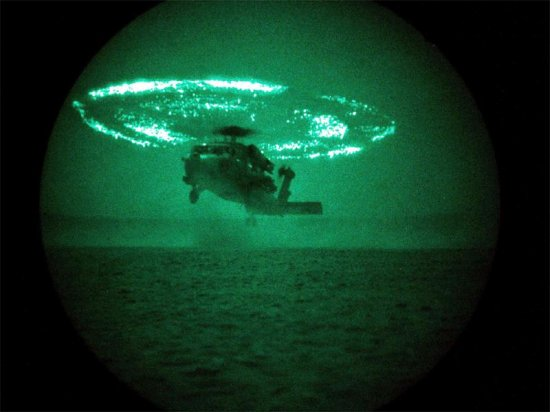
Most of the day had been pretty boring but now comes the cool part. Two SH-60s from the carrier air wing come in to pick me up. Completely dark. The only way I can even make them out is from the static electricity produced by the rotors. One of the Army guys gives me his night vision binoculars so I can watch the 60s land. Amazing stuff. They quickly picked me up and then I got a night-time, low level ride across the desert and back out to sea. We landed once to refuel on a destroyer and then finally made it back to the carrier in the middle of the night.
I'm sure I'm forgetting many of the details of that day. And I would not have been aware of how many assets of the carrier strike group, not to mention other service assets that were laser focused on recovering me. It was just a training exercise, but these things just don't happen in real life without extensive, repetitive training under all sorts of conditions.
English

Honestly I'm ready for Texas to secede
TEXIT
English
This is what it’s like when social media and the like become topical experts in your field for 15 minutes.
A couple of rules of thumb that will help all the new Combat Search and Rescue (CSAR) subject matter experts:
1. Words mean things. Use precise and correct language.
2. USAF Combat Search and Rescue is a mission set focused on by HH-60Ws (Rescue Squadron - RQS), HC-130Js (RQS), Pararescue (PJ)/Combat Rescue Officers (CROs) (RQS), and A-10s (Fighter Squadron - FS).
3. The Airmen who comprise CSAR in point 2 are NOT SOF; they are CAF or Combat Air Force Airmen who are aligned under USAF Air Force Reserve Command, Air National Guard, and Air Combat Command.
4. Yes, USAF Air Force Special Operations Command (AFSOC) as the air component of Special Operations Command does have their own PJs and CROs, but not HHs, HCs, or A-10s. AFSOC PJs and CROs are in Special Tactics Squadrons (STS). STS and RQS are separate and distinct and have different mandates.
5. CAF CSAR focuses on CSAR and can swing role to support or execute other missions. However, the focus is supporting the Combatant Commander and Joint Forces Air Component Commander (JFACC) CAF scheme of maneuver (attack, fighters, bombers, ISR) in projecting airpower through air domain operations. These are the forces who flew the daring DAYTIME immediate dynamic rescue of the F-15E pilot.
6. SOF does special operations in support of their lines of effort. There are plenty of books if you want more data. SOF can, and in this case did, swing role and support a rescue of the WSO. Not their main role or mission, but they have the skill sets and tools to plan and execute it, obviously.
7. The CAF and SOF will often interact, intersect, and one is often in a supportive role to the other (ie the CAF establishes and maintains air superiority, presents bombers and attack effects in support of SOCOM operations etc), and that supporting/supported relationship can be fluid.
8. Regardless of CAF or SOF, for members who project combat power, the intent is to achieve the commander’s intent. Ideally through effective and efficient means; however, the win is achieving the intent. The intent was taking back our own… full stop. The violence and hardware expended doesn’t actually matter.
9. For the new experts in all of this, and apparently the foreign folks who are also new experts and pointing out the loss of a couple of MC-130s (SOF), MH/AH-6 (SOF), a single A-10 (CAF), and obviously the F-15E (CAF): wait until you find out how many aircraft and other hardware we lose in training annually for combat or even the frontline fighters we lose training for air shows. That’s all open source. The losses on this mission to forcibly take back our WSO and not incur any blue service member losses is a win.
English

North Korea is a nuclear armed nation and has openly stated their disdain for America for 20 years. Why aren’t we bombing them?
English

@CattardSlim You really think I want America to fail?
English


BREAKING — Be brutally honest: Do you support the US president using profane language to threaten Iran with hell, as Pres. Trump just did, telling Iran to open the “Fuckin’ Strait, you crazy bastard, or you’ll be living in hell”? and is it good to bomb power plants? Yes or no?

English
Nolen retweetledi

Can’t believe Trump told Iran to “open the fuckin’ straight.” I miss normal times when Biden would say things like “sfddghhhkjjjytssghtmn.”
English
@Georg_Pazderski So you don't have to worry about them nuking you. You are welcome.
English

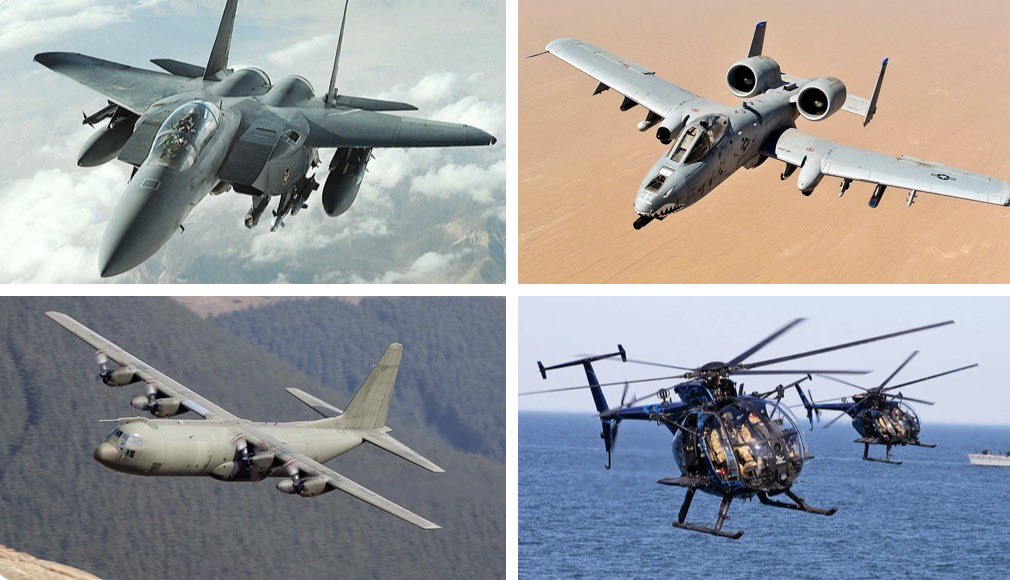
Die Rettung des abgeschossenen US-Piloten im IRAN hat die USA ~386 Mio. $ an Ausrüstung gekostet:
▪️F-15E Strike Eagle: ~100 Mio.
▪️A-10 ThunderboltII: ~18,8 Mio.
▪️2 C-130 Hercules: ~200 Mio.
▪️MH-6 Little Bird: ~7,5 Mio.
▪️1–2 MQ-9 Reaper: ~60 Mio.
DAS IST NUR GELD.
Wert für die Moral der Truppe: UNBEZAHLBAR❗️
Deutsch

I really wish "legal experts" hadn't screamed bloody murder about every little thing Trump did, so they could speak with authority now that he's actually committing war crimes.
English

Is there no leader in the Western world with the courage to say "ENOUGH!"
English

We are witnessing the greatest humiliation of the US military since Vietnam, and this will be Trump's legacy! Another hundreds of millions fighter plane downed by Iran:
English

All of the 5-MeO DMT in the world couldn’t destroy the ego of a MH 6
Byron Banger@ByronBanger
@RyanSaavedra Looks like a MH-6 Little Bird helicopter was also torched
English

This is an actual post. This is not funny. This is beyond desperate. This is a deeply unwell man who doesn’t belong anywhere near the levers of power. Every member of his cabinet and Congress is complicit in not demanding his removal now.

English

$200M destroyed while rescuing a single pilot.
They are hiding the U.S. casualties

English

Undeclared war still warrants treatment of captives per the Geneva Convention.
Let's hope Iran follows that convention unlike the US killing survivors at sea.
English

Absolute disaster for Washington. A military simulation reveals how Iranian forces can brilliantly ambush elite US rescue teams. A single hidden anti-aircraft gun completely decimated a rescue chopper, turning a recovery mission into a desperate fight for survival.
English