Sabitlenmiş Tweet
Gowrish
2.2K posts

Gowrish retweetledi

Gowrish retweetledi

AI is the new engine of civilization.
The smartest capital on Earth is moving toward AI.
The future is going to be richer, faster, stranger, and more abundant than almost anyone believes.
English
@natiakourdadze curious, which vibe coding tool are you using to build this in 20 mins?
English

I built the Peptides App in 20 minutes!
You can follow the step-by-step in the article below.
Superappp AI is just too good.
Natia Kurdadze@natiakourdadze
English
Gowrish retweetledi

Gowrish retweetledi

Health and wellness will be the biggest market in the world. It’s inevitable.
Avi Roy@agingroy
A weekly jab in the belly is generating more revenue than the entire AI industry. Ozempic + Mounjaro: $71B in 2025. OpenAI + Anthropic: $29B. And they've barely started. ~2% of the 800 million eligible patients can currently access them. h/t @DrSamuelBHume
English
Gowrish retweetledi

wake up because this is the GREATEST time in history to start a company with TRILLIONS of dollars up for grabs over the next 10 years
1. consumer mobile is INTERESTING again for the first time since like 2017. apps can actually do things now.
do things. real things. book the flight, draft the contract, follow up with the lead, negotiate the rate, do things. we went from "tap to view" to "tap to deploy." the entire interaction model of software just flipped & most people haven't even registered it yet. OH, and the cost to create these apps is 1/100th of 2017.
2. HARDWARE is back on the table because you can shove Gemma 4 or DeepSeek onto a device that costs less than dinner & it runs locally with zero cloud costs. a year ago that sentence would have sounded insane. you can ship a physical product with a real brain in it now. the last time hardware was this accessible was the early smartphone era & that created a trillion dollar app economy from scratch.
3. literally EVERY category is open to be rebuilt AI-first. the incumbents know it & they're paralyzed. they can't move fast because moving fast because incumbents move slower than you (usually). that paralysis is your opportunity. build the app. build the SaaS. build the AI agent
4. distribution is FREE. you can go from zero audience to 10,000 people who trust you in 90 days on X or YT or IG your first 100 customers are sitting in your replies right now. the old playbook of "raise money, hire sales team, buy ads" is being lapped by a solo founder with a twitter account & a working demo. Oh, and you can use AI to automate a lot of it (ideas, research, AI avatars etc)
5. Idk about you but it feels like companies are doing LAYOFFS like it's the great depression and it's only getting started. No job is secure. So, building a side project that could turn into the main project is more important than ever.
6. the ENTIRE economy is being repriced in real time. the surface area for new companies has never been wider. the tools to build are free. the models are open source. the incumbents are running committees about their "AI strategy" while you could have already shipped.
and somehow the predominant response from most people is to watch youtube videos about it & go back to their 9-5.
not saying this is easy
not saying everyone will win
but im saying right now is a time worth trying
YOU ARE LIVING through a mass reshuffling of who owns what & who builds what. the last time this happened was the internet itself. before that, electricity.
this almost never happens.
& you're sitting there doing nothing about it?
wake up.
English
Gowrish retweetledi
startup idea for you
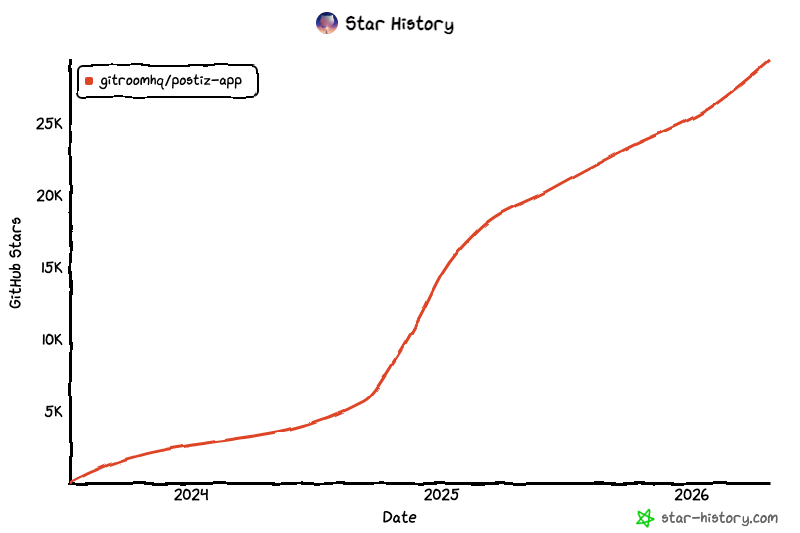
use postiz (20k+ github stars project) to sell AI social media content/management to 1 niche of SMBs.
what's postiz? it's an open source social media scheduler with AI built in. basically buffer + AI and free to download.
1. self-host postiz. use codex/claude code to help you figure this out in an afternoon.
2. pick one niche. dentists, realtors, lawyers. can even go a subniche like orthodentists vs dentists. family law over of lawyers.
2. wrap it in their language. "AI social media for dental practices"
3. add "we write your captions with AI" as the hook. that's what they're actually paying for.
4. plug it into n8n, make, or zapier so posting, scheduling, and approvals run on autopilot. the client approves with one tap. everything else is handled.
5. charge $50/mo-$100 per seat. that's nothing to a business paying $2,000/mo for a social media freelancer. you're 25x cheaper and 10x more reliable because the system runs whether you're awake or not. win-win for everyone.
6. build one landing page. run one onboarding call. that's the whole sales motion.
7. build media to attract customers. post tips for that niche on X, tiktok, youtube. become the "social media for dentists" person.
8. reinvest profits to build other tools that serve that same niche. scheduling, reviews, patient intake. build those tools or plug in more open source projects. now you own the vertical.
these businesses KNOW they need to post. they hate doing it. they will never find postiz on github. they will google "someone please handle my social media." that's you
open source is the new wholesale. the code is free. the customer relationship is where the margin lives.
you can do this as one person. you can do this as a two person team. you don't need funding. you don't need an office. you need a laptop, a niche, and the willingness to start.
someone is going to do this. might as well be you.
English
Gowrish retweetledi

I guess the weird thing these days is I asked my claw to do this and it did it in about 2 min and then I could tune to exactly what I wanted iteratively in the 15 to 20 minutes after
There are certain things that are much better as just in time software
Om Patel@om_patel5
THIS GUY JUST GAVE CLAUDE CODE THE ABILITY TO WATCH VIDEOS claude code can't natively see video or hear audio which means every time you want it to "look at this video" you have to screenshot frames manually and transcribe the audio yourself so this guy built a plugin that does the whole perception layer for you > extracts frames with adaptive fps based on your question (claude picks the rate automatically, denser frames for "what happens right before the crash" vs "summarize this talk") > runs audio through gemini, local whisper, or openai whisper for transcription with timestamps > feeds the frames and transcript to claude as one combined input so it reasons about them together you just drop a .mov in and ask questions the install takes 3 commands inside claude code AND it's fully open source, no paywall or account needed claude code just got eyes and ears
English
Gowrish retweetledi

What I told 2,000 future founders in Bengaluru today:
1/ We believe we are at the start of a second wave of Indian companies that will build world-class AI native products for the global market. Emergent and Giga are the model of the future.
2/ Just because a space seems crowded doesn't mean it's too late. Zepto, Emergent, Giga - none were first movers. Second mover advantage is real.
3/ In fact, a good formula for finding startup ideas is to look at ideas that are showing some promise and just execute them better. Execution is everything: if you're an exceptional engineer, and you can build and move faster than your competitors, you'll win.
4/ There is every reason to believe Indian teams can beat US teams building global products. The level of engineering talent here is on a whole different level, and that's the key input.
5/ In the AI era, the best founders are the ones building at the edge of what's technically possible. You need to be experimenting wth the latest models, the latest open source projects.
6/ Stay in the flow of information. Watch the right podcasts, follow the right people on X. With AI changing this fast, you need to know what the smartest builders are thinking.
7/ Most of the best startups don't come from someone explicitly trying to start a company. They start from someone building a project just for fun, or tinkering with a new technology because they are curious. India needs more of this "tinkering" culture - this is how you have novel ideas when technology is shifting quickly.
8/ Founders are getting younger. Aadit was 18 when he started Zepto. The Giga founders were 20 when they came to SF. Young people who can learn very fast have the advantage right now.
9/ The best founders are pushing AI coding to the max. You can now write 20K lines of code / day. One person can do the work that just a year ago would take a 100 person team. The best builders are taking advantage and building at Garry Tan speeds.
English
Gowrish retweetledi

this video will teach you a lot about Claude Code and other agent harnesses, even if you know a lot about them. the more you understand how these harnesses work, you'll have an easier time working with them.
Theo - t3.gg@theo
Agent harnesses aren't the black magic many of y'all seem to think they are. To prove it, I built one.
English
Gowrish retweetledi

Gowrish retweetledi

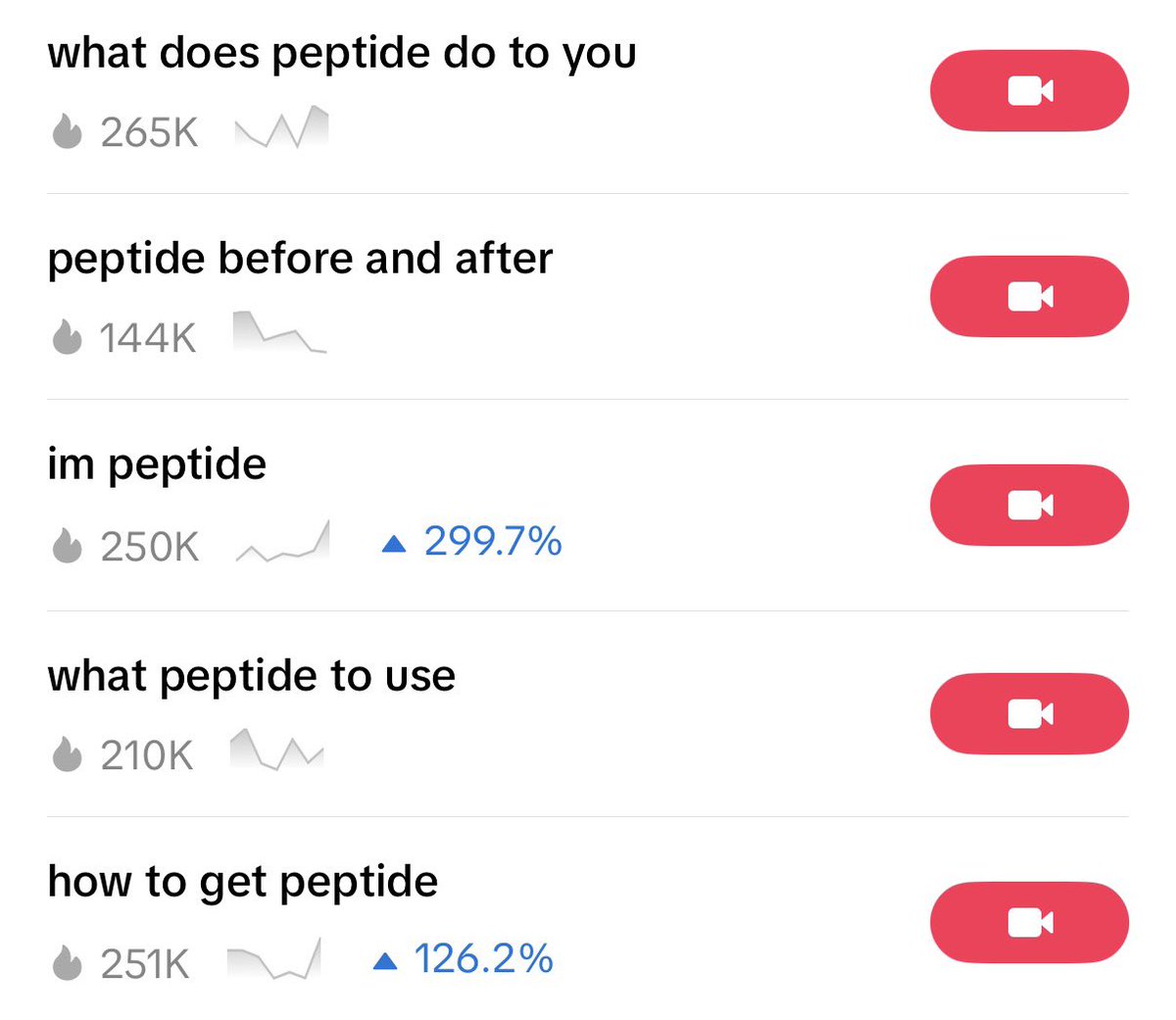
whoever vibe codes an iphone app for peptides will own this niche in the next months.
0 real apps making money right now.
and they’re not even globally known yet.
English
Gowrish retweetledi
THE CLEAREST PATH TO A $10M+ SOFTWARE EXIT in 2 YEARS (with AI and agents)
building an agency right now is one of the most interesting business moves
the productized agency had its moment in 2022. it collapsed because scaling humans is a nightmare. inconsistent output, people quitting, margins getting crushed. most of the founders (and creators) who tried it got burned and moved on
but the thesis was right. the labor problem is just solved now with AI, claude code, openclaw etc.
here's the actual playbook i'd run today:
pick one painful deliverable for one specific buyer. like SEO content for e-commerce brands doing $1M+ but not "marketing."
or like ad creatives for DTC brands spending $50k/month on meta. one thing. one customer. that's it
then you build the AI workflow behind it.
you're selling an outcome on a monthly retainer. $3-5k/month. 80%+ margins because your cost is compute and a few hours of QA
"BuT tHaT'S nOt a BiG bUsInnesS"
okay but you're still swinging for the fences
because the agency IS the research and development for your agent SaaS
every client is paying you to figure out what to automate. you're learning what breaks, what scales, what customers actually want.
by month 4 you know exactly what to productize. you build the software on top of the workflow you've already proven works and already have customers paying for
agency funds the agent SaaS. SaaS scales without the agency overhead. the clients become your first software customers
now let's talk about what this actually looks like financially
year 1: 10 clients at $4k/month. $480k revenue. 2 people. maybe $80k in costs including compute, tools, one part time VA. you're taking home $400k between two people while building the software in the background
year 2: you launch the software. your 10 agency clients are the first to convert. they already trust you. they've seen the output. you charge $800/month for the software version. now you have recurring software revenue AND the agency still running
year 3: agency is winding down or running on autopilot. software has 200 customers at $800/month. that's $1.9M ARR. 2-3 person team. 85% margins. you are now a very attractive acquisition target
the exit math is interesting. SaaS at $1.9M ARR with strong retention trades at 5-8x revenue. that's a $10-15M exit for something two people built in 3 years starting with zero VC
CAVEAT:
Startups are hard. A lot needs to go right.
But from a framework perspective, I think this probably the lowest risk, highest reward option for lots of of folks
and most of the businesses cost $0 to start
basically
this is the most capital efficient path to a software exit that exists right now
happy building
English
Gowrish retweetledi
I'm telling most everyone I know that they should build a personal OpenClaw
Ryan Sarver@rsarver
English
Gowrish retweetledi

App ideas launched on the App Store in the last 90 days & made $10k+ in revenue:
- Romance novels
- AI Agent assistant
- Mobile IDE for Claude Code
- Quran Study App
- AI Hairstyle Try On
- AI Photo & Video Creator
- Anime Chat Roleplay
- AI Video Generator
- Live Air Traffic Radio
- Quran Widgets
- AI Chatbot
- Alarm Clock to Wake Up
- Workouts Tracker
- Coloring book
- AI Interior Design
- Speed tracker
English
Gowrish retweetledi

Gowrish retweetledi

Gowrish retweetledi

When expertise becomes an API, connecting dots becomes a superpower.
English
Gowrish retweetledi

Every AI tool you need to escape the permanent underclass:
• OpenClaw
• Hermes Agent
• Gemma 4 running on a Mac Mini
• Paperclip
• ChatGPT 5.4 Pro
• Claude Code
• Codex app
• 2nd monitor that has these agents up 24/7
Do work on 1st monitor. Constantly prompt 2nd monitor
English
Gowrish retweetledi