yasuo hasegawa retweetledi
yasuo hasegawa
661 posts
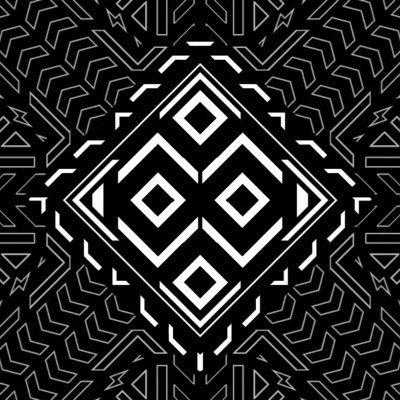
Baku Hashimoto “Permutation” Shueisha Vision Feb 13–15, 9:00–24:00 @_baku89 The symbol adorning Eric S. Raymond's celebrated essay "How to Become a Hacker" is the glider from the Game of Life—a small pattern within a cellular automaton that moves autonomously across a grid. Hackers adopted it as their emblem. From purely local rules that reference only the state of neighboring cells, unpredictable behavior emerges—and in that structure, they recognized their own ethos. The cellular automata that Baku Hashimoto has been exploring belong squarely to this lineage. Hashimoto considers the existence of LED walls installed in public space to be "more or less evil." He was even reluctant about the very act of jacking a screen. His stated intention: to display the most modest thing possible—salmon fry—so as to capture as little of passersby's attention as he can. To slip quiet, unhurried motion into a screen that would otherwise broadcast an unbroken stream of garish advertising. Meanwhile, a representative of Shibuya Television, which has operated these screens for years, describes the essence of their vision as "not merely an advertising medium, but part of the cityscape—something that blends into people's everyday lives." Adjusting for LED panel brightness degradation, fine-tuning directional speaker angles, layering compliance with regulations and consideration for the neighborhood to make the vision melt into the city—it is upon this "invisible work" that the present screen stands. Hashimoto's determination to "go as unnoticed as possible" resonates, perhaps unexpectedly, with the effort the operators have invested over more than twenty years to make their screens blend into the city. The operation of LED walls, landscape regulations, whether frameworks exist for independent artists to display work on commercial screens—Hashimoto naturally extends his inquiry into the practical questions surrounding public space and electronic media. Embodying the open-source hacker spirit, he simultaneously accepts, at human scale, the responsibility for the impact his own work might have amid the city's ubiquitous advertising and electrical consumption. Not flaunting technology but apprehending it at life-size, reflecting on himself as he goes—this consistent posture defines Baku Hashimoto as an artist. The Shueisha Vision is a large vertical LED screen—approximately 10.6 meters tall and 8.6 meters wide—mounted on the façade of Shibuya Modi. Born in 2015 alongside the building's transformation from Marui City Shibuya, it has illuminated the entrance to Koen-dori from the Jinnan 1-chome intersection ever since. On that screen now, threading between flashing advertisements, a school of fry drifts according to the rules of a cellular automaton. The title, "Permutation"—sequence, substitution. The momentary replacement of garish ads by salmon fry is itself a permutation; the fry are born, school together, multiply, then thin out and recede—the cycle tracing its own sequence. The organic movement born from a cellular automaton may melt into the restless noise of the city. He has always documented the process behind his work and stated his thoughts plainly. What this Baku Hashimoto will think and what questions he will carry home from this experiment—that, too, is something I want to know. 1 Eric S. Raymond, "How to Become a Hacker" catb.org/~esr/faqs/hack… #SCREENS_CONTEXUALIZED w/DIG SHIBUYA @neort_io
会社に着いてから、恐る恐る昔作ったSWFをダブルクリックしてみると…めちゃくちゃ普通に再生されるやないか!騙しやがって!