YieldShield

32 posts

YieldShield banner
YieldShield

YieldShield

@yieldshield_ai

YieldShield Offers the Highest Risk Free Yield

Katılım Ekim 2025
1 Takip Edilen31 Takipçiler
YieldShield
YieldShield@yieldshield_ai·
@henloitsjoyce (Reads replies, takes notes on which investing strategies can be insured...)
English
0
0
0
21
joyce
joyce@henloitsjoyce·
where is everyone getting USDC/USDT yield. i have stables sitting idle
English
407
19
696
168.2K
YieldShield
YieldShield@yieldshield_ai·
@aave Argentinians showing the way 🇦🇷
English
0
0
1
82
Aave
Aave@aave·
Argentinians are using crypto to escape inflation and protect their savings. It shows what, and who, crypto is really for.
English
49
62
394
63.3K
YieldShield
YieldShield@yieldshield_ai·
Very interesting read. Stablecoins will unlock the next wave of adoption for our industry. We now have well-established blockchain protocols, stablecoin protocols, and even investing protocols. What's missing? Insurance. People want reliability to invest safely. And we are here making it happen.
Nathan@proofofnathan

x.com/i/article/1997…

English
0
0
2
167
YieldShield
YieldShield@yieldshield_ai·
IYKYK 👀
YieldShield tweet media
Suomi
0
0
2
79
YieldShield
YieldShield@yieldshield_ai·
Participation grows faster when users can rely on structure instead of manual analysis. Clear outcomes build trust, and trust is what expands the entire space.
English
0
0
0
31
YieldShield
YieldShield@yieldshield_ai·
Evaluating protocol risk takes time and technical knowledge. Not everyone wants to do that work for every deposit. Not everyone knows how to do that for every deposit.
English
1
0
0
38
YieldShield
YieldShield@yieldshield_ai·
Why Predictable Outcomes Matter in DeFi
GIF
English
1
0
0
63
🩷💚khadee
🩷💚khadee@dee_nftarmy·
Gm CT It’s a good day to talk about @arbitrum. I don’t know if you know about the recent update on Ethereum. I will be making a post about it later and how it’s taking ethereum and its ecosystem forward. Also, looking don’t forget to complete your registration on Cysic. Only 3 days left. Staying all in @trylimitless and @useTria Also you can try @TauntCoin
🩷💚khadee tweet media
English
74
0
87
2K
Lido
Lido@LidoFinance·
🇪🇺 + 💧 + 💼 December 4th
English
42
36
418
44.3K
Moonwell
Moonwell@MoonwellDeFi·
The Moonwell Flagship USDC Vault on @Base is ready to support Ethereum-backed loans in the @Coinbase app. Our curators have allocated liquidity to the cbETH/USDC market on @Morpho to meet this new demand. Higher borrowing activity increases utilization and revenue for Moonwell.
Moonwell tweet media
Coinbase 🛡️@coinbase

If you believe in somΞTHing, this one's for you. ETH-backed loans are here. You can borrow USDC against your Ethereum, unlocking liquidity without selling. Available now in the U.S. (ex. NY).

English
5
20
70
7.5K
YieldShield
YieldShield@yieldshield_ai·
@MerlinEgalite This is quite true. But we also need to provide users with tools that make them confident in the system. A decentralized insurance protocol like YieldShield is key for growth.
English
0
0
0
163
Merlin Egalite 🦋
Merlin Egalite 🦋@MerlinEgalite·
For DeFi to truly become the backbone of the financial system, protocols need to be immutable and non-custodial so the infrastructure stays credibly neutral: anyone should be able to use it safely without fearing being locked in or locked out. This is why the Morpho team is laser-focused on ensuring that Morpho Vaults and Morpho smart contracts are fully immutable and can be configured in a fully non-custodial way. This isn't just for beauty's sake, it’s a requirement for DeFi to operate as permissionless infrastructure. Non-custodial design and immutability aren't easy to achieve, and not all vaults are made equal. That's why I think it's worth diving into the details. What makes Vault V2 non-custodial? Vaults V2 can be made non-custodial thanks to 3 mechanisms: 1/ Timelocks All curator actions in a Vault V2 go through a timelock set at vault creation, giving users (and Sentinels) time to react before any change takes effect. Some actions, for instance setting gates that control vault access, could impact how users enter or exit. To eliminate this, a curator can permanently abdicate the ability to set gates in the future. Curators also cannot allocate funds into a specific strategy without going through the same timelock, making sure that users always have full visibility into new changes. 2/ Sentinel A Sentinel is a role that can be set at the vault level, and there can be multiple Sentinels at once: a DAO, an automated bot, etc. During the timelock period, Sentinels can veto pending curator actions, adding an independent check that prevents harmful changes from going through and keeps curators accountable. 3/ In-Kind Redemption With timelocks and Sentinel vetoes, users should be able to exit at any time, except in cases where the underlying market itself becomes illiquid. For example, a bad actor could borrow out all available liquidity during the timelock period, temporarily preventing normal withdrawals. To prevent this, a forceDeallocate function lets a user exit the vault by redeeming an in-kind position, meaning they receive their position directly at the underlying market level instead of relying on vault-level liquidity. The forceDeallocate function reallocates liquidity from a given adapter to idle. Hence, the user ends up with a supply position at the market level and does not have any more exposure to the vault and its curator. Here's the flow a user would follow to perform in-kind redemption: 1. flashloan USDC 2. deposit USDC into underlying market, creating available liquidity for the vault 3. forceDeallocate from market to idle 4. withdraw position from vault, now there's available liquidity 5. use the withdrawn USDC to repay flashloan
Merlin Egalite 🦋 tweet media
English
21
25
273
18.7K
YieldShield
YieldShield@yieldshield_ai·
@0xKolten @aave Impressive milestone! Imagine how much more volume there could be if users’ positions were insured.
English
0
0
0
112
Kolten
Kolten@0xKolten·
It's crazy that @aave has generated more revenue in 2025 than in the past three years combined.
Kolten tweet media
English
15
19
163
28.1K
YieldShield
YieldShield@yieldshield_ai·
There have been several discussions lately in the space of token fundamentals. This is great, but it does not scale to users and scares them away. Let's build robust systems that protect users, so we can keep onboarding more people to DeFi.
English
0
0
3
72
YieldShield
YieldShield@yieldshield_ai·
This is unfortunate, and it is good to see the team responding quickly. Even experienced teams can face exploits. This is systemic risk, not individual failure. It is unrealistic to expect any complex system to operate forever without issues, and we want these teams to keep building the products that move the space forward. Systemic risk is something users should be protected against. That is what we do at YieldShield. When users have protection, builders can innovate with confidence, and the entire ecosystem becomes stronger.
yearn@yearnfi

At 21:11 UTC on Nov 30, an incident occurred involving the yETH stableswap pool that resulted in the minting of a large amount of yETH. The contract impacted is a custom version of popular stableswap code, unrelated to other Yearn products. Yearn V2/V3 vaults are not at risk.

English
0
0
1
80
YieldShield
YieldShield@yieldshield_ai·
@adenn_0x @symbioticfi Great post. More and more products coming on-chain should help with this and ultimately make decentralized on-chain insurance more efficient than off-chain insurance.
English
0
0
1
17
𝐀 𝐃 Ξ 𝐍
𝐀 𝐃 Ξ 𝐍@adenn_0x·
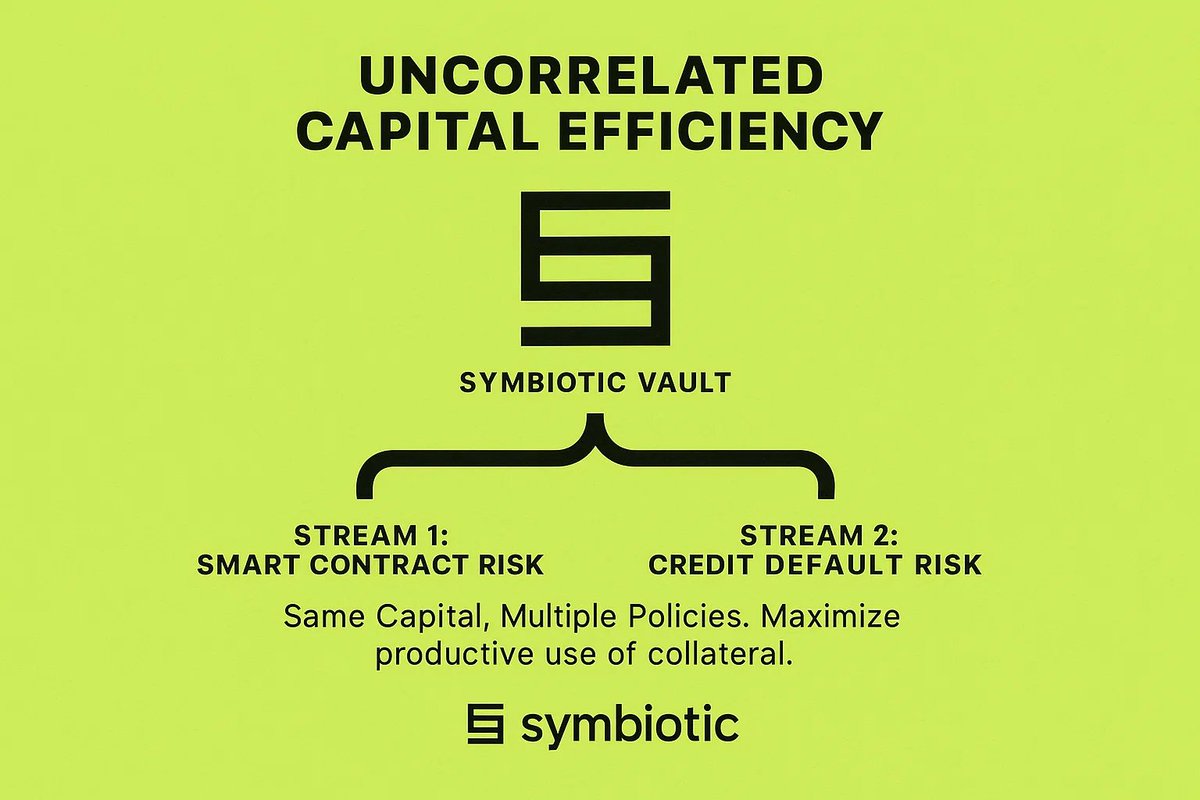
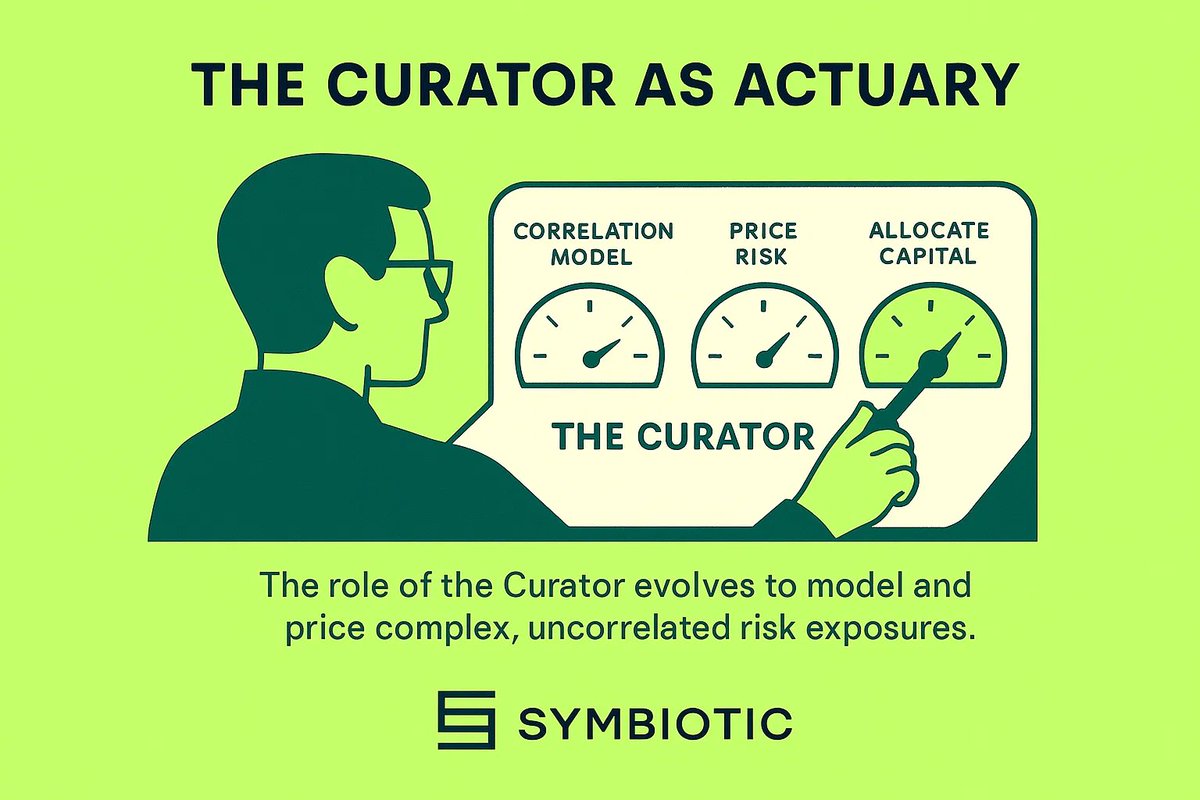
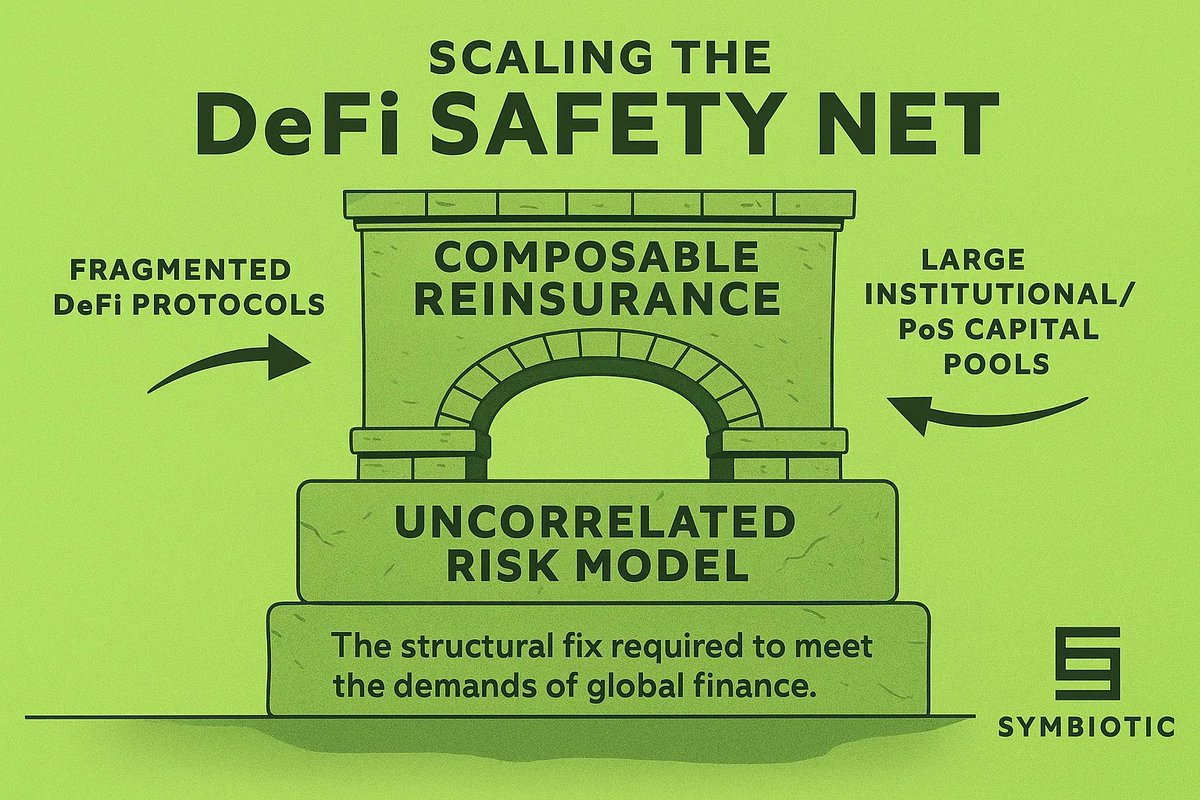
Is DeFi Risk Still a House of Cards? (The Uncorrelated Fix) | @symbioticfi I was reading about the traditional insurance world companies like Lloyd's of London. Their entire business model relies on actuaries modeling uncorrelated risk. A hurricane in Florida has no statistical relationship to a credit default in Tokyo. That’s what allows them to reuse the same capital across multiple policies massive capital efficiency. ===> We need to talk about why DeFi insurance has struggled to scale: Concentration Risk. Historically, DeFi risks (smart contract hacks) were so highly correlated that they were essentially one massive, binary risk. If one big protocol was exploited, the entire DeFi ecosystem often contained the same vulnerability. This forces insurance capital to sit in isolated pools, ready to pay out 100% of claims at once. The result? The market is too small, too expensive, and structurally fragile. ===> ❓Q: How does the traditional insurance world (the real experts) solve this concentration risk? ➡️A: Through Uncorrelated Risk Modeling. Insurance companies rely on actuaries to price risks and model exposure. They know that a natural catastrophe is independent of a credit default. This allows them to reutilize collateral to underwrite multiple, unrelated policies simultaneously. This is the structural foundation for capital-efficient reinsurance. DeFi, until now, has lacked the infrastructure to even model this concept. ===> ❓Q: How does Symbiotic's modularity unlock uncorrelated risk modeling for DeFi? ➡️A: Through Composable Underwriting Infrastructure. Symbiotic's framework allows capital to be programmatically and transparently handled across multiple use cases that have inherently low correlation: - Credit Risk (e.g., 3Jane CDS, Cap Money): Financial/Macroeconomic risk. - Smart Contract Risk (e.g., Nexus Mutual): Technical/Code failure risk. - Infrastructure Risk (e.g., Primev): Slashing/Operational risk. A single dollar of collateral can now underwrite a smart contract risk and a credit default risk simultaneously. This is the massive unlock to capital efficiency. ===> ❓Q: What does capital efficiency look like when risks are uncorrelated? ➡️A: It means the capacity is nearly doubled! If the probability of a smart contract hack (Risk A) and the probability of a credit default (Risk B) are independent, the same pool of capital can back both. You're no longer holding idle capital for a single, catastrophic event. You're maximizing its productive use. This is the key that moves DeFi insurance from a niche product to a scalable financial primitive. ===> ❓Q: Who manages this massive complexity? Who is the 'actuary' in this system? ➡️A: The Risk Curators. The role of the Curator is rapidly specializing from simple yield allocation to deep risk underwriting expertise. They are the new on-chain actuaries, utilizing advanced tools (like those from Pareto Credit) to model the statistical correlation between various on-chain risks. They decide: is the risk of a BitGo custody failure (Custody Risk) truly uncorrelated with the risk of a MakerDAO governance exploit (Protocol Risk)? Symbiotic provides the programmatic rails for them to express that sophisticated risk model. ===> ❓Q: What is the signal for institutions and traditional finance? ➡️A: Transparent, Scalable Reinsurance. Institutions need two things: scale and transparency. Symbiotic provides the structural plumbing for partners like @NexusMutual , @onrefinance , and private credit funds to access highly efficient, transparent reinsurance capacity without the need for traditional, centralized bottlenecks. By leveraging uncorrelated risk, DeFi can finally offer coverage that is competitive in capacity, price, and speed with traditional finance, opening the door for massive institutional adoption. ===> The current fragmented risk market is the biggest bottleneck to DeFi maturity. Symbiotic provides the infrastructure to move DeFi risk modeling from a binary failure state (concentrated risk) to a mature, capital-efficient, actuarially-sound market (uncorrelated risk). This shift unlocks scalable insurance and reinsurance, and that is what finally brings institutional capital into the DeFi economy.
𝐀 𝐃 Ξ 𝐍 tweet media𝐀 𝐃 Ξ 𝐍 tweet media𝐀 𝐃 Ξ 𝐍 tweet media𝐀 𝐃 Ξ 𝐍 tweet media
English
2
0
6
159
Duo Nine ⚡ YCC
Duo Nine ⚡ YCC@duonine·
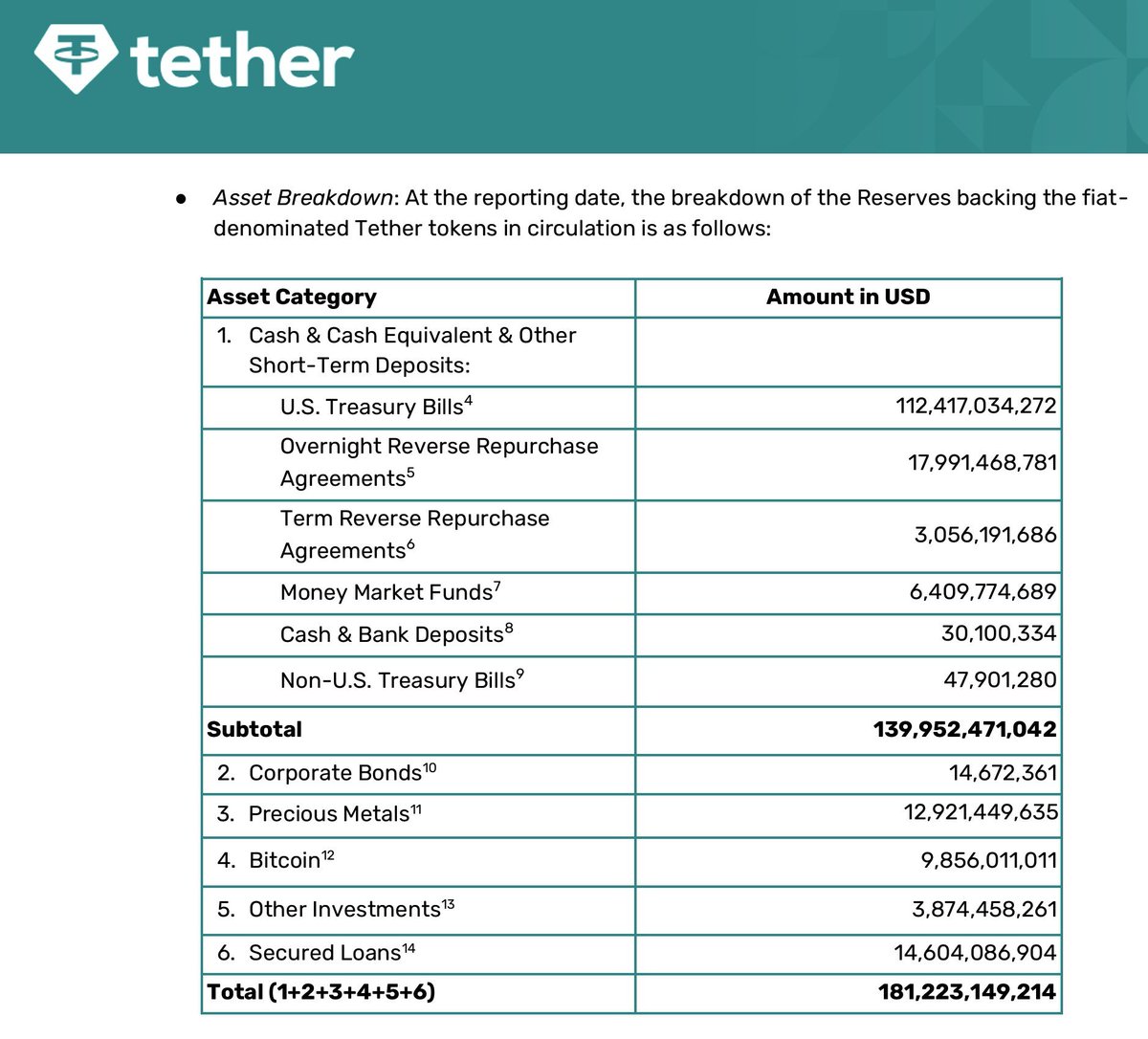
Imagine thinking Tether with $181 billion market cap is insolvent when all that USDT is backed by the most liquid collateral that exists in the world: ▫️ US-Treasury Bills - $28 Trillion mcap ▫️ Gold - $29 Trillion mcap ▫️ Bitcoin - $2 Trillion mcap The risk with stablecoins is mostly about liquidity that needs to be accessed on demand in times of stress. Even if a stablecoin is fully backed, if that collateral is sitting in say real estate, that's a guaranteed depeg event. That's because selling houses to access liquidity is not as easy as clicking sell like for BTC or Gold. Tether has no problem to liquidate 80% of its collateral on demand before there are any liquidity concerns. Those FUDing Tether / USDT need to do better because this is not it. You're better off FUDing your local bank since its collateral is only 10% of all liabilities (called Fractional Reserve Banking). With that in mind, I expect people to attack Tether even more in the future as it approaches $1 Trillion market cap. Follow @duonine and let me know if you agree in the comments.
Duo Nine ⚡ YCC tweet media
English
56
47
390
39.3K
YieldShield
YieldShield@yieldshield_ai·
@paoloardoino The issue isn’t FUD. The issue is systemic. When users cannot safeguard their positions, fear and uncertainty take over. For DeFi to continue growing outside the space, we need better mechanisms to protect users.
English
0
0
2
578
Paolo Ardoino 🤖
Paolo Ardoino 🤖@paoloardoino·
re: Tether FUD From latest attestation announcement (Q3 2025): "Tether will continue to maintain a multi-billion-dollar excess reserve buffer and an overall proprietary Group equity approaching $30 billion." Tether had (at end of Q3 2025) ~7B in excess equity (on top of the ~184.5B stablecoin reserves) + another ~23B in retained earnings as part of our Tether Group equity. Tether Group total assets: ~215B Stablecoin liabilities: ~184.5B S&P made the same mistake of not considering the additional Group Equity nor the ~500M in monthly base profits generated by U.S Treasury yields alone. Some influencers are either bad at math or have the incentive to push our competitors. Forever trusting who we are No, nothing else matters
English
423
552
4.9K
1.3M