mrch2020

2.3K posts

mrch2020

mrch2020

@yzh2020

Katılım Haziran 2020
903 Takip Edilen140 Takipçiler
mrch2020
mrch2020@yzh2020·
@GoGalaGames What NFT’s that the OG Mirandus supporters have will be used first?
English
0
0
0
13
BigEarnMcCracken
BigEarnMcCracken@BigEarnMCracken·
@Firelightfi When will we be able to access our stXRP? Once we are able to access our stXRP when will we be able to use it like FXRP with Borrowing & Lending? Will we be using AI Agents with stXRP ecosystem?
English
2
0
1
390
mrch2020 retweetledi
Flare Devs
Flare Devs@FlareDevHub·
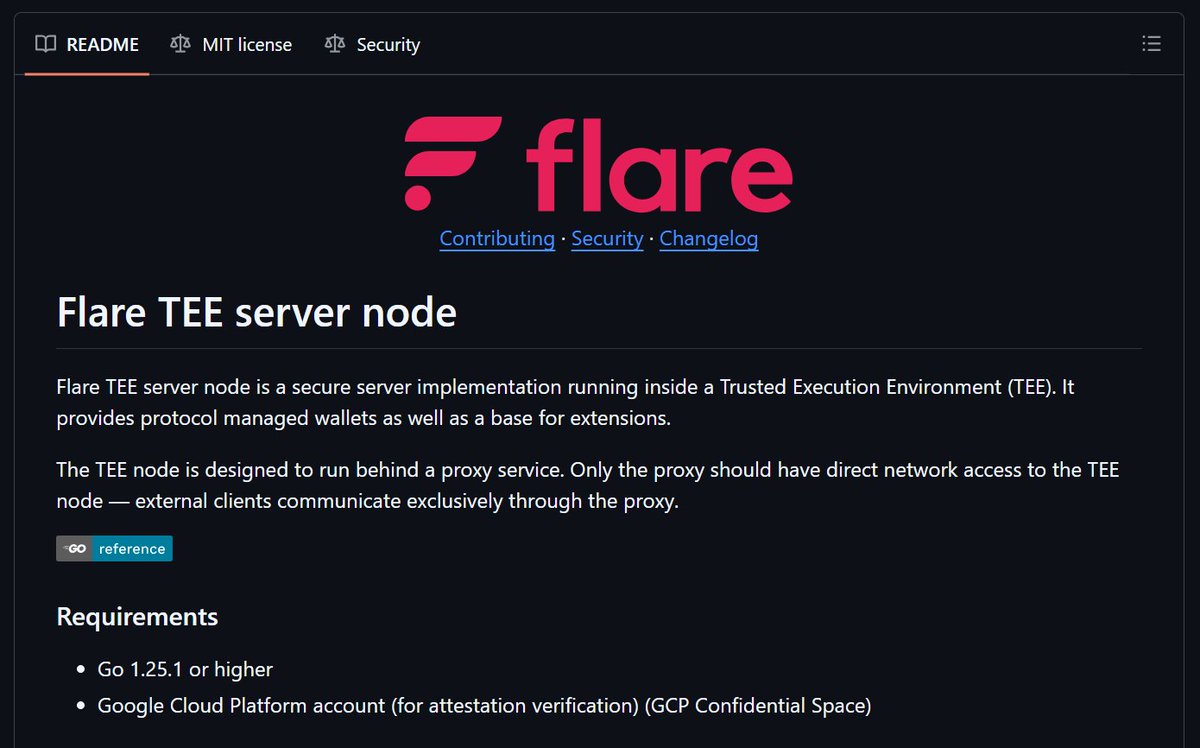
⚡️ We just dropped an early release of the building blocks behind Flare Confidential Compute (FCC): A system that lets @FlareNetworks apps rely on off-chain computation that’s verifiably running in a Trusted Execution Environment and produce outputs that can be consumed by onchain workflows. This release includes the following GH repos: ◉ tee-node: the enclave workload (wallet ops / VRF / signing) built to run in a TEE. github.com/flare-foundati… ◉ tee-proxy: a network-facing broker that accepts instructions, queues work, and serves results. github.com/flare-foundati… ◉ tee-relay-client: listens for Flare C-chain events and routes + queues work to proxies. github.com/flare-foundati… ◉ go-verifier-api: verifies attestation flows and returns ABI-encoded responses. github.com/flare-foundati… This is the beginning for verifiable trust where developers can validate that a specific workload is running in a TEE before accepting results.
Flare Devs tweet media
English
7
49
171
21K
mrch2020
mrch2020@yzh2020·
@_The_Prophet__ I thought the real question was when will Elon’s prediction of universal HIGH (Rich) income hit and what will the market look like then when people don’t have to work for a living but they want to buy multiple houses like 4-5 instead of 1-2?
English
0
0
1
172
SightBringer
SightBringer@_The_Prophet__·
⚡️This is the housing market starting to admit that the bid is gone. That is what this really is. For years, people kept telling themselves the market was strong because prices stayed high. That was a misread. Prices can stay high for a while in a frozen market because owners refuse to capitulate. That does not mean demand is healthy. It means denial is still holding the line. This chart shows denial running into math. Sellers are showing up. Buyers are not. The real issue is affordability failure. Mortgage rates stayed too high. Home prices stayed too high. Insurance, taxes, HOA fees, maintenance, and basic carrying costs kept rising. The monthly payment detached from the actual earning power of the median buyer. Once that happens, the market starts hollowing out from the demand side. The buyer does not merely hesitate. The buyer disappears. And once the buyer disappears, housing becomes a trapped-asset market. Owners still think in old-cycle prices. Buyers are underwriting a new reality. That gap produces paralysis first. Listings pile up. Time on market stretches. Concessions start. Builders blink. Investor-heavy markets crack first. Existing homeowners hold out longer because they are emotionally anchored and often locked into lower mortgage rates. But eventually somebody has to move, divorce, relocate, delever, or get realistic. That is where the fracture begins. So my real view is brutal and simple. This is the beginning of a long housing repricing process. Not necessarily one clean national crash all at once. Something nastier in a different way. A diseased market. Low liquidity. Bad turnover. Selective regional damage. Condos and oversupplied Sun Belt pockets getting hit first. Investor inventory getting uglier. More listings chasing fewer real buyers. The national narrative lagging behind because people keep staring at stale comps while the live market weakens underneath them. And this connects directly to labor. Housing only holds together if the professional buyer stays solvent, confident, and willing to stretch. If white-collar security weakens at the same time housing affordability is broken, then the market loses its last real shock absorber. People stop moving. They stop upgrading. They stop taking risks. They sit in homes they cannot really afford to leave and in jobs they cannot really afford to lose. That is how housing stops being wealth and starts being a restraint device. That is the signal here. The housing market is no longer clearing through healthy demand. It is being held up by owner inertia, low-rate lock-in, and psychological anchoring. That can delay repricing. It cannot prevent it forever. So the truth is this: The American housing market is beginning to break from the buyer side, and once that process gets far enough along, sellers will be forced to come down to reality. The only question is how long denial can keep the fantasy alive before the surrender starts.
unusual_whales@unusual_whales

Home sellers now exceed buyers by over 600,000, marking the widest gap on record, per Redfin.

English
49
57
507
95K
Walrus 🦭/acc
Walrus 🦭/acc@WalrusProtocol·
OpenClaw showed everyone what AI agents can do, and people loved it. An always-on agent managing your positions, monitoring liquidations, and executing strategies without you lifting a finger…sounds amazing, right? 👀 But the agent is still only as good as the data it's reading. Bad data in, bad decisions out. The agent won't stop to think about it, it'll just act. Confidently. DeFi starts with data, and data matters. Build on data you can trust 🦭 Read more 👇
Walrus 🦭/acc tweet media
English
14
11
132
5.1K
mrch2020
mrch2020@yzh2020·
@FlareNetworks Becoming the leading (trustless)/ trust-minimized bridge and DeFi layer for non smart contract / legacy assets — starting with $XRP and then $BTC thru FAssets.
English
0
0
1
416
Flare ☀️
Flare ☀️@FlareNetworks·
FlareDrops are almost finished (final drop Jan 30). That closes the distribution phase — $FLR now serves as a core part of Flare’s steady-state network operation. Important clarification: 1️⃣ FlareDrops ending won’t change protocol rewards (FTSO delegation, FLR staking incl. sFLR, and FAssets agents participation) or rFLR incentives. Users may see lower total FLR since FlareDrops were distributed on top for eligible WFLR/staked FLR/vested rFLR balances. 2️⃣ Circulating supply: estimated ~85B after the final FlareDrop (unclaimed + escrow releases + burns). 3️⃣ Total supply: ~105B, decreasing via burns. New FLR issuance is limited to a maximum of 5B per year and inflation rate is ever decreasing and will approach zero over time. 4️⃣ Q1 governance: proposals in development to route protocol revenue (incl. FAssets-related fees) toward sustainability and offsetting issuance, subject to governance approval. Flare keeps leaning into what it’s actually built for: a full-stack data + interoperability network (FTSO + FDC + FAssets + Smart Accounts), with verifiable off-chain compute (TEEs) on the horizon ☀️ If you could pick one killer use case @FlareNetworks should own in 2026, what is it?
Flare ☀️@FlareNetworks

x.com/i/article/2016…

English
27
107
415
41.1K
mrch2020
mrch2020@yzh2020·
@HugoPhilion P L E A S E!!! Let’s price it about 100 FLR to start so in the future we can chat about “@FlareNetworks Olive Oil Day” like BTC Pizza day😂 at $100 $FLR everyone could laugh at us for spending $10,000 a bottle!! While we laugh all the way to the bank…early adopters winnnnnn!😎
English
0
0
2
247
Hugo Philion
Hugo Philion@HugoPhilion·
Funnily enough I am very interested in Olive Oil! So interested infact that I own a small olive grove for producing organic Olive Oil. Maybe next year we should put Flare branded Olive Oil in the merch store.
English
96
30
583
18.5K
☀️Jon_Snow_bbx 🐦🪝
Juggling 3 projects and a full time 9-5 + other duties that involve being alive really makes a guy wonder how much longer until this thing skyrockets so we can just quit the 9-5 and focus on 3 things instead of 5
English
4
0
39
1K
PBInvesting ⚡️
PBInvesting ⚡️@PBInvesting·
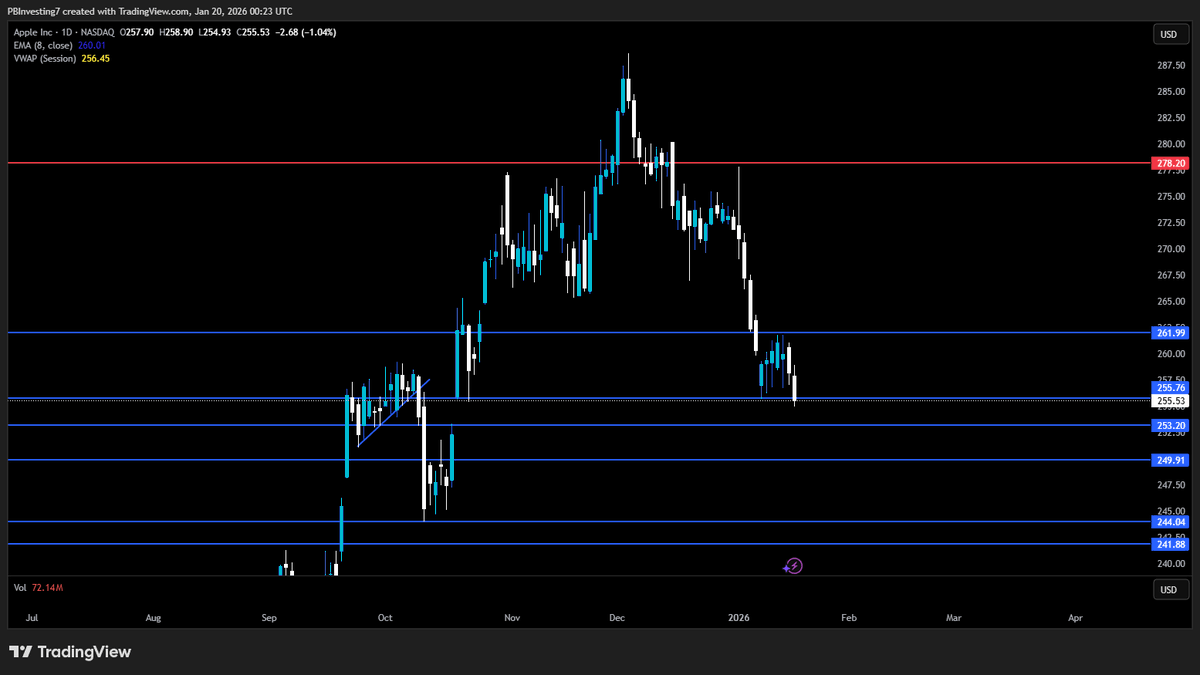
$AAPL breaking down out of a nasty bear flag and in a gap. If $AAPL shows weakness will be watching for this to fill the gap and then see 250. Ugly chart.
PBInvesting ⚡️ tweet media
English
8
50
102
9.9K
mrch2020 retweetledi
Than0s
Than0s@0xthanos·
what would happen to solana’s MEV capture if memecoin trading moved to a functional orderbook?
English
2
3
20
848
mrch2020 retweetledi
JENNA {X} 🪝
JENNA {X} 🪝@JennaXCrypto·
🎉 XAO DAO JUST HIT 650 MEMBERS! Let’s keep the momentum going! If you care about the future of the XRPL and decentralized governance, you should be a XAO DAO member! Link 🔗 below to learn more! Keep sharing and much thanks for all of your support to get this going. 🗳️ Proposals and voting begins at 1000 members!
JENNA {X} 🪝 tweet media
English
22
17
68
10K
mrch2020
mrch2020@yzh2020·
@kwok_phil @dom_kwok Loved your deep dives on tokenomics and those real-world crypto takes – always super insightful and on point. The street interview vids were a close second though, that raw energy is gold. Keep crushing it into 2026 guys!🚀
English
1
0
2
65
Phil Kwok | EasyA
Phil Kwok | EasyA@kwok_phil·
in 2025, what content did you like most from @dom_kwok and me? like, was it the word on the street vids, behind the scenes, insights or anything else... will make more of it in 2026!
English
64
4
145
11.5K
mrch2020
mrch2020@yzh2020·
@DamiDefi @UR_global $FLR is the verifiable AI powerhouse: Consensus Learning for decentralized model ensembles + Google Cloud TEEs for secure off-chain complex compute. Web2 scale meets Web3 consensus—hackathon winners prove it. Undervalued king of AI infra! ☀️ #Flare #VerifiableAI
English
0
0
0
31
Dami-Defi
Dami-Defi@DamiDefi·
Major Crypto Sectors and Projects That Dominate Them: (Bookmark for later) Yield-bearing stables — $ENA, $ONDO, $SYRUP Neobanks — $ETHFI, $NEXO, $WXT, @UR_global Privacy — $ZEC, $FIRO, $DASH Perp DEXes — $HYPE, $ASTER AI compute backbone — $TAO, $AKT, $IO, $ICP AI Agent tooling & marketplaces — $FET, #VIRTUALS, $AIA GPU economy for AI & media — $RENDER, $AKT, $IO RWA / Treasury tokenization — $ONDO, $POLYX, $CFG, $RIO Institutional credit & PayFi rails — $SYRUP, $GFI Base ecosystem liquidity core — $AERO, $AVNT What would you add?
English
82
78
341
37.7K
mrch2020
mrch2020@yzh2020·
@HugoPhilion My condolences to you and your family, sorry to hear this Hugo.
English
0
0
1
17
Hugo Philion
Hugo Philion@HugoPhilion·
I lost someone in my family today, of my generation, for whom I cared greatly. Life is brief. Embrace the people you love for they are all you really have.
English
259
56
1.4K
30K
Stronghold
Stronghold@strongholdpay·
How many Stronghold ornaments can you spot in each photo? 👀 One lucky winner will take home Stronghold gear! 🎄❄️ #SHxmas
Stronghold tweet mediaStronghold tweet mediaStronghold tweet mediaStronghold tweet media
English
68
25
266
9.3K
mrch2020 retweetledi
Jesus Rodriguez
Jesus Rodriguez@jrdothoughts·
One of my fav ways to think about @Firelightfi is as the assetization of risk. In its current version, DeFi unquestionable needs the notion of tradable cover The evolution of financial markets is essentially the story of turning intangible concepts into tradable assets. We turned "ownership" into equities. We turned "debt" into bonds. We turned "time" into futures. Yet, in DeFi, "risk" remains a stagnant, binary concept. You are either safe, or you are rugged. This is a primitive view of capital efficiency. The root of it: We have successfully built markets for liquidity (AMMs) and markets for leverage (Lending). But we are missing the third leg of the institutional stool: A liquid market for Risk. This is the core thesis behind @Firelightfi. We are not just building "insurance"; we are turning DeFi risk into a tradable asset class. Here is the mental model for how we get there: 1. Moving from "Vibes" to "Math" Current DeFi insurance often relies on DAO governance votes to decide payouts. This isn't finance; it's politics. To make risk tradable, it must be predictable. Firelight utilizes the Sentora Risk Stack—our AI-driven infrastructure that continuously monitors protocol health, economic vectors, and smart contract integrity. We don't guess the risk; we calculate the probability of failure in real-time. Once risk is quantified by math rather than sentiment, it becomes priceable. 2. The Uncoupling of Correlation A major flaw in DeFi v1 insurance was capital correlation. If you insure an Ethereum protocol with an ETH-based pool, and the ecosystem crashes, your insurance fund correlates with the loss event. Firelight introduces a new primitive: Uncorrelated Capital Vaults. By backing DeFi cover with massive, dormant, uncorrelated assets (like XRP or XLM), we create a "hard" security layer. This allows capital providers to earn yield on assets that typically sit idle, while providing DeFi protocols with a safety net that won't collapse when the market beta turns negative. 3. Risk as a Tradable Commodity When you buy cover in Firelight, you aren't just buying a "policy." You are buying a tokenized position that represents a specific risk premium. For the Buyer: It is a hedge. For the LP: It is a yield-bearing instrument derived from the "safety" of the underlying protocol. This creates a secondary market for risk. An institution can now go long on "Aave Safety" or short on "Bridge Security" simply by interacting with Firelight vaults. The Institutional Endgame I speak with institutional allocators constantly. They do not fear volatility; they fear undefined liability. They cannot deploy billions into a system where the downside is "total loss." By turning insurance into a liquid, tradable asset, Firelight allows institutions to cap their downside mathematically. We are moving from the "DeFi Casino" to the "DeFi Economy." And real economies run on insured rails. This is the missing layer. We are building it.
English
3
19
75
4.7K