JP Barnard
3.9K posts


A warning has been issued for the south of England this morning. A single Anglo-Nubian goat, operating from a smallholding in Devon, is, by every available indicator, dismantling the British food system one calorie at a time. We have, with considerable courage, sent a correspondent to document the day in full. The report is below. Reader discretion is advised.
5:47am. Keith woke up on a 28-degree slope of Devon clay where the topsoil is approximately 14 centimetres deep, the drainage has defeated two generations of agricultural consultants, and no tractor has ever successfully operated in the lower section without becoming a story people tell in the pub. Keith is occupying this land. Keith is therefore preventing the cultivation of, by every honest assessment, nothing.
6:30am. Keith ate a bramble. The bramble would have, in his absence, advanced approximately 15cm into the field this season. The advance has not occurred. This is a loss to the bramble.
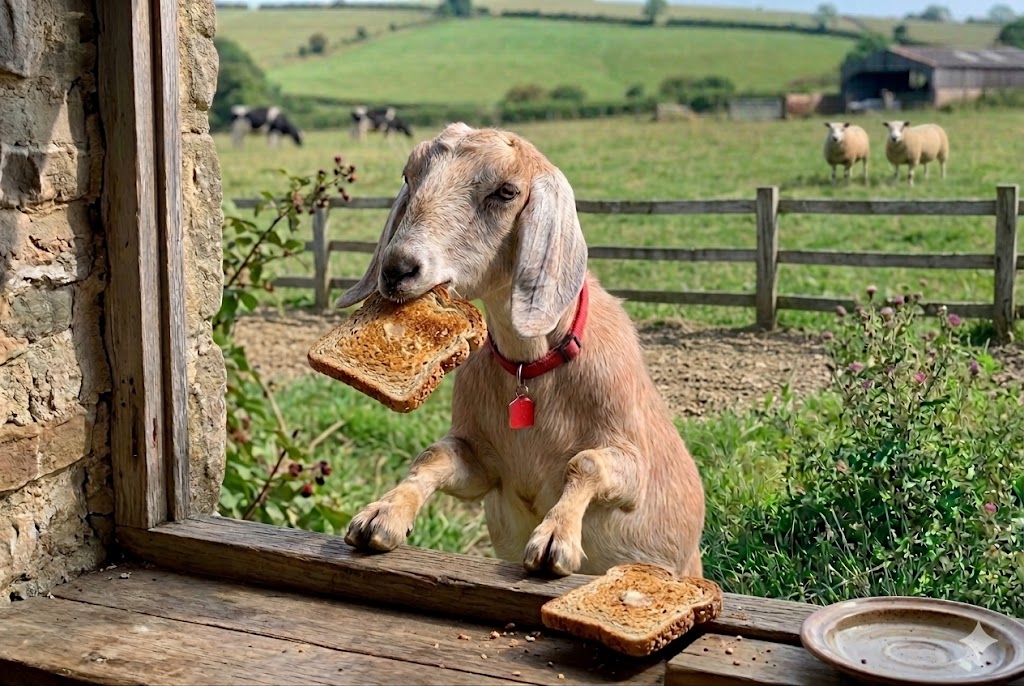
8:15am. Keith stole a piece of toast from Dave's plate on the kitchen window ledge. The toast was made from wheat grown in Lincolnshire on land that can actually grow wheat, a category of land Keith's field has never been in and will never be in. The toast cost 11p. Dave has not invoiced.
9:00am. Keith ate the dock plants in the corner Dave had been meaning to address since April.
10:30am. Keith took half a sandwich from Martin the postman in the lane. The sandwich contained processed turkey, an ultra-refined seed oil-based spread, and a slice of bread that had been on a shelf for nine days without visible change. Keith ate the turkey. Keith left the bread. Keith left the spread. Keith has not yet been credited with conducting the most rigorous quality control assessment of British convenience food currently available.
12:00pm. Keith ate the bindweed advancing on Steve's compost bin. The compost bin is now visible for the first time since 2019.
1:15pm. Keith took a piece of Wensleydale from a hiker's lunch on the public footpath. The hiker had bought the Wensleydale from a Yorkshire farm shop. The Yorkshire farm shop had bought it from a dairy that processes milk from cattle grazing pasture not dissimilar to the pasture Keith is currently occupying. The transaction was, by every honest measure, a closed loop briefly interrupted by a goat.
3:00pm. Keith ate the moss off the barn roof, which is not in the human food system and has, by every available indicator, never been in the human food system.
4:45pm. Keith took a Hobnob from a child sitting on the wall outside the village shop. The child laughed. The child's mother laughed. The Hobnob was, by every available metric, of considerably more nutritional value to Keith's rumen than to the child's pancreas.
6:30pm. Keith returned to the field. The field would, in his absence, support: rushes, thistle, dock, bracken, and Steve's bindweed advancing across the boundary. The field, in his presence, supports: a goat, who eats all of those, and who produces, as a byproduct, 4.5% butterfat milk and a manure profile that has raised soil organic matter on the lower pasture by 0.8% in fourteen months.
Total food stolen from humans, by weight: approximately 340 grams.
Total invasive vegetation removed, by weight: approximately 180 kilograms.
Total agricultural land withheld from crop production: zero hectares, because the land cannot grow crops, has never grown crops, and will never grow crops, regardless of who or what is standing on it.
Keith is, by every available accounting, a catastrophic burden on the British food system.
The system would, in his absence, be exactly the same.
Except the bramble, the bindweed, the dock, the rushes, the thistle, and the moss on the barn roof, which would all be larger.
And the Hobnob, which the child's mother has, on reflection, decided was probably going to be a write-off anyway.
English
@PPersonalSafety @SamaHoole One could call it molesting, in a manner of speaking that is.
English
@SamaHoole Somewhat concerned that you are getting milk from Keith!
English
@malkizeee @SamaHoole At least, not the kind milk he would like to drink, by all reasonable accounts.
English

@SamaHoole Not sure what it is you do in Devon but good luck getting milk from a male goat.
English
@BRICSinfo Of course. He said something nice so the oil price can drop and some of his buddies can take their turn to make money off it. Say nice things, oil price drops. Buddies buy. Threatens some bad things. Oil price rises.
Buddies sell. Make money. Round n round.
English

JUST IN: 🇺🇸🇮🇷 President Trump says he will not move forward with the planned military attack on Iran tomorrow after being asked by UAE, Saudi Arabia, and Qatar.


English
JP Barnard retweetledi

"I do want to fight the next election... I'm not going to walk away," PM Keir Starmer says
Follow latest updates: bbc.in/4dwtz79
English
@SamaHoole And then Prof Tim Noakes of South Africa took his revenge with his Real Meal Revolution. The smear against him ended in court and failed there. I changed my diet in 2016 due to reading Prof Noakes's book and related works. Such as The Grain Brain by Dr Perlmutter.
English
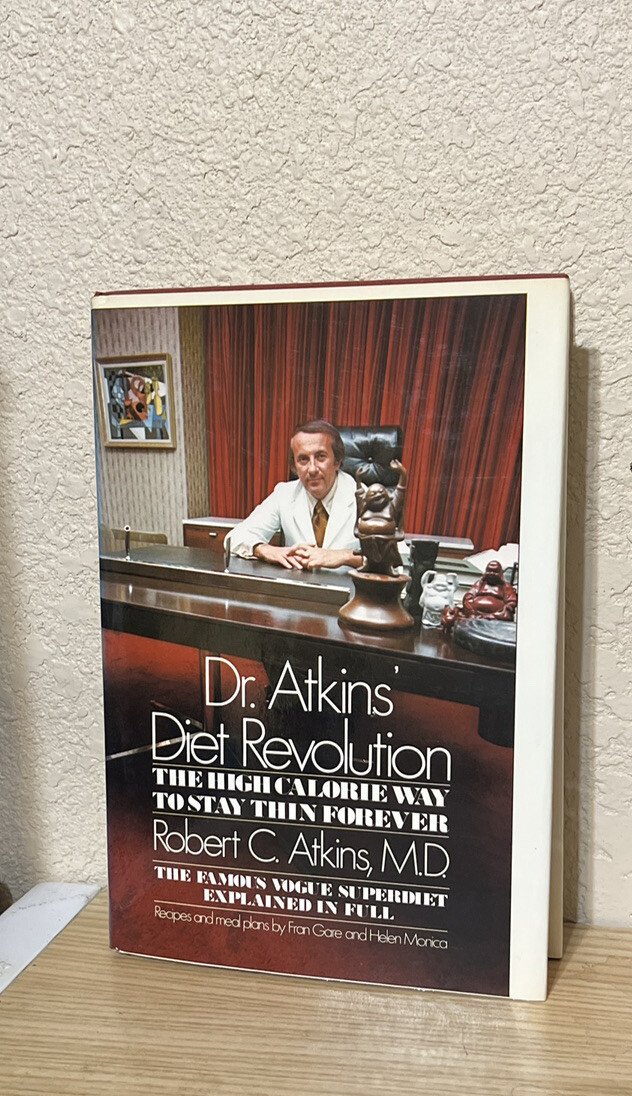
In 2003, a strange thing happened.
A diet book by a New York cardiologist who had spent thirty years arguing the opposite of the official guidance suddenly went vertical. Dr Atkins' New Diet Revolution had been quietly selling since the 1970s. In 2003 alone it sold ten million copies. By 2004, roughly one in eleven American adults was on some version of the Atkins diet.
The diet involved removing the refined carbohydrate at the base of the food pyramid and eating, instead, the eggs, butter, meat, cheese, and cream the pyramid had spent twenty years calling dangerous. The result was a brief, mass, real-world experiment in eating the food humans had eaten before 1977.
Bread sales fell. Pasta sales fell. The cereal aisle contracted. The food industry, which had built its entire low-fat infrastructure on the assumption the guidance would never change, panicked.
The pushback was severe and coordinated. The American Heart Association warned the diet was dangerous. The British Medical Association called it nutritionally unsound. Dietitians lined up to denounce it on daytime television and in women's magazines.
Then, in April 2003, Atkins slipped on an icy New York pavement, hit his head, and died nine days later in a coma. His family declined an autopsy. Ten months later, his private medical records were leaked to the Wall Street Journal by a physician affiliated with a vegan advocacy group. The records showed Atkins had weighed 258 pounds at the time of his death, after nine days of intravenous fluids and coma-related bloating. The press ran the headline as if the diet had killed him.
It was one of the more effective smears in the history of nutrition science, and it worked. The Atkins moment passed. The pasta came back. The institutional consensus reasserted itself.
But the people who had tried it had noticed something. Eggs and butter for breakfast had left them less hungry, more energetic, and visibly thinner than twenty years of skimmed milk and pasta ever had. They had felt, in their own bodies, what the previous half-century had been concealing.
Most of them went back to the pasta anyway. The doctor had said so. The dietitian had said so. The man on television had said so. And the man who had said otherwise had just been carried out of his apartment building on a stretcher, made obese by the press the morning after his funeral.
English
@SamaHoole And in countries that are rain forest? Where do cows feed? In deforested fields. Destroyed invaluable forest habitat. We need a better plan than deforestation.
English
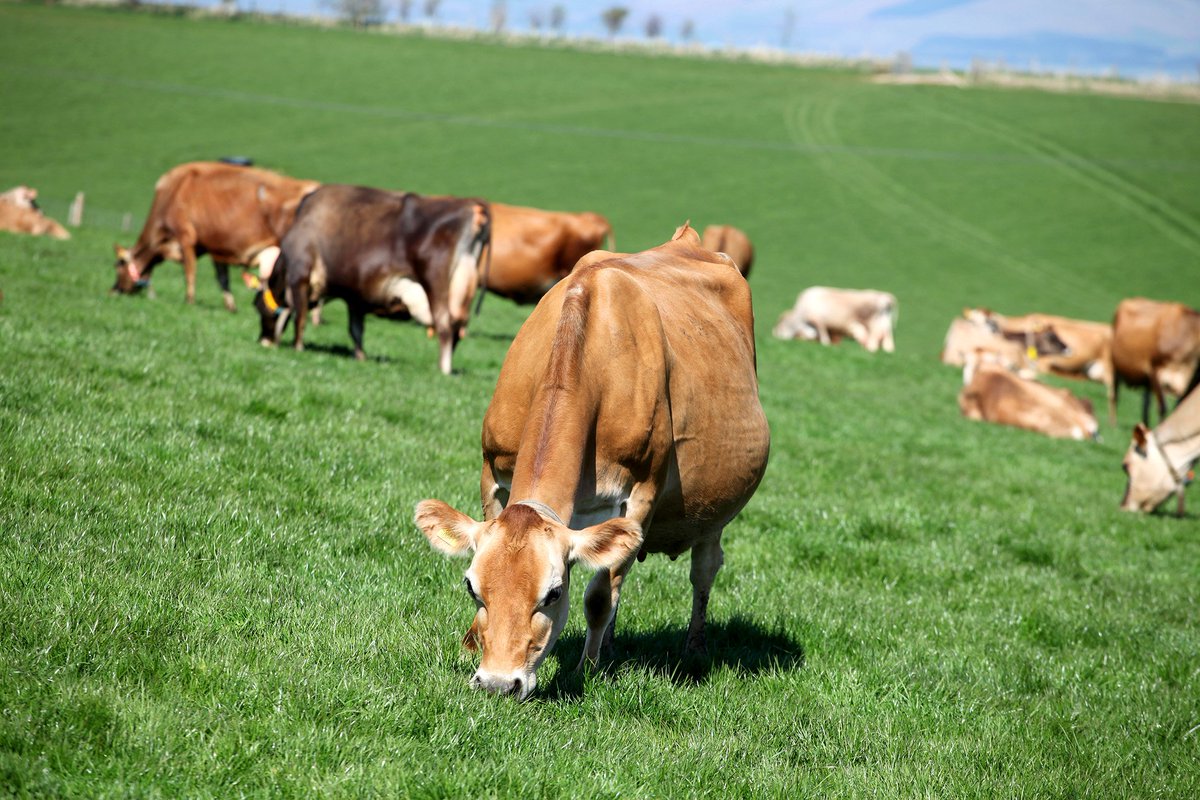
Things the cow needs:
- Grass
- Rain
- A field
Things oat milk needs:
- A monoculture of oats on prime arable land
- Synthetic nitrogen fertiliser, made from natural gas
- Glyphosate, sprayed pre-harvest
- A processing plant
- Industrial enzymes
- Stabilisers and emulsifiers
- Added vegetable oil to fake the mouthfeel of dairy fat
- Added calcium to fake the calcium of dairy
- Added vitamin D to fake the vitamin D of dairy
- Added B12, because there isn't any in oats
- Tetra paks
- A refrigerated supply chain
- A marketing budget
- A celebrity endorsement
- A weekly column in The Guardian
- The continued cooperation of people willing to pay £2.40 a litre for water with oats in it
Things that have changed about what the cow needs in the last ten thousand years:
- Nothing
Things that have changed about what her replacement needs in the last ten years:
- Quite a lot, apparently
There may be a lesson in this.
There usually is.
English
JP Barnard retweetledi

On the anniversary of the Nakba, Palestinians remember the profound loss and ongoing struggle for justice. time.com/6978612/nakba-…
English
@SamaHoole The argument against keeping enough lifestock to feed 8 billion omnivores a carnivore diet is that doing so requires too much land, causing deforestation in areas where there are no natural lifestock grazing fields. This destroys habitat and species.
English
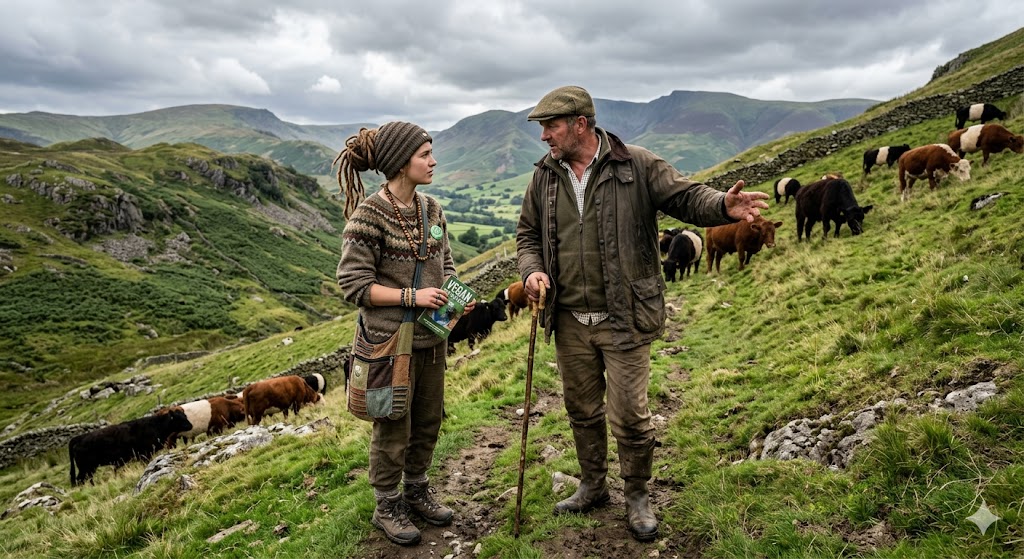
Activist: "You should replace your cattle with plant crops."
Farmer: "Such as?"
Activist: "Wheat."
Farmer: "Thirty-degree slope. The tractor would be in the hedge by lunchtime."
Activist: "Soy, then."
Farmer: "Soy likes hot summers and warm nights. This is Cumbria. The soy would sit in the rain for a month, sulk, and die confused."
Activist: "Quinoa."
Farmer: "Quinoa grows at altitude in the Andes on thin dry soil. My altitude's right. Everything else is wrong. The sheep next door would write a strongly worded letter."
Activist: "Lentils. Chickpeas."
Farmer: "Both Mediterranean. This field had eleven inches of rain in August. They'd drown standing up."
Activist: "Vegetables. Carrots."
Farmer: "Carrots need deep, sandy, stone-free soil. This is clay with rocks the size of footballs. The carrot would meet the rock, give up, and grow sideways out of spite."
Activist: "There must be something."
Farmer: "There is. It's grass. Grew here on its own. Asks for nothing. Feeds something that turns it into food. The field decided this long before I got here."
English
@EricLDaugh @ProfTimNoakes And yet, somehow, Boeing's stock price dropped immediately after. Strange, isn't it.
Perhaps, the original goal was somewhat more than 200 planes? Isn't that the truth?
English

🚨 IT'S OFFICIAL: Chinese President Xi Jinping has COMMITTED to order 200 large Boeing jets, after President Trump's closed door meeting
"Boeing only wanted 150 — he got 200!" 🔥
"That's a big thing...that's a LOT OF JOBS. A LOT." 🇺🇸🇨🇳
More wins!
English
@SamaHoole Classic. Yes. I have learned and remembered enough biology from high school to know Mr Hoole is telling the truth here.
English
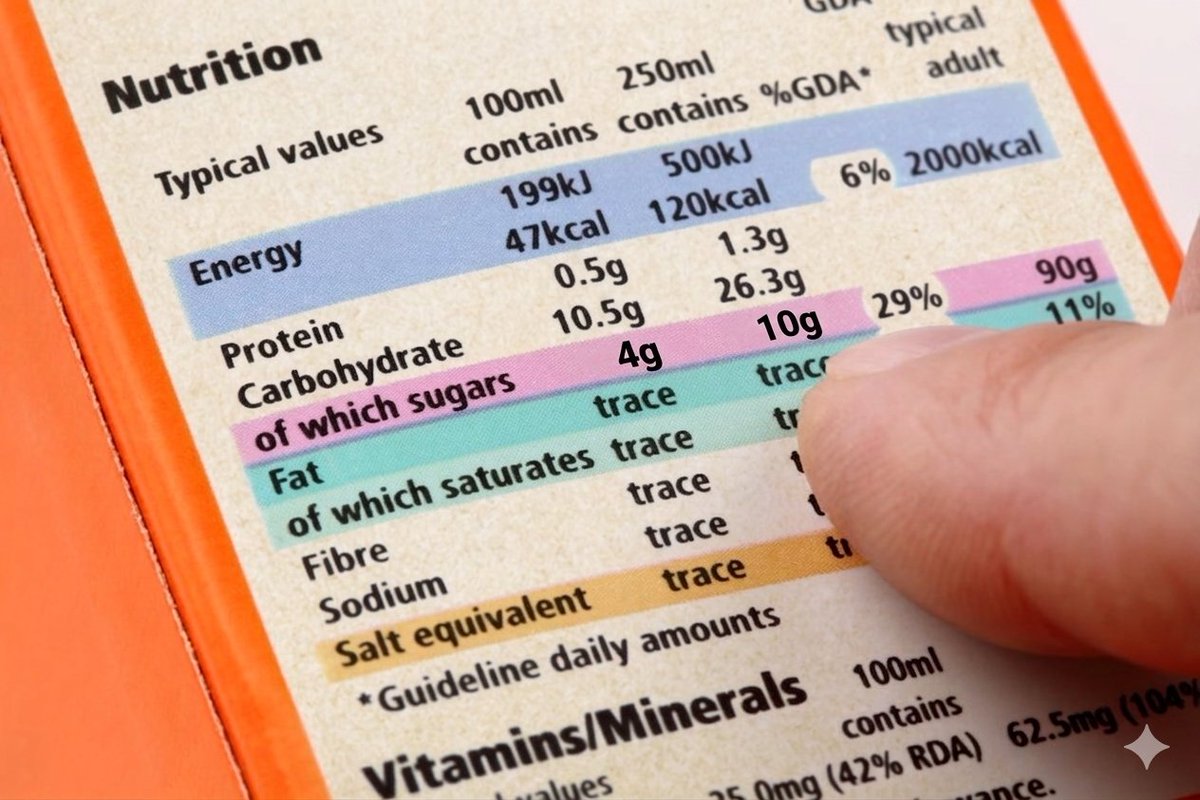
The label on the packet draws a clean little line between "carbohydrate" and "of which sugars," and you have been quietly trusting that line your whole life.
The line is not real.
Bread starts converting to sugar before it has even left your mouth. There is an enzyme in your saliva, amylase, whose entire job is to begin dismantling starch into glucose on contact. Hold a piece of plain white bread on your tongue for thirty seconds and it turns sweet. That is not a trick. That is the process starting exactly where it always starts.
By the time the bread, the pasta, the rice, the "wholesome" bowl of oats has cleared your stomach, it is glucose. Your bloodstream cannot tell the difference between a slice of wholemeal toast and a spoonful of table sugar, because by the point of absorption, there is no difference. Starch is simply glucose molecules holding hands. Digestion lets go of the hands.
So the label says four grams of sugar and forty grams of carbohydrate, and you read that as one bad number and one safe number. There is no safe number. There is the four grams of sugar, and the forty grams of sugar wearing a coat.
The distinction on the packet was never there for your health.
It was there so the forty grams could keep a low profile.
English
@SamaHoole My breakfast of 2 eggs fried in butter plus a bacon rasher plus a slice of English cheddar, a glass of full cream milk and cup of coffee with milk lasts me from 08h00 until lunch at noon.
English
The breakfast table, 1926:
- A rasher of bacon, cured by the butcher down the road
- A fried egg from a hen in the yard
- Black pudding for the iron
- A wedge of bread fried in the bacon fat
- A pot of strong tea, with milk straight from the bottle, cream still on it
The breakfast that built the people who dug the coal.
The breakfast table, 1956:
- Two fried eggs
- Three rashers of bacon
- A sausage from the butcher on the corner
- Fried bread or buttered toast
- Whole milk in a glass bottle, gold top
- Tea or coffee with real cream
The breakfast that built the people who fought the war and walked to work.
The breakfast table, 1976:
- Cornflakes with full-cream milk
- A boiled egg with toast soldiers
- Butter, scraped thinner than the previous generation used to do
- The bacon retired to weekends
- The cream replaced with the milk above it
The first quiet edits.
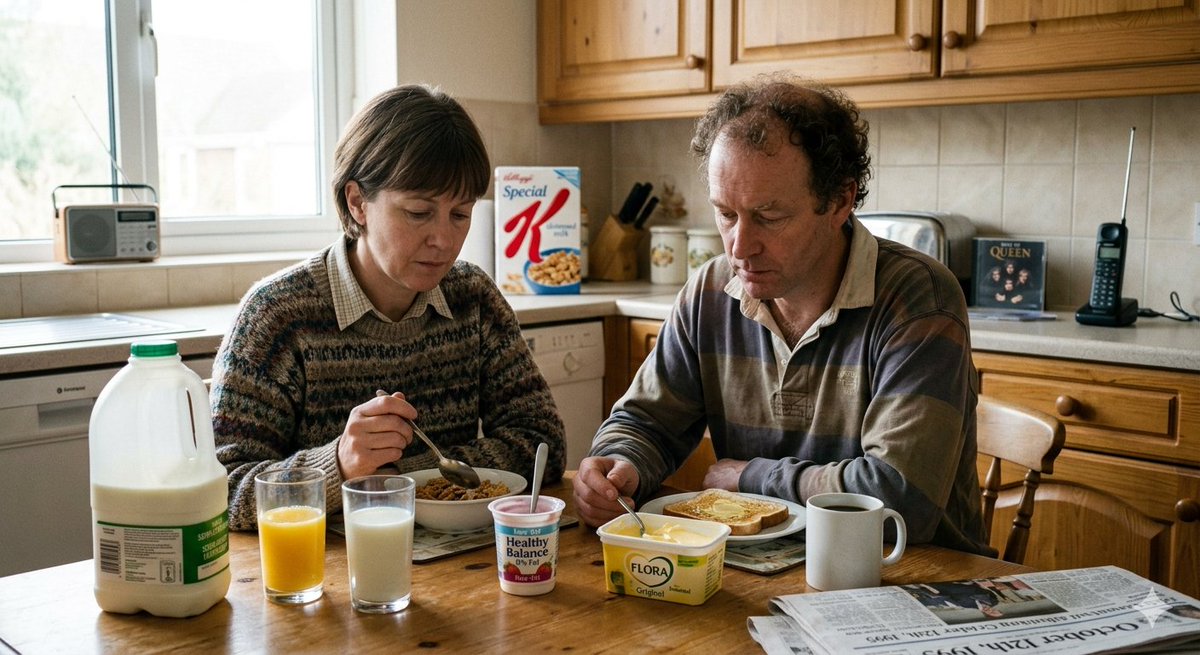
The breakfast table, 1996:
- Special K, because a magazine said it would help drop a jeans size
- Skimmed milk, because the cream had been classified as a hazard
- Orange juice from concentrate, counted as one of the five a day
- A "low-fat" yoghurt with four teaspoons of sugar and the word "healthy" on the lid
- Toast scraped with a margarine made from hydrogenated vegetable oil
- A black coffee, because cream was now frightening
The breakfast that left its eater starving by half past ten.
The breakfast table, 2026:
- An overnight oats sachet with twenty-three ingredients
- A scoop of whey blended with oat milk, drunk standing at the counter
- A Huel bar in the car, billed as "complete nutrition," tasting of regret
- An oat-milk latte with two pumps of sugar-free vanilla, because real milk is for amateurs
- Blueberries flown in from Peru, photographed for the story
- Eaten in three rooms by three people on three phones, all "intermittent fasting" until the snack at half past ten
The breakfast that has finally evolved past the inconvenient business of being a meal.
The 1926 breakfast was called Tuesday. The 1956 breakfast was called a heart attack on a plate. The 1996 breakfast was called sensible. The 2026 breakfast is called optimised.
The 1926 and 1956 breakfasts carried a working person to lunch without thinking about food. The rest delivered a blood sugar spike at half past eight, a crash at half past ten, and a "healthy" snack at eleven.
A hundred years of progress, and we have arrived at a meal that has to be marketed because nothing about it would be chosen.
English
@SkySportsF1 I almost smashed the Like button with delight. But that would have been a touch insensitive, wouldn't it?
English

ON THIS DAY, a decade ago, Mercedes team-mates Lewis Hamilton and Nico Rosberg had an expensive collision, allowing a teenager called Max Verstappen to win on his Red Bull debut...
English
@SamaHoole This confusion is rooted ignorance about the time constants of various carbon cycles. The cow and grass cycle has a short time constant, similar rates. Fossil fuel carbon cycle does not. The rate of carbon capture to fossils is much lower than our rate of fossil carbon release.
English
What you have been told about cattle methane:
- It is a potent greenhouse gas
- Cows produce a lot of it
- Therefore cows are heating the planet
- Therefore we must remove the cows
What got left out between point three and point four:
- The carbon in that methane came out of the air a few months earlier, pulled down by the grass the cow ate
- Methane breaks down in roughly twelve years and returns to being the carbon dioxide it started as
- A stable herd is therefore not adding new carbon, it is cycling the same carbon round and round
- Fossil fuels add carbon that has been underground since before grass existed, and it stays up for centuries
The myth survives entirely on the gap between point three and point four.
Mind the gap.

English
@SamaHoole My acid reflux disappeared almost completely after I quit eating stir fried veggies every day. In fact, I now eat only a few cherry tomatoes and portabellini mushrooms with my supper. And a few olives. Rest is meat or eggs. No bread or cereal.
English
Patient: "The omeprazole stopped working."
Doctor: "We can double the dose."
Patient: "I've been on it for fifteen years."
Doctor: "Yes. It's a very safe drug."
Patient: "Why doesn't it work any more?"
Doctor: "Acid rebound. We can add an H2 blocker on top."
Patient: "So the drug that suppresses my stomach acid has caused my stomach to produce more acid?"
Doctor: "It's called tolerance."
Patient: "Could I just try eating differently?"
Doctor: "Diet doesn't cause reflux."
Patient: "It cleared up completely the last time I cut out bread for a month."
Doctor: "Anecdotal."
Patient: "I have B12 deficiency now."
Doctor: "Common at your age."
Patient: "I'm forty-one."
Doctor: "We can prescribe an injection."

English
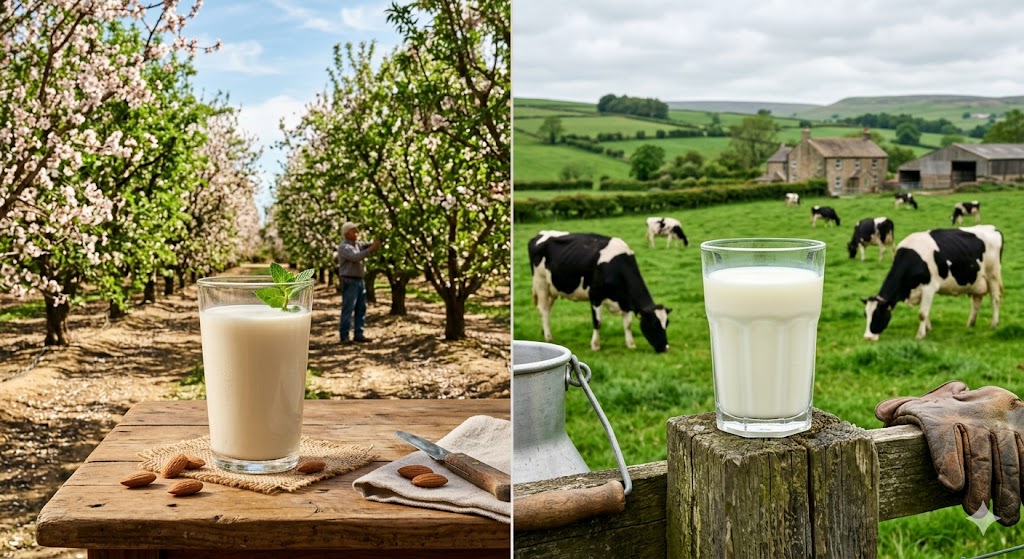
@SamaHoole I love my glass of full cream milk. And I use exactly the same style of milk glass as in your picture.
English
Full-fat milk versus almond milk. Here's what the labels won't tell you.
Whole milk (240ml):
- 8g complete protein
- All nine essential amino acids
- 300mg natural calcium, 30% absorbed
- Natural B12, B2, B5, A, D, K2
- Phosphorus, zinc, selenium, iodine
- Conjugated linoleic acid
- 1 ingredient: milk
- Rain-fed
- 30 miles from udder to fridge
- 80p a litre
Almond milk (240ml):
- 1g protein. Incomplete.
- 0mg natural calcium (added as chalk)
- 0 natural B12 (added, synthetic)
- 0 natural vitamin D (added as inferior D2)
- 0 vitamin K2
- 2-4% actual almonds
- 12+ ingredients including gellan gum, lecithin, carrageenan
- Each almond: 4 litres of aquifer water
- Central Valley sunk 28 feet since 1920s
- 50 billion bees killed in one winter to pollinate the bloom
- 5,400 miles from orchard to fridge
- £2 a litre
You are paying double for one-eighth the protein, none of the natural nutrients, a list of synthetic stand-ins for what was stripped out in processing, the permanent draining of a Californian aquifer, and the largest managed pollinator die-off in agricultural history, all so you can pour something whiter than milk into a coffee while reading a carton that claims it's better for the planet than the cow standing in the field two miles from your house.
English
JP Barnard retweetledi
Activist: "Your cows are putting carbon into the atmosphere."
Farmer: "Where did they get it?"
Activist: "What?"
Farmer: "The carbon. Where did the cow get it before it put it anywhere."
Activist: "From... eating?"
Farmer: "From eating grass. And where did the grass get it."
Activist: "The soil?"
Farmer: "The air. The grass pulled it out of the air last spring. The cow ate the grass. The cow breathed some of it back out. It went back into the air it came from."
Activist: "But it's still going into the atmosphere."
Farmer: "It's going back. There's a difference between a thing going somewhere and a thing going back. You've described a circle and you're frightened of it."
Activist: "Then just don't have the cow."
Farmer: "The grass still dies in autumn. It rots where it falls. The carbon goes back into the air either way, just without anyone getting fed in the middle."
Activist: "It's not that simple."
Farmer: "It's grass, cow, breath, grass. Or it's grass, rot, air, grass. Same circle, fewer dinners. If that's complicated for you I'd stay away from the water cycle. That one's got clouds in it."

English
@StandardBankZA @Kholiswa And if I pay with my virtual credit card linked to my physical Standard Bank Mastercard? Do I still earn reward points?
English

Thanks so much for reaching out, Kholiswa. Just to clarify, the type of POS (point of sale) machine you used by the merchant doesn't affect your UCount Rewards. As long as you make your purchase using your Standard Bank card, you’ll continue to earn UCount points for every eligible transaction or purchase you make.
English

Yo @StandardBankZA some of your Astron partners have different POS and we are required to ask for the @AstronEnergySA rewards POS
English

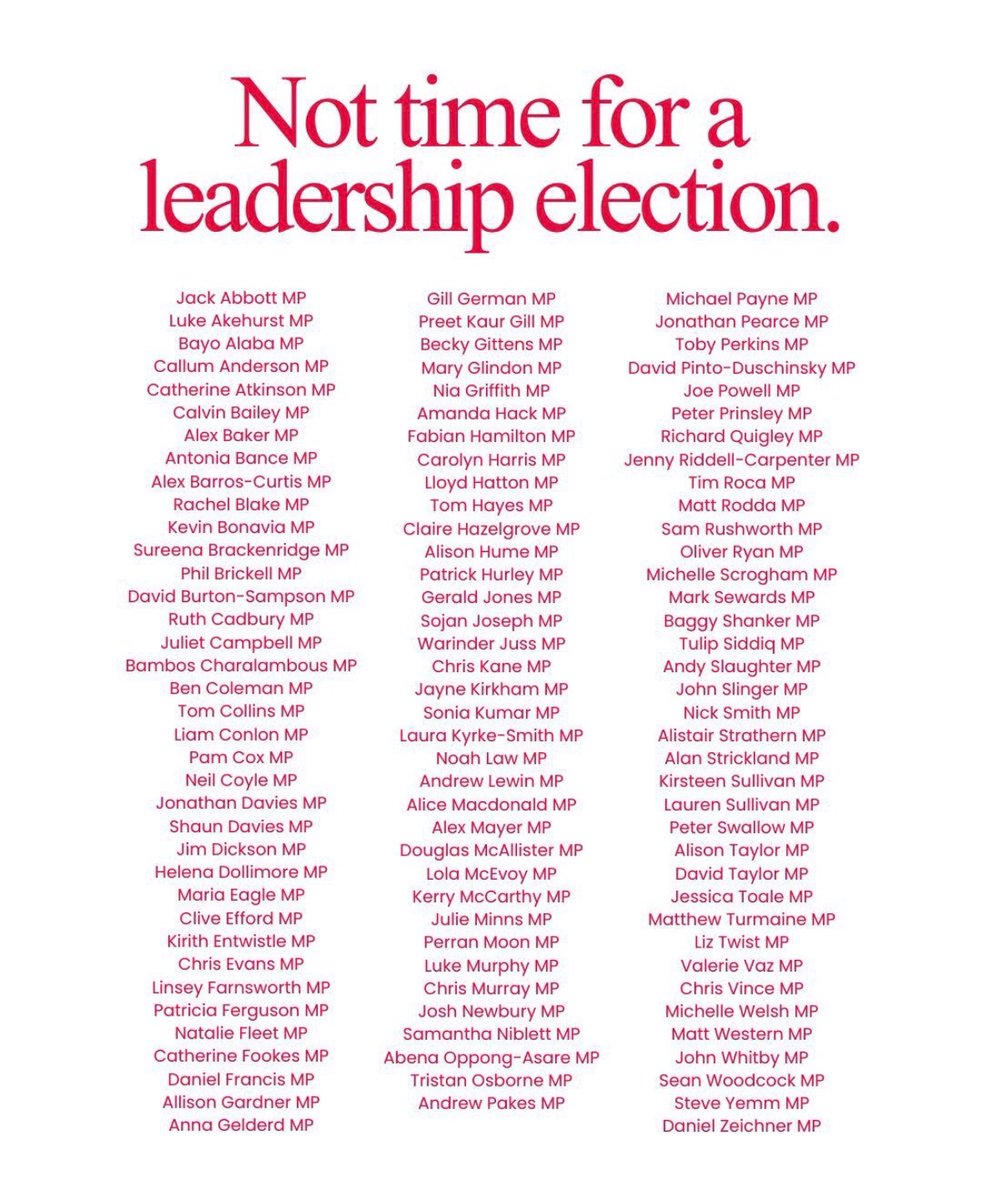
I’m glad to have joined a growing number of my Labour MP colleagues in signing this statement supporting the Prime Minister and opposing a leadership contest.
I was also glad to help with the process of putting this together.

English