

Aaron Arnold
3.9K posts

Aaron Arnold
@zomoskeptical
Four directions and just two feet
Austin, TX Katılım Ağustos 2014
1.9K Takip Edilen549 Takipçiler

@kmrstan Carte Goodwin, George Helmy, Ryan Goodsmith, and Laphonza Butler should form a club
English


Aaron Arnold retweetledi

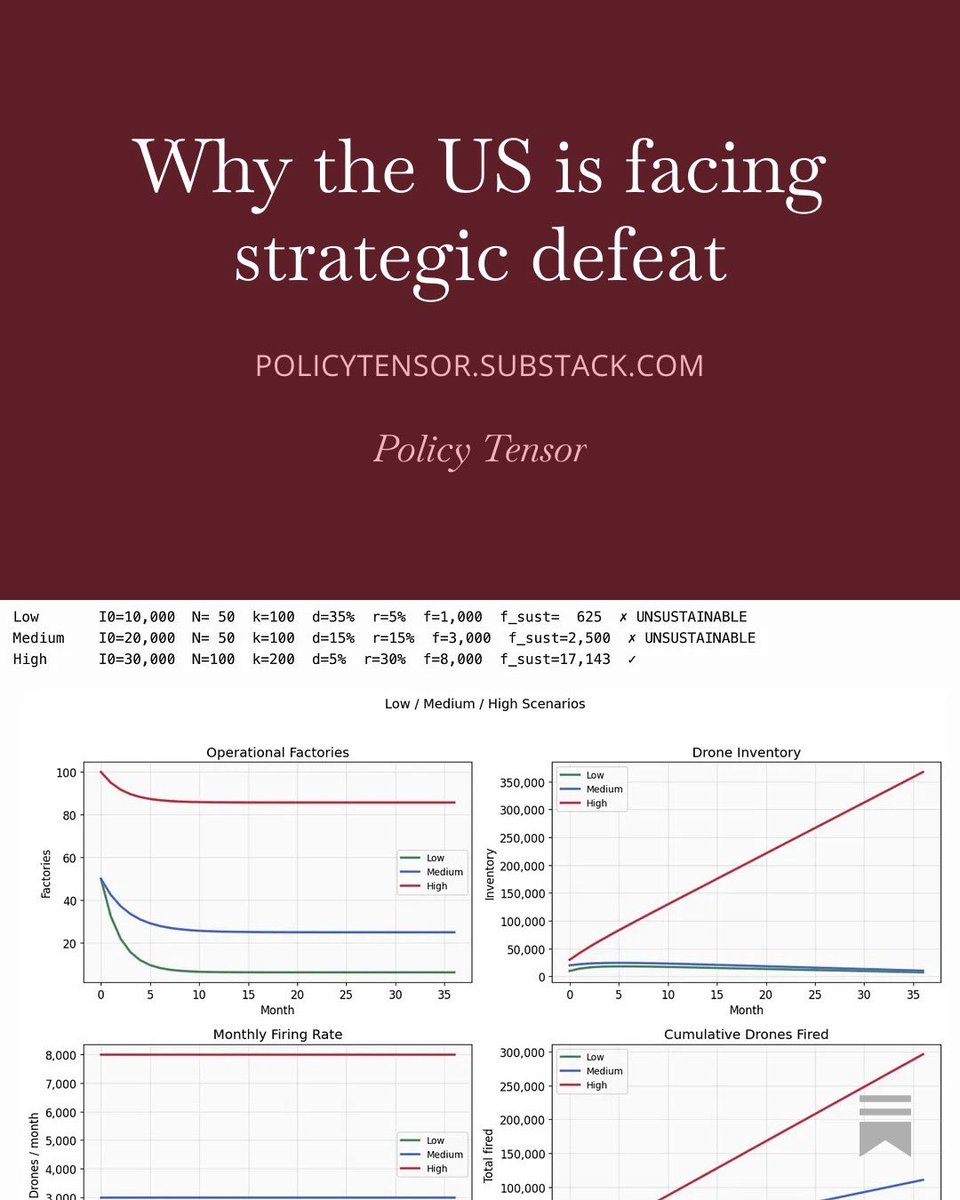
Tbf, I didn’t think that in the first few days. Even after decapitation had failed I thought Iran could be disarmed. It was only when I explicitly wrote down the drone war model that I discovered that the US was facing strategic defeat. Wrote it up on March 6.
Bruno Maçães@MacaesBruno
I only saw two people say when the war started that said it would be a US defeat. @policytensor and myself. But now it seems there were hundreds
English
Aaron Arnold retweetledi

Aaron Arnold retweetledi

I’m a disbeliever in accidental discoveries (at least, in biology). Whenever I’ve looked into one, the story turns out to be false.
The most famous is penicillin – supposedly, the fungi wafted in through a window, fell into a petri dish of cultured staphylococci, and suppressed the bacteria’s growth.
But in a recent article (asimov.press/p/penicillin-m…), @kevinsblake explains that doesn’t really work (grown staphylococci aren’t affected by penicillin; it only works if introduced before the bacteria begin growing); plus, Fleming’s notes on the discovery provide very little detail and the specific results he described couldn’t be replicated by other scientists (even though penicillin does work against staphylococci when introduced correctly.)
There are more: Pasteur’s supposedly accidental discovery of a chicken cholera vaccine was more likely the result of systematic work by his then-assistant, Émile Roux. (jstor.org/stable/2332836…)
And, as @NikoMcCarty writes, the discovery of GFP, nanopore sequencing, and optogenetics are also often described as accidents, but none of them happened that way either. nikomc.com/2026/04/01/opt…
People love serendipity, so why am I bursting their bubble?
I don’t think this is limited to accidental discoveries; I think many historical science anecdotes are highly embellished:
- Edward Jenner didn’t deliberately expose a young boy with full-blown smallpox to test his vaccine (he used variolation); and he wasn’t the first to try using cowpox bsky.app/profile/scient…
- Cobra catching bounties in British India didn’t lead to a rise in the number of snakebites, and there was only hearsay evidence that cobras were bred in response at all twitter-thread.com/t/169650089580…
- Barry Marshall didn’t develop stomach ulcers from drinking a concoction of H. pylori (he did develop gastritis though…) cdn.centerforinquiry.org/wp-content/upl…
- No one knows who actually found the highly-productive strain of penicillin on a cantaloupe, but it probably wasn’t 'Moldy Mary' scientificdiscoveries.ars.usda.gov/tellus/stories…
But in this case it irks me for an additional reason – it gives the impression that innovation happens sporadically, by chance, when there are actually ways that we can systematically speed it up – such as better funding, institutions and incentives.
So: are there any true accidental discoveries that hold up to scrutiny?
English
@Steve_Sailer @richarddeitsch Which is funny, because at the time of the speech Rice was in the middle of a surprisingly competitive stretch against Texas; it wouldn’t become so lopsided until after his death. winsipedia.com/games/rice/vs/…
English

@richarddeitsch JFK himself added the "Why does Rice play Texas?" wisecrack.
English

I'm not a fan of the Kennedy mythology by any means but I always thought this was a hell of a paragraph from JFK and his speech writers.

English
Aaron Arnold retweetledi

It is crazy how few people know this:
Russia now occupies less Ukrainian land than it did one month into the full-scale invasion four years ago

English
Aaron Arnold retweetledi

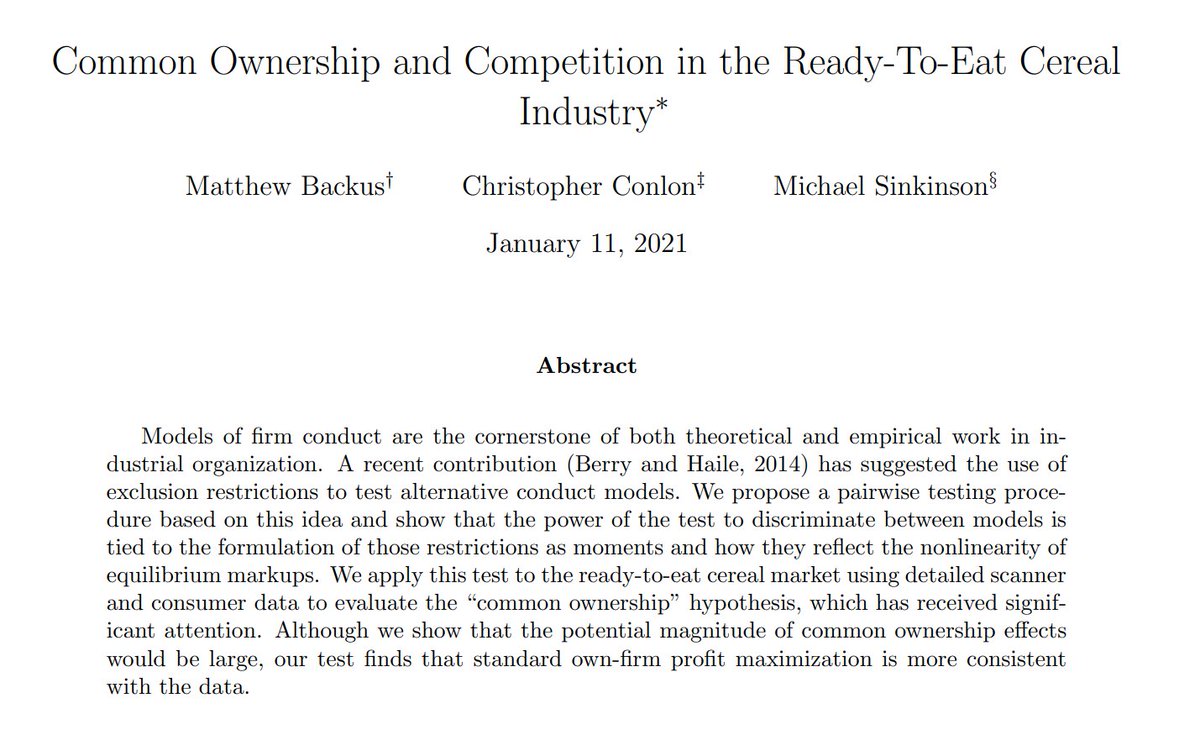
The three largest institutional investors control 21% of the U.S. stock market. What might it look like if they caused firms to collude with each other to raise and prices and reduce quality? And are they doing that right now? Let's go read this masterpiece together. 1/
English
Aaron Arnold retweetledi
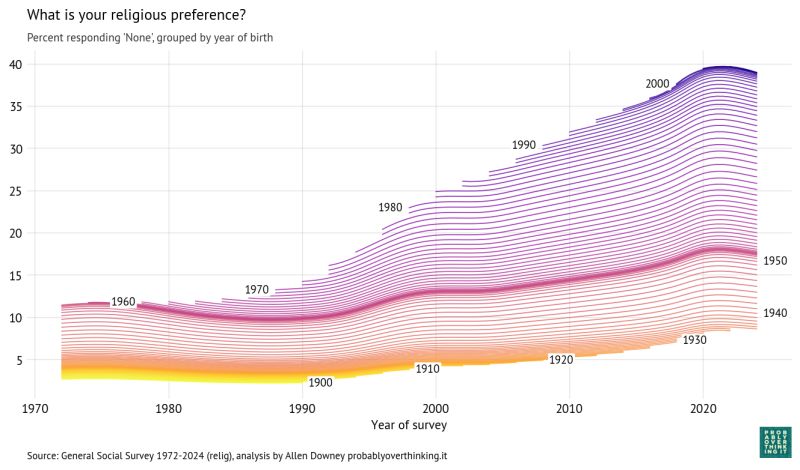
Working on a Bayesian model to decompose period and cohort effects.
As an example, it looks like the "rise of the Nones" (increase in people with no religious affiliation) has stalled.
Cohort or period effect? Turns out, both.
allendowney.com/blog/2026/03/3…
English
Aaron Arnold retweetledi
Excellent, data-rich thread - and exactly the right way to judge the Liberation Day tariffs (ie, by the President's own standards/promises).
THIS is why tariff fans obsess over pre-TACO predictions of Tariff Armageddon & claim "victory" when the worst doesn't come to pass.
Erica York@ericadyork
This week is the one-year anniversary of Trump's "Liberation Day." Instead of focusing on whether predictions made when tariffs were at their peak came to pass, let's ask whether the tariffs actually imposed achieved the Trump administration’s stated goals.
English
Aaron Arnold retweetledi
This is despite the insurance, regulatory, etc environment being quite different
aeaweb.org/articles?id=10…
English
@adamcurtisbroll Modern day DePalma shot.
nofilmschool.com/why-shot-bonfi…
English

F-35 Lightning II jets approach Nellis Air Force Base during Red Flag 25-1 exercises as the Las Vegas Sphere displays a smiling emoji face, January 2025.
English
@Empty_America Chuck Klosterman wrote about how popular Morrissey was among Mexicans for Spin in 2002. books.google.com/books/about/SP…
English

The Smiths didn't used to be a major band, mostly listened to by low-rider Chicanos for some reason.
Jennifer Connelly was sort of a B+ celb in the 90s.
Few Americans knew who Kate Bush in the 80s, she wasn't even on MTV much if at all.
Retroactive Celebrity.
Post-Menshevik@Fullantho
@Empty_America Do young people know that The Smiths were not a big band when they were around?
English
@antipode_elliot @technorural @Empty_America Chuck Klosterman wrote an essay for Spin in 02 about this.
books.google.com/books/about/SP…
English
@technorural @Empty_America I remember even way back in the 90s, Moz's odd popularity among Latinos was regularly remarked upon.
English
Aaron Arnold retweetledi





Aaron Arnold retweetledi

And, finally, a comparison of fiscal records of the past 4 presidents using identical methodology that focuses on bills and executive orders signed - rather than deficit changes driven by less-controllable economic & technical factors.

English
Aaron Arnold retweetledi

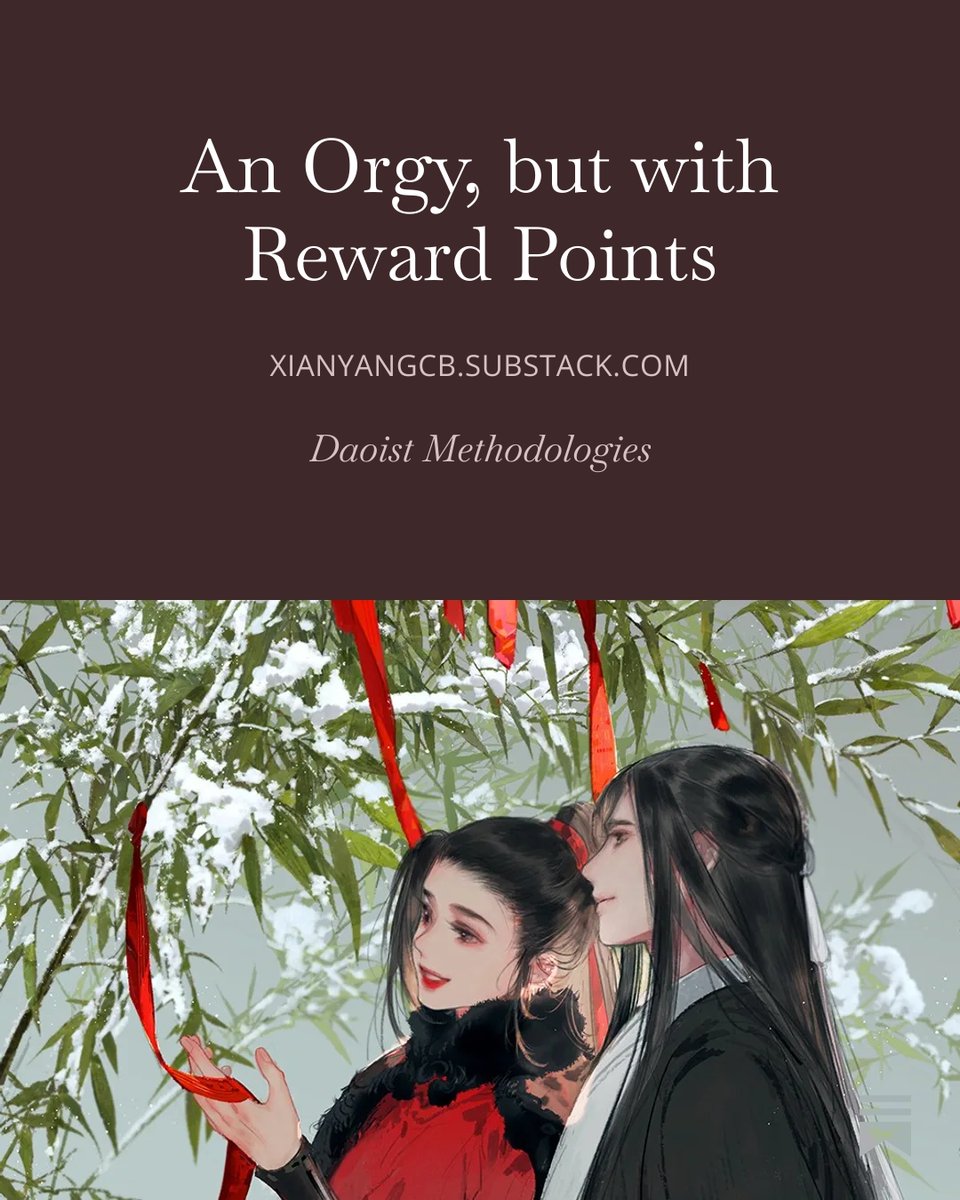
Part two of my history of ancient Chinese attitudes to sex.
Link below.
English
Aaron Arnold retweetledi


Aaron Arnold retweetledi
Famously (there is a beautiful Works in Progress piece on this) in 2016, Geoffrey Hinton told an audience in Toronto that medical schools should stop training radiologists, since AI would soon outperform them at reading scans. Ten years later, there are more radiologists than ever, and they earn more than they did then.
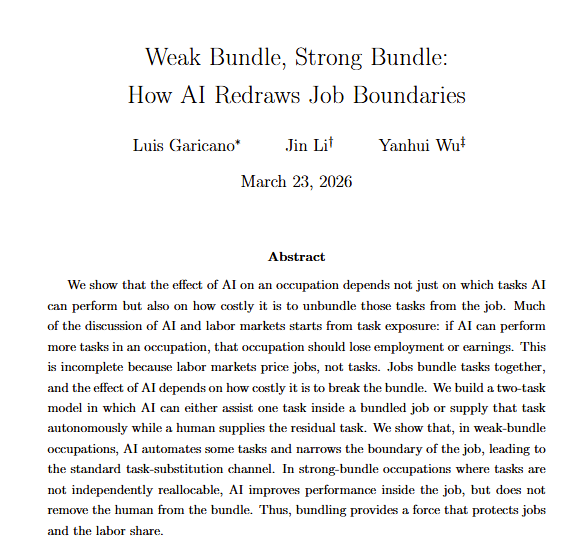
Hinton was right about the task, but he was wrong (so far!) on the future of the radiology profession. Times have never been better for them. The gap between those two claims, the difference between tasks and jobs, is the subject of a paper I have written with Jin Li and Yanhui Wu, and that we release today: "Weak Bundle, Strong Bundle: How AI Redraws Job Boundaries." (Very relatedly we are also finishing the first draft of our book "Messy Jobs" on AI and Jobs!! You will be the first to hear).
We start from the observation that the growing literature on AI and labor markets measures the AI shock by task exposure: people count how many tasks AI can perform in a given occupation AI can perform, and infer that more exposure means more displacement. Eloundou et al. published a paper in Science in 2024 that started this literature, and many follow the same logic. The inference they make is that the more exposed tasks, the worse the outcomes.
This is incomplete, because labor markets price jobs, not tasks. A radiologist does not just sell image classification, but does many other jobs: triages cases, communicates with other physicians, trains residents, makes the difficult decisions, and signs a diagnosis. The market buys a bundled service. The question AI poses is not whether it can do one task inside the bundle. The question is whether that task can be pulled out.
Thread (1/3)
dropbox.com/scl/fo/689u1g7…
English
Aaron Arnold retweetledi

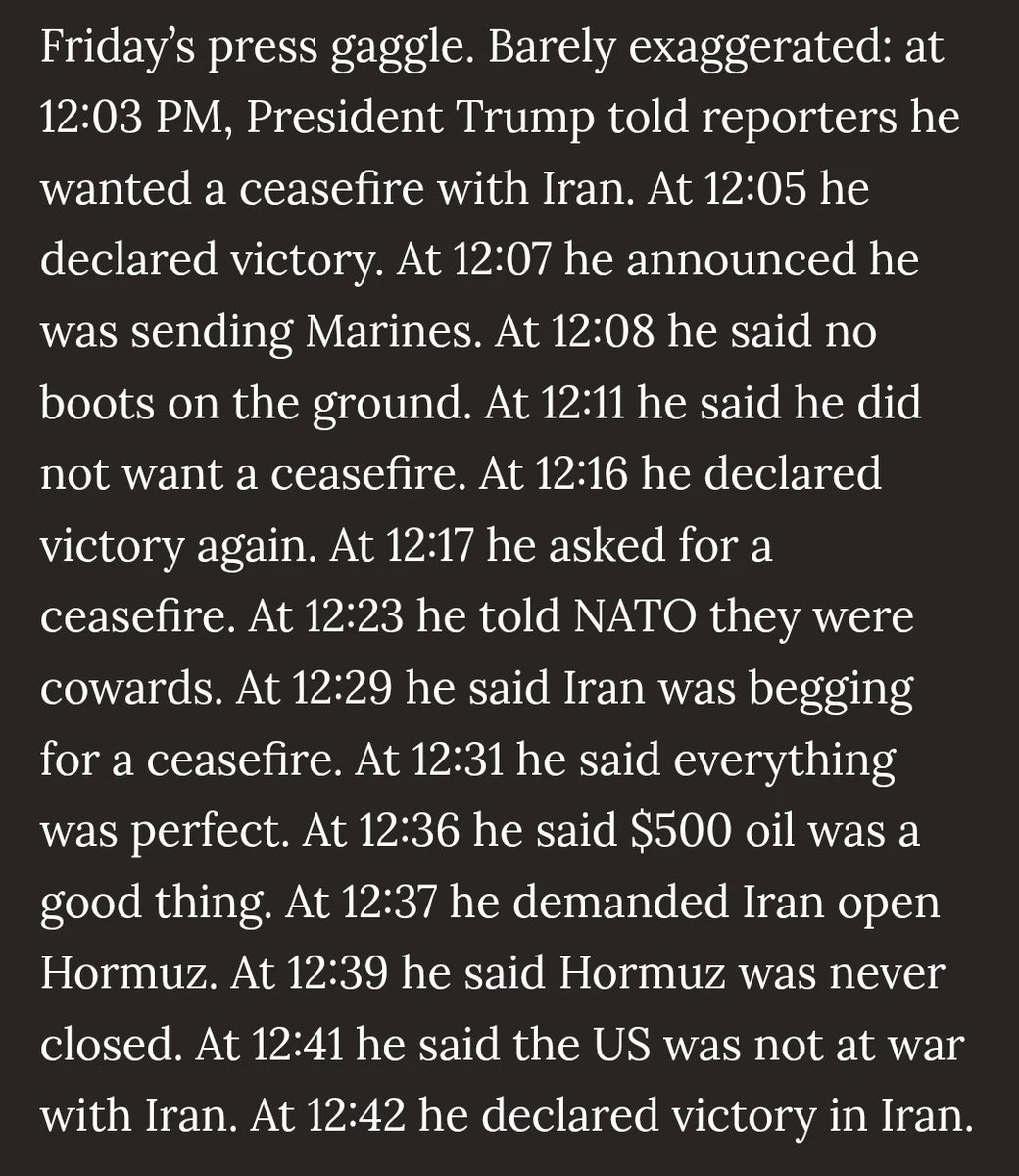
the mainstream political media intentionally sanewashes the Presidents' press conferences and speeches
in realty he's just rambling incoherently
English
@femboyliberty The embargo explains at most a tenth of their horrific economic performance since the early 60s. x.com/vincentgeloso/…
Vincent Geloso@VincentGeloso
The joint work by @JamiePavlik, @jpmvbastos and myself is the definitive work on Cuba’s economic path since 1958. We show that the divergence is largely explained by the Revolution and the Regime’s policies. The embargo doesn’t help but it explains barely 10% of the gap with the "no revolution" counterfactual.
English

Leftists hype up the cuban embargo so much i legit thought it was a full on blockade but nooo its just a normal boring embargo
English