Innes

6.7K posts

Innes banner
Innes

Innes

@AnInnes3

Be Traist. 23 y/o. Animist. Archaeology! Find my alt @shelflid

Albion Entrou em Haziran 2020
313 Seguindo1.1K Seguidores
Tweet fixado
Innes
Innes@AnInnes3·
My approach: I propose an organic and grounded approach to furthering paganism, one with roots. In the past few days I have posted a lot about animism, especially as it pertains to Germanic culture. I have done this to present solid evidence that the idea of what can be termed ‘animism’ is applicable to the pre-Christian Germanic worldview, and is its defining feature.. If I were to have to describe the worldview of a broadly-speaking “Indo-European” person before Abrahamic influence, I would describe them as essentially operating within an animistic ontology. Likewise, if there was one thing that I would declare that all Indo-European people held as a universal value, it would be kinship and clannishness. I would also (as would many anthropologists) go as far as to term many recent European (and diaspora) populations as animistic, even if these were far less developed forms of animism than others. One of the leading scholars in the study of animistic thought has described animism as belonging to the elders of a society, not the children. The most authentic way to be a pagan, is to be a pagan in the way in which our own ancestors were. Rather than faring away to become a Hindu or a Buddhist, and rather than isolating oneself to a limited shelf of historical sources; I suggest that the best approach is to learn what it means to be an animist, to learn the complexities of how our ancestors viewed the world, and to reinvigorate and revive traditional European knowledge. Aspects from both approaches can be valid, the sources of utmost importance, as is our ability to look outside of our sphere to find wisdom in other cultures. But we operate from a solid foundation, and that is what I present here. This is the difference between incorporating sacred ale into a ritual because you understand the elements and relational way in which that beer is important, versus doing so because it is what they did, or doing so because a similar custom survives within the wishy-washy idea of an Indo-European world.
Innes@AnInnes3

On Indo-European(ism): Indo-Europeanism is a term that I used to describe the attempt at creating a pan-Indo-European identity in the modern day. When I think of Indo-Europeanists, I immediately think of a friend of mine; Hammer & Vajra, as well as other projects such as the Hammingja Foundation, Arya Akasha, and countless other individuals. Indo-Europeanists take a holistic approach and look at the wider Indo-European world as comparative mythologists and syncretists. Many seek initiation into 'Indo-European' religions such as Buddhism, Hinduism, and others in an attempt to 'fill-in-the-gaps', or to sometimes entirely replace their native faiths. The justification here is that as we perceive these traditions to have derived from the same source, it is reasonable to cross these traditions over with one another 'organically.' By worshipping Durga, we worship Frigg, by worshipping Mahakala, we worship Odin, etc. Indo-Europeanists and syncretists often contrast and conflict with the Folkish movements exemplified by the likes of the Norrœna Society, and various other groups and individuals such as Dave Martel and his associates.. I am wary of both of these approaches. My issues: Indo-Europeans have never really existed to begin with. Now, it is undeniable that there does exist an Indo-European category of languages, and that there was a genetic population(s) associated with the spread of these languages. However, I suggest that there has never been a unified Indo-European people. The historical reality of the Indo-European peoples, and the contemporary identarian idea of these people are starkly different from one another. Indo-European identitarianism isn’t so different from pan-Germanicism, or pan-Celticism. It plays on the assumption that there was a time when all groups we might consider to be ‘Celtic’ ‘Germanic,’ or in this case ‘Indo-European’ were unified in one way or another (Yes, these groups may have recognized a shared culture, language and ancestry, but to call them truly united is an untruth.) Those who can admit that this is an untruth will argue then that this is not a historical revitalization project, but a project for a new identity in modernity -- which is a fair point. However, I suggest that this is antithetical to the revival of a so-called ‘Indo-European’ worldview that many claim to have existed. When examining the values of the Indo-European people, what is truly universal is that they are defined truly by their clannishness, and the animistic approach with which they took to life. Whilst I value those who seek some kind of spiritual truth in the East; I believe that there is a far more grounded and valuable approach that one can take.
English
2
0
31
9.6K
Innes
Innes@AnInnes3·
So many online Germanic pagans are so very dull, though. I can see people I recognize (and do not respect) as such in her replies. Pull out the charts and the sources and the arguments -.. I have been like that too before, but I think it's quite antithetical to what being a 'pagan' is supposed to be. But her post is straight up bait for those sorts of people to feast on, lol.
English
0
0
3
24
Innes
Innes@AnInnes3·
@BardnanGael Older generation American culture of Celtic romanticism meets contemporary 'actually' reddit-like Germanic pagans. Lady seems a bit confused, but not entirely nonsensical once you figure out what she's trying to say.
English
1
0
4
46
Innes retweetou
Innes
Innes@AnInnes3·
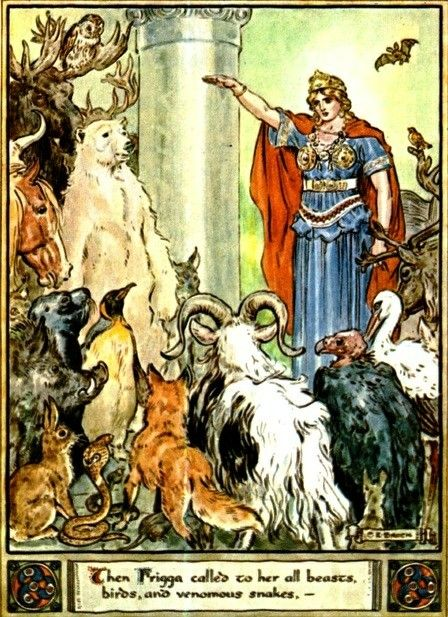
Frie receiving word from all the beasts of the world that they shall do no harm unto her son.
Innes tweet media
English
0
1
9
198
Innes retweetou
Kevin MacLean (Fortress of Lugh)
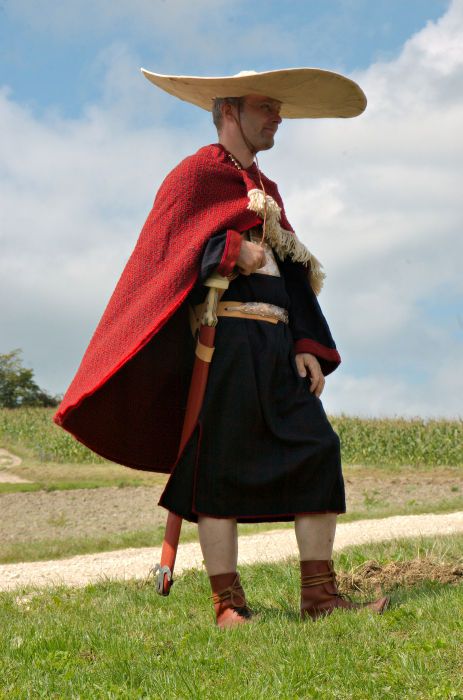
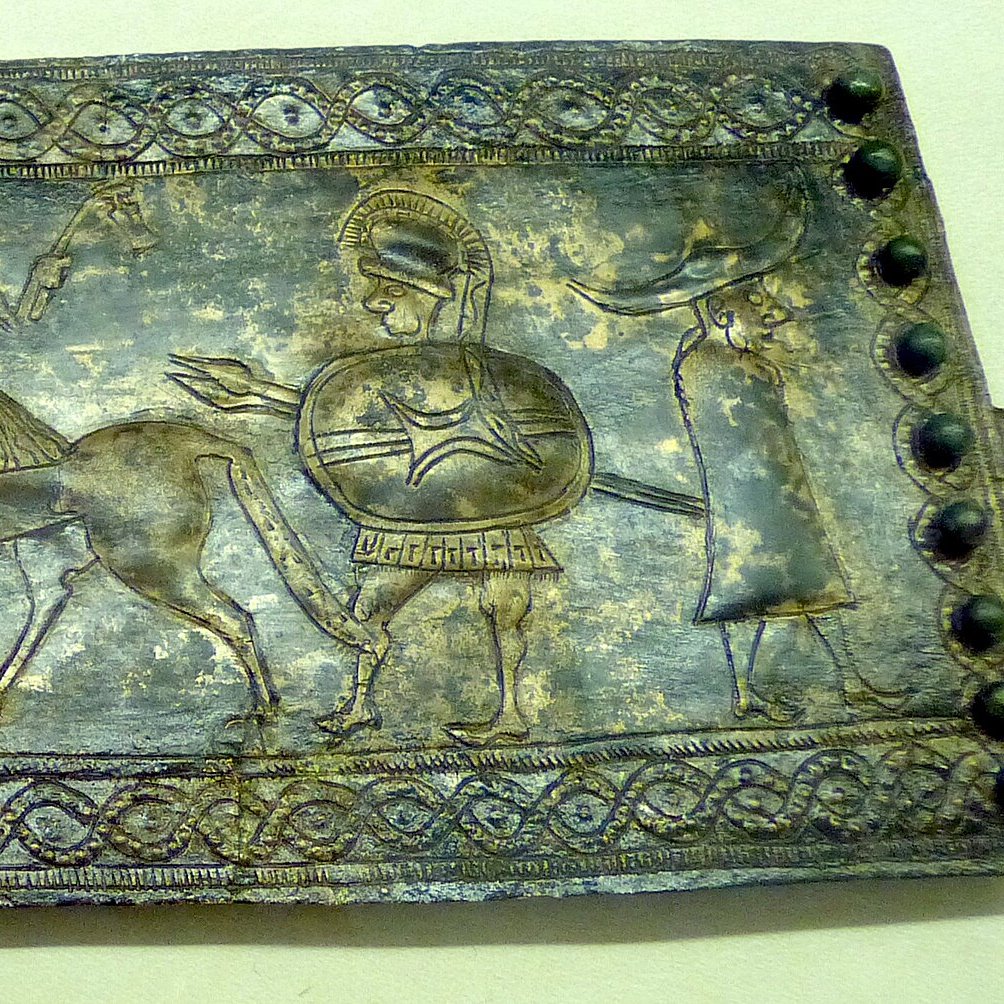
What did the Proto-Celts of the Hallstatt Culture look like? Probably something like below. Trousers were a later adoption, brought by contact with Iranian tribes during the Late Bronze-Early Iron Age. This can be seen by those in Ireland and northern Britain being trouser free through the Roman period. It seems that Europeans trouser-wearing tradition is due specifically to the Iranian tribes that migrated into Central Europe, Sarmatians and their predecessors who popularized them among the Central European Celts and Germanic peoples. Big hats, including those made out of birch bark, were rad fashion. This specific example may be based on the Illyrian extension of the Hallstatt culture, but nearby Celts had similar styles.
Kevin MacLean (Fortress of Lugh) tweet mediaKevin MacLean (Fortress of Lugh) tweet media
English
11
20
142
8.9K
Innes retweetou
Innes
Innes@AnInnes3·
Holda (Frie) & Woden by Spanish artist Paulo Meyer in a nice Medieval inspired aesthetic.
Innes tweet mediaInnes tweet media
English
2
4
24
709
Innes
Innes@AnInnes3·
As-salamu alaykum
Innes tweet media
Türkçe
0
0
2
120
Innes
Innes@AnInnes3·
It's a bit of a complex topic as there is no real 'clan system' that existed at all. It depended on region and era as to how a clan was defined. Some of the most clan-like clans were found in the Anglo-Scottish border where they operated like the sort of kingroups you'd expect the Anglo-Saxons to have had. Sometimes it literally just is feudal houses too, maybe with a bit more of a focus on extended kinship groups that you don't always see in England or the rest of Europe - ones that transcend other socio-economic factors like title, wealth and status. E.g., in a raid on a Church conducted against another family by my own in the 16th century, you saw very distant and poor cousins of the Laird showing up out of a sense of kinship loyalty rather than Lordship (having come from lands not belonging to the chief also.) Much of it is rooted in Germanic culture. The feuding and the kinship loyalty and so on.
English
1
0
5
103
🪙 Bard inna nGoídel 🇮🇪
Scottish clans really arose as a combination of the Gaelic system with the French feudal, perhaps even with a little more influence from the latter. Most clans trace their origins to the normanization of Scottish law.
🪙 Bard inna nGoídel 🇮🇪@BardnanGael

Rugby, Cricket etc. we’re invented to cover the fact that Brit public schools were gay harems, Ossian is forged, tartan and clans are fake, 50% of Welsh culture was invented in the 19th century, nobody without a PhD understands more than half of Shakespeare and Milton is dreary.

English
3
1
41
1.1K
Tencterer
Tencterer@Tencterer·
@AnInnes3 @keltyse @Ostfale Thanks for the reply. Those who came up with these naming conventions were somewhat unstructured tbh. Why would someone put all these Z and then sneak a random L in there lol
English
1
0
1
57
Innes
Innes@AnInnes3·
R-Z326 derives from Z301, which is a dominant subclade of Z381. It goes: Z381>Z301>L48>Z326 Descendants of L48 include Thurungian's, Angles, Frisian's, Langobards, and Swedes - so it's quite a widespread Germanic subclade. FTDNA lists these ancient samples as belonging to Z326: Medieval German from Schelswig-Holstein, Two early Medieval Thurungian from Saxony-Anhalt, Early Medieval Angle from Cambridgeshire & one from Suffolk, one Langobard from the Czech Republic, and a Sarmatian and a Hun from Hungary.
English
1
0
1
57
olan4833
olan4833@olan4833·
@AnInnes3 nah, a viking would challenge him to holmgang, not seethe for 50 years and then shoot him in the face like a coward.
English
1
0
0
19
Innes
Innes@AnInnes3·
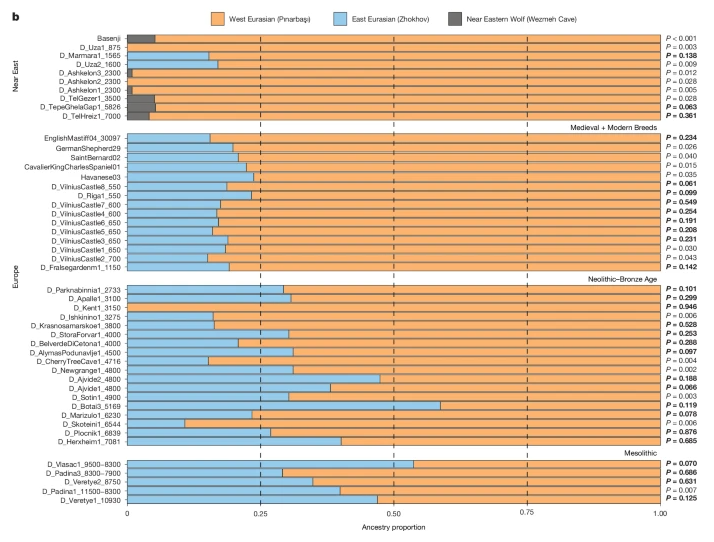
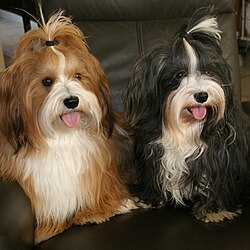
@Tom_Rowsell sort of, Havanese has the most East Eurasian derived ancestry of any currently tested modern breed.
Innes tweet media
English
0
0
8
197
Innes
Innes@AnInnes3·
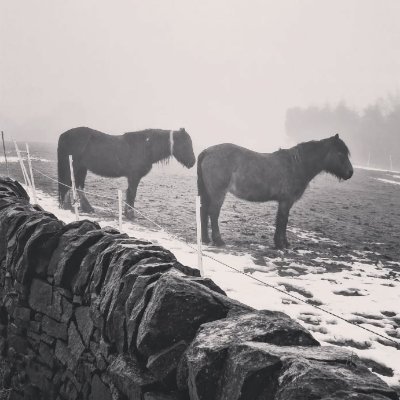
This is actually how my ancestors lived.
English
2
0
13
1K
Innes
Innes@AnInnes3·
But it is interesting that the cavalry in both the US and the British civil wars were defined by their use of pistol! The tactics weren't even all that different. In the 17th century context, you'd get to the point where your pistol was touching the enemy however.
English
0
0
3
95
Innes
Innes@AnInnes3·
Of course US Cavalry did adopt this style too, it just took time to catch on and was first popularized by the Confederates.
English
1
0
3
112
Innes
Innes@AnInnes3·
Pistols from horseback sort of fell out of fashion after this era if I remember correctly, and it wasn't a tactic that was received very well when it /was/ redeveloped in the America's. It wasn't until the Texas Rangers really developed the six-shooter meta, causing it to be popularized by the Confederates in the Civil War that it really became accepted. Even then, Union cavalrymen still often relied on sword or sometimes even lance. It was one of those things that made the Confederate Cavalry just that tad bit superior to the US cavalry for a period. It's all very interesting stuff. I'm not super well educated on the matter, but I'm not sure if it ever became /that/ popular in the north. I wonder if early 20th century westerns and stuff popularized the pistol-shootin' mounted cowboy more.
Dolfijnmanjohns@Dolfijnmanjohns

We where doing this long before u where born, kid. Sit tf down.

English
1
1
9
629