Boris D Heifets

2.5K posts

Boris D Heifets banner
Boris D Heifets

Boris D Heifets

@TheBorisLab

Anesthesiologist, neuroscientist, amateur psychiatrist. I know where the most powerful psychotropic drugs in the hospital are.

Stanford, CA Entrou em Kasım 2018
1.2K Seguindo3.5K Seguidores
Tweet fixado
Boris D Heifets
Boris D Heifets@TheBorisLab·
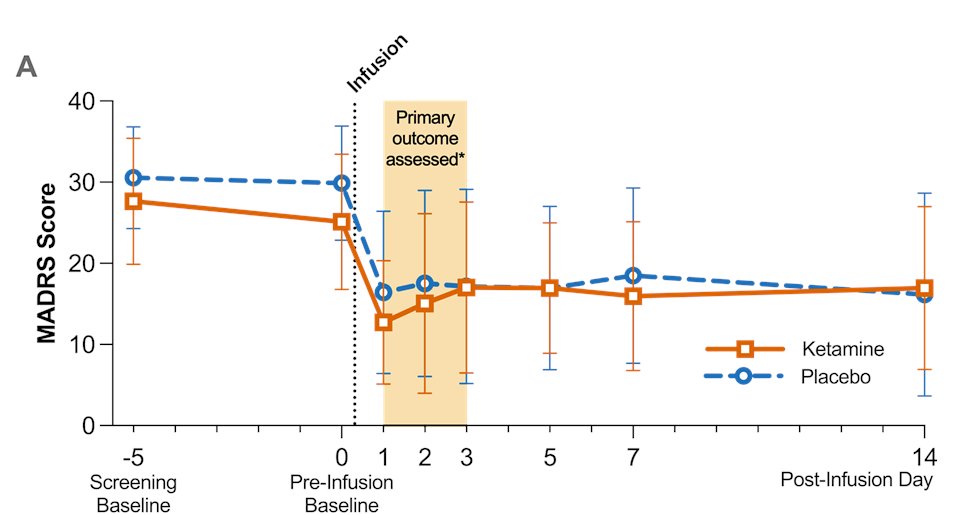
SPIKED: Stanford Placebo vs Intraop Ketamine Evaluated for Depression. We masked ketamine with surgical anesthesia in depressed patients. Full details now published, peer review pending. Huge antidepressant response in both groups. @TheresaLii 1st auth bit.ly/3LMAueK
Boris D Heifets tweet media
English
89
233
991
687.9K
Boris D Heifets retweetou
Michael Ostacher, MD, MPH
Michael Ostacher, MD, MPH@RecoveryDoctor·
Really terrific work here. There is definitively the “moment of betrayal” when the participant is randomized to placebo. @TheBorisLab We need a new methodology for studying these consciousness altering drugs, especially in this environment of tremendous hope and hype.
Balázs Szigeti@psybalazs

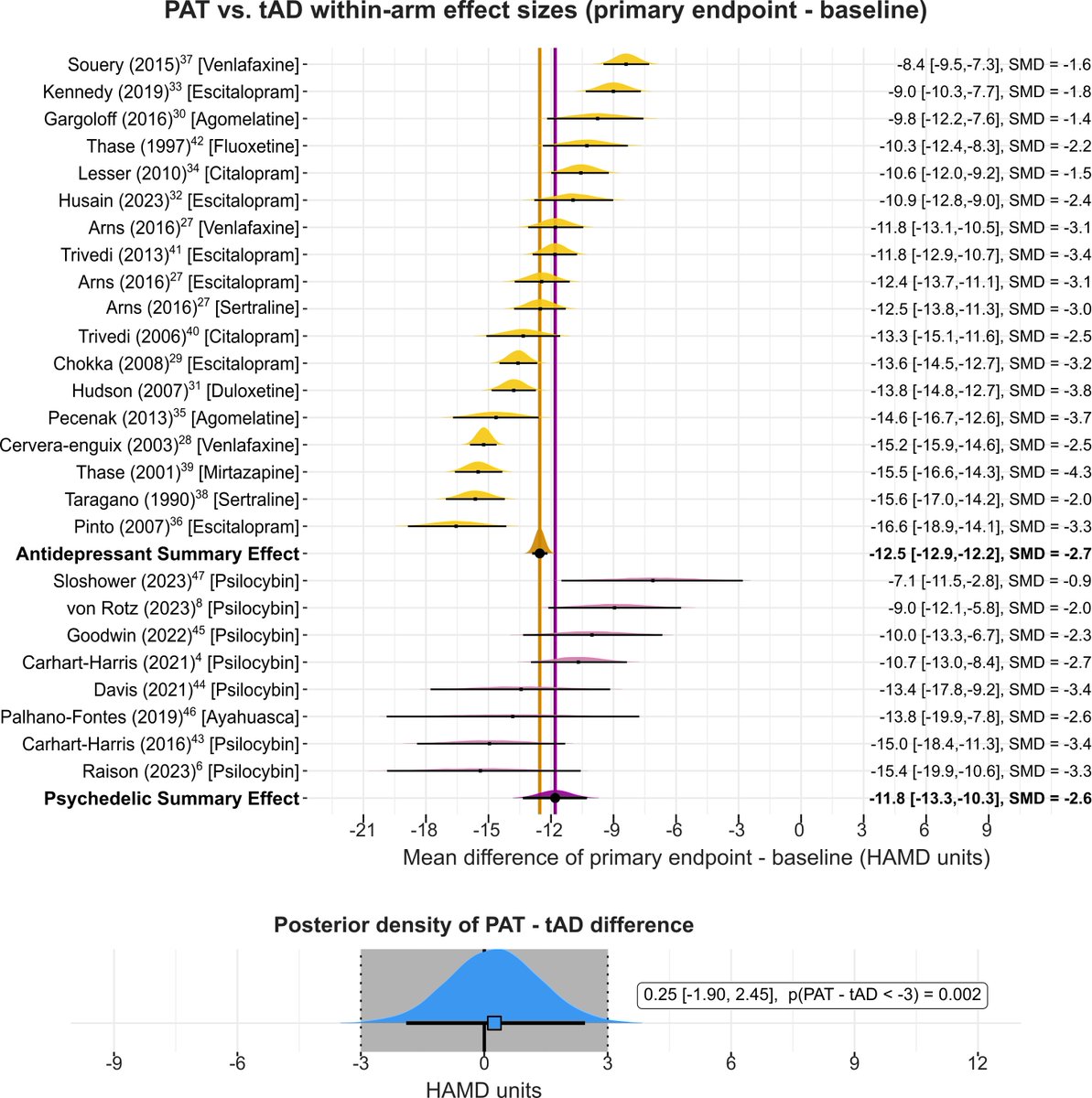
🚨MAJOR NEW PAPER 🚨 just out in @JAMAPsych : Psychedelic Therapy vs Antidepressants for the Treatment of Depression Under Equal Unblinding Conditions (tinyurl.com/yu2rbtaf). I am very proud of this one, was a lot of work for me - both co-first and last author! Eternal gratitude to co-first @QuantPsychiatry and twitterless Hannah Barnett! The premise is that it is biased to compare open-label trials (=where patients know what treatment they are getting) to blind trials (=where patients do NOT know what they are getting). Open-label trials would gain an unfair advantage by higher placebo response. Even formally blinded psychedelic trials are practically open-label as its obvious to distinguish placebo from 25mg of #psilocybin. In contrast, traditional antidepressants (SSRIs/SNRIs) trials are are close to be truly blind (Lin 2022). Given the bias of open-label vs. blinded comparison, we compared the efficacy of psychedelic-therapy (which is practically always open-label) vs. open-label antidepressants for the treatment of major depression. We tested 3 prior hypothesis: - There will be a significant difference between psychedelic-therapy vs. open-label antidepressants, favoring psychedelic-therapy. - There will be a significant difference between blinded and open-label antidepressants trials, favoring open-label. - There will NOT be a significant difference between blinded and open-label psychedelic-therapy, as practically they are always open-label. In contrast with our prior hypothesis, we did not find psychedelic-therapy to be more effective than open-label antidepressants (H1). Not only was the difference not clinically meaningful, but practically there was no difference at all. This finding means that antidepressants administered knowingly to patients, which is the case in real-life medical practice, is as effective as psychedelic-therapy. This result was robust across variations in study selection, including when we removed psychedelic-therapy trials on treatment-resistant depression. We also assessed the impact of blinding in both psychedelic-therapy and antidepressants trials. We found that for antidepressants (H2), but not for psychedelic-therapy (H3), open label is associated with better outcomes than blinded treatment. However, even in the case of antidepressants, the difference was practically small (~1.3 HAMD units). How come hypothesis 1 failed, i.e. that psychedelic-therapy is no ore effective than open-label antidepressants, given that antidepressants trials are famous for small drug-placebo difference (~2.4 HAMD units), while psychedelic-therapy trials reported large effects (~7.3)? The key factor is that in psychedelic trials the placebo response is about 50% relative to antidepressants, ~ 4 vs 8 HAMD units (Hsu 2024, Hieronymus 2025). This suppressed placebo response leads to an inflated between-arm difference, as the treatment arm is measured against a lower floor. The suppressed placebo response in psychedelic-therapy trials is likely attributable to the ‘know-cebo’ effect, i.e. the disappointment when patients realize they are in the control group. In psychedelic-therapy trials, this placebo suppression accounts for 4.0 / 7.3 ~ 55% of the specific treatment effect. In other words, ~55% of psychedelic-therapy’s effect is not explained by patient improvement after the treatment, but rather by the lack of improvement in the placebo group. In summary, we found that for the treatment of depression, psychedelic-therapy is no more effective than open-label SSRIs/SNRIs. Our results for psychedelics are twofold: psychedelic-therapy demonstrated a robust and large therapeutic effects (~12 HAMD units), which justifies optimism. On the other hand, psychedelic-therapy’s lack of superiority compared to open-label SSRIs/SNRIs highlights the influence of blinding integrity and argues against overly optimistic narrative's about psychedelic-therapy's potential.

English
1
3
24
2.8K
Boris D Heifets retweetou
Balázs Szigeti
Balázs Szigeti@psybalazs·
🚨MAJOR NEW PAPER 🚨 just out in @JAMAPsych : Psychedelic Therapy vs Antidepressants for the Treatment of Depression Under Equal Unblinding Conditions (tinyurl.com/yu2rbtaf). I am very proud of this one, was a lot of work for me - both co-first and last author! Eternal gratitude to co-first @QuantPsychiatry and twitterless Hannah Barnett! The premise is that it is biased to compare open-label trials (=where patients know what treatment they are getting) to blind trials (=where patients do NOT know what they are getting). Open-label trials would gain an unfair advantage by higher placebo response. Even formally blinded psychedelic trials are practically open-label as its obvious to distinguish placebo from 25mg of #psilocybin. In contrast, traditional antidepressants (SSRIs/SNRIs) trials are are close to be truly blind (Lin 2022). Given the bias of open-label vs. blinded comparison, we compared the efficacy of psychedelic-therapy (which is practically always open-label) vs. open-label antidepressants for the treatment of major depression. We tested 3 prior hypothesis: - There will be a significant difference between psychedelic-therapy vs. open-label antidepressants, favoring psychedelic-therapy. - There will be a significant difference between blinded and open-label antidepressants trials, favoring open-label. - There will NOT be a significant difference between blinded and open-label psychedelic-therapy, as practically they are always open-label. In contrast with our prior hypothesis, we did not find psychedelic-therapy to be more effective than open-label antidepressants (H1). Not only was the difference not clinically meaningful, but practically there was no difference at all. This finding means that antidepressants administered knowingly to patients, which is the case in real-life medical practice, is as effective as psychedelic-therapy. This result was robust across variations in study selection, including when we removed psychedelic-therapy trials on treatment-resistant depression. We also assessed the impact of blinding in both psychedelic-therapy and antidepressants trials. We found that for antidepressants (H2), but not for psychedelic-therapy (H3), open label is associated with better outcomes than blinded treatment. However, even in the case of antidepressants, the difference was practically small (~1.3 HAMD units). How come hypothesis 1 failed, i.e. that psychedelic-therapy is no ore effective than open-label antidepressants, given that antidepressants trials are famous for small drug-placebo difference (~2.4 HAMD units), while psychedelic-therapy trials reported large effects (~7.3)? The key factor is that in psychedelic trials the placebo response is about 50% relative to antidepressants, ~ 4 vs 8 HAMD units (Hsu 2024, Hieronymus 2025). This suppressed placebo response leads to an inflated between-arm difference, as the treatment arm is measured against a lower floor. The suppressed placebo response in psychedelic-therapy trials is likely attributable to the ‘know-cebo’ effect, i.e. the disappointment when patients realize they are in the control group. In psychedelic-therapy trials, this placebo suppression accounts for 4.0 / 7.3 ~ 55% of the specific treatment effect. In other words, ~55% of psychedelic-therapy’s effect is not explained by patient improvement after the treatment, but rather by the lack of improvement in the placebo group. In summary, we found that for the treatment of depression, psychedelic-therapy is no more effective than open-label SSRIs/SNRIs. Our results for psychedelics are twofold: psychedelic-therapy demonstrated a robust and large therapeutic effects (~12 HAMD units), which justifies optimism. On the other hand, psychedelic-therapy’s lack of superiority compared to open-label SSRIs/SNRIs highlights the influence of blinding integrity and argues against overly optimistic narrative's about psychedelic-therapy's potential.
Balázs Szigeti tweet media
English
20
58
216
52.5K
Boris D Heifets retweetou
Ben Rein, PhD
Ben Rein, PhD@dr_benrein·
REMINDER: registration closing soon for our @Stanford class: *How to Communicate Science* This class counts towards Stanford's Neuroscience PhD program requirements! 🎓
Ben Rein, PhD@dr_benrein

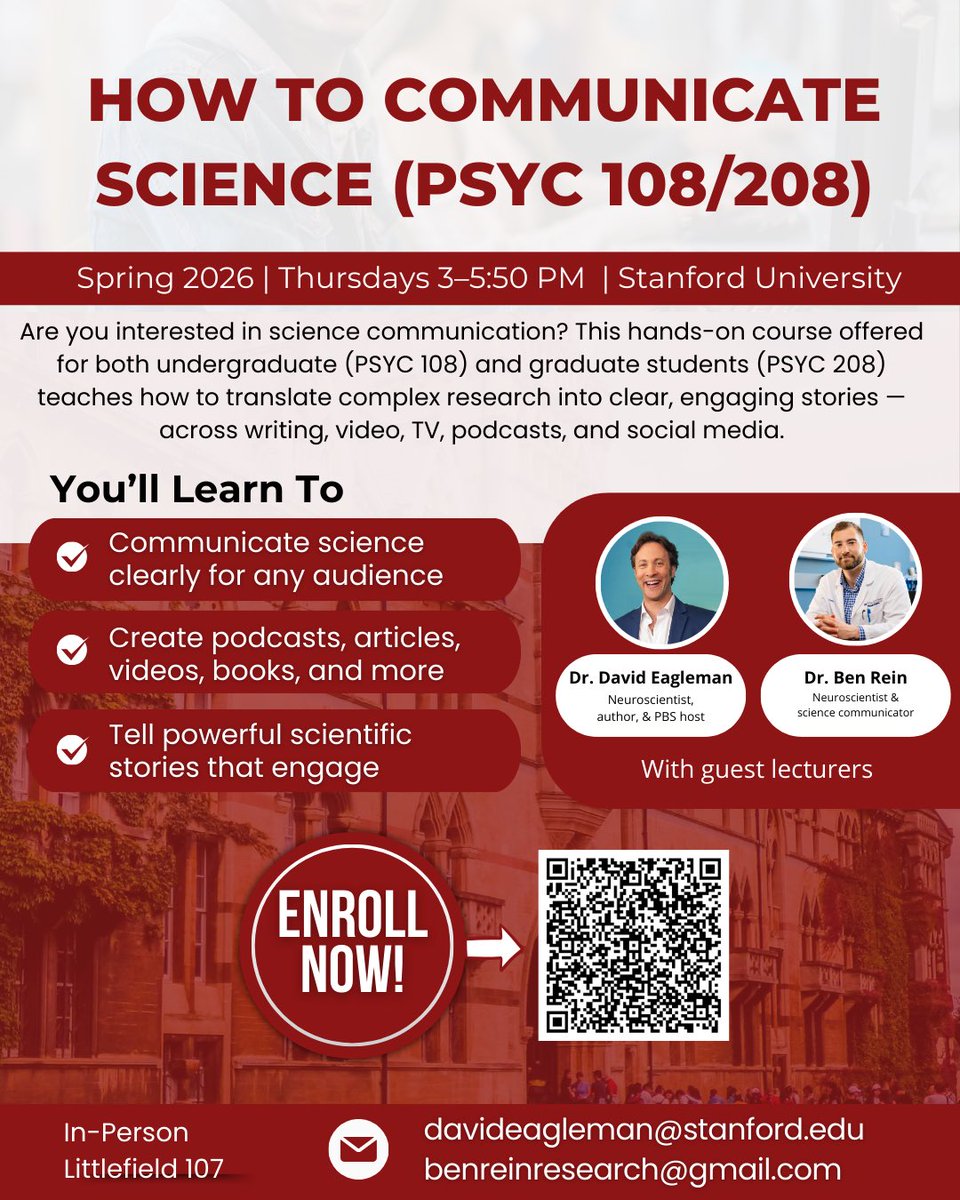
🌲Stanford students! Our unique class “How to Communicate Science” is BACK for the Spring semester! Taught by @davideagleman and myself, with guest lecturers. Enrollment is open *now* at both the undergraduate (PSYC 108) and graduate (PSYC 208) levels!

English
0
1
4
386
Boris D Heifets retweetou
BryanRoth
BryanRoth@zenbrainest·
Sadly untrue but useful. The biggest bottleneck is choosing the right target. The rest is pretty straightforward
Dustin@r0ck3t23

Jensen Huang just called the exact top of the pharmaceutical industry. Not a pivot. Not a disruption. An extinction event. Huang: “Where do I think the next amazing revolution is going to come? And this is going to be flat out one of the biggest ones ever. There’s no question that digital biology is going to be it.” The medical establishment has spent centuries playing a chaotic game of trial and error. We’re about to mathematically engineer the human operating system. Huang: “For the very first time in human history, biology has the opportunity to be engineering, not science. When something becomes engineering, not science, it becomes less sporadic and exponentially improving.” Biology is no longer the dark art of random discovery. It’s a predictable, compounding execution loop. Translate the chaotic variables of chemistry into the laws of computer science and you stop waiting for accidental breakthroughs. You simply compute the cure. That line should terrify every pharmaceutical executive alive. Huang: “It can compound on the benefits of the previous years. And every researcher’s contributions compound on each other.” For decades, drug discovery has been an isolated, artisanal process. One lab. One team. One molecule. Years of blind iteration. The algorithm just shattered that entire bottleneck. Every failed protein fold, every successful synthetic molecule instantly trains the foundational model. Makes the next iteration mathematically smarter. Huang: “We’re going to have incredible tools that bring the world of biology, which is very chaotic and constantly changing and diverse and complex, into the world of computer science. And that is going to be profound.” Incumbent pharma looks at the human body and sees an unmanageable wall of variables. Engineers look at that exact same body and see raw data waiting to be compiled. No longer guessing how a molecule will react in the physical world. Running millions of zero-cost simulated iterations before a single test tube is ever touched. Rip the chaotic friction out of the physical lab and drop it directly into a massive GPU cluster? The timeline to map, edit, and optimize the biological machine doesn’t shrink. It collapses.

English
0
6
32
8.3K
Bryan Johnson
Bryan Johnson@bryan_johnson·
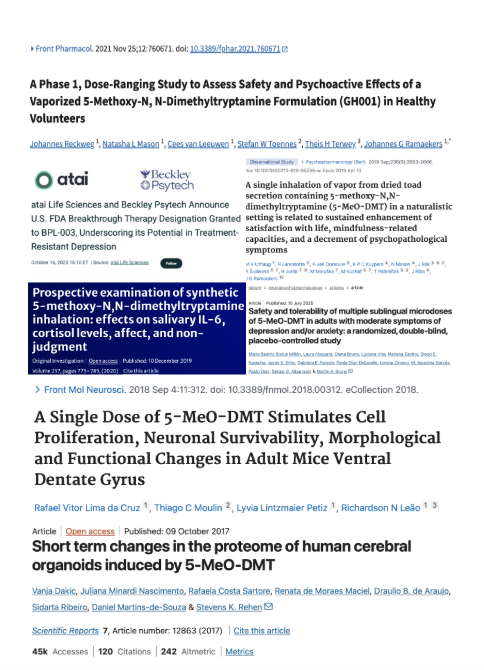
I'm experimenting with 5-MeO-DMT because it may be most underrated longevity molecule no one is talking about. + Accelerated neurogenesis: a single dose more than doubled brain cell proliferation and neuronal regeneration in the hippocampus within 12 hours, alongside measurable increases in synaptic density and firing frequency in rodent models. + Proteomic reorganization: in human cerebral organoids, 5-MeO-DMT triggers rapid proteomic shifts favoring cellular reorganization and synapse formation. Early evidence of structural brain renewal at the molecular level. + Default Mode Network reset: The DMN calcifies with age locking us into rigid, repetitive patterns of thought. 5-MeO-DMT disrupts these patterns, restoring bottom up connectivity between sensory and creative brain regions. A forced return to neurological flexibility and youthfulness. + Systemic anti-inflammation: suppresses pro-inflammatory cytokines (IL-1β, IL-6, TNF-alpha) while upregulating IL-10, the anti-inflammatory signal. Mediated through the Sigma-1 receptor, suggesting a mechanism distinct from other psychedelics.
Bryan Johnson tweet media
English
311
200
2.6K
192.9K
Boris D Heifets retweetou
Matthew W. Johnson
Matthew W. Johnson@Drug_Researcher·
Just published: our RCT shows psilocybin (magic mushrooms) dramatically beats nicotine patch for quitting smoking using the same psychotherapy! A single psilocybin session showed 6x greater odds of staying quit. Biologically verified. In @JAMANetworkOpen Thread 🧵 #Psychedelics #QuitSmoking
Matthew W. Johnson tweet media
English
19
80
326
57.4K
Boris D Heifets retweetou
Tanner Anderson, PhD
Tanner Anderson, PhD@EphysTanner·
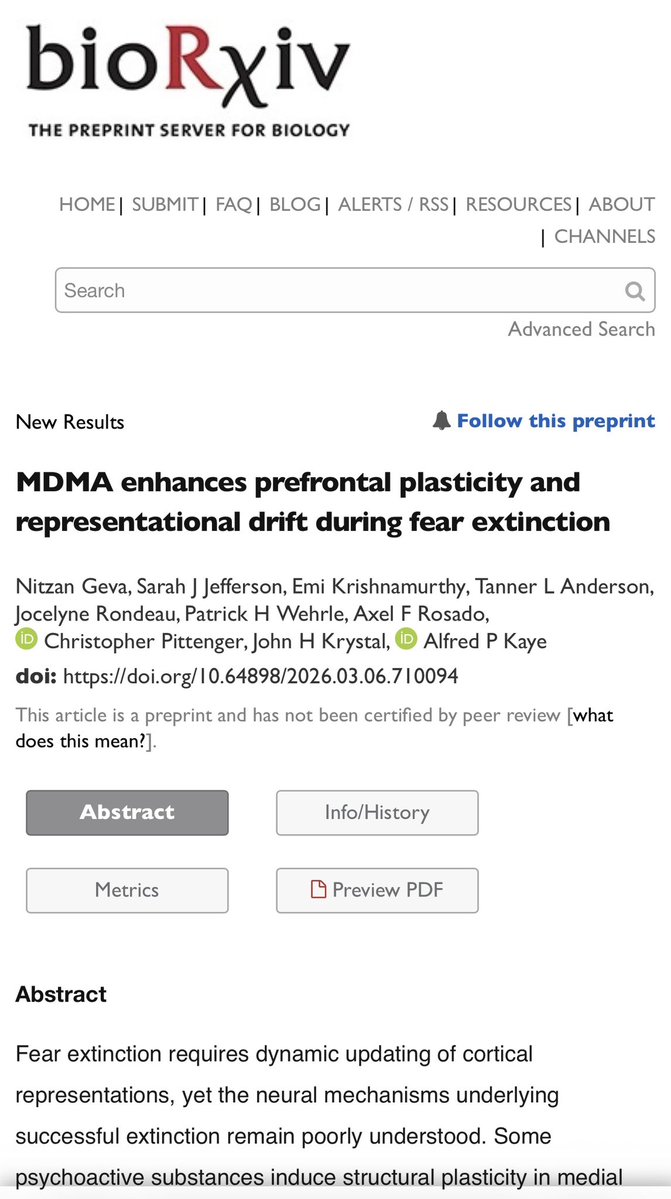
New Kaye Lab preprint is out now! We used longitudinal dendritic spine imaging, synaptic proteomics, mini scope calcium imaging, and electrophysiology to study MDMA-induced plasticity and representational drift during fear extinction! 🔗⬇️
Tanner Anderson, PhD tweet media
English
3
10
46
2.4K
Boris D Heifets retweetou
Doris Tsao
Doris Tsao@doristsao·
As efforts get underway to map the mouse, monkey and human connectomes, backed by private capital, I just want to shout out how important it will be for this information to be open and freely available to all. Companies can use it in their own ways, but the map doesn't belong to any person, company, or country. It's our collective inheritance from Mother Nature.
Adam Marblestone@AdamMarblestone

To accelerate progress, the field should obviously proceed (at least in the early pre-competitive phases) with replicable science with methods and codes documented and explained, not just videos / teasers. Last October, @E11BIO (led by @Andrew_C_Payne) released open methods for a family of optical connectomics approaches called PRISM, which have the potential to massively reduce the cost of acquiring connectomics data x.com/Andrew_C_Payne… PRISM will integrate with AI driven methods to further reduce the cost of proofreading with AI, e.g. PATHFINDER (Januszewski, Viren Jain @stardazed0, and colleagues): biorxiv.org/content/10.110…

English
3
21
123
14.7K
Boris D Heifets retweetou
Ben Rein, PhD
Ben Rein, PhD@dr_benrein·
🌲Stanford students! Our unique class “How to Communicate Science” is BACK for the Spring semester! Taught by @davideagleman and myself, with guest lecturers. Enrollment is open *now* at both the undergraduate (PSYC 108) and graduate (PSYC 208) levels!
Ben Rein, PhD tweet media
English
1
5
18
2.3K
Boris D Heifets retweetou
Carolyn Rodriguez
Carolyn Rodriguez@CRodriguezMDPhD·
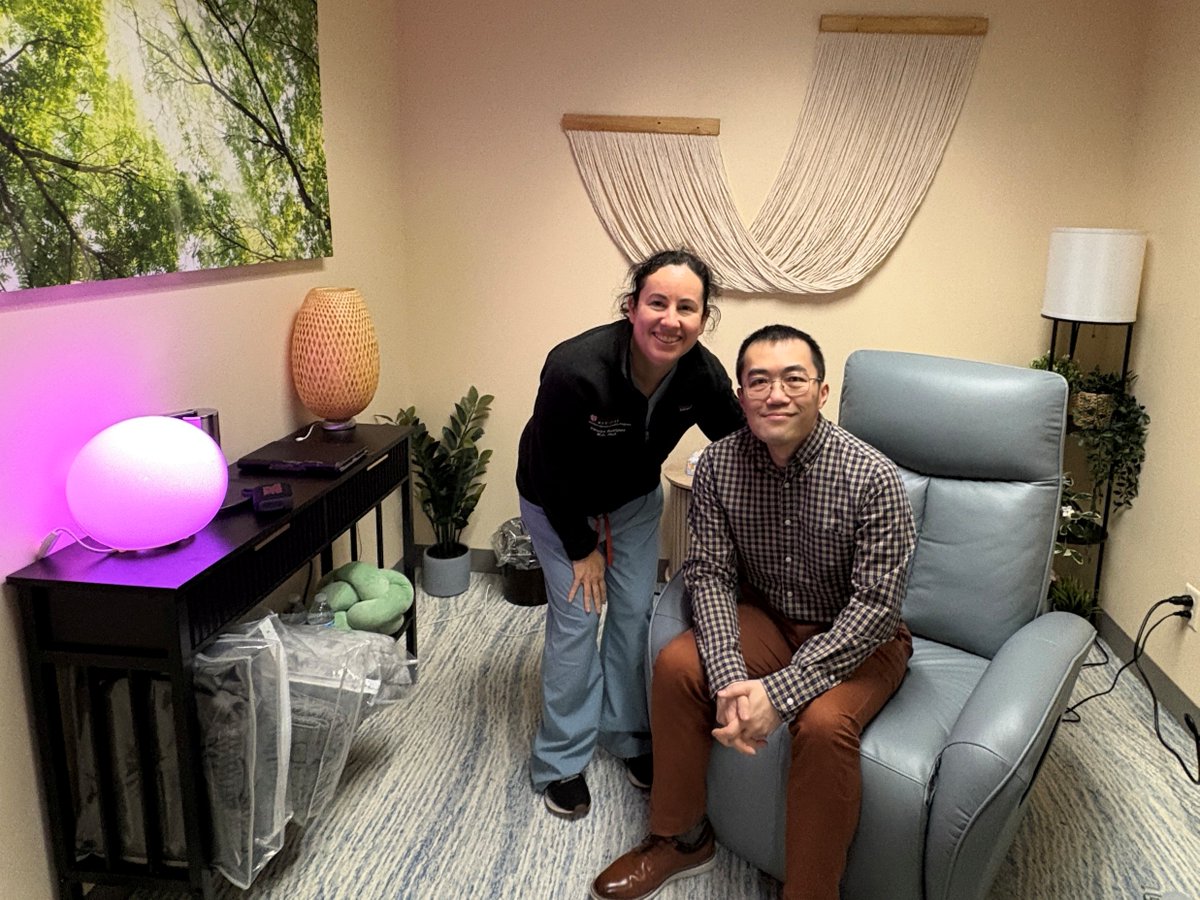
Thank you @kwanalexc for an outstanding Stanford Psychiatry Grand Rounds "Making Synapses with Psychedelics" @StanfordBrain Tsai Neurosciences!! Appreciate @TheBorisLab and Austen Casey for your kind hosting.
Carolyn Rodriguez tweet media
English
3
5
25
2K
Boris D Heifets retweetou
Stanford Anesthesiology
Stanford Anesthesiology@stanfordanes·
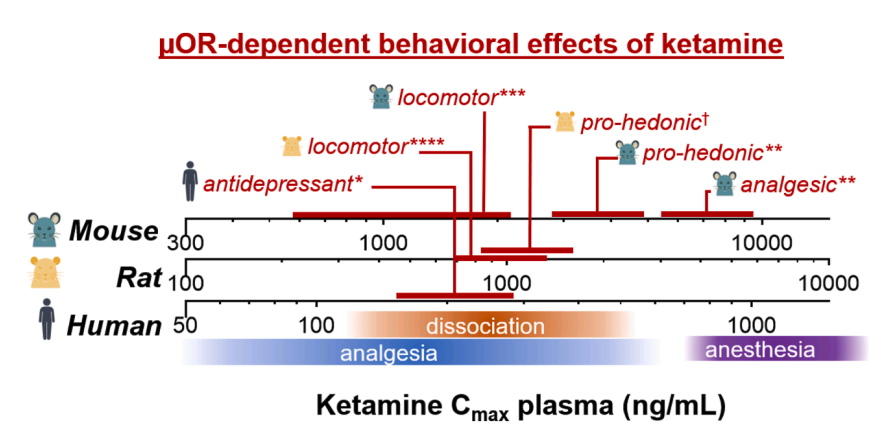
Ketamine has changed how scientists think about treating depression and pain. But one big question remains: how does it actually work? For years, researchers focused on NMDA receptors. New evidence suggests the answer may also involve the brain’s opioid system.
English
2
9
51
7.9K
Boris D Heifets retweetou
Sofiya Hupalo
Sofiya Hupalo@sofiyahupalo·
Very cool structural biology and molecular pharmacology study on psychedelic mechanisms of action. But, I cringe at references to hallucinations in mice, even with qualifiers about limitations of animal models. We need to be more precise in our descriptions of animal behavior!
Robert Y. Chen@therealRYC

🚨 The NO TRIP mushroom for depression We finally know how psychedelics cause hallucinations vs. therapeutic effects at the 5-HT2A receptor. Gi signaling drives the trip, Gq drives the relief. And they just designed a non-hallucinogenic analog to prove it 🧵

English
2
1
12
1.6K
Boris D Heifets retweetou
Zeest Khan, MD
Zeest Khan, MD@doctor_zeest·
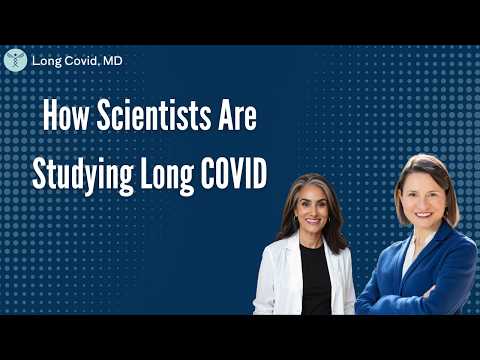
RECOVER researcher explains the process and collaboration involved in the stellate ganglion block study for #LongCovid COVID. It’s a well-funded RCT, which we need. The study design is now available and open to public comment until March 3. youtu.be/_W3VoXX-V5U
YouTube video
YouTube
English
4
8
26
4.6K
Boris D Heifets
Boris D Heifets@TheBorisLab·
I love this mashup of anesthesia, neurology and psychiatry- honestly didn’t expect to hear life-changing narratives from patients after a getting a nerve block…. Though it’s a pretty unique block
Zeest Khan, MD@doctor_zeest

RECOVER researcher explains the process and collaboration involved in the stellate ganglion block study for #LongCovid COVID. It’s a well-funded RCT, which we need. The study design is now available and open to public comment until March 3. youtu.be/_W3VoXX-V5U

English
0
2
8
917
Boris D Heifets retweetou
Sean Noah
Sean Noah@seannoah·
@elonmusk I’m a UC Berkeley neuroscience postdoc studying the subjective effects of psychedelics with LLMs. I’d love to use Grok for a project – could I apply for research API credits?”@xai @grok @x
English
4
2
12
628
Boris D Heifets retweetou
Stanford Pain Medicine
Stanford Pain Medicine@StanfordPain·
A single dose of psilocybin did not reduce pain in mice. In a new 2026 study published in @Nature, researchers tested psilocybin across three common models of pain: inflammatory pain, nerve injury pain, and widespread muscle pain.
English
3
4
25
3.7K
Boris D Heifets retweetou
Cara Weisman
Cara Weisman@WeismanCara·
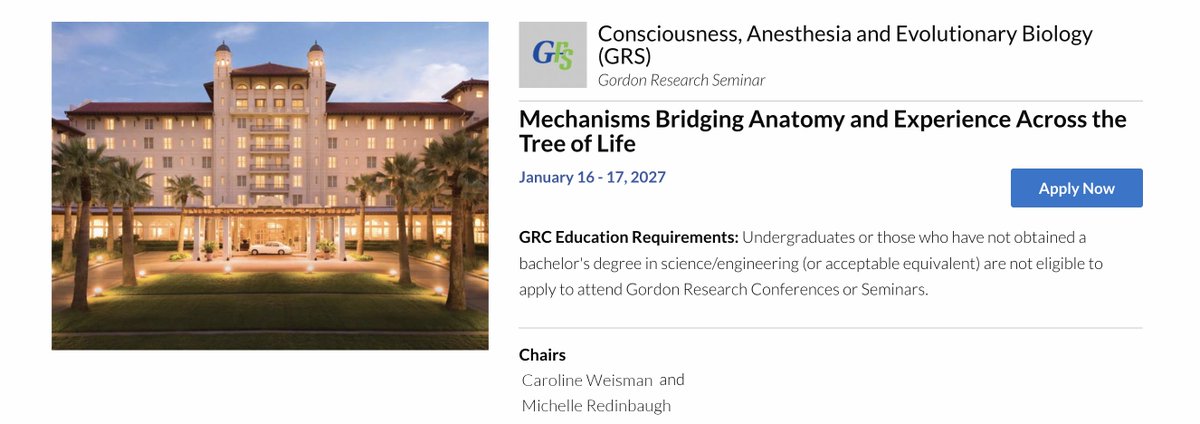
I'm excited to announce the 2027 Gordon Research Seminar on Consciousness, Anesthesia, and Evolutionary biology, which I am co-chairing! It's a fantastic GRS/C, and this year we're making a concerted push for more participation from evolutionary biologists. Please RT widely! grc.org/consciousness-…
Cara Weisman tweet media
English
0
4
9
592