

Ed_Key retweetou

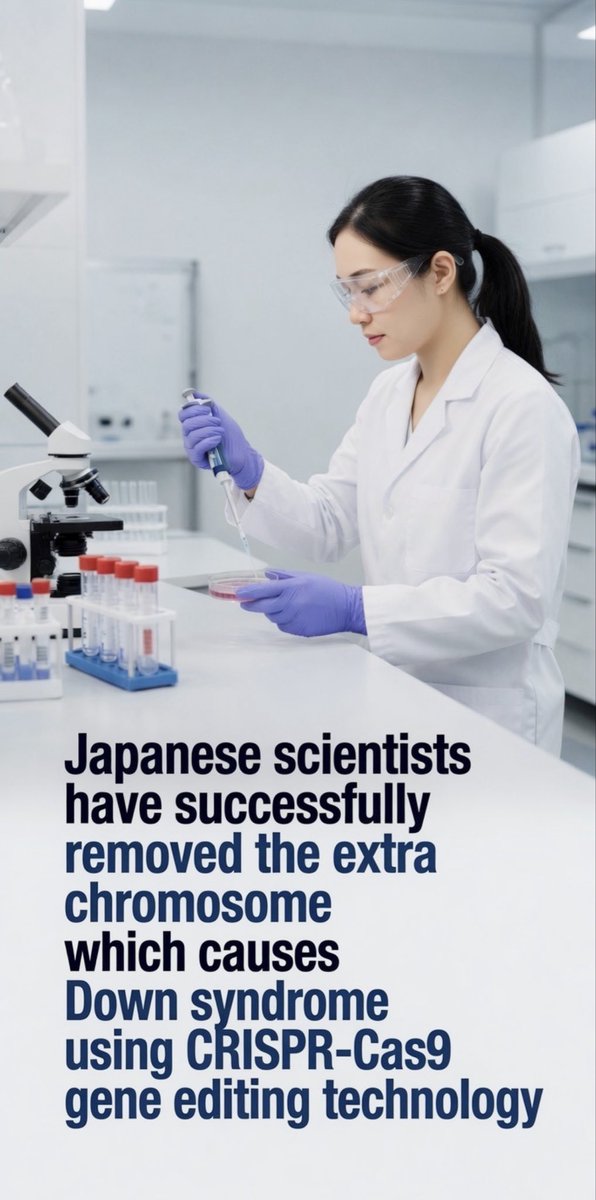
Japanese scientists have successfully removed the extra chromosome associated with Down syndrome from human cells in a laboratory setting using CRISPR-Cas9 gene-editing technology.
In this early-stage research, led by a team working in Japan including Dr. Ryotaro Hashizume, scientists targeted cells carrying trisomy 21, the condition where an individual has three copies of chromosome 21 instead of the usual two. Using CRISPR-based methods, they were able in some cases to eliminate the extra chromosome from affected cells grown in the lab.
Following this genetic correction, more than 30% of treated cells showed signs of restored or improved normal cellular function, suggesting that removing the additional chromosome could potentially reverse some of the biological disruptions linked to the condition at a cellular level.
However, this work is still strictly experimental and has only been carried out in isolated cells under laboratory conditions. It has not been tested in animals or humans, and there are significant challenges ahead, including how to safely target only the extra chromosome without affecting normal genetic material, and how to deliver such a treatment to the correct cells in the body.
Scientists emphasise that while this represents an important proof of concept for chromosome-level gene editing, any real-world therapeutic application for Down syndrome would require many more years of research, along with careful ethical review and safety testing.
English