0xPatrick รีทวีตแล้ว

Not a single person has attempted to split the G with @collision
And that’s a damn shame
English
0xPatrick
350 posts

@0x_patrick
Let's think through this step by step.



Code is an output. Nature is healing. For too long we treated code as input. We glorified it, hand-formatted it, prettified it, obsessed over it. We built sophisticated GUIs to write it in: IDEs. We syntax-highlit, tree-sat, mini-mapped the code. Keyboard triggers, inline autocompletes, ghost text. “What color scheme is that?” We stayed up debating the ideal length of APIs and function bodies. Is this API going to look nice enough for another human to read? We’re now turning our attention to the true inputs. Requirements, specs, feedback, design inspiration. Crucially: production inputs. Our coding agents need to understand how your users are experiencing your application, what errors they’re running into, and turn *that* into code. We will inevitably glorify code less, as well as coders. The best engineers I’ve worked with always saw code as a means to an end anyway. An output that’s bound to soon be transformed again.
New blog post: "A sufficiently detailed spec is code" I wrote this because I was tired of people claiming that the future of agentic coding is thoughtful specification work. As I show in the post, the reality devolves into slop pseudocode haskellforall.com/2026/03/a-suff…

we need a better word than vibe coding man, Claude can create the most beautiful things
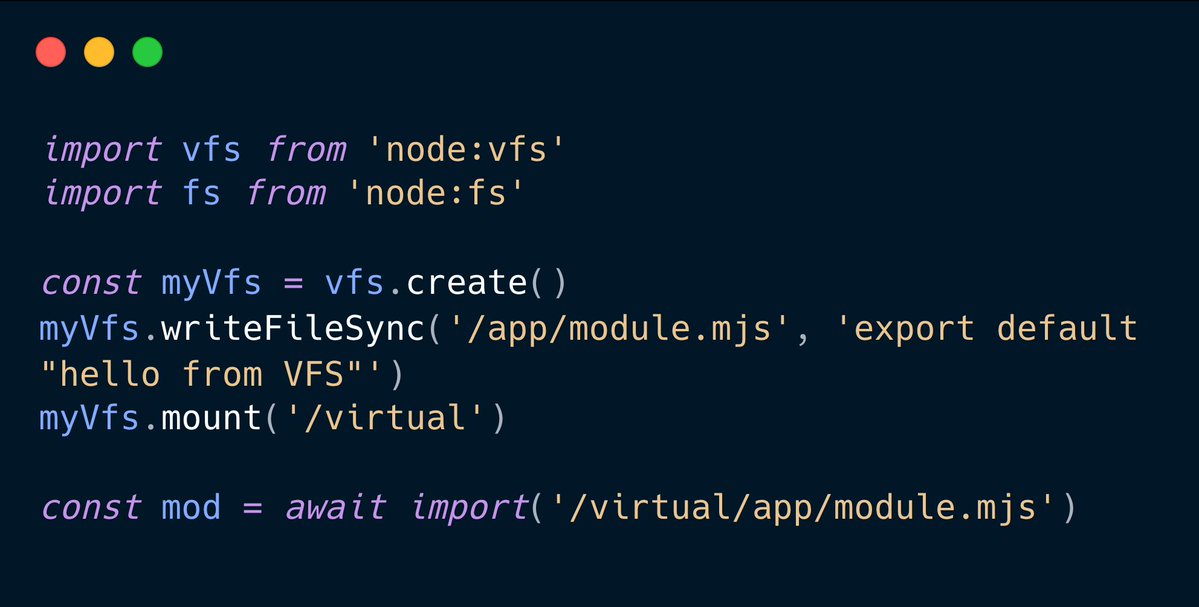

Fuck it, a bit early but here goes: Monty: a new python implementation, from scratch, in rust, for LLMs to run code without host access. Startup time measured in single digit microseconds, not seconds. @mitsuhiko here's another sandbox/not-sandbox to be snarky about 😜 Thanks @threepointone @dsp_ (inadvertently) for the idea. github.com/pydantic/monty
It is interesting to see that many use claude code to implement a waterfall development workflow. They write a multi pages comprehensive spec, then let cc run on its own. There is a reason why people moved away from waterfall in favor of a more iterative workflow where specs are updated along the way. Think of agile methods. Sure, if you want to be agile with cc (or another AI coding agent), then you have to stay in control, interact, review, and revise during the development of your system. But it is worth it, for all the reasons that made waterfall fail in the past.
A workflow I'm enjoying for managing coding agents on a kanban board: When an agent needs your input, it turns the task red to alert you that it's blocked! And then you can respond right there on the card to unblock it 😎

Liam, I have been a professional programmer for 36 years. I spent 11 years at Google, where I ended up as a Staff Software Engineer, and now work at Anthropic. I've worked with some incredible people - you might have heard of Jaegeuk Kim or Ted Ts'o - and some ridiculously productive programmers - Eric Biggers, Jeff Sharkey and @jackinwarsaw come to mind as people who seemed to solve problems with code at a truly unearthly rate. At work, I am currently hitting levels of productivity that would put all of them to shame. Not just a rate of making code, but a rate of actually solving problems, that would have been unthinkable two years ago. And it's possible because Claude Code with Opus 4.5 is doing all the heavy lifting; I'm not doing much more than setting direction and reviewing the output. I often have three different sessions going at once, attacking three different aspects of the work I'm doing. Over the holidays I took a break from work Clauding, to do some home Clauding, writing in a few days from scratch a complicated webapp using disparate technologies I had no background in, that would have taken weeks prior to Claude. When I hit problems I just told Claude to debug them and that almost always worked. It also looks great, which is pleasing since not only have I zero CSS skill, I have zero design skill. I'm not out of a job quite yet; there are still some areas where I have better taste than it does, or better instincts. But when you talk about "AI's inability to code", this seems to me to reveal a total disconnect from reality. And this is why I'm urging you to ACTUALLY TRY IT, find out for yourself, and join the rest of us on this Earth.
I've never felt this much behind as a programmer. The profession is being dramatically refactored as the bits contributed by the programmer are increasingly sparse and between. I have a sense that I could be 10X more powerful if I just properly string together what has become available over the last ~year and a failure to claim the boost feels decidedly like skill issue. There's a new programmable layer of abstraction to master (in addition to the usual layers below) involving agents, subagents, their prompts, contexts, memory, modes, permissions, tools, plugins, skills, hooks, MCP, LSP, slash commands, workflows, IDE integrations, and a need to build an all-encompassing mental model for strengths and pitfalls of fundamentally stochastic, fallible, unintelligible and changing entities suddenly intermingled with what used to be good old fashioned engineering. Clearly some powerful alien tool was handed around except it comes with no manual and everyone has to figure out how to hold it and operate it, while the resulting magnitude 9 earthquake is rocking the profession. Roll up your sleeves to not fall behind.