Explore this gift article from The New York Times. You can read it for free without a subscription. nytimes.com/2026/02/06/opi…
CryptoCow 💉x 7 #Vivele-LongLiveCanada.🇨🇦
22.7K posts

@CowCrypto
Nuck fan from 1970 no matter score, humanist, hope I do right things, understand/respect/accept all, sacrifice now for better future.🇨🇦 Follow ≠ endorsement.

Explore this gift article from The New York Times. You can read it for free without a subscription. nytimes.com/2026/02/06/opi…


Federal law says no living president can appear on U.S. currency. huffpost.com/entry/america-…


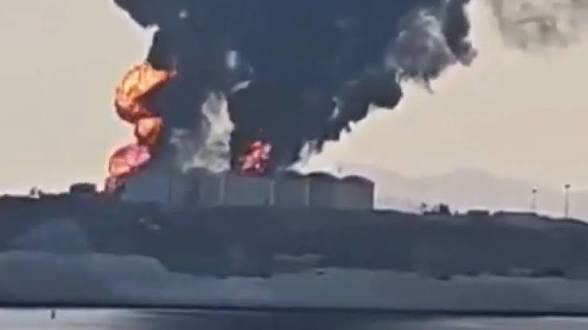
JUST IN: The war arrived at the petrol station in Hanoi. At the airport gate in Mumbai. At the cooking stove in Colombo. At the fuel pump in Sydney. Simultaneously. In 95 countries. Vietnam. Diesel up 40 to 59 percent since February 28. Gasoline up 30 to 44 percent. The government cut tariffs, urged employers to allow remote work, and disclosed that national fuel reserves cover roughly 20 days. Vietnam has one of the smallest oil reserve buffers in Southeast Asia. Twenty days measured from the day the strait closed means the buffer expires before the USDA publishes March 31 planting data. Australia. Petrol up 70 cents per litre, from roughly $1.56 to $2.26. Analysts warn another 40 cents is possible. Energy bills surging alongside transport costs. Australia produces crude domestically but refines abroad. The refined product that fills Australian cars was processed in refineries that source feedstock from a Gulf that is simultaneously on fire and uninsured. Sri Lanka. Rationing activated. QR codes at fuel stations limiting purchases to 15 litres for cars and 5 litres for motorcycles per week. A four-day working week mandated for government offices. Schools and non-essential services closed on Wednesdays. LPG cooking gas raised. The country that collapsed in 2022 under a foreign exchange crisis triggered partly by fertiliser policy is now rationing fuel under a system designed for the exact scenario its geography makes unavoidable: total dependence on imports that transit a chokepoint it cannot influence. India. LPG and cooking gas prices raised. Eighty-five percent of crude is imported. Sixty percent of oil imports originate in the Middle East. A sustained Hormuz closure creates what economists describe as a dual physical and financial shock: import volumes fall while import costs rise simultaneously. The Reserve Bank of India faces the same stagflationary trap as the Fed: inflation demanding tighter policy while growth demands looser policy. The jet fuel crisis is the mobility layer nobody is pricing. Gulf air cargo volumes collapsed 79 percent in the first week of the conflict. Jet fuel prices surged 58 percent. Airlines cannot hedge against a physical absence of fuel at departure airports that source kerosene from Gulf refineries now burning or suspended. IndiGo and Akasa Air imposed fuel surcharges of 199 to 2,300 rupees on domestic and international routes. Vietnam Airlines warned of fuel shortages beginning in April. Long-haul flights through Gulf airspace face rerouting costs that add hours and tonnes of additional fuel burn per flight. Easter travel across Asia and Europe is at risk. The airline does not care about Brent crude. It cares about the kerosene in the tank at the airport. That kerosene was refined at facilities in the Gulf that are now in force majeure. Mina Al-Ahmadi is burning. Ras Laffan is in extensive damage. SAMREF at Yanbu was hit. The refining capacity that produced the jet fuel is the same capacity that produced the diesel, the LPG, the naphtha, the methanol, the sulfur, and the polyethylene. Every molecule that the war has trapped behind the strait includes the one that lifts the aircraft. Ninety-five countries have reported petrol price increases since February 28 according to Al Jazeera. The WTI-Brent discount widened to $12 to $20 because American crude in Oklahoma is insulated while Gulf crude is gated. The American consumer pays less. The Vietnamese consumer pays 59 percent more. The Australian consumer pays 70 cents more per litre. The Sri Lankan consumer stands in a QR code queue on a Wednesday when the office is closed. The strait is 21 miles wide. It just repriced daily life on five continents. open.substack.com/pub/shanakaans…

BREAKING: The world thought Hormuz was an oil story. Then it became an LNG story. If the damage assessment holds, it becomes a civilisation-input story that lasts half a decade. There is a difference between a shipping shock and a capacity shock that the market has not yet priced. A shipping shock traps molecules. The oil exists, the gas exists, the tankers are anchored, and when the strait reopens the molecules flow again. A capacity shock destroys molecules. The liquefaction trains that convert gas into LNG are physically damaged. The molecules cannot be produced even if every ship in the world is available to carry them. QatarEnergy’s CEO Saad al-Kaabi told Reuters that damage to Ras Laffan is severe. Repairs to impaired liquefaction capacity could take three to five years. Force majeure was declared on March 4 and has since escalated as the damage assessment worsened through March 18 and 19. Long-term contract buyers including Italy, Belgium, South Korea, and China face multi-year delivery disruptions. Shell declared force majeure on cargoes it resells from QatarEnergy. The market must now confront a possibility it has refused to model: that roughly 17 percent of Qatar’s 77 million tonne per annum capacity is not delayed but structurally impaired. JERA’s CEO stated that the global LNG market does not have the spare capacity to bridge the gap if Hormuz-linked supply is meaningfully lost. That single sentence reprices everything. If the replacement molecules do not exist in sufficient volume, the adjustment mechanism is not alternative supply. It is fuel switching, demand destruction, and rationing by balance-sheet strength. Rich buyers can pay more. Poor buyers cannot. The poor buyers are already breaking. Vietnam’s diesel is up 40 to 59 percent. Australia’s petrol is up 70 cents per litre. Sri Lanka is rationing fuel with QR codes at 15 litres per car per week, a four-day workweek, and Wednesday school closures. India raised LPG prices while importing 85 percent of its crude through a strait that is 90 percent shut. Gulf air cargo collapsed 79 percent. Jet fuel surged 58 percent. IndiGo and Akasa imposed surcharges. Vietnam Airlines warned of shortages from April. Ninety-five countries have reported petrol price increases since February 28. Ras Laffan is not just LNG. It is helium, urea, methanol, polyethylene, and sulfur. The downstream cascade from a multi-year Qatari impairment runs through semiconductor fabrication, pharmaceutical synthesis, phosphate fertiliser production, food packaging, and desalination. The facility that is damaged produces the molecules that four billion people depend on for chips, medicine, fertiliser, plastic, and drinking water. Europe’s post-2022 gas security was built on Qatari LNG replacing Russian pipelines. A structural impairment does not merely make gas expensive. It makes gas unavailable to industry. That is how an LNG shock becomes a deindustrialisation shock. BASF and Yara are already cutting fertiliser output. Russian LNG fills the gap at 18 to 22 percent of European imports. The country Europe sanctioned is the country Europe now depends on because the country Europe trusted was struck in a war Europe refused to join. Anyone arguing this resolves quickly now carries the burden of proof. They must explain where the replacement molecules come from when the world’s largest LNG hub is physically impaired, the strait is commercially closed, and the CEO of Asia’s biggest power buyer says there is no bridge. The market priced a shipping delay. The evidence demands a capacity repricing. The difference between those two words is measured in years, in trillions of dollars, and in whether the lights stay on. Full analysis: open.substack.com/pub/shanakaans…