
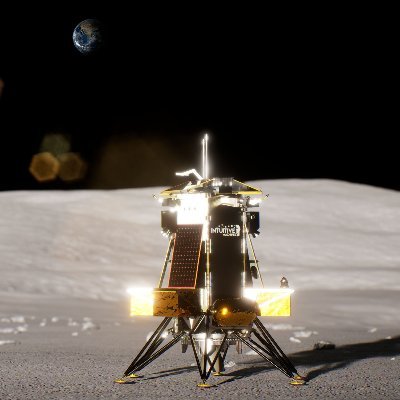
@thespacecpa @Int_Machines We have a fantastic robotics and mechanisms team and capability in Maryland. Glad to see this partnership with the state help grow it. #adlunam
English
Tim
1.3K posts





NASA is aware of the anomaly that occurred tonight at Launch Complex 36 involving Blue Origin’s New Glenn rocket at Cape Canaveral Space Force Station. Spaceflight is unforgiving, and developing new heavy-lift launch capability is extraordinarily difficult. We will work with our partners to support a thorough investigation of this anomaly, assess near-term mission impacts, and get back to launching rockets. We will provide information on any impacts to the Artemis and Moon Base programs as it becomes available.


Hell yes! A real base on the Shackleton Connecting Ridge! It’s a brilliant start. Because of the ridge's location, you have a direct line of sight with Earth whenever it rises above the lunar horizon, which lasts for about 13.5 days at a time. For the other 13.5 days of the month, the base will rely on the Khon-2 satellite for communications. Intuitive Machines (@Int_Machines) will drop Khon-2 into lunar orbit during their IM-3 mission before attempting their landing at Reiner Gamma. But when Earth is visible? The view from the Shackleton Connecting Ridge will be spectacular. Because of the Moon’s libration, Earth will trace a slow, vertical figure-8 in the lunar sky over the course of a tropical month. It will spend roughly half the month in the top loop of the '8' and the other half in the bottom. The link below allows you to view a very well made video and some infographics that will help you understand what the astronauts looking at Earth from our first moon base will see. sky-lights.org/2021/11/22/ear… @NASAAdmin @CrainTim
$LUNR IM-3 will lay the foundation for Moon Base III later this year.




We're excited to share that Goonhilly will be acquired by @Int_Machines, subject to regulatory approval. Continuing to operate out of Cornwall, this acquisition will expand Intuitive Machine’s integrated space-to-Earth network. ➡️goonhilly.org/Goonhilly-to-b…


Intuitive Machines is proud to announce our selection by the @USSpaceForce @USSF_SSC for the Andromeda IDIQ contract. Under Andromeda, we will compete to design and field next-generation Space Domain Awareness (SDA) capabilities to detect, track, and characterize objects in geosynchronous orbit. Our focus is to provide innovative and dependable SDA mission solutions for the U.S. Space Force to maintain space superiority through 2030 and beyond. The Power of Integration: This award marks our first major selection as a combined company following the acquisition of @LanterisSpace. Together, we bring unique mission value for Andromeda through our combined heritage of high-performance systems delivered via commercial based processes.


