Delwin | Military Theorist
5.9K posts

Delwin | Military Theorist
@DelwinStrategy
Military Strategy & History | Decoding Global Strategies & Past Campaigns| Data-driven Insights 🌍 | #MilitaryStrategy #MilitaryHistory #Geopolitics


Ukraine's urgent fight on the financial frontline bbc.in/4sMnE3Q

1/2 [STRATEGIC POINT OF VIEW] Economic War via the Destruction of Energy Infrastructure. I wrote in my recent article that I consider the collapse of Ukraine’s electricity system would constitute a decisive strategic victory in this conflict. The recent blackout shows the breaking point could be nearing, even though power was restored and a complete collapse is technically very unlikely. The generation deficit is high during winter time, and the destruction of significant assets in 750kV substations means nuclear output will soon be curtailed on the 330kV network, whose capacity is insufficient to handle the entire supply from the NPPs, aggravating the situation. However, the underlying goal is the collapse of the economy. In order to achieve its maximalist political goals in Ukraine, Russia is executing a multidimensional strategy across economic, political, and military dimensions, under the principles of A. Svechin, which I have paraphrased as the “permanent war” doctrine. The military aspect is well documented and consists of forcing attrition on the Ukrainian military to a point where it is unable to conduct meaningful operations, thus creating a de facto annexation of captured territories. From a Russian perspective, this must include the entire Donbas at least, and probably Zaporizhia city, hence the ongoing effort along the frontline. At this point, in early 2026, military analysis suggests this phase could conclude within the next 12-18 months at the current pace. But the primary political goal, turning Ukraine into a favorable regime, if not a proxy state, cannot be achieved via military means or the direct political pressure it entails. As we see in recent polls, support for the Ukrainian leadership remains very high, around 67% by mid-2025 (Gallup poll). Likewise, the population is determined to prevent Russian dominion, as attested by a very recent survey by the KIIS, 65% still support the war as long as it takes. This context makes early elections unlikely until a peace accord (though support for negotiated settlement is increasing to 69%). Therefore, unless European support dwindles, there is little prospect of success for Moscow on this political front. That is where the economic front takes precedence. Economic warfare and systemic collapse. Collapsing the Ukrainian economy, while making the cost and reconstruction effort unbearable by destroying key infrastructure, appears to be the chosen way for Russia to achieve its maximalist goals. This is a very cynical approach, one that leads to humanitarian catastrophe. Obviously, this was not the original plan in 2022, as Russia does not want to incur reconstruction costs if it could be avoided. But relentless EU financial support means this is now the primary pathway, one where civilians pay a disproportionate toll, as outlined in this Financial Times article. The collapse of the electrical grid is the means to an end. Population exodus and the shutdown of enterprises would bring down the Ukrainian economy in such a case, already heavily dependent on European aid. This aid now amounts to the equivalent of 46% of the state budget if we include both financial and military assistance, unprecedented in 2026. (annualised 45bn$) That being said, a significant gap remains to cover the expected $113 billion in state expenditure in 2026, which is still missing $15-20 billion according to the IMF estimates. Negotiations are ongoing, but as state revenues dwindle with increasingly frequent blackouts, it becomes less likely that the budget can be fully funded. ft.com/content/987a39… #Ukrainewar #Strategy #Economy #Energy

Endurance in war: why the Russo–Ukrainian war can last far longer than the World Wars Of calibration in the war effort Many observers question, or criticize, the apparent stalemate in the Russo–Ukrainian war and compare its duration to the First World War, which lasted four years. This comparison is misleading. The world wars were defined by two key features: - General mobilization at the outset: both sides drew broadly and rapidly from their manpower pools without echeloned planning for a long war. - A “total war” economy: war production and finance absorbed extraordinary shares of national output (often cited as above 20% of GDP, but can reach up to 75% like Germany during WW2). 1) Mobilization and the illusion of infinite reserves General mobilization carries a major drawback: it can create a false sense of inexhaustible reserves for general staffs. That illusion encourages over-ambitious operations and the rapid exhaustion of manpower. This dynamic was visible in 1914–1915, when offensives were designed and executed at casualty levels that were strategically unsustainable, with the goal of ending quickly the conflict. The result was that, later in the war, both camps faced severe limits in force generation: beyond replacements, only the next annual cohort (roughly the 18-year-old age group) could be added in meaningful numbers, and the remaining rear officers were often unqualified, leading to difficulties in getting new formations combat-ready. Germany rebuilt offensive capacity in 1918 after the end of large-scale fighting on the Eastern Front by merging armies, while the Allies increasingly relied on incoming United States forces. Aleksandr Svechin criticized this model heavily and promoted the concept of permanent mobilization, which should be planned ahead and separately so as to remain an efficient process throughout the war. I consider this the first pillar of “endurance in war.” “ The need for mobilization plans to be flexible stems from the need to of subordinate mobilization to the political situation at the time of the mobilization” A. Svechin, Strategy 1927 2) Economics and the limits of total war The same logic applies to the economy. A true war economy, where every factory, agricultural facility, and financial instrument is subordinated to the war effort, cannot be sustained indefinitely without severe consequences. The First World War left much of Europe economically and socially exhausted. France spent up to 25% of its GDP equivalent in the war effort, funded at 75% by debt; and reaches a debt to GDP ratio of about 200% by the end of the conflict. Needless to say it is unlikely such levels can be maintained for a decade. By contrast, endurance depends on building war capacity gradually and recalibrating industry and finance to sustain a long conflict without excessive strain on the rear, or reckless borrowing and depletion. This is the second pillar, which can be paraphrased as a doctrine of “permanent war” (in the sense of sustainable long-term war-making capacity, not maximal intensity). Applying the framework to the current war Today, Russia reportedly spends around 7% of GDP on the war effort. That is significant, but it is a fundamentally different order of magnitude from a full “total war” economy. The economy has been reoriented through localization and export substitution. While it is under stress, nothing so far clearly indicates that it cannot continue for several more years. On manpower, Russia has a far larger pool and could have pursued general mobilization, fielding two or three million men. But that approach would have imposed major economic costs by reducing the workforce. It also might not have translated into proportional battlefield results in the post-2023 environment, where small-unit infiltration, gradual advances, and attrition have become the norm. Moreover, a mass-mobilization posture risks encouraging the same problem Svechin warned about: command may feel tempted to attempt larger, costlier offensives to end the was quickly, that are not necessarily more efficient; burning out potential rapidly and prematurely. In the event of a prolonged stalemate, such exhaustion could translate into a strategic failure (or be perceived as one) relative to political objectives. It is therefore plausible that, from 2023 on the military side and 2024 on the economic side, Russian leadership, e.g., Valery Gerasimov and Andrey Belousov, opted for a calibrated approach consistent with Svechin’s logic. This is especially relevant in a context where a far stronger economic and industrial coalition (NATO and the European Union) supports Ukraine. In a direct contest of industrial scale, Russia likely loses faster; in an endurance contest, there may be a narrow path to achieving its aims. “The principle of economy of forces should predominate decisively in all cases” A.Svechin, Strategy 1927 Conclusion Comparing the duration of the current war to the First World War is misguided because the intensity of mobilization and economic commitment is far lower, by a factor of several in GDP spending and in force generation posture. A lower-intensity but sustainable model of war-making can, by design, persist much longer than the “total war” model that burned through societies at an extreme rate. Read on Substack: open.substack.com/pub/delwinstra… #UkraineRussianWar #Economy #Strategy #Svechin

Bilan 129 du 24 février 26 Des succès ukrainiens dans le Sud, une lente poussée russe en direction de Slaviansk. Les négociations s’enlisent. Un quatrième anniversaire de guerre finalement pessimiste. Billet 129 : lettrevigie.com/bilan-ndeg-129… Billet précédent 128 du 1er février :


Vous n'avez toujours pas compris votre erreur de lecture de l'IISS. J'avais déjà tout expliqué ici : x.com/DelwinStrategy… Pour résumer à nouveau, ils sont intégrés dans la catégorie APC par l'IISS, sauf les 70 (et pas 77) Novator. Comme expliqué maintenant 3 ou 4 fois, par convention je n'ai pas édité la catégorisation, ni de l'IISS, ni d'Oryx, car la marge d'erreur de quelques points de % pour l'analyse est négligeable. Vous continuez de vous fier aux chiffres officiels des industriels pour estimer la production neuve, sans éléments tangibles pour soutenir ces affirmations. Or nous savons que ces déclarations sont régulièrement surestimées ou fausses… (Hello Flamingo…) Le chiffre de 3500 est évidemment très au-delà de la réalité, notamment pour ces véhicules dont les livraisons en volume ont réellement re-démarré en 2024, ce que l'on peut observer dans les chiffres des pertes : 1. Seulement 73 Novator-1 détruits. Le ratio ne colle pas, sauf à ce que ces véhicules ne soient pas beaucoup utilisés. Le premier Novator-2 perdu date d'avril 2025, peu après sa mise en service donc, pour 43 perdus en 10 mois, contre 73 en 4 ans pour le Novator-1, pourtant en théorie bien plus présent dans la flotte, puisqu'ils devraient représenter une majorité des 1000+produits au total. / 44 Varta (il y en avait déjà 200 en service pré-guerre) et combien de produits depuis ? Vraisemblablement peu. 2. Le Kozak. (79 pré-guerre, 180 pertes), pointe vers une production continue. 3. Les pertes en IMV (tableau) sont en très forte croissance en volume (et en % du total) seulement depuis 2025, ce qui coïncide avec la forte dégradation de la flotte de blindés lourds post-Koursk et son remplacement progressif par des véhicules abondants mais plus légers, comme mon analyse l'a démontré. Mais cela pointe aussi vers le début des nouvelles livraisons significatives (non homéopathiques) de la production locale d'IMV. 4. Les véhicules militaires sont produits par batch sur commande/contrat. Pre-guerre, la production = ~100/an. les années 2022 et 2023 avec la reconfiguration de l'industrie et les transferts vers l'Ouest du pays n'étaient pas propices à la moindre accélération. Enfin, mon chiffre de 420 s'arrête à septembre 2025, il manque donc 6 mois de production avec une table remise à jour, soit, puisque j'utilise un volume de production croissant, presque 200 unités supplémentaires. ~600 produits en 4 ans, dont 2 presque à l'arrêt, est cohérent. C'est peut-être un peu plus, voire un peu moins, dans tous les cas cela accélère. Tous ces "MRAP" sont dans la catégorie "IMV" chez Oryx. Comme expliqué ci-dessous, je n'ai pas modifié cette catégorisation, car cela n'apporte concrètement rien à l'analyse. Les MRAP sont, d'un point de vue technique, très proches des IMV. Les modèles ukrainiens IMV ou MRAP sont STANAG niveau 2 pour la protection contre les mines, ce qui les différencie peu. À contrario, le Typhoon ou le Bushmaster sont STANAG 3, le MaxxPro est entre les deux avec une résistance à 7 kg d'explosifs. D'ailleurs, le Novator 2 n'est pas présenté sur le site de son fabricant comme un MRAP. Le Novator 2 est avant tout une version plus volumineuse du Novator originel, avec une capacité de transport doublée et une protection balistique améliorée à l'avant. Enfin, les Varta 2, ou Gyurza 2 (en l'occurrence plus proches du MRAP car STANAG 3 en protection anti-mine), sont invisibles. Aucune perte répertoriée, cela fait penser à un modèle catalogue dont la production est anecdotique ou à peine démarrée. Quant aux chars (et à toutes les catégories, vraiment), il en manque probablement quelques unités, mais nous savons aussi que beaucoup n'étaient pas en état de marche en 2022, ce qui explique les difficultés de l'IISS à les référencer. Cela ne change pas les conclusions de l'analyse, qu'il reste 27 % ou 30 % de chars fin 2025.




Des centaines de gens écrivent ça. On leur a mis de la merde dans la tête. Ça dépasse de très loin les réseaux sociaux, je le constate autour de moi dans les échanges que j’ai, « dans la vraie vie ». « Le mec est mort, tu sais quoi, on s’en balec en vrai de ce nazillon, un de moins ». Je rappelle que 9 suspects ont été mis en examen et placés en détention provisoire, dont 8 pour homicide volontaire. Si j’ai bien compris, ces gens n’hésiteront plus à tuer si ce que vous dites ne leur convient pas, ils s’autorisent à infliger la peine de mort, tranquillement, sans aucune espèce d’état d’âme, puis à s’absoudre avec l’aide de la presse qu’étrangement tout à coup ils vénèrent, après avoir traité tous les journalistes de collabos. Et en plus, cerise sur leur gâteau, ils viennent vous faire la leçon en vous traitant de « facho ». Le monde à l’envers. « Faites mieux », qu’il leur avait dit le vieux, en se gardant la place bien sûr pour la fois d’après. Il semble voir été entendu au-delà de ses espérances.


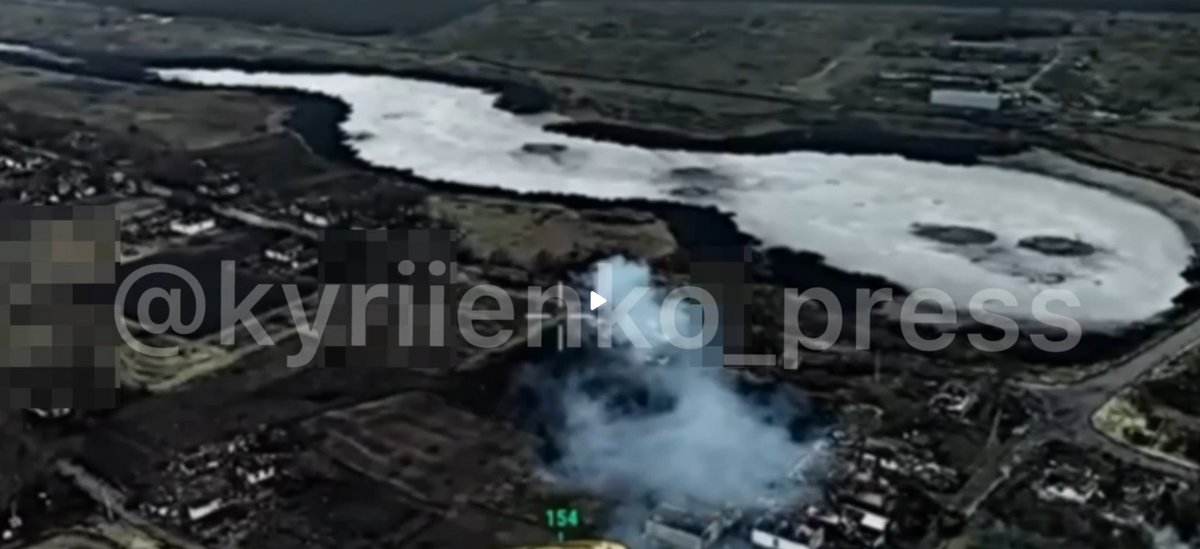
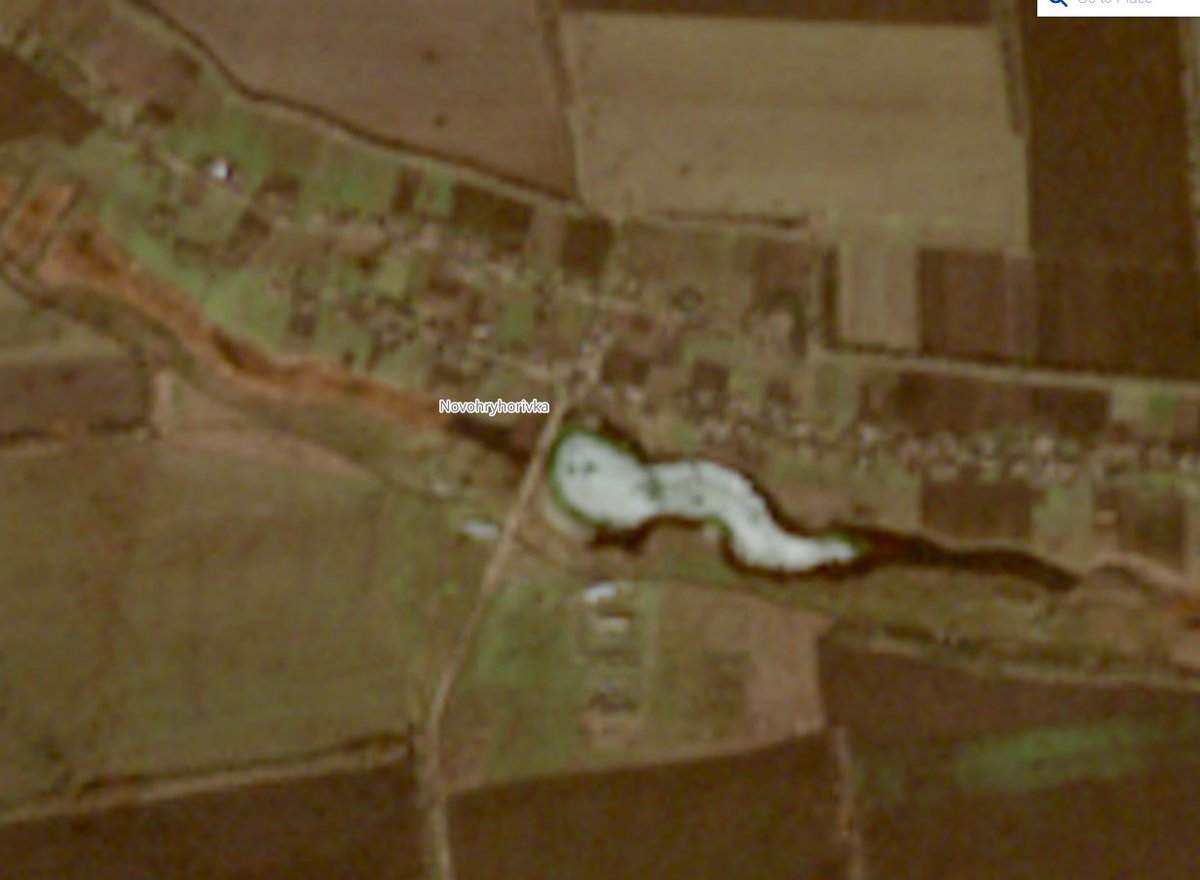
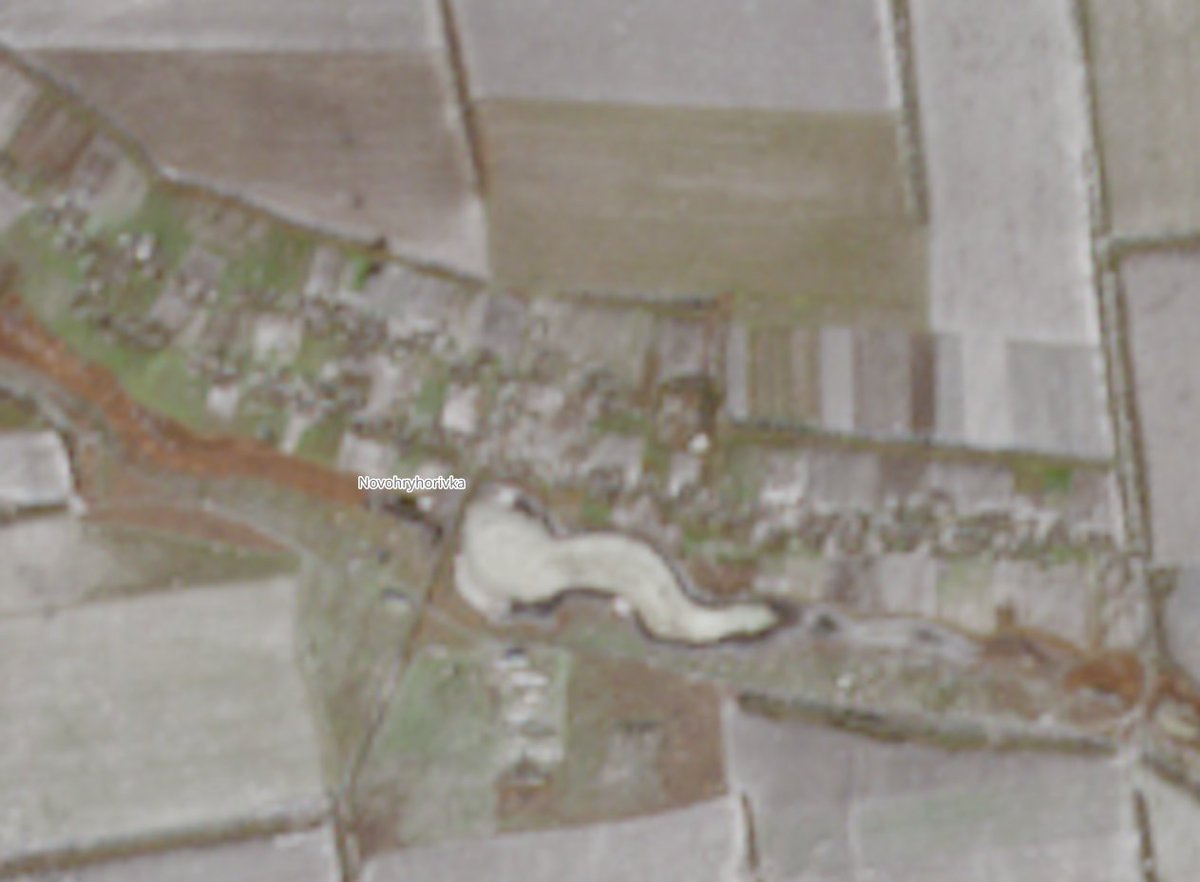
This was filmed somewhere during the last week of February, considering the ice on the lake and lack of snow. Hard to say what the current situation in Novohryhorivka is.

A Ukrainian armoured vehicle fires at Russian positions in Novohryhorivka. Location of vehicle in minute 0:12 - 47.812635, 36.436545 Novohryhorivka, Zaporizhia Oblast, Ukraine @GeoConfirmed @UAControlMap @AndrewPerpetua

Endurance in war: why the Russo–Ukrainian war can last far longer than the World Wars Of calibration in the war effort Many observers question, or criticize, the apparent stalemate in the Russo–Ukrainian war and compare its duration to the First World War, which lasted four years. This comparison is misleading. The world wars were defined by two key features: - General mobilization at the outset: both sides drew broadly and rapidly from their manpower pools without echeloned planning for a long war. - A “total war” economy: war production and finance absorbed extraordinary shares of national output (often cited as above 20% of GDP, but can reach up to 75% like Germany during WW2). 1) Mobilization and the illusion of infinite reserves General mobilization carries a major drawback: it can create a false sense of inexhaustible reserves for general staffs. That illusion encourages over-ambitious operations and the rapid exhaustion of manpower. This dynamic was visible in 1914–1915, when offensives were designed and executed at casualty levels that were strategically unsustainable, with the goal of ending quickly the conflict. The result was that, later in the war, both camps faced severe limits in force generation: beyond replacements, only the next annual cohort (roughly the 18-year-old age group) could be added in meaningful numbers, and the remaining rear officers were often unqualified, leading to difficulties in getting new formations combat-ready. Germany rebuilt offensive capacity in 1918 after the end of large-scale fighting on the Eastern Front by merging armies, while the Allies increasingly relied on incoming United States forces. Aleksandr Svechin criticized this model heavily and promoted the concept of permanent mobilization, which should be planned ahead and separately so as to remain an efficient process throughout the war. I consider this the first pillar of “endurance in war.” “ The need for mobilization plans to be flexible stems from the need to of subordinate mobilization to the political situation at the time of the mobilization” A. Svechin, Strategy 1927 2) Economics and the limits of total war The same logic applies to the economy. A true war economy, where every factory, agricultural facility, and financial instrument is subordinated to the war effort, cannot be sustained indefinitely without severe consequences. The First World War left much of Europe economically and socially exhausted. France spent up to 25% of its GDP equivalent in the war effort, funded at 75% by debt; and reaches a debt to GDP ratio of about 200% by the end of the conflict. Needless to say it is unlikely such levels can be maintained for a decade. By contrast, endurance depends on building war capacity gradually and recalibrating industry and finance to sustain a long conflict without excessive strain on the rear, or reckless borrowing and depletion. This is the second pillar, which can be paraphrased as a doctrine of “permanent war” (in the sense of sustainable long-term war-making capacity, not maximal intensity). Applying the framework to the current war Today, Russia reportedly spends around 7% of GDP on the war effort. That is significant, but it is a fundamentally different order of magnitude from a full “total war” economy. The economy has been reoriented through localization and export substitution. While it is under stress, nothing so far clearly indicates that it cannot continue for several more years. On manpower, Russia has a far larger pool and could have pursued general mobilization, fielding two or three million men. But that approach would have imposed major economic costs by reducing the workforce. It also might not have translated into proportional battlefield results in the post-2023 environment, where small-unit infiltration, gradual advances, and attrition have become the norm. Moreover, a mass-mobilization posture risks encouraging the same problem Svechin warned about: command may feel tempted to attempt larger, costlier offensives to end the was quickly, that are not necessarily more efficient; burning out potential rapidly and prematurely. In the event of a prolonged stalemate, such exhaustion could translate into a strategic failure (or be perceived as one) relative to political objectives. It is therefore plausible that, from 2023 on the military side and 2024 on the economic side, Russian leadership, e.g., Valery Gerasimov and Andrey Belousov, opted for a calibrated approach consistent with Svechin’s logic. This is especially relevant in a context where a far stronger economic and industrial coalition (NATO and the European Union) supports Ukraine. In a direct contest of industrial scale, Russia likely loses faster; in an endurance contest, there may be a narrow path to achieving its aims. “The principle of economy of forces should predominate decisively in all cases” A.Svechin, Strategy 1927 Conclusion Comparing the duration of the current war to the First World War is misguided because the intensity of mobilization and economic commitment is far lower, by a factor of several in GDP spending and in force generation posture. A lower-intensity but sustainable model of war-making can, by design, persist much longer than the “total war” model that burned through societies at an extreme rate. Read on Substack: open.substack.com/pub/delwinstra… #UkraineRussianWar #Economy #Strategy #Svechin

(1/3) [ANALYSIS] Armored Losses of the Ukrainian Conflict Trends Update - Winter Campaign Assessment. Over the winter (December to February), armored losses trended downward on both sides after the elevated losses seen in autumn. Ukraine, with an average of 169 vehicles lost per month, has returned to roughly summer-level loss rates. Russia, by contrast, has recorded some of its lowest monthly vehicle losses of the war, averaging around 80 per month, with February falling to just 31. A widening loss gap in Russia’s favor What stands out most is that Ukraine is now losing nearly twice as many armored vehicles as Russia, and has been losing more assets overall since spring 2025 (with the exception of October, when Russian forces launched several armored columns to secure tactical objectives around Pokrovsk). Even though IMVs now account for close to 50% of total losses, the AFU is still losing more heavy armor than Russian forces. Ukraine is also continuing to suffer heavy artillery losses (up to ~30 per month), nearly three times more than Russia. This reinforces the importance of artillery in repelling assaults and supporting counterattacks, even in a drone-heavy battlefield environment. It also suggests that, since last spring, Russian artillery doctrine, relying on fixed, concealed firing positions to support short, incremental infantry assaults, has been increasingly effective. The recent strike from a 152mm howitzer in Kramatorsk illustrates improved survivability and the still-limited effect of Ukrainian counter-battery fire in some sectors. Read it on Substack: open.substack.com/pub/delwinstra… #UkraineRussiaWar #Armor #Strategy #Analysis