
ทวีตที่ปักหมุด
Be🅰️ch Life Capital ☀️🌴⛱️🏝️🛰️ 🧠 💵
747 posts


Be🅰️ch Life Capital ☀️🌴⛱️🏝️🛰️ 🧠 💵
@DividendPayers
70% of Book= $ASTS $KRKNF $PHYS $SPHR $TRIN $WMT $PFFA $KRP $RITM $XLU $DX $AGNCL $TWO.B $XOM $MFA.C $CIM.C $MFA.B $ADAML $NLY $AEM $ASML | PhD | Economist /NIA
Florida, USA เข้าร่วม Eylül 2009
525 กำลังติดตาม374 ผู้ติดตาม
@ASTS_SpaceMob $ASTS Great post! The tech is years ahead of Starlink & Amazon. 📡🛰️Thank you for sharing! 😃
English

$ASTS
BO🅰️ CAPITAL@DrOllie1979
$ASTS BO🅰️’s Cliff Notes - @CatSE___ApeX___ was right about everything 👇👇👇👇 dl.acm.org/doi/epdf/10.11… 👆👆👆👆 This study out of Tsinghua University is one of the first real looks at how Starlink direct to cell actually works on normal phones. And honestly the takeaway is pretty simple. It works… but it is constantly fighting physics. The satellites are hundreds of miles away, so the signal is way weaker than a normal cell tower. That makes the connection harder to hold and way more prone to errors. Right now it looks okay because almost nobody is using it yet, so there is basically no congestion. That is best case scenario. Then you’ve got the satellites flying across the sky at crazy speeds. That creates timing and frequency issues that are really hard to clean up. Even when they try to correct it, the signal is never perfectly lined up, so performance takes a hit. And here is where it gets messy. Even if you are standing still, your phone is switching between satellites or beams every 20 to 30 seconds. That constant handoff creates interruptions, packet loss, and forces the system to resend data over and over. To keep things from breaking completely, Starlink actually had to turn off HARQ, which is a core LTE feature that normally fixes errors in real time. Without it, errors stack up and get pushed higher into the system. That leads to a lot more retransmissions and packet loss. In testing, downlink packet loss was hitting around 25 to 30 percent in test. Even basic things like just connecting take longer, and the system bouncing between satellites can actually make stability worse instead of better. Big picture This is not something you just fix by adding more satellites or more spectrum. The issue is deeper than that. They are trying to force terrestrial cell tech to work in space, and that comes with tradeoffs that show up as instability and inefficiency. It proves you can connect a phone, but scaling that into a reliable network is a completely different problem. That is why this is bullish for AST. AST is not trying to retrofit the system. They designed it from the ground up for space. They are using low band spectrum, which travels farther, goes through buildings, and does not need nearly as much correction. So instead of fighting physics, they are working with it. If these results hold as things scale, the winner is going to be the system that works with physics, not against it. That is exactly where AST stands out. Look at the architecture. Starlink is trying to put the whole cell tower in orbit. AST is keeping the tower on the ground and just using the world’s largest phased array to extend its reach. One is a complex workaround. The other is an elegant extension of the networks we already use. Built on a timeless visual by @NomadBets and added a few updates
QCT
I’m going to @thekookreport’s upcoming Space. $ASTS Will you join too? twitter.com/i/spaces/1AKEm…
English

Netflix has 301 million subscribers paying an average of $17 a month.
That is $5 billion in recurring revenue every single month. Same infrastructure. Margins expanding every quarter because the cost base barely moves while the subscriber count grows.
That is the $ASTS model from space.
When the constellation is built $ASTS sits above AT&T, Verizon, Vodafone, TELUS and 50 plus carrier partners as the infrastructure layer that makes coverage possible everywhere on earth.
The carriers bill the customer. $ASTS collects a cut on every connected subscriber every single month.
Over 3 billion potential subscribers already on partner networks today.
Here is where it gets interesting.
AST has shared survey data showing that a significant portion of users would pay for satellite connectivity as an add-on to their existing plan. Run the math at even conservative adoption rates.
At 30% of partner network subscribers opting in that is 900 million paying subscribers.
At $5 per month per subscriber that is $4.5 billion in monthly recurring revenue. $54 billion annually. On fixed infrastructure that does not get more expensive as more people connect.
At 50% adoption that is 1.5 billion subscribers. $7.5 billion per month. $90 billion in annual recurring revenue.
Netflix generates $40 billion a year and trades at a $400 billion market cap.
$ASTS at 30% adoption would be generating more annual revenue than Netflix does today. On a fixed satellite infrastructure that is already being launched right now.
The carriers already have the customers. The FCC already approved the service. FirstNet is already granted.
The only thing left is getting enough satellites in orbit.
English

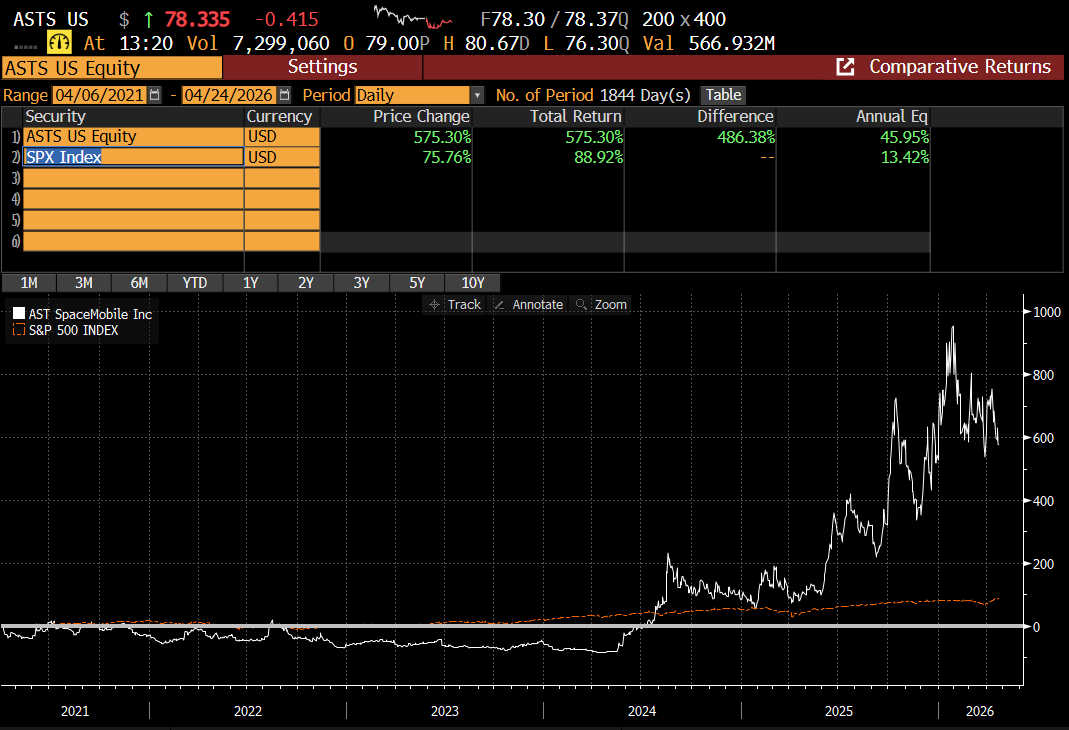
$ASTS: On days of frustration, I think back to April 2024 when AST was down ~80% from IPO and the S&P was up 37% over that 4 year period. I was filled with regret and sadness that perhaps those 4 years were wasted not only in terms of $, but also my time. This was right before news of Verizon partnering with AST and locking up 2/3 of the US market. This news sent AST up +1,850% over three months to a $39 high that summer.
Nowadays "big" swings of $5, $10 or $15 don't phase me. These moves are *multiples* of what our market cap was back then, which was around $700M.
When I see people complaining about the daily stock price moves in the context of what this company has accomplished and the massive opportunity that lies ahead, I sit back and laugh thinking about April 2024.
English
@redrum_2001 $ASTS Great post! 💪 Thank you for sharing! 😃
English

$ASTS - FCC approval explained, and why it matters - a lot.
The full FCC approval granted to AST SpaceMobile on April 21, 2026, is a watershed moment for the company and the telecommunications industry.
By authorizing a constellation of 248 satellites and granting the first-ever major commercial license for Supplemental Coverage from Space (SCS), the FCC has effectively given the green light for a new era of global connectivity.
Here’s a breakdown of the implications for the company, the industry, and the investment landscape.
✅ Implications for AST SpaceMobile
This approval is the final regulatory "gold stamp" the company needed to transition from an experimental startup to a global telecommunications utility.
Commercial Unleashing
The "SCS" grant allows AST to use the existing terrestrial spectrum of partners like AT&T and Verizon. This means they can legally provide 4G/5G service directly to standard smartphones in the U.S. without needing any hardware changes from the user.
Massive Scale-Up
The license covers 248 satellites—far beyond the initial five test-beds. This allows AST to build out a persistent, high-capacity network capable of handling millions of concurrent users.
Operational Certainty
AST now has a clear legal framework for interference protection. The FCC’s ruling provides the "rules of the road," allowing AST to launch and operate without the constant threat of regulatory halts.
✅ Implications for the Industry
The FCC’s decision essentially validates the "Direct-to-Cell" business model over legacy satellite approaches.
The End of Dead Zones
This marks the beginning of the end for cellular dead zones. By turning every standard smartphone into a satellite-compatible device, the industry is shifting from "coverage where there are towers" to "coverage everywhere."
Shift in the Competitive Moat
Unlike SpaceX’s Starlink (which originally focused on proprietary dishes), AST’s model relies on partnering with existing Mobile Network Operators (MNOs). This approval solidifies the MNO-partnership model as the dominant path for mass-market satellite-to-phone services.
Pressure on Legacy Players
Traditional satellite firms like Iridium and Globalstar, which require specialized hardware or specific spectrum, are now facing a reality where standard cellular spectrum can be broadcast from space at scale.
✅ The Investor Perspective
From a valuation standpoint, this is a massive de-risking event, though it comes with a side of "execution reality."
Regulatory Risk Removed
For years, the biggest "bear case" for ASTS was that the FCC might never grant commercial authority due to interference concerns from other carriers. That risk is now effectively zero.
Revenue Conversion
Investors can now model a concrete path to revenue. With the license in hand, the backlog of over $1 billion in commitments from global partners can begin converting into usage-based revenue as more satellites go up.
Institutional Appeal
Full regulatory approval often acts as a catalyst for large institutional investors (pension funds, etc.) who previously viewed the stock as too speculative.
TL;DR
The FCC has cleared the runway. AST SpaceMobile no longer needs permission to exist; it now only needs to prove it can reliably build and launch its satellites.
For investors, the story has shifted from a legal gamble to an industrial execution play.
GIF
English
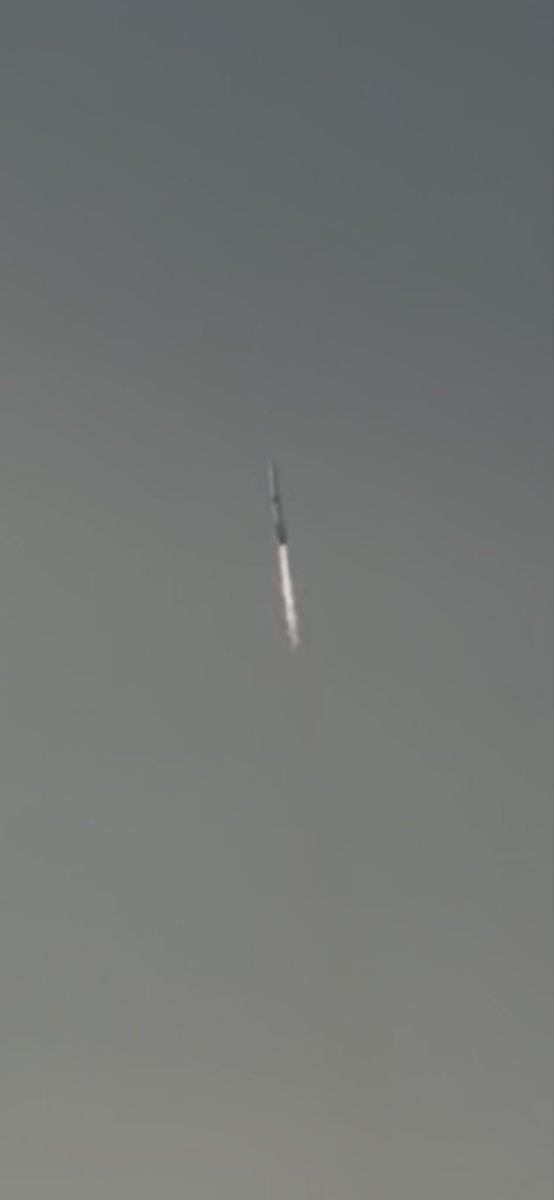
@NomadBets @AST_SpaceMobile @blueorigin $ASTS Launch mission accomplished!! 🚀🚀🚀 Congrats to AST employees and shareholders. Thanks to #BlueOrigin! It was a great day to be at the BB7 launch!!! There will be plenty more to come. Highly recommended for all #SpaceMob ers to get to the next one! 😃
English

$ASTS Wishing the Mob that went to Cape an amazing day. BB1-5 is still a memorable day for me! Godspeed @AST_SpaceMobile and @blueorigin
English
@ASTS_Investors @pewpewturtle69 Okay, it’s a little cloudy. But it’s still a good day for the launch! 😂
English
@ASTS_Investors @pewpewturtle69 $ASTS Clear skies, low wind speeds forecast. Today is a good day for a launch! Let’s go! 🚀
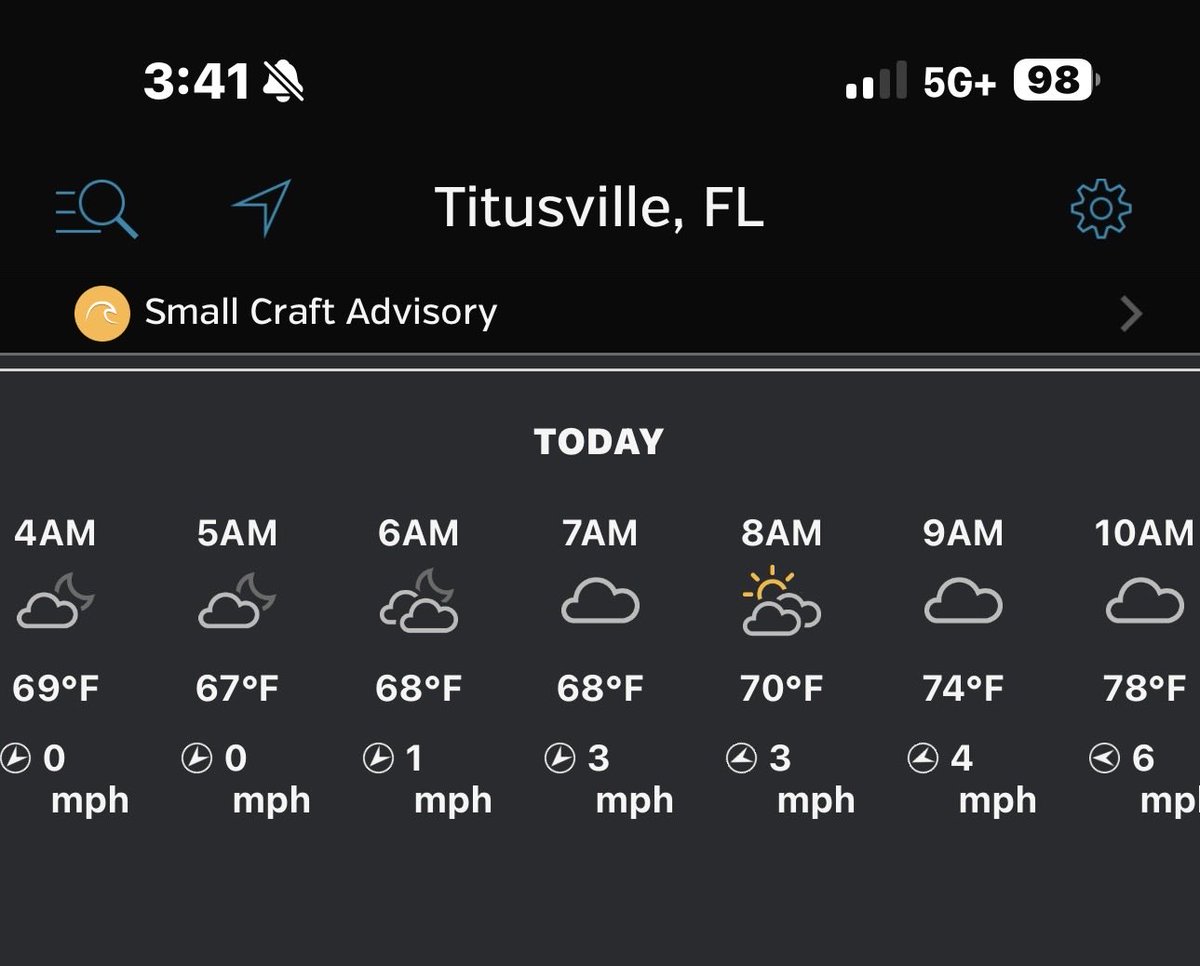
GIF
English
In just over 3 hours 30 minutes the launch window opens for New Glenn 3, who's excited?
$ASTS
Credit - @pewpewturtle69 📷

English
@ASTS_SpaceMob $ASTS Awesome group! Real AST SpaceMobile ballers! 🏀⛹🏻We’ll be at the Cape soon! 🚀 Thanks for sharing! 😃
English
SP🅰️CEMOB MARIOTT POOL BAR MEETUP! THE ENERGY IS REAL 🚀 $ASTS

English
GIF
English

$ASTS This is YOUR time!!! 🚀 Lock in and blast off!!! Complete the mission! 45 BBs in LEO by EOY 2026!!! #connecttheunconnected #ASTSpaceMobile #space #BlueOrigin
GIF
AST SpaceMobile@AST_SpaceMobile
We are excited for this weekend's launch. Big rocket and the biggest satellite! BlueBirds 8 - 32 in production in TX, next batch getting ready to ship. More structures arriving by the big Antonov, the next seven did arrive this week. We are accelerating our buildout space-based cellular broadband together with our 50+ mobile operator partners with nearly 3 billion subscribers. 🌎🚀📶📱 Built in Texas. The future of connectivity. #ASTSpaceMobile #Broadband #ConnectingtheUnconnected #BlueBirds
English
You can read a great article on Blue Origin NG-3 & $ASTS or just look at the cool pictures! Enjoy! 😃 @blueorigin @AST_SpaceMobile #BlueOrigin #NewGlenn space.com/space-explorat…
English
$ASTS Great summary! Thank you for sharing! 😃
Analyzed Investing@analyzedinvest
$ASTS BlueBird 7 is set to launch this week, and here's why it matters: AST SpaceMobile is building satellite coverage that works on YOUR existing phone. No new hardware. BB7 features the largest commercial communications array in low Earth orbit, 2,400 sq ft, up to 120 Mbps direct to unmodified smartphones. This is satellite #2 of a planned 45–60 by end of 2026. Revenue is already up 1,500% YoY to $70.9M. The company is pre-profitability and the valuation is demanding, but the technology milestone here is real. Every successful launch de-risks the story. (NFA)
English
@endless_frank It’s just paper money. You’re living your best life like most of us early investors. Keep your eye on the prize! Thanks for sharing!! 😃
English
$ASTS I lost over $2m today. Took the wife and kids to the Yankee game tonight. Fuck it. Life goes on. Management isn’t selling so I’m not selling. 🅰️💪🏼🚀
English
Be🅰️ch Life Capital ☀️🌴⛱️🏝️🛰️ 🧠 💵 รีทวีตแล้ว
$ASTS If CatSe is right here it would be incredible. Also, Abel, Andrew, Scott and Shanti received a mountain of unrestricted shares on 3/31 and as a reminder nobody sold anything.
One has to interpret their actions as bullish even though their silence has led to uncertainty.
C🅰️tSE@CatSE___ApeX___
@GuywithUmbrella @endless_frank @tomster000 I do not have inside information. But with capital strong backer (Amazon/Bezos) and the proper mature tech (AST) the GSAT MSS spectrum which is some 80% of the value in this deal is likely to get reallocated not given away to someone else and it will generate largest value there.
English