

Ed Pheil
15.6K posts
Ed Pheil
@EdPheil
https://t.co/vtyTpYA3Gp, Interested in Nuclear Fission & Fusion, e.g. MSRs, PbBi Rx's, Polywell P-B11 @ EMC2, Silicone Accelerator, Fisonic Pumps, Quantum cpu's
Esperance, NY USA เข้าร่วม Şubat 2012
435 กำลังติดตาม1.4K ผู้ติดตาม

Robert F. Kennedy jr Wants Dr Fauci to be charged in Court for his cover up of COVID 19 origins.
Should he be charged?
A. Huge Yes
B. No

English
@argueswithyou @yasir_fission It is a zero power test, no steam, no kWh
English

@yasir_fission 45 days -- first leak that no one could have anticipated
52 days -- first cleanup
61 days -- forms for taxpayer assistance
74 days -- ratepayer increases
82 days -- steam explosion due to "user error"
90 days -- solar park opens nearby
97 days -- Wholesale kWh goes negative
English

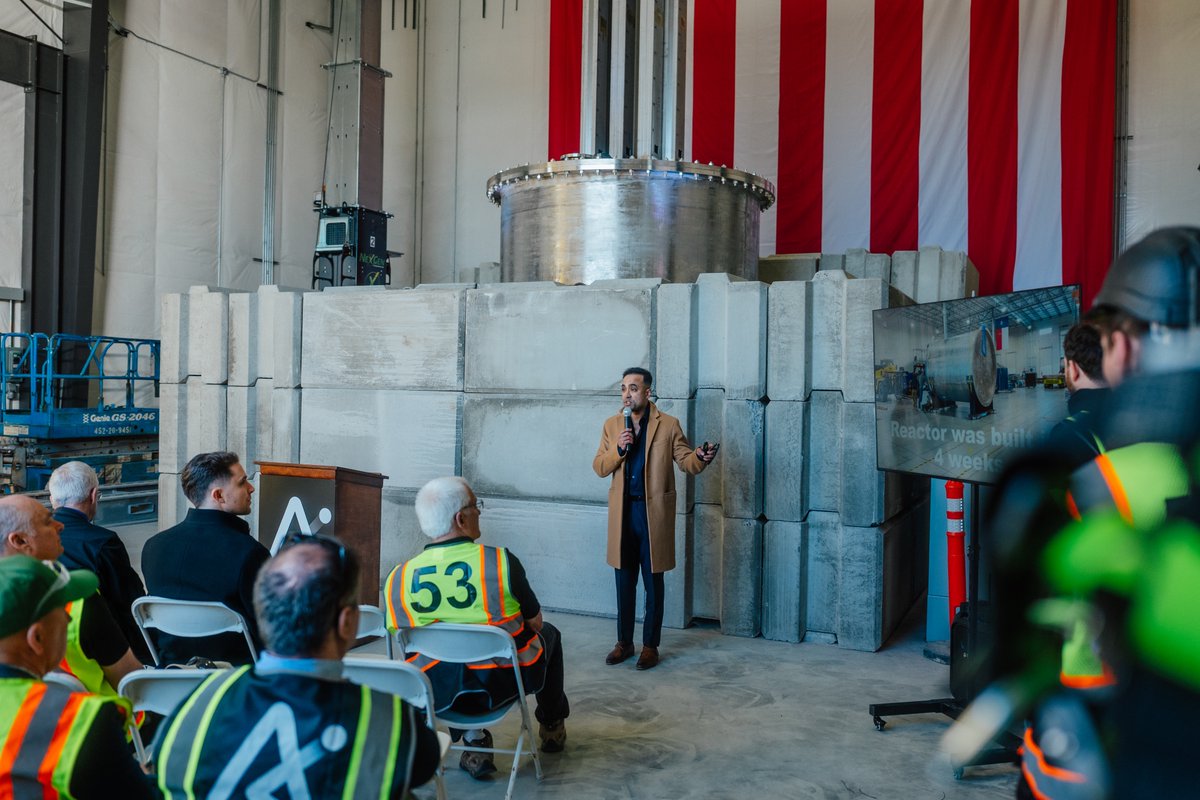
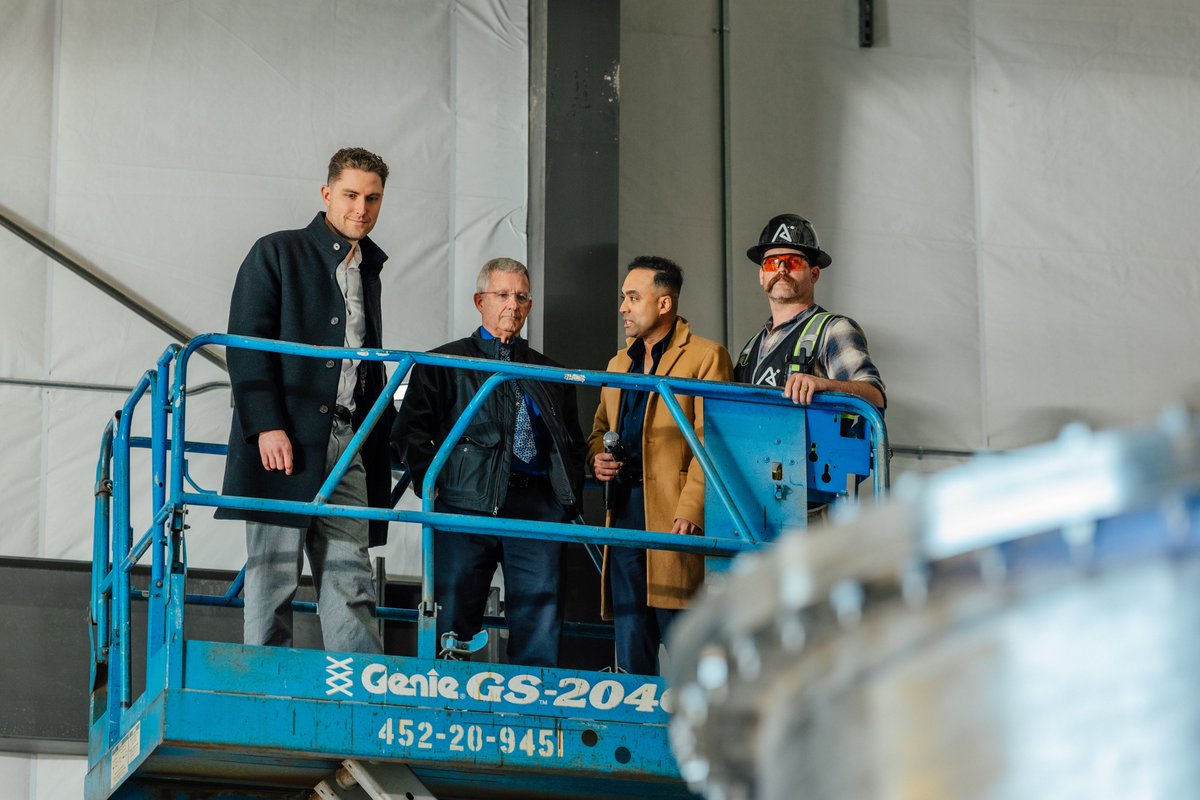
We just built our first nuclear reactor, at an impossible speed
- 14 days: completed PDSA
- 36 days: finished construction
- 28 days: built the reactor
- 10 days: assembled on site
Core goes in after final DOE approval.
Speed without sacrificing safety.


English
@GovNuclear Also includes operations & refueling to maximize utilization.
English

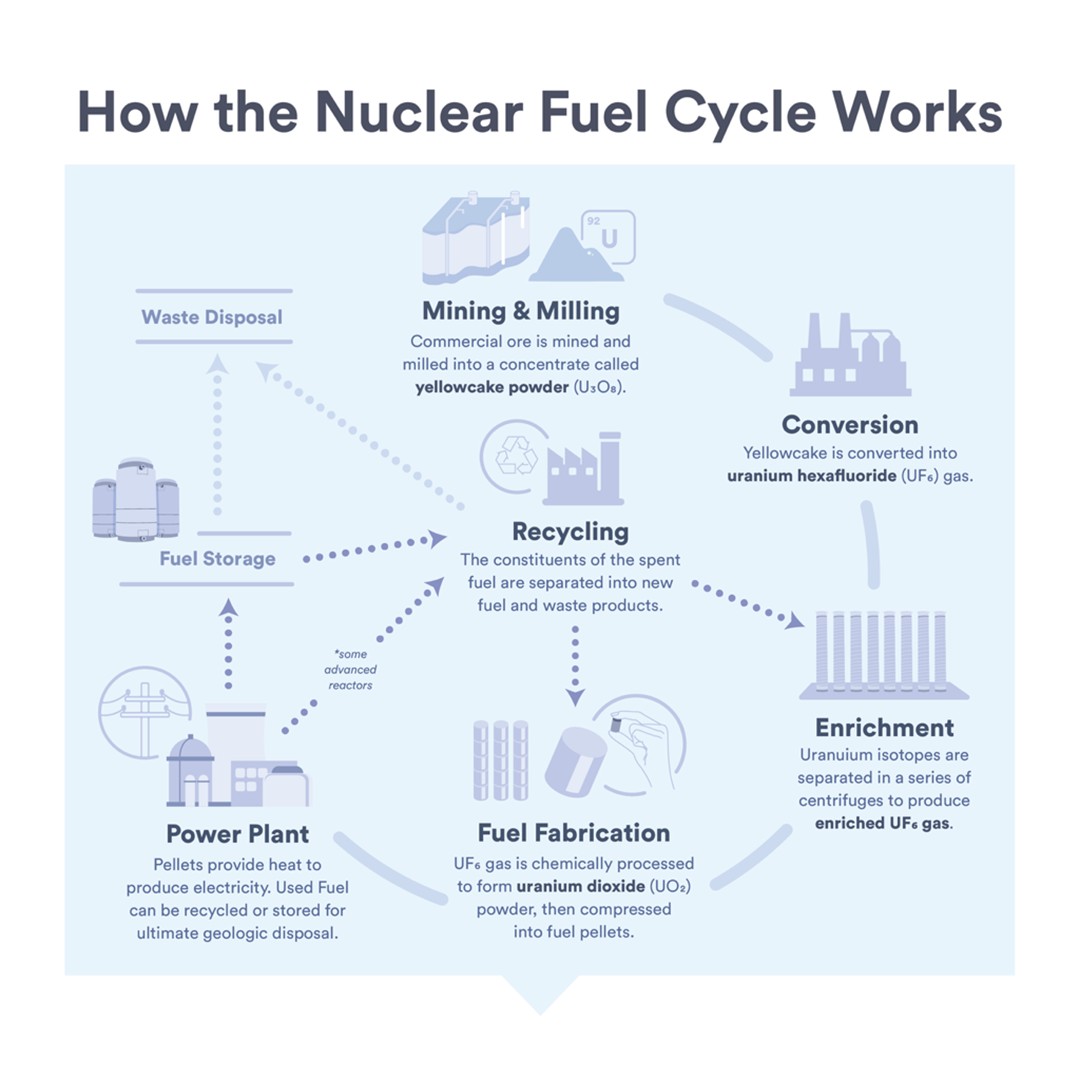
The nuclear energy fuel cycle is made up of two phases: the front end and the back end.
The front end prepares uranium for use in nuclear reactors.
The back end ensures that used fuel is safely managed, recycled, or disposed of.
English

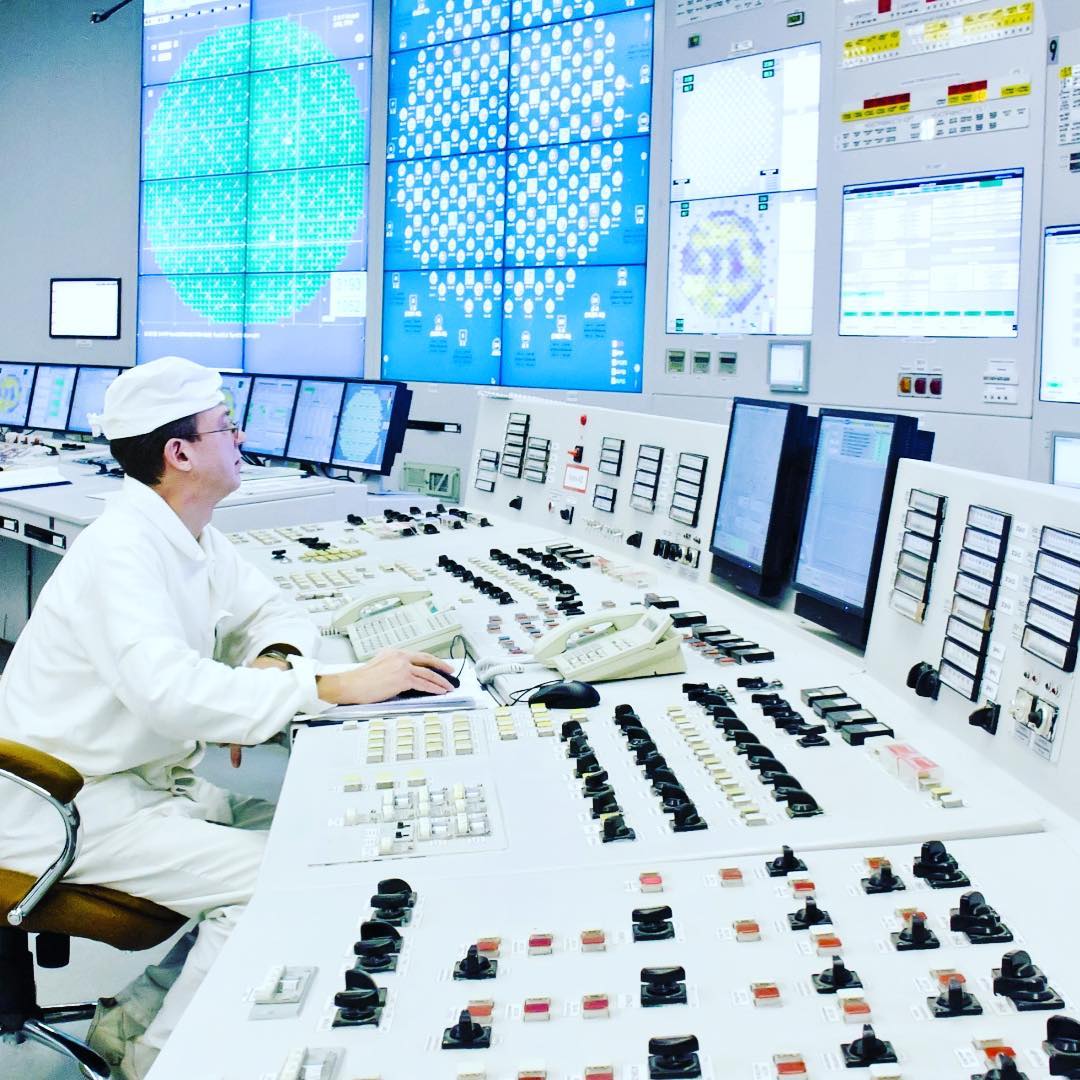
This is what a nuclear power reactor's control room looks like. DYK that reactor sites have simulators that have exactly the same equipment and mimics the one used in actual control rooms? They are used for exercises & drills to prepare operators to handle a real-world scenario.
English

The SMR craze reflects a fundamental category error & combined cycle gas turbine envy.
It tries to map the attributes of a CCGT plant onto nuclear, where the underlying cost structure & physical infrastructure is fundamentally different.
A CCGT plant is essentially a jet engine bolted to a heat recovery steam generator and a smaller steam turbine. The critical point is where the complexity sits.
The gas turbine, which is the expensive & technically demanding component, is built in a factory, hot functionally tested & shipped to site as a finished machine.
Construction on site is largely installation, foundations, piping, electrical connection, using conventional materials & repeatable processes.
That architecture shifts risk into manufacturing & compresses timelines. Rather than building the hardest part on site you are simply installing it in 24-36 months.
Nuclear does not behave this way. It can incorporate modular components, but the NSSS is only 25-40% of cost. The dominant cost drivers sit elsewhere.
Civil works, excavation, basemat, containment, seismic qualification, remain site specific & labour intensive.
Nuclear grade quality assurance, documentation, & inspection add another layer of fixed overhead.
Safety systems with redundancy and independence are function driven, not size driven, so they do not shrink proportionally with output.
The nuclear steam supply system is not analogous to the gas turbine in a CCGT. It is not a fully integrated, factory proven machine that arrives ready to run.
The plant comes together on site, under regulatory oversight, with integration, testing & certification happening during construction & commissioning.
This is why economies of scale are so strong in nuclear. Many of the costs do not scale linearly with power. When you reduce reactor size, you reduce output & revenue, while a large share of the cost base remains.
Studies show that smaller reactors actually increase the relative share of on site construction because the civil works do not shrink in proportion to capacity.
The SMR thesis assumes nuclear can transition from a project to a product, capturing the modular, factory built economics of gas plants.
The constraint is that the parts of nuclear that dominate cost remain stubbornly project based.
None of this explains why the comparison is made in the first place. CCGTs are extraordinarily compelling. They are marvels of thermally efficiency, capital light, fast to deploy & supported by a global supply chain of standardized components.
They are the most successful large scale power plants of the past decades.
It is natural that nuclear developers would look at that model & attempt to emulate it but in so doing they are committing a grave category error, an error that sets the western nuclear industry up for decade(s) of disappointment.
Some SMRs will get built but they will not replicate the CCGT promise.
They will be mini versions of large reactors with mini revenues to pay off the significant inherent costs of nuclear.

English

🚨 Chuck Schumer is PISSED that Elon Musk plans to cover TSA agents’ salaries during the Dem shutdown.
Fetterman just praised him big time: “This is incredibly generous!”
Do you firmly agree that Elon Musk is a real patriot?
A. Huge Yes
B. No
IF Yes, Give me a THUMBS-UP👍!!
MAKE THIS GO VIRAL ON 𝕏. LET’S GO 👏
English
@HopfJames The term Gold Standard has been destroyed by the use for the NRC and the NPT adding the 123, resulting, as intended, as Golden Anchors for nuclear power expansion.
English

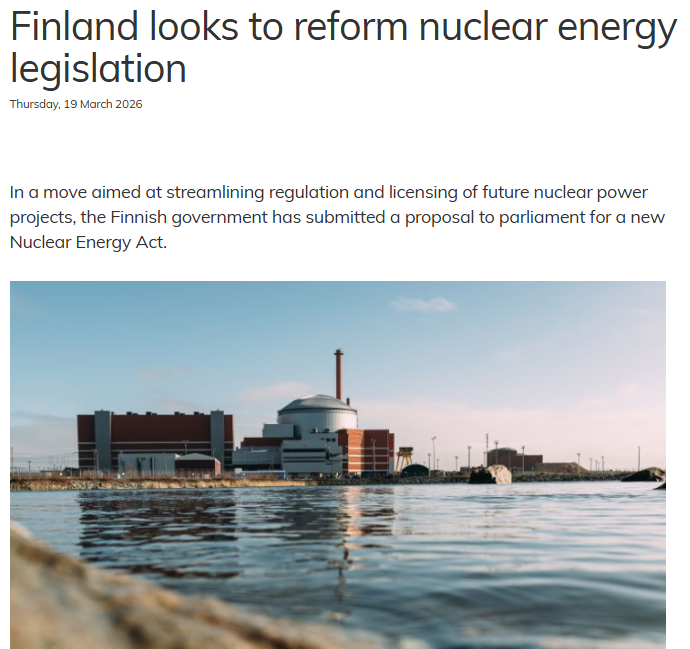
Finland is considering a bill that looks alot like the nuclear regulatory reform that is happening in the US. Article link in reply.
I'm glad to hear that other nations are following the US' lead in terms of facilitating nuclear deployment. May the US be the "gold standard" in terms of nuclear deployment, as opposed to having the strictest nuclear regulation!
English
Or it is found in seawater, as PNNL & ORNL demonstrated before DOE defined it and gave the technology to China who pursued it at US universities, until it was developed to be as economic as physical mining, so China built a pilot plant, then upgraded & expanded the pilot seawater extraction plant.
English
FACT: Uranium is the main source of fuel for nuclear reactors.
It's found as a mineral in the earth’s crust that is bonded with other elements.
Learn more: energy.gov/ne/nuclear-fue…

English
@jeffpjordan @sweet_nector1 The cloth is heated to white hot to make white light. Cloth contains thorium oxide (ThO2) to be able to take the heat and stay a cloth material.
English

@sweet_nector1 This was the little bag that you hooked onto your gas pipe, leading into your lamp that lit up your sidewalk in front of your house. Never did figure out what the little bag was for. I guess to contain the flame.
English

People keep guessing, but no one gets it right. Do you know what this is?

English
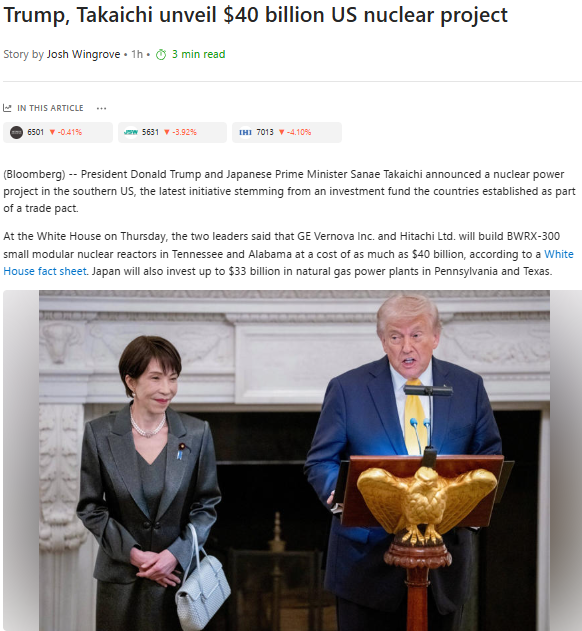
Trump and Japanese PM Sanae Takaichi announced a $40 billion project to build BWRX-300 reactors in the Southeast US. Article link in reply.
The article did not say how many reactors would be built. The BWRX-300 project in Ontario has a projected cost of ~$15 billion for four reactors. That suggests that $40 billion would pay for 10-12 reactors. Hopefully, costs will come down after the first couple reactors are built.
English
@HopfJames Two different ways to look at nuclear plants. One real life, one holding a hatchet over the plant's life 20years at a time. Certainly holding a knife to a plants neck forces good maintenance, but is that the only way to get good maintenance?
English
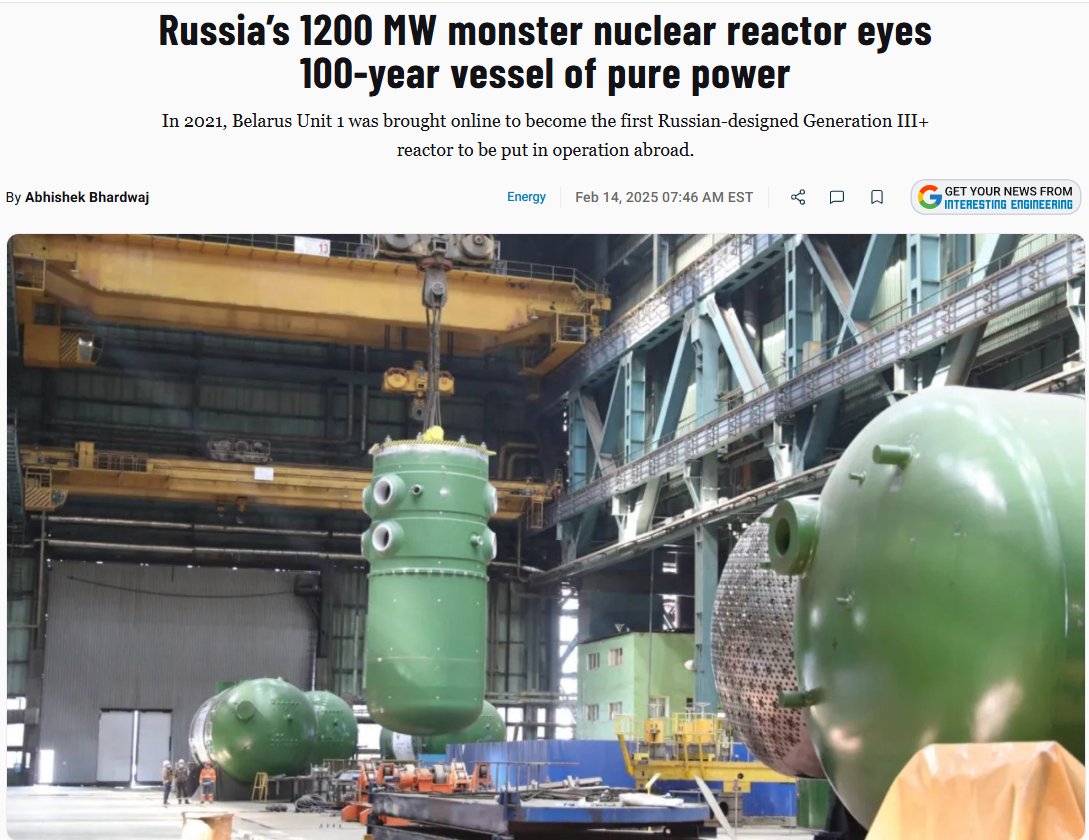
Something I didn't know. Russia's VVER-1200 reactor design has a "life cycle" of 100 years. Does that mean that the plant will not have to apply for license extensions (e.g., every 20 years)? Article link in reply.
TBH, the notion of a plant design having a "design life" or a "life cycle" isn't even meaningful. Length of operation is more a function of long-term maintenance practices, vs. the plant's design. NRC license extensions, for example, are mostly an evaluation of plant component conditions, and long-term maintenance plans.
English
@allie__voss Large components are containment, like secondary shield bulkheads, & hull sections.
English
@allie__voss Navy uses shipyards for assembly and bring in large components by sea, no roads/railroads, except small components.
English


@allie__voss All of the reactor individual components, like RV, SG, PZR, RCP, Core in core barrel, are road shippable, and other than the core, are stored inland in warehouse alley PA, until needed for install.
English
@allie__voss And they go to sea after assembly, and are way to big to travel on highways, NOT actually SMALL, just assembled near water for delivery by sea, so not being small doesn't matter.
English
@jonburkeUK Sun has a choke point every night and on cloudy/rainy/snowy days and for several days after snowfall.
English

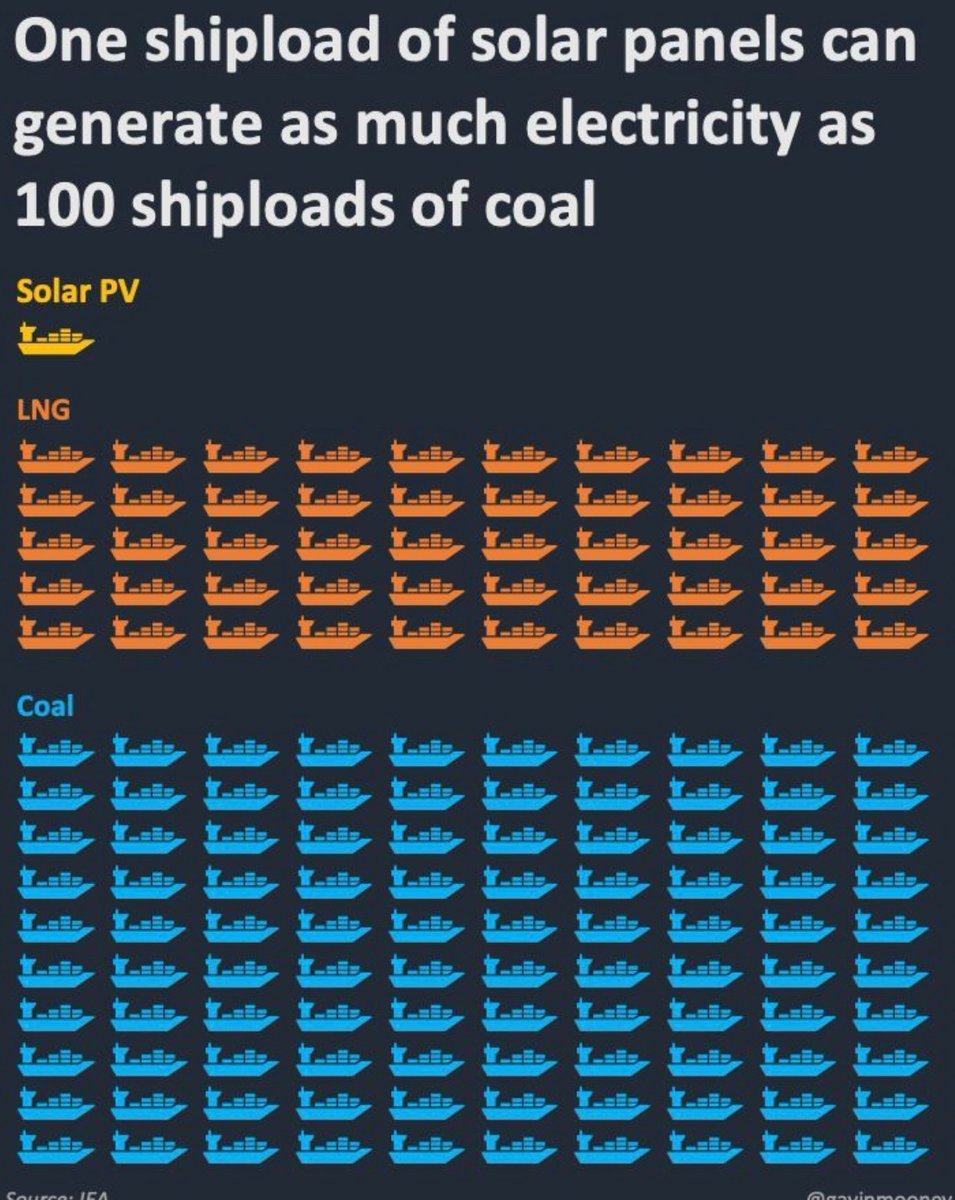
@EricLDaugh 42.9% vs 42. 7% approval ratings are identical, not higher!
English

🚨 BREAKING: It was just announced that President Donald J. Trump has a HIGHER approval rating 60 weeks into his 2nd term than Barack Hussein Obama and George Bush, at the same point in their 2nd term — RealClearPolitics
KEEP PUSHING, 47! The fake news is stunned! 🇺🇸
English
@NuclearHazelnut State your assumptions, as the amount of energy varies two orders of magnitude depending on reactor type: PHWR, LWR, to Fast closed cycle reactor with recycling?
English

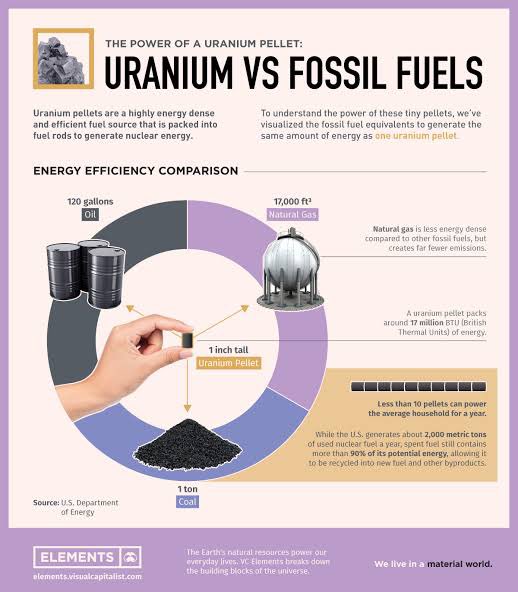
For perspective, here is how the energy in one uranium pellet compares to fossil fuels.
Hard to believe something this small can hold so much energy: A tiny pellet with a
massive energy density!! ⚛️
English
Somewhere above the clouds holding a replica uranium fuel pellet I use during talks.
It helps people visualize how small nuclear fuel actually is… & how much energy it holds!! ⚛️
A real pellet about this size contains roughly the same energy as ~1 ton of coal

English
@NuclearHazelnut Is that based on a CANDU using 0.75%, an LWR using 4% of the enriched pellet (0.35% of mined uranium.), or a fast reactor using nearly 100% of the mined uranium & pellet with recycling? It matters A LOT!
English