
First Round

15.1K posts

First Round banner
First Round

First Round

@firstround

Where “imagine if” gets to work. We've helped 500+ companies (like @NotionHQ, @Roblox, @Uber, @Square) take a straighter path from idea to product-market fit.

SF, NY, PHL เข้าร่วม Temmuz 2008
1.9K กำลังติดตาม225K ผู้ติดตาม
ทวีตที่ปักหมุด
First Round
First Round@firstround·
After @tobi published his now-famous AI memo, you probably saw similar posts from other founders and CEOs flood this platform. But most companies are still in the “memos and demos” phase — ambitious plans and mandates, “AI-first” roadmaps on board decks, flashy features and demoware. Yet scalable implementations and real results remain murky. So today, we’re launching a brand new publication to close the gap: Applied Intelligence. It aims to share how builders are using AI at their companies and the meaningful impact they’re seeing. Our inaugural essay is with none other than Shopify, following up on Tobi Lütke’s memo. We learn from VP & Head of Engineering @fnthawar about the non-obvious insights, tactics and workflows Shopify used to bring an ambitious memo to life. Read the essay below.

First Round tweet media
English
18
12
79
32.9K
First Round รีทวีตแล้ว
Neel Kunjur
Neel Kunjur@neelkunjur·
I'm excited to announce we have achieved our Tier 1 mission success criteria and have begun gathering a tremendous amount of data on how this brand new spacecraft performs. On March 30th, 13:17:08Z, the Gravitas spacecraft separated from the SpaceX Transporter-16 stack to begin its mission as one of the highest power free-flying satellites ever launched. Immediately after separation, the spacecraft autonomously: - Executed detumbling maneuvers - Established two-way communications with the ground (on our very first ground station pass) - Deployed its 20kW solar arrays - Slewed to a safe and stable attitude to await further ground commands These actions alone are a testament to the incredible work of our in-house engineering, software, and GNC teams to build a robust spacecraft. Since then, our operations team completed all initial system activations and checkouts, confirming the vehicle is in a power positive and thermally stable state with no major anomalies observed at this time. We completed this phase of the mission ahead of schedule. Next up we will be powering up and downlinking data for all payloads aboard the Gravitas spacecraft in support of our customers and partners while continuing to put the spacecraft through its paces. As we noted ahead of launch: The goal of this mission is to experiment and push our systems to the limit to inform future missions. I look forward to sharing more on our successes and challenges as the mission proceeds. Video of our satellite below; link to full T-16 webcast: x.com/SpaceX/status/…
English
25
52
545
66.7K
First Round รีทวีตแล้ว
Jake Stauch
Jake Stauch@jakeserval·
Serval is #1 on the Enterprise Tech 30. What a surreal moment. Special to see so many of our customers here like @clay, @vercel, @togethercompute, and many more we'll announce soon. I’m so grateful for the entire @getserval team that powers this rocket ship, especially my cofounder Alex McLeod and COO @TatianaBirgisso, who have assembled unrivaled teams across engineering and GTM. It’s Serval now. newcomer.co/p/mintlify-ser…
English
11
16
48
7.6K
First Round รีทวีตแล้ว
Ivan Zhao
Ivan Zhao@ivanhzhao·
The loudest story about AI is a lonely one. One person with an army of chatbots. Other humans are friction. That gets the future wrong. The best things aren’t built alone. In a moment of change, we want to remind the world (and ourselves) what Notion stands for: — Think Together
English
178
364
2.7K
858.1K
First Round รีทวีตแล้ว
Vanta
Vanta@TrustVanta·
"Fetching rocks” is one of the most expensive habits teams fall into. 🪨 On @firstround's Executive Function, our CPO @jeremy_epling shared happens when teams start doing work before they’ve defined what decision they’re actually trying to make. TL;DR? Clarity first. Then execution.
English
1
1
13
2.7K
First Round
First Round@firstround·
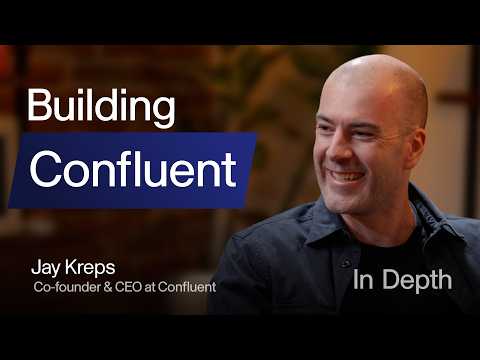
Confluent co-founder and CEO @jaykreps says effective marketing is like a pyramid. You have your pithy slogan at the top, and the supporting evidence in long form at the bottom. But most founders only focus on one end of the pyramid, which makes their messaging fall flat. "If you have a software engineering background, you don't think of product marketing as being hard. But in fact, a lot of marketing just takes a lot of thinking," says Jay. "The amount of time you're going to think about how to convey the thing is just much higher than you would expect." Jay is one of the creators of Apache Kafka, the open-source data streaming platform that would become the foundation for Confluent. On In Depth, he shares why a blog post did more for the adoption of Kafka than years of engineering work.
English
1
0
4
1K
First Round รีทวีตแล้ว
Brett Berson
Brett Berson@brettberson·
Confluent just sold for $11 billion. @jaykreps built it by learning a distinction that sits at the center of every hard company decision. There are two questions you can ask about anything hard: what can we do? And what do we have to do? The first is answered by your team. The second is imposed by the world. When Confluent needed a cloud product, most of the company thought it was a terrible idea. The on-prem business was working. The economics were better. Investors thought they were making a mistake. As Jay put it: if there were two standalone companies, we'd invest in this one and definitely not that one. Jay's answer: we have to do this. There's no question that a huge portion of the market is going to be in the cloud. So we have to serve that part of the market. The fact that it's very hard is not relevant. Once you know you have to do something, you find a way to do it. We cover this insight amongst dozens of others in my most recent "In Depth" conversation. Timestamps: 01:18 Making the leap from engineer to CEO 03:33 The 80% rule: what a CEO actually needs to know 04:54 Scaling different business disciplines 09:31 How Confluent’s story began in LinkedIn 12:13 The growing need for scalable data tech 13:37 What the early Kafka product looked like 16:38 Kafka’s underwhelming open-source launch 18:38 The blog post that accelerated Kafka’s adoption 20:16 Why so many marketing messages fail 28:08 The decision to build Confluent 34:24 Planning to fundraise before building the product 39:19 Confluent’s early years: Tough product decisions 47:07 The underrated growth lever question for companies 55:46 Why founder optimism is an overrated trait 1:00:29 What should founders give up as they scale? 1:02:47 Why people become trapped in a failure mindset 1:08:33 The Chipotle problem: Losing excellence at scale
English
2
10
58
18.8K
First Round รีทวีตแล้ว
Brett Berson
Brett Berson@brettberson·
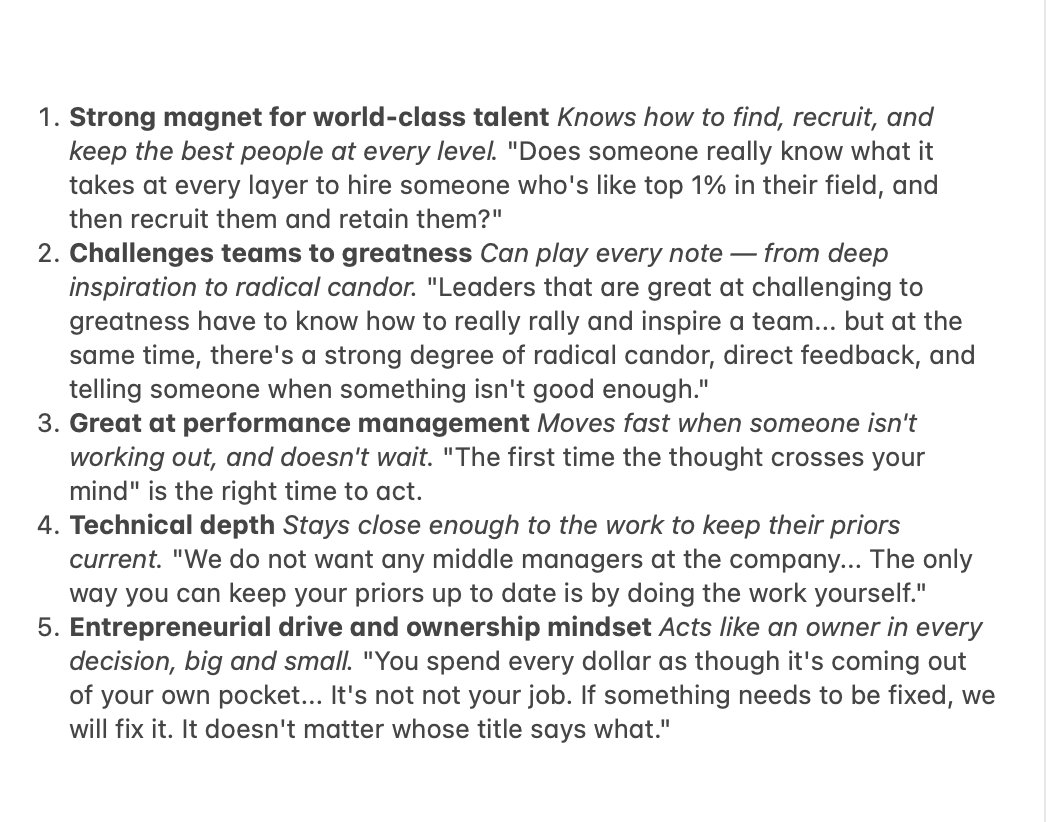
Zipline's 5 exec values are quite good.
Brett Berson tweet media
Brett Berson@brettberson

Zipline has always done things the “wrong” way. They launched a drone company when drones were essentially illegal in the US. They moved the whole team to trailers on a farm in Half Moon Bay to figure out how to fly. Their launcher was deep sea fishing poles from Walmart. Their landing pads were made by a bouncy castle company. They went to Rwanda with no aviation experience, no logistics experience, no healthcare experience. Co-founder and CEO @Keller wore tennis shoes and a hoodie to meet the president of the country. The night before the launch, he was on his back in the dirt with a screwdriver in his mouth, trying to rebuild a launcher that kept destroying itself, while the president's special forces watched. The aircraft flew. Keller was just as surprised as everyone else. Nine months of all-nighters after that Rwanda launch, they got one hospital working reliably. Then 20 more in three months. Then 50. Then 400. Today Zipline serves 5,000 hospitals globally and has flown 135 million autonomous miles. To find the best hardware builders in the world, Zipline often hires teenagers. Not as interns fetching coffee — as engineers who own real work. One kid joined at 15 and got offered $180K to lead a team of mechanical engineers instead of going to Stanford. He took it. Another applicant had built a full GPS system for a 3D-printed quadcopter using onboard Nvidia GPUs. While at boarding school. Keller's question for candidates: what have you built? Keller summarized everything in one line: "We specialize in turning the impossible into the merely late." He shares Zipline’s wild origin story in full in our conversation on In Depth. Timestamps: 02:11 Why Zipline doesn't hire for experience 06:04 Are founders born or made? 07:37 Why Zipline hires 17-year-olds over PhDs 17:03 The employees Zipline doesn't want 18:53 The ultimate startup hire is a "heat-seeking missile" 20:36 Why blind references are a non-negotiable 23:07 Can candidates admit when they screwed up? 30:10 Zipline's secret leadership playbook 35:16 Why you should always fire quickly 36:26 The early vision for Zipline 39:48 How Zipline almost died - twice 44:55 From toy robots to drone delivery: Zipline's pivot 51:35 How Rwanda's health minister changed everything 57:10 Why Zipline's launch was a "complete disaster" 1:04:05 Scaling from 1 hospital to 5000 1:05:17 The 10x hardware cost rule every founder should know

English
1
4
56
11.9K
First Round รีทวีตแล้ว
Karan Kunjur
Karan Kunjur@KaranKunjur·
I’m excited to share that @K2SpaceCo is on contract to deliver 28 satellites to @SES_Satellites for meoSphere, SES’s next-generation MEO network. This program reflects a shift we’ve believed in from the beginning: that satellite networks of the future will require significantly more power, flexibility, and scalability than legacy architectures were designed to support. The initial batch of 28 K2 high-power satellites will effectively double SES’s networks capacity. Over time, we will continue to build on this foundation together, to deliver new levels of performance to MEO and support the growing demands for sovereign, secure, and high-throughput connectivity. We’re proud to support SES as they push forward a truly multi-orbit, multi-mission network. Thanks to @adel_al_saleh for helping to share the news!
English
9
23
112
22.4K
First Round
First Round@firstround·
Guideline’s acquisition by Gusto last year was the culmination of a decade-long partnership between the two companies. Integrations, shared customers and years of trust made the deal a logical next step. It was also very complicated. As a regulated financial services company, Guideline wasn’t a single entity that could be cleanly transferred. “There was no blueprint,” founder Kevin Busque says. “I didn’t sleep for months.” Plowing forward without a blueprint is nothing new for Busque. When he founded Guideline a decade earlier, he set out to fix what he saw as a broken 401(k) system for SMBs, and committed to building it the hard way. On The Review, Busque shares what made the timing right for acquisition — and the decade of sometimes contrarian decisions that made it possible.
First Round tweet media
English
1
2
4
815
First Round รีทวีตแล้ว
Brett Berson
Brett Berson@brettberson·
We first began our partnership with @zackkanter and @Stedi back in 2017. Today, they announced their $50 million Series C. But most of those years were spent quietly and quite obsessively building the underlying infrastructure. Once the company built its way into healthcare, things started to inflect quickly. (They were recently named one of Ramp’s fastest-growing vendors across all categories, not just healthcare). But as with most “overnight success” stories, it was nearly a decade in the making. The ambition to replace legacy clearinghouses with a modern API-first, software-native platform is a big one, and the breadth of the product surface is stunning. But it’s Zack’s desire to keep grinding towards bigger outcomes that’s truly outlier. He’s built Stedi with unusual levels of patience and persistence. (For example, they threw away the entire codebase 8 times, and took 4+ years to launch anything publicly.) These choices stem from a determination to avoid what he calls the accumulation of not doing things the right way. His philosophy is rather unique and is best captured in this quote: “As a company, we’ve decided we’re gonna eat glass. That is what sets us apart. We’ll go to the ends of the earth to do things the right way, even when it’s not economical and it doesn’t make sense.” He gets at more of this idea in the clip below from our recent interview, where he talks about why he’s building Stedi to be a company he wants to run forever. He’s an incredibly tough founder to bet against, and I feel fortunate to both be an early supporter of his @firstround and to call him a close friend.
English
4
11
39
16.2K
First Round รีทวีตแล้ว
Zack Kanter
Zack Kanter@zackkanter·
I'm thrilled to announce @Stedi's $50m Series C, led by Lee Fixel from Addition with participation from @Stripe, @RibbitCapital, @USV, @FirstRound, @BoxGroup, and @BloombergBeta, along with angel investors including @tobi, Charlie Songhurst, @rauchg, @karimatiyeh, @Max, and more. This latest round brings our total funding to $142 million. We’ve grown enormously over the past year. Our number of paying customers has increased by 6x year over year, and our number of billed transactions has increased by over 7x. We’re now processing more than a billion claims and eligibility transactions annually – to frame this on a relative basis, we processed more transactions in February alone than we did in the first half of 2025 combined. This month, Stedi was named one of @TryRamp's fastest-growing vendors – across all categories, not just healthcare – for the second time in ten months; we’re the first non-AI company to make the list in five months. We’ve done all this while offering a level of support that (allegedly) doesn’t scale. We offer dedicated Slack and Teams channels to every customer and now have over 1,500 shared channels. Over the past 12 months, our median support ticket response time has decreased from 18.3 minutes to just 6.7 minutes, all while handling a 6.4x increase in support volume – with 100% of tickets answered by humans. Our customers send us thousands and thousands of questions and suggestions every month, day and night, and the learnings we get from this firehose of real-time feedback are the engine that turns our business. It is this process that has made us the fastest-growing clearinghouse by a wide margin. This latest round of funding allows us to continue to accelerate development across our platform and to continue to serve customers with a first-rate support experience. One key to that is continuing to build a world-class team – to that end, we are hiring for dozens of roles across engineering, product, design, operations, GTM, and more. If building the transactional layer for the future of healthcare sounds interesting to you, drop me a note.
Zack Kanter tweet media
English
24
21
226
49.2K
First Round รีทวีตแล้ว
Brett Berson
Brett Berson@brettberson·
This is episode 5 of Executive Function, with Jeremy Epling, Chief Product Officer at Vanta. Jeremy spent 16 years at Microsoft, then moved to GitHub when it was being run by @natfriedman. Nat told him he had 9 months to ship GitHub Actions. No discussion. Jeremy says that deadline did more for the product than any strategy doc ever could have. We talk about what it actually takes to make the jump from big tech to a startup, and what great product leadership looks like once you're scaling. Here are three of a few dozen insights from our conversation: The day you become CPO, your team stops being EPD. It's the C-Suite. Every founder he asked said the same thing. Most new CPOs don't believe it until it's too late. The CPO-CRO relationship is broken by design. One runs on salary and equity, the other on quota. You have to fix that manually or it'll quietly wreck you. Spend real time with your most influential ICs — the staff engineers nobody manages but everyone listens to. They know what's actually happening before anyone else does. Timestamps: 00:00 Introduction 00:09 Why most big-tech executives fail at startups 05:38 Great product leaders stay in the details 09:21 The biggest mindset shift from VP to CPO 16:24 Revenue and product teams are always at odds 18:00 The key to a quality CPO and CRO relationship 23:21 Stop making your team fetch rocks 25:54 Who ultimately oversees the quality bar? 32:27 Why rigid hierarchies kill great companies 36:38 How to leave actionable, detailed feedback 38:55 Great CPOs should avoid comfort metrics 47:27 A glimpse into Jeremy’s working week 49:07 The case for weekly 1:1s 55:13 Why ICs are the unsung heroes of a company 58:25 Jeremy’s most formative career moments 1:07:55 The hardest skills Jeremy had to learn 1:09:31 Why great managers know when to push
English
2
4
29
4.6K
First Round รีทวีตแล้ว
Hashir Jaffry
Hashir Jaffry@habibihashir·
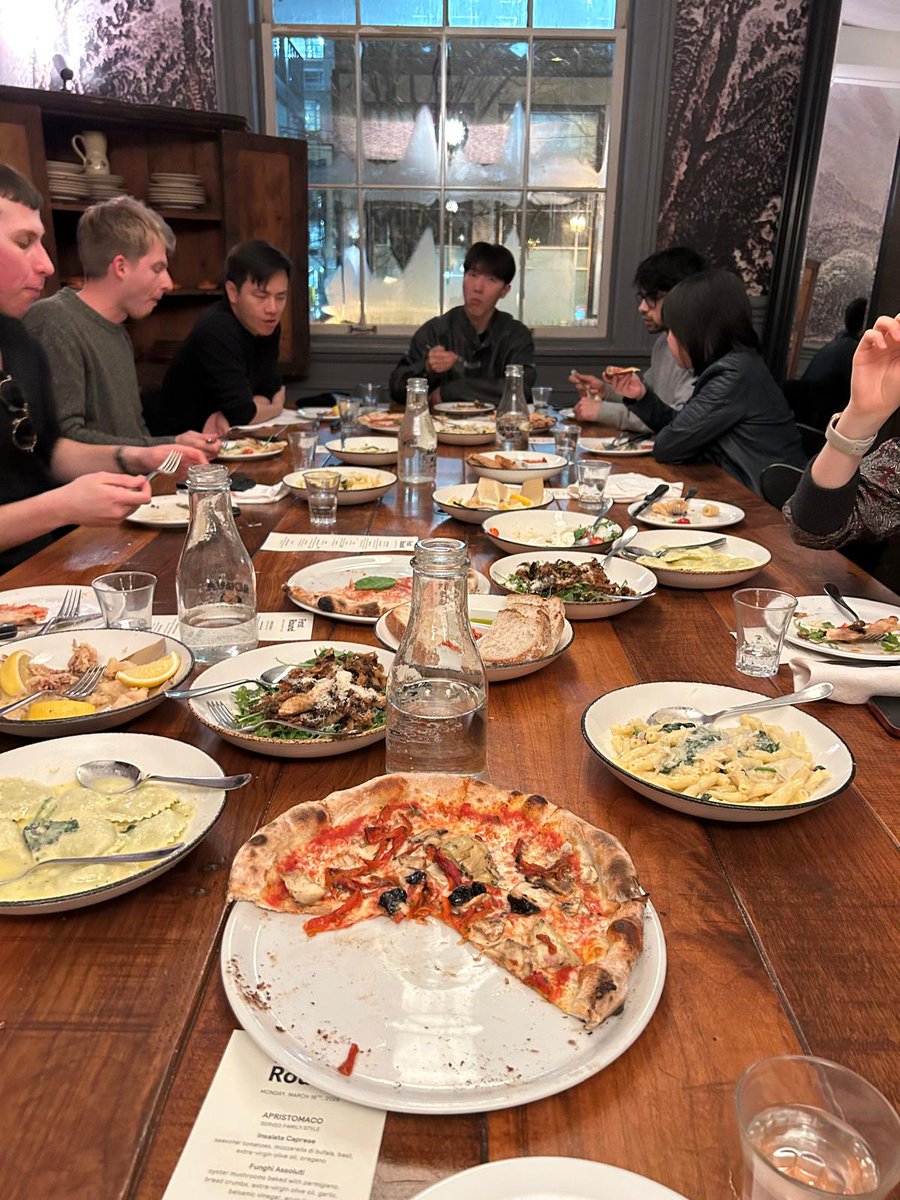
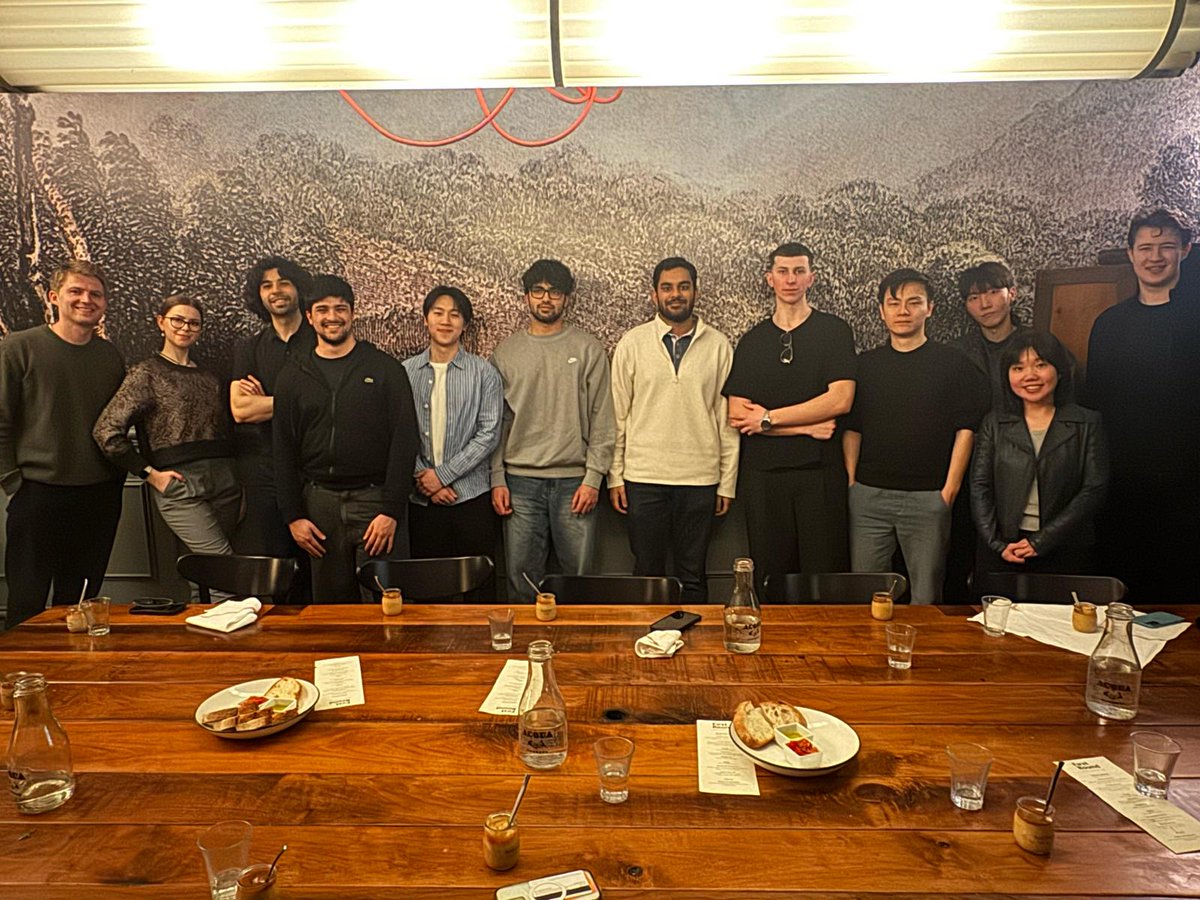
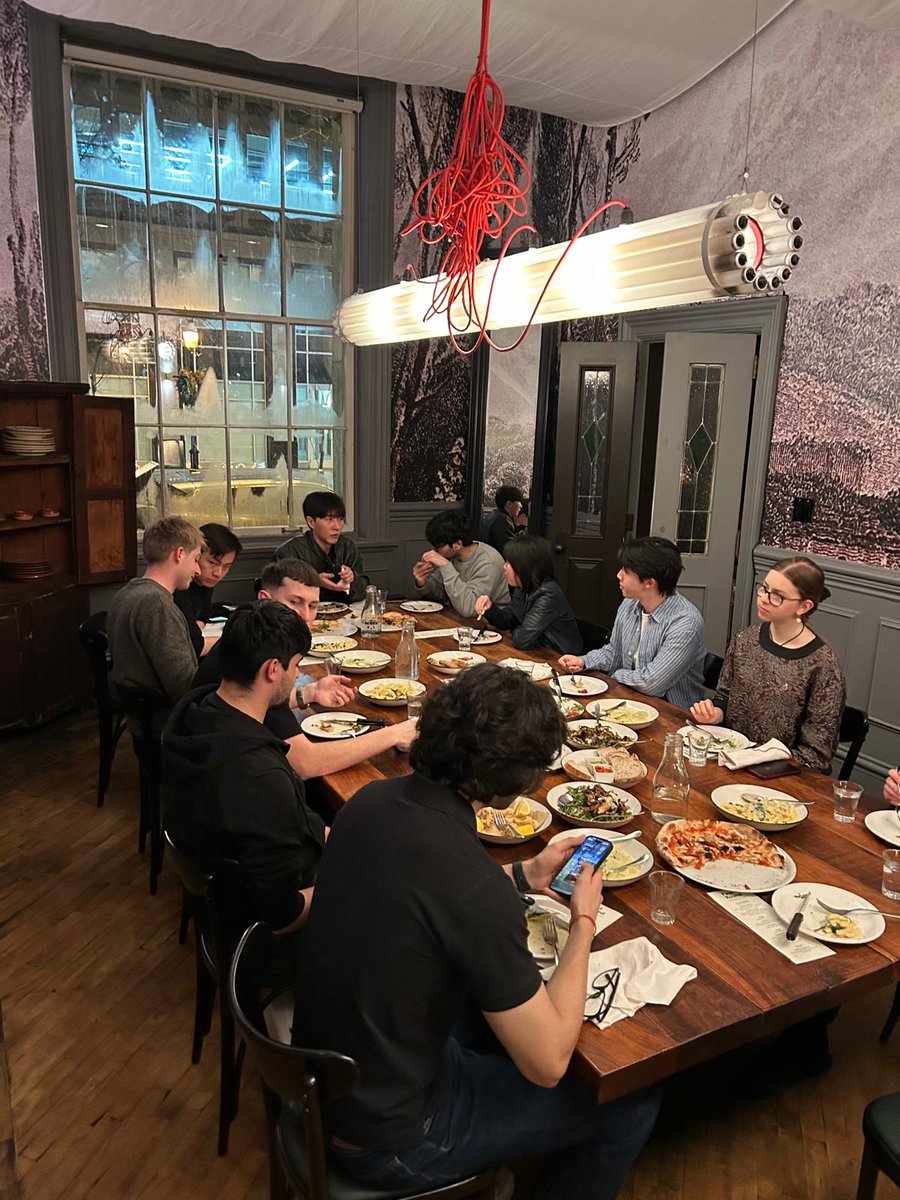
Hosted a Young Builders dinner with @nickrubin from @firstround. The room was filled with UofT students and alumni building venture-backed startups, ML research, and interning at cool companies. Grateful to Nick for making the evening possible!
Hashir Jaffry tweet mediaHashir Jaffry tweet mediaHashir Jaffry tweet media
English
0
1
14
2.5K
First Round
First Round@firstround·
"Do you know when the right time to fire someone is? The first time the thought crosses your mind." @zipline co-founder and CEO @Keller explains that if you're deliberating over a new hire who's not performing, you already have the answer to your question.
English
1
1
6
1.2K
First Round
First Round@firstround·
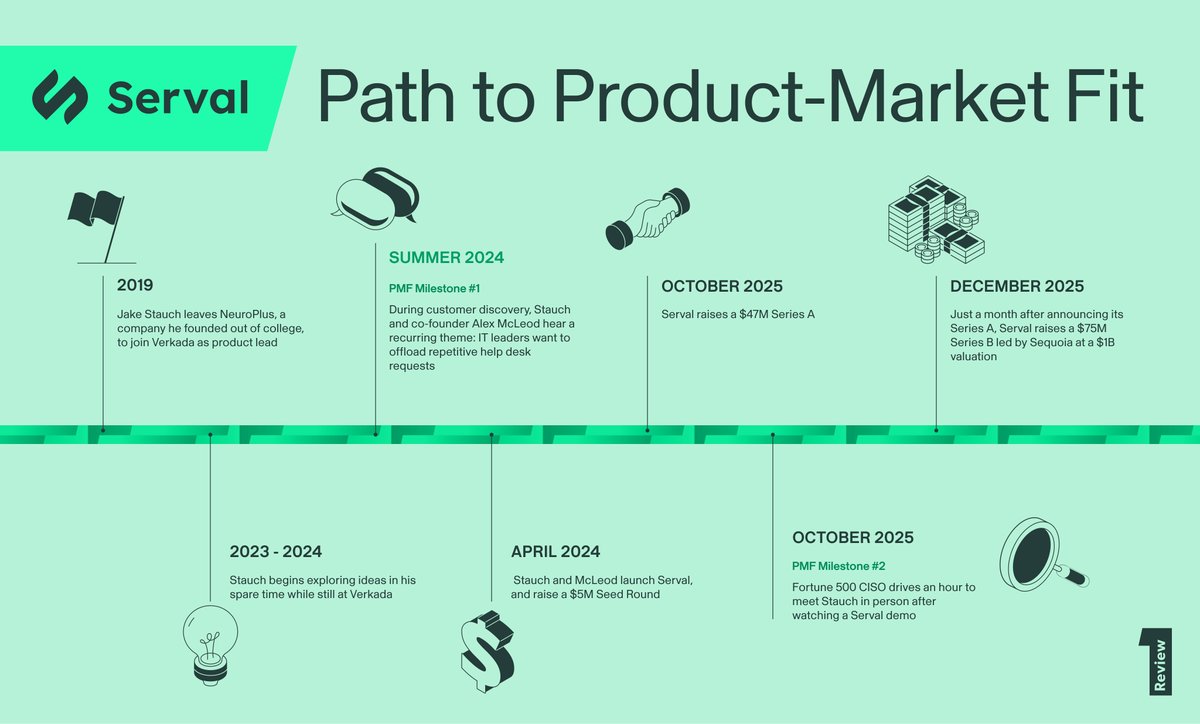
After @jakeserval finished showing a @getserval demo to a Fortune 50 CISO, the exec asked him, “Where are you right now? I'm going to drive to see you. I'll be there in an hour.” It’s a classic “you’ll know it when you see it” PMF signal. But Stauch says it revealed a deeper truth about building for enterprise buyers: They want some consumer magic in a demo. This was an insight he’d picked up from Verkada, where he witnessed the power of a consumer-grade enterprise product. Sales reps would send prospects a text message with a live link to view Verkada security camera footage during the call. These buyers had Ring and Nest cameras at home, but were accustomed to clunky security hardware at work. The demo showed them they could raise their standards. On The Review, we sat down with the AI IT founder to pull out his PMF lessons two years into building. It’s a timely read for AI enterprise founders right now: How to take a swing at a hundred-billion dollar incumbent, the value in building the hard thing first and how to win in an existing category while actively creating a new one.
First Round tweet media
English
9
1
10
2.2K
First Round
First Round@firstround·
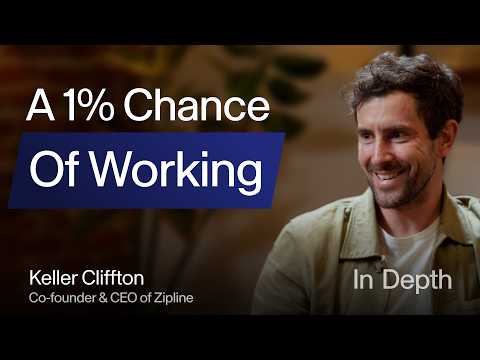
“Heat-seeking missiles for pain. That is the perfect definition of people who really succeed at startups.” @Keller is the CEO and co-founder of @Zipline, the world's largest commercial autonomous delivery system. Back in 2011, he set out to solve the un-fancy, real-world problem of transporting life-saving medicines to people who need it. To do it, he’s enlisted builders who are willing to “crack some eggs.” On In Depth, he sits down with @brettberson to share why building hardware is 10X harder than you’d think. He shares: -Why Zipline had a 1% chance of working -The blood drone delivery launch in Rwanda that was near-catastrophic -What it took to scale to 5,000 hospitals -How he hires at Zipline, from execs who aren't above "plunging the toilets" to teenagers who’ve built submarines and robots in their garage -Why the most important companies of the next 10 years will be hardware
English
4
5
14
2.9K