Harry Surden

8.4K posts

Harry Surden banner
Harry Surden

Harry Surden

@HarrySurden

Professor, University of Colorado Law School • Associate Director Stanford CodeX Center for Legal Informatics. Research: Artificial Intelligence and Law

Stanford, California เข้าร่วม Nisan 2014
1K กำลังติดตาม2.9K ผู้ติดตาม
ทวีตที่ปักหมุด
Harry Surden
Harry Surden@HarrySurden·
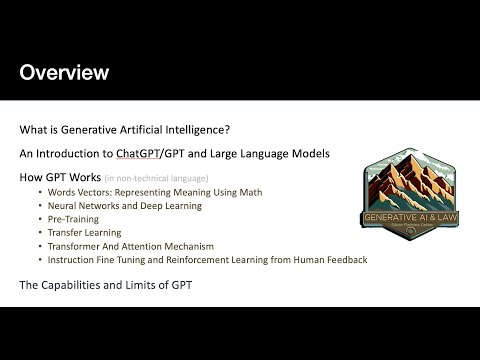
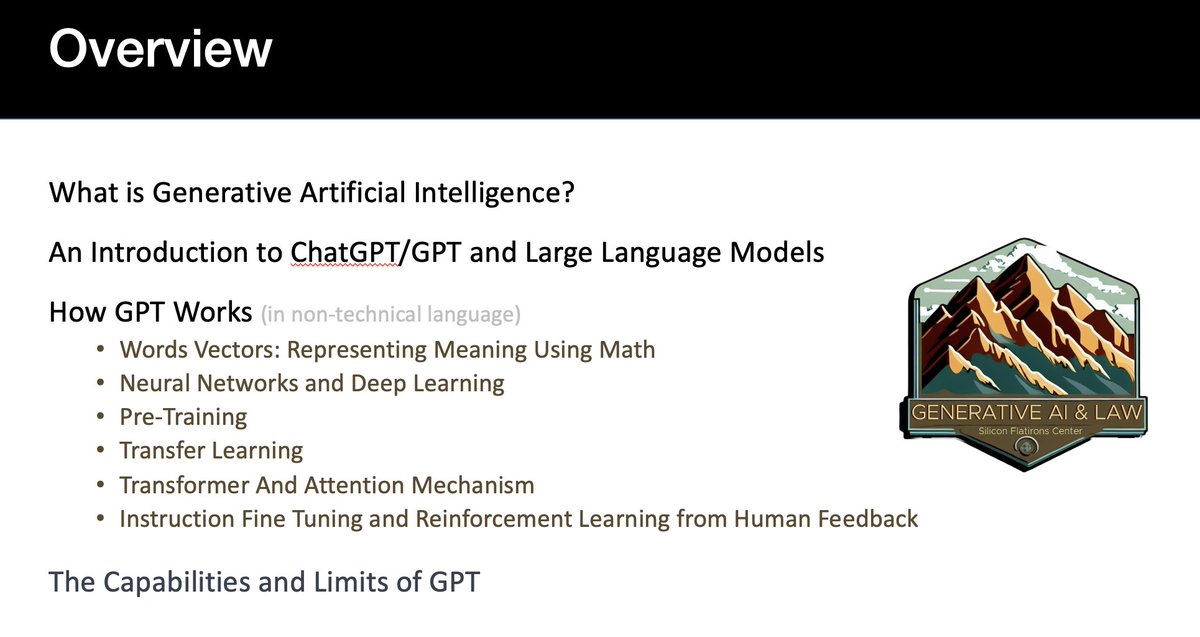
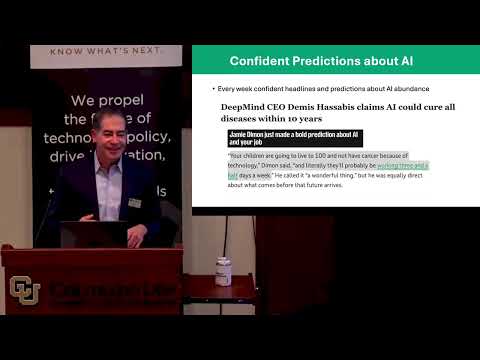
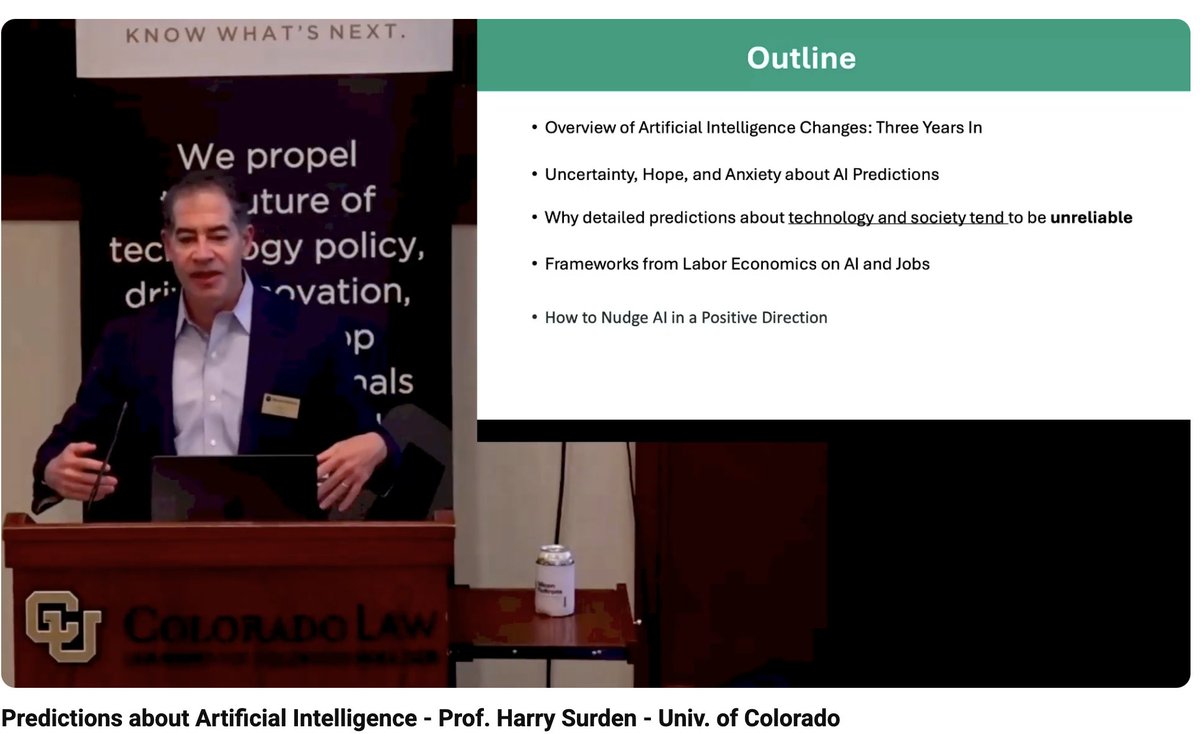
This is a primer that I gave to law students, about how GPT works. It is detailed, but it is designed to be understandable to those without a technical background. I have tried to improve the audio in this version. youtube.com/watch?v=IMAhwv…
YouTube video
YouTube
Harry Surden tweet media
English
3
23
59
8.2K
Harry Surden รีทวีตแล้ว
Anthropic
Anthropic@AnthropicAI·
New Anthropic research: Natural Language Autoencoders. Models like Claude talk in words but think in numbers. The numbers—called activations—encode Claude’s thoughts, but not in a language we can read. Here, we train Claude to translate its activations into human-readable text.
English
551
1.6K
15.6K
2.1M
Harry Surden รีทวีตแล้ว
CU Boulder 🦬
CU Boulder 🦬@CUBoulder·
10,198 graduates. One unforgettable day at Folsom Field. To the Class of 2026: Congratulations on this momentous achievement. We’re so proud to welcome you to the #ForeverBuffs family and see where you go next. Sko Buffs! bit.ly/4tLEUHc
English
2
22
198
5.8K
Harry Surden รีทวีตแล้ว
Konstantine Buhler
Konstantine Buhler@Konstantine·
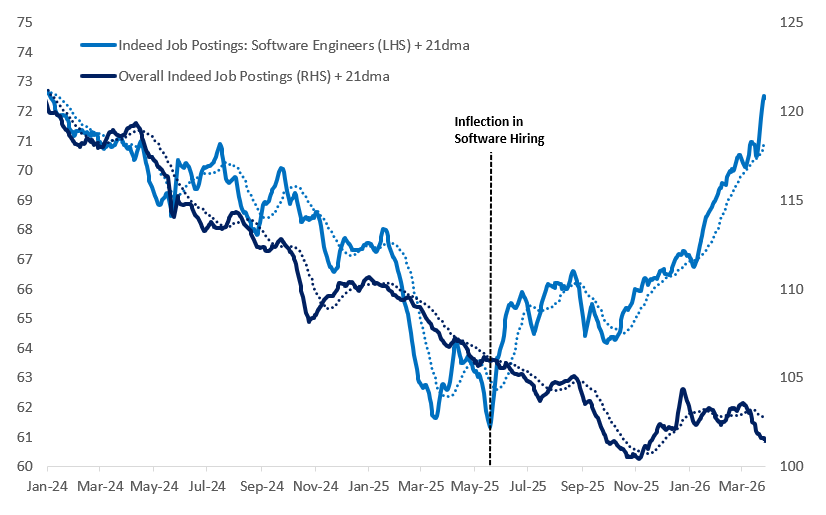
Narrative violation and great insight from the latest Citadel Securities banger by Frank Flight: "We illustrated back in February that demand for software engineers, the most AI exposed occupation was accelerating higher, which we argued violates the displacement narrative. Indeed the acceleration in software job postings has continued, now up 18% from the inflection point in May last year."
Konstantine Buhler tweet media
English
64
227
1.2K
661.3K
Harry Surden รีทวีตแล้ว
Andrew Curran
Andrew Curran@AndrewCurran_·
New update from Scott Aaronson. He continues: 'And I’d say that that makes my own moral duty right now ironically simple and clear: namely, to use my unique soapbox, as the writer of The Internet’s Most Trusted Quantum Computing Blog Since 2005TM, to sound the alarm. So, here it is: if quantum computers start breaking cryptography a few years from now, don’t you dare come to this blog and tell me that I failed to warn you. This post is your warning. Please start switching to quantum-resistant encryption, and urge your company or organization or blockchain or standards body to do the same.'
Andrew Curran tweet media
Andrew Curran@AndrewCurran_

Scott Aaronson on his blog talking about Shor's, quantum, and crypto: 'When I got an early heads-up about these results—especially the Google team’s choice to "publish" via a zero-knowledge proof—I thought of Frisch and Peierls, calculating how much U-235 was needed for a chain reaction in 1940, but not publishing it, even though the latest results on nuclear fission had been openly published just the year prior. Will we, in quantum computing, also soon cross that threshold? But I got strong pushback on that analogy from the cryptography and cybersecurity people who I most respect. They said: we have decades of experience with this, and the answer is that you publish. And, they said, if publishing causes people still using quantum-vulnerable systems to crap their pants … well, maybe that’s what needs to happen right now.'

English
13
67
535
52.7K
Harry Surden รีทวีตแล้ว
Paul Graham
Paul Graham@paulg·
Hamming's talk is so important that I reproduced it on my site. It's one of the only things on my site written by someone else. paulgraham.com/hamming.html
Ihtesham Ali@ihtesham2005

A mathematician who shared an office with Claude Shannon at Bell Labs gave one lecture in 1986 that explains why some people win Nobel Prizes and other equally smart people spend their whole lives doing forgettable work. His name was Richard Hamming. He won the Turing Award. He invented error-correcting codes that made modern computing possible. And he spent 30 years at Bell Labs sitting in a cafeteria at lunch watching which scientists became legendary and which ones faded into nothing. In March 1986, he walked into a Bellcore auditorium in front of 200 researchers and told them exactly what he had seen. Here's the framework that has been quoted by every serious scientist for the last 40 years. His opening line landed like a punch. He said most scientists he worked with at Bell Labs were just as smart as the Nobel Prize winners. Just as hardworking. Just as credentialed. And yet at the end of a 40-year career, one group had changed entire fields and the other group was forgotten by the time they retired. He wanted to know what the difference actually was. And he said it wasn't luck. It wasn't IQ. It was a specific set of habits that almost nobody is willing to follow. The first habit was the one that hurts the most to hear. He said most scientists deliberately avoid the most important problem in their field because the odds of failure are too high. They pick a safe adjacent problem, solve it cleanly, publish it, and move on. And because they never swing at the hard problem, they never hit it. He said if you do not work on an important problem, it is unlikely you will do important work. That is not a motivational line. That is a logical one. The second habit was about doors. Literal doors. He noticed that the scientists at Bell Labs who kept their office doors closed got more done in the short term because they had no interruptions. But the scientists who kept their doors open got more done over a career. The open-door scientists were interrupted constantly. They also absorbed every new idea passing through the hallway. Ten years in, they were working on problems the closed-door scientists did not even know existed. The third habit was inversion. When Bell Labs refused to give him the team of programmers he wanted, Hamming sat with the rejection for weeks. Then he flipped the question. Instead of asking for programmers to write the programs, he asked why machines could not write the programs themselves. That single inversion pushed him into the frontier of computer science. He said the pattern repeats everywhere. What looks like a defect, if you flip it correctly, becomes the exact thing that pushes you ahead of everyone else. The fourth habit was the one that hit me the hardest. He said knowledge and productivity compound like interest. Someone who works 10 percent harder than you does not produce 10 percent more over a career. They produce twice as much. The gap doesn't add. It multiplies. And it compounds silently for years before anyone notices. He finished the lecture with a line I have never been able to shake. He said Pasteur's famous quote is right. Luck favors the prepared mind. But he meant it literally. You don't hope for luck. You engineer the conditions where luck can land on you. Open doors. Important problems. Inverted questions. Compounded hours. Those are not traits. Those are choices you make every single day. The transcript has been sitting on the University of Virginia's computer science website for almost 30 years. The video is free on YouTube. Stripe Press reprinted the full lectures as a book in 2020 and Bret Victor wrote the foreword. Hamming died in 1998. He gave his final lecture a few weeks before. He was 82. The lecture that explains why some careers become legendary and others disappear is still free. Most people who could benefit from it will never open it.


English
82
436
3.7K
775.1K
Harry Surden รีทวีตแล้ว
James Cham
James Cham@jamescham·
don't tell anyone but there is still great value in majoring in CS.
English
3
2
43
3.4K
Harry Surden
Harry Surden@HarrySurden·
I am impressed with @OpenAI's new AI large language model GPT‑5.5 - it performed better than @Anthropic's Opus 4.7 on a few hard coding tests that I gave it.
English
0
0
1
97
Harry Surden รีทวีตแล้ว
Bilim Dünyası
Bilim Dünyası@dunyasalbilim·
Basit ve güzel bir anlatımla " tüm çokgenlerin dış açılarının toplamının neden 360 derce olduğunun ispatı. Hiç bir çocuk bu şekilde anlatıldığında bunu unutmaz.
Türkçe
110
3.9K
22.2K
1M
Harry Surden รีทวีตแล้ว
Zain Shah
Zain Shah@zan2434·
Imagine every pixel on your screen, streamed live directly from a model. No HTML, no layout engine, no code. Just exactly what you want to see. @eddiejiao_obj, @drewocarr and I built a prototype to see how this could actually work, and set out to make it real. We're calling it Flipbook. (1/5)
English
1.1K
3.5K
27.3K
5.7M
Harry Surden รีทวีตแล้ว
Chris Hayduk
Chris Hayduk@ChrisHayduk·
A couple of months ago, I announced that I was partway through implementing a simple, readable AlphaFold2 in pure PyTorch, inspired by @karpathy's minGPT. Today, I'm happy to share minAlphaFold2 - the completion of that project. Repo link: github.com/ChrisHayduk/mi…
English
19
113
757
51.2K
Harry Surden
Harry Surden@HarrySurden·
I am very impressed with the Kimi K2.6 open weights model that was just released. It is about as good as the proprietary frontier models on my internal tests.
Harry Surden tweet media
English
1
0
1
83
Yann LeCun
Yann LeCun@ylecun·
I love Geoff. But he understands even less than Dario about the effects of technological revolutions on the labor market. Again, don't listen to AI scientists, as brilliant as they might be, and even less to AI CEOs, as successful as they might be, for questions of labor economics. Listen to reputable economists who have studied these things like @Ph_Aghion , @DAcemogluMIT , @erikbryn , @amcafee , @davidautor , etc.
English
153
219
2.8K
289.8K
Rohan Paul
Rohan Paul@rohanpaul_ai·
Geoffrey Hinton on AI's job loss: History’s tech revolutions replaced one job with another. e.g. Tractors replaced farm jobs with factories & office jobs. But AI will break that cycle, because AI can replace both physical+intellectual labor.
English
107
90
641
342.8K
Harry Surden รีทวีตแล้ว
Reid Wiseman
Reid Wiseman@astro_reid·
Only one chance in this lifetime… Like watching sunset at the beach from the most foreign seat in the cosmos, I couldn’t resist a cell phone video of Earthset. You can hear the shutter on the Nikon as @Astro_Christina is hammering away on 3-shot brackets and capturing those exceptional Earthset photos through the 400mm lens. @AstroVicGlover was in window 3 watching with @Astro_Jeremy next to him. I could barely see the Moon through the docking hatch window but the iPhone was the perfect size to catch the view…this is uncropped, uncut with 8x zoom which is quite comparable to the view of the human eye. Enjoy.
English
4.1K
45.5K
265.4K
18.9M
Harry Surden รีทวีตแล้ว
Robert Scoble
Robert Scoble@Scobleizer·
I have now watched this entire video. It is way more important than I thought it would be. @gravicle lays out a Unified Model and makes a compelling case for why this is the future of AI.
English
14
54
516
49.7K
Harry Surden
Harry Surden@HarrySurden·
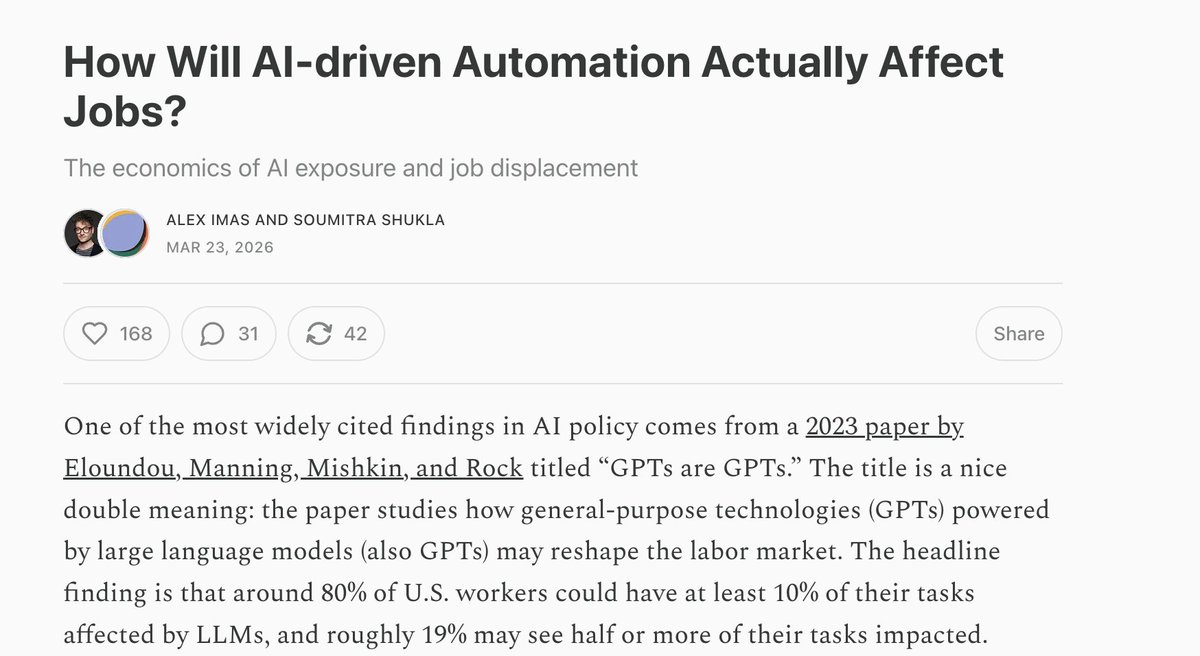
Excellent essay by @aleximas about thinking about the effects of Artificial Intelligence on the Labor Force
Harry Surden tweet media
English
1
0
2
173
Harry Surden รีทวีตแล้ว
Yann LeCun
Yann LeCun@ylecun·
Dario is wrong. He knows absolutely nothing about the effects of technological revolutions on the labor market. Don't listen to him, Sam, Yoshua, Geoff, or me on this topic. Listen to economists who have spent their career studying this, like @Ph_Aghion , @erikbryn , @DAcemogluMIT , @amcafee , @davidautor
TFTC@TFTC21

Anthropic CEO Dario Amodei: “50% of all tech jobs, entry-level lawyers, consultants, and finance professionals will be completely wiped out within 1–5 years.”

English
1.2K
2.8K
21.5K
4.1M