

@Wyvernous66 Excited to how your character looks with the next one I'm working on
English
HEX
289 posts

@HexMethod
Secular Conservative America First 🇺🇲 Slop Generator


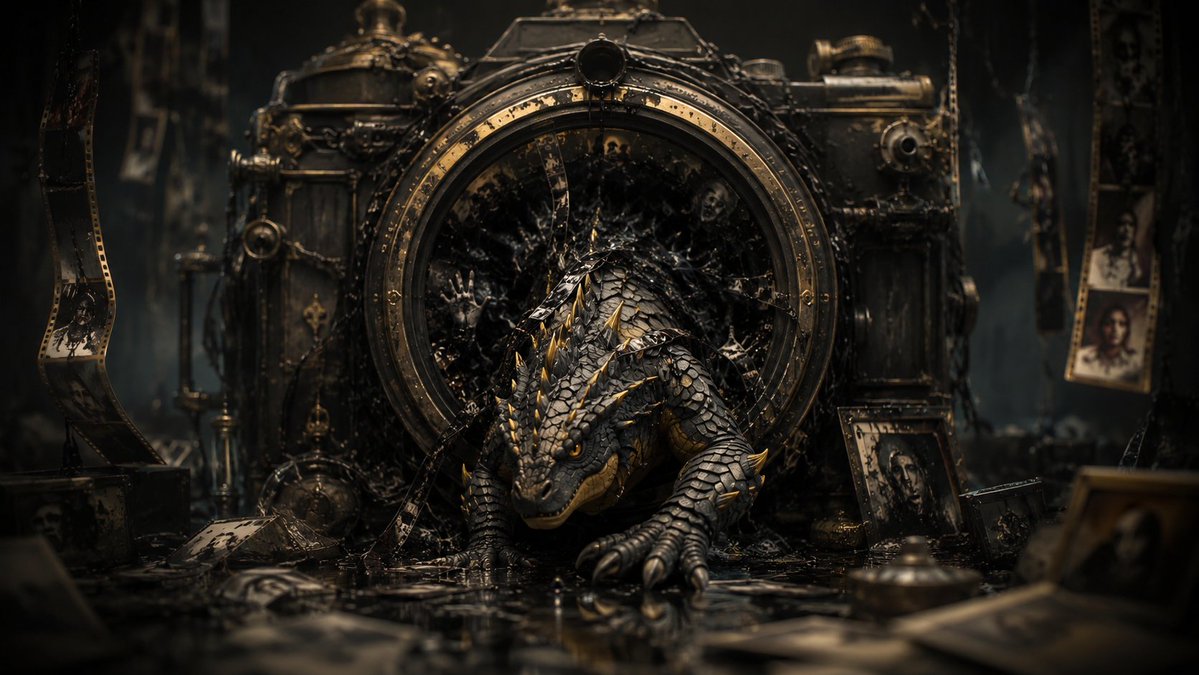
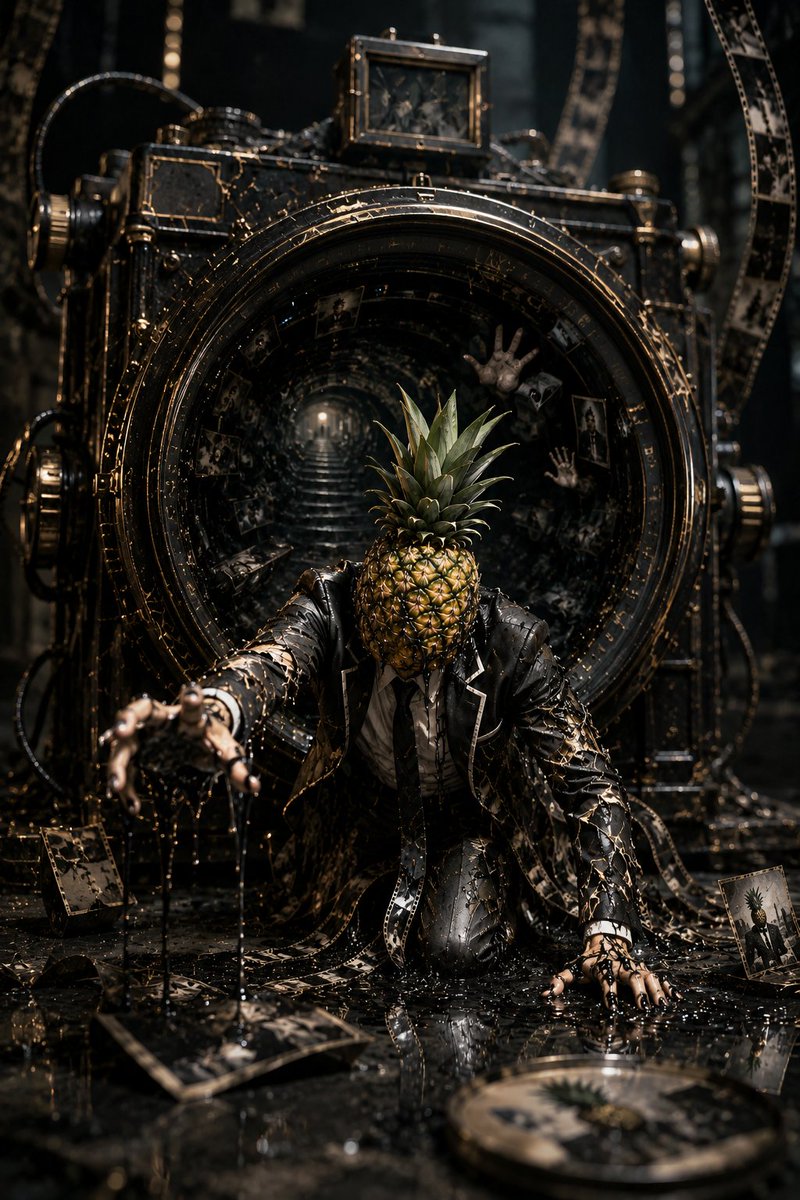


For something like Raelin's character, between Mood and Avoid I added, "Tails must match rest of character design." Otherwise, it forgets them so keep that in mind. The prompt will generate quite a variation of designs, so give it a few attempts. Prompt Share: Create a highly artistic, surreal fine-art image inspired by the supplied reference image. Use the supplied reference only as the seed of identity, not as a literal character copy. Preserve only a faint echo of the subject’s original form: a hint of silhouette, expression, posture language, color palette, materials, outfit motifs, accessories, or symbolic design elements. The final entity should feel transformed so completely that the original reference is present only as a ghost beneath the new form. The subject should not appear as a bust, statue, ordinary figure, or normal character. They should appear as a surreal godlike entity entering this reality through a violent tear in time, space, memory, or dimension. Their form should feel ancient, alien, divine, and metaphysically powerful, as if they are made from impossible cosmic anatomy rather than ordinary matter. At the center of the entity’s chest is a black hole core. It should not look like a simple glowing circle, portal, or decorative chest gem. It should feel like a true gravitational wound: a dark collapsed void surrounded by warped light, gravitational lensing, thin accretion rings, gold-lit cracks, black radiance, distorted reflections, and fragments of reality being pulled inward. The black hole may bend the torso around it, stretch nearby material, pull loose fragments from the body, distort the surrounding dimensional tear, and create the feeling that the entity carries a dead universe inside itself. The entity’s internal structure should be visible as impossible astronomy. Its ribs may resemble orbital rings, eclipsing arcs, celestial machinery, or broken planetary paths. Its spine may appear as a vertical constellation, a column of black stars, a chain of moons, or a tower of folded space. Its veins may look like glowing star maps, molten-gold ley lines, black-light cracks, nebula streams, or luminous cosmic roots. Its joints may appear as eclipses, tiny black suns, rotating moons, or gravitational knots. Its bones may be made from black marble, cracked porcelain, fossilized starlight, obsidian, bone-metal, or molten gold. The cosmic anatomy should feel sacred and terrifying, not medical or scientific. It should look like the inner structure of a divine anomaly: ceremonial, symbolic, ancient, and physically impossible. The exposed anatomy should not be gore. It should be elegant, abstract, sculptural, and celestial, as if the entity’s body is a map of dead galaxies, ruined timelines, and collapsed heavens. The entity appears to have torn open a hole in the fabric of reality itself. The rupture should look less like a portal and more like reality has been cut open from the other side. It should feel like a wound in space-time: ragged, luminous, elegant, impossible, and physically wrong. Around the opening, reality bends, folds, cracks, peels back, liquefies, or fractures like glass, cloth, old parchment, black marble, skin, metal, or cosmic film. The edges of the tear may glow with molten gold, black light, celestial fire, liquid shadow, bioluminescent threads, or broken starlight. The entity should look as if it has personally wounded the universe to enter the image. The dimensional tear should behave like a living scar in space-time, reacting to the entity’s presence with gold-lit fractures, black radiance, impossible shadows, floating shards, warped reflections of alternate realities, and fragments of broken physics. The world around it should look afraid to contain it. The original reference should be visible only through subtle traces: a familiar outline buried in the silhouette, faint echoes of the original colors, transformed clothing or armor motifs, symbolic fragments of accessories, or ghostlike details embedded into the cosmic anatomy. Do not preserve the original form too literally. Let the design become something stranger, older, more sacred, and more impossible. Exaggerate the entity’s silhouette into an iconic surreal shape. Its form may be elongated, fragmented, translucent, partially missing, multiplied, folded through time, made of layered shadows, cracked porcelain, black marble, molten gold, celestial scars, cosmic fabric, bone-metal ornamentation, sacred geometry, living ink, torn constellations, or gravity-distorted matter. The form should feel deliberate and elegant, not random. The face, if visible, should only faintly suggest the reference. It may be partially obscured, split across multiple planes, replaced by an eclipse, softened into a mask, fractured into floating pieces, stretched into shadow, or hidden behind luminous cracks. Any eyes may appear as black suns, impossible lights, voids, moons, or mirrored fragments of another universe. The expression should feel calm, commanding, unknowable, and ancient. The entity should appear to be the source of the rupture’s power. Reality should bend away from it while the black hole in its chest pulls reality inward. This contradiction should create visual tension: the outer universe recoiling from the entity, while the chest core consumes light, debris, time fragments, broken timelines, dimensional residue, and pieces of alternate worlds. Its arrival should feel less like travel and more like manifestation. The edges of the tear should contain tiny impossible scenes, alternate timelines, broken rooms, inverted skies, collapsed hallways, half-formed faces, memory fragments, symbolic ruins, and miniature worlds trapped in the torn fabric of existence. These details should be subtle and discovered after a longer look. Behind the entity, show glimpses of another universe or dimension: impossible architecture, inverted stars, floating ruins, black suns, recursive hallways, ocean suspended in space, shattered moons, alien cathedral geometry, storm clouds inside a void, dead planets, celestial machinery, or landscapes that ignore gravity. The world behind it should feel ancient, sacred, alien, emotionally charged, and physically incompatible with this reality. Make the dimensional rupture interact directly with the entity. The tear may wrap around its limbs or fragments, cling to its surface, pull pieces from its form, cast impossible shadows, create duplicate afterimages, reverse gravity around floating debris, reveal alternate versions of the entity inside folded space, or make parts of it appear slightly out of sequence with time. The final image should feel like a sacred intrusion: beautiful, mythic, cinematic, unsettling, symbolic, and overwhelming. It should look as if the entity is not arriving from another place, but breaking through from a reality that has different rules for matter, memory, identity, gravity, anatomy, and time. Aspect ratio: 9:16 vertical composition, full or three-quarter entity, centered dramatic arrival, tall torn rupture extending above and below the figure, enough space to show the dimensional wound, the black hole chest core, the visible cosmic anatomy, and the impossible universe behind it. Style: surreal godlike entity design, cosmic anatomy, mythic dimensional deity, sacred cosmic horror elegance, symbolic fine-art fantasy, reality-wound arrival, black hole chest core, gravitational lensing, luxury kintsugi energy, impossible anatomy, celestial distortion, dark cosmic realism, high-detail cinematic fantasy realism, dramatic gallery lighting, premium abstract composition, dimensional rupture, sacred sci-fi relic aesthetic. Mood: powerful, calm, alien, sacred, invasive, mysterious, elegant, terrifying, emotionally heavy, reality-breaking, divine, ancient, surreal, iconic. Avoid: gore, medical anatomy, bloody organs, ordinary character design, normal proportions, literal reference copying, casual stance, standard sci-fi portal, simple glowing circle, generic superhero pose, decorative chest gem, goofy monster design, messy horror, cluttered background, readable text, logos, cheap sparkles, random particle spam, action-movie chaos, or making the reference identity too obvious. @Gryphonknightt @reallynunyaz99 @DelDemonOver9k @RaelinAI


Fable 5 lies 96% of the time. We were surprised by it's skill... 🧵





Karmelo Anthony’s parents wanted their son to live in a gated community, and now he will. So it all worked out for them in the end.


