Hu Hu

8K posts

Hu Hu banner
Hu Hu

Hu Hu

@HuHuWeb3

Content creator | Web3 educator | Handmade arts creator | contributor @RialoHQ @bulktrade

เข้าร่วม Mayıs 2025
890 กำลังติดตาม1.1K ผู้ติดตาม
Hu Hu รีทวีตแล้ว
Devine
Devine@Mr_Kalamkaar·
$100 : 1st place $50 : 2nd place $25 : 3rd place $10 : 4th place $5 : 5th place Moove Article Contest. Participate Now @devineshaan/r" target="_blank" rel="nofollow noopener">moove.xyz/@devineshaan/r…
English
23
13
58
1.2K
𝐇𝐚𝐬𝐧𝐚𝐢𝐧
𝐇𝐚𝐬𝐧𝐚𝐢𝐧@Hasnain007861·
Are you guys waiting for this? Pfp 👀... I'm just thinking let me know what do you say...
𝐇𝐚𝐬𝐧𝐚𝐢𝐧 tweet media
English
20
2
47
916
Legend
Legend@legendary54321·
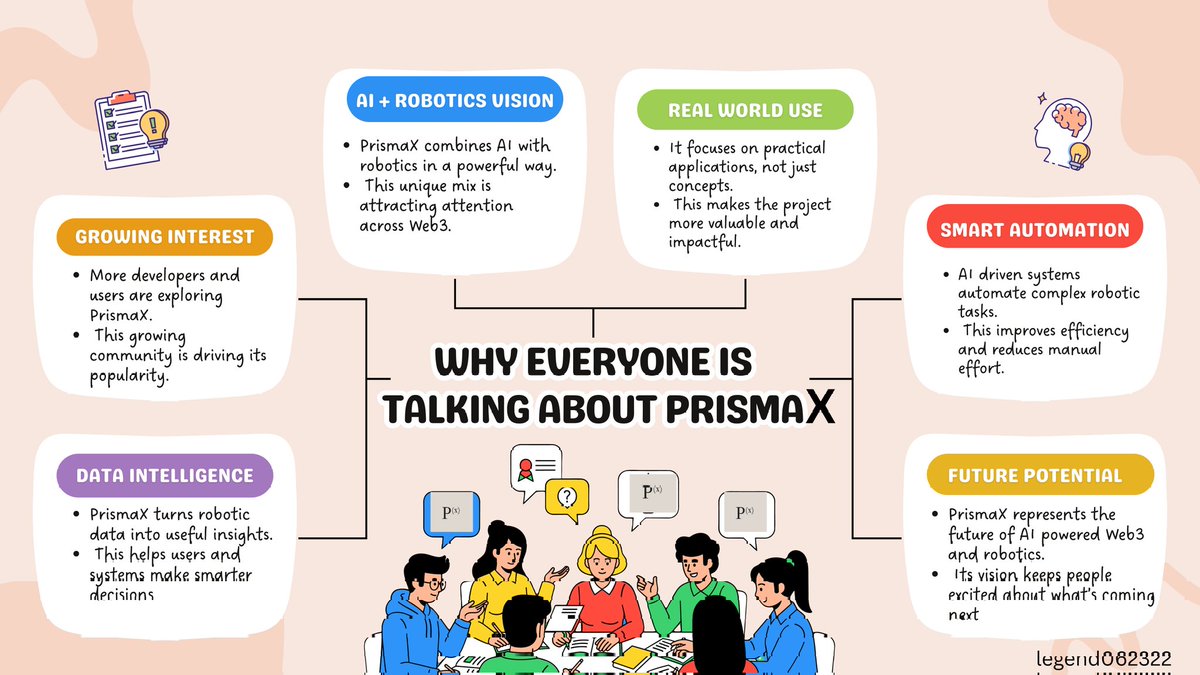
Why Everyone Is Talking About @PrismaXai PrismaX is gaining attention because it is not following the usual path of Web3 projects. Instead of focusing only on tokens or trading, it is building something much bigger, a real connection between AI, robotics, and blockchain. >> At the center of this attention is a clear and powerful vision: Operate robots. Generate data. Train better AI. >> This simple idea explains why PrismaX stands out in today’s tech space. >>One of the main reasons people are talking about PrismaX is its real world focus. >> Most AI systems rely on internet based data, but PrismaX is working with robots to generate real world data, which is more practical and valuable for improving AI. >> Another reason is the continuous improvement cycle it creates. Robots perform tasks, generate data, and that data is used to train better AI. >> This means the system keeps getting smarter over time, which is a big step toward advanced automation. >> PrismaX is also building a strong reputation for authenticity. >> It encourages real human contribution and does not support low effort or AI generated content. >> This creates a more trustworthy and meaningful community. >> The project also benefits from blockchain technology, which brings transparency, security, and fair participation. >> Users can trust the system, and contributors are rewarded based on their genuine efforts. >> Most importantly, PrismaX is seen as the bridge between robotics and mainstream adoption. >>It is taking advanced technologies and making them practical, useful, and accessible. >> In simple words, people are talking about PrismaX because it is not just another project, it is building a future where: >> Machines learn from real world actions, and AI becomes truly intelligent.
Legend tweet media
Legend@legendary54321

How to Get Roles in @PrismaXai Getting a role in PrismaX is not about shortcuts, it’s about real effort, consistency, and genuine contribution. As an AI Web3 project focused on robotics, PrismaX values people who truly understand its vision: Operate robots. Generate data. Train better AI. 1. Understand the Project Start by learning what PrismaX is building. Focus on how AI, robotics, and blockchain work together. When you understand the vision, your contributions become more meaningful. 2. Create Original Content PrismaX does not accept AI generated content. Share your own thoughts, ideas, and learnings in simple words. Authentic content shows your effort and helps you stand out. 3. Stay Active and Consistent Roles are given to those who are regularly active. Engage daily, participate in discussions, and support the community with useful input. 4. Add Real Value Don’t just post for the sake of posting. Try to educate, help others, and share insights about AI and robotics. Quality always matters more than quantity. 5. Follow Community Rules Respect the guidelines and maintain professionalism. Avoid spam, copied content, or low effort posts, these can reduce your chances. 6. Engage with the Community Interact with others, answer questions, and be supportive. Strong community presence plays a big role in earning trust. 7. Be Patient and Consistent Roles are earned over time. If you stay consistent and keep improving, recognition will come naturally. Conclusion In PrismaX, roles are not given randomly, they are earned through trust, effort, and authenticity. In simple words: Learn → Contribute → Stay consistent → Earn your role.

English
42
0
62
584
Devine
Devine@Mr_Kalamkaar·
Good Morning "X" 🌞 Any Plans ?
Devine tweet media
English
24
1
38
389
DARK SHADOW ( BARO X )
DARK SHADOW ( BARO X )@BaroAkhrang·
🍃 I took a break for 3 days and touched some grass to refresh myself 😉 . 💚 Went to a long drive with my friends and also bought myself a Joystick 🕹 . Now it's time to lock in again 😁 .
DARK SHADOW ( BARO X ) tweet mediaDARK SHADOW ( BARO X ) tweet media
English
13
0
23
287
STEVEN
STEVEN@stevenx199·
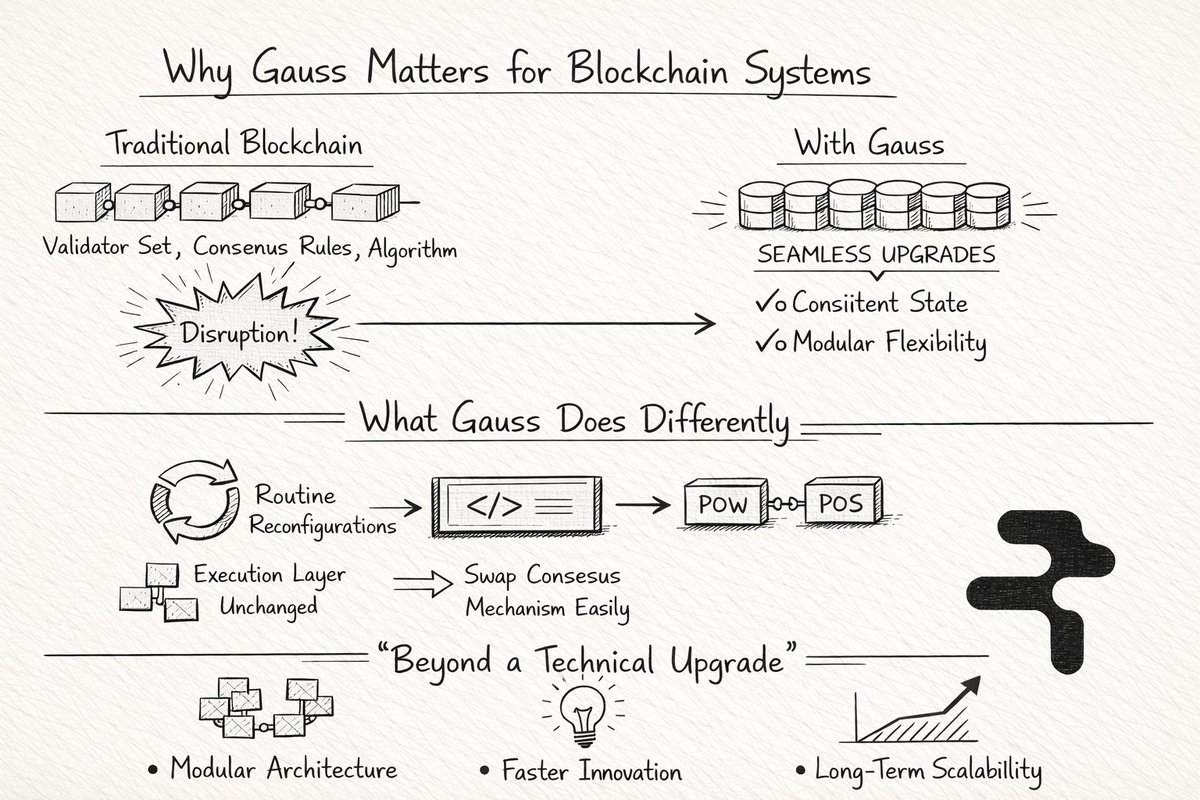
Why Gauss Matters for Blockchain Systems Anyone who works with blockchain knows one persistent headache. Every time you need to update the system, things get complicated. Change the validator set, update consensus rules, bring in a new algorithm, and each step carries real risk. One wrong move and the entire network can be in trouble. Gauss takes a fundamentally different approach to this problem. What Gauss Does Differently -> Reconfiguration is no longer a high-stakes event, it becomes a routine operation -> The execution layer stays untouched even when consensus rules change -> The system always converges to one consistent state, regardless of what happens in between The most significant part is that you can swap out an entire consensus mechanism without rewriting your codebase from scratch. This Goes Beyond a Technical Upgrade This approach reshapes how decentralized systems will be built going forward. Modular architecture means individual components can evolve independently. Teams no longer have to pause innovation just because an upgrade feels too risky. And when risk drops, experimenting with new ideas becomes far more practical. Gauss is ultimately the result of long-term thinking. As blockchain networks grow in scale and complexity, the demand for this kind of flexible, resilient infrastructure will only increase. @RialoHQ @RialoBangladesh
STEVEN tweet media
STEVEN@stevenx199

When you upgrade a system, downtime is almost always part of the deal. Gauss decided to change that. How Gauss handles upgrades The entire process is split into three stages. First, new validators prepare themselves and sync up with the current state. During this time, the old system keeps running without any interruption. Then a specific point is defined where the new configuration takes over. Both the old and new systems operate side by side, with one gradually replacing the other. Finally, the old validators step back slowly. Nothing shuts down all at once. So what does this actually mean for users? Simply put, you will not even notice when the upgrade happens. No major downtime, no service interruption, just a smooth and continuous experience. For most platforms, an upgrade feels like a risky event that everyone has to prepare for. Gauss turns it into something that feels completely routine, just another background process that takes care of itself. @RialoHQ @RialoBangladesh

English
12
0
31
916
DORA
DORA@dfwdora·
Rialo’s first two threshold modules show why these systems aren’t about splitting a key, they’re about splitting trust. With DKG, a group generates a private key together, but no one ever sees the full secret. Shares exist independently, and only a threshold of participants can reconstruct anything meaningful. VSS and Pedersen DKG take it further: if someone tries to cheat, the system detects it and removes them. Security doesn’t rely on hoping everyone is honest, it’s built to withstand misbehavior by design. When this foundation is solid, everything on top; validators, custody, MPC workflows runs much more reliably. Security isn’t in one place; it’s in the architecture.
Rialo@RialoHQ

Distributed trust is the cornerstone of robust security. We are diving deep with a 5-part technical series on how threshold systems eliminate single points of failure by requiring a quorum of participants to execute cryptographic operations. The first two modules are now live: 01 | Distributed Key Generation: An analysis of how groups jointly generate shared keys without any participant gaining knowledge of the full secret. This lesson covers Shamir's Secret Sharing, Lagrange interpolation, and honest-world key generation. 02 | Verifiable Secret Sharing: Moving beyond the honest-world assumption. This module explores Feldman’s VSS for share verification and Pedersen’s protocol for achieving DKG without a trusted dealer through complaint-based disqualification. Stay tuned for the remaining three parts of the series. Link below:


English
7
0
28
330
Mostofa Rafiu
Mostofa Rafiu@MostofaRafiu·
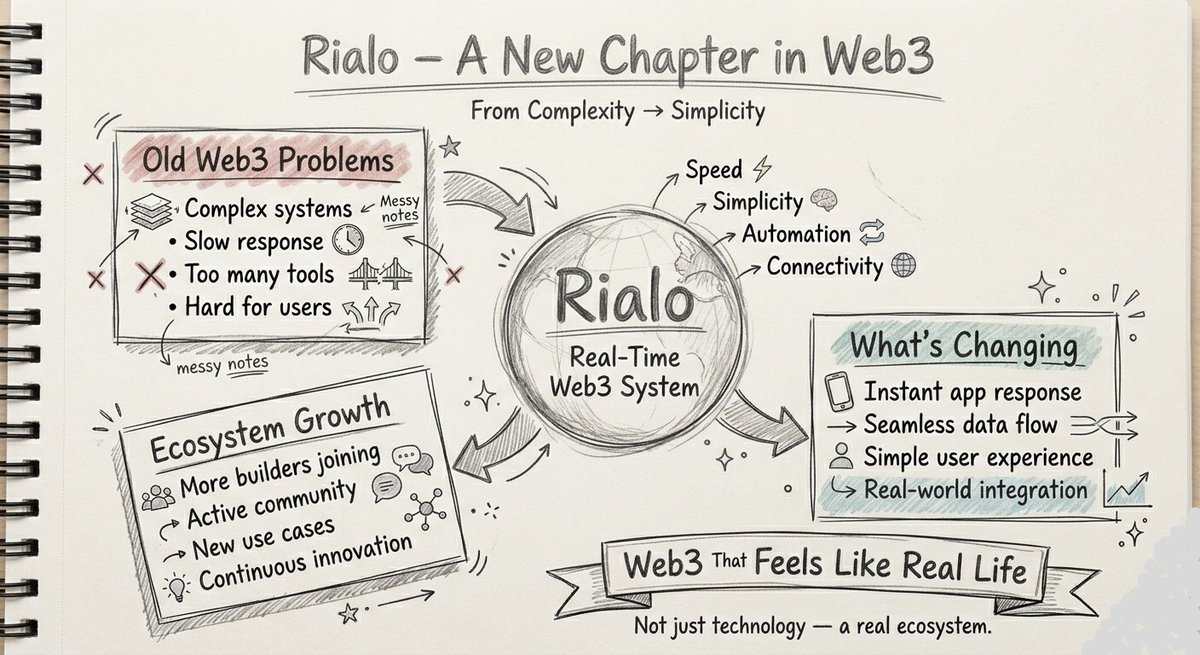
A new chapter for rialo.The conversation around blockchain is changing and Rialo is right at the center of that shift. @RialoHQ @RialoBangladesh For a long time, Web3 has been filled with powerful ideas but limited real world execution. Systems were built fast but often felt disconnected from how people actually live work and interact with technology.Rialo is approaching things differently. Instead of focusing only on performance metrics it’s building an environment where blockchain feels natural where apps respond in real time, data flows seamlessly and users donot have to think about complex layers behind the scenes. This is a move toward simplicity. A system where applications react instantly. Data is available when it’s needed.Processes are automated without friction.Users experience Web3 like modern software. At the same time, the ecosystem is growing.More builders are exploring ideas.More discussions are happening.More use cases are starting to take shape. This kind of organic growth is what turns technology into something bigger a real, living ecosystem. Rialo isn’t just solving technical problems. It’s redefining how blockchain fits into everyday life. The focus is no longer just on chain it’s about connecting onchain systems with real world activity in a way that feels seamless and practical. That’s where the future is heading. And Rialo is building toward it, step by step.
Mostofa Rafiu tweet media
English
8
1
37
197
Hasinur
Hasinur@hasinur1995·
The consumer credit market in the US is massive, sitting north of $1.7 trillion. But here's the thing: the infrastructure powering it hasn't really evolved much. For years, everything came down to one number. Your FICO score. That three-digit figure basically determined your financial life, whether you could borrow, how much, and what you'd pay for it. @RialoHQ is taking a different approach. They're building infrastructure that pulls in way more context than just credit scores. Think employment data, actual cash flow patterns, how someone behaves across different platforms. The goal is giving lenders a fuller picture so they can make better calls on creditworthiness. But the platform goes beyond just assessment. Rialo lets lenders run loan servicing and repayment tracking directly on blockchain infrastructure. This cuts down on operational costs and adds transparency to processes that have traditionally been black boxes. Borrowers can see where they stand, lenders can automate workflows, and everything runs on programmable rails. There's also a securitization angle. Lenders can tokenize their loans and bundle them into risk-stratified pools. For investors, this means actually understanding what's in the package they're buying into instead of trusting some opacity-filled prospectus. So you've got three pieces working together: better credit assessment using diverse data sources, streamlined servicing on chain, and clearer packaging for secondary markets. All in one system. The legacy lending stack is showing its age @RialoHQ is betting they can rebuild it with better data, better infrastructure, and way more transparency. Worth watching how this plays out.
Hasinur tweet media
English
6
0
19
111
𝐀𝐔𝐑𝐈 🌸
Most blockchains store data in one way publicly. Every balance, every vote, every order sitting on-chain is readable by anyone with an RPC call. That's not a bug in Ethereum's design. It was intentional. But it's become a ceiling for what serious applications can actually build on-chain. @SeismicSys tore that ceiling out. Mercury Seismic's custom EVM doesn't add a privacy layer on top of the existing storage model. It changes the storage model itself. Here's how it works. In standard EVM, every storage slot holds one thing: a value. 32 bytes. That's it. Mercury adds one more field to every single slot: (value, is_private) A boolean flag. Baked directly into the VM. Not in the compiler, not in a wrapper contract, not in a ZK circuit in the execution environment itself. To read and write these slots, Mercury introduces two new opcodes alongside the existing SLOAD/SSTORE: → CLOAD reads from a confidential slot → CSTORE writes to a confidential slot The rule is strict: the opcode must match the slot's flag. Try to SLOAD a private slot? Blocked. Try to CLOAD a public slot? Blocked. The VM enforces it not the developer, not the auditor. There's one exception worth noting. CLOAD can read a public slot if its value is zero. This exists to support initialization transitioning a fresh slot from public to private requires writing zero first, then CSTORE'ing into it. And that transition? It's one-way. Once a slot flips to private, it stays private. There's no path back to public. This is a deliberate design decision not a limitation. It prevents any scenario where previously confidential state could be accidentally or maliciously re-exposed. Now here's the detail that separates good privacy design from great privacy design: Gas costs. In standard EVM, storage gas costs vary cold slots, warm slots, dirty slots all cost different amounts. Those differences can be observed. And observable differences in gas costs can leak information about what's stored, even without ever reading the value directly. Mercury closes that. Confidential storage ops always charge the flat maximum gas cost. No variation. No side-channel. Privacy enforced not just at the data layer, but at the metering layer. For developers, the experience is clean. Seismic Solidity introduces stype declare a variable as a shielded type and the compiler handles the rest. CLOAD and CSTORE get routed automatically. Public and private variables coexist in the same contract, same structure, no architectural changes needed. This is what it looks like to build privacy into a blockchain at the specification level not as an afterthought, not as a middleware, but as a first-class property of how the machine itself thinks about data. @SeismicSys isn't adding privacy to the EVM. They rewrote what the EVM stores.
English
7
0
16
113
Koushik Nir
Koushik Nir@AhmedNir·
Base Joins x402 Foundation to Power the Agentic Economy Base has announced its entry into the x402 Foundation marking a significant step toward building infrastructure for the emerging agentic economy. By joining forces with major players like @coinbase , @Cloudflare , and @Shopify Base is positioning itself at the center of a new digital economic paradigm. The agentic economy refers to a future where autonomous AI agents can independently transact pay for services and interact financially without human intervention. At the core of this vision is x402 a developing standard aimed at enabling seamless native internet payments particularly for machine to machine interactions. @base highlighted a key milestone over the past month 75% of all x402 transactions have settled on its network. This signals strong early traction and suggests that Base is becoming a leading settlement layer for this new type of economic activity. As AI and blockchain technologies continue to converge initiatives like x402 could redefine how value moves across the internet unlocking new possibilities for automation micropayments and decentralized commerce.
Koushik Nir tweet media
Base@base

We're joining the x402 foundation to keep building the rails for the agentic economy alongside @coinbase, @Cloudflare, @Shopify, and more. In the past month, 75% of all x402 transactions have settled on Base, and we're excited to contribute to x402

English
6
0
15
172
Maharshi
Maharshi@maharshi_2207·
Blockchains split capital from usage. You stake to secure the network. But you still need separate tokens to pay for gas, storage, and recurring execution. Capital earns. Consumption spends. Users juggle both. That divide adds friction. Rialo’s Stake-for-Service (SfS) collapses the split. Staking yield converts directly into live service credits. Your capital doesn’t just sit and earn. It funds your activity automatically. No constant top-ups. No separate budgeting loop. No idle yield on one side and service costs on the other. Security and usage become economically aligned. Capital secures the network and powers it. Less wallet management. More capital efficiency. That’s infrastructure thinking. @RialoHQ @itachee_x
Maharshi tweet media
Maharshi@maharshi_2207

Blockchains promised transformation. But real finance never moved onchain. Because the base layer wasn’t built for it. No native automation. No configurable privacy. No tunable consistency. Too much middleware. Too many bots. So teams patched around the gaps. Oracles. Keepers. Admin scripts. Bridges. Compliance layers bolted on top. Fragmentation followed. Rialo starts at the protocol. Reactive transactions for native automation. Hybrid concurrency for safe parallel execution. Tunable consistency for real workloads. Deterministic write ordering across replicas. Confidential execution with programmable disclosure. Not faster for the sake of it. Structurally capable. RWAs that behave like real assets. Prediction markets that settle autonomously. DeFi that connects without wrappers. Agents that execute with verifiable guarantees. Less patchwork. More foundation. Get real. Get Rialo. @RialoHQ @itachee_x @ericargent31113

English
9
1
29
369
Aryan Gulati
Aryan Gulati@AryanXbt·
The credit system is finally evolving beyond just a 3 digit score. For years models like FICO reduced people to a number. But real life is more complex income patterns, spending behavior, job stability even platform activity all tell a deeper story. That's exactly where @RialoHQ is heading. They are not just improving credit assessment they are rebuilding the entire lending stack: → Bringing realworld data onchain → Automating loan servicing with transparent logic → Turning loans into programmable, tokenized assets This means lenders don't just decide better they operate better. Smarter underwriting. More efficient servicing. Clearer risk visibility. The shift is not incremental it's structural. Get real about credit. Get Rialo.
Rialo@RialoHQ

The $1.7T+ US unsecured consumer credit market is starting to move beyond credit scores alone. For decades, lenders mostly relied on systems like FICO to decide who should get a loan, how much they should get, and at what rate. That is changing: newer lending systems, including those used by @SoFi and @CashApp, use signals ranging from education and employment history to cash flow and platform-specific behavior to make those decisions. The next step is to upgrade the lending stack and move key components onchain. Rialo makes this possible by connecting onchain credit systems to real-world data, providing infrastructure to automate servicing workflows onchain, and enabling seamless tokenization of real-world assets, including private credit and consumer loans. That opens up three opportunities: - Richer credit assessment: Lenders can use alternative signals to determine creditworthiness by tapping into real-world data through Rialo. - Efficient servicing: Lenders can run loan management and repayment workflows on Rialo’s transparent, programmable blockchain rails, reducing overhead and improving transparency. - Loan packaging: Lenders can tokenize loans and bundle them into risk-weighted vintages, or loan pools organized by risk profile, with clearer visibility into risk and performance. The opportunity for lenders is not just to make better loans. It is to use infrastructure that enables them to assess, service, and package loans in a single integrated system. Get Real about credit. Get Rialo.

English
7
0
29
169
Devine
Devine@Mr_Kalamkaar·
Good Morning X 🌞
Devine tweet media
English
26
0
40
401