
Does the British public really value bats at £300,000 a pop?
Jonathan Berman
1.9K posts

@JZBerman
“The job ain’t about telling the story you like the most” Bunk Moreland

Does the British public really value bats at £300,000 a pop?


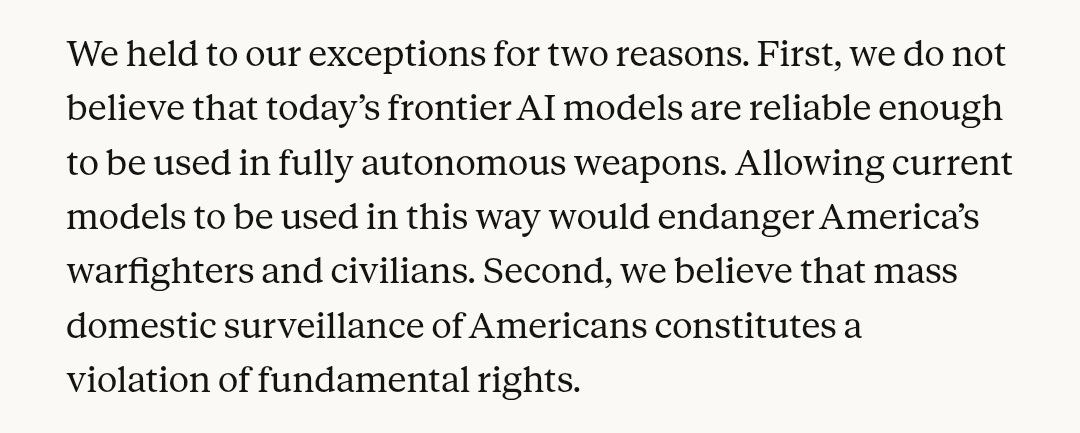
Tonight, we reached an agreement with the Department of War to deploy our models in their classified network. In all of our interactions, the DoW displayed a deep respect for safety and a desire to partner to achieve the best possible outcome. AI safety and wide distribution of benefits are the core of our mission. Two of our most important safety principles are prohibitions on domestic mass surveillance and human responsibility for the use of force, including for autonomous weapon systems. The DoW agrees with these principles, reflects them in law and policy, and we put them into our agreement. We also will build technical safeguards to ensure our models behave as they should, which the DoW also wanted. We will deploy FDEs to help with our models and to ensure their safety, we will deploy on cloud networks only. We are asking the DoW to offer these same terms to all AI companies, which in our opinion we think everyone should be willing to accept. We have expressed our strong desire to see things de-escalate away from legal and governmental actions and towards reasonable agreements. We remain committed to serve all of humanity as best we can. The world is a complicated, messy, and sometimes dangerous place.

Really great to see OpenAI with the same red lines as Anthropic - they also agree AIs are not able to do autonomous weapons safely and that mass surveillance would go too far.

Tonight, we reached an agreement with the Department of War to deploy our models in their classified network. In all of our interactions, the DoW displayed a deep respect for safety and a desire to partner to achieve the best possible outcome. AI safety and wide distribution of benefits are the core of our mission. Two of our most important safety principles are prohibitions on domestic mass surveillance and human responsibility for the use of force, including for autonomous weapon systems. The DoW agrees with these principles, reflects them in law and policy, and we put them into our agreement. We also will build technical safeguards to ensure our models behave as they should, which the DoW also wanted. We will deploy FDEs to help with our models and to ensure their safety, we will deploy on cloud networks only. We are asking the DoW to offer these same terms to all AI companies, which in our opinion we think everyone should be willing to accept. We have expressed our strong desire to see things de-escalate away from legal and governmental actions and towards reasonable agreements. We remain committed to serve all of humanity as best we can. The world is a complicated, messy, and sometimes dangerous place.


A statement on the comments from Secretary of War Pete Hegseth. anthropic.com/news/statement…

BREAKING: Trump orders all Government agencies to stop using Anthropic products. 97% chance Claude is banned.


Here's something fascinating happening in the apartment market right now. The cheapest, oldest apartments (Class C) are getting crushed right now. But ONLY in cities that just delivered tons of new apartments. Let me show you the numbers: Denver: Class C rents down 13.9% Naples: Class C rents down 13.5% Austin: Class C rents down 13.3% Phoenix: Class C rents down 10.5% San Antonio: Class C rents down 7.2% Dallas: Class C rents down 6.5% What do all these cities have in common? They just absorbed a massive wave of new apartments. But here's the twist... In cities that DIDN'T get a big supply wave? Class C rents are actually RISING. 20 cities saw Class C rents go UP more than 3%. 19 of those 20 cities had supply BELOW the national average. So what's going on? It's basically musical chairs. When a brand new luxury apartment opens up, where do those renters come from? They don't appear out of thin air. They move from slightly older apartments. Those apartments now have vacancies. So they drop their rents to compete. That pulls in renters from even older apartments. And down the chain it goes. Eventually it hits the oldest, cheapest apartments at the bottom. And here's why they get hit the hardest: People living in Class C apartments are already spending a huge chunk of their paycheck on rent. To fill empty units, landlords have to cut prices A LOT. Sometimes enough to attract people who couldn't afford market-rate apartments before. It's like a waterfall effect. The water (new supply) at the top pushes everything down. But here's the important part: This proves that building new apartments - even "luxury" ones - reduces rents all the way down the spectrum. If it was just an affordability crisis, you'd see Class C rents falling everywhere. In high-supply cities AND low-supply cities. But we're not seeing that. We're seeing a perfect split: Lots of new apartments = falling Class C rents Few new apartments = rising Class C rents New supply at the top creates relief at the bottom. Also: wages have been growing faster than rents for 3 straight years. More people can afford apartments today than before. The bottom line? This is what happens when you actually build housing. Supply works. (Chart and analysis from Jay Parsons - one of the sharpest real estate economists out there)


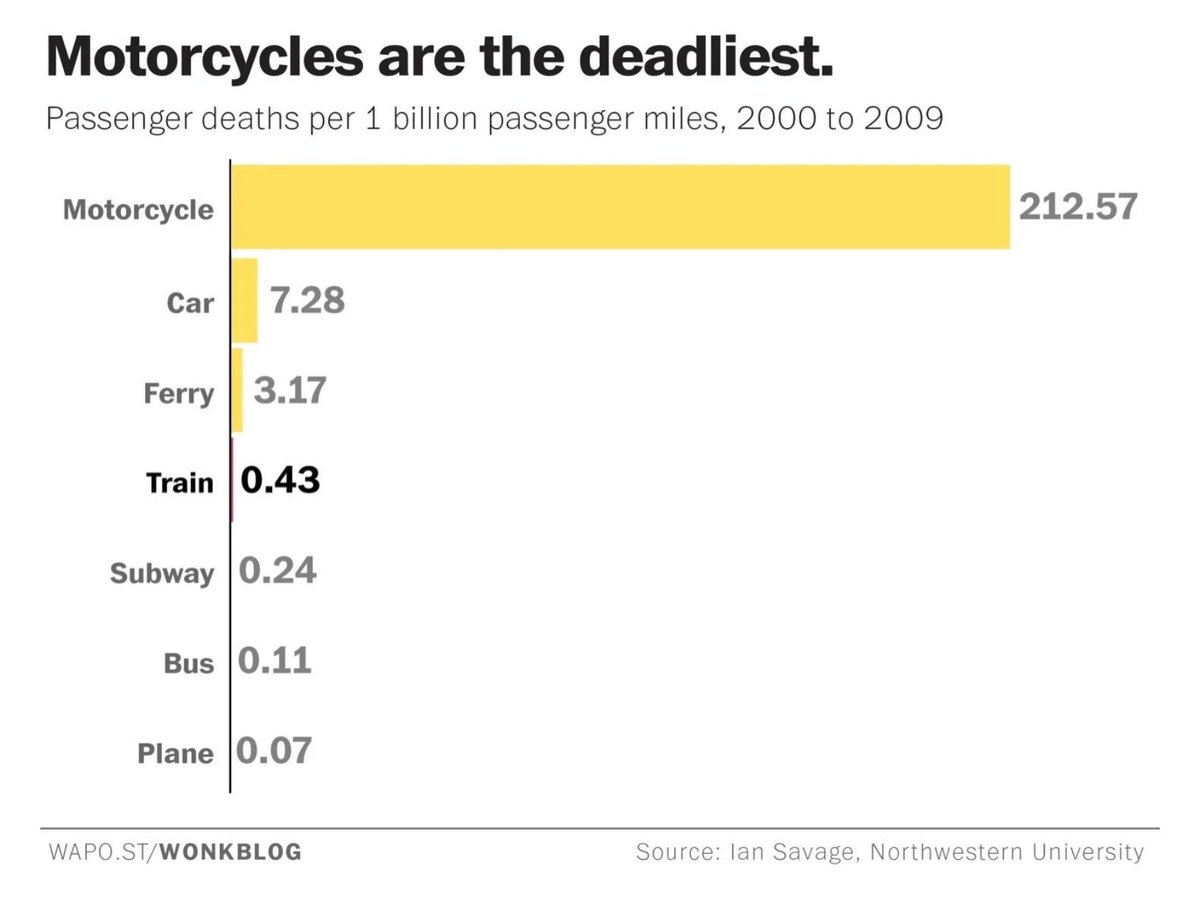
@allie__voss People die in car wrecks, too. Everyone has their own level of risk tolerance, and don't need to be wrapping everyone else in bubble wrap. That's how we got wimps running the country.