

Let's Do Logic
1K posts
Let's Do Logic
@LogicWouldHelp
Together we can remove incompetence.
เข้าร่วม Nisan 2023
33 กำลังติดตาม101 ผู้ติดตาม

JUST IN: Bridgeport Islanders to relocate to Canada pending approval.
READ MORE: bit.ly/4uEYllT
#News12CT #BreakingNews
English
@RoyalFamily The Queen has officially rolled over in her grave.
English


@SenSchumer Chuckles doesn't believe the US has the right to defend ourselves.
English

In four weeks, gas prices have surged by 27%—The second-largest jump in 35 years...
...and Donald Trump doesn't care:
FactPost@factpostnews
Trump on Iran: "I wanted to put out that fire and I said, 'You know, if I do that, oil prices will go up. The economy will go down a little bit.' I thought it would be worse, much worse actually. ... It's not that bad"
English
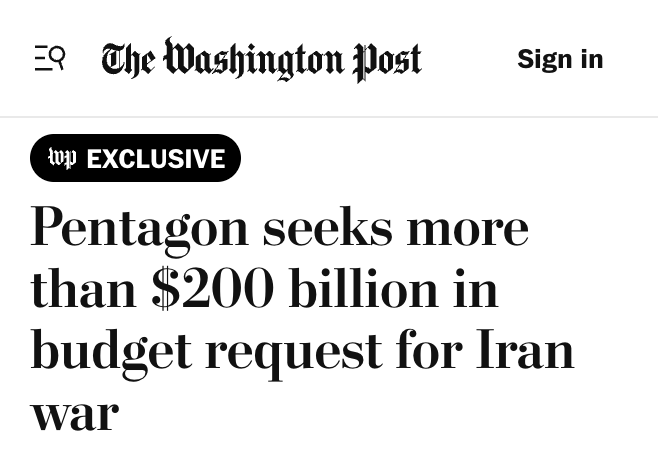
You've been in congress for a very, very long time. Why didn't you do anything to stop Iran? Thousands of American lives have been lost and trillions of dollars spent over the last 47 years. And now you complain about a $200 billion spend for the US to defend itself. Whose side are you on?
English
If Trump wants $200 billion, it means he believes we will be at war for a very, very long time.
That’s the last thing Americans want.
English
@SenGillibrand And how many American lives were lost and trillions of dollars were spent dealing with Iran since 1978?
English

Trump is asking Congress for $200 billion more for his war in Iran, but he cut your health care, drove costs up, and slashed Medicaid.
He wants money for his war first while Americans are paying for it.
English
@10DowningStreet And when push comes to shove, Starmer will rely on the US for its defense.
English

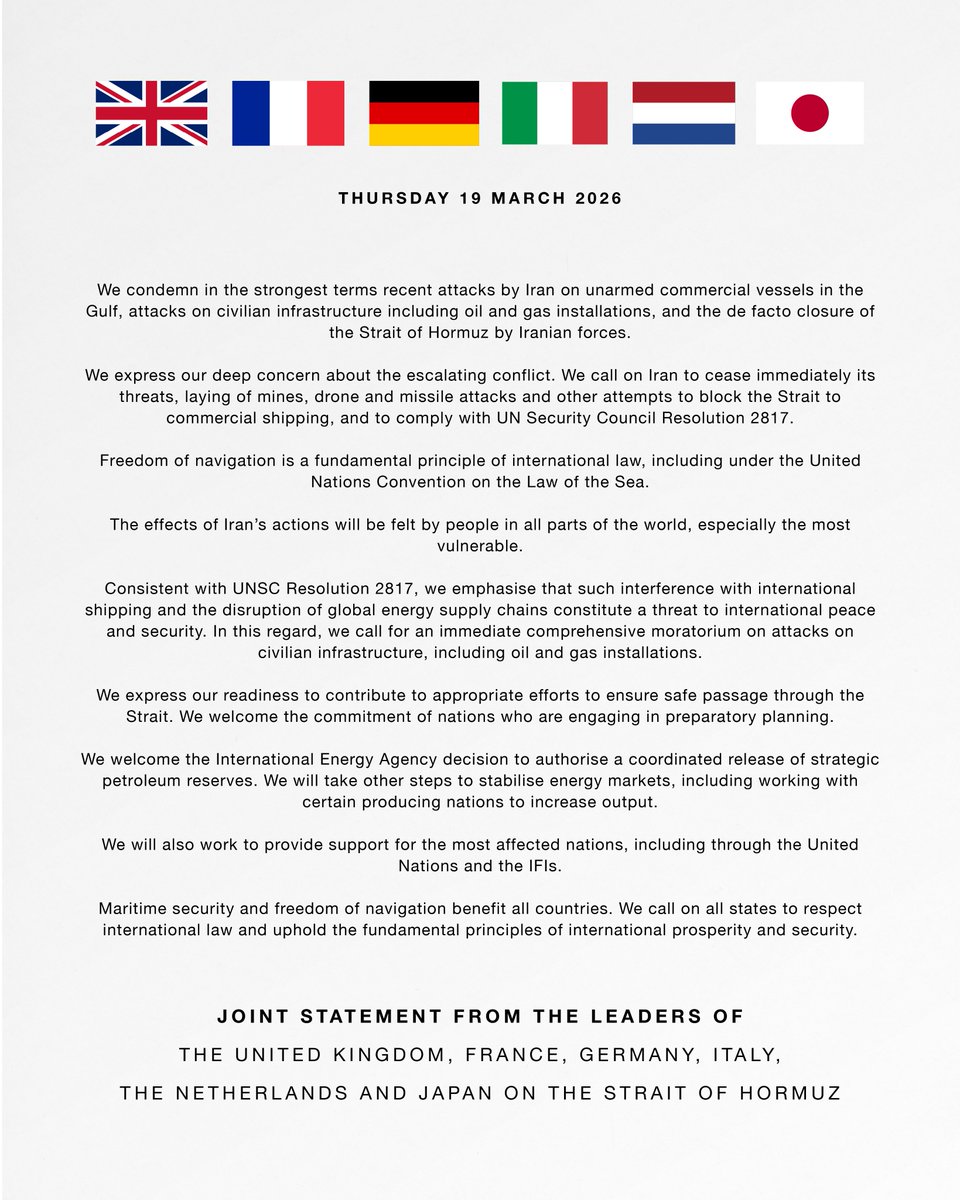
Together with our allies, we condemn in the strongest terms recent attacks by Iran on unarmed commercial vessels in the Gulf, attacks on civilian infrastructure including oil and gas installations, and the de facto closure of the Strait of Hormuz by Iranian forces.
English
@CTCentinal Proficiency rates in West Harford Public Schools are 68% for reading and 58% for math. Instead of dumbing down students with DEI, a novel idea to improve student outcomes would be to hire the best teachers.
English

Connecticut School's Equity Goals Included $20k Equity Contract, Hiring Based On Color, Privilege And Oppression Training
connecticutcentinal.com/education/2026…
English
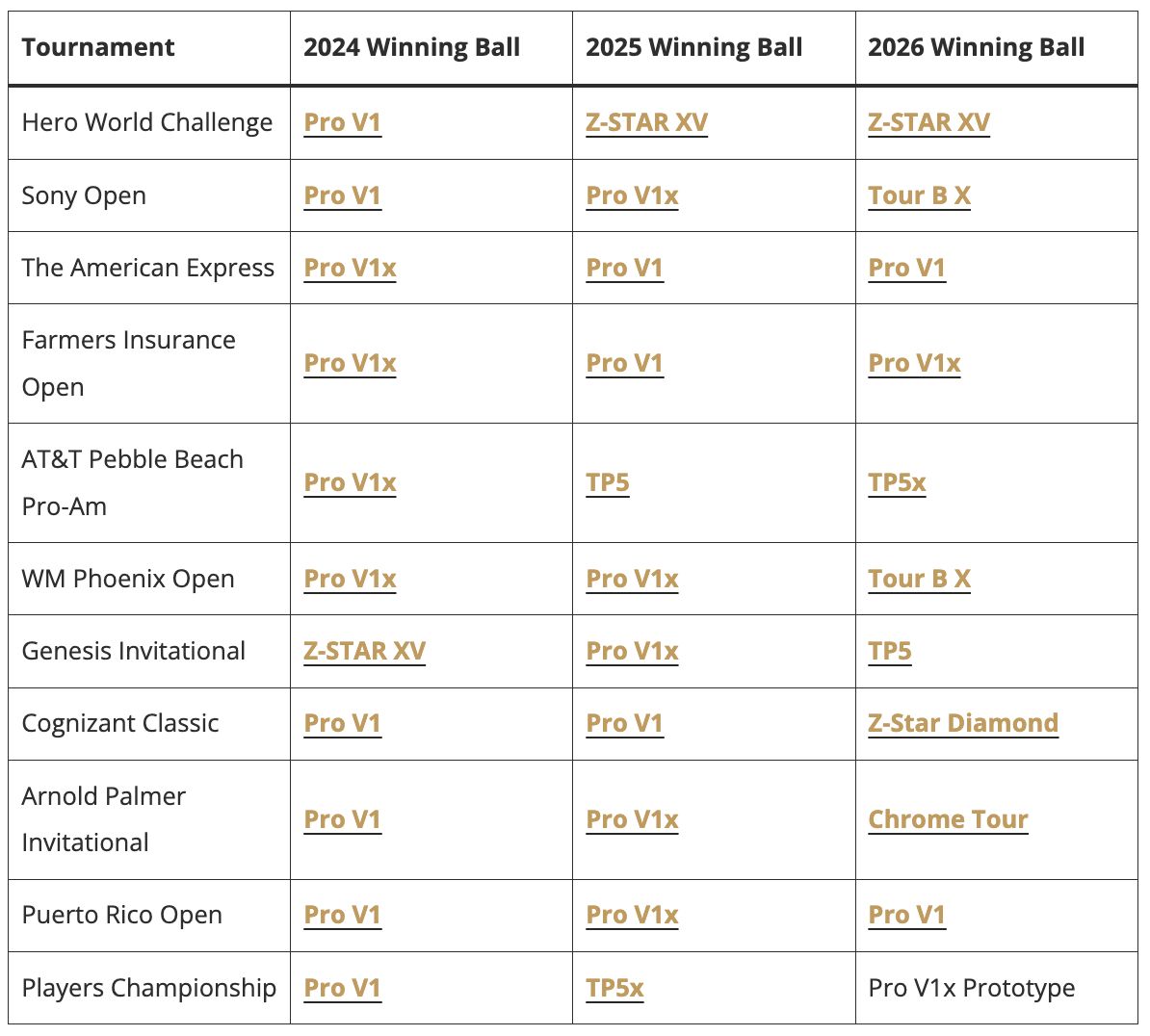
@MyGolfSpy @Titleist What balls are played by the top twenty players in the world? How about total wins on the PGA Tour over the last two years? How about dollars won? Eleven events is hardly statistically significant. Need more data to make an honest assessment.
English

If you play a @titleist ball...you should see this 👀
Looking at the first 11 events over the last 3 seasons, they used to have a 91% win share
Now? It's at 36%
Here's what's happening: buff.ly/jurHZLz
English

In Bristol a white girl, 14, went into the Zara store in Bristol, she was evading 15 bullies, many who were black. The store refused to protect her & made her leave the shop. She was brutally set upon by all 15 girls.
Friends & family are picketing the store.
Video @billymooreAPBD
English
@CTCentinal Crazy. CT wants to dumb down children by forcing them into schools with low proficiency rates.
English
The Connecticut Education Establishment Wants To Bully Home Schoolers
The Bill Authorizing This Should Be Rejected
connecticutcentinal.com/opinion/2026/0…
English
@PGATOUR He is a true gentleman. Can't wait to see him win again.
English

I think Goldstein would do better if he focused on other issues. Americans want to see those in congress held accountable for their incompetence, anti-American rhetoric, insider trading, stealing the vote, grift, etc. Himes and each of his counterparts in CT, and the northeast for that matter, need to be removed from congress.
English
Greenwich Physician Announces 2026 Congressional Challenge To 17-Year Incumbent
connecticutcentinal.com/politics/2026/…
English

Senator Chris Murphy of Connecticut... and you have to hear about this guy because it's one of the most incredible, most brazen, most dishonest examples of hypocrisy you'll ever see in American politics. Maybe ever. And there's a lot of competition, believe me.
Back in 2014, Murphy is on the Senate floor, he's giving speeches, he's writing resolutions, and he's telling every Republican in Washington... don't you dare undermine these Iran negotiations. Don't do it. He said if Congress shows it doesn't take the talks seriously, it'll destroy our credibility with allies, scare off our negotiating partners, give Russia and China an excuse to walk, and leave us with nothing but a military option. His words. Not anyone else's. His words.
And by the way, Trump rebuilt the military, made it the strongest, the most powerful, the most technologically advanced fighting force the world has ever seen... nobody's even close... so the military option isn't quite the disaster it would've been under the previous administration, but that's a separate story.
So what happens? Trump gets back into office, and he starts serious indirect talks with Iran. April 2025. Oman-mediated. Very tough, very sophisticated negotiations. Steve Witkoff, incredible guy, working the back channels. Trump gave them a real deadline... sixty days... because he doesn't do endless process. He does deals. Zero enrichment, ship out the uranium, dismantle the key sites, open the doors to inspectors. Clear demands. Generous terms, frankly, very generous, because he didn't have to offer them anything. He could've just hit them. But Trump wanted to give diplomacy a chance because that's what a strong leader does.
And what does Murphy do? The same Chris Murphy who said you must not undermine negotiations while they're happening? He goes on television. He goes to Iran International, which the Iranians are watching, and he calls Trump a liar. Says he has no idea what Trump is trying to achieve. Says most of what Trump says isn't real. He pushes war powers resolutions to tie the President's hands. He's out there broadcasting American division to the entire world... to Iran, to our allies, to everybody... while the United States is sitting at the table trying to close a deal that could've avoided all of this. All of it.
And it gets worse. Murphy secretly met with Iran's foreign minister, Javad Zarif, back in 2020. Secretly. Behind everyone's back. During Trump's first term. So he'll freelance with the Mullahs, but he won't support his own country's negotiating position when it matters. Think about that.
Iran watched all of this. They watched Murphy trash America's leverage in real time. They saw the division. They stalled. They rejected every core demand. Zero enrichment? No. Ship out the uranium? No. Dismantle the facilities? Absolutely not. And the talks collapsed. They collapsed because Iran believed... correctly, unfortunately... that they didn't have to make a deal because half of Washington was working against the other half. And Murphy was leading the charge.
So the only card left was the military card. The very thing Murphy warned about in 2014. The very thing he said would happen if politicians undermined negotiations. He predicted the mess. Then he spent a year engineering the mess. Then the military option becomes necessary, and now he's on NPR calling the war "incoherent." Now he's calling Trump senile. Now he wants to block all Senate business and defund the operation. The man who helped make the war inevitable is now complaining about the war. Incredible.
And by the way... this is the same guy they're floating for 2028. That's their big idea. A senator from Connecticut who sabotaged his own country's diplomacy, sided with Iran's talking points, and now wants to be President. Good luck with that, Chris. Good luck.
You have to ask the question. At what point does undermining your own country's foreign policy in the middle of the most sensitive, most high-stakes, most consequential negotiations in decades... at what point does that stop being opposition and start being something else? Because the people of Connecticut deserve better, the people of this country deserve better, and our incredible warriors now in harm’s way... including the 13 who lost their lives because diplomacy failed... they sure as hell deserve better than Chris Murphy.
English
@TrustDML @ChrisMurphyCT could learn something from this video.
English

The BEST VIDEO of the week:
“Fuck Palestine” from a native NYer on the subway. “If you hate this country then get the fuck out.”
English
What did you think would happen after we chose to defend ourselves after 47 years? Of course Iran is going to lash out. Did you think the crazies in charge would stay silent? If it was your choice you would allow Iran to continue attacking the US and killing Americans. You are a disgrace.
English
Read this incredibly comprehensive account of how the entire Middle East is about to explode….
…and then think about the fact that our current Secretary of Defense spends most of his day reviewing and complaining about photos of him online.
Hamidreza Azizi@HamidRezaAz
#Iran War Update No. 12 (focus on Iranian strategic narrative): 🔹Iranian sources expect that the war is entering a new and more volatile phase that could, on the one hand, involve internal unrest, and on the other hand, expanded regional fronts and greater pressure on global energy markets. 🔹Iranian security circles are warning that a phase involving foreign-instigated domestic instability or civil strife may be approaching. In response, authorities appear to be tightening internal security, adjusting Basij and security forces procedures, and mobilizing pro-government supporters to maintain control of public spaces. 🔹Pro-government gatherings were reported in several cities during the night. Iranian officials have openly encouraged supporters to occupy the streets in order to prevent opposition groups from shaping the domestic narrative during wartime. 🔹At the same time, state media claim new volunteers have come forward to join Basij operations after reports that some Basij members had been targeted and killed by Israeli drones in Tehran. The state media are in fact signaling that attacks on these forces are unlikely to intimidate the government’s core ideological support base. 🔹Iranian strategic discussions also suggest that the conflict is entering a more complex regional phase. Hezbollah’s escalation is seen in Tehran as a way to reduce pressure on Iran by forcing the United States and Israel to divide their military focus across multiple fronts. 🔹In response to Hezbollah’s large rocket attacks, Israel reportedly conducted a major wave of strikes against Hezbollah infrastructure in Lebanon. Iranian analysts believe this could force Israel either to shift resources toward Lebanon or risk widening the war further. 🔹Some Iranian analysts also argue that the Yemen front could soon become active, potentially adding another layer of pressure on the United States and Israel and further stretching their military resources across the region. 🔹At the same time, reports indicate that Israel may be considering establishing a base in Somaliland to counter the Houthis in Yemen. If implemented, such a move could expand the conflict toward the Horn of Africa and create new targets for Houthi operations. 🔹At the same time, there is growing concern in Iranian discussions about Syria potentially becoming another arena of escalation. Some analysts warn that Syrian government forces could become involved in the conflict against Hezbollah in coordination with Israel, which in turn could trigger retaliation by Iran or by Iraqi Shia militias against Syrian targets. 🔹The maritime dimension of the conflict continues to dominate global attention. G7 leaders have discussed the possibility of organizing a coordinated naval escort mission for commercial shipping in the Strait of Hormuz in order to restore maritime traffic and stabilize energy markets. 🔹The economic impact of the war is also becoming more pronounced. The International Energy Agency announced the release of around 400 million barrels of oil from strategic reserves in an effort to stabilize global markets. 🔹Despite these measures, energy markets remain under pressure due to the near halt of shipping traffic through the Strait of Hormuz and the broader disruptions caused by the conflict. 🔹Donald Trump stated that oil prices are already beginning to fall but indicated that the United States is unlikely to end the war before achieving its objectives, suggesting that Washington may still lack a clear endgame for the war. 🔹Meanwhile, GCC political dynamics appear more complicated behind the scenes than public statements suggest. According to reports cited by Reuters, some Gulf leaders privately believe the United States entered the war hastily and dragged regional partners into the conflict without a clear long-term plan. 🔹Iranian analysts interpret these reports as evidence that Gulf states may be increasingly frustrated with Washington’s ability to guarantee their security despite massive investments in defense systems. 🔹From the Iranian perspective, geography will ultimately force Gulf states to maintain relations with Iran regardless of current tensions. Iranian observers argue that once the war ends, regional states may reassess aspects of their strategic alignment with the United States. 🔹Diplomatically, Iranian analysts appear to view the recent UN Security Council abstentions by Russia and China pragmatically. They note that both countries attempted mediation efforts but could not guarantee that Gulf states would deny their territory to U.S. operations, making abstention the expected outcome. 🔹At the same time, Iranian observers emphasize that Russia and China continue to support Iran through diplomatic backing and other forms of cooperation, even if they avoid openly confronting the United States in international institutions. 🔹Iranian strategic thinking increasingly assumes that the United States may escalate the war further. Scenarios discussed include attacks on Iran’s economic and energy infrastructure, limited ground deployments, and expanded targeting of security forces such as the Basij. 🔹Overall, day 12 suggests that the war is moving toward a broader contest over regional positioning, domestic resilience inside Iran, and the ability of each side to impose economic and political costs over time. At the same time, the geography of the conflict may be widening, with growing indications that additional theaters such as Syria and even the Horn of Africa could become involved as the war evolves.
English
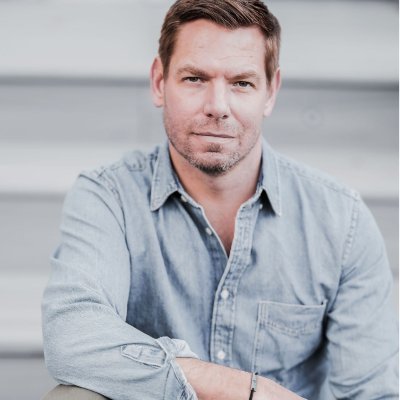
I receive hundreds of death threats every year. My children are not allowed in the yard. That’s why my address is private. And now Tom Steyer has not only put my life at risk but also my family’s by releasing my address.
And the California Post and Daily Mail took his bait and are harassing my neighbors.
Tom, you can try to buy this election all you want, but this is low, even for you.
English

Iran Cancels Plan To Attack California After Seeing Gavin Newsom Already Destroyed It buff.ly/PWIAOgw

English
@ChrisMurphyCT And let Iran continue to attack the US? Pound sand.
English
The better plan to lower gas prices is to
END
THE
WAR.
ABC News@ABC
The Department of Energy announced Wednesday that it has been authorized by President Trump to release 172 million barrels from the U.S. Strategic Petroleum Reserve, starting next week, in an effort to lower gas and oil prices amid the war in Iran. abcnews.link/xlNsj2B
English
What a friggin disaster.
Erin Banco@ErinBanco
SCOOP: U.S. intelligence indicates that Iran's leadership is still largely intact and is not at risk of imminent collapse after nearly two weeks of relentless U.S. and Israeli bombardment, per sources briefed. w/@JonathanLanday reuters.com/business/media…
English

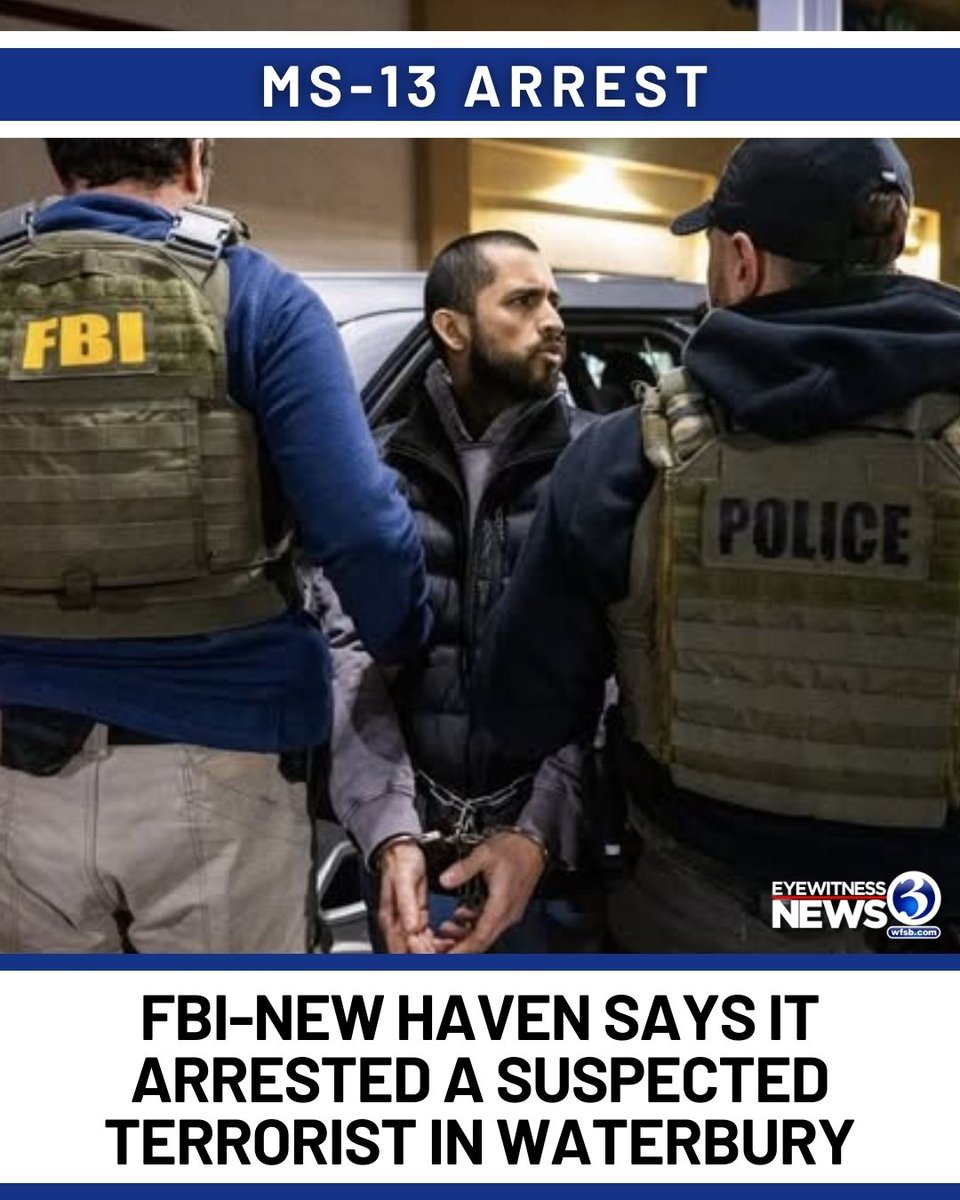
The FBI New Haven office says it arrested a member of a foreign terrorist organization in #Waterbury. wfsb.com/2026/03/11/sus…
English