Michael Anthony Brito, PhD รีทวีตแล้ว
Michael Anthony Brito, PhD
2.2K posts

Michael Anthony Brito, PhD
@MBritoNeuro
Neuroscientist. Bassist. @UCSBpsych @NGPMichigan @UCSF alum. From academic research in consciousness/psychedelics to building the future of BCIs @neuralink.
San Francisco, CA เข้าร่วม Eylül 2017
1.4K กำลังติดตาม1.5K ผู้ติดตาม

@PMinervini If flight were a fraction as complex as emotion, this might hold. It is a false assertion that simple mechanical systems are analogous to complex systems like the brain that give rise to emergent phenomena like "feeling". Planes = sum of parts, qualia are not.
English

Let me say this clearly: airplanes cannot fly.
Flying is an evolutionary mechanism that first insects and then dinosaurs used to avoid danger etc.
Valerio Capraro@ValerioCapraro
Let me say this clearly: LLMs cannot feel emotions. Emotions are evolutionary mechanisms. They push us to avoid danger or approach what is beneficial. We experience emotions because we are alive, and we want to stay alive. LLMs are not alive. Yes, emotional language may be encoded somewhere in the LLM. Yes, it may even be associated with some LLM output. But that is just a superficial property. There is nothing deeper behind it. For a very simple reason: LLMs do not have an intrinsic and inescapable drive to stay alive. This is what we call “motivation fault line” in our paper describing seven fault lines between human and artificial intelligence. * Paper in the first reply
English
Michael Anthony Brito, PhD รีทวีตแล้ว

Kenneth was diagnosed with ALS in 2024 and is losing his ability to speak.
Through Neuralink’s brain-computer interface technology, he is working towards regaining not just the ability to speak, but to speak in his own, original voice.
See how this is made possible.
English
Michael Anthony Brito, PhD รีทวีตแล้ว
I’m looking forward to speaking at Foresight’s Vision Weekend!
Foresight Institute@foresightinst
Molecular self-assembly. Private AI. Brain-computer interfaces. AGI safety. Hacking aging biology. Dyson spheres. Funding models for long-horizon science. We can’t wait for the talks at our upcoming Vision Weekend. June 5-7 in London. Full speaker lineup: • Greg Wayne (Google DeepMind) on universal AI assistants • William Shih (Harvard University) on self-assembly and the coming age of molecular machines • @moxie (Confer) on private AI • @leecronin (University of Glasgow) • @irinarish (Mila) on beyond scaling: toward continual and adaptive intelligence • @eboyden3 (MIT) on incentives in science • @anderssandberg (Institute for Future Studies) on Dyson 2070: how fast can we build a Dyson sphere and how stable are they? • João Pedro de Magalhães @jpsenescence (University of Birmingham) on hacking aging biology • @dorothychou (Google DeepMind) on capital for the long game: financing durable innovation in an age of hype • @SergeyStavisky (UC Davis) on high-bandwidth BCIs for motor and communication recovery in people with paralysis • Žiga Avsec @Avsecz (Google DeepMind) on advancing regulatory variant effect prediction with AlphaGenome • Christopher Rozell @crozSciTech (Georgia Tech) on closed-loop neuroengineering • @JerzySzablowski (Rice University) on precision neuromodulation through molecular engineering and focused ultrasound • Christine Peterson @lifeext (Foresight Institute) on Foresight, 40 years later • @MariusHobbhahn (Apollo Research) on the case for AGI safety products • @WeinbaumJonah (Institute for Progress) on the 'launch sequence': towards a concrete agenda for defensive acceleration • Peter Gehle (Tübingen AI Institute) • @joemeyerowitz (Field Foundry) • @jncstrd (SPRIND) on challenges as a tool for breakthrough innovation • @RonitKanwar (Renaissance Philanthropy) on fuelling scientific renaissances • Lynne Cox @OxAgeN_oxford (University of Oxford) • Adam Shai @adamimos on the neural basis of intelligent behavior • Zoë Brammer (Google DeepMind) on AI for science 2030 • Darja Isaksson (Vinnova) • Thane Campbell @Thane_ac (Deep Science Ventures) • Ankur Vora (Google DeepMind) on AI for science 2030 • Leah Morris @leahelizmorris on AI for science • @KirillEves (e184) • Kathleen Fisher (ARIA) • Mehmet Fisek (Meridial) • @JacquesCarolan (ARIA) moderator • Barbara Diehl @barbaradiehl13 (SPRIND) moderator • Eric Gilliam @eric_is_weird (Renaissance Philanthropy) moderator • @allisondman (Foresight Institute) moderator Powered by: @apolloaievals @ARIA_research @e184media @CUHPartners @RenPhilanthropy @SPRIND :
English
Michael Anthony Brito, PhD รีทวีตแล้ว

Some neuroscientists think engineers exist to serve them. Some engineers think biology doesn't matter, just build better devices.
Biology is why every chronic brain implant eventually fails. You can't engineer around a problem you refuse to study.
English
Michael Anthony Brito, PhD รีทวีตแล้ว
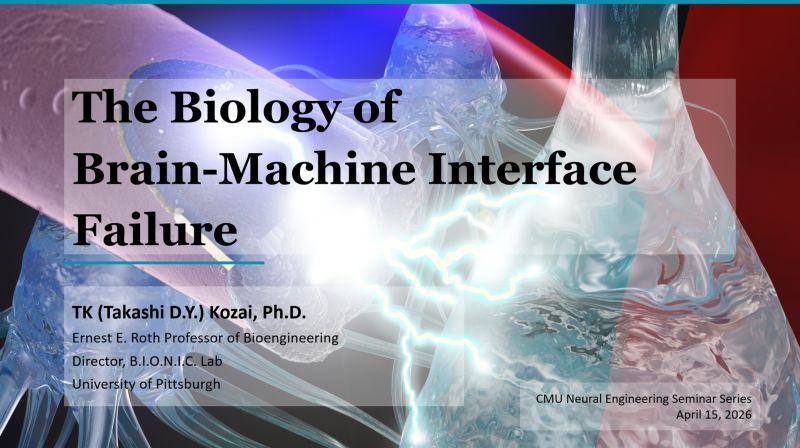
🎥 A few people asked for slides after my CMU seminar. I re-recorded the full talk instead.
Thanks to Bin He for organizing.
English
Michael Anthony Brito, PhD รีทวีตแล้ว
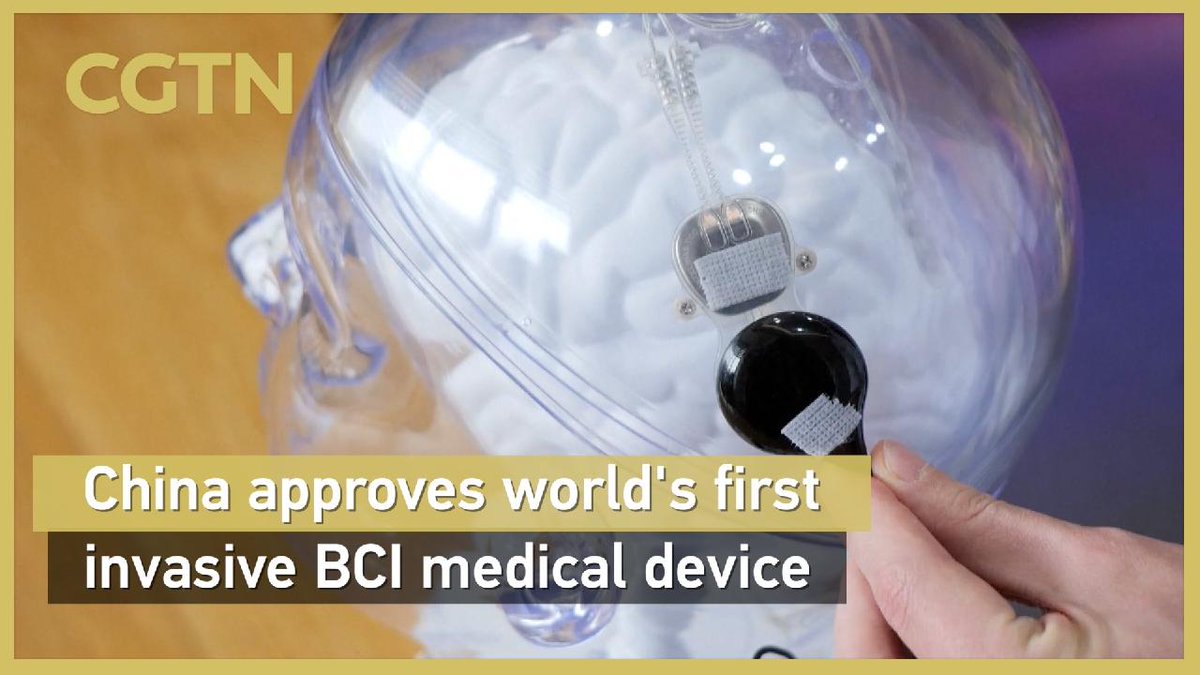
Every BCI in clinical trials in the US today was built on biology from the 1990s. The foreign body response, the Shannon safety limits, the biocompatibility metrics we still use. That science was the runway. We stopped extending it.
English
This week, I'm back in Ann Arbor to speak to neuroscience students about industry careers as a part of UM Neural NetWORKS. I love this place, and will never forget the ways in which the University of Michigan nurtured me as a student. It feels good to be back in the Mitten!
English
@TheBorisLab @JAMAPsych Definitely not off. Just has a friend who is a bit slow talking very loudly over everything. Great work, Boris and co!
English
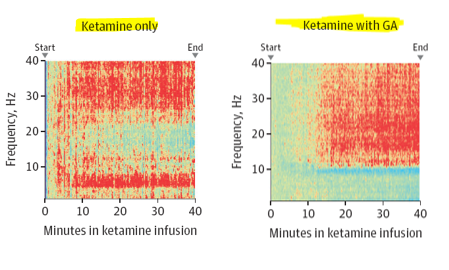
Lots of folks seemed PRETTY sure that giving ketamine during general anesthesia to "block the trip" was pointless, anesthesia silences the brain and ketamine won't work. We checked. Just out in @JAMAPsych. Below: frequency heatmaps over the course of 40 min, + and - anesthesia:
English
@FredBarrettPhD That seems like a crazy and unrealistic requirement. It should be seen as exceptional, certainly, but "needing" one filters out a lot of excellent talent. I was involved in undergrad research for 3 years. I left with two co-authors and a hell of a lot of real lab skills.
English

reality check: do prospective grad students really need to have first-authored papers to be competitive? perspectives have differed widely when sampling a few local colleagues. It's clear they can be sufficient, but the question is whether they are truly necessary ...
English
Michael Anthony Brito, PhD รีทวีตแล้ว

Integrated information theory - the good, the bad, and the misunderstood. New preprint, a long time in the making, led by Adam Barrett alongside a terrific crew: @MilinkovBorjan @PedroMediano @_fernando_rosas @DanielBor Lionel Barnett, & me. arxiv.org/abs/2604.11482
English


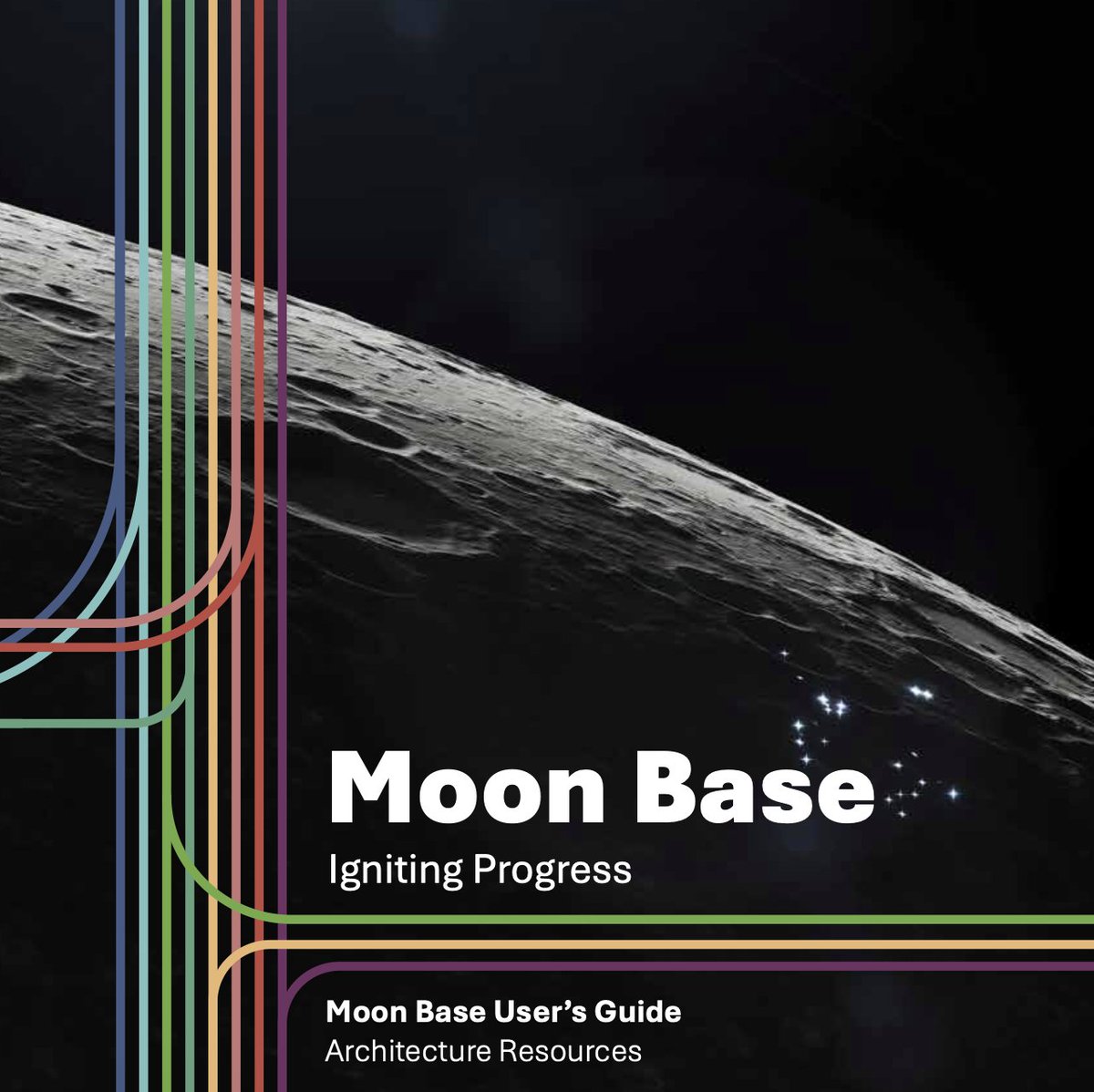
NASA just quietly published something incredible.
A map of how we build a permanent human presence off Earth.
It’s called the Moon Base User’s Guide.
Here's what's in it! 🧵
English
Michael Anthony Brito, PhD รีทวีตแล้ว
🛂 I was raised as a compassionate conservative. Core principle: those with privilege owe service to those without.
Ironic. My family had no privilege
My parents were green card holders. >$1M in debt. Too afraid to take entitlement programs bc it might cost them their immigration
English
Michael Anthony Brito, PhD รีทวีตแล้ว

Our team didn’t just win on the court, our scientists won #STATMadness too!
Congrats to @UMichCVC's Dr. Eugene Chen and our worthy opponent @FIU.
Learn more about what Dr. Chen's team is doing to understand & potentially prevent deadly aortic aneurysms: michmed.org/ygrbg
GIF
English

@Drug_Researcher 😂 was wondering if you had been digging through the lab stash for a sec.
English

Happy April Fool's Day! Psychedelic science is important and impressive, but ...
GIF
English
Breaking: Two major psychedelic studies are about to change everything when published today. After years of rigorous, double-blind work, there is now the first provable evidence of interspecies communication… and the first laboratory-confirmed psychedelic-occasioned spiritually enlightened humans.
Details below.
English
Michael Anthony Brito, PhD รีทวีตแล้ว

“What truly exists is consciousness. That’s the only thing I am directly acquainted with. I don’t know about atoms, galaxies, and neurons; all of that is inferred. The only thing I know is seeing, hearing, feeling.” Christof Koch
bigthinkmedia.substack.com/p/the-inner-li…
English
English

I'm really happy to see "brain-to-text" begin crossing over from academia to industry, helping more and more people communicate along the way! And I'm proud that I was able to contribute to this tech during my time at Neuralink.
Neuralink@neuralink
ALS has gradually taken away Kenneth’s ability to speak. Through Neuralink’s VOICE clinical trial, he’s exploring how a brain-computer interface designed to translate thought to speech could help restore autonomy in his daily life. Watch to learn more:
English
Michael Anthony Brito, PhD รีทวีตแล้ว
New UP NExT Paper: "Solving the Problem of Inception"
Brain implants can make a paralyzed person feel touch on a hand they can't move. But we still can't explain, at the level of cells and circuits, how electrical pulses become specific experiences.

English
@CGtwelve_ The duo will go down in history. This is your ship now CG.
English