

MarkydElectrical
7.2K posts


Out of interest. I wanna hear from my followers.
Where do you stand on @NJ_Timothy’s comments?
I think Labour have misjudged this one by attacking him, it’s going to backfire massively on them (if they weren’t hated enough already) - I don’t think they realised how many people probably agree.
Nick Timothy MP@NJ_Timothy
Too many are too polite to say this. But mass ritual prayer in public places is an act of domination. The adhan - which declares there is no god but allah and Muhammad is his messenger - is, when called in a public place, a declaration of domination. Perform these rituals in mosques if you wish. But they are not welcome in our public places and shared institutions. And given their explicit repudiation of Christianity they certainly do not belong in our churches and cathedrals. I am not suggesting everybody at Trafalgar Square last night is an Islamist. But the domination of public places is straight from the Islamist playbook. Trafalgar Square belongs to all of us. It is a national memorial to our independence and our salvation. Last night was not like a televised football match or a St Patrick’s Day celebration. It was an act of domination and therefore division. It shouldn’t happen again.
English


Keir Starmer: I’m proud of our tolerant and diverse country.
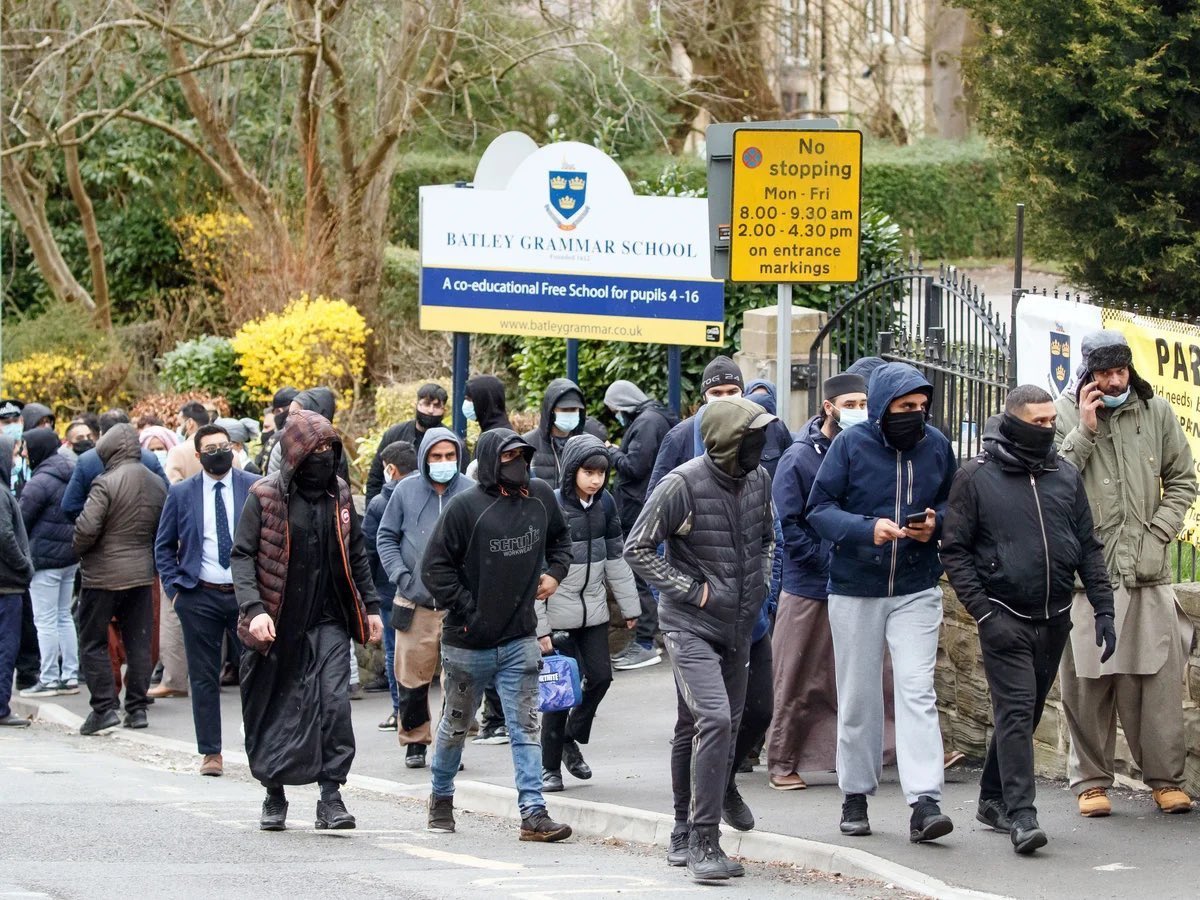
We currently have a Batley school teacher in hiding due to death threats from Islamist thugs.
So you’ll have to excuse me for not sharing these proud feelings.
English


As Ramadan comes to an end, wishing Muslims everywhere a joyful and peaceful Eid al-Fitr.
I hope your day is filled with happiness, reflection, and time with those who matter most.
Eid Mubarak.
English

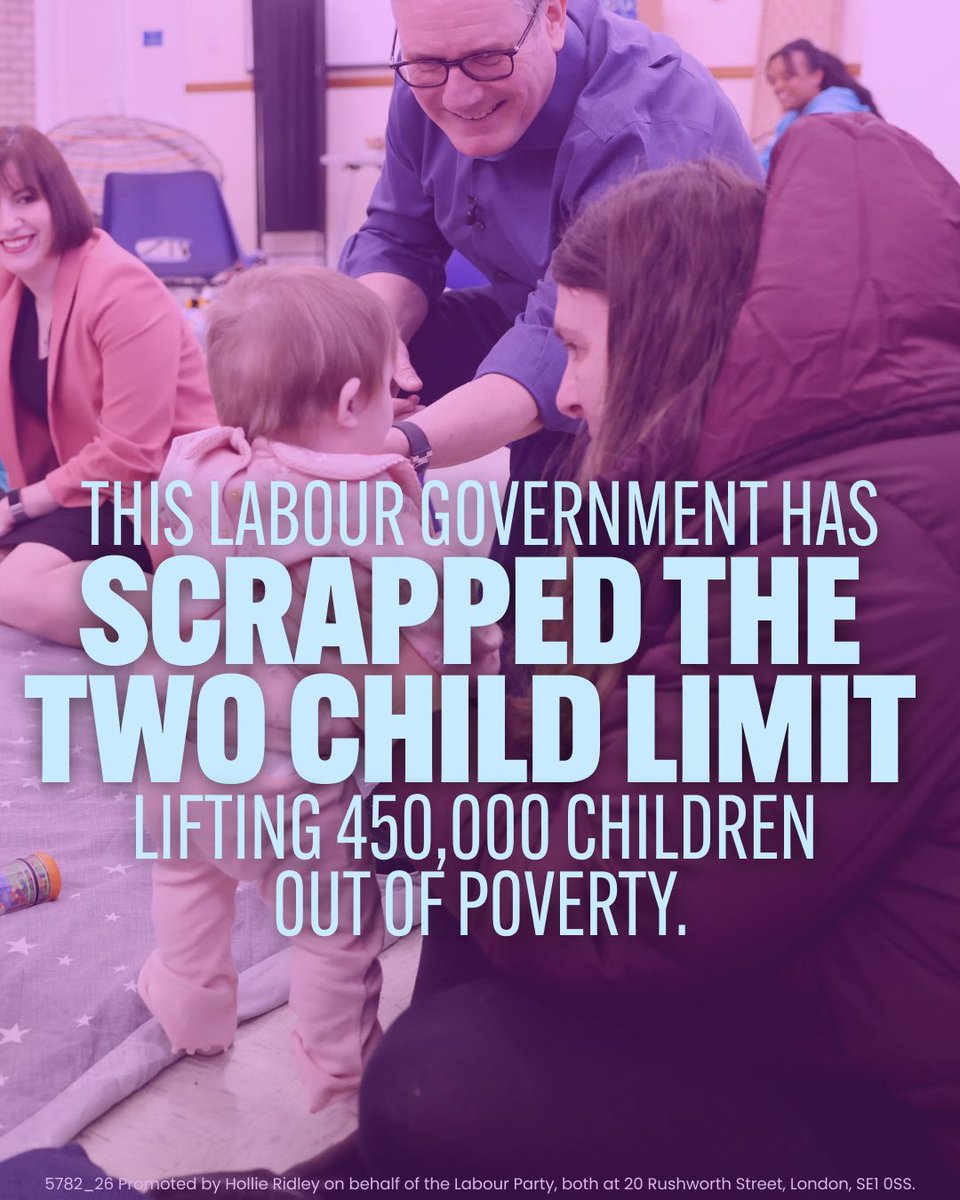
This Labour Government has lifted the two child limit because every child the best start in life.
English


Micheál Martin - I could not love you more!
Defends Starmer, sets the record straight about Churchill and Ireland..making Trump look petty and uninformed.
Politics UK@PolitlcsUK
🚨 WATCH: The Irish PM defends Keir Starmer as Donald Trump repeats he is "not Winston Churchill" "Starmer has done a lot to reset the Irish-British relationship. I do believe he is a very earnest person who you have a capacity to get on with"
English
Kemi Badenoch says it is "British values" to attack Muslims for praying in public.
This is disgraceful and offensive. So I called it out in Parliament.
The Tories are still the nasty party.
@kemibadenoch must apologise immediately.
English


This is quite possibly the worst PMQs I have ever seen.
Keir Starmer REFUSES answer a single question about Peter Mandelson and blatantly keeps changing the subject.
This man has no place being Prime Minister.
He should be in prison.
It's SO BAD I had to post the whole thing.
English

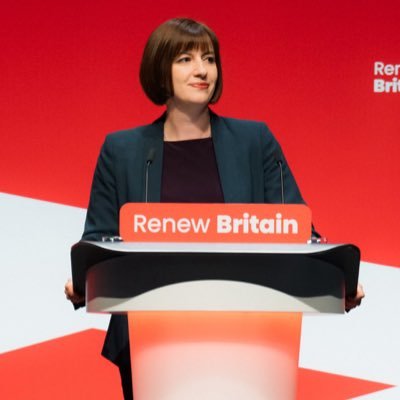
Christians, Jews, Sikhs and Hindus have all prayed in Trafalgar Square.
Nick Timothy singled out Muslims, then had the brass neck today to sit on the front bench. He should be sacked.
The Tories are following Reform into the gutter. Neither are fit to govern.
English


Just fuck off. You racist piece of shit.
Nigel Farage MP@Nigel_Farage
Our brilliant young minds are being replaced by goat herders from Afghanistan.
English

@EquinoxElec @NordluxUK Pure feckin crap......have refused to fit some products with that shit inside
English

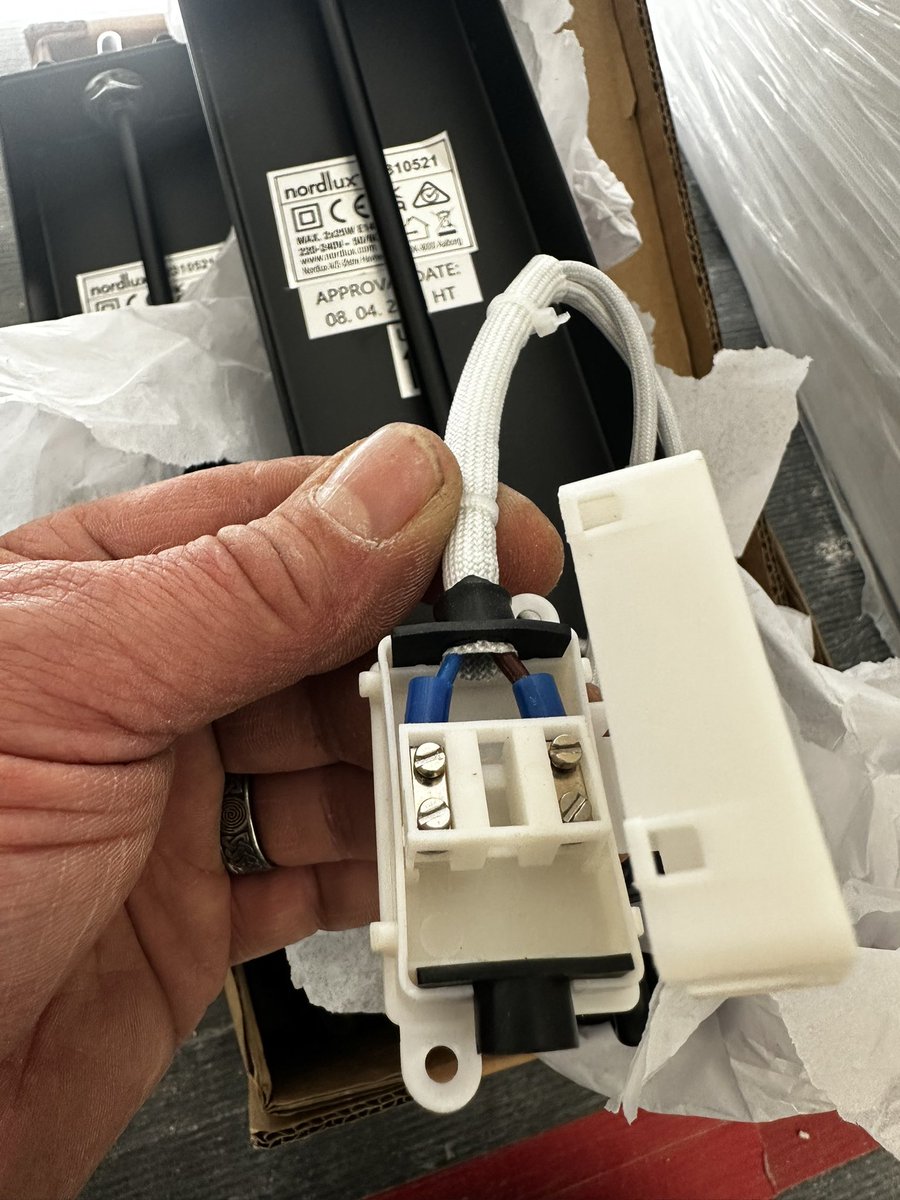
Does make you wonder sometimes……Nordlux Class 2 wall light…. They couldn’t just have put an earth terminal in that box….I mean come on 🙄🤦🏻♂️…. Room for 2 cables in the grommet might have been nice too but hey ho… @NordluxUK
English

Our priorities are clear:
Make life more affordable.
Protect the majority over the wealthy elite.
Protect our planet for generations to come.
English

I’m proud of our tolerant and diverse country.
I’m proud that in Trafalgar Square we celebrate all faiths.
That’s British values.
The comments from Nick Timothy are shameful. Kemi Badenoch should do the right thing and sack him.
English
@earthygirl011 Mrs Gee is the right name for you
Anyone with Irish family will know what that means
English

I cannot stress this enough
Vote Green
Vote Indie socialist
Vote Your Party
Vote for whoever 👆 stands best chance where *you* live
Never Labour, never Tory, Never Reform
It's not rocket science
English


I think Kier Starmer is the best PM we have had for decades.
Strange that so many say he's made mistakes/he's not perfect.
When did those commentators ever say tory PMs made mistakes? You know tory governments that make ordinary people poorer & rich people richer. FUNNY THAT
English

5 things we’re doing to help tackle the cost of living 👇
English

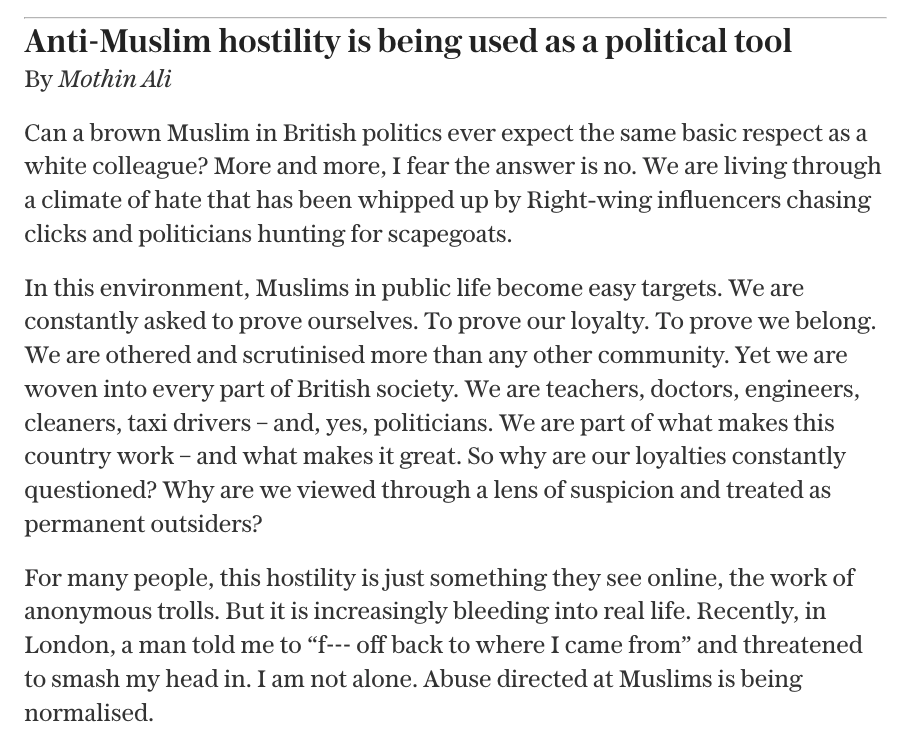
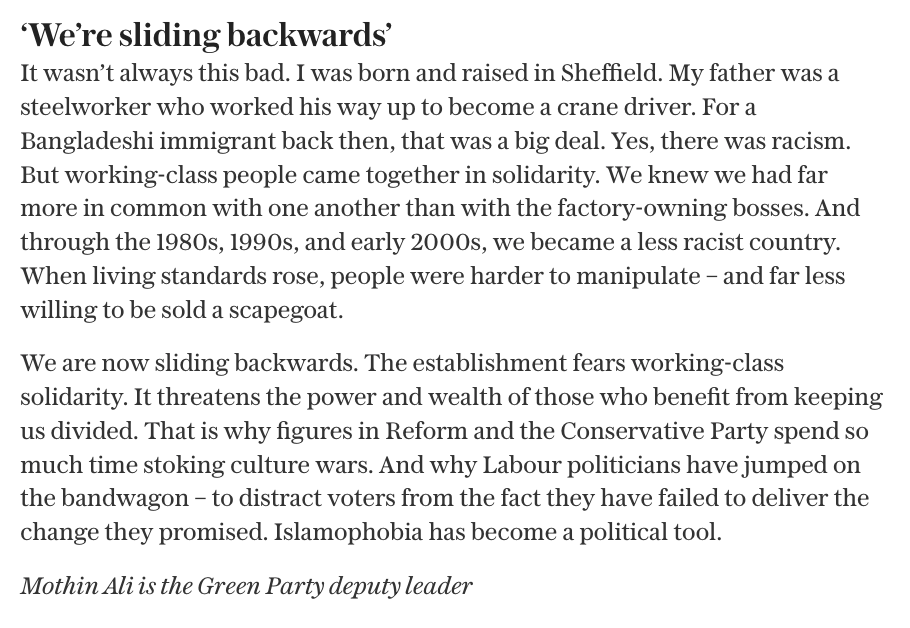
Solidarity with our deputy leader @MothinAli, who’s calling out the appalling Islamophobic abuse he’s faced from the right. Many politicians are complicit in whipping up this climate of hatred.
English


We said we would replace Labour and take the fight to Reform.
And that's exactly what's happening.
We need you.
Join.greenparty.org.uk
Sam Coates Sky@SamCoatesSky
This week’s YouGov / Sky News / Times voting intention poll has the following headline results: RefUK 25%(+2), GRN 19% (nc). CON 17% (-2), LAB 17% (nc), LDEM 14% (nc), The poll was taken on Sunday 15 March and Monday 16 March, with a sample of 2,329 respondents from YouGov’s online panel. This is the first poll since Nigel Farage and Reform UK publicly challenged YouGov’s approach and the pollster agreed to supply more underlying data about each poll. How YouGov carries out voting intention polls. During the last election campaign in 2024, YouGov changed how it conducts its weekly voting intention polls in an attempt to pick up tactical voting that has become an increasing feature of UK elections in recent years. They have continued to use this methodology since the election. Unlike other pollsters, YouGov’s methodology involves asking their online panel two voting intention questions: first, how they would vote if a general election were held tomorrow and - second - how they would vote in a general election if they were thinking specifically about their own constituency. The results are then put through an MRP model - or to give it its full name, a “multi-level regression and post-stratification” model to turn their raw data into headline voting intention - the figures that Sky News reports each week. YouGov uses these two techniques - a pair of voting intention questions and then putting the results through an MRP model - because they believe this allows them to get the closest to the result of an election held tomorrow. There appear to be significant differences between pollsters in their respective treatment of Reform UK: there are a lot of irregular voters currently telling pollsters they will go out and vote for Nigel Farage’s party in an election tomorrow, and different companies take a different view on how likely this would be to happen in practice. Why Reform UK dispute the methodology In recent months, YouGov has reported lower polling shares for Reform UK than other firms, although other pollsters also reported a decline from their peak, and Nigel Farage’s party has now challenged the pollster’s methodology. They say they believe that the first voting intention question - that makes no reference to constituencies - is a better representation of what is happening in the country, as well as questioning the use of the YouGov MRP model. They point to the pollster Peter Kellner, a one time employee of YouGov, who said that use of a second voting intention question about how a respondent would vote if thinking about their constituency would advantage the Lib Dems over Reform UK. From this week, following the Reform UK challenge, YouGov has agreed to publish the results to the question without the constituency prompt, as well as the one with the prompt which was already automatically part of the data. Nigel Farage is claiming this as a victory for transparency. YouGov’s methodology, however, has not changed and they stand by their approach. So here are YouGov’s raw voting intention numbers this week without a constituency prompt, and before YouGov apply the MRP model: Reform UK 19% Green 16% Conservative 11% Labour 11% Lib Dems 7% SNP 2% Plaid 1% Other 4% Would not vote 10% Don’t know 15% Refused to say 3% These are the numbers that Reform UK say are the “real” figures which each week they are likely to highlight. Note the figure here for Reform UK is the same this week when the question is asked both with and without the constituency prompt - 19%. Who is right? All pollsters use modelling and a range of techniques to generate the headline voting intention they believe best reflects reality. Ultimately, these results can only be tested at a general election, and at these moments, polling companies are judged by clients and shareholders. This wait can be frustrating for political parties, since in between elections polls drive momentum and, at worst, can be used to justify a change of leader. However at the last election, the final YouGov MRP poll put Reform UK on 15%, the exact number they received at the ballot box, and the final MRP was the most accurate by seats of any pollster, with 92% of constituencies called correctly.
English


Watching this will hurt your brain.
The stupidity is so painful.
Also, the way her voice ticks up at the end of every sentence!
English