Pablo Blinder

1.3K posts

Pablo Blinder banner
Pablo Blinder

Pablo Blinder

@PBNeuroVascLab

A #neuroscience lab at the @TelAvivUni, passionate to know how neurons and blood vessels interact in the brain. Funded by #ERC_Research

Tel Aviv University, Israel เข้าร่วม Ağustos 2016
696 กำลังติดตาม940 ผู้ติดตาม
Pablo Blinder รีทวีตแล้ว
Søren Grubb
Søren Grubb@SorenGrubb·
Preprint! 🚨 “Pericyte and Endothelial Primary Cilia and Centrioles have Disparate Organization Across the Brain Microvasculature” This project took an unexpected turn when we discovered that #pericytes have primary #cilia! 🔗 biorxiv.org/content/10.110… 🧵1/8
English
2
18
90
16.7K
Pablo Blinder รีทวีตแล้ว
Yoav Adam
Yoav Adam@YoavAdam·
Excited to share our new paper published @NeuroCellPress! We used voltage imaging combined with optogenetics in 4 major hippocampal cell types to study how the behavioural state modulates their firing, subthreshold dynamics, and gain authors.elsevier.com/a/1mego3BtfHD0…
English
1
5
22
1.8K
Pablo Blinder รีทวีตแล้ว
Oliver Hahn
Oliver Hahn@Oliver__Hahn·
🚨 Postdoc position in my lab @calico is live! I'm looking for someone deeply curious about the aging brain🧠⌛️, who wants to build novel scientific projects from scratch and carry them to publication and, ideally, into their own lab🥼🧪. No neuroscience background needed.
English
15
72
378
31.3K
Pablo Blinder รีทวีตแล้ว
Ruslan Rust
Ruslan Rust@rust_ruslan·
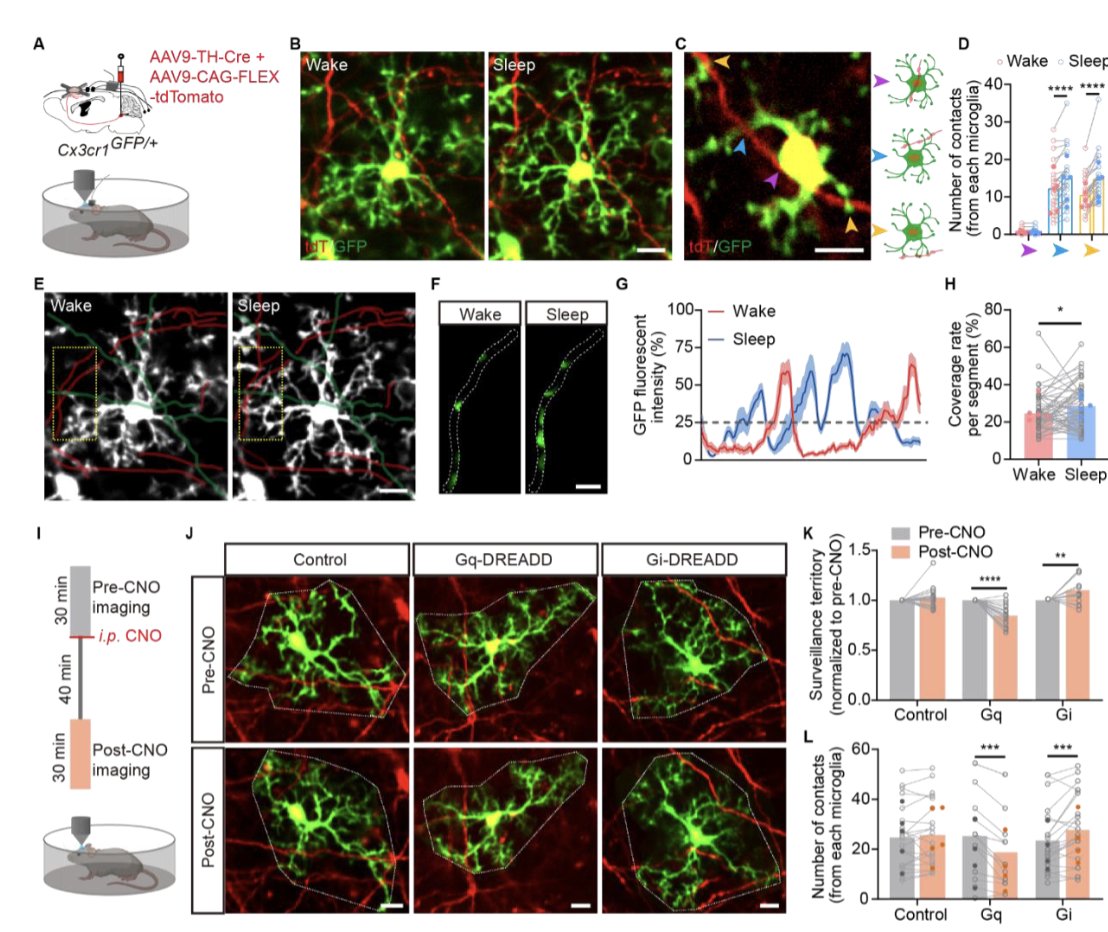
Cortical microglia promote noradrenergic signaling to maintain wakefulness
Ruslan Rust tweet media
English
2
25
119
6.6K
Pablo Blinder รีทวีตแล้ว
Dr. Dominic Ng
Dr. Dominic Ng@DrDominicNg·
Bottom line: We may have been measuring the wrong things about sleep. Total hours, REM percentage, deep sleep duration - none predicted brain cleaning as well as norepinephrine pulse frequency did. cell.com/cell/fulltext/…
Dr. Dominic Ng@DrDominicNg

New Cell paper from the team that discovered glymphatic clearance (how your brain removes waste during sleep). Sleep hours DIDN'T predict brain cleaning. Neither did REM or deep sleep. They found what actually matters - and why some sleeping pills might undermine it 🧵
English
44
126
1.2K
128.7K
Pablo Blinder รีทวีตแล้ว
Nature Methods
Nature Methods@naturemethods·
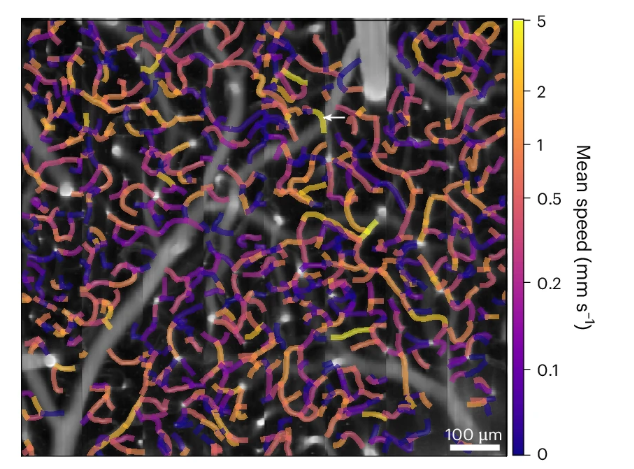
FACED 2.0: a method for high-speed, large FOV, volumetric 2-photon voltage and calcium imaging in the mouse and zebrafish brain. nature.com/articles/s4159…
Nature Methods tweet media
English
0
4
12
3K
Pablo Blinder รีทวีตแล้ว
Ali Max Erturk
Ali Max Erturk@erturklab·
🚀 We’re hiring! Staff Scientist / Postdoc – Tissue Clearing & 3D Image Analysis (m/f/d) (LMU Munich) Are you a great fit, or do you know someone outstanding, please reach out 🔁 If you want to at the frontier of whole-organ / whole-body 3D imaging, and help generate truly beautiful datasets that drive major biological discoveries and therapeutic development, see below ✨ We’re building the next-generation pipeline for tissue clearing + light-sheet microscopy + quantitative 3D analysis in the SyNergy Excellence Cluster (Mesoscale Hub) and we’re looking for someone excited to push this forward with us. 🧠🔬📈 🎥 I’m also attaching a short video showing the kind of high-quality imaging and datasets you’d be working with. What you’ll do 🛠️ 🔹 Lead and evolve tissue clearing + light-sheet workflows across collaborative SyNergy projects 🔹 Turn complex 3D datasets into robust quantitative insights (visualization, atlas registration, readouts) 🔹 Develop new methods and analysis pipelines together with our AI team 🤖 🔹 Maintain and optimize cutting-edge light-sheet systems (optional: support animal license writing) What we’re looking for 🎯 ✅ Strong hands-on experience in tissue clearing and/or fluorescence microscopy ✅ Solid experience with light-sheet microscopy and 3D imaging workflows ✅ Familiarity with 3D tools like Imaris / arivis Vision4D, stitching (e.g., BigStitcher), and quantitative analysis in cleared tissues ✅ Service mindset, great organization, and strong scientific English How to apply 📩 Apply via the LMU Klinikum online application form lnkd.in/gCgdaJuV Please also send your application to: farida.hellal@med.uni-muenchen.de CC: ali.ertuerk@med.uni-muenchen.de 📎 Include one PDF: short cover letter, CV, 2–3 referees, and earliest start date. 📍 Campus Großhadern (Munich) and Helmholtz Munich | 🕒 Full-time | 📅 Start: 01 January 2026 If you love high-quality imaging, cutting-edge biology, and building something that will matter, we’d love to hear from you. 🌍✨ #hiring #StaffScientist #Postdoc #TissueClearing #LightSheetMicroscopy #ImageAnalysis #SpatialBiology #Neuroscience #SyNergy #LMU #Munich
English
4
51
194
14.5K
Pablo Blinder รีทวีตแล้ว
Amit Vinograd
Amit Vinograd@AmitVinograd·
The neural computation of affective internal states in the hypothalamus: A dynamical systems perspective: Neuron cell.com/neuron/fulltex…
English
0
3
12
604
Pablo Blinder รีทวีตแล้ว
Kasra Jalaldoust
Kasra Jalaldoust@causalkasra·
Neuroscientists record two main data modalities: electromagnetic waves and Spiking activities. A longstanding debate in neuroscience is whether the brain waves are essential for understanding how the brain works, or are they merely epiphenomenal. In more scientific terms, do the waves carry a causal influence on the behavior when spiking activities are recorded? When I first heard about this from @ZabehErfan I assumed neuroscientists are already discussing in causal inference terms; turns out that it is not quite the case. Each neuroscientist has their own qualitative beliefs/knowledge about the brain mechanisms, but to our surprise, they are not using the causal inference semantics to express it. The debate is not settled despite decades of advancement in recording technologies and statistical modeling breakthroughs, and it is not too surprising from a causal inference perspective: due to Causal Hierarchy Theorem (@eliasbareinboim et al. 2020), no amount of data alone can identify the causal quantities. Thus it is necessary to use a formal language to express the qualitative knowledge, and @yudapearl’s do-calculus is precisely the syntax and semantics we need to settle the spike-wave duality. In particular, we ground the discussion in Structural Causal Models, and boil down the epiphenomenality claim to assessing a certain inequality: P(behavior | spikes) ?= P(behavior | spikes, do(waves)) Once the qualitative domain knowledge is properly expressed in causal terms, e.g., a semi-Markovian causal graph, then a graphical criterion for epiphenomenality can be derived. Grounding the discussion in causal language sheds light on many hidden aspects of the problem, even if the debate remains unsettled: 1. What is the inference bottle neck? Is it the amount of data, regimes of data, scope of measurements, or the statistical modeling methods? 2. Data-driven knowledge discovery: what can be said about the causal graph using the data? which forms of heterogeneity and surrogate interventions are useful? If you’re at @NeurIPSConf come check out our poster along many other cool work at @CauScien workshop!
Erfan Zabeh@ZabehErfan

Finally a causal formulation of spike-wave duality. Over the past couple of years I have been constantly asked about causality of brain waves. After two years of spontaneously thinking about this, I dared to put this "baby" out. Shout out to my talented collaborator @causalkasra whom perfected the causal machinery behind this work. If you are at @NeurIPSConf come to our poster and let’s chat. arxiv.org/abs/2511.06602

English
7
32
154
18.3K
Pablo Blinder
Pablo Blinder@PBNeuroVascLab·
@PiatkevichL @yulonglilab Great! Already in contact with BrainCase (mail went into junk inbox...). We wilk try the BC-4389 rAAV-hSyn-DIO-NES-SomaFRCaMPi. Thanks!
English
0
0
1
35
Pablo Blinder รีทวีตแล้ว
PiatkevichLab
PiatkevichLab@PiatkevichL·
Great commentary by @yulonglilab on our two recent papers introducing red genetically encoded biosensors for calcium and potassium imaging! 🔴 FRCaMPi - Enhanced red calcium sensor 🔴 RGEPOs - First-ever red potassium sensors 📖 doi.org/10.1371/journa…
PiatkevichLab tweet media
English
2
31
116
18.6K
Danielle Beckman
Danielle Beckman@DaniBeckman·
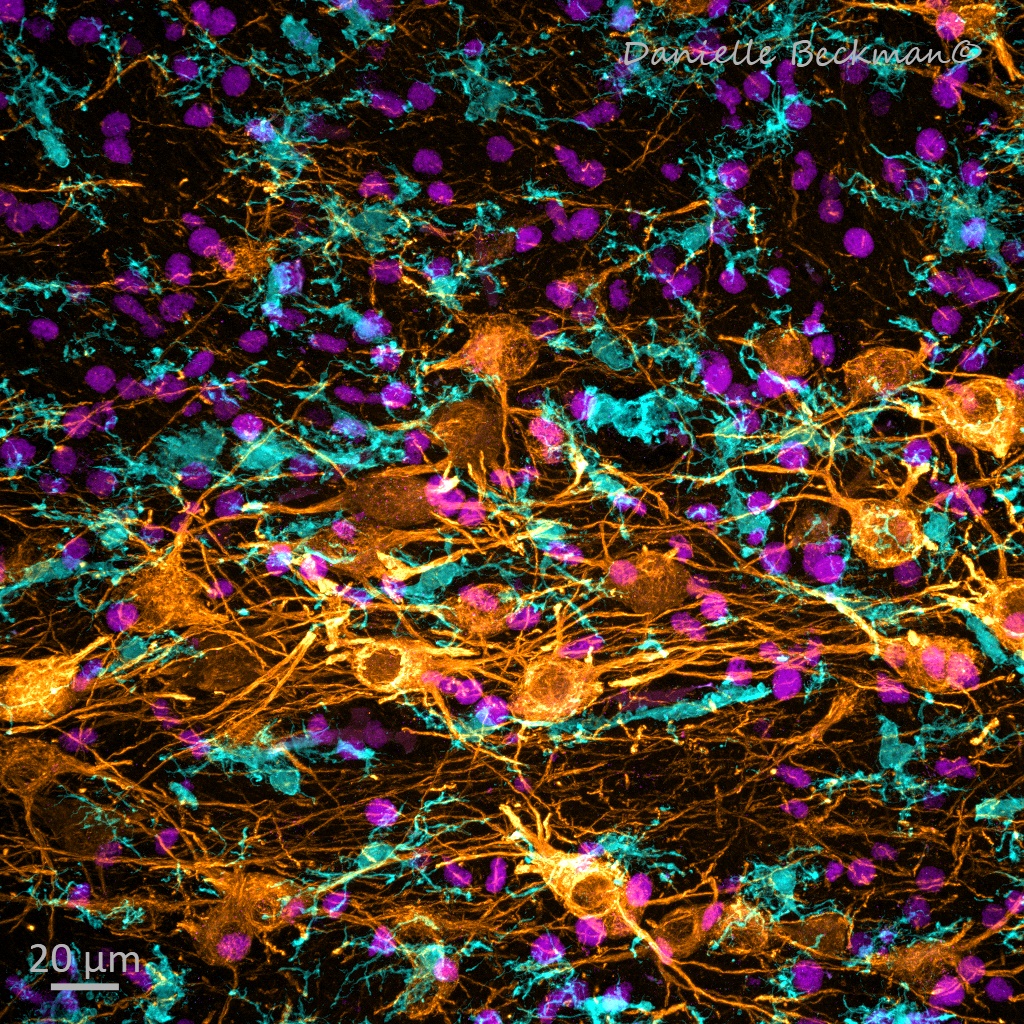
Testing some new antibodies to identify oligodendrocytes 🟣, for me, the most difficult one to target in brain microscopy! Here, I was able to identify its nuclei but not the whole cell body like neurons 🟡or microglia 🔵. Still, you can see oligos are everywhere! #Neuroscience
Danielle Beckman tweet media
English
16
59
376
11K
Pablo Blinder
Pablo Blinder@PBNeuroVascLab·
@OdedRechavi Already "analyzing"... can't wait to see the breakdown etc...paper classified as "Neuroscience", let's see!
English
1
1
3
2.1K
Oded Rechavi
Oded Rechavi@OdedRechavi·
@PBNeuroVascLab Yes!!! 🙌 thanks Pablo, tell me how it went! (You can also read with it)
English
1
0
0
280
Oded Rechavi
Oded Rechavi@OdedRechavi·
BIG ANNOUNCEMENT📣: I haven’t been this excited to be part of something new in 15 years… Thrilled to reveal the passion project I’ve been working on for the past year and a half!🙀🥳 It started from my frustration with the depressing effect that the current publishing system has on the well-being of myself, my team, and pretty much every scientist I know (maybe you’ve noticed from my stupid jokes… :) I was exhausted of dealing with the huge delays, reviewers that can be abusive, and how arbitrary it all is. Unfortunately, the most important factors are often WHO your reviewers are and who YOU are... It’s clear we need alternatives or at least ways to improve the situation. So, together with a really special and talented team we worked to develop this idea into “qed” a platform where you can get CONSTRUCTIVE feedback on your own work or CRITICALLY assess other people’s papers. It can be a real difference maker if many of you join us (thousands have tried it already, but today we release a NEW and much stronger version ;) Let’s harness qed to put the power back in the scientists’ hands, to do, to read & to publish science on our own terms. I’m dying for you to TRY IT, and it’s very simple - just drop a paper (the link to the website is in the replies👇) - it’s completely secure, private, and free, and you get results fast. Please show your support, SHARE, tell your friends, and let’s be the revolution 🫵!
Oded Rechavi tweet media
English
109
492
1.9K
540.1K
Pablo Blinder รีทวีตแล้ว
Seong-Gi Kim
Seong-Gi Kim@SeongGi_Kim·
Excited to share our new PNAS paper! 🎉 We examined the neural source of rs-fMRI FC using patterned optogenetic manipulation in mice 🧲🧠. A step toward answering a long-standing question. Fantastic work by @HnSk_Moon @hong_seok_jun @CNIR_IBS pnas.org/doi/epdf/10.10…
English
3
17
57
4.7K
Pablo Blinder รีทวีตแล้ว
Andy Shih
Andy Shih@AndyShih_Lab·
It is debated whether poor #blood flow underlies white matter loss in #aging. Our recent study in aged mice supports this idea: Impaired drainage through rare, deep-reaching #venules causes mild #hypoperfusion that triggers inflammation and demyelination. nature.com/articles/s4159…
Andy Shih tweet media
English
3
40
191
16.9K