

Rob1855
7.6K posts
Rob1855
@Rob1855
Litigator, Auburn Football fan, Overextended Dad.
Atlanta, Georgia เข้าร่วม Kasım 2010
1K กำลังติดตาม336 ผู้ติดตาม

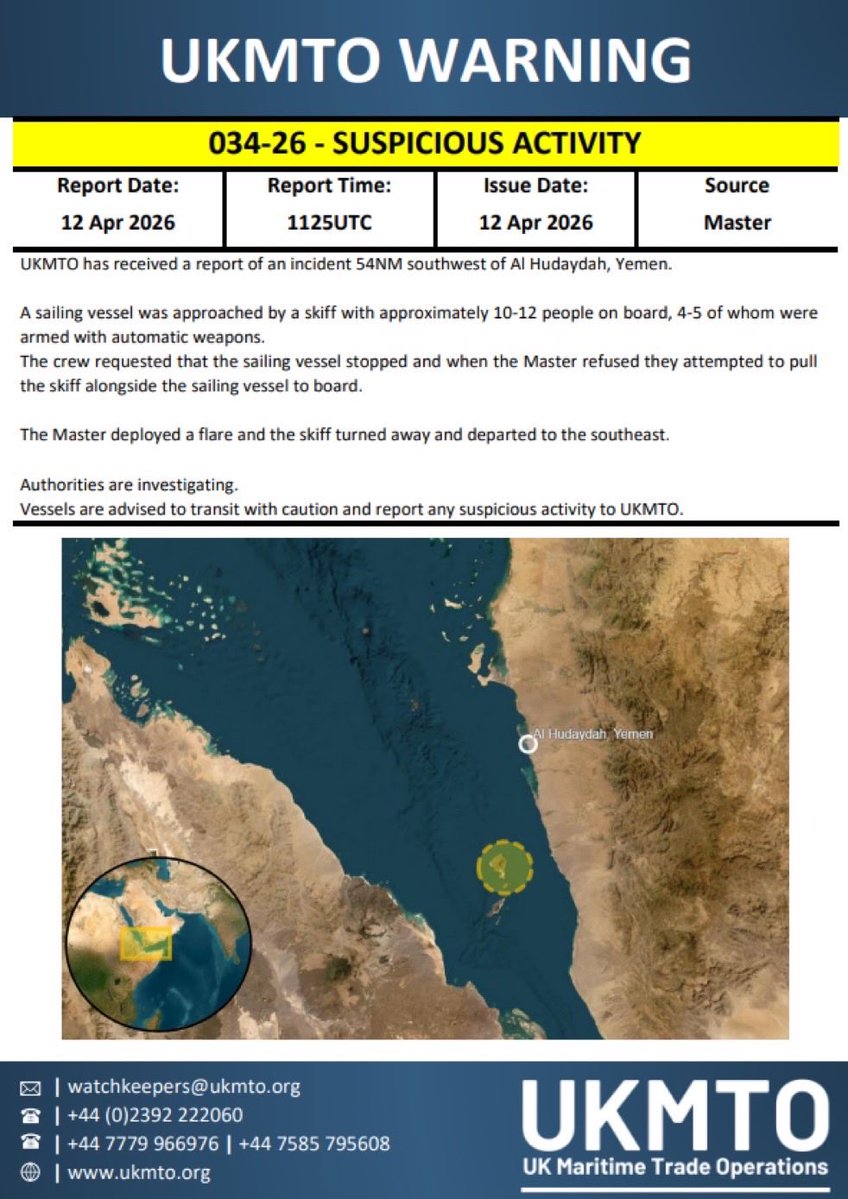
A sailing vessel off Yemen's coast was approached by a skiff with armed individuals near Al-Hodeidah. The ship's master fired a flare, forcing them to break off.
UKMTO.
English
@HelenSmithPhD C'mon, Helen. This has been going on as long as time itself. The "icks" are nothing new.
English

I was talking to a group of 20-somethings discussing the "ick factor" in dating. For those of you unfamiliar with the term, it means a visceral, sudden surge of cringe triggered by a specific behavior. "Women will dismiss a man if he ties his shoe wrong," said one woman. How in the world are people going to connect with such strict requirements? #mensrights
English



Rob1855 รีทวีตแล้ว

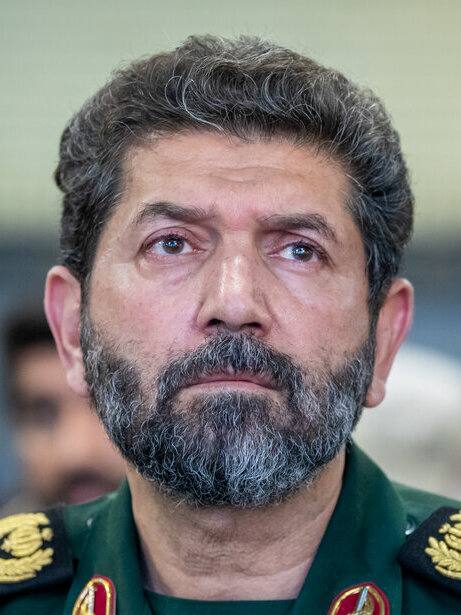
You’re allowed to wave Hamas flags. Hezbollah flags. Flags of the USSR. IRGC flags. ISIS flags. Gay pride flags. But don’t you dare wave the British flag or a police officer will confiscate it and arrest you for incitement and racism.
Welcome to the UK.
English
@HillelNeuer @instapundit Why do they need missiles when they have @lufthansa @airfrance and @BA_USA ?
English
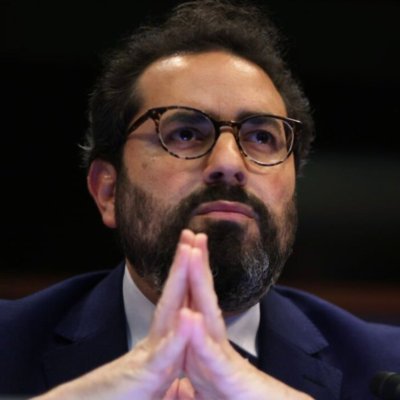
Today Iran revealed its missiles can reach Paris, London, and Berlin.
Pierre Poilievre said it plainly long ago: stopping this genocidal regime would be a gift to humanity.
He understood the threat. Many still don’t.
Hillel Neuer@HillelNeuer
Q: Do you not agree with Joe Biden in his assessment on Israel and Iran? 🇨🇦 Opposition Leader Pierre Poilievre: “I think if Israel were to stop that genocidal, theocratic, unstable dictatorship from acquiring nuclear weapons, it would be a gift by the Jewish State to humanity.”
English
Rob1855 รีทวีตแล้ว

This is Rome's most famous crime scene
Today, March 15, marks the day sixty men stabbed the most powerful person on earth and accidentally destroyed the very thing they were trying to save. The lesson he died for is one the world still hasn't learned...
In 44 BC, Julius Caesar was proclaimed dictator for life. He had ended a civil war, conquered Gaul, and remade Rome in his image. The poor loved him. The soldiers would die for him. But 60 senators called themselves the Liberators and plotted to kill him.
At their center stood Marcus Junius Brutus, descended from the very man who had founded the Republic. Yet it was Caesar’s mercy that helped restore Brutus’s political career. Caesar had spared his life after the civil war and allowed him to return to public office...
Brutus took the blade he sharpened on Caesar's generosity and drove it into his chest.
But before the blood, there was a warning.
According to Plutarch, a seer had told Caesar his life would be in danger on the Ides of March. On his way to the Senate that morning, Caesar spotted the man and said to him that the Ides had arrived. The seer's reply was: "Aye, they are come, but they are not gone."
Caesar was stabbed twenty-three times. He fell at the base of a statue of Pompey the Great — his oldest rival. When he saw Brutus among the assassins, he stopped fighting and sank to the ground...
Brutus had prepared a speech celebrating the restoration of the Republic. He was shocked to find outrage instead of praise. Caesar's death triggered civil wars. His heir Octavian crushed the conspirators at Philippi — Brutus and Cassius both died by their own swords — then became Emperor Augustus, terminating the Republic forever.
The Liberators had liberated no one.
They had a plan for the assassination and none for the morning after — certain of their own righteousness, blind to everything else. Every revolution led by people drunk on their own virtue ends the same way: not in the freedom they promised, but in the chaos they swore to prevent.
Power does not fall into a vacuum. It falls to whoever is most prepared to catch it. The men who killed Caesar set out to stop a dictator. They created an emperor instead. That is the oldest political truth there is, and the one we keep forgetting: removing a man changes nothing if you haven't changed the conditions that made him necessary in the first place.
English

Keir: You despise me, don't you?
Donald: If I gave you any thought I probably would.
English
Play “La Marseillaise”! Play it!
Macron has his Casablanca moment in the hangar deck of the aircraft carrier Charles de Gaulle.
x.com/Tom_Antonov/st…
Tom Antonov@Tom_Antonov
French national anthem “La Marseillaise” sung in the hangar bay of the aircraft carrier Charles de Gaulle, currently off the coast of Crete, after President Macron’s speech on the deployment of the French Navy in the Middle East. via @Le_Figaro
English
Rob1855 รีทวีตแล้ว
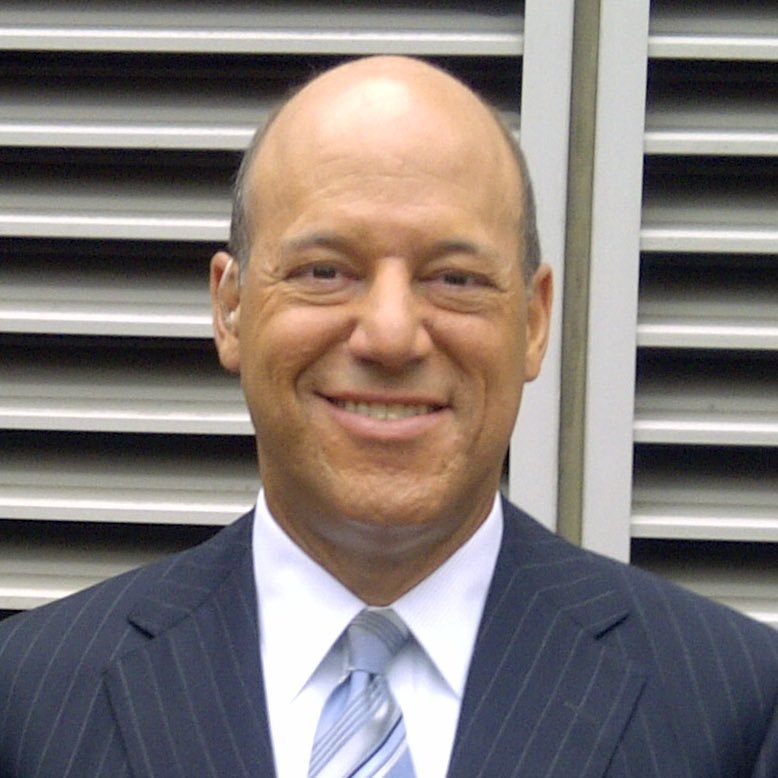
Great Britain isn’t so great any more.
It’s a wonderful country with a storied history run by modern-day fools who are weak apologists, watching their country get overrun by anti-western foreigners.
Enjoy it while it lasts.
Israel Foreign Ministry@IsraelMFA
British Secretary of Defense🤡 adopts the Iranian regime’s definition of ״military installations״: Hospitals, residential areas and universities. Consequently, all Israeli casualties were civilians! The Secretary implies that targeting Israeli civilians is ״proportional״.
English
Rob1855 รีทวีตแล้ว

Insane video appears to show the moment last night that storm drains across the Iranian capital of Tehran exploded and burst into flames, as a result of runoff from the Shahran Oil Depot and other oil infrastructure across Northern Tehran, which were targeted earlier in the evening by strikes from the Israeli Air Force.
English
Rob1855 รีทวีตแล้ว
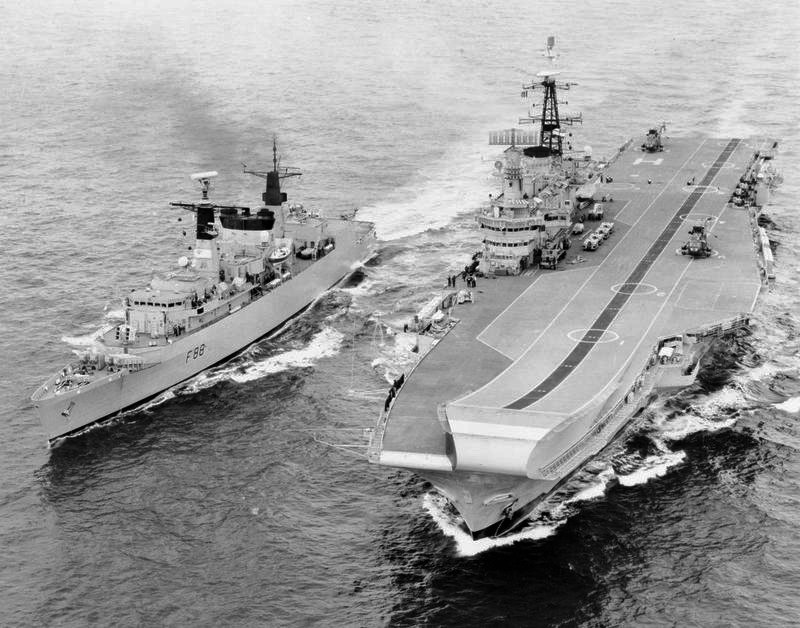
Thatcher organised a fleet of 127 warships and cruise ships within 48hrs ready to sail to the Falkland Islands after Argentina invaded 🇬🇧
Starmer organised 1 ship to sail to Cyprus to protect the island but it won't be ready to sail until next week 🚣🏼♂️
English

@Aviation_Intel any indication the warthogs have gotten into the fight?
English
California Gov. Gavin Newsom:
“We’re talking about regime change? For two years, they haven’t even been able to solve the Hamas question in Israel.”
English
Interesting read ...
John Ʌ Konrad V@johnkonrad
This is potentially the biggest Iran story nobody is talking about: the global insurance market may be heading toward a systemic crisis. Here’s why… Most people don’t realize London isn’t just a financial center it’s THE center of global insurance. Lloyd’s underwrites ~40% of the world’s marine cargo. Ship sinks, port gets bombed, canal gets blocked the bill lands in London. This is why the UK punches above its weight. Not the Royal Navy. Not diplomacy. Insurance. Control insurance, control trade. And London doesn’t just control the 90% of global trade that moves by sea. Lloyd’s and the London market are major insurers of almost everything skyscrapers, factories, ports, satellites, entire supply chains. You can’t participate in public markets or raise large amounts of capital without insurance. Now, the normal playbook for war risk is repricing, not cancellation. Canceling coverage entirely is a massive escalation in underwriting posture. It signals something beyond risk, it signals uncertainty so deep the underwriter can’t even price it. The question everyone should be asking: why? Why not just jack up premiums and make a fortune off the crisis like they did in the Black Sea off Ukraine? To answer that, you have to understand WHY London has maintained a stranglehold on global insurance while losing nearly submarket related to ships. The answer: better intelligence. It is no coincidence that MI6 headquarters sits directly across the Thames from the @IMOHQ, the world’s maritime regulator & a short distance from Lloyd’s itself. I have no proof of a direct pipeline, but it has long been speculated in the industry that intelligence flows from MI6 to Lloyd’s. Having the best intel in the world would be the single greatest competitive advantage any insurer could possess: the ability to price risk that competitors can only guess at. Here’s the problem: the majority of MI6’s intel doesn’t come from its own agents. It comes from Five Eyes the alliance comprising the US, UK, Australia, Canada, and New Zealand. And within 5Eyes, the dominant partner is obvious. The CIA, NSA, NRO, etc generate the lion’s share of intel. So if Lloyd’s pricing advantage flows from MI6, and MI6’s best intelligence flows from the US… what happens when that data pipeline gets throttled? All indications are that @Keir_Starmer was blindsided by the size and scope of the US/Israel strikes on Iran this weekend. That alone tells you something about the current state of transatlantic intelligence sharing. And we know there has been serious anger in Washington over the UK’s decision to sell Diego Garcia, home to America’s most strategically important base in the Indian Ocean, to Mauritius. It is not a huge leap to conclude that the submarine cables linking Langley to London have gone dark, or at minimum have been significantly throttled. What this means for UK national security is a question for the Brits. But what it means for EVERY company globally that’s insured through the London market has massive implications for the entire financial system. Because most large insurers worldwide don’t do independent intelligence work. They index off Lloyd’s rates. If you’re insuring a skyscraper in Tokyo, a semiconductor fab in Taiwan, or a port in Argentina you get a Lloyd’s quote, then shop that price around. Other insurers see Lloyd’s number and assume the diligence was done. They price accordingly. This means if London is suddenly flying blind it’s not just Lloyd’s policyholders at risk. It’s the entire global reinsurance chain. The cancellation of war risk coverage on ships isn’t the crisis. It’s the canary. If this hypothesis is correct, we could be looking at a systemic repricing event across global insurance markets…. the kind of cascading uncertainty that defined 2008 and COVID. Watch Lloyd’s. Watch reinsurance spreads. What Five Eyes. That’s where this story, and possibly Wall Street, breaks. CC @BillAckman
English

Stockpile:
GIF
Phil Stewart@phildstewart
(Reuters) - The Trump administration plans to meet with executives from the biggest U.S. defense contractors at the White House on Friday to discuss accelerating weapons production, as the Pentagon works to replenish supplies after strikes on Iran and several other recent military efforts, five people familiar with the plan told @MichaelStone Companies including Lockheed Martin LMT.N and Raytheon parent RTX RTX.N, along with other key suppliers, have been invited to attend the meeting, the people said, speaking on condition of anonymity because the discussions are private. The meeting underscores the urgency felt in Washington to shore up weapons stocks after the Iran operation drew heavily on munitions. Since Russia invaded Ukraine in 2022 and Israel began military operations in Gaza, the U.S. has drawn down billions of dollars' worth of weapons stockpiles, including artillery systems, ammunition and anti-tank missiles. The conflict in Iran has consumed longer-range missiles than those furnished to Kyiv. At least one of the people said the gathering was expected to center on pressing weapons makers to move faster to boost output. Lockheed, the Pentagon and White House did not immediately respond to requests for comment. RTX declined to comment. In a social media post Monday, Trump said there was a "virtually unlimited supply" of U.S. munitions and that "wars can be fought "forever," and very successfully, using just these supplies." The White House meeting comes as Deputy Defense Secretary Steve Feinberg has been leading Pentagon work in recent days on a supplemental budget request of around $50 billion that could be released as soon as Friday, one of the people said. The new money would pay for replacing the weapons used in recent conflicts including those in the Middle East. The figure is preliminary and could change. The push to boost production has intensified following U.S. military strikes on Iran, where the U.S. deployed Tomahawk cruise missiles, F-35 stealth fighters and low-cost one-way attack drones on Saturday. Tomahawk missile maker Raytheon has a new agreement with the Pentagon to eventually ramp production to 1,000 units annually. The Pentagon currently plans to buy 57 of the missiles in 2026 at an average cost of $1.3 million each. The administration has been steadily ratcheting up pressure on defense contractors to prioritize production over shareholder payouts. President Donald Trump signed an executive order in January to identify contractors deemed to be underperforming on contracts while distributing profits to shareholders. The Pentagon is expected to release a list of underperforming contractors. Companies named will have 15 days to submit board-approved plans to correct the situation. If those plans are judged insufficient, the Pentagon can pursue enforcement actions, including contract terminations.
English

Only an idiot gets busted twice for PEDs, especially when he already has a long-term contract. Can’t wait to hear the excuse this time.
Jeff Passan@JeffPassan
BREAKING: Atlanta Braves designated hitter Jurickson Profar is facing a 162-game suspension after testing positive for a performance-enhancing drug for the second time, sources told ESPN. News free at ESPN: espn.com/mlb/story/_/id…
English