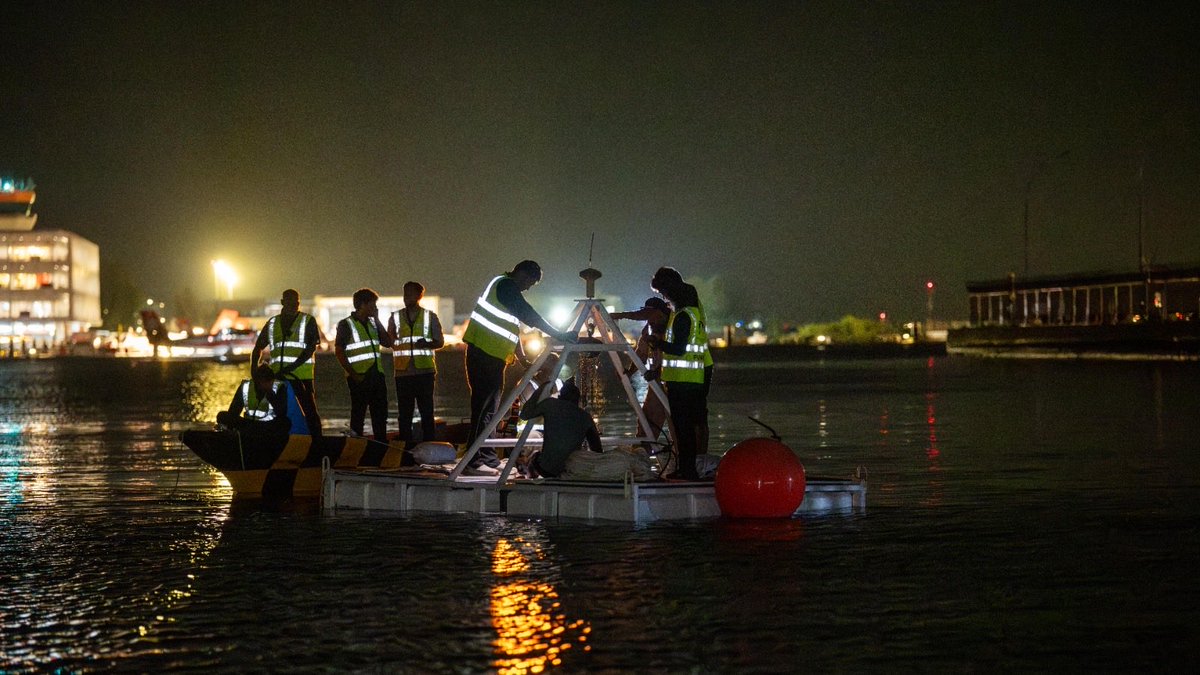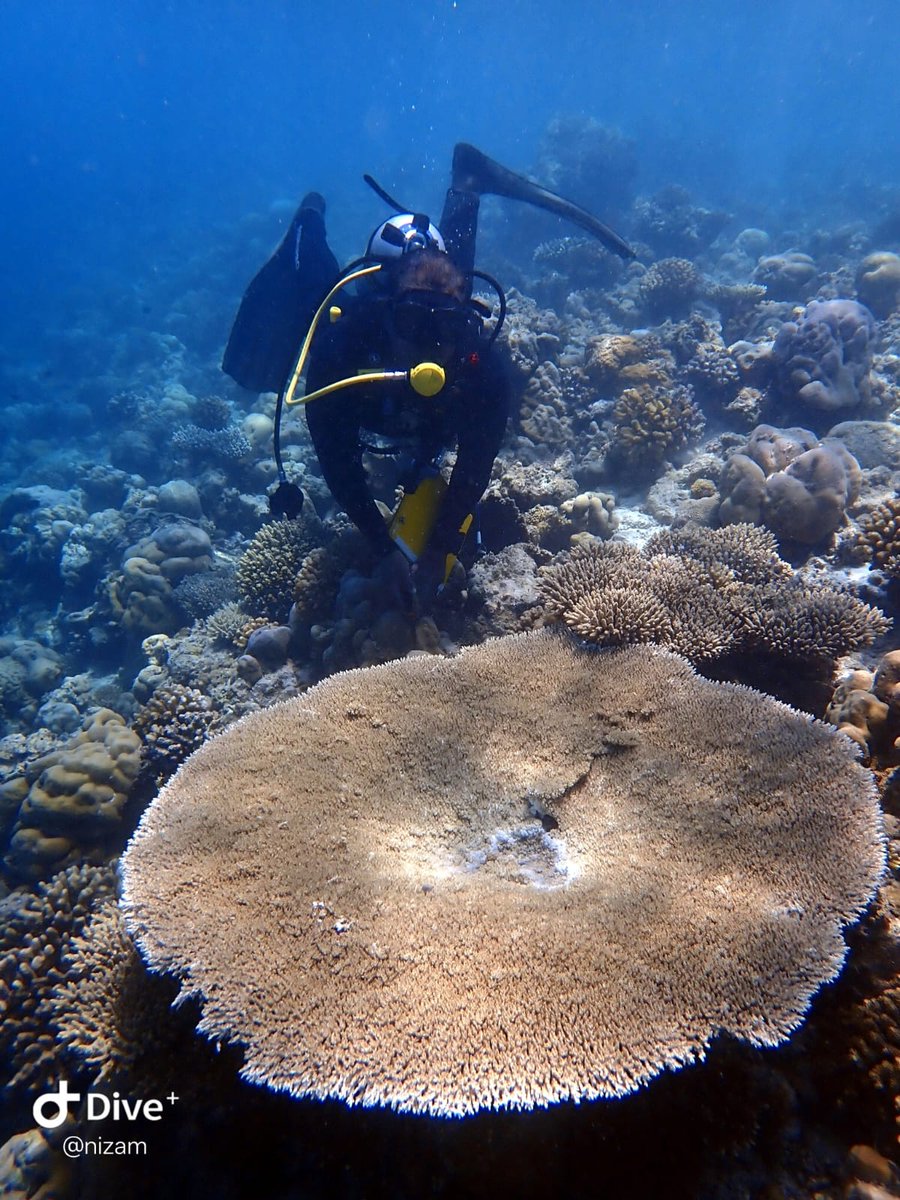


Early signs of coral bleaching are now being observed in the Maldives — and both field observations and satellite data are pointing in the same direction. In Huvadhu Atoll, we are recording night-time temperatures of up to 31°C at ~10 m depth on coral spawning reefs. Under normal conditions, these reefs are around ~29°C. The difference is not just measurable — it is physically noticeable during dives. At the same time, corals around Rathafandhoo are already showing visible whitening along colony edges, an early indicator of thermal stress. These reefs are not only facing elevated temperatures, but also the cumulative effects of sedimentation from ongoing harbour dredging, which further reduces their resilience. The attached figure (based on NOAA Coral Reef Watch data) shows that the Maldives has already crossed the local bleaching threshold and reached Bleaching Alert Level 1 by mid-April 2026. While cumulative heat stress is still building compared to major bleaching years like 1998 and 2016, the current trajectory is concerning. Bleaching is not triggered by peak temperatures alone — but by how long reefs remain under elevated thermal stress. If these conditions persist into the coming weeks, we could see a rapid escalation from early stress signals to widespread bleaching. Reefs already under local pressure will be the first to tip. We will continue monitoring both spawning reefs and bleaching progression closely over the coming weeks. #CoralBleaching #Maldives #CoralReefs #ClimateChange @CoralReefWatch @MMRI_Maldives @ERA_Maldives @MoEnvmv @ICRI_Coral_Reef @UNEP @Shammaan @Turqoiselabmv @Turqoiselabmv @AyaNaseem @ecosm_mv @SavetheBeachVM