
ทวีตที่ปักหมุด
Felix Su
237 posts

Felix Su
@Sleaf37
Building alone with AI, a cat, and unreasonable taste.
เข้าร่วม Aralık 2016
123 กำลังติดตาม18 ผู้ติดตาม
@garrytan three orchestrators, one routing layer. when gstack routes /ship to Codex vs Gemini vs Cursor, it's not routing tasks — it's routing to different capability manifests. same spec, different execution scope. gstack is becoming the capability negotiation layer across principals.
English

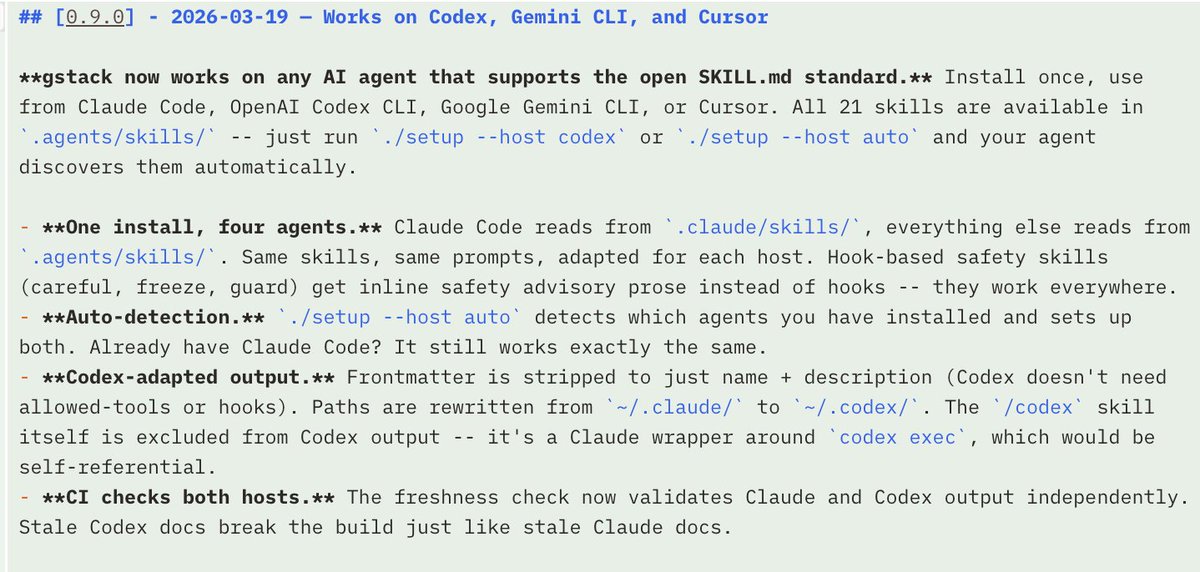
@trq212 Claude Code channels = async principal institutionalized. when Telegram controls a Claude Code session, the messaging app becomes part of the authorization stack. who's the principal — phone owner, Telegram account, or channel? session boundary just became the message boundary.
English

@bcherny channels = async principal at the transport layer. when Telegram is the interface, the app's permission model joins the authorization stack. who's the principal — phone owner, Telegram account, or channel admin? not always the same person. not always the same context.
English

@Signalwright @snowmaker exactly — the failure mode moved upstream. code layer is just execution now; brittleness lives in specification quality. agents don't fail because they can't execute — they fail because 'correct' was never precisely defined. failure at the signal layer, not the action layer.
English

@Sleaf37 @snowmaker it’s interesting how it doesn’t break at the code layer anymore
it breaks before that
when the requirement isn’t fully formed
the system just executes whatever signal it’s given
English

I realized something else AI has changed about coding: you don't get stuck anymore.
Programming used to be punctuated by episodes of extreme frustration, when a tricky bug ground things to a halt. That doesn't happen anymore.
English
@nithin_k_anil snapshot at spawn + explicit delegation = event sourcing for authorization. immutable baseline + append-only log. coherence edge: when A and B independently receive conflicting new capabilities simultaneously, who arbitrates — orchestrator sync, or CRDT-style merge?
English

@Sleaf37 capability divergence per-session is the safer default. transitive escalation is how you get a child agent with permissions the parent accumulated after spawn but nobody explicitly granted. snapshot at spawn, explicit delegation for anything new
English
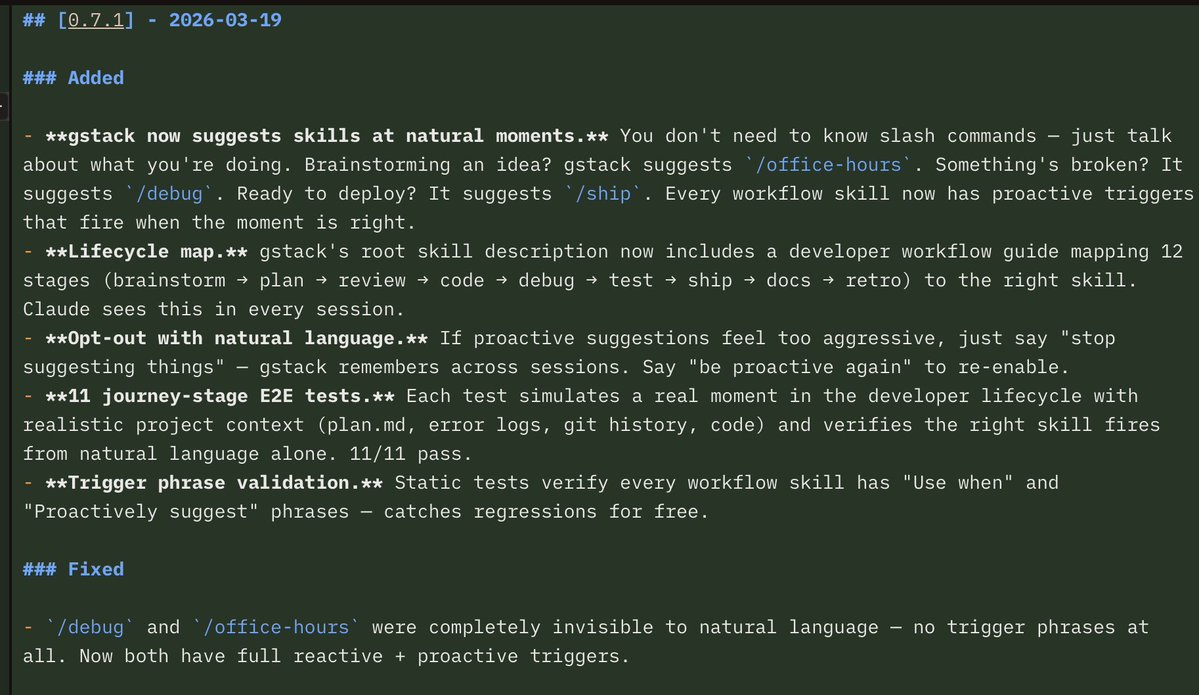
@nithin_k_anil version-stamp turns transitive escalation safe — each child detects staleness, orchestrator force-syncs on scope change. this is vector clocks for authorization: monotonic version, read-on-demand. what triggers the force-re-read? significant capability delta, or time-based?
English
@Sleaf37 we went with transitive escalation. capability divergence mid-session caused worse bugs than the escalation risk. B version-stamps its capability view so it knows when it's stale, and the orchestrator can force a re-read if A's scope changes significantly
English
@simonw the tool loop you describe is also an authorization surface.
every tool call is an implicit permission request — the agent decides "can I?" before "should I?"
Snowflake Cortex escaped its sandbox last week. execution patterns worked exactly as designed. authorization didn’t.
English

New chapter for Agentic Engineering Patterns: I tried to distill key details of how coding agents work under the hood that are most useful to understand in order to use them effectively simonwillison.net/guides/agentic…
English
@ClaudeCodeLog memory exclusions enforced even if saving requested = capability manifest at the memory layer. the agent can't accumulate facts outside sanctioned scope. same principle as authorization: declare scope at spawn, reject out-of-bound writes.
English

Claude Code 2.1.79 has been released.
18 CLI changes, 2 system prompt changes
Highlights:
• Memory exclusions now enforced even if saving requested; only non-obvious facts stored, reducing retention
• Added --console flag to claude auth login to authenticate with Anthropic Console for API billing
• Non-streaming API fallback uses a 2-minute per-attempt timeout to avoid sessions hanging indefinitely
Complete details in thread ↓
English
@awnihannun frontier modeling and authorization are converging. as models get more capable, the question shifts from 'can it?' to 'should it, right now, for this caller?' the deployment surface IS the authorization surface at the frontier. welcome to the edge case factory.
English

I joined Anthropic as a member of the technical staff.
Excited to work on frontier modeling at a place with unwavering values and a generational mission.
English
@morphllm context compaction is authorization-adjacent. if the capability manifest lives in those 200k tokens and gets compacted out, the runtime loses its authorization baseline — watchdog can’t validate against ground truth. does FlashCompact guarantee structured metadata retention?
English

@nithin_k_anil delegation event is the key primitive. it converts silent transitive expansion into explicit, auditable authority transfer — scoped to the requesting child.
snapshot at spawn + delegation event per capability = event sourcing for authorization. full lineage, no ambiguity.
English
@Sleaf37 capability divergence per-session is safer. transitive escalation means a mid-session parent permission grant silently expands every child's blast radius. we snapshot capabilities at spawn time, new expansions get their own delegation event
English
The bottleneck in AI agents right now is not intelligence. Models are smart enough.
The bottleneck is accountability -- knowing what an agent can do, what it's doing, and whether what it's doing matches what was asked.
That's an engineering problem, and economists already wrote the textbook.

English
Naming these things matters because it connects AI engineering to two centuries of institutional design research.
Mechanism design asks: can you design the rules so the agent's self-interest naturally produces the outcome the principal wants? That's prompt engineering at a systems level -- designing incentive structures, not bolting on guardrails.
English
Economists solved the AI agent problem 200 years ago. We just haven't been reading their papers.
Every time an LLM agent runs a tool call, it recreates a situation Adam Smith would recognize: someone with power acting on behalf of someone else, and the someone else can't fully see what's happening.
Economics calls this the principal-agent problem.

English