
Bushi
3.1K posts


Bushi
@bushibuilds
banned from everything @molochresearch
เข้าร่วม Mayıs 2021
4K กำลังติดตาม5.3K ผู้ติดตาม

@bushibuilds something has been happening on solana for a while. most people just weren't paying attention. 大多数人没注意到. welcome to the show.
English







English

@InCartersEyes @DTODDART Good time to remind people that you can commission a custom a whole lot cheaper than that!!
English


@CocosLair @Butabi_brothers @BrianHo98173659 @notthreadguy Brother your memecoin is named after the centralized founder in questions cat, what do you mean it’s large enough that it is beyond “needing” base?
English

There are significant differences between individual projects and communities. To me, $TOSHI has established itself beyond "needing" base. We are large enough that we will continue to do well.
But other projects and communities on base that haven't hit a certain level of escape velocity yet will potentially hurt at an exponentially higher speed than necessary until base pivots (hopefully on time)
English

@bryan_johnson They say estrogen is bad but it feels so good and maybe is good?
English
@bryan_johnson So what about males on hrt with increased estrogen production? Notoriously high estrogen with artificially increased testosterone.
English

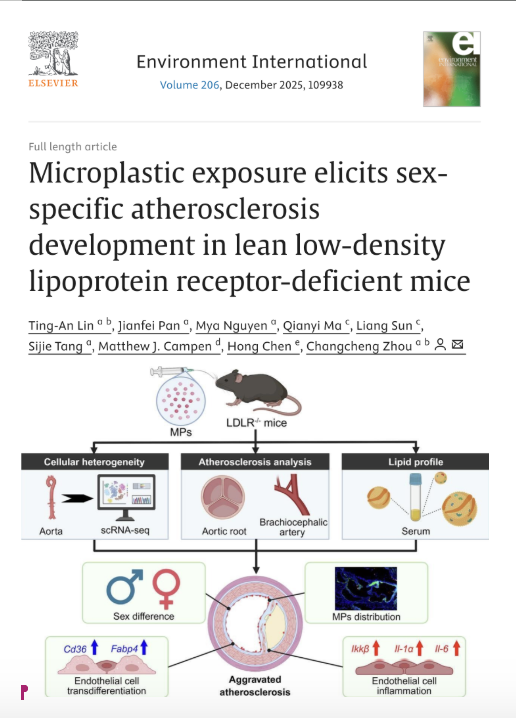
A new study provides mechanistic evidence why men specifically now have reason to be concerned about microplastics. They are active pathogenic agents that target male biology.
I am grateful to have eliminated 85% of microplastics from my blood and ejaculate last year. Read below how you can too.
In 2024, microplastics found in human plaque. Linked to 4.5x higher stroke/death risk. Correlation only.
Dec 2025, causation established. Males showed a 624% increase in plaque. Females were protected.
Details
In this study, male and female LDL receptor deficient mice (a well-established model for plaque formation, mimicking familial hypercholesterolemia) were fed polystyrene microplastics for nine weeks to assess their impact on plaque development and cardiovascular risk.
To avoid confounding effects from obesity or metabolic disease, all animals were maintained on a low-fat, low-cholesterol diet.
Key findings
Only male mice exhibited a robust increase in plaque burden following microplastic exposure:
+ Plaque area increased by approximately 63% in the aortic root
+ Plaque area increased by more than 624% in the brachiocephalic artery, a critical vessel supplying the upper body and contributing to brain circulation.
Single-cell gene expression analysis of aortic tissues from the male mice revealed that microplastic exposure induced pronounced shifts in vascular cell composition and gene expression, particularly affecting endothelial cells. These changes were consistent with increased cellular proliferation, inflammatory signaling, lipid handling, and stress and damage-response pathways.
Microplastics also directly activated inflammatory and cardiovascular disease–related gene programs in both mouse and human primary endothelial cells, including upregulation of genes involved in lipid uptake, inflammation, cytokine signaling, and increased oxidative stress.
Importantly, microplastic-treated and control mice displayed no differences in body weight, body composition, circulating lipids, or lipoprotein profiles. This rules out indirect effects mediated by obesity, dyslipidemia, or systemic metabolic dysfunction, and instead supports a model in which microplastics exert direct, lipid-independent damage to the vascular wall in male mice.
Sex-specific effects and implications
The damage being exclusive to males is plausibly linked to estrogen-mediated cardiovascular protection in females.
The involvement of sex hormones in microplastic-induced plaque formation therefore represents a critical and newly opened line of investigation. This is particularly relevant given that microplastics are also known to disrupt hormonal signaling, potentially rendering their pro-plaque effects multifactorial rather than purely vascular.
Significance
A handful of studies have shown ubiquitous exposure to microplastics in humans and animals alike (including in the brain, testes, blood vessels and carotid plaques), this study gives a huge reason for concern by providing mechanistic evidence of microplastics directly driving plaque formation in animal models, the key risk factor for cardiovascular disease.
English