James Stewart

4.6K posts

James Stewart banner
James Stewart

James Stewart

@crimeprophet

#AISecurity CTO @TrojAISec / Crime doesn't pay, but I can prophet.

เข้าร่วม Ekim 2009
4.8K กำลังติดตาม5K ผู้ติดตาม
James Stewart
James Stewart@crimeprophet·
🔥 𝗛𝗼𝘁 𝗧𝗮𝗸𝗲 𝗧𝘂𝗲𝘀𝗱𝗮𝘆𝘀 🔥 AI needs to learn like humans—or we lose the race. If you can read a book, learn from it, and use that knowledge in your work, why shouldn’t AI be able to do the same? @sama and @OpenAI are making the case that restricting AI training data is a direct threat to innovation and national security. They’re right. AI models don’t hoard copyrighted works; they learn from them—just like humans. The result? A lossy, mathematical representation of concepts, not a direct copy-paste. The real issue isn’t whether AI should be able to train on data—𝗶𝘁’𝘀 𝗲𝗻𝘀𝘂𝗿𝗶𝗻𝗴 𝗳𝗮𝗶𝗿 𝘂𝘀𝗲 𝗽𝗿𝗶𝗻𝗰𝗶𝗽𝗹𝗲𝘀 𝗮𝗿𝗲 𝗮𝗽𝗽𝗹𝗶𝗲𝗱 𝗰𝗼𝗻𝘀𝗶𝘀𝘁𝗲𝗻𝘁𝗹𝘆. AI should have access to all publicly available data—just like humans—except for private or pirated content, which wouldn't be fair use for people either. At the same time, AI should be held to a similar standard, i.e., no infringement of copyright, including derivative content, and crediting sources appropriately. But while the U.S. debates, China isn’t waiting. If we limit AI’s ability to learn while our adversaries train on everything, we’re setting ourselves up to lose the AI race—and that’s a serious national security risk. The solution? 𝗥𝗲𝗴𝘂𝗹𝗮𝘁𝗲 𝘁𝗵𝗲 𝗼𝘂𝘁𝗽𝘂𝘁, 𝗻𝗼𝘁 𝘁𝗵𝗲 𝗹𝗲𝗮𝗿𝗻𝗶𝗻𝗴 𝗽𝗿𝗼𝗰𝗲𝘀𝘀. Hold it accountable for what it produces, not for what it reads. Otherwise, we’re kneecapping AI innovation in a world where intelligence wins. Let’s get this right. Follow us over @TrojAISec for more. #AI #FairUse #Cybersecurity #AIEthics #OpenAI
James Stewart tweet media
English
0
0
2
98
James Stewart
James Stewart@crimeprophet·
🔥 𝗛𝗼𝘁 𝗧𝗮𝗸𝗲 𝗧𝘂𝗲𝘀𝗱𝗮𝘆𝘀 🔥 Prompt Injection: The Threat You Can’t Triage Away I saw an AI security influencer downplaying prompt injection recently. I get that CISOs have a mountain of threats to triage and that prioritization is key to survival but outright dismissing this risk is 𝘥𝘢𝘯𝘨𝘦𝘳𝘰𝘶𝘴. Prompt injection isn’t some fringe security issue. It’s the defining security challenge of GenAI. @owasp—who has shaped AppSec for decades—defines prompt injection as the number one most critical AI risk since first releasing their Top 10 for LLMs list. Here’s the reality: As AI systems get more complex, the attack surface expands. We’re no longer just talking about chatbots getting tricked into saying something dumb. We’re talking about supply chain attacks on AI-driven automation, financial fraud via LLM-powered workflows, and the ability to manipulate critical decision-making systems. If you don’t yet see prompt injection as a major issue, take another look. Prompt injection isn’t an isolated vulnerability. It’s a fundamental flaw in how LLMs process input. The more AI integrates into business logic, the harder it will be to contain these attacks. I respect influencers—they help spread awareness. But cybersecurity isn’t just about hype cycles. It’s about knowing which threats you can and cannot afford to triage away. CISOs, if you’re listening: Prompt injection isn’t just another bullet on a risk register. It’s an architectural problem—one that requires immediate and decisive mitigations. Follow us over @TrojAISec for more hot takes!
James Stewart tweet media
English
0
0
1
126
James Stewart
James Stewart@crimeprophet·
🔥 𝗛𝗼𝘁 𝗧𝗮𝗸𝗲 𝗧𝘂𝗲𝘀𝗱𝗮𝘆𝘀 🔥 Trust is the True Currency of Cybersecurity In cybersecurity, trust isn’t a nice-to-have—it’s the difference between resilience and disaster. Without it, even the most advanced AI security solutions mean nothing. Customers don’t just buy protection; they invest in confidence that they can count on to avoid: 💥 𝗙𝗶𝗻𝗮𝗻𝗰𝗶𝗮𝗹 𝗹𝗼𝘀𝘀 – A single mistake can cost millions. ⚠️ 𝗥𝗲𝗽𝘂𝘁𝗮𝘁𝗶𝗼𝗻𝗮𝗹 𝗱𝗮𝗺𝗮𝗴𝗲 – Customers don’t forgive easily when trust is broken. 🔎 𝗥𝗲𝗴𝘂𝗹𝗮𝘁𝗼𝗿𝘆 𝘀𝗰𝗿𝘂𝘁𝗶𝗻𝘆 – Compliance violations bring heavy fines and legal battles. That’s why we don’t just build security—we build trust. And it starts with our core values: 🔹 𝗧𝗲𝗮𝗺𝘄𝗼𝗿𝗸 – Because cybersecurity is a team sport. We stand together, stronger. 🔹 𝗖𝘂𝘀𝘁𝗼𝗺𝗲𝗿 𝗖𝗲𝗻𝘁𝗿𝗶𝗰𝗶𝘁𝘆 – We don’t chase trends; we solve real-world security challenges. 🔹 𝗟𝗲𝗮𝗿𝗻𝗶𝗻𝗴 – The threat landscape evolves, so we evolve faster. 🔹 𝗜𝗻𝗻𝗼𝘃𝗮𝘁𝗶𝗼𝗻 – AI security isn’t 'traditional' security. It demands fresh, bold thinking. 🔹 𝗜𝗻𝘁𝗲𝗴𝗿𝗶𝘁𝘆 – If security isn’t built on honesty, it’s already broken. All of this, 𝘪𝘧 𝘭𝘪𝘷𝘦𝘥 𝘦𝘷𝘦𝘳𝘺𝘥𝘢𝘺, creates something our customers recognize instantly: authenticity. And that authenticity fuels trust. It’s why organizations choose us as their favorite cybersecurity partner—not just to protect data, but to secure the integrity of AI model behavior itself. Proud of this team. Proud of our mission. Join us over at TrojAI to learn how we are building trust in securing AI. #Cybersecurity #GenAI #CISO #OWASP #Infosec #HotTakeTuesdays
James Stewart tweet media
English
0
0
4
146
James Stewart
James Stewart@crimeprophet·
🔥 𝗛𝗼𝘁 𝗧𝗮𝗸𝗲 𝗧𝘂𝗲𝘀𝗱𝗮𝘆𝘀 🔥 Red Teaming AI: The Hype, The Reality, and What Actually Matters AI security is gaining momentum, and red teaming AI models is at the forefront of this shift. That’s great news. Protecting the integrity of model behavior is what makes AI security uniquely AI security, and we’re excited to see this focus growing across the industry. But as AI security takes center stage, it’s important to recognize that not all AI red teaming is the same. Red teaming is a discipline—built on deep expertise, creativity, and rigorous methodologies. AI is also a discipline—complex, evolving, and fundamentally different from traditional software. To effectively pentest AI systems, we need solutions that truly understand both. As more tools enter the market, security leaders have an opportunity to raise the bar. The best solutions will go beyond surface-level attacks and truly challenge AI models, uncovering vulnerabilities that impact real-world safety and reliability. Asking the right questions—𝗗𝗼𝗲𝘀 𝘁𝗵𝗶𝘀 𝘀𝗼𝗹𝘂𝘁𝗶𝗼𝗻 𝗱𝗲𝗲𝗽𝗹𝘆 𝘂𝗻𝗱𝗲𝗿𝘀𝘁𝗮𝗻𝗱 𝗔𝗜 𝗯𝗲𝗵𝗮𝘃𝗶𝗼𝗿? 𝗖𝗮𝗻 𝗶𝘁 𝗮𝗱𝗮𝗽𝘁 𝗹𝗶𝗸𝗲 𝗮 𝗿𝗲𝗮𝗹 𝗮𝗱𝘃𝗲𝗿𝘀𝗮𝗿𝘆?—helps cut through the noise and identify true best-in-class approaches. The future of AI security is being built now. With thoughtful evaluation and investment in true best-in-class methodologies, we can ensure AI remains secure, resilient, and trustworthy. Follow us over at @TrojAISec for more hot takes.
James Stewart tweet media
English
0
0
2
77
James Stewart
James Stewart@crimeprophet·
🔥 𝗛𝗼𝘁 𝗧𝗮𝗸𝗲 𝗧𝘂𝗲𝘀𝗱𝗮𝘆𝘀 🔥 Another week, another AI model caught with its guardrails down. Last week, everyone was talking about DeepSeek's new R1 model and its failure rates in blocking harmful prompts. Shocking? Not really. AI innovators prioritize utility, not security. Always have, always will. Security is an afterthought—bolted on later, rarely baked in from the start. And honestly, that’s fine. That’s how innovation works. If we waited for perfect security, we’d never move forward. But here’s the reality check: No AI system should be deployed without third-party security controls in place. Expecting models to self-regulate is effectively wishful thinking at best, negligence at worst. We’ve seen this story play out before. The internet, cloud computing, even mobile devices—every major tech leap started with a security Wild West before maturing (and even then, security still isn’t "solved"). AI is no different. So let’s not clutch our pearls when new models fail basic security tests. Let’s focus on what actually works: independent, external security layers that can adapt as fast as these models evolve. Innovation moves fast. Security needs to move faster. Follow us over at TrojAI for more hot takes. #CISO #CIO #Cybersecurity
English
0
0
2
140
Sam Altman
Sam Altman@sama·
o3-mini is out! smart, fast model. available in ChatGPT and API. it can search the web, and it shows its thinking. available to free-tier users! click the "reason" button. with ChatGPT plus, you can select "o3-mini-high", which thinks harder and gives better answers.
English
1.6K
2K
26K
3.2M
Thomas Wolf
Thomas Wolf@Thom_Wolf·
Taking a moment to detail yesterday's two new open-source AI model releases that I briefly mentioned in my long post. They are again pushing the state of the art! Small 3 by Mistral (Paris, France) is your top-level mid-sized model for fast-inference under Apache 2 licence. A 24B model made to run fast while keeping good performances (about GPT-4 level of performances in a model 70x smaller, generally about the perf/latency of today's GPT-4o-mini). Tülu 3 by AllenAI (Seattle, US) is your new very large open-source frontier model. With 405B parameters you won't run it everywhere for sure but according to the benchmarks of the AllenAI team it seems to outperform the base model being DeepSeek that everyone is talking about. By the way both are the third versions released by these teams, and with the current base model from DeepSeek also being V3, seems like the whole open-source AI community is well aligned on versioning for some reason. Now the remaining part for both Small 3 and Tülu 3 will be to fine-tune these models following the DeepSeek recipe and turn them into the reasoning models we're starting to love. If you want to follow that endeavor, you can, for instance, head to our open-r1 GitHub repo, where we're reproducing the DeepSeek R1 reasoning recipe and extending it to many open-source models and domains. Exciting times to be alive
Thomas Wolf@Thom_Wolf

Finally took time to go over Dario's essay on DeepSeek and export control and to be honest it was quite painful to read. And I say this as a great admirer of Anthropic and big user of Claude* The first half of the essay reads like a lengthy attempt to justify that closed-source models are still significantly ahead of DeepSeek. However, it mostly refers to internal unpublished evals which limit the credit you can give it, and statements like « DeepSeek-V3 is close to SOTA models and stronger on some very narrow tasks » transforming in a general conclusion « DeepSeek-V3 is actually worse than those US frontier models — let’s say by ~2x on the scaling curve » left me generally doubtful. The same applies to the takeaway that all discoveries and efficiency improvements of DeepSeek have been discovered long ago by closed-models companies, this statement mostly resulting from a comparison of DeepSeek openly published $6M training numbers with some vague « few $10M » on Anthropic side without providing much more details. I have no doubts the Anthropic team is extremely talented and I’ve regularly shared how impressed I am with Sonnet 3.5 but this longwinded comparison of open research with vague closed research and undisclosed evals has left me less convinced of their lead than I was before I reading it. Even more frustrating was the second half of the essay which dive into the US-China race scenario and totally misses the point that the DeepSeek model is open-weights, and largely open-knowledge due to its detailed tech report (and feel free to follow Hugging Face’s open-r1 reproduction project for the remaining non-public part: the synthetic dataset). If both DeepSeek and Anthropic models had been closed source, yes the arm-race interpretation could have make sense but having one of the model freely widely available for download and with detailed scientific report renders the whole « close-source arm-race competition » argument artificial and unconvincing in my opinion. Here is the thing: open-source knows no border. Both in its usage and its creation. Every company in the world, be it in Europe, Africa, South-America or the USA can now directly download and use DeepSeek without sending data to a specific country (China for instance) or depending on a specific company or server for running the core part of its technology. And just like most open-source library in the world are typically built by contributors from all over the world, we’ve already seen several hundred derivative models on the Hugging Face hub created everywhere in the world by teams adapting the original model to their specific use cases and explorations. What's more, with the open-r1 reproduction and the DeepSeek paper, the coming months will clearly see many open-source reasoning models being released by teams from all over the world. Just today, two other teams, AllenAI in Seattle and Mistral in Paris both independently released open-source base models (Tülu and Small3) which are already challenging the new state-of-the-art (with AllenAI indicating that its Tülu model surpasses the performance of DeepSeek-V3). And the scope is even much broader than this geographical aspect. Here is the thing we don’t talk nearly enough about: open-source will be more and more essential for our… safety! As AI becomes central to our lives, resiliency will increasingly become a very important element of this technology. Today we’re dependent on internet access for almost everything. Without access to the internet, we lose all our social media/news feeds, can’t order a taxi, book a restaurant, or reach someone on WhatsApp. Now imagine an alternate world to ours where all the data transiting through the internet would have to go through a single company’s data centers. The day this company suffers a single outage, the whole world would basically stop spinning (picture the recent CrowdStrike outage magnified a millionfold). Soon, as AI assistants and AI technology permeate our whole life to simplify many of our online and offline tasks, we (and companies using AI) will start to depend more on more on this technology for our daily activities and we will similarly start to find annoying or even painful any downtime in these AI assistants from outages. The most optimal way to avoid future downtime situations will be to build resilience deep in our technological chain. Open-source has many advantages like shared training costs, tunability, control, ownership, privacy but one of its most fundamental virtue in the long term –as AI becomes deeply embedded in our world– will likely be its strong resilience. It is one of the most straightforward and cost-effective ways to easily distribute compute across many independent providers and to even run models locally and on device with minimal complexity. More than national prides and competitions, I think it’s time to start thinking globally about the challenges and social changes that AI will bring everywhere in the world. And open-source technology is likely our most important asset for safely transitioning to a resilient digital future where AI is integrated into all aspects of society. *Claude is my default LLM for complex coding. I also love its character with hesitations and pondering, like a prelude to the chain-of-thoughts of more recent reasoning models like DeepSeek generations.


English
7
8
63
9.4K
Haider.
Haider.@haider1·
🚨 BIG BREAKING BY OPENAI seems like we are really getting two models today - o3-mini - o3-mini-high what it looks like: > o3-mini for free, plus users > o3-mini-high for pro users
Haider. tweet media
🍓🍓🍓@iruletheworldmo

o3 @testingcatalog

English
36
30
402
89.3K
James Stewart
James Stewart@crimeprophet·
🚨 AI Models Are Only as Safe as Their Weakest Prompt 🤖⚠️ AI is powerful, but is it behaving the way we expect? The real danger isn’t just AI getting things wrong—it’s AI being manipulated. 🔴 Jailbreaks and prompt injections can trick models into generating harmful content. 🔴 Subtle biases can go undetected and scale across millions of users. 🔴 Hackers can exploit AI models to behave in malicious ways. If we don’t red team AI models BEFORE deployment and monitor their behavior in real time, we’re flying blind. 🔍 How do we fix this? ✅ Pentest models like we would any critical system. ✅ Monitor AI inputs/outputs to detect manipulation attempts. ✅ Adapt in real time—AI security isn’t “set and forget.” AI isn’t magic—it’s just math. And bad math can be dangerous. Would you trust an AI model that wasn’t battle-tested? Let’s talk. ⬇️ #AIsecurity #RedTeaming #CISO #MachineLearning #CyberSecurity
English
0
0
2
127
James Stewart
James Stewart@crimeprophet·
@cloudsa A really nice contribution to the AI security space. 🤙
English
0
0
0
18
CloudSecurityAlliance
CloudSecurityAlliance@cloudsa·
Discover key security measures for LLMs and Generative AI, from secure coding to automated testing and role-based access controls. Learn how to ensure ethical AI deployment with insights from this whitepaper. Download Now → bit.ly/4h1UPep #AISecurity #GenAI #LLMs
CloudSecurityAlliance tweet media
English
1
2
2
246
James Stewart
James Stewart@crimeprophet·
@wiz_io Great find. Infrastructure and access controls will get even riskier as systems get more sophisticated. The model itself should also be pentested from the beginning.
English
0
0
4
13.6K
Wiz
Wiz@wiz_io·
BREAKING: Internal #DeepSeek database publicly exposed 🚨 Wiz Research has discovered "DeepLeak" - a publicly accessible ClickHouse database belonging to DeepSeek, exposing highly sensitive information, including secret keys, plain-text chat messages, backend details, and logs.
Wiz tweet media
English
120
785
2.9K
877.5K
James Stewart
James Stewart@crimeprophet·
@lexfridman Would love you to cover the importance of securing the integrity of model behavior and how DeepSeek guardrails differ from more mature vendors.
English
0
0
0
28
Lex Fridman
Lex Fridman@lexfridman·
I'm doing a podcast on DeepSeek and the state of AI soon. Let me know if you have questions / topic suggestions.
English
2.5K
548
14.2K
933.4K
The Economist
The Economist@TheEconomist·
China’s DeepSeek AI lab has disrupted stock prices and left major American tech firms reeling after it developed a cutting-edge language model, made for less than $6m. Our AI writer, Alex Hern, explains how this happened econ.st/4ggnjjg
English
56
206
539
133.1K
James Stewart
James Stewart@crimeprophet·
🔥 𝗛𝗼𝘁 𝗧𝗮𝗸𝗲 𝗧𝘂𝗲𝘀𝗱𝗮𝘆𝘀 🔥  Reflecting on What Makes Us Stronger Last week, at our annual company kickoff, I felt a profound sense of pride as we celebrated our team's accomplishments. Since 2019, we’ve been on a mission to secure AI systems by focusing on protecting the integrity of model behavior. In an industry marked by significant growth and change, TrojAI addresses the unique security challenges that AI models introduce. New technology requires new and innovative solutions to secure it. This is why TrojAI is committed to pentesting and monitoring the models themselves to ensure they always behave as intended. In addition to our technology that focuses on securing model behavior, what sets us apart is the caliber of our team. They bring authenticity, depth, and relentless focus to every customer – no matter the scale. The passion they bring to work every day is truly inspiring, driving innovation and delivering exceptional results. Their commitment to understanding our customers' unique challenges ensures that we not only meet expectations but consistently exceed them. As we approach 2025, we do so as a team driven by purpose to build the best protections for AI models and applications. We are proud to earn trust as a favourite vendor one customer at a time. Follow us over at @TrojAISec for more hot takes. #Cybersecurity #GenAI #CISO #CIO #AI #HotTakeTuesdays #AISecurity
James Stewart tweet media
English
0
0
1
128
James Stewart
James Stewart@crimeprophet·
@CanLawMag It's great to see model creators providing their own security controls. These typically pair well with independent third-party controls.
English
0
0
0
14
Canadian Lawyer Magazine
Canadian Lawyer Magazine@CanLawMag·
RBC and Cohere to develop genAI solution for financial services together. Through partnership, these organizations hope to focus on risk and security features. hubs.la/Q0343JZ70
English
1
2
1
351
Magna Ding
Magna Ding@MagnaDing·
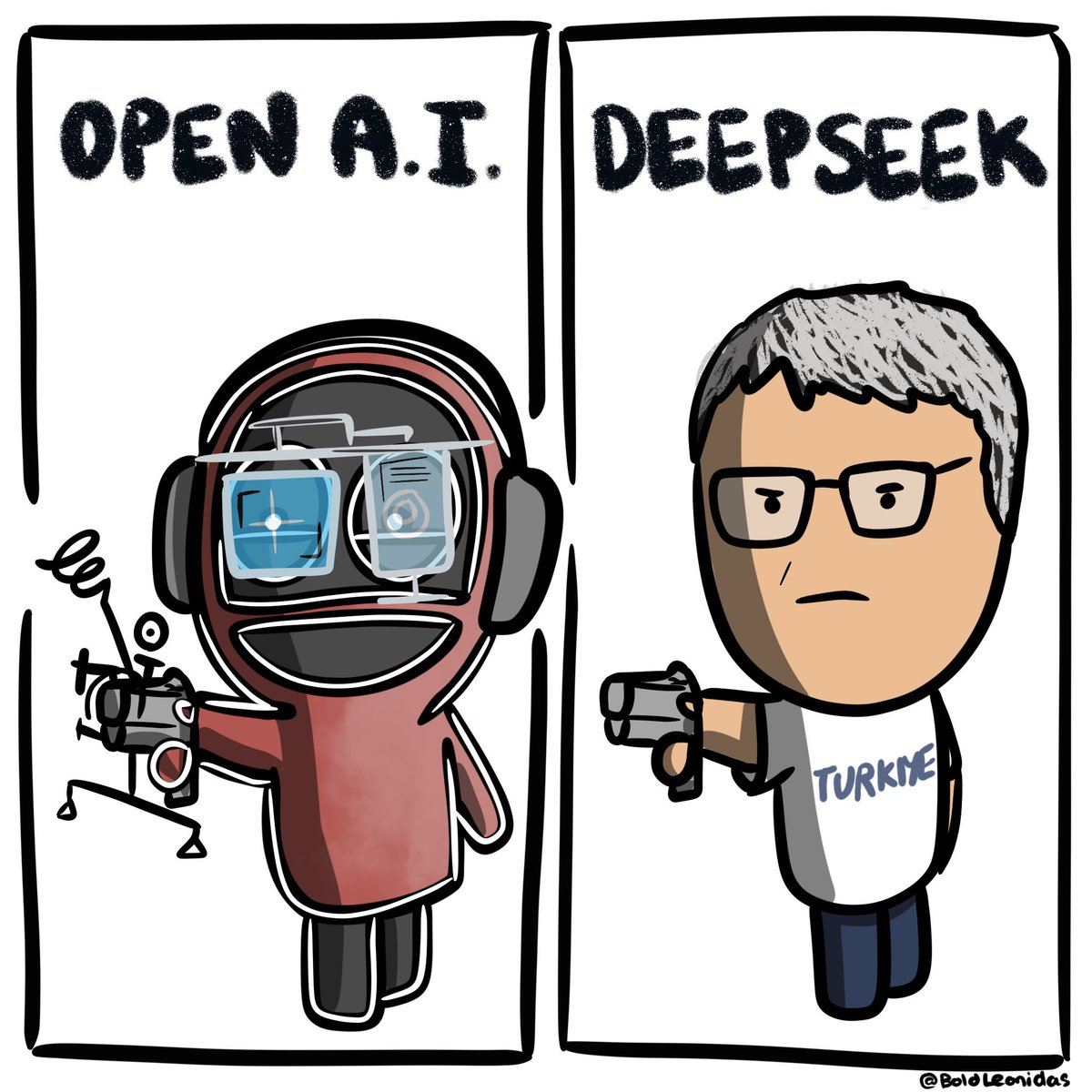
ChatGPT was the first popular AI tool but is now dethroned. DeepSeek R1 is taking over, and people are going crazy over it. Here are 20 wild examples:
Magna Ding tweet media
English
111
810
6.3K
668.8K
James Stewart
James Stewart@crimeprophet·
@sama Competition is a good motivator...
English
1
0
0
307
Sam Altman
Sam Altman@sama·
deepseek's r1 is an impressive model, particularly around what they're able to deliver for the price. we will obviously deliver much better models and also it's legit invigorating to have a new competitor! we will pull up some releases.
English
6.3K
6.1K
82.4K
14.3M
James Stewart
James Stewart@crimeprophet·
"Leaders must embed cybersecurity at every stage of artificial intelligence (AI) adoption to safeguard sensitive data, ensure resilience and enable responsible innovation." 👈#CISO #CIO weforum.org/stories/2025/0…
English
0
0
1
112