Daniel McDevitt MD FACS FSVS

1.9K posts

Daniel McDevitt MD FACS FSVS banner
Daniel McDevitt MD FACS FSVS

Daniel McDevitt MD FACS FSVS

@dtmcdevitt

They say laughter is the best medicine. Surgery works pretty good, too.

Atlanta, Georgia เข้าร่วม Mayıs 2009
911 กำลังติดตาม649 ผู้ติดตาม
Daniel McDevitt MD FACS FSVS รีทวีตแล้ว
Bob Tahara
Bob Tahara@BobTahara·
Patrick Ryan giving his inspired Presidential Address @OEIS
Bob Tahara tweet media
English
0
1
3
83
Daniel McDevitt MD FACS FSVS
@DrBruggeman That would be better. I think there needs to be some rules in place about post procedure review and time limitations on lookback.
English
0
0
0
5
Adam Bruggeman, MD
Adam Bruggeman, MD@DrBruggeman·
I am hopeful, based on the WISeR demonstration results so far, that we can have a real time “check” for those who want to know before a procedure that it will be approved VS a post-procedure look back for those who didn’t use the check up front and the insurer wants to review. This can and should be done using as much automation as possible to quickly approve appropriate care. It is much like TSA precheck sorts people into those who are higher risk and those who are lower risk. Add on gold card and you have a very functional system
English
1
0
3
22
Adam Bruggeman, MD
Adam Bruggeman, MD@DrBruggeman·
I have argued that prior authorization is a necessary part of our system What isn’t necessary is the gamesmanship of regularly denying claims with the knowledge that 90% won’t be appealed. Prior authorization went from reasonable gatekeeping to a profit strategy
Anil Makam@AnilMakam

prior auth sucks for all but its a tragedy of the commons 12 years of training does not mean you know how to appraise and apply evidence I know, because I was that person a lot of what doctors order, including at elite academic medical centers, is not needed I see it everyday

English
7
6
23
2.1K
Daniel McDevitt MD FACS FSVS
I didn’t get mine to save gas money. Although right now, it was a good choice! I got it because it drives itself. It has literally no maintenance. The Y is very comfortable and big enough to take people and cargo but still fit in a typical parking space. I have no idea why people hate these cars so much.
English
0
0
1
44
theficouple
theficouple@theficouple·
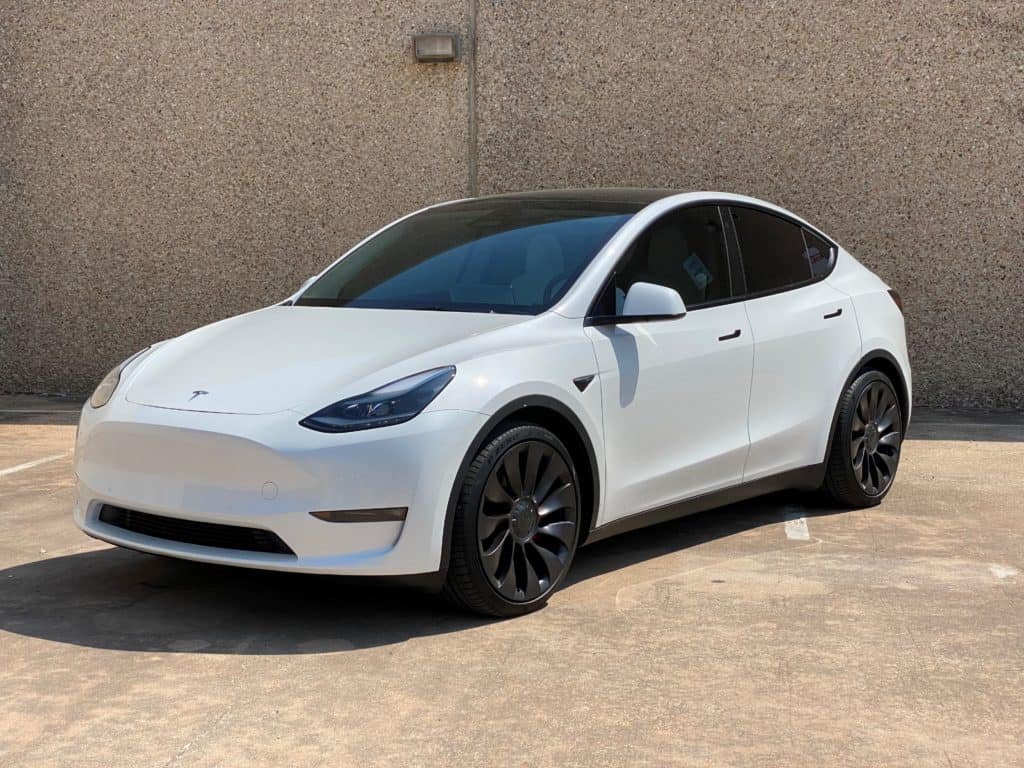
When you bought the $50,000 Tesla Model Y to save on gas & maintenance. Then you learned: - It loses 20-35% of its value by year 3 - It loses 55-58% of its value by year 5 So by year 5 you lost $35,000+ of value? ....Congrats on saving ~$1,000/yr on gas.
theficouple tweet media
English
2.3K
173
1.8K
597K
Daniel McDevitt MD FACS FSVS
I’ve been driving a Tesla for 10 years. This scenario may have been somewhat true years ago, but not now. There are plenty of chargers. The computer in the car guides the stops and times to charge. When the battery is less charged, charging goes pretty quick. The car literally drives itself. Long drives are tedious and attention can wander. Plus, the car constantly monitors 360 degrees at all times simultaneously which humans cannot. I love conventional autos and still drive them but Tesla is on a whole new level.
English
0
1
2
46
William Shatner
William Shatner@WilliamShatner·
And for the #teslarites who don’t understand 500 miles. Time is money. How long does it take to pump a tank of gas? 4-5 mins versus 30. Early last week I went up to the Yosemite area (about 300 miles.) I got up there, did my thing and got gas (5 mins) and drove back. With a Tesla. It would be drive up (maybe on one charge) charge up 20-30 mins, do my thing. Drive back, stop along the way to recharge (again probably another 20 mins…) That’s too long. 500 would be one recharge so it’s 10 mins gas versus 29-30 mins which I would consider.🤷🏼
English
902
44
1.6K
218.3K
Daniel McDevitt MD FACS FSVS
I looked up Jones’ position on election integrity and just saw a lot of lip service to “transparency”. What does that even mean? We have two feckless senators in DC thanks to the current GOP controlled executive branch here in GA. They need to do better. No one is confident in these guys.
English
0
0
0
25
Daniel McDevitt MD FACS FSVS รีทวีตแล้ว
Accidentally Retired
Accidentally Retired@AcdntlyRetired·
Early retirement doesn’t give you more time. It simply shows you how much time you truly wasted on meaningless activities.
English
3
2
33
1.5K
Daniel McDevitt MD FACS FSVS
HIPAA and EMTALA are the poster children of bad health law. Start with a reasonable idea but encumber it with legal definitions, add draconian punishments for violations, provide for exceptions that no one can ever remember, then inconsistently enforce it. Everyone assumes the worst. It becomes paralyzing. The one thing that facilitates care is communication. HIPAA frightens people into silence.
English
0
0
0
31
Daniel McDevitt MD FACS FSVS
@rgergelymd No reason why this can’t be done in this day and age. The only question here is how we deal with the cost of doing this. Who stores the records? Who maintains software to view them?
English
2
1
2
20
GruntDoc
GruntDoc@gruntdoc·
@awstar11 Where they going to put their F-35s after they demo the runways?
English
2
2
4
176
Dutch Rojas
Dutch Rojas@DutchRojas·
A physician pays $85,000 a year in malpractice premiums. The insurer keeps 40 cents of every dollar as profit and float. A captive structure would return that money to the physicians who funded it. Legal in all 50 states. The hospital down the street has had one since 2004. 99% of physicians have never heard of the phrase captive.
English
19
51
283
14.2K
Daniel McDevitt MD FACS FSVS
Great post. It’s a tough issue. The old saw in medicine is that you have to be alive to have a problem. Unfortunately, current care paradigms have become transactional at the point of need. There’s no long term because, well, we will deal with that tomorrow. A long time ago, a mentor once told me “you will rarely see old doctors and nurses as patients in the ICU”. We know, but find ourselves caught in unrealistic but compelling expectations when we are the physicians of record. I’m not an ICU doc, but I’ve had the good fortune to work with a lot of really good ones. I admire how you all make the worst day any one ever has into something manageable. Godspeed.
English
0
0
1
10
Ann L. Jennerich, MD MS ATSF
3/ And caring for patients who are clearly at the end of life, helping families understand what is happening and guiding them through an unimaginably hard time, can also feel deeply meaningful. That work is hard, but it does not usually leave me conflicted.
English
2
0
18
4.1K
Ann L. Jennerich, MD MS ATSF
1/ There is a lot about my job in pulmonary and critical care medicine that I find deeply meaningful. But one thing really weighs on me these days, and it is this. 🧵
English
6
20
104
35.2K
Daniel McDevitt MD FACS FSVS
@thoughtson_tech The absolute irony here is that all of the problems with healthcare financing in existence today were once the brightest ideas from the smartest experts we could find. Can't wait to see what they come up with next!
English
0
0
1
40
Special Interest Media
Special Interest Media@thoughtson_tech·
Doctors can’t own hospitals. Ever wonder why? Short answer: Pete Stark, a four-page law Reagan signed without reading, and 80 years of the government fixing its own fixes. The longer answer is one of the better origin stories in American policy. Hill-Burton in 1946 solved a real problem (not enough hospitals) so well it created a new one (way too many hospitals). CON laws in 1974 tried to fix that, didn’t work, got repealed federally in 1987, but 36 states kept them anyway because incumbent hospital systems realized they were a great way to block competition. Then Medicare and Medicaid blew up demand in ways nobody predicted. Then EMTALA made ERs a legally mandated safety net with zero federal funding attached. Then Stark showed up to stop doctors from referring patients to facilities they owned. Then the ACA closed the last loophole that let them. Then 340B, a tiny 1992 drug discount program, quietly became a $66B/year machine that barely resembles its original purpose. None of it was designed. All of it was improvised. Every fix created the next problem. For anyone deploying capital or building companies in health tech, this history is basically the operating manual for why the market looks the way it does. CON laws, Stark compliance, 340B mechanics, EMTALA cost structures - these aren’t background noise. They’re the load-bearing walls. ----- Link to the full analysis onhealthcare.tech/p/how-the-gove…
English
1
6
11
1.1K
Daniel McDevitt MD FACS FSVS
When practices are struggling, these guys show up with money and promises. There is no viable investment model where someone gives you money to do whatever you feel is best for your patients, no matter what they say. They expect a hefty ROI and you're expected to deliver...and that's just what the contract says. Any monies paid are an advance on YOUR future productivity. They get paid today from the top line. They aren't there to lose on the deal. Things don't work out? They take the write off, saddle you with the debt, sue you maybe, or just flat-out sell you to someone else.
English
0
0
0
4
Private practice
Private practice@eljefe1america·
I agree VC is just a vehicle owned by people But these people profit off the sick and make people who are fine sick. Just like you said make a buck and move on. But where I’m from there are consequences for actions and for profiting off the sick in that fashion, if it were up to me I would remove those peoples hands from their bodies. Because you shouldn’t just screw over the sick and vulnerable and walk away.
English
1
0
1
9
Dutch Rojas
Dutch Rojas@DutchRojas·
VC poured $4.8 billion into healthcare infrastructure companies last year. Not into clinics. Not into care. Into the billing layer. The EHR layer. The revenue cycle layer. They did not “invest” in healthcare. They’re invested in the toll booth between the physician and the payment. 99.9% of VC money doesn’t treat patients. It invoices them.
English
29
88
423
16.8K
Daniel McDevitt MD FACS FSVS
@pitdesi I am not sure that really changes anything substantively. These are just general numbers and don't really reflect the context behind them. This type of analysis is not new and, while interesting, is very superficial.
English
0
0
0
108
Daniel McDevitt MD FACS FSVS
For my vascular surgery colleagues, quoted from the article: "Additionally, cardiothoracic and vascular surgery is among the most capital-intensive specialties to sustain independently, with high overhead, expensive equipment, and heavy hospital dependency making these groups particularly vulnerable to acquisition. A 2022 analysis in the Annals of Thoracic Surgery found that rising practice costs combined with declining reimbursement were placing established independent cardiothoracic surgery practices “at risk for closure or purchase by hospital systems.” Independent vascular practices have been hanging on by the skin of their teeth for a while now. They shouldn't be, though. OBL/ASC models for vascular care are scalable and easily deployable in vascular care deserts. But they require capital to do so and physicians willing to invest in them. Accessible care that is cheaper than the hospital should be a goal for healthcare financing going forward. With continued effort, we may be able to get back on the right track! @AmCollSurgeons @VascularSVS @MeganTracci @BobTahara @OEISociety
English
1
4
13
2.2K
Daniel McDevitt MD FACS FSVS รีทวีตแล้ว
Sanat Dixit MD FACS
Sanat Dixit MD FACS@sdixitmd·
AHA in 2010: " We can't make money just taking care of sick patients. We need elective, commercially insured patients. Shut down these damn doctor owned hospitals." AHA in 2021:"We had record revenues in spite of the pandemic throttling high margin elective cases. Looks like we figured out how to make money caring for sick patients." AHA in 2023:"Yeah so even though we had record revenues post pandemic, and our C suites got crazy production bonuses; we lost money on our balance sheets because our investment arms took a bath in the market. Can you guys at CMS maybe give us a pay bump to offset our losses?" AHA in 2026:"We can't make money taking care of sick patients. We need elective, commercially insured patients. Don't repeal the ban on physician owned hospitals. Doctors are just greedy interlopers anyway. Hey can I show you my new Maybach?????" @GeBaiDC @DrDiGiorgio @DrBruggeman @DutchRojas @anish_koka @nickshirleyy @DrOz
Federation of American Hospitals@FAHhospitals

There is no issue with physician-led hospitals- the issue is about the conflict of interest when physicians self-refer patients to their own hospitals. The data is clear: POHs tend to treat more commercially insured and healthier patients than full-service hospitals. In rural communities, this can leave rural hospitals with a greater financial burden, further threatening their ability to keep their doors open and keep 24/7 care available in their communities. Read more: fah.org/wp-content/upl…

English
1
20
66
5.5K