
Kaan⚡️
362 posts


Michael Howell: Dollar stablecoins are a weapon against every rival monetary system on earth. Anonymity from local tax authorities, easier to open than a bank account, rapid transactions, and "a currency which is going to devalue at a slower rate than many of these domestic units." The EU, China, Turkey, emerging markets - none of them have a great answer to this. FT @CrossBorderCap @BitcoinJesusETH.


when in doubt, try withdrawing $10k from your bank account you will quickly remember why crypto is 100000% the future


As the 10 Year US Treasury yield explodes higher, pay close attention to what new Fed Chair Warsh and other officials say in the coming days and weeks. Why? 1. The 10 Year is the benchmark for just about all consumer borrowing rates in the US, including credit cards, auto loans, and mortgages. 2. The Fed controls the overnight rate by voting on the Fed Funds Target. But the 10 Year is set by the bond market itself. Buyers and sellers voting on inflation, credit risk, and Treasury supply in real time. 3. To keep consumer rates from following the 10 Year higher, the Fed has one tool left in the kit. Print money and buy the bonds themselves to force yields lower. Yield Curve Control. And that is what drives excess money supply and the next leg of asset inflation. Their words, and any fancy new acronyms, will be your first clue.

If you bought the S&P in late 2024 betting on 8-10% returns, you're about to lose a decade of your financial life. Billionaire investor Howard Marks on the JP Morgan chart everyone's ignoring: At the end of 2024, the S&P was at a P/E of 23. Historically, every single time the market hits a P/E of 23, the next 10 years returned between 2% and -2% annualized. NO exceptions. What this means: if you invested $100K at the end of 2024, by 2034 you'll have between $82K and $122K. Best case (2% annualized): you barely beat inflation Worst case (-2% annualized): you lose 18% of your money Either way, high-yield savings beats your "aggressive" portfolio This isn't a bearish prediction. It's a historical certainty based on the price you chose to pay. @thesamparr @ShaanVP

U.S. equity investors -- get ready for five to ten years of chop suey During the past 100 years the S&P index chopped sideways for 54 years. That is 46 years of no new net gain (other than from dividends) S&P Index is entering another major period of chop $SPX


Making a thread of a bunch of my posts re: money + BTC x.com/TXMCtrades/sta…

Bitcoin is actually the best form of money, but who's keeping track. Why peg your token to a currency that central and commercial banks can dilute and debase, where your transactions can be arbitrarily blocked, and where third parties can freeze your money? No thanks.


Remember when your statist Bitcoin heroes like Pierre Rochard and the Washington crypto lobby were vouching for Lutnick as “a Bitcoin guy?“


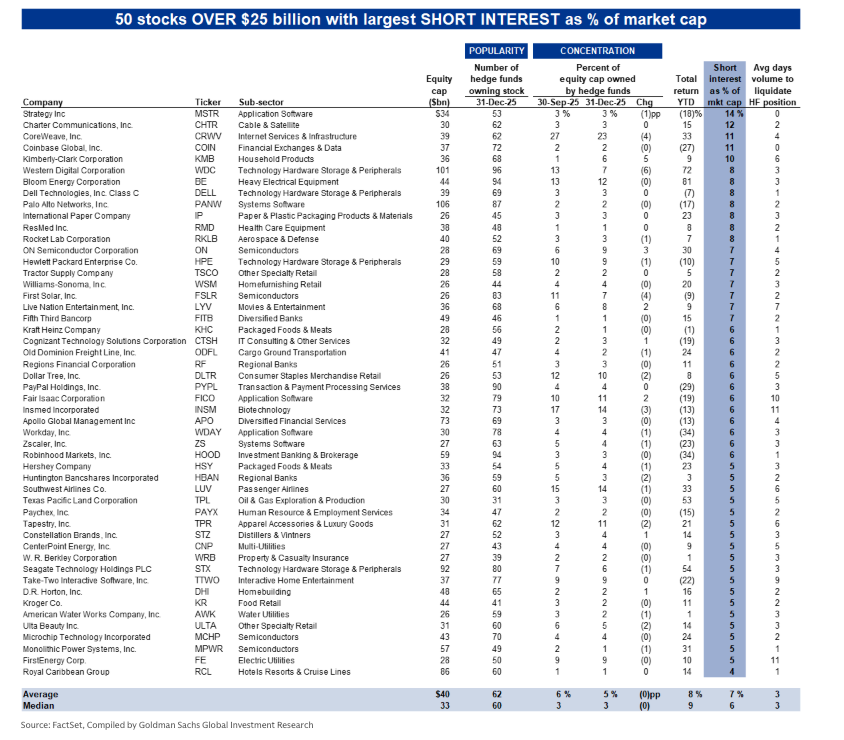
One of the things I like about MSTR is that the numbers aren’t fixed—they lean toward an easing or more accommodative environment. For example, if the Fed were to cut rates by 200 basis points, it could easily lead to a doubling of Bitcoin’s value on the balance sheet and a reduction in the cost of capital by as much as three-quarters, not just going forward but across the entire portfolio since the first STRC issuance. Many in the system see lower rates as the obvious, though short-term, answer to the debt refinancing challenge. I think that MSTR may be one of the most pro big print trades in the system. @LawrenceLepard


THE NIGHTMARE SCENARIO NOBODY IS TALKING ABOUT AN OIL + DOLLAR SHORTAGE The nightmare scenario nobody is talking about right now is what happens if the Dollar skyrockets at the same time as oil. Since the world's oil supply is purchased in Dollars, they are typically inversely correlated. A lower Dollar = increased international demand for oil. The only time we've seen a brief period of oil 🔼 Dollar 🔼 was in 2022, during the economic slowdown. The nightmare scenario we're facing is a global oil supply shortage at the same time as an economic crisis. Both of these compound the demand for Dollars because not only are nations forced to liquidate greater assets to purchase oil, but servicing sovereign debt becomes much more expensive because it's denominated in Dollars. This energy crisis could very well be the beginning of Brent Johnson's @SantiagoAuFund Dollar Milkshake Theory and the United States' plan to take a large portion of its debt out of circulation.


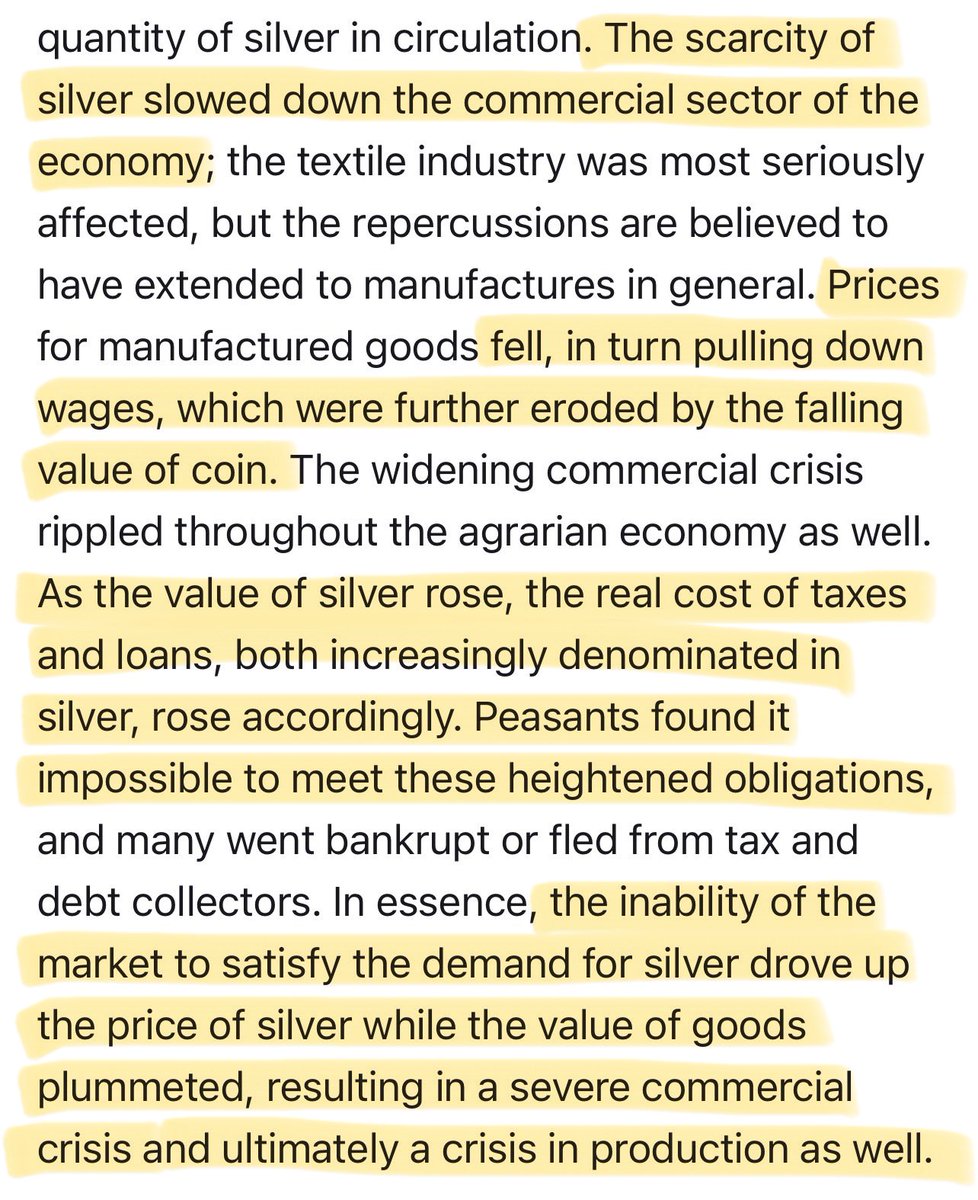
One of the most salient learnings from the book is that the average worker prefers cheap and abundant money as MoE versus scarcity. Scarcity is not actually a virtue of a powerful exchange medium, which may sound like sacrilege in some circles. There is a popular assumption (which seems blindly applied tbh) in bitcoin conversations that people will prefer a scarcer money for everyday use because it is the opposite of debasing fiat. But there are countless examples throughout time where people demanded a softer money for wages and petty payments (even choosing counterfeits when necessary) over a scarce asset. Societies past have learned of the tendency for harder monies to have low velocity and bouts of deflation, and they adapt accordingly. Typically by circulating a weaker money. When it did not exist, people minted their own and circulated those at a discount rather than accepting deflation. An elastic money can grow with an economy and allow prices to remain closer to stable. It allows new economic demand to be met without dragging down the price level of goods. Flexibility becomes a problem when money is debased frivolously and rapidly such that it erodes trust and disrupts the status quo- this is the primary flaw with modern fiat. Reliability over conceivable timelines and broad acceptance are what are important to people more than scarcity, empirically. There are always multiple choices for how to "store value" in an economy, and many assets can serve that role without being money. Bitcoin does that exceedingly well. But the good that is the most liquid, which doesn't harden liabilities priced in it over time, which doesn't eternally rise in price vs other goods, and whose circulating supply of units flexes with the demand in the economy, has proven more preferable as the vessel for daily commerce throughout history. Scarcity is better for saving and measuring value, but is the antithesis of the ideal structure of an MoE.


#1 Luke Dashjr (@LukeDashjr) vs #16 Wicked (@w_s_bitcoin)